Leidsid 33 sarnast õppematerjali, mis on seotud failiga "Presentation - Salvador Dali, inglise keeles". Need materjalid aitavad sul teemat sügavamalt mõista.
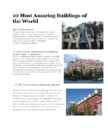
salvador, spain, artwork, came, surrealism, difference, between, felipe, 1904, spanish, painter, graphic, passing, through, cubism, futurism, joined, became, famous, paintings, unreal, dream, space, things, them, clocks, eggs, moved, back, in1989they are dancing out of line and appear out of order. It was designed by Viennese artist Friedensreich Hundertwasser and finally planned and implemented by architect Heinz M. Springmann. It contains 105 apartments, an inner courtyard, a small artificial lake and also a playground for children. The building has 12 floors. 3. The Torre Galatea Figueras (Spain) The first things you notice are the giant egg sculptures along the roofline. Then it hits you that the Salvador Dali Theater Museum in Figueras, Spain, is no ordinary building. The museum’s tower, Torre Galatea, was named for the surrealist artist’s deceased wife, and Dali himself lived there until his death in 1989. Interestingly, the museum sits next to the parish church where Dali was baptized in 1904; he is buried in an unmarked crypt in the museum’s main exhibition hall. 4. The Basket Building (Ohio, United States) This may look like a picnic basket kept in the park. But this
Brought the film from the street to studio. Magic. He was hacing a background in the theater and was a musician and thought that it is a good idea do produce fictional movies. He was disliked by lumiere brothers, they thought that cinema should be documentary. He was the man who did it all. You can tell cinema storys if u use tricks, costumes, you create illusiona nd tricks in technological way. ,,special effects". He was interested how to make things to look like magic. Some tricks came by accident. Melies was filming in the street. He saw a horsecar passing by. Camera stopped and started later, there was a horsecar with a coffin. Appearing and dissapearing things. It was the beginning of special effects. Tricks nowadays are more and more sophisticated. Cinema ca produce things that are magic. He became incredibly popular, most popular film director. He had all those ideas and made all the films, became the victim of that
soon divorce. In 1909, Delaunay began to paint a series of studies of the city of Paris and the Eiffel Tower. The following year, he married Terk, and the couple settled in a studio apartment in Paris, where they later had a son. At the invitation of Wassily Kandinsky, Delaunay joined The Blue Rider (Der Blaue Reiter), a Munich-based group of abstract artists, in 1911, and his art took a turn for the abstract. The outbreak of World War I found Delaunay and his wife vacationing in Spain, and they settled with friends in Portugal for the duration of the conflict. During this period, the couple took on several jobs designing costumes for the Madrid Opera, and Sonia Delaunay started a fashion design business. After the war, in 1921, they returned to Paris. Delaunay continued to work in a mostly abstract style. During the 1937 World Fair in Paris, Delaunay participated in the design of the railway and air travel pavilions. When World War II erupted, the Delaunays
American Art Revision Materials Colonial Period Portraiture. The first typically American paintings were illustrated maps but painting remained scarce during C17. There were 4 reasons: settlers came from backgrounds where art was unusual, Protestant attitudes was averse to imagery and painting, the English were not yet distinguished in visual arts and religious art was non-existent. The colonial period is almost entirely limited to portraiture (deemed as `useful' by settlers). These first paintings were made by limners and artisans without formal training and were based on what was popular in England during the Tudors. The
American Art Revision Materials Colonial Period Portraiture. The first typically American paintings were illustrated maps but painting remained scarce during C17. There were 4 reasons: settlers came from backgrounds where art was unusual, Protestant attitudes was averse to imagery and painting, the English were not yet distinguished in visual arts and religious art was non-existent. The colonial period is almost entirely limited to portraiture (deemed as `useful' by settlers). These first paintings were made by limners and artisans without formal training and were based on what was popular in England during the Tudors. The
see a wide horizontal front in a classical style. It is the National Gallery. It has been in this building since 1838 which was built as the National Gallery to house the collection of Old Masters Paintings (38 paintings) offered to the nation by an English Private collector, Sir George Beamount. Today the picture galleries of the National Gallery of Art exhibit works of all the Euro-pean schools of painting, which existed between the 13th and 19th centuries. The most famous works among them are `Venus and Cupid' by Diego Velazquez, `Adoration of the Shepherds' by Nicolas Poussin, `A Woman Bathing' by Harmensz van Rijn Rembrandt, `Lord Heathfield' by Joshua Reynolds, `Mrs Siddons' by Thomas Gainsborough and many others. In 1897 the Tate Gallery was opened to house the more modern British paintings. Most of the National Gallery collections of British paintings were transferred to the Tate, and only a small
artists. This is very bad, because the viewer needs a certain benchmark, according to which he could assess the quality of the works presented. 1. THEORETICAL PART Any type of history is a discourse in its own right. What is more, when talking about art history, the discourses seem to flourish immensely from one into another, and so on into many more. In the context of the beginnings, one cannot but firstly reflect upon the artwork of graffiti. Later on, by the end of the 20th century and the beginning of the 21st, street art has evolved into complex interdisciplinary forms of artistic expression. From graffiti, stencils, prints and murals, through large-scale paintings and projects of artistic collaboration, to street installations, as well as performative and video art, it is very much safe to say that street art has found it’s way into the core of contemporary art. And rightly so. (Maric B
Rossetti(critic), James Collison(painter), Frederic Stephens (critic), Thomas Woolner(sculptor). The three youthful Pre-Raphaelites deliberately challenged the established view of art, drawing up a manifesto of their intentions and publishing them in the four issues of a periodical called "The Germ". They would paint direct from nature, with objective truthfulness and genuine ideas in sympathy with what was direct and heartfelt in the art of the past. The brotherhoods techniques came from the early Flemish art- especially Van Eyck. To imitate the work of great Italian artists the PRB-s studied the colours in nature. To have the effect of glowing colours they invented a new method called "wet white". It was very difficult and wasn't used a lot (except Hunt). The technique was to apply colour on a wet brilliant white ground. For inspiration the brotherhood turned to the bible because they wanted to portray significant themes.
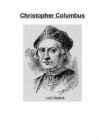
Christopher Columbus Christopher Columbus was born in Genoa, a port city in Italy, in 1451. This is the name we know him by today but his actual name is Cristobal Colon in Spanish, or Cristofero Colombo in Italian. He first went to sea at the age of 1465 at the age of 14. He was a deck boy and he had to clean, cook and mend clothes. By the age of 30 he was an experienced sailor and a skilful navigator. He had made many journeys to the South Atlantic from his home the Madeira Islands. He also sailed to Bristol and Galway. Many people believed that he had also sailed to the north of Iceland in 1477.
bloopers collected by teachers throughout the United States, from eight grade through college level. Read carefully, and you will learn a lot. The inhabitants of Egypt were called mummies. They lived in the Sarah Dessert and traveled by Camelot. The climate of the Sarah is such that the inhabitants have to live elsewhere, so certain areas of the dessert are cul- tivated by irritation. The Egyptians built the Pyramids in the shape of a huge triangular cube. The Pramids are a range of mountains between France and Spain. The Bible is full of interesting caricatures. In the first book of the Bible, Guinesses, Adam and Eve were created from an apple tree. One of their children, Cain, asked "Am I my brother's son?" God asked Abraham to sacrifice Issac on Mount Montezuma. Jacob, son of Issac, stole his brother's birthmark. Jacob was a partiarch who brought up his twelve sons to be partiarchs, but they did not take to it. One of Jacob's sons, Joseph, gave refuse to the Israelites.
Believed in the trimph of working man (marx), but at the same the in the necessity of of the survival of the strongest. Was attracted to the Nietzches theory of the superman- the true aristocrats. The rest are the slaves. Morality, conscious, christianity-are the inventions of the slaves. Because this is how slaves tried to control the masters. 27.02.13 1920-jazz, post war euphoria, people were more less ,,From whom the bell tolls" Hemingway. Spanish civil war. Franco vs the Republicans. Three days are described. Protagonist is Robert Jordan. American, but teaches Spanish, joins the Spanish guerillas-the spanish partisans, in the fight against the facist. He is wounded and left to die. We get this sense of betrayal-most powerful emotions. The bell tolls for everybody, the bell is symbolically the funeral bell, it conserns everybody. The message of the novel is presented through inner monologue
Slater was framed. After the death of his wife Louisa in 1906, and the deaths of his son Kingsley, his brother Innes, his two brothers-in-law, and his two nephews shortly after World War I, Conan Doyle sank into depression. He found solace supporting Spiritualism and its alleged scientific proof of existence beyond the grave. According to the History Channel program Houdini: Unlocking the Mystery (which briefly explored the friendship between the two), Conan Doyle became involved with Spiritualism after the deaths of his son and his brother. Kingsley Doyle died from pneumonia on 28 October 1918, which he contracted during his convalescence after being seriously wounded during the 1916 Battle of the Somme. Brigadier-General Innes Doyle died in February 1919, also from pneumonia. Sir Arthur became involved with Spiritualism to the extent that he wrote a Professor Challenger novel on the subject, The Land of Mist.
The Renaissance In the history the Middle Ages were followed by the Renassance period. During this period a new class called bourgeoeisie came into being. This is the period when monarchies based on nationality were estabilished. The Renaessance started in Italy In the 14th century. Then it spread all over Europe, reached England in 16th century. The struggle for power culminated in a war called The War of Roses. It was a civil war between two dynasties, families. They had different emblems on one side the Yorks (white rose) other Lancasters (red). They couldn't decide who gets the throne. War ended 1485
Leonardo Da Vinci We are making a presentation about Leonardo da Vinci. He was an Italian polymath and he had a wide range of interests including sculpture, science and painting. He is widely considered one of the greatest and most famous painters of all time. He was born on April 15th 1452 in a town called Vinci, that is also where he got his name from. Very little is known about his early life, but he spent his first five years with his mother and then moved together with his father. Leonardo had 12 half-siblings who were all much younger than him. Leonardo received an informal education in Latin, geometry and mathematics. At the age of 14 he joined a workshop held by an artist known as Verrocchio. There he painted his painting `'Baptism of Christ'', which first gained notoriety. Leonardo Da Vinci died in 1519 at the age of 67. Leonardo was and is primarily known as a painter. Among his other works, `'Mona Lisa'' is the most famous and most parodied portrait which he pained durin
worked towards religious, moral and societal reforms. The writings and ideas of John Calvin, a leader in the Reformation, gave rise to Protestantism and were pivotal to the Christian revolt. They contended that The Church of England had become a product of political struggles and man-made doctrines. The Puritans were one branch of dissenters who decided that the Church of England was beyond reform. Escaping persecution from church leadership and the King, they came to America. Of Plymouth Plantation Of Plymouth Plantation is the single most complete authority for the story of the Pilgrims and the early years of the Colony they founded. Written between 1620 and 1647, the journal describes the story of the Pilgrims from 1608, when they settled in the Netherlands, through the 1620 Mayflower voyage, until the year 1647. The book ends with a list, written in 1650, of Mayflower passengers and what happened to them.
Leaves of Grass (1855). This period witnessed the highest lit expression of the Puritan tradition and the emergence of a new cultural and philosophical movement, Transcendentalism. Although the Am frontier was being pushed westward, Massachusetts and Virginia, the Puritan strongholds in the east, remained the centre of cultural activity. The Puritan heritage is clearly evident in the work of Nathaniel Hawthorne, who wrote about the conflict between the good and evil set in the dark, Puritan, New England past. In his masterpiece The Scarlet Letter he uses a mixture of fantasy and realism, symbols and allegories to explore one of his constant themes: the relationship between the individual and society. Herman Melville dedicated his greatest work, Moby Dick, to Hawthorne, in recognition of his friendship and the contribution he made in revising the first draft of the novel
"The legend was especially popular in the late eighteenth century, not only because of its dramatic ingredient of grim misfortune, but because it offered a historical counterpart to the contemporary scandal of a French general, the Count de Lally, who, after mismanaging a French expedition to India, was wrongly convicted of treason and executed in 1766, but then officially exonerated in 1781, the year of David's painting. It was the kind of parallel between contemporary events and distant history that David's art would evoke more and more as the Revolution approached."(Rosenblum, Woldemar, 1984, p.25) Although, the painting is not specifically created to represent the French Revolution, its theme borrowed from antiquity and classical style are both already representing David's style that continued to be his trademark for upcoming revolution years. In 1989, David exhibited his Brutus and the Lictors in the Salon. This painting is the first to
Christopher Columbus Christopher Columbus was born in 1415 in Italy. Although the exact date of Christopher's birth is unknown, he is believed to have been born between August 25 and October 31. He was the oldest of five children in his family. His father was a wool weaver. He helped his father with the weaving, but he always wanted to sail the seas. He didn't get to go to school very much, but he learned to read and write Spanish during his travels. He also taught himself Latin because all the geography books were written in Latin.
The Renaissance Between 14th and 16th century in Europe From French word rebirth It was an age of growth in Europe. New, powerful city states emerged. A new middle class had more and more money to spend. Great artists, writers and thinkers lived during this time. During the Middle Ages many people who lived in the countryside worked on the land that they got from the noblemen. In return, they were protected by them Between the middle and the end of the 14th century, the plague, also called "Black Death" killed almost half of Europe's population. It spread most rapidly in the larger cities where many people lived. This led to economic depression. When the plague slowly decreased in the 15th century, the population in Europe began to grow. A new middle class emerged --bankers, merchants and trades people had a new market for their services. People became wealthier and had more than enough money to spend
they deemed "inalienable." Democracy: The colonies had no say in the formation of the government, and had no representation in the lawmaking process. Consequently, they were attracted to the idea of democracy, where the government is "of the people, by the people, for the people," as Lincoln later expressed in his Gettysburg Address. Religious Tolerance: Much impetus for the ideas of religious tolerance came from the rule of King George II, who was a staunch Catholic and did not allow freedom of religion to Protestants in New England. Voltaire was among the first to denounce Christianity and other organized religions as mere ploys to support monarchy. What emerged was Deism, which was more or less a new religion that considered reason its foundation. In Deism, there is no interference by a deity, and man controls his own destiny.
in teams competing in football ,,leagues". Professional football is as much a business as a sport. Rugby football was first played in 1823. In rugby every player is allowed to carry the ball. The ball is oval, not round. Each team contains 15 players. The oldest game of football in England is probably the football match which takes place at Ashburn on Shrove Tuesday every year. The game starts in the centre of the town, and the distance between two goals is two miles. The only rule is not to use motorcycles, cars and lorries in the game. In 1958 one team buried the ball. The other team didn't know and ran after them. Later first team took the ball and won. 3) JAMES WATT He was born in the small port of Greenock on the river Clyde in Scotland in 1736. His father was a mathematical-instrument maker and also kept a shop to supply ships with goods for their voyages. James was a delicate boy and often suffered from headaches
She died of breast cancer when Adolf was 18 years old. Education • Attended a Benedictine monastery school where he took part in the choir. • When it was time to choose a secondary school, Adolf wanted to become an artist. • His father wanted him to become a civil servant, but after his father died, he dropped out of high school and attempted to get into the Vienna Academy of Fine Arts - he failed. • The following slides are examples of Adolf’s artwork. signature signature Years in Vienna • After his mother died, Adolf (now 18) decided to move to Austria to pursue his dream of becoming a great artist. • Again he failed to gain entrance into the Academy • He eventually sold all his possessions and became a homeless drifter who slept on park benches and ate at soup kitchens throughout Vienna (age 19) • Adolf did manage to sell some paintings and postcards, but remained impoverished Vienna -Importance
The portrait of Michelangelo by Daniele de Volterra The Pietà is a marble sculpture in St. Peter's Basilica in Vatican City MICHELANGELO Italian sculptor, painter, architect and poet. He was one of the founders of the High Renaissance and, in his later years, one of the principal exponents of Mannerism. He was born in 6 March, 1475 in Caprese, the son of the local magistrate, his family returned to Florence soon after his birth. During his life he lived in city's like Florence, Venice and Bologna in Tuscany, nowadays Italy. Later, during the prolonged illness and after the death of his mother, he lived as a stonecutter and his wife and family in the town of Settignano where his father owned a marble quarry and a small farm. Michelangelo once said to the biographer of artists Giorgio Vasari, "What little good I have within me came from the pure air of your native Arezzo and the chisels and hammers." Michelangelo's desire to become an artist was initi
been an explosion of color and scent all over the planet – if a perceiving consciousness had been there to witness it. Much later, those delicate and fragrant beings we call flowers would come to play an essential part in the evolution of consciousness of another species. Humans would increasingly be drawn to and fascinated by them. As the consciousness of human beings developed, flowers were most likely the first thing they came to value that had no utilitarian purpose for them, that is to say, was not linked in some way to survival. They provided inspiration to countless artists, poets, and mystics. Jesus tells us to contemplate the flowers and learn from then how to live. The Buddha is said to have given a “silent sermon” once during which he held up a flower and gazed at it. After a while, one of those present, a monk called Mahakasyapa, began to smile. He
their respects. They had intermediaries talk to the father and ask if they would be permitted to call on the girl at home. The first formal visit was brief, with the girl's mother and perhaps other relatives in attendance who would find out the young man's intentions. After four home visits the father asked the young man if he was serious about his daughter. If the young man wanted to marry the girl the two fathers negotiated the dowry. A notary came to write a list of the couple's possessions and drew up the marriage contract. Once the contract was signed, the families announced the engagement. The girl's family gave a big dinner at her house where the young man gave her an engagement ring. As a fiancée the young man could visit the girl whenever he wanted and take her out, but they were always chaperoned. A few days before the wedding, the young
Vladimir Kush and his works: ,,Purse" ,,Departure Of The Winged Ship" Kristiina Ojamets 2011 Vladimir Kush A Russian surrealist painter and sculptor Prefers to define his art as metaphorical realism rather than surrealism He was born in Moscow in 1965 (age 46) Entered the Moscow Higher Art and Craft School at age 17, but a year later he was conscripted. After 6 years military training the unit commander thought he should better paint propagandistic posters. After military service graduated the Institute of Fine Arts In 1987 Kush began to take part in the Union of Artists exhibitions and in 1990 in Germany nearly all his displayed paintings were sold. Went to Los Angeles and worked for a while in a small, rented garage, but managed to find a place to sell his works. Evenutally he was able to purchase a ticket to Hawaii. Most of his paintings are inspired by the pale blue Hawaiian skies where he lives and also the cold, dark winter months of Moscow, his birthplace.
colors and paint in short brushstrokes. His paintings started to look much happier, brighter and more colorful • His paintings include portraits, self portraits, landscapes, still lifes, olive trees, wheat fields and sunflowers • In 10 years Vincent van Gogh painted almost 900 paintings • During his lifetime Van Gogh was never famous as a painter and struggled to make a living as an artist. Van Gogh only sold one painting during his lifetime Importance • Van Gogh’s artwork has had a strong influence on modern art and current artistic styles. His paintings are known for the amazing colors, emotions and styles • He has influenced generations of young artists worldwide • Van Gogh did not live to see his talent recognized. But now he is a household name and his artworks are admired throughout the world • Vincent van Gogh was the most influential artist of the early twentieth century „The Starry Night“, 1889
Scotland, whom he had criticized for accepting money from U.S. slave-owners, demonstrated against him with placards that read, "Send back the nigger". Douglass was able to win back his freedom after British sympathizers paid the slaveholder who legally still owned him. Pre-Civil War In 1851, Douglass merged the North Star with Gerrit Smith's Liberty Party Paper to form Frederick Douglass' Paper, which was published until 1860. Douglass came to agree with Smith and Lysander Spooner that the United States Constitution is an anti-slavery document, reversing his earlier belief that it was pro-slavery, a view he had shared with William Lloyd Garrison. Garrison had publicly demonstrated his opinion of the Constitution by burning copies of it. Douglass' change of position on the Constitution was one of the most notable incidents of a division that emerged in the abolitionist
education more people went to universities. profound change in morals: · No universal value and perspective on things · Multiple truths, multiple perspectives · Nothing has inherent (kaasasündinud, sisemist) importance · Life lacks purpose Science: Albert Einstein-general theory of relativity had a huge impact on culture as well. Everything is relative. Philosophy: Henri Bergson (French) came to challenge the immediate experience ad intuition are more significant than rationalism and science for understanding reality. Opposition to materialism and positivism. Opposition to abstract, untested theories &ideologies. Friedrich Nietzsche ,,God is dead"-through explaining and putting forward theories had killed Christian god. The essence of Freudian theory: the process in the human psyche Superego-society, conscience, morals, traditions, religion, a moral censor
Witchcraft Witchcraft is the alleged use of supernatural or magical powers. A witch (from Old English wicca m. / wicce f.) is a practitioner of witchcraft. Historically, it was widely believed that witchcraft involved the use of these powers to inflict harm upon members of a community or their property, and that all witches were in league with the devil. Since the mid 20th century, the term witchcraft has sometimes been used to distinguish between bad witchcraft and good witchcraft, with the latter often involving healing. Human misfortune was often blamed on a supernatural entity or a known person in the community. Reasons for accusations of witchcraft fall into four general categories: · A person was caught in the act of positive or negative sorcery · A well-meaning sorcerer or healer lost their clients' or the authorities' trust · A person did nothing more than gain the enmity of their neighbours
ENGLISH LITERATURE Ancient Britain Lived on the British Isles in the 1st millenium. They most probably came from Eastern Europe and belonged to the Celtic race and also spoke Celtic. They were primitive hunters- gatherers, farmers. Some Celtic words are still used in modern English, however they are used mostly in place names. For example: · avon river · cumb valley · ford shallow place in the river Ancient Britons had their own religion and priests or druids and temples. In the year 55 BC Britain became a Roman province. Romans were highly developed and
Yet, as David Hume showed in the eighteenth century, there is no principle of causality in a mere sequence. That one thing follows another accounts for nothing. Nothing follows from following, except change. So the greatest of all reversals occurred with electricity, that ended sequence by making things instant. With instant speed the causes of things be an to emerge to awareness again, as they had not done with things in sequence and in concatenation accordingly. Instead of asking which came first, the chicken or the egg, it suddenly seemed that a chicken was an egg's idea for getting more eggs. Just before an airplane breaks the sound barrier, sound waves become visible on the wings of the plane. The sudden visibility of sound just as sound ends is an apt instance of that great pattern of being that reveals new and opposite forms just as the earlier forms reach their peak performance. Mechanization was never so vividly fragmented or sequential as in the birth of
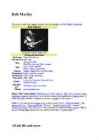
In 1975, Marley had his international breakthrough with his first hit outside Jamaica, "No Woman, No Cry" from the Natty Dread album. This was followed by his breakthrough album in the US, Rastaman Vibration (1976), which spent four weeks on the Billboard charts Top Ten. In December 1976, two days before "Smile Jamaica", a free concert organized by the Jamaican Prime Minister Michael Manley in an attempt to ease tension between two warring political groups, Marley, his wife, and manager Don Taylor were wounded in an assault by unknown gunmen inside Marley's home. Taylor and Marley's wife sustained serious injuries, but later made full recoveries. Bob Marley received only minor injuries in the chest and arm. The shooting was thought to have been politically motivated, as many felt the concert was really a support rally for Manley. Nonetheless, the concert proceeded, and an injured Marley performed as scheduled.
 annaabi.ee