 50 punkti
Autor soovib selle materjali allalaadimise eest saada 50 punkti.
50 punkti
Autor soovib selle materjali allalaadimise eest saada 50 punkti.
 ~ 8 lehte
Lehekülgede arv dokumendis
~ 8 lehte
Lehekülgede arv dokumendis
 2012-05-26
Kuupäev, millal dokument üles laeti
2012-05-26
Kuupäev, millal dokument üles laeti
 8 laadimist
Kokku alla laetud
8 laadimist
Kokku alla laetud
 0 arvamust
Teiste kasutajate poolt lisatud kommentaarid
0 arvamust
Teiste kasutajate poolt lisatud kommentaarid
 Doriiish
Õppematerjali autor
Doriiish
Õppematerjali autor
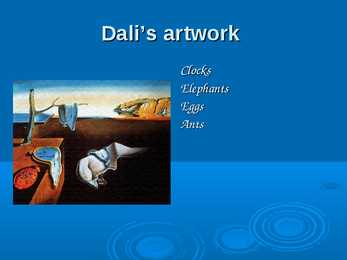
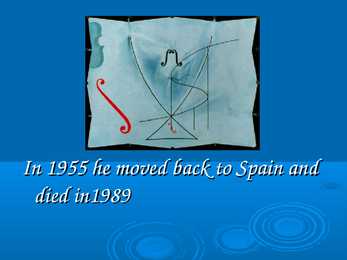
they are dancing out of line and appear out of order. It was designed by Viennese artist Friedensreich Hundertwasser and finally planned and implemented by architect Heinz M. Springmann. It contains 105 apartments, an inner courtyard, a small artificial lake and also a playground for children. The building has 12 floors. 3. The Torre Galatea Figueras (Spain) The first things you notice are the giant egg sculptures along the roofline. Then it hits you that the Salvador Dali Theater Museum in Figueras, Spain, is no ordinary building. The museum’s tower, Torre Galatea, was named for the surrealist artist’s deceased wife, and Dali himself lived there until his death in 1989. Interestingly, the museum sits next to the parish church where Dali was baptized in 1904; he is buried in an unmarked crypt in the museum’s main exhibition hall. 4. The Basket Building (Ohio, United States) This may look like a picnic basket kept in the park. But this
Divided in 5 acts, film based on editing rather than narration. Gropus shots juxtaposed with etreme close-ups, multiple directions of movements, manipulation of time for dramatic purpose. High amount of shots. 86 min long film contained 1375 shots. Psychologial manipulation of time and showing the enemies not as human beings and the victims as humans Luis Bunuel-surrealism and its aftermath Born in spain, in bourgeois family, went to jesuit school, studied agriculture in madrid and met salvador dali. Leaves paris, wants to fight for republicans, wants to fight for homecountry, other forces win. Goes to hollywood, working, loses his job, accused of communism, goes to mexico, becomes a filmmaker. Dies in mexico city as a result of liver disease, liver cancer Bunuel three periods: 1) The surrealist period. Parents money. ,,Le chien andalou" ad ,,L'age d'or" 2) The mexican period. Broke parents. Franco forces bunuel to live abroad. 3) The second french period. Creative freedom.
KUBISM Kubism on 20. sajandi kunstivool, mis hakkas kujunema Pariisis 1907. aastal Pablo Picasso ja Georges Braque'i töödes. Kubistide eelkäijaks oli Paul Cézanne. Mõiste "kubism" võttis kasutusele prantsuse kriitik Louis Vauxcelles ja see vihjab kuubist lähtuvale kujutamisele. Kriitik kirjeldas Braque'i töid 1908. aastal väljendiga bizarreries cubiques (kuubilised veidrused). Kubistide eesmärk oli vabastada teos jutustavast sisust ja kujutada asju (muusikainstrumendid, natüürmordid, maastikud jne) geomeetrilistena (kuup, silinder jne), tükeldatud pindadena või stereomeetrilistena (kujutada esemeid ühekorraga mitmest vaatevinklist). Algset kubismi, perioodi, mis algas 1909. aastal, nimetatakse analüütiliseks kubismiks. Seda perioodi iseloomustab motiivide (majad, puud ja natüürmordid) lahutamine justkui algosadeks (geomeetrilisteks kujunditeks) ning nendest uue pildi ülesehitamine. Teine, hilisem vool kubismis, kannab nime s
American Art Revision Materials Colonial Period Portraiture. The first typically American paintings were illustrated maps but painting remained scarce during C17. There were 4 reasons: settlers came from backgrounds where art was unusual, Protestant attitudes was averse to imagery and painting, the English were not yet distinguished in visual arts and religious art was non-existent. The colonial period is almost entirely limited to portraiture (deemed as `useful' by settlers). These first paintings were made by limners and artisans without formal training and were based on what was popular in England during the Tudors. The paintings are technically unskilled, strongly patterned, flat and linear. Spanish painting in America was mostly religious. In C18, painting was a luxury and necessitated wealth that had by then become available. Portraitures remained at the forefront because the rich could thusly display their status and because it was less "frivolous" than other forms of pain
American Art Revision Materials Colonial Period Portraiture. The first typically American paintings were illustrated maps but painting remained scarce during C17. There were 4 reasons: settlers came from backgrounds where art was unusual, Protestant attitudes was averse to imagery and painting, the English were not yet distinguished in visual arts and religious art was non-existent. The colonial period is almost entirely limited to portraiture (deemed as `useful' by settlers). These first paintings were made by limners and artisans without formal training and were based on what was popular in England during the Tudors. The paintings are technically unskilled, strongly patterned, flat and linear. Spanish painting in America was mostly religious. In C18, painting was a luxury and necessitated wealth that had by then become available. Portraitures remained at the forefront because the rich could thusly display their status and because it was less "frivolous" than other forms of pain
modern sculpture. The collection of Turner's paintings at the Tate includes about 300 oils and 19,000 watercolours and drawings. He was the most traditional artist of his time as well as the most original: traditional in his devotion to the Old Masters and original in his creation of new styles. It is some-times said that he prepared the way for the Impressionists. The modern collection includes the paintings of Henri Matisse and Pablo Picasso, Marc Chagall and Salvador Dali, Francis Bacon and Graham Sutherland, Peter Blake and Richard Hamilton, the chief pioneers of pop art in Great Britain. Henry Moore is a famous British 7 sculptor whose works are exhibited at the Tate too. One of the sculptor's masterpieces - the Reclining Figure' - is at fees Headquarters of UNESCO in Paris. The British Theatre Britain is now one of the world's major theatres centres. Many British actors and actresses are
(A&E Television Networks, Banksy Biography.com 2014, [https://www.biography.com/people/banksy-20883111] 20.12.17) In my opinion, Banksy is one of the brightest graffiti artists of our time, who keeps his identity in secret. I believe that graffiti is one of the most honest arts. It does not have either elitism or swindle, paintings are exhibited on the best walls of the city, and the price of entry does not scare anyone. The wall has always been the best place for the presentation of the work. People who rule our cities do not understand graffiti, because they are convinced that the only right to exist is that which benefits. That is why their opinion is worthless. Banksy work is very simple and intelligible, they always have humor (irony at least) and there is always a social overtones. And then everything depends on whether you like it or not. “People say graffiti is ugly, irresponsible and childish. But that's only if it's done properly.” —Banksy CONCLUSION
THE PRE-RAPHAELITES The PRB was formed in 1848 in London and it was an association of painters, poets, critics, sculptors. It was founded by three Royal Academy students who wanted to brake free from the academic art and return to the moral and descriptive truthfulness that they felt was gone from art. (The Royal Academy of Arts is and institution with a purpose to promote the creation, enjoyment and appreciation of the visual arts through exhibitions, education and debate.). The founders were William Hunt, John Millais, Dante Rossetti. Because of the fact that they were all students they were also very young- the oldest one, Hunt, was 21. They were soon joined by William Rossetti(critic), James Collison(painter), Frederic Stephens (critic), Thomas Woolner(sculptor). The three youthful Pre-Raphaelites deliberately challenged the established view of art, drawing up a manifesto of their intentions and publishing them in the four issues of a periodical called
 annaabi.ee








Kõik kommentaarid