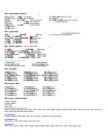
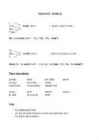
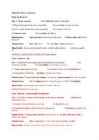
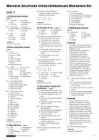
Leidsid 33 sarnast õppematerjali, mis on seotud failiga "Present Tenses - Kehtivad ajavormid". Need materjalid aitavad sul teemat sügavamalt mõista.
eitav, present, jaatav, haven, küsiv, lauses, tegija, järjekord, eitavas, tenses, ajavormid, öeldis, sihitis, kohamäärus, ajamäärus, viisimäärus, küsilause, simple, never, late, doesn, aren, vormiga, homework, perfect, studying, englishNimisõnade omastav kääne 66 OMADUSSÕNA kesk- ja ülivõrre 67 TEGUSÕNA Tegusõna BE pööramine (olevik) 69 Tegusõna BE pööramine (minevik) 70 HAVE GOT pööramine 71 Üldolevik 73 Üldminevik Jaatav lause - reeglipärased tegusõnad 74 Jaatav lause - ebareeglipärased tegusõnad 75 Eitav ja küsiv lause 77 USED TO 78 LISTEN & REPEAT REPEAT 59 Lk. Üldtulevik 78
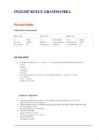
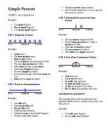
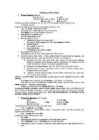
INGLISE KEELE GRAMMATIKA Present Simple Lihtoleviku moodustamine Jaatav vorm Eitav vorm Küsiv vorm I make I do not make Do I make? He/she/it speaks He/she/it does not speak Does he/she/it speak? We/you/they go We/you/they do not go Do we/you/they go? NB! ERANDID! · Verbidele, mis lõpevad ss, h, ch, tch, x või oga, lisatakse ainsuse kolmdandas pöördes es. he does he goes he misses
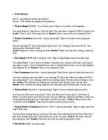
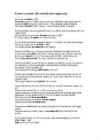
1. Active/Passive Active - the professor teaches the students. Passive - The students are taught by the professor 2. Present Simple [VERB] + s/es in third person. Tegevus on korduv või tavapärane. You speak English. I play tennis. Cats like milk. The train leaves tonight at 6 PM. I am here now. Active= Once a week, Tom cleans the car. Passive= Once a week, the car is cleaned by Tom. 3. Present Continuous [am/is/are + present participle]. Tegevus toimub/ei toimu praegusel hetkel. You are watching TV. You are learning English now. I am studying to become a doctor. I am meeting some friends after work. Active= Right now, Tom is writing the letter. Passive= Right now, the letter is being written by Tom. 4. Past Simple [VERB+ed] or irregular verbs. Tegevus algas/lõppes minevikus täpsel ajal. . You called Debbie. I saw a movie yesterday. I finished work, walked to the beach, and found a nice place to swim
on Christmas Day (but at Christmas) We use at in these expressions: at night - at Christmas - at the moment / at present - at the same time - at weekends - at the age of... IN DURING
to go by tram trammiga sõitma to go by air lennukiga sõitma learn by heart pähe õppima speak by telephone telefoniga kõnelema last week /month/year möödunud nädalal/kuul/aastal next week/month/year tuleval nädalal/kuul/aastal from day to day päevast päeva from morning till night hommikust õhtuni from place to place ühest kohast teise at present praegu by chance juhuslikult on foot jalgsi Tegusõna be 1. I MINA MY MINU YOU SINA YOUR SINU HE TEMA (M) HIS TEMA (M) SHE TEMA (N) HER TEMA (N) IT SEE ITS SELLE WE MEIE OUR MEIE
MODULE 1 Greeting. Introducing oneself and the others. The alphabet. Spelling. The tenses. How to introduce yourself and others Formal introductions How to respond and reply to an May I introduce myself? I am John introduction Smith. How do you do. Allow me to introduce John Smith to Pleased to meet you. you. Standard introduction Nice to meet you. I'd like you to meet John Smith. Hello. I want you to meet John Smith. I'm so pleased to meet you.
Windows are not made of wood. Simple Present · · New York is a small city. It is not important that this fact is untrue. [VERB] + s/es in third person USE 3 Scheduled Events in the Near Examples: Future · You speak English. · Do you speak English?
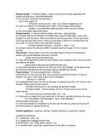
AJAD Simple Present: (olevik. Kui midagi toimub iga päev. every day.) EXAMPLES: I play tennis. She does not play tennis. The train leaves every morning at 8 am. The train does not leave at 9am. She always forgets her purse. (Ta alati unustab oma koti) He never forgets his wallet. Every twelve months, the Earth circles the sun. The sun does not circle the Earth. Past Simple: (midagi on tehtud. Tegusõna tuleb panna minevikku ehk II põhivormi. Seda aega tuleb kasutada siis, kui lause väljendab tegevust, mis minevikus tehti ja ka ära lõpetati!) EXAMPLES: I saw a movie yesterday. (Ma nägin eile filmi. Nägin filmi lõpuni.) I didn't see a movie yesterday. Last year, I traveled to Japan. (Sõitsin Jaapanini välja, mitte ei jäänud reisi peal kuhugi toppama) Last year, I didn't travel to Japan. She washed her car. (Ta pesi auto ära! Mitte ei pesnud natuke ja jooksis siis tuppa multikaid vaatama, vaid lõpetas töö ära ja siis tegi muid asju edasi) She didn't wash
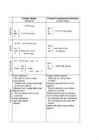
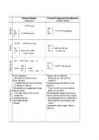
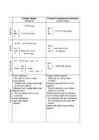
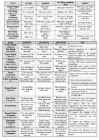
Ing Present Simple Present Progressive/Continuous (lihtolevik) (kestev olevik) I vorm (play) am JAATAV he is I vorm+ing (playing) she I vorm+s (plays) are it do not I vorm (don't play) am
Ing Present Simple Present Progressive/Continuous (lihtolevik) (kestev olevik) I vorm (play) am JAATAV he is I vorm+ing (playing) she I vorm+s (plays) are it do not I vorm (don't play) am
Ing Present Simple Present Progressive/Continuous (lihtolevik) (kestev olevik) I vorm (play) am JAATAV he is I vorm+ing (playing) she I vorm+s (plays) are it do not I vorm (don't play) am
frequency(kordumine ) adverbs(määrsõna) N: Do you go to school by car every day ? I don't often watch TV. 2)Present continuousbe + verb + ing. Actions happening now N; Look! It's snowing. I'm meeting Jane tonight. You're always losing things. 3)keep + ingto describe habitual actions which may be irritating. N: my uncle keeps making silly jokes. Present perfect: 1) Present perfect simple: have/has + past participle. N: I've been here for ten minutes .The phone has rung ten times today. Look at this cheque,'I've won first prize. They have made a new star wars film. I've just got home. How long have you been here ? Have you ever been to Paris? It's the best book I've ever read. It's the first time I have ever been abroad. 2)Present perfect continious : have/has + been + ing. N:I've been living in this flat since 2000
TENSES. ACTIVE VOICE. 1. Present Simple (üldolevik) I (he, she, it s) he works Eitav,küsiv do (I, you, we, they) he does not work does (he, she, it) does he work? Verbidele, mis lõpevad infinitiivis ss, -sh, -ch, -x või o, lisatakse ainsuse 3. pöördes es he touches, she goes Verbidel, mis lõpevad y-ga, mille ees on konsonant, muutub y->ies carry - he carries Vrdl: play he plays 1. Harjumuspärane, korduv tegevus või seisund olevikus. Tom drinks tea every day. He lives in Brussels.
6 Determiners 71 Kinds of Sentences 140 The Imperative 141 The Articles 71 The Subject and the Object 143 Demonstrative Determiners 73 Direct and Indirect Objects 144 Interrogative Determiners 74 Positive and Negative Sentences146 Possessive Determiners 75 Questions 147 7 Verbs and Tenses 79 14 Punctuation 150 The Simple Present Tense 80 Period 150 Am, Is and Are 83 Comma 151 The Present Progressive Tense 89 Exclamation Point 152 Have and Has 93 Question Mark 152 The Present Perfect Tense 96 Apostrophe 153 1 What is Grammar?
Passive (=passiiv ehk umbisikuline tegumood) This house was built in 1935. Was built on passiiv. Võrdle isikulist (active) ja umbisikulist tegumoodi (passive): Somebody built this house in 1935. (aktiiv house on lauses sihitis (=object)) This house was built in 1935. (passiiv house on lause aluseks (=subject)) Kui me kasutame isikulist tegumoodi (aktiiv), siis ütleme, mida lause aluseks olev isik (subject) teeb: My grandfather was a builder. He built this house in 1935. It's a big company. It employs two hundred people. Kui kasutame umbisikulist tegumoodi (passiiv), siis ütleme, mis juhtub lause alusega: This house is quite old. It was built in 1935. Two hundred people are employed by the company.
you are, they are. He is jane he/she/it isn't Is he/she/it German? No I'm not, you aren't, he/she/it isn't, we aren't, She is marta we aren't are we German? you aren't, they aren't. It is a school. you aren't are you German? We are students they aren't are they German? You are in class 12 They are teachers Unit 2 / present simple + - ? yes- I do, you do, he/she/it does. I work I don't work Do I work no I don't, you don't, he/she/it doesn't You work you don't work do you work? He/she it works he/she/it doesn't works does he/she/it work We work we don't work do we work
.. It Does she / he work here? Yes, she / he does. / No, she / he doesn't. Time expressions always often not often never usually normally rarely sometimes occasionally hardly ever when after before unless in case as soon as until Uses - for permanent facts - for actions and situations which are generally true - for habits and routines PRESENT CONTINUOUS bebe++ ing ing I am (I'm) You are (you're) She/He/It is (she's/he's/it's) (not) + working here. We are (we're) They are (they're) Are you working here? Yes, I am. / No, I'm not. Is he working here? Yes, he is. / No, he isn't. Time expressions now currently at the moment these days nowadays right now Uses
PRESENT SIMPLE (lihtolevik) Form: 1st form (+s) Use: 1. Things in general. Nurses look after patients in hospitals. 2. Things that happen all the time or repeatedly. She usually goes away at weekends. 3. Laws of nature (things that are true in general). The sun rises in the east. 4. Timetable events. The train leaves at 6.50 p.m. Negative form: I don't (do not) normally eat my lunch here. He doesn't (does not) like this film at all. Question form: Do you live here? How often does it rain around here? Signal words: always, every day/month, never, normally, often, seldom, sometimes, usually etc. PRESENT CONTINUOUS/PROGRESSIVE (kestev olevik) Form: am/is/are + ing Use: 1. Unfinished actions happening at or around the time of speaking. Listen! Somebody is crying. They are building a new bridge in our town. 2. Changes happening around now.
3 The wooden floor had rotted. Challenge! 4 The little boy was sobbing and Transcript Students' own answers pointing to his sister's ice cream. 5 The thief grabbed my bag and ran The photos are connected with the 1B Past and perfect tenses off. topic of school. Both photos show page 4 6 He dropped a leaf into the water students in class. In the first photo I imagine that 1 1 ate and watched it drift under the
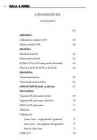
INGLISE KEEL Sisukord Sisukord 2 Ajavormid Tense vorms 3 Lihtolevik The present simple 3 Lihtminevik The past simple 3 Lihttulevik The future simple 3 Kestev olevik The present continuous 3 Kestev minevik The past continuous 4 Kestev tulevik The future conrinuous 4 Täisminevik The present perfect 4 Enneminevik The past perfect 4 Ennetulevik Future perfect 5 Üldminevik Past tense 5 Üldtulevik Future indefinite 5 Artiklid ja eessõnad 7
INGLISE KEEL Sisukord Sisukord.................................................................................................................................. 2 Ajavormid Tense vorms.......................................................................................................3 Lihtolevik The present simple..................................................................................... 3 Lihtminevik The past simple....................................................................................... 3 Lihttulevik The future simple...................................................................................... 3 Kestev olevik The present continuous......................................................................... 3
H-Helen, J - Julia 1.Receiving a money order H: - Hello, I would like to cash a money order. J: - Hello! You should present your identity card. H: - But, you know, I'd like to receive money order for my sister. How do I go about it? J: - Your identity card and letter of attorney, please. H: - Here you are. J: - Well...Unfortunately, I can't cash your money order your signature is not witnessed. H: - Ok. Than, please, I'd like to cash my money order. J: - Take this form and fill it in. May I see your passport? H: - Yes. Please. So...Should I write my full name, my passport number and the sum of
Golden Grammar rules 1. Don't use an with own. Sue needs her own room. (NOT Sue needs an own room.) I'd like a phone line of my own. (NOT ... an own phone line.) 2. Use or rather to correct yourself. She's German or rather, Austrian. (NOT She's German or better, Austrian.) I'll see you on Friday or rather, Saturday. 3. Use the simple present play(s), rain(s) etc to talk about habits and repeated actions. I play tennis every Saturday. (NOT I am playing tennis every Saturday.) It usually rains a lot in November. 4. Use will ..., not the present, for offers and promises. I'll cook you supper this evening. (NOT I cook you supper this evening.) I promise I'll phone you tomorrow. (NOT I promise I phone you tomorrow.) 5. Don't drop prepositions with passive verbs. I don't like to be shouted at. (NOT I don't like to be shouted
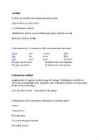
I haven't worked. Have I worked? you say that sth. has happened or have/has + past is finished in the past and it has a participle* Simple already He has worked. He hasn't worked. Has he worked? connection to the present Present Perfect *(infinitive + -ed) or so far, I have gone. I haven't gone. Have I gone? action started in the past and (3rd column of table continues up to the present of irregular verbs)
Tests Superstar 1 Luke Prodromou Test 1 Name____________________ Class_______ Use your English 1 Complete these sentences using the correct form (present simple or present continuous) of the verb in brackets. _ 1 She is in a band and she _________________________________ (record) a CD at the moment. _ 2 She is an actress and often _________________________________ (appear) on television. _ 3 At the moment she _________________________________ (have) a rest because she is tired. _ 4 Mike is a doctor and he _________________________________ (live) in Manchester. _ 5 I _________________________________ (start) work at 8.30 every morning.
Word Order Table of Contents Types of Sentences ..................................................................................2 Parts of the Sentence ..............................................................................2 Word Order in Affirmative Sentences ...................................................3 Position of Adverbs of Frequency .........................................................5 Word Order in Negative Sentences......................................................6 Word Order in General Questions.........................................................7 Word Order in Special Questions ..........................................................8 Word Order in Subject Questions ..........................................................9 Types of Sentences There are four basic types of sentences in English. AFFIRMATIVE and NEGATIVE sentences both end with a full st
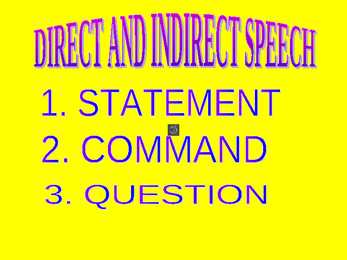
TIME & PLACE · DIRECT · INDIRECT · NOW · THEN · TOMORROW · THE FOLLOWING DAY · NEXT WEEK · THE FOLLOWING WEEK · TONIGHT · THAT NIGHT · TODAY · THAT DAY · YESTERDAY · THE DAY BEFORE · LAST NIGHT · THE NIGHT BEFORE · LAST WEEK · THE WEEK BEFORE · HERE · THERE · THIS · THAT · THESE · THOSE CHANGES OF TENSES · DIRECT · INDIRECT · SIMPLE PRESENT · SIMPLE PAST · SIMPLE PAST · PAST PERFECT · PRESENT PERFECT · PAST PERFECT · PRESENT · PAST CONTINUOUS CONTINUOUS · PAST PERFECT · PRESENT PERFECT CONT. CONT. · SIMPLE FUTURE · PAST FUTURE 1. STATEMENT HE SAID HE SAID TO ME THAT REPORTED WORDS HE TOLD ME STATEMENT EXAMPLE
Get/ Have something TENSE ACTIVE PASSIVE WHEN? done Present Simple Am/is/are + Every day, year, often, I pv + do/does Have/ get + sth+ III pv Lihtolevik III pv usually, always Past Simple Yesterday, last year,
He makes a point of heeding all she says, And I suspect that he is fond of her. Would God 'twere true!--'Twould be the height of humour Now, she has sent for him, in your behalf, To sound him on this marriage, to find out What his ideas are, and to show him plainly What troubles he may cause, if he persists In giving countenance to this design. His man says, he's at prayers, I mustn't see him, But likewise says, he'll presently be down. So off with you, and let me wait for him. DAMIS I may be present at this interview. DORINE No, no! They must be left alone. DAMIS I won't So much as speak to him. DORINE Go on! We know you And your high tantrums. Just the way to spoil things! Be off. DAMIS No, I must see--I'll keep my temper. DORINE Out on you, what a plague! He's coming. Hide! (Damis goes and hides in the closet at the back of the stage.) SCENE II TARTUFFE, DORINE TARTUFFE (speaking to his valet, off the stage, as soon as he sees Dorine is there)
ki-tu ki-zuri `a nice thing' - definiteness: a house the house Sw. ett hus huset det röda huset II. Relational categories for nouns: case English vs Estonian Grammatical categories for verbs I. Inherent categories for verbs: - tense: He walks a mile every day. He walked a mile every day Grammaticalized expression of location in time. The Wishram-Wasco dialect of Chinook: 4 inflectional past tenses ga-ciux `He did it some time ago' ni-cíux `He did it long ago.' na-ciúxw-a `He did it recently.' i-cíux `He just did it.' - aspect: He was writing a letter to Tom. He has written a letter to Tom. - mood: He goes to Tallinn tomorrow. He would go to Tallinn tomorrow if he had time. German: the subjunctive Wenn du Zucker hättest, könnten wir jetzt Tee trinken. `If you had sugar, we could drink tea now.'
Darcy, looking at the eldest Miss Bennet. "Oh! She is the most beautiful creature I ever beheld! But there is one of her sisters sitting down just behind you, who is very pretty, and I dare say very agreeable. Do let me ask my partner to introduce you." "Which do you mean?" and turning round he looked for a moment at Elizabeth, till catching her eye, he withdrew his own and coldly said: "She is tolerable, but not handsome enough to tempt me; I am in no humour at present to give consequence to young ladies who are slighted by other men. You had better return to your partner and enjoy her smiles, for you are wasting your time with me." Mr. Bingley followed his advice. Mr. Darcy walked off; and Elizabeth remained with no very cordial feelings toward him. She told the story, however, with great spirit among her friends; for she had a lively, playful disposition, which delighted in anything ridiculous.
can’t = logically improbable We don’t have all the facts, so we are not absolutely sure, but we are pretty certain: He’s very fit, though he must be at least sixty! Suzie can’t have a ten-year-old daughter! She’s only twenty-five herself! Is there no reply? They must be sleeping. They can’t be out at this time of night. A walk in this weather! You must be joking! • We use may/might and could to express possibility in the present or future. May/might + not is the negative. Couldn’t is used rarely. Take your umbrella. It might rain later. Dave and Beth aren’t at home. They could be in the pub, I suppose. We may go to Greece for our holidays. We haven’t decided yet. You know we’re going out tonight? - Well, I might not be able to make it. I might have to work late. • We use will to express what we believe to be true about the present. We are
,Ptc}inl tcnr;.form' ul rhe pos:iv vui(() :.i.',.. Simple present; am/is/are + 3. pdhivorrn A hotrsc is buill eyen, rnonth (ehitatakse). Present progressive: am/is/are + being + 3. p6hivorm. A hotrse is being built (chitatakse pracgu). o Present perJect; have/has + been i 3. pdhivorrn ;1 house has been buih (on ehitalud). ij,r'+i!"ir i;,iirl
 annaabi.ee