Leidsid 33 sarnast õppematerjali, mis on seotud failiga "Premium B2 - Unit 6 vocabulary". Need materjalid aitavad sul teemat sügavamalt mõista.
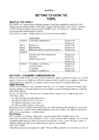
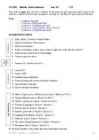
something, work, verb, often, basic, pressure, military, official, parent, material, part, unit, vocabulary, noun, adjective, adverb, working, child, learning, walk, strong, desire, tired, rarely, queue, stand, feel, responsible, charge, either, credit, blame, famous, known, curious, proud, pride, complain, manage, prepare, ready, apply, applicationIn addition, foreign born professionals frequently need a TOEFL score for certification to practice their profession in the United States or Canada. The TOEFL is a timed test that consists of the three sections listed here. THE TOEFL Section 1 Listening Comprehension 50 questions 35 minutes Part A Statements 20 questions Part B Short Dialogs 15 questions Part C Minitalks and Extended Conversations 15 questions Section 2 Structure and Written Expression 40 questions Structure 25 minutes
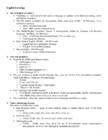
) Only 4 of the top-ranked one hundred words in the Brown Corpus are of foreign origin. o 64 state o 81 use v (Old French) o 93 people (Anglo-Norman, > Old French) o 100 just (> Old French) Core vocabulary and syllable structure: o 93 of the first one hundred words in the Brown Corpus are monosyllabic, and the remaining have two syllables (only, about, other, also, many even people) Core vocabulary – often short (monosyllabic) words of Germanic and Old Norse origin. 3. Native and foreign element. The native vocabulary has 3 strata Indo-European words - names of close relatives, names of natural objects, parts of the body, numerals. o Mother, father, night, foot, heart, bear (bore, born), see Germanic words o Friend, bridge, ship, life, heaven, glass, death, make, meet Old-English words –
After I've said what I think about each topic, readers may have a fair comprehension of my philosophy. First comes sensitivity. If a person be insensitive, be it from numbing cold, exhaustion, drugs, genetic makeup, or upbringing, then the process of education is bogged down, and results come only after great efforts. Sensitivity in my integrated meaning is broad, covering literally the senses, so that deaf and blind people are less sensitive, as well as people whose senses work perfectly, but whose receptivity or thought processes are blunted for whatever reason. A person can be insensitive in one way, such as blind, and extraordinarily sensitive in another way, such as in hearing. It is also possible to be so ultra-sensitive that the result is disadvantageous. I expect no argument in asserting that a normal sensitivity is a healthy, indispensable ingredient for optimal education. Sensitivity can be heightened or blunted by education
have often prevented the recognition of children as active citizens, entitled to respect and participation. With a particular interest in Wales, the following research project analyses the development of children`s active participation both in the Welsh Government and the County and Council of Swansea. Both the local and national authority has regarded the UNCRC on the basis of all its activity. One of the primary goals in both authorities is to work towards the adoption of the UNCRC in every school in Wales and Swansea as they recognise the positive impact rights based education may have upon young people`s emotional, social and academic development. The central theme of this dissertation rests on the commitment of the Cadle Primary School towards children`s right to participation as underpinned in the Article 12 of the UNCRC. The Cadle Primary School is one of the first schools in Swansea to adopt the UNCRC through the
Book 1 BASIC ENGLISH BASIC ENGLISH GRAMMAR GRAMMAR BASIC ENGLISH GRAMMAR Book 1 Book 1 Younger students at beginning to intermediate levels will greatly benefit from this step-by-step approach to English grammar basics. This is the ideal supplement to your language arts program whether your students are native
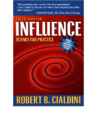
More praise for Influence: Science and Practice! "We've known for years that people buy based on emotions and justify their buying decision based on logic. Dr. Cialdini was able, in a lucid and cogent manner, to tell us why this happens." --MARK BLACKBURN, Sr. Vice President, Director of Insurance Operations, State Auto Insurance Companies "Dr. Cialdini's ability to relate his material directly to the specifics of what we do with our customers and how we do it, enabled us to make significant changes. His work has enabled us to gain significant competitive differentiation and advantage" -LAURENCE HOF, Vice President, Relationship Consulting, Advanta Corporation "This will help executives make better decisions and use their influence wisely ... Robert Cialdini has had a greater impact on my thinking on this topic than any other scientist."
adjective + preposition omadussõna + eessõna proud of, good at, married to adverb particle Some verbs are followed by adverb particles. Examples are: put on, take off, give away, bring up, call in. Sometimes the particle is detached from the verb and put after the object. •He took his boots off. •They called the doctor in. apposition a grammatical construction in which two usually adjacent nouns having the same referent stand in the same syntactical relation to the rest of a sentence (as the poet and Burns in “a biography of the poet Burns”) back-reference In grammatical analysis, the term reference is often used to state a relationship of identity which exists between grammatical units, e.g
LEXICOLOGY 1. Size of English vocabulary 1) Old English – 50,000 to 60,000 words Vocabulary of Shakespeare OE – homogeneous; 1/3 of the vocabulary has survived • 884,647 words of running text About 450 Latin loans (Amosova) • 29,000 different words (incl. work, working, Viking invasions added 2,000 worked, which are counted here as separate 2) Middle English – 100,000 – 125,000 words) English becomes heterogeneous (Norman French, • 21,000 words English, Latin), hybrid of Germanic and Romance languages Norman French influence – about 10,000 words, 75 % are still in use (Baugh) Latin influence continues
7. Universal respect for, and observance of, human rights and fundamental freedoms for all (environmental norms Lege ferenda norm which is in the process of establishment) To use war as a legal object to resolve conflict, there has to be either self-defence or the agreement of the security council of UN (if there's a threat to peace etc). State (def) "Inter-American convention on the rights and Duties of States!" (Montevideo 26.12.1933) A permanent population biggest part are citizens of the state, + citizens of other states, who have a residence permit, stateless person (apatrid), people with multiple citizenships (bipatrid). How to get citizenship by birth: lex sanguinis blood principle, by birth, given to the child according to the citizenship of the parents (if parents are citizens of different countries different
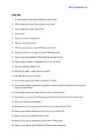
(an animal act? clowns? acrobats? jugglers?) 28. Are you good at juggling? What makes you think so? 29. Do you like aerobics? Are you good at it? Do you know anybody who is? 30. Would you like to perform in a circus? 31. Do you know anybody who might become a good clown? What must a clown be good at? 32. Have you ever played sport regularly? What training classes do you go to and how often? What sport would you like to play and why? 33. Have you ever taken part in sport competitions? When, where and what were the results? 34. Are sports days held at your school? 35. What sports events do you watch on TV? 36. Do you read the sports page in a paper? Do you watch/listen to sports news? Could you tell us the latest sports news? 37. Who is the best athlete in your class? 38. Who is your favourite athlete? What do you know about him? 39. What sports events are popular in Estonia? How many Estonian Olympic gold medalists can you name? 40
British Cuisine Some people criticize English food. They say it's unimaginable, boring, tasteless, it's chips with everything and totally overcooked vegetables. The basic ingredients, when fresh, are so full of flavour that British haven't had to invent sauces to disguise their natural taste. What can compare with fresh pees or new potatoes just boiled and served with butter? Why drown spring lamb in wine or cream and spices, when with just one or two herbs it is absolutely delicious? If you ask foreigners to name some typically English dishes, they will probably say "Fish and chips" then stop
Use the ese forms to mean that when what you are talking about is near the person you are addressing. Use the aquel forms when what you are talking about is far from both you and the person you are addressing. Esto and eso are the neuter forms of this and that. They can be used in general and abstract ways. Demonstrative adjectives (listed above) are used before a noun; if you want to use the demonstrative pronouns, which are used before a verb, add an accent on all of the first e's: éste, ésta, éstos, éstas, ése, ésa, ésos, ésas, aquél, aquélla, aquéllos, aquéllas. 5. Subject Pronouns nosotros / noh-soh-trohs / yo yoh I we nosotras noh-soh-trahs
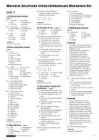
I reckon 8 Did she meet label since 2004 they are about 17 years old. It's a 9 was travelling 2 1 She had completed a physical mixed class of boys and girls. It's 10 was working training regime. difficult to tell what kind of lesson 11 started 2 She hadn't studied basic Nepalese. they're in. Their teacher is handing 12 had lived 3 She had obtained long-term a paper to one student. It could be 13 happened weather forecasts. that they're in a maths lesson. These 14 didn't want 4 She had planned a route to the students aren't wearing uniform. It
Study independently 17. Varieties of language (I. Galperin "Stylistics") 18. Emotive prose (I. Galperin "Stylistics") 19. Scientific prose style (I. Galperin "Stylistics") 20. Language of the drama (I. Galperin "Stylistics") 21. Publicistic style (I. Galperin "Stylistics") 22. The style of official documents (I. Galperin "Stylistics") 23. Newspaper style (I. Galperin "Stylistics") *- very bulky questions they will be split into several parts at the exam. FGI 1081 Stylistics (I. Ladusseva) 1 STYLISTIC TERMS: Understatement (nonce-words)
Style The term style is a polysemantic one. The latin word ,,stilus" meant a writing instrument used by the ancients for writing on waxed tablets. Already, in classical latin the meaning of style was extended to denote the manner of expressing one's ideas in written or oral form. One of the abts/the best was given by Jonathan Swift: ,,Proper words in proper places." In present- day english, the world style is used in about half a dozen basic meanings. 1. the characteristic manner in which a writer expresses his ideas. Some speak about the style of Hemingway, Dickens etc. 2. the manner of expressing ideas, characteristic of a literary movement or period. Style of symbolism, romanticism 3. the use of language to pick a literary genre-comedy, novel, drama, O.D (poetic form) etc. 4. the selective use of language that depends on spheres of human activity fiction,
Established church The Church of England is the established church, which means that: 1.)the Monarch is the Supreme Governor of the church, 2.)the Church performs a number of official functions, 3.)Church and State are linked. To disestablish Disestablishmentarianism refers to campaigns to sever links between church and state, particularly in relation to the Church of England as an established church. It was initially a movement in the United Kingdom in the 18th century. The established churches in Wales and Ireland could not count on even nominal adherence by a majority of the population of those countries
results, you have the right road map in your hands.You have before you the DNA of your future. All you need to create a wonderful fu- ture for yourself is to read this book, decide how you are going to apply it to your own life, write out a plan, and then go forth with en- thusiasm and make it happen. I have a confession to make. I am one of Brian’s raving fans. I have studied him, his brilliant work, and the extraordinary results he has achieved. I am also one of his close colleagues and friends. We have worked together on many platforms, and met and talked with each other on numerous occasions. Brian is one of the finest thinkers and writers on inner develop- ment and personal success in the world. I know; I have sold over 82 million books aimed at helping people get the most out of themselves.
Lõhikesi vorme ei kasutata! (don't) 150 sõna Teema "should mery-killing be punished?" HOMEWORK Terms to explain: Nation - a country, especially when thought of as a large group of people living in one area with their own government, language, traditions, etc: Stranger someone whom you do not know Citizen - a person who is a member of a particular country and who has rights and obligations because of being born there or because of being given them Penalty - a punishment for doing something that is against a law Government - the group of people who officially control a country System of courts - a set of connected positions which operate together to ensure ... ? To commit a crime to do sth that is forbidden by law Corruption - illegal, immoral or dishonest behaviour, especially by people in positions of power Fine (trahv) - an amount of money that has to be paid as a punishment for not obeying a rule or law
words; syntax. Language: a systematic, conventional use of sounds, signs or written symbols in a human society for communication and self-expression. - human language at all levels is rule- or principle-governed. Linguistics: the scientific study of human natural language Synchronic approach to language: Diachronic approach to language: Linguistic competence: Linguistic performance: What is grammar?: "The sounds and sound patterns, the basic units of meaning, such as words, and the rules to combine them to form new sentences constitute the grammar of a language" Prescriptive grammar vs. Descriptive garmmar: Descriptive grammar: the systematic study and description of a language. Descriptive grammar refers to the structure of a language as it is actually used by speakers and writers. Prescriptive grammar: a set of rules and examples dealing with the syntax and word
Maturita Solutions Advanced Workbook Key stand bananas and coffee! It's a bit 3 1 to 8 of Unit 1 uncanny really. Is it something she's 2 about 9 century passed on to me genetically, or is it 3 like 10 assumed / 1A Memories page 3 learned behaviour? Who knows? 4 of thought / 1 See exercise 2 2 5
Stylistics is a part of style; it studies principles of selecting and using different linguistic means (grammatical and phonetic) that serve to render shades of meaning. The Stylistics of language studies stylistic devices and expressive shades of linguistic units (words, construction of phrases). The Stylistics of speech studies individual texts viewing the way the message or content is expressed. Literary Stylistics concentrates on artistic expressiveness that characterizes a literary work, a writer, or a whole time period. Linguistic Stylistics studies linguistic facts from the point of view of their ability to convey extra shades of meaning (connotations we call them). Stylistics has no fixed single unit of study. Stylistics studies everything that makes the utterance of the text expressive. STYLISTIC STUDIES Stylistics is regarded as a relatively new branch of philology, yet its roots go back as far as ancient Greece and Rome.
What these forms of travel have in common that distinguishes them from many other lifestyle choices is sustained physical mobility. Whilst social scientists dispute just how ‘new’ mobilities are to our lives (Creswell, 2010; Sheller & Urry, 2006), less disputable is that globalisation, with mobility as a crucial characteristic, is leading to different ways of understanding identities and relating to place. As such, the current paper not only contributes the first empirical material to advance past speculative evidence that backpacking can extend to a way life (Noy & Cohen, 2005; Welk, 2004; Westerhausen, 2002), but it also contextualises this form of lifestyle travel within a wider discussion in the social sciences of how physical mobility can affect and challenge the ways in which we experience ourselves, others and places over time. Based on ethnographic interviews with lifestyle travellers in India and Thailand in 2007, I use theory on lifestyle
playwrights, fiction and non-fiction writers, scholars, and fans of pop culture all over the world. Discover a set of useful myth-inspired storytelling paradigms like "The Hero's Journey," and step-by-step guidelines to plot and • character development. Based on the work of Joseph Campbell, The Writers Journey is a must for all writers interested in further developing their craft. This updated and revised Third Edition provides new insights and observations from Vogler's ongoing work on mythology's influence on stories, movies, and man himself. In revealing new material, he explores key principles like polarity and catharsis, plus: • A revised chapter which looks back at the Star Wars phenomenon and analyzes
Dependent Territories citizens – British Overseas citizens = persons connected with former British colonies (Malaysia and Kenya) – British Nationals (Overseas) = status created by the Hong Kong Act 1985 – British Protected Person (BPP). 15. Right of abode- an individual's freedom from immigration control in a particular country. A person who has the right of abode in a country does not need permission from the government to enter the country and can live and work there without restriction. Generally, in order to have the right of abode in a certain country, a person must be a citizen of that country. Those with permanent residency of the country generally have a de facto right of residence but it can be revoked in certain circumstances, for example for being convicted of crimes. 16. Print media- (newspapers and magazines). Print media is one of the oldest and basic forms of mass communication
suspension (kõrvaldamine) - form of punisment that people recieve for violating rules and regulations Civil Action (tsiviilhagi) - lawsuit between two private parties prosecution (süüdistus) - the institution and carrying on of legal proceeding against a person injury (vigastus) - an act or event that causes someone/something no longer to be fully healthy claim (nõudeõigus) - to apply for compensation or to inherit something prison (vangla) - residence for incaretaking criminals majority (enamus) - greater amount of the group public opinion (avalik arvamus) - collective opinion of many people on same issue, problem etc. Seperation of Power (võimude lahusus) - division of responsibilites into distinct branches to limit any branch from excersising the core functions of another (legislative, executive, judicial)
The stylistics of language studies different styles, including registers, stylistic devices and shades of meaning. The stylistics of speech studies individual text, viewing the way the author's message is expressed. Literary stylistics--analyzes means of artistic expressiveness, characteristics of a literary work, a writer, a literary trend or a whole epoch. It is part of literary criticism and poetics. Poetics--studies the structure of a literary work and aesthetic means employed in it. Linguistic stylistics--views linguistic facts from the point of view of their ability to convey additional shades of meaning. Any act of speech passes on 2 types of information: · The content as such · Additional inf. which finds expression in all kinds of extra shades of meaning that are attached to the main content The form of speech may vary depending on the speaker, the listener and the
the ball." "The man poured the sand into into the timer. Viljandi 2009 Viljandi County Gymnasium 3. Prepositions of time Picture It Clip Art Preposition Example at "I got to work at 8.00 this (a time) morning." on "I'll see you on Tuesday." (a day) on "I have an appointment on (a date) the 31st." in "My birthday is in June" (a month)
Hello. I want you to meet John Smith. I'm so pleased to meet you. This is Jane Smith. I'm Jane Smith. My name's John Smith. Informal introduction Hi. John. Jane. Hello. Titles: Mr Mrs Miss Ms Ms is a modern form of address for women. It replaces the traditional forms of Mrs and Miss. Greetings Good morning/afternoon/evening! 'How are you?' Very often people expect you to say something positive. Here's a breakdown of how you can express how you really are without complaining too much. · Fine, thanks. / On top of the world, thanks. · OK, thanks · Not so bad, thanks. / Can't complain, thanks. · So so, thanks. / So and so, thanks. · Not so good, actually 1 The English alphabet
By DAVID KAHN (abridged by the author) A SIGNET BOOK from NEW AMERICAN LIBRARV TIMES MIRROR Copyright © 1967, 1973 by David Kahn All rights reserved. No part of this book may be reproduced or transmitted in any form or by any means, electronic or mechanical, including photocopying, recording or by any information storage and retrieval system, without permission in writing from the publisher. For information address The Macmillan Company, 866 Third Avenue, New York, New York 10022. Library of Congress Catalog Card Number: 63-16109 Crown copyright is acknowledged for the following illustrations from Great Britain's Public Record Office: S.P. 53/18, no
grave. Through buffoonery, utter mismanagement and downright stealing of the wealth of the masses, these leaders have so impoverished Africa that we are now nothing but a beggar continent. We beg for everything; we are more dependent on our colonial masters than when we received our independence from them. Africa owes the West more money than we and our generations to come can pay. I arrived in America in December of 1967as an official of what we believed was going to be a dynamic African nation – the young Republic of Biafra. But Biafra was defeated and Nigeria remained one, as a giant of Africa. In the last 32 years, I have watched with horror and outright helplessness as the downward slide of the African race continues to escalate. But rather than address the problems, we resort to blaming the Caucasians, Asians and others for our misfortune. We are not men enough to accept responsibility for our actions
Подготовлено на факультете лингвистики. The book contains an overview of the most important events in British history – from the first documented invasions of the island to the formation and fall of the British colonial empire. A series of exercises will help to remember the subject matter, practise the vocabulary and contribute to skills work. The book is intended for the Humanities students. Вавилов Н.А., 2008 3 4 Contents 5 ПРЕДИСЛОВИЕ Настоящее пособие содержит краткий очерк истории Великобритании от первых документально засвидетельствованных событий, имевших место на
libraries, museums, in travel agencies, as well as Russian and international companies. Curriculum within in philological faculty includes courses of Russian and European languages and literature, courses of Linguistics and Theory of Literature for students to familiarize themselves with various schools and trends of Russian and foreign philology. The core curriculum also includes a number of Liberal Arts courses (Philosophy, History, Psychology, Pedagogy), as well as courses of basic mathematics and computer studies, and optional courses of science and the Humanities. The Department of Theory of Literature and the Department of General and Comparative Linguistics teach a vast number of core courses to junior students, both offering major courses to senior students in all the divisions of the faculty. The Department of Theory of Literature teaches literature as a type of art, focusing on the
· impersonal style Greeting: Dear Julie, · complex sentence structure - frequent · personal, short, zappy style use of Passive Voice - single word · use of slang or colloquial English use of verbs - non-colloquial English -- formal idioms/phrasal verbs language · pronouns are often omitted · each paragraph develops one specific · chatty, wide use of descriptive adjectives topic · use of short forms · only facts, infrequent use of descriptive Best wishes / Love / Yours / Regards. adjectives · no use of short forms Name: Steve Name: Yours faithfully/Yours sincerely, Steven Hill TASK 2 Put an - for formal and an I for informal language. Give reasons .
 annaabi.ee