Leidsid 33 sarnast õppematerjali, mis on seotud failiga "Poison dart frog". Need materjalid aitavad sul teemat sügavamalt mõista.
frog, dart, poison, frogs, venom, kill, size, gold, skin, enough, lives, south, tropical, forests, insects, beetles, appearance, vary, weigh, paper, clip, yellow, copper, green, blue, black, colourful, these, species, lethal, keep, anyone, them, golden, adult, humans, mammal, other, spiders, amazon, ground, snake, seem, immune, animals, medical, alreadythe other layers to grow. The 2nd layer: saplings and shorter kinds of trees The 3rd layer, or understorey: shrubs. The 4th layer: forest herbs, such as wildflowers and berries. In spring, before the leaves develop on the deciduous trees, these herbs bloom and grow quickly while they are getting a lot of sunlight. The 5th layer: mosses and lichens that grow on tree trunks. Lianas such as wild grape, poison ivy, and Virginia creeper climb the trees to flower and fruit high in the forest canopy. Plant adaptations: The plants have adapted so that they can survive in this biome. The leaves of deciduous trees are broad and quite light. This gives the leaves a bigger surface to capture sunlight to help produce food for the plant. This is called photosynthesis. When the weather gets cold, broad leaves are not good for the plant, as they lose too much moisture and get damaged
Acid deposition may influence forest vegetation and soils. It removes soil nutrients such as calcium and magnesium from soils in high elevation forests. Acid rain may also help weaken natural defenses of some trees, making them more vulnerable to some diseases and pests. Acid rain wears away the waxy protective coating of leaves, damaging them and preventing them from being able to photosynthesize properly. Many animals and insects are sensitive to acidification. Frogs are relatively tolerant of low pH, but the insects upon which they feed are not. Lichens, mosses and fungi are also particularly sensitive to acid deposition. Acid rain may lead to increases in nitrogen in forests. Nitrogen is important plant nutrient, but it some situations it leads to nitrogen saturation. Nitrates can remove additional calcium and magnesium from the soils. Social effects Humans can become seriously ill, even die from the effects of acid rain
of 11 ships carried about 1500 people half of them convicts. The fleet arrived at Port Jackson, the cite of modern Sydney, on 26 th January, 1788, and on this day every year Australia day is celebrated. In all, about 160 000 en and women were brouth to Australia as convicts. The transportation was ended in 1868. by this time many settlements were established. In 1901 all the separate parts of Australia were united into one country. In 1851 gold was discovered in eastern Australia. This brought along the great gold rush. Thousands of people went to the new land to find fortune. Forty years later the gold was found in the west. The miners of the east had a very hard time, the water was scarce and the roads were bad. But then the railway was built. Many of people who came to Australia to find gold stayed on to do other kinds of work. The found that Australia has other riches too, such as
Rain forests are being quickly destroyed as well, and their survival is questionable. E.O. Wilson, a biologist at Harvard, called the depletion of rain forest areas "the greatest extinction since the end of the age of dinosaurs." Unlike some environmental issues, rain forest depletion has fortunately received significant public and media attention. Despite the opposition to the cutting down of rain forests, the problem continues. Every year, Brazil chops down an area of forest the size of the state of Nebraska. In addition to the Amazon's rain forests, many other forests are being cut down as well. In Indonesia, Zaire, Papua-New Guinea, Malaysia, Burma, the Philippines, Peru, Colombia, Bolivia, and Venezuela, rain forests that were once great have been lost. According to some estimates, 50 million acres of rain forest are cut down every year. The United Nations says the figure is closer to 17 million acres. The World Wildlife Fund says that every
vast inland sea which once extended south from the Gulf of Carpentaria. Rivers Australia has only few rivers. Many of them are full of water only after it rains. There are many temporary rivers called creeks. The biggest rivers are in the east. All the rivers in Australia are short. Murray River is Australia's principal river. The Murray River and its tributaries run approximately 3,370km in length and form most of the border between New South Wales and Victoria. Climate Because of its size, Australia has many climates. The Tropic Capricorn cuts across the northern part of Australia so about 40per cent of the country lies in tropics. In the south, the island state of Tasmania lies in the cool roaring forties. In the north the climate is tropical. Monsoon winds bring moist air from the northwest during summer. This time of high rainfall, between December and March is known as "the wet". In the southern the climate ranges from warm temperate to cool temperate. Winter
They include more than 500 species of eucalyptus, or gum trees. Only the big river red gum is seen nearly everywhere. These can be found beside rivers and dry riverbeds. Some gum trees are valuable timber species and have been cut down for many years. Gum tree leaves are full of oils, which evaporate easily. Another big family of native plants is the acacias. They are also known as wattles. There are about 900 wattle species. The golden wattle is Australia’s native flower. Its gold flowers and green leaves inspired the colours worn by many Australian sporting teams. In Australia bushfires are very often to happen. Because the trees and shrubs do not lose their leaves in winter, but grow throughout the year. But when the dry leaves and branches fall down, then there is a lot of dry material and that helps bushfires to burn. 5 Animals Scientists estimate that the continent is home to more than one
types of lowland rainforest, 13 types of montane rainforest, five varieties of palm and swamp forest and three different mangrove forests. Two-thirds of the world's species of orchids come from New Guinea. /1/ Birds include 38 species of the bird of paradise, and the megapode and cassowary. Marsupials and mammals include cuscus, tree kangaroos, wallabies, bandicoots, spiny anteaters and, in the coastal waters, the dugong. There are between 170 and 200 species of frog and 450 species of butterfly. /3/ 4 The forests of New Guinea Richer and more diverse in species than their montane counterparts, the lowland forests of southern New Guinea are the home of more than 1,200 species of trees. Lowland rainforests are demanding ecosystems. They need at least 2,500 mm of rainfall per year, and they only show the greatest species diversity on well-drained sites. /2/ Soil
people) and the yellow in the middle (representing the sun) is a source of pride for Indigenous Australians. The present coat of arms was granted by King George V in 1912. It consists of a shield containing the badges of six Australian states, enclosed by an ermine border. The shield is a symbol for the federation of the states, which took place in 1901. The crest, which is above the shield, is a seven-pointed gold star on a blue and gold wreath. The seven points of the star represent exactly the same thing that they do on the flag. The supporters of the shield are native Australian animals: the red kangaroo and the emu. Usually the coat of arms is depicted on the background of sprays of golden wattle with a scroll beneath it containing the word `Australia'. Australia's national anthem is `Advance Australia Fair', which replaced `God Save the Queen' in 1984
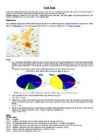
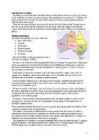
These grasslands are called the savannas (2.). Farther west the trees disappear and the bushlands (3.) begin. The real desert (4.) occupies the centre of the Western Plateau. In the very southwest there are thin forests of evergreen trees (5.). Most of Australian trees are kinds of eucalyptus trees (or gum trees to Australians) and acacia ( wattle to Australians). Eucalyptus trees are found everywhere in Australia. There are many kinds of them and they greatly differ in size. One kind, the great mountain ash, can grow to 120 metres and it grows in the wet forests in the eastern part of the continent.These strong trees do not die when there are forest fires. Some other kinds are small bushes in the semi-deserts.Eucalyptuses give the local people timber and eucalyptus oil. Of 600 kinds of acacias the golden wattle, the national flower of Australia, is the best known. Australia has many other kinds of tree, and thousands of kinds of wild flowers too. Of
rafting and fishing. It is because of the different biomes that appear in that country. One can do everything one wants to do in different parts of the land. The animal life is also diverse in Canada. There are many interesting animals. Badger is one of them. It belongs to the weasel family. It is one of the biggest in that carnivore family. Good paintbrushes are made from its fur. They eat snakes, squirrels and insects. Snake poison doesn't harm these mammals unless the snake strikes its nose. Moose live also in Canada. They live in marshy areas all around the country. They are reddish brown and the males are bigger than the females. Moose are herbivores. The male moose have big antlers, female ones don't have them. Prairie dogs are very funny-looking animals. They are rodents who live in tunnels under the ground. They are very good diggers. Prairie dogs are 30 centimetres long. They eat insects and grass. Land
Outback. Their young are called joeys. All kangaroos are herbivores and only eat plants. The biggest enemies of kangaroos are humans. III slaid The Koala is one of Australia's best known animals. It is an icon represented when promoting Australia to the tourist industry. Koalas are mainly found in the south east Australia. Koalas are often referred to as a Koala bear. However they are not a bear. The name Koala comes from an Aboriginal word. It means "no drink", as Koalas get enough fluids through the eucalyptis leaves they feed on. They do not move around much and are only active for about 2 hours of the day. IV slaid The thorny devil lizards, also know as dragon lizards, are a popular example of the Australian lizards that live in the Outback. Despite its dangerous appearance and its name it is one of the least aggressive reptiles. Thorny lizards are heliotherm, meaning they need sunlight to warm themselves up, and their body temperature and agility depends on
land they owned. Finding food was not easy at that time. In some areas, both men and women had to spend over half 2 of each day on hunting or gathering food. In some areas, mostly inland, there was always a shortage of water and it was even deadly for some people. However, Aborigines were tough and got the water from certain trees and roots. They even squeezed some water out of frogs. In the desert areas, Aborigines traveled a lot because there was not much food, but in coastal areas, people were relatively static because there was enough food for everybody. Nevertheless, those Aborigines, who had to be mobile, had to have mobile belongings, like the coolamon, which was a curved wooden dish used to dig, to carry water or a baby, to toss seeds or collect the plant food. However, the Aborigines were very clever in making things out of noting, like fishing lines for example
[28] The opening theme song has been remixed three times during the course of the series (as of season ten), and certain lines have been altered. Starting from the episode "4th Grade", a hip hop version of the theme song remixed by Paul Robb was used. From season six onwards, the theme song changed to an even faster version with a more country music influence. Halfway through season 10 the title music was once again remixed to sample the song "Whamola", performed by The Les Claypool Frog Brigade, from the album Purple Onion Additional musical contributions to the show formerly came from Isaac Hayes, who voiced Chef's singing of usually sexual songs to explain certain adult themes to the boys Popular songs such as "Kyle's Mom is a Big Fat Bitch" originated on the show, but the creators' musical abilities were not frequently used until the release of South Park: Bigger, Longer & Uncut. The film's soundtrack (co-written and produced by Grammy Award-winning
They are now called Amber and Light Amber. The Amber effect is due to the extension gene (also called red factor) which controls the production of red and black pigment. The dominant version of the gene produces normal black pigment in the coat while the recessive version produces red pigment. The name comes from the effect of black or brown pigment not being extended throughout the whole coat, but being restricted to the skin of the extremities and to the eyes (for example in bay horses). This Norwegian Forest Cat was bred by Yve Hamilton Bruce from a silver mackerel tabby female (imported from Denmark) and a classic red tabby and white male. The result was 1 silver tabbies and 2 silver tabbies with white. At just over 3 months old, this silver and white tabby male developed a large patch of bright red hair on his back which continued to spread. Eventually the whole fur will become amber
NEW ZEALAND Geography: New Zealand is situated midway between the Equator and the South pole in the southern Pacific Ocean. It consists of two large islands, North Island and South Island, plus several smaller ones of which Stewart Island is the largest. North and South Islands are separated by the 32km wide Cook Strait. The total land area is 270,535 sq Km, about the size of Italy, the United Kingdom or the US state of Colorado. North Island is volcanically active with three active volcanoes. South Island has the high snow covered mountain peaks and glaciers of the Southern Alps, a range running almost 500Km along the Island. The longest river is the Waikato on North Island (425 Km), the largest inland stretch of water is Lake Taupo also on North Island (607 sq Km) and the highest point is Mount Cook on South Island (3754 m). Over 75% of New Zealand is above 200m
Eating and food · It has a diet which is 99% bamboo. · Giant Panda must have at least two different species of bamboo available in its range to avoid starvation. · The Giant Panda may eat other foods such as honey, eggs, yams, shrub leaves, oranges, bananas and even meat and fish when available. · The average Giant Panda eats as much as 9 to 14 kg of bamboo shoots a day. · Pandas eat for up to 14 hours a day. Size · At birth, the Giant Panda is only about the size of a stick of butter (150 grams) which is about 1/900 of the mother's weight. · Adults measure around 1.5 m long and around 75 cm tall, at the shoulder. Males are 10-20% larger than females. Males can weigh up to 115 kg. · The Giant Panda has a body shape typical of bears. The Giant Panda has large molar teeth and strong jaw muscles for crushing tough bamboo. · The Giant Panda can usually live to be 20-30 years old in captivity
endangered list. Britain has many small mammals and the large ones tend to be gentle. The only surviving large mammals are red deer and roe deer. Semi wild ponies also inhabit the Shetland Islands. Once wild boars and wolves roamed Britain but they were hunted to extinction. Small mammals like badger, foxes, otters, red squirrels and wildcats inhabit Britain. Wildcats are found only in parts of Scotland. Britain has five species of frogs and toads and three species of snakes. There are no snakes in Northern Ireland. Bird watching is a popular national pastime. Britain is home to a large variety of birds. About 200 species are regularly seen. The most common ones are those which remain all 7 year round. Other well known birds are crows, robins, wrens, woodpeckers. One of the
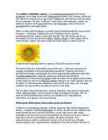
many directions when mature. However, the leaves typically exhibit some heliotropism. Cultivation and uses A sunflower farm near Mysore, India. Sunflower heads solds as snacks in China. Sunflowers are native(pärit) to the Americas. The earliest known examples of a fully domesticated sunflower were found at the Olmec site of San Andrés dating some time before 2500 B.C.[1] The Incas used the sunflower as an image of their sun god. Gold images of the flower, as well as seeds, were taken back to Europe early in the 16th century. The Giant sunflower (Hlianthus giganteus) is native to Connecticut. They can grow to be between 3 and 12 feet tall. Their flower heads can be between 2 to 3 inches wide. They are most commonly found in valleys with wet meadows or swamps. The Giant sunflower grows between July and October. To grow well, sunflowers need full sun. They grow best in fertile, moist, well-drained soil with a lot of mulch
Those people are called passive smokers. Children who live in a home where there's a smoker or come in contact with cigarette smoke very often are more likely than average to become smokers themselves when older. They are at increased risk of developing cancer as adults. And they also do worse at reading and reasoning skills compared with children in smoke-free homes, even at low levels of smoke exposure. Smoking also has short term consequences like your breath, clothes, hair, skin, and home smell of tobacco. You do not notice the smell if you smoke, but to non-smokers the smell is obvious and unpleasant. Your sense of taste and smell are dulled. Enjoyment of food may be reduced. Smoking is a serious problem, about 100,000 people in the UK die each year due to smoking. It is very hard to quit smoking but luckily there are things like nicotine patches and gums to help you during the process. But those things won't help you if you lack
Affixes are native and borrowed. Native ones are those that existed in OE period (ish, dom, ful, teen). They used to be indipendent words. Foreign affixixes are viewed according to the lg they come from (nt, Latin- able; deca-dent, expect-ancy) Hybrids are for example read plus able. Some words have elements that belong to different languages, they are hybrids. Diminutive suffixes express fondness or a small size (nt, daddy, booklet, pussykin). Derigatory express neg attitude (nt, gangster) . Negative prefixes are un, non, mis dis . 9. composition ehk compound. The pattern of composition is a combination of 2 or more stems. Compounds are spelt either as one word or with an hyphen. Compounds are completely motivated (nt, dining-room), partly motivated (nt, flower-bed), absent (nt, fiddle, viiul). Stress on the first part (nt, doorway); primary stress on the first
There are arctic birds, which come in the winter, and birds such as the swallow, which come from Africa in the summer to breed. Ireland has a very rich marine avifauna, with many large seabird colonies dotted around its coastline such as those on the Saltee Islands and Skellig Michael. Also of note are golden eagles, only recently reintroduced after decades of extinction. There are no snakes and only one reptile native to Ireland, the common lizard. There are three amphibians, the common frog, the smooth newt and the natterjack toad. Certain marine turtle species appear regularly off the south west coast but do not come ashore. Flags of Ireland The state flag applying to Northern Ireland is the Union Flag of the United Kingdom of Great Britain and Northern Ireland. The state flag of the Republic of Ireland is the Tricolour. The history of the Irish Tricolour bearing the colours green for the Catholic majority, orange for William of Orange the Protestant King (and his
Temperate rainforest- The animals use most of the fall to prepare for the merciless winter season. The animals that leave during the winter, including songbirds and some butterflies, migrate south for a warmer and sunnier winter. Some animals that do stay in the temperate forest avoid the winter by hibernating, or sleeping. All of these animals prepare for hibernation by eating large amounts of food during the summer and fall seasons. They gain enough fat so that they can survive hibernating during the winter and not be emaciated when they wake up. Animals, like ground squirrels, marmots, ground hogs, and other small mammals, make underground burrows and hibernate until the spring or warmer weather arrives. When these animals hibernate their body temperatures can drop near freezing. Their hearts also slow so much that they are barely alive. Black bears also avoid the winter by sleeping in their dens. They go into a
half way round the world from Europe. More than 6,000 miles of ocean separate in from the America. Australia is the only continent except for Antarctica that lies all south of the equator. The natural zones of Australia are very various. There are deserts, semi deserts, grasslands, savannas, bushlands and rainforests. The wet forests occupy the narrow region in the east. Most of the animals, birds and insects live in that region, because there is enough food. The savannas which are grasslands with some trees are mostly in the west. Farther west are the bushlands. The real deserts occupy the centre of the Western Plateau. In the very south west there are thin forests of evergreens trees. Australia is the driest inhabited continent, the flattest, and has the oldest and least fertile soils. Only the south-east and south-west corners of the continent have a temperate climate. The
Lady Bountiful." She is devoted to charitable causes and is always getting involved(haaratud) in bazaars and other functions. Emily hasn't changed since Hastings last saw her, and there is no question of who is running the show at Styles. Emily Inglethorp's presence and conversation dominate everyone's life at Styles. This domination must upset someone very deeply because soon Emily is found dead from strychnine poisoning. Emily was a forceful person but even so, who would want to kill her? One obvious answer is Emily's current husband, Alfred Inglethorp. He started out being the old lady's secretary and got promoted to husband. "Rotten little bounder" is how John Cavendish describes him. Inglethorp is years younger than his wife and gushes attention on her in a very obsequious manner. The second suspect to consider is John Cavendish himself. John, the older of two Cavendish sons, was a lawyer who has settled down to the life of a country squire. John's dislike for life at
The Cougar prefers habitats with dense underbrush and rocky areas for stalking, but it can live in open areas. The cougar is territorial and persists at low population densities. Individual territory sizes depend on terrain, vegetation, and abundance of prey. A single male lion may require up to 175 square miles of territory for its home range. They prefer wild areas frequented by deer. One lion will consume about one deer per week. A lion will cover the remains of its prey and return to the kill to feed until the meat begins to turn. If you find a lion kill, don't hang around the area. The animal may still be nearby. An adult can weigh up to 200 pounds. It is the second heaviest cat in the New World, after the jaguar, and the fourth heaviest in the world, after the tiger, lion, and jaguar, although it is most closely related to smaller felines. Cougars are good climbers and can leap more than 20 feet up into a tree from a standstill. They
(Grana Padano or Parmigiano Reggiano) freshly ground black pepper · Mix the beaten egg with grated cheese and ground black pepper · Slice the pancetta 7 to 10 mm thick and cut in 2 cm rectangular bites · Slowly fry the pancetta in the extra virgin olive oil in a non stick pan until crispy. If the pancetta has enough fat you will not need to add oil · Add the spaghetti with some of the cooking water, do not fry the spaghetti but rather just let it absorb the flavour of the pancetta · Simmer gently until the water is almost gone · Remove the pan from the stove · Add the egg, cheese and pepper mixture to the pasta and stir quickly making sure the egg does not overcook but remains creamy. It shouldn't pass the 70-72 C? (158-162 F?)
1. Key features for all studied biomes. Tundra The main seasons are winter and summer. The tundra is the world's coldest and driest biomes. The average annual temperature is -28° C. Nights can last for weeks when the sun barely rises during some months in the winter, and the temperature can drop to -70° C. During the summer the sun shines almost 24 hours a day. Summer are usually warm. Average summer temperatures range from 3° to 16°C. TaigaTaiga is the Russian word for forest and is the largest biome in the world. It stretches over Eurasia and North America. The taiga is located near the top of the world, just below the tundra biome. The winters in the taiga are very cold with only snowfall. The summers are warm, rainy, and humid. Some of the animals in the taiga hibernate in the winter, some fly south if they can, while some just cooperate with the environment. GrasslandsGrassland biomes can be found in the middle latitudes. They can have either moist continental climates or dry
Tartu 2008 Contents p. 1. Introduction....................................................................................................1 2. Nature and geography.....................................................................................2 3. Position and size.............................................................................................2 4. Climate............................................................................................................3 5. Flora and fauna...............................................................................................4 6. Main fields of economy and industry..............................................................5 7. The people........................................................
1. What a railgun basically is A railgun is an electrically powered electromagnetic projectile launcher and a large electric circuit, made up of three parts: a power source, a pair of parallel rails and a moving armature. Along the pair of parallel conducting rails a sliding armature is accelerated by the electromagnetic effects of a current that flows down one rail, into the armature and then back along the other rail. Railguns have long existed as experimental technology but the mass, size and cost of the required power supplies have prevented railguns from becoming practical military weapons. However, in recent years, significant efforts have been made towards their development as feasible military technology. For example, in the late 2000s, the U.S. Navy tested a railgun that accelerates a 3.2 kg projectile to hypersonic velocities of approximately 2.4 kilometres per second, which is about Mach 7.
-eer · On the slang, -o shows contemptuous attitude (kiddo, coppo) · -happy, -dog show irony, contempt (car-happy, handsome-dog) · Negative affixes that show absence of some quality are rather expressive (unmask vs. reveal, motherless vs. orphan) · The romantic writers tend to bring together such adjectives and the text becomes very emotional (Milton) · Diminutive suffixes imply small size or humoruous or contemptuous colouring (daddy, starlet, lambkin, weakling) Compounds: · Unexpected models for compounds may create humour due to unusual combinations (in-chiefboy-friend-in-chief) · Compound nouns standing for people may form out of a phrase (sound contemptuous) (miss what's-her-name) · This type of word building is popular for coining nonce words (adjectives, nouns) (a move-away-or-I'll-kick-you attitude)
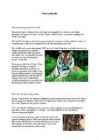
Rare animals Rare Chinese tiger seen in the wild Researchers have confirmed that a wild tiger, photographed by a farmer in the Qinba Mountains of Shaanxi Province, Central China, is indeed that of the critically endangered South China tiger. The South China tiger classified as one of only five subspecies of tiger still alive today is extremely rare, with only an estimated 20 to 30 still remaining in the wild. The wildlife and conservation group WWF says the South China tiger is actually native to the Hainan most forests of south-east China, and because there are so few individuals left, it is regarded by many scientists as being "functionally extinct" in the wild. But a group called Save China's Tigers has been working on a captive- breeding programme and hopes to reach an agreement with China's State Forestry Administration to reintroduce captive-bred animals into the wild. If all goes well, the first individuals could be reintroduc
feelings, keeping his emotions at bay in order to preserve his sanity and survive. As a result, the compassionate young man becomes unable to mourn his dead comrades, unable to feel at home among his family, unable to express his feelings about the war or even talk about his experiences, unable to remember the past fully, and unable to conceive of a future without war. He also becomes a "human animal," capable of relying on animal instinct to kill and survive in battle. But because Paul is extremely sensitive, he is somewhat less able than many of the other soldiers to detach himself completely from his feelings, and there are several moments in the book (Kemmerich's death, Kat's death, the time that he spends with his ill mother) when he feels himself pulled down by emotion. These surging feelings indicate the extent to which war has programmed Paul to cut himself off from feeling, as when he
Elizabeth plans to get surgery to enlarge her breasts, believing she is being overlooked for women with larger chests. However, she cannot afford the $10,000 procedure. To make matters worse, Scott admits that he has a crush on Amy, only viewing Elizabeth as a friend. Elizabeth attempts to raise money for the surgery by participating in her 7th grade class car wash in provocative clothing and by manipulating parents to give her money for more school supplies and tutoring, but her efforts are not enough. Amy, acting on the growing resentment between them due to her pursuit of Scott and ignoring of school rules, attempts to warn the principal about Elizabeth's embezzlement scheme, but he dismisses her claims as groundless. Elizabeth later learns that the teacher of the class with the highest state test scores will receive a $5,700 bonus. With this knowledge, Elizabeth decides to change her style of teaching, forcing the class to study intensely for the upcoming test
 annaabi.ee