 5 punkti
Autor soovib selle materjali allalaadimise eest saada 5 punkti.
5 punkti
Autor soovib selle materjali allalaadimise eest saada 5 punkti.
 ~ 5 lehte
Lehekülgede arv dokumendis
~ 5 lehte
Lehekülgede arv dokumendis
 2013-02-06
Kuupäev, millal dokument üles laeti
2013-02-06
Kuupäev, millal dokument üles laeti
 5 laadimist
Kokku alla laetud
5 laadimist
Kokku alla laetud
 0 arvamust
Teiste kasutajate poolt lisatud kommentaarid
0 arvamust
Teiste kasutajate poolt lisatud kommentaarid
 mmuskaa
Õppematerjali autor
mmuskaa
Õppematerjali autor
the other layers to grow. The 2nd layer: saplings and shorter kinds of trees The 3rd layer, or understorey: shrubs. The 4th layer: forest herbs, such as wildflowers and berries. In spring, before the leaves develop on the deciduous trees, these herbs bloom and grow quickly while they are getting a lot of sunlight. The 5th layer: mosses and lichens that grow on tree trunks. Lianas such as wild grape, poison ivy, and Virginia creeper climb the trees to flower and fruit high in the forest canopy. Plant adaptations: The plants have adapted so that they can survive in this biome. The leaves of deciduous trees are broad and quite light. This gives the leaves a bigger surface to capture sunlight to help produce food for the plant. This is called photosynthesis. When the weather gets cold, broad leaves are not good for the plant, as they lose too much moisture and get damaged
Acid Rain Acid rain is any precipitation that is unusually acidic. It possesses elevated levels of hydrogen ions(it has low pH level). Acid rain is caused by emissions of carbon dioxide, sulfur dioxide and nitrogen oxides, which react with water molecules. Distilled water(doesn't contain CO 2), has pH level 7. Liquids with pH level less than 7 are acidic, liquids with pH level greater than 7 are alkaline. Unpolluted rain has a pH level over 5.7, so it is slightly acidic. Affected areas Places significantly impacted by acid rain around the globe include most of eastern Europe from Poland northward into Scandinavia, the eastern third of the United States and southeastern Canada. Other affected areas include the southeastern coast of China and Taiwan Causes · It is caused when sulfur dioxide and nitrogen oxides are released into the air. In the atmosphere they react with water, oxygen and other chemic
Tallinna Inglise Kolledz Australia Topic Alice Tärk, 8b. Tallinn 2007 Table of contents: Factfile............................................................................................. ................................. Symbols.......................................................................................... ....................................Head of State................................................................................................ ................... Government....................................................................................... ............................... History............................................................................................. .................................. Relief................................................................................................ .................................. Geographical
Water pollution Attention for water pollution exploded in the 1980s. The oil spill of the Exxon Valdez showed many around the world just how horrible the effects of water pollution could be. However, even the Exxon Valdez spill barely touched the surface of the problem of water pollution. The ship spilt only 5% of the oil spilt that year, and oil is just one of many pollutants that people dump into the water every year. Every year, 14 billions pounds of sewage, sludge, and garbage are dumped into the world's oceans. 19 trillion gallons of waste also enter the water annually. The problem of ocean pollution affects every nation around the world. This is especially true because water is able to transport pollution from one location to another. For many years, chemicals were dumped into bodies of water without concern. While many countries have now banned such behavior, it continues to go on today. As the world has industrialized and its population has grown, the problem of water poll
Topic Australia Introduction Many people know Australia as the land down under because it is the only continent except for Antarctica that is all on the southern hemisphere. Its name means ,,Southland". The official name of the country is the Commonwealth of Australia. It's capital is Canberra. Australia is the sixth largest country in the world but the smallest continent. Australia has 6 states and 2 territories (New South Wales, Victoria, Tasmania, Queensland, Western Australia , South Australia, The Australian Capital Territory and the Northern Territory). The Australian people are culturally the same as the Anglo Americans. There also live aborigines. Aborigines are the ancestors of the people. Like the US and Canada, Australia was an English speaking colony of Great Britain. Today Australia is a modern developed country with a diversified economy. Australia is an island continent of 7.7 million square kilometres, which makes it a little smaller than the USA. Located in
Tallinna Inglise Kolledž Australia Referaat Tallinn Table of contents: Introduction.....................................................................................................................3 Geographical Position.....................................................................................................3 Relief...............................................................................................................................4 Climate & Time Zones....................................................................................................5 Plants...............................................................................................................................5 Animals...........................................................................................................................6 Population......................................................................................
types of lowland rainforest, 13 types of montane rainforest, five varieties of palm and swamp forest and three different mangrove forests. Two-thirds of the world's species of orchids come from New Guinea. /1/ Birds include 38 species of the bird of paradise, and the megapode and cassowary. Marsupials and mammals include cuscus, tree kangaroos, wallabies, bandicoots, spiny anteaters and, in the coastal waters, the dugong. There are between 170 and 200 species of frog and 450 species of butterfly. /3/ 4 The forests of New Guinea Richer and more diverse in species than their montane counterparts, the lowland forests of southern New Guinea are the home of more than 1,200 species of trees. Lowland rainforests are demanding ecosystems. They need at least 2,500 mm of rainfall per year, and they only show the greatest species diversity on well-drained sites. /2/ Soil
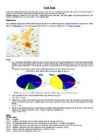
Australia Fact file: Australia comprises a land area of 7 686 850 square kilometres. Its population is about 21,3 million people. Australia's capital is Canberra. The national language is English. The official name of it is the Commonwealth of Australia. It's divided into six states and two territories: New South Wales, Queensland, South Australia, Western Australia, Tasmania, Victoria, Australian Capital Territory (ACT) and Northern Territory. Symbols: Australia had the British flag as their official flag until 1901, when the Commonwealth of Australia was formed. Over 30 000 entries attracted the official competition. Five of them, which contained almost identical designs, were placed equally first. The Australian flag symbolises Australia's historical links with Britain, because it has British flag on it, and Australia's location in the southern hemisphere, because it has stars of the Southern Cross on it
 annaabi.ee











Kõik kommentaarid