Leidsid 33 sarnast õppematerjali, mis on seotud failiga "Phonetics Glossary Homework". Need materjalid aitavad sul teemat sügavamalt mõista.
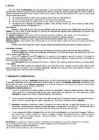
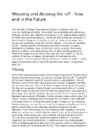
vowel, sound, 2016, available, january, voice, english, consonant, vocal, phonetic, vowels, citation, language, tense, differ, diphthongs, position, front, back, vibration, phono, phonetics, noun, than, verb, infinitive, wells, late, meaning, difference, felt, phoneme, furman, university, pair, pronoun, usually, latin, greek, forms, mono, formed, towardhow they may be "strung" together to form meaningful units how they are produced It studies: how to describe the speech sounds in the languages of the world what these sounds are how they fall into patterns how they change in different circumstances Acoustic phonetics the study of the physical properties of the sounds themselves. Auditory phonetics the study of the way listeners perceive these sounds. Articulatory phonetics the study of how the vocal tract produces the sounds of language. Phonology maybe used by actors, teachers, computer engineers etc. Phonology the description of the systems and patterns of speech sounds in a language. It studies: the abstract or mental aspect of the sounds in a language the actual physical articulation of speech sounds The phoneme. Phoneme is a meaning distinguishing sound in a language; it functions contrastively/ the smallest contrastive unit in the sound system of a language.
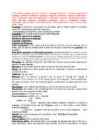
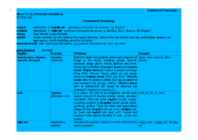
Definitions: Phonology is the study that describes the systems and patterns of speech sounds in a language. Phonetics is the general study of the charecteristics of speech sounds – studies how different speech sounds are produced. Phoneme is a meaning-distinguishing sound in a language. E.g. artistic-al-ly To know if a sound is a phoneme use the minimal contrasting pair method where the difference is only one sound: pin vs pen. Allophones are different variations of how a phoneme is pronounced according to the context. E.g. dark and clear l – clear and dull. Segmentation is the act of dividing speech sounds into units. E.g. segment- ation Larnyx (kõri) is the voice box. Glottis is the opening between the vocal cords. Manner of articulation is the way the airstream is blocked when producing a sound – blocked vs partially blocked; vibrating vs no vibration. Different sound types:
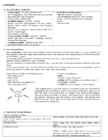
Loan words (Old Norse, Old French). Dual pronouns. Determiners - no separate definite article. Strong and weak verbs. Word order relatively free with tendencies towards SVO. SVO, SOV, VSO most common. Adposition and podposition were both possible (eesliide ja tagaliide). About syntax: clauses were joined much simpler than nowadays, using and, then etc. Because of case syncretion the word order in a sentence became much more important to be able to tell the difference between words. FIRST CONSONANT SHIFT (GRIMM'S LAW) Grimm's Law (also known as the First Germanic Sound Shift or Rask's rule) is a set of statements named after Jakob Grimm describing the inherited Proto-Indo-European (PIE) stop consonants as they developed in Proto-Germanic (the common ancestor of the Germanic branch of the Indo- European family) in the 1st millennium BC. It establishes a set of regular correspondences between early Germanic stops and fricatives and the stop consonants of certain other centum Indo-European
Suppletion Present in languages of different families. Present in Old, Middle and Modern English, though the general tendency is towards more regularity/iconicity so the number of suppletive forms has decreased.In the text: goon to go wenden - to turn Gan was suppletive in Old English, past form: eode.Eode was supplanted by went (past form of wenden) at the end of the Middle English period.To wend has survived in Modern English in phrases such as to wend one's way, we wended homewards (ironic usage). Thus: suppletivity- suppletion different parts of one and the same paradigm come from what were originally different paradigms (different words with close meanings or words in different but close dialects).Suppletion embraces verbs, adjectives, nouns. Be was/were been (Old English beon/wesan) (am, art, is, are); in Old English some suppletive
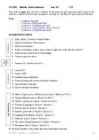
Phonology. Mid-term 2. Syllable - is a phonological unit consisting of one or more phonemes. In phonetics a syllable is a unit which consists of a centre, that has little or no obstruction to airflow; it is comparatively louder than other sounds. In phonology syllables are the possible combinations of phonemes. The syllable consists of - onset, nucleus, coda. (every syllable has a nucleus: vowel, syllabic l, or m, n). Rhyme/rime nucleus + coda; the nucleus and the coda constitute a sub-syllabic unit rhyme. Words rhyme, when their nucleus and coda are identical. (E.g 'cr-o-wn', 'd-o-wn'). The hierarchical structure of the syllable: Onset the beginning of the syllable Nucleus/peak the open part of a syllable, generally a vowel. Coda a consonant sound which ends the syllable. Open syllable - has no coda Closed syllable - has a coda!
1) Standard and non-standard varieties of English Standard varieties of English are the varieties of the English language that are considered to be a norm and are spoken and written by the minority (educated people). This is the optimum for educational purposes. The standard varieties of English are: BrEng (British), EngEng (English), NAmEng (North-America), USEng (United States), CanEng (Canada), AusEng (Australia), NZEng (New Zealand). Standard English (British English) is the most widely accepted and understood among native speakers, learned by foreigners. It is used in broadcasting, TV, news etc. It doesn't concern pronounciation (accent), but grammar and vocabulary. It includes formal and informal styles. British Standard English grammar and vocabulary, together with the RP accent should be called English English. RP (Received Pronounciation) is an accent that originates from South-East of England. A
Can you tell by a single sound I make, whether I am straight, bi or gay? As ridiculous as it might sound and casting aside all stereotypes, it actually seems possible. Unbelievable? Well, sociolinguistics, sociopathology, sociophonetics are all very fascinating subjects. Never thought a single word or a sound you make could tell random strangers who you are? Well, prepare to be convinced otherwise. (Well, not solely by these two articles or my short conclusions, of course, it is a very wide field and there is yet much research to be done.) Anyhow, here I have found two research articles, both dealing with whether it is possible to distinguish someone's sexual identity solely based upon a few words, or much less, a single phone. As it turns out, it is
Style The term style is a polysemantic one. The latin word ,,stilus" meant a writing instrument used by the ancients for writing on waxed tablets. Already, in classical latin the meaning of style was extended to denote the manner of expressing one's ideas in written or oral form. One of the abts/the best was given by Jonathan Swift: ,,Proper words in proper places." In present- day english, the world style is used in about half a dozen basic meanings. 1. the characteristic manner in which a writer expresses his ideas. Some speak about the style of Hemingway, Dickens etc. 2. the manner of expressing ideas, characteristic of a literary movement or period. Style of symbolism, romanticism 3. the use of language to pick a literary genre-comedy, novel, drama, O.D (poetic form) etc. 4
1. STYLE The term "style" is polysemantic (has many meanings): a Latin word "stilus" originally meant a writing instrument used by ancient people. Already in classical Latin the meaning was extended to denote the manner of expressing one's ideas in written or oral form. Jonathan Swift defined style as "proper words in proper places". In present day English the word "style" is used in about a dozen of principle meanings: 1. the characteristic manner in which a writer expresses his/her ideas (e.g. style of Byron) 2. the manner of expressing ideas, characteristic of a literary movement or period 3. the use of language typical of a literary genre (e.g. the style of a comedy, drama, novel). 4. the selective use of language that depends on spheres / areas of human activity (e.g. style of fiction, scientific prose,
1. Style, stylistics, a survey of stylistic studies 2. Inherent connotations. Phonesthemes Use lecture notes 3. Adherent connotations 4. Stylistic morphology: articles, nouns, pronouns, adjectives, verbs, adverbs, number * 5. Expressiveness on the level of word-building 6. Phonetic expressive means Study independen tly 7. Phonetic SD ("Rhythm And Style") 8. Lexical SD* 9. Syntactic SD* Use lecture notes 10. Graphical means and devices 11. Common literary and common colloquial vocabulary 12. Special literary vocabulary 13
LEXICOLOGY 1. Size of English vocabulary 1) Old English – 50,000 to 60,000 words Vocabulary of Shakespeare OE – homogeneous; 1/3 of the vocabulary has survived • 884,647 words of running text About 450 Latin loans (Amosova) • 29,000 different words (incl. work, working, Viking invasions added 2,000 worked, which are counted here as separate 2) Middle English – 100,000 – 125,000 words) English becomes heterogeneous (Norman French, • 21,000 words English, Latin), hybrid of Germanic and Romance languages Norman French influence – about 10,000 words, 75 % are still in use (Baugh) Latin influence continues 3) Early Modern English – 200,000 – 250,000 English becomes a polycentric language; polyglot, cosmopolitan language
Byron) · the manner of expressing ideas characteristic of a literary movement or period (symbolism, romanticism) · the use of lg. typical of a literary genre (comedy, drama, novel) · the selective use of lg that depends on spheres of human activity. These are called functional styles or registers (fiction, newspaper) Stylistics is the study of style. However, for some reason, English stylistics is less developed than French, German or Russian. The term ,,stylistics"came into more common use in English only some 35 years ago. It was recorded much earlier; in 1882 as "the study of literary style, the study of stylistic features" Stylistics is a branch of linguistics that studies principles of selecting different linguistic means for passing on thoughts and emotions. It studies: · Different functional styles, styles of genres, individual styles
7. Provide a diverse lesson with a variety of activities 8. Be always prepared for the lesson. 9. Let learners know about your teaching style, the course content and your reasons for doing some activities.... 10. Offer feedback after oral or written assignments or pair-, group work. 1 References: Kahny, Jim. Classroom dynamics: An interview with Jill Hadfield. Available at http://ltprofessionals.com/journalpdfs/vol1no1/features/winter2000kahny.pdf accessed 27.12.2012 ESOL Teaching Skills TaskBook. Classroom dynamics: unit 1 a). Available at http://akoaotearoa.ac.nz/download/ng/file/group-4/n2431-esol-teaching-skills- taskbook-unit-1-a---classroom-dynamics.pdf accessed 27.12.2012 III Language teaching methods. · (Traditional: the grammar-translation method/ classical method.) · Traditional: the direct method Youtube:
English lexicology 1. Size of English vocabulary Vocabulary is a sum total of words used in a language by speakers or for dictionary-making. Active and passive vocabulary. The Old English vocabulary was homogenous. There were about 50 000 – 60 000 words, 1/3 of which have survived. o About 450 loans from Latin o About 2000 from the Viking invasions. The Middle-English vocabulary became a heterogeneous hybrid of Germanic and Romanic languages. 100 000 to 125 000 words. o About 10 000 loans from Norman French, 75% are still in use o Continuing Latin influence
English structure revision for the exam 1. Terms Language → A systematic, conventional (tavakohane) use of sounds, signs or written symbols in a human society for communication and self-expression. Human language at all levels is rule- or principle- governed (valitsema) meaning that language corresponds to the grammar. Natural language is usually spoken, while language can also be encoded into symbols (such as letters, morse etc) For example: Estonian, English. Linguistics → The scientific study of human natural language. Broadly, there are three aspects to the study which are Pragmatics (studies the use of language → interested in the gap between the sentence’s meaning and the speaker’s meaning). Semantics (concerned with the meaning of the language aspects and the way they change, also how objects and language and thinking and language are related).
Estuary English 1. The geographical dimension: Is `Estuary' English estuary? Estuary English is a dialect of English widely spoken in South East England, especially along the River Thames and its estuary. Phonetician John C. Wells defines Estuary English as "Standard English spoken with the accent of the southeast of England".[1] The name comes from the area around the Thames, particularly London, Kent, north Surrey and south Essex. The variety first came to public prominence in an article by DavidRosewarne in the Times Educational Supplement in October 1984. [2] Rosewarne argued that it may eventually replace RP (Received Pronunciation) in the south-east. Studies have indicated that Estuary English is
companies not making the devices inherently secure from the start of the production. Since the IoT industry is quickly developing, so are the ideas for protecting those devices. For instance encrypting the data in a novel way, creating stronger default passwords and so on. And if the producers should fail to implement proper security measures by themselves the legislative organs have to step in and enact laws, which set a standard for security. References [1]"Internet of Things", Wikipedia, 2016. [Online]. Available: https://en.wikipedia.org/wiki/Internet_of_Things. [Accessed: 11- Mar- 2016]. [2]" Internet of Things Connected Devices to Almost Triple to Over 38 Billion Units by 2020 - Juniper Research", Juniperresearch.com, 2016. [Online]. Available: http://www.juniperresearch.com/press/press- releases/iot-connected-devices-to-triple-to-38-bn-by-2020. [Accessed: 11- Mar- 2016]. [3]"HP News - HP Study Reveals 70 Percent of Internet of Things Devices
words; syntax. Language: a systematic, conventional use of sounds, signs or written symbols in a human society for communication and self-expression. - human language at all levels is rule- or principle-governed. Linguistics: the scientific study of human natural language Synchronic approach to language: Diachronic approach to language: Linguistic competence: Linguistic performance: What is grammar?: "The sounds and sound patterns, the basic units of meaning, such as words, and the rules to combine them to form new sentences constitute the grammar of a language" Prescriptive grammar vs. Descriptive garmmar: Descriptive grammar: the systematic study and description of a language. Descriptive grammar refers to the structure of a language as it is actually used by speakers and writers. Prescriptive grammar: a set of rules and examples dealing with the syntax and word
Finally it ment ,,tenant`s dwelling (elamine). To sack means when workers were dismissed, theiy took their tools in a sack and left. Intral words are connected with each other. New facts in the lg cause some change in the meaning of some words. (nt, autumn pushed harvest out, harvest tähendas nii sügist kui ka viljalõikust) 4. Motivation. Folk etymology. Motivation reflects some feature of an object in a word (nt, cucoo! Duck ducan (sukelduma)). Types of mot: a)phonetics- called sound imitation (onomatopoeia), (nt, murmur, bang, giggle, whistle). b)morphologial mot- the meaning of a word is motivated by the meaning of morphemes(separate elements), (nt, speak-er, ice-cream, beauty-ful) c)semantic mot is based on the coexistance of the direct and figurative meanings(nt, the nose of the boat) d)faded vs clear mot new words are always motivated. (nt, ööbik-nighttingale, knight ja singer). Time goes, motivation shanges
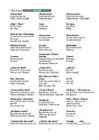
I am _____ years old. How old are you? (formal) How old are you? (informal) ¿Hablas inglés? ¿Habla usted español? (No) Hablo... ah-blahs een-glehs ah-blah oo-sted eh-spahn-yol noh ah-bloh Do you speak English? Do you speak Spanish? (formal) I (don't) speak... (informal) ¿Entiende usted? / ¿Entiendes? (No) Entiendo. Yo (no lo) se. ehn-tyen-deh oo-sted / ehn-tyen- noh ehn-tyen-doh yoh noh loh seh dehs I (don't) understand. I (don't) know. Do you understand? (formal / informal)
This kind of Latin is known as Vulgate Latin (meaning the Latin of the common people), and accordingly Jerome's translation is called the Vulgate. Cicero – Lived during the 1st century BC. Roman politician, philosopher & translator. Theory ‘‘word-for-word’’ & ‘‘sense-for-sense’’. • Martin Luther – his role in the history of translation studies. Lived during the 15th century. He was a priest, theologian & translator. During that time, the Bible’s were only available in either Latin or Hebrew, which made it very difficult for common people to understand. He came out with a radical plan to translate the Bible into local languages (the first language was German – translated by Martin Luther). This inspired many other translators during that period. • What happened in the 19th and 20th century in translation studies? When and who created the term ‘translation studies’? Translation Studies – James S. Holmes - 1972
Book 1 BASIC ENGLISH BASIC ENGLISH GRAMMAR GRAMMAR BASIC ENGLISH GRAMMAR Book 1 Book 1 Younger students at beginning to intermediate levels will greatly benefit from this step-by-step approach to English grammar basics. This is the ideal supplement to your language arts program whether your students are native
(not I want orange.) •Where is my bottle? (not Where is bottle?) When a countable noun is plural, we can use it alone: •I like oranges. •Bottles can break. We can use some and any with countable nouns: •I've got some dollars. •Have you got any pens? We can use a few and many with countable nouns: •I've got a few dollars. •I haven't got many pens. definite article The definite article the is the most frequent word in English. We use the definite article in front of a noun when we believe the hearer/reader knows exactly what we are referring to. • because there is only one: The Pope is visiting Russia. The moon is very bright tonight. The Shah of Iran was deposed in 1979. This is why we use the definite article with a superlative adjective: He is the tallest boy in the class. It is the oldest building in the town. • because there is only one in that place or in those surroundings:
the Slavic languages. It is also the largest native language in Europe, with 144 million native speakers in Russia, Ukraine and Belarus. Russian is the eighth most spoken language in the world by number of native speakers and the seventh by total number of speakers. The language is one of the six official languages of the United Nations. Russian is also the second most widespread language on the Internet after English. Russian distinguishes between consonant phonemes with palatal secondary articulation and those without, the so-called soft and hard sounds. Almost every consonant has a hard or a soft counterpart, and the distinction is a prominent feature of the language. Another important aspect is the reduction of unstressed vowels. Stress, which is unpredictable, is not normally indicated orthographically. though an optional acute accent ( , znak udareniya) may be used to mark stress, such as to distinguish between homographic words, for example
Chipset (or core logic) - two or more integrated circuits which control the interfaces between the system processor, RAM, I/O devises, and adapter cards. Processor slot/socket - the slot or socket used to mount the system processor on the motherboard AGP - Accelerated Graphics Port - a high speed interface for video cards; runs at 1X (66MHz), 2X (133MHz), or 4X (266MHz). PCI - Peripheral Component Interconnect - a high speed interface for video cards, sound cards, network interface cards, and modems; runs at 33MHz. ISA - Industry Standard Architecture - a relatively low speed interface primarily used for sound cards and modems; runs at approx. 8MHz. RAM - Random Access Memory - see System RAM Port (serial, parallel, PS/2, USB, sound, LAN, VGA, SCSI) - interface connectors for the associated types of devices Serial - a low speed interface typically used for mice and external modems Parallel - a low speed interface typically used for printers
SYMPHONISM. XXVIII. THE PERFORMANCES OF SYMPHONIC MUSIC: THE ORCHESTRAS OF TARTU AND TALLINN. XXIX. ESTONIAN SYMPHONISTS ABOUT CREATIVITY. CONCLUSION APPENDIXES APPENDIX A. SELECTED PUBLICATIONS ON ESTONIAN HISTORY AND CULTURE IN GENERAL. APPENDIX B. BIBLIOGRAPHY OF ESTONIAN SYMPHONIC MUSIC APPENDIX C. RECORDINGS OF SYMPHONIC MUSIC. APPENDIX D. SCORES OF SYMPHONIC MUSIC PUBLISHED. APPENDIX E. CHRONOLOGY OF ESTONIAN SYMPHONIES. APPENDIX F. SOUND TAPES OF ESTONIAN SYMPHONIES IN THE ESTONIAN MUSIC INFORMATION CENTRE AT THE COMPOSERS UNION. APPENDIX G. SOME PROGRAMMES WITH ESTONIAN MUSIC AND CONDUCTORS. APPENDIX H. INDEX OF PERSONAL NAMES. APPENDIX I. SELECTION OF PHOTOGRAPHS. APPENDIX J. MUSICAL EXAMPLES. PIANO ARRANGEMENTS AND SCORE SAMPLES. APPENDIX K. USEFUL ADDRESSES. ABOUT THE AUTHOR ESTONIA AND THE ESTONIANS Estonia is situated on the southern shore of the Gulf of Finland, between the Baltic Sea and Lake Peipsi
1 Grammatical Terminology PRACTICAL ENGLISH GRAMMAR FLGR.01.042 Grammatical Terminology analytic analüütiline (= uninflected - grammar is focused in the sentence , e.g. English) synthetic sünteetiline (= inflected - grammar is focused in the word, e.g. Estonian, Latin, Russian, Old English) ending lõpp (käände- ja pöördelõpud)
General Rules....................................................................... 2 The Definite Article ............................................................... 5 Names that take the Definite Article...................................... 6 No article.............................................................................. 7 Countable and uncountable nouns ....................................... 9 General Rules There are two articles in the English language – the Indefinite Article and the Definite Article. The Indefinite Article has two forms – a and an (a precedes words beginning with a consonant sound and an precedes words beginning with a vowel sound). It comes from the Old English word ãn, which meant one. The Definite Article is the. It comes from the Old English word ţis, which meant this. Thus, in most general terms, a and an cannot be used with countable nouns in the plural and with uncountable nouns
Tallinna Mustamäe Humanitargümnaasium Valeria Jefremenkova ENGLISH AS A GLOBAL LANGUAGE INGLISE KEEL KUI ÜLEMAAILMNE KEEL Research work Supervisor: Jevgenija Kozlova Tallinn 2016 1 Table of Contents СONTENT…………………………………………………………………………………...2 INTRODUCTION…………………………………………………………………………...3 CHAPTER I……………………………………………………………………………….....5 1.1. A Brief History of the English Language…………………………………………...….
Games Programming with Java and Java 3D Andrew Davison Dept. of Computer Engineering Prince of Songkla University HatYai, Songkhla 90112 E-mail: [email protected] Draft: 14th January 2003, #2 Abstract This article looks at the advantages and disadvantages of using Java and Java 3D for games programming. It assumes the reader is familiar with Java, but presents short overviews of gaming, the low-level APIs OpenGL and DirectX, and Java 3D. No programming examples are included here, although links to online code are supplied. 1. Background to Gaming Giving a definition for `computer game' is problematic, due to the wide range of game types
consumption low. If driver stop behind the traffic light then car will shut down by itself and when car is not working then there will not be any fuel consumption and the system does not shut down the air conditioner or your stereo, all the electric devices are still working and if you want to move again, then just push the clutch and car starts immediately. However the automatic start-stop system at the moment is available only for 6-speed manual gearboxes. (http://www.themotorreport.com.au) Internal marketing environment Competitors Mini has a lot of competitors in the car market. Both direct and indirect competitors have an enormous part on Mini's success. Because Mini is a premium car brand; that means Mini's direct competitors are other premium car brands and indirect competitors are volume car brands. For example Audi as premium car brand and Ford as volume car brand. Substitutes for
ing-through" jammed radar) radar echoes) This book employs certain typographic conventions for simplicity and economy. Plaintext is always set lower case; when it occurs in the running text (as opposed to its occurrence in the diagrams), it is also in italics. Cipher-text or codetext is set in SMALL CAPS in the text, keys in LARGE CAPS. They are distinguished in the diagrams by labels. Cleartext and translations of foreign-language plaintext are in roman within quotation marks. The sound of a letter or syllable or word, as distinguished from its written form, is placed within diagonals, according to the convention widely followed in linguistics; thus /t/ refers to the unvoiced stop normally represented by that letter and not to the graphic symbol t. D. K. 1. One Day of Magic: I AT1:28 on the morning of December 7, 1941, the big ear of the Navy's
190 (2002), http://www.essex.ac.uk/armedcon/story_id/000043.pdf [accessed 7 April 2014); Children`s Rights and Early Education, ed. By Cathy Nutbrown (London: Paul chapman Publishing Ltd, 1996), p.4-5. 21 Children`s Rights and Early Education, p.4-5. 8 Act 1989 to ascertain children`s views and wishes when making decisions about their welfare.22 Lansdown cites that providing children a voice only in the point of crisis like the breakdown of marriage or when placing the child into the care of the local authority is not enough to adhere to Article 12. He contends that listening to children and taking their views into account must be respected and taken seriously.23 Moreover, the outrage to the explicit criticism also demonstrated that children`s rights are predominantly viewed with some hostility in the UK, where Article 12 in particular has
 annaabi.ee