Leidsid 33 sarnast õppematerjali, mis on seotud failiga "Michael Morpurgo ". Need materjalid aitavad sul teemat sügavamalt mõista.
children, farm, king, work, stories, horse, morpurgo, wife, clare, books, farms, years, author, five, films, opera, following, early, english, french, went, teach, primary, pupils, kent, noted, storytelling, shows, established, charity, programme, countryside, during, part, favourite, butterfly, lion, fiction, novel, first, britain, ward, battlesTallinna Rahumäe põhikool Report Michael Morpurgo Lizett Käos 8A Tallinn, 2014 Michael Morpurgo His biographical data Michael Murporgo´s full name is Michael Andrew Bridge Morpurgo. He was born 5 October 1943 in St Albans, Hertfordshire, he attended schools in London, Sussex and Canterbury. He went on to London University to study English and French, followed by a step into the teaching profession and a job in a primary school in Kent. It was there that he discovered what he wanted to do. Morpurgo's biological father was actor Tony Van Bridge. His mother, Kippe Cammaerts (otherwise Catherine Noel Kippe, daughter of Emile Cammaerts), who
Michael Morpurgo 1. Introducton. This project is about Michael Morpurgo. He is a well-known British author. He writes the sort of stories he likes to tell his own children. 2. Biographical data. Michael Murporgo´s full name is Michael Andrew Bridge Morpurgo. He was born 5 October 1943 in St Albans, Hertfordshire. He was the son of Tony bridge who was an actor. He attended schools in London, Sussex and Canterbury. 3. Biogrphies. There has been released three biogrphies about Michael Morpurgo. First on was released in 1999 called "Interview with Michael Morpurgo", written by Joanna Carey. In 2004 was released "Dear mr Morpingo: Inside the world of Michael Morpurgo", written by Geoff Fox. In 2005 was released "Michael Morpurgo",
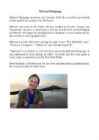
Michael Morpurgo Michael Morpurgo was born in 5 October 1943, his full name is Michael Andrew Bridge Morpurgo . He is a well-known British author, who has written over a hundred books for children. There has been released three biogrphies about Michael Morpurgo. First on wasreleased in 1999 called “Interview with Michael Morpurgo”, written by JoannaCarey. In 2004 there was released “Dear mr Morpingo: Inside the world of Michael Morpurgo”, written by Geoff Fox. In 2005 was released “Michael Morpurgo”,written by Shaun McCarthy. Favorites among his own books are The Butterfly Lion, Kensuke´s Kingdom, WarHorse and Private Peaceful. The book talks about a horse who lives on a farm and moves into the battles of World War I
Michael Morpurgo Michael Morpurgo was born on 5 October 1943. He is well-known British author and he has written over 100 books. Michael was born in St Albans. He has studied in London, Sussex and Canterbury. He went to university in London and there he studied English and French. He began his working life as a primary- school teacher and he discovered his writing talent there. Michael has four favourites among his own books "The Butterfly Lion", "Kensuke´s Kingdom", "Warhorse" and "Private Peaceful". "Warhorse" is a children´s novel which is written by Michael Morpurgo. It was published in Great Britain in 1982. The book tells the story about a horse Joey, its experiences in the First World War. Now Michael is 69 years old. He has three children and six grandchildren. He is married with his wife Clare.
vivacious woman about whom a future Viceroy of India would say, "Dullness and Mrs. Kipling cannot exist in the same room."[3] Father - John Lockwood Kipling. Lockwood Kipling, a sculptor, an illustrator, museum curator and pottery designer, was the principal and professor of architectural sculpture at the newly- founded Sir Jamsetjee Jeejeebhoy School of Art and Industry in Bombay. Later in life Kipling illustrated many of Rudyard Kipling's books, and other works. Kipling also remained editor of the Journal of Indian Art and Industry, which carried drawing works from the students of the Mayo School. COUPLE named their son after the place they had first met Rudyard Lake. Alice Kipling Fleming - Sister of British author Rudyard Kipling who became a well-known psychic, producing automatic writing under the name "Mrs. Holland." Born June 11, 1868, Alice Kipling was privately educated
Charles Dickens Charles John Huffam Dickens was the foremost English novelist of the Victorian era, as well as a vigorous social campaigner. Considered one of the English language's greatest writers, he was acclaimed for his rich storytelling and memorable characters, and achieved massive worldwide popularity in his lifetime. Charles Dickens was born in Landport, Portsmouth in Hampshire, the second of eight children to John Dickens n 7 February 1812. The 12-year-old Dickens began working ten hour days in a Warren's boot-blacking factory. In May 1827, Dickens began work in the office of Ellis and Blackmore as a law clerk. At the age of seventeen, he became a court stenographer and, in 1830, met his first love, Maria Beadnell. Maria's parents disapproved of the courtship and effectively ended the relationship when they sent her to school in Paris.
American literature The literary history of this nation when the first humanbeing living in what has since become the U.S used language creatively. · Mid to late 18 century put down · Words are powerful, magical · Words must be remembered · Native Americans stories creation of the world · Attidude thought their land/language · Similar stories Dates and names · America was discovered in 1492 by Columbus · 1497 John Cabot went to Canada · 1579 San Fransisco/St. Fransis · 1607 Jamestown collony/John Smith · 1620 a boat called MayFlower · 1630 Boston was established · 1636 Harvard University · 1773 Boston Teaparty · 1775 War of Independence · 1776 4 July Declaration of Independence
The only woman tortured in the Tower was Anne Askew. Guy Fawkes was prisoned 5 th November 1605, hung in 1607. Walter Raleigh was knighted, married without queen´s permission. Last prisoners were in the Tower in 1952. Rita: "Alexander Fleming" Was a pharmacologist, has graduated 6 schools, studied anti-bacterial agents, found Lysozyme accidentally in 1922 and penicillin, which changed the world, in 1928. Won Nobel Prize in 1945. Has been married twice, first wife was a trained nurse. He died in 1955 at home because of a heart attack. He had 1 child. Liis: "The Phantom of the Opera" A.L. Webber is knighted, started writing musicals in 1965, owns 7 theatres and has written 13 musicals. The story is based on a book. The musical was first staged at Sydmonton, at the home of A.L Webber. The main actors were Sarah Brightman and Michael Crawford. There have been 65 000 performances and over 80 million people have seen it. There was a film made in 2004
Young Charles' father was an active and highly conservative clergyman of the Anglican church who later became Archdeacon of Richmondand involved himself, sometimes influentially, in the intense religious disputes that were dividing the Anglican church. He was High Church, inclining to Anglo Catholicism, an admirer of Newman and the Tractarian movement, and did his best to instill such views in his children. Young Charles was to develop an ambiguous relationship with his father's values and with the Anglican church as a whole. Dodgson was born in the little parsonage of Daresbury in Cheshire county (near the towns of Warrington and Runcorn), the eldest boy but already the third child of the fourandahalfyearold marriage. Eight more children were to follow.
ravages of nature only to fall victim to wanton destruction by ,,civilized" man. Like the huge stone statues of Easter Island and prehistoric cave paintings of Altamira and Lascaux, North American Indian rock art is surrounded by an atmosphere of mystery. Although examples of rock art exist at some 15000 sites in canyons, deserts, caves and river gorges. Nowadays, however, primitive rock art in the United States has become a new field of scientific study. Klaus F Wellmann wrote two books about rock art. He is a professor of medicine. Rock art represents the history of aboriginal Americans. In the most cases the art is an expression of ideas and way of life, ritual ceremonies, hunting, fighting. The pictures of people and animals are often strikingly lifelike and artistic. Many of these ancient relics have been destroyed by the ravages of nature and of man. Wind and water have worn away and continue to wear away, unprotected sites.
jordan. She places love above war, politics. Pablo is another type, he is a moral coward, he is a defeatist, who wants to avoid personal danger and wants to save his life, he is mean and betrays his country men. Pilar, Pablo's woman, strong, courageous, patriot, never the less understands the importance of individual human happiness. Human independence and solitarity. Jordan dies, he is left to die. Maria problably is pregnant. Towards the end of his life Heingay wrote short stories. 1952 novella ,,The old man and the sea". The protagonist is an old cuban fisherman. Cuba was that time almost the colony of usa. Santiago is an old fisherman who isn't able to catch anything for several days. One day he catches enormous fish. He is exhausted from trying to fight that fish and has to tie the fish to the boat. While he is rowing back to village the sharks eat the fish when he arrives back to village. It is a moral victory of defeat. Man may be destroyed but not defeated
J.F.Cooper(1789-1851): he was born in Burlington, New Jersey in 1789. When he expelled from Yale bacause of prank, he joined the navy as a midshipman. In 1810 he took a furlough and never returned to active duty. He married with Susan De Lancy and got 5 children. They lived Europe, but returned to America because he was unpopular in Europe. In 1920 je published his first fiction "Precaution", in 1821 the second one "The Spy". His third book "The Pioneers" was the first of five novels. He died at Cooperstown in 1851. He was immensely popular writer and he considered to be the first major American novelist. R.L.Stevenson(1850-1894): he was born in Edinburgh, Scotland in 1850. He was a sick little boy who spent much of his time in bed. He was very
earlier texts. Among the first to study Russian dialects was Lomonosov in the 18th century. In the 19th, Vladimir Dal compiled the first dictionary that included dialectal vocabulary. Detailed mapping of Russian dialects began at the turn of the 20th century. In modern times, the monumental Dialectological Atlas of the Russian Language ( [dlktitskj ats ruskv jzka]), was published in three folio volumes 19861989, after four decades of preparatory work. Orthography Russian spelling is reasonably phonemic in practice. It is in fact a balance among phonemics, morphology, etymology, and grammar; and, like that of most living languages, has its share of inconsistencies and controversial points. A number of rigid spelling rules introduced between the 1880s and 1910s have been responsible for the former whilst trying to eliminate the latter. The current spelling follows the major reform of 1918, and the final codification of 1956. An
Joseph Rudyard Kipling was a British author and poet. He was born on 30 December 1865 in Bombay, in India which was part of the British Empire then. he is best known for his works of fiction The Jungle Book (1894) (a collection of stories which includes Rikki-Tikki-Tavi), Kim (1901) (a tale of adventure), many short stories, including The Man Who Would Be King (1888); and his poems, including Mandalay (1890), Gunga Din (1890), and If-- (1910).He is regarded as a major "innovator in the art of the short story"; his children's books are enduring classics of children's literature; and his best works speak to a versatile and luminous narrative gift. Kipling was one of the most popular writers in English, in both prose and verse, in the late 19th and early 20th centuries. In 1907, he was awarded the Nobel Prize in Literature, making him the first English
It was written in 1916 and was first published by John Lane in the USA in October 1920 and in the UK by The Bodley Head (John Lane's UK company) on January 21 1921. In her first novel, The Mysterious Affair at Styles(1920), she created the now-famous Belgian detective Hercule Poirot, the most popular sleuth in fiction since Sherlock Holmes. Poirot and Marple have also been portrayed in the many films, radio programmes and stage plays based on her books.It is Christie's first published novel, and introduces Hercule Poirot, Inspector Japp and Lieutenant Hastings (later, Captain) The story is told in first person by Hastings, and features many of the elements that, thanks to Christie, have become icons of the Golden Age of Detective Fiction. It is set in a large, isolated country manor. There are a half-dozen suspects, most of whom are hiding facts about themselves.
REVISION QUESTIONS 1. The Contradictory, diverse, chaotic 20th century. New developments in science and philosophy. The essence and influence of Freudian theory. Contradictory, diverse, chaotic 20th c- simultaneous rejection and invocation of the past. While modernists apotheosized the creative geniuses of the past, they also rejected old poetic forms. Challenge old and established beliefs and more and more people had access to books and education more people went to universities. profound change in morals: · No universal value and perspective on things · Multiple truths, multiple perspectives · Nothing has inherent (kaasasündinud, sisemist) importance · Life lacks purpose Science: Albert Einstein-general theory of relativity had a huge impact on culture as well. Everything is relative. Philosophy: Henri Bergson (French) came to challenge the immediate experience ad intuition are
In 1882, he joined former classmate George Budd as his partner at a medical practice in Plymouth, but their relationship proved difficult, and Conan Doyle soon left to set up an independent practice. Arriving in Portsmouth in June of that year with less than £10 to his name, he set up a medical practice at 1 Bush Villas in Elm Grove, Southsea. The practice was initially not very successful; while waiting for patients, he again began writing stories. His first significant work was A Study in Scarlet, which appeared in Beeton's Christmas Annual for 1887 and featured the first appearance of Sherlock Holmes, who was partially modelled after his former university professor, Joseph Bell. Future short stories featuring Sherlock Holmes were published in the English Strand Magazine. Interestingly, Rudyard Kipling congratulated Conan Doyle on his success, asking "Could this be my old friend, Dr. Joe?" Sherlock Holmes, however, was even more closely
theatre production, and finally writing his own one-act and full-length plays. Later he has worked both as a freelancer and a contracted writer. He first wrote the short story "Ender's Game" while working at the BYU press. Ender's Game and its sequel Speaker for the Dead were both awarded the Hugo Award and the Nebula Award, making Card the only author (as of 2008) to win both of science fiction's top prizes in consecutive years. Card continued the series with seven books, which divide into "Shadow" and "Speaker" series. He has also announced his plan to write two more novels: Shadows in Flight, a book that connects the "Shadow" series and "Speaker" series together, and Ender in Exile, a book that takes place after Ender's game and before Speaker for the Dead. Furthermore, Card recently announced that Ender's Game will soon be made into a movie. Though Card is best-known for "Ender's Game", he has also written in a variety of other
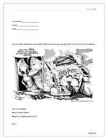
Page |1 Your Name:__________________ Grade:______________________ Date:_______________________ Do you often read books voluntarily? What books do you usually read? Discuss it with your neighbor. Ask your neighbor: Who is Harry Potter? What's so magical about him? Part I 1/9/2013 Page |2 Reading: Read through the text, look up unknown words by J. K. Rowling
He is born on 19. June 1947. He is the only son of Anis Ahmed Rushdie and Negin Bhatt, a teacher. Rushdie was born in Bombay, India, into a Muslim family of Kashmiri descent.[10][11][12] He was educated at Cathedral and John Connon School in Mumbai, Rugby School, and King's College, University of Cambridge, where he studied history. Rushdie's first career was as a copywriter, working for the advertising agency Ogilvy & Mather. It was while he was at Ogilvy that he wrote Midnight's Children, before becoming a full-time writer. His first novel, Grimus, a part-science fiction tale, was generally ignored by the public and literary critics. His next novel, Midnight's Children, catapulted him to literary notability. It is regarded by many as one of the great books of the last 100 years. This work won the 1981 Booker Prize and, in 1993 and 2008, was awarded the Best of the Bookers as the best novel to have received the prize during its first 25 and 40 years
they deemed "inalienable." Democracy: The colonies had no say in the formation of the government, and had no representation in the lawmaking process. Consequently, they were attracted to the idea of democracy, where the government is "of the people, by the people, for the people," as Lincoln later expressed in his Gettysburg Address. Religious Tolerance: Much impetus for the ideas of religious tolerance came from the rule of King George II, who was a staunch Catholic and did not allow freedom of religion to Protestants in New England. Voltaire was among the first to denounce Christianity and other organized religions as mere ploys to support monarchy. What emerged was Deism, which was more or less a new religion that considered reason its foundation. In Deism, there is no interference by a deity, and man controls his own destiny.
Lesson by lesson, this book provides basic instruction in the eight parts of speech--nouns, pronouns, verbs, adjectives, adverbs, prepositions, conjunctions, and interjections--as well as the standard patterns of English sentences. All students of English, be they native speakers or those who are studying English as a second language, will profit from the fundamental introduction and review of grammar provided by SADDLEBACK'S BASIC ENGLISH GRAMMAR 1 and 2. Helpful marginal notes throughout the books have been provided to reinforce existing skills and call attention to common problem areas. We wish you every success in your pursuit of English proficiency. 1 What is Grammar? 5 The Simple Past Tense 98 Regular and Irregular Verbs 99 Was and Were 104 2 The Capital Letter 6 The Past Progressive Tense 106
Trust and National Arts Collections Fund and Society for the Protection of Ancient Buildings); conservation movement · What were their aims/concerns? Main aims were to restore old things; make new things more like Gothic (old); displaying old things etc. · What was the ides behind the creation of the public park? In towns there was a need for "green lungs"; air of the city was problematic; people had a place to go on a free day (people started to work 6 days in a week- 1 day off); a place for different classes to mingle and mix (Georgian/landscape park with Romantic/pleasure garden etc.) 3) Lord Tennyson and Victorian poetry · What was his main source of inspiration? He was inspired by romantic authors, especially Keats; another source was King Arthur and Arthurian Tales; (also inspired by nature many descriptions of nature, in many works discussed the role of man and woman in society; morbid themes/deaths etc.); · His works:
from Walter Scott's Waverley novels. The tales, which include The Last of the Mohicans, recount the adventures of the great frontiersman Natty Bumppo, nicknamed `Leatherstocking'. Cooper shows great skill in weaving history into the exciting plots and in creating credible and identifiably Am characters. His works sold widely in Am, Britain and Europe. Edgar Allan Poe was a southerner who moved north to find work as an author and editor in Baltimore, Philadelphia and New York City. His gothic tales of horror included the Romantic elements of fantasy and terror. His masterpieces The Fall of The House of Usher (1839) and The Masque of the Red Death (1842) show a deeply analytical mind which Poe also applied to literary criticism. His novel The Murders in the Rue Morgue is widely considered to have given rise to the genre of detective stories
Geoffrey Chaucer (1343–1400) – Father of English literature, The Canterbury Tales in English, increased the prestige of the language, provided a standardised form. The Canterbury Tales: frame story. Majority in verse, some prose. Intended to contain 124 stories, only finished 24. Story: a pilgrimage to Canterbury Cathedral, where archbishop Thomas Becket had been murdered. The stories present a portrait of medieval society, e.g. a knight, a student, a monk, a miller (a flour maker at a mill), a wife of Bath, etc
Libraries. We know a lot of things thanks to books, but we do not know exactly when and where they originated, and what should be considered the first book in the world. Ancient document, written on parchment, papyri and vellum can hardly be qualified as books the way we understand the word today. Centuries went before paper replaced parchment and papyri. In the 15 th century Johann Gutenberg invented a mechanical process of duplicating texts, which we today call book printing. The first book was printed between 1444 and 1446, so these years can be considered as the beginning years of book printing. His most important preserved printings are the 40 copies of the Bible. By the end of the 15 th
Active Citizenship in Cadle Primary School: A Case Study 20 Conclusion 29 Bibliography 32 Appendices Appendix 1: The United Convention of the Rights of the Child Appendix 2: Interview with Jamie Richards, the Head Teacher of Cadle Primary School 2 Abstract: Children inherently have had a rather tenuous relationship with citizenship. Similarly to how women were once viewed, children have not been considered as subjects of rights due to their perceived incompetence and irrationality. Currently, children are not considered as being rational and capable of exercising responsibility until the age of majority, the age of 18. However, the adoption of the U.N Convention of the Rights of the Child (UNCRC) in 1989 granted for the first time the recognition for children as worthy individuals with rights of their own
Romans developed a number of towns and introduced schools, new language Latin large farms, baths. In AD 410 they had to leave. 11. The battle of hastings. Bayeux Tapestry. On I 4 October 1066 an invading army from Normandy defeated the English at the Battle of Hastings. The battle was close and extremely bloody. At the end of it, most of the best warriors in England were dead , including their leader, King Harold. On Christmas day that year the Norman leader, Duke William of Normandy, was crowned king of England. He is known in popular history as 'William the Conqueror'. The date is remembered for being the last time that England was successfully invaded. The Bayeux Tapestry is technically not a tapestry, but a huge band of embroidered linen, which describes the Norman invasion of England and the events that led up to it. The Tapestry contains
British authors from the United Kingdom, which includes England, Scotland, Northern Ireland, Wales, the Channel Islands, and Isle of Man Includes early works written in Gaelic, Welsh, and Latin, works in Old, Middle, and Modern English, each of which represents a different period Full of great works British works in Latin Venerable Bede He lived between 673 and 735 AD The greatest of all the AngloSaxon scholars He's the earliest English historian, whose work has shed light on a period of English history that would have otherwise been unknown ,,The Father of English History" Wrote / translated about 40 books on almost every area of knowledge, i.e. nature, astronomy, and poetry His best known work is "The Ecclesiastical History of the English People" Starting with the Roman invasion in the 5th century, he recorded the history of the English up to his own day Old English Cædmon ,,The Father of English Hymn"
The moon is down Author: John Steinbeck.(February 27, 1902--December 20, 1968) John Steinbeck III was one of the best-known and most widely read American writers of the 20th century. He wrote the Pulitzer Prize-winning novel The Grapes of Wrath, published in 1939 and the novella Of Mice and Men, published in 1937. In all, he wrote twenty-five books, including sixteen novels, six non-fiction books and several collections of short stories. In 1962 Steinbeck received the Nobel Prize for Literature. In his subsequent novels, Steinbeck found a more authentic voice by drawing upon direct memories of his life in California. Later he used real historical conditions and events in the first half of 20th century America, which he had experienced first-hand as a reporter. Steinbeck often populated his stories with struggling characters; his works examined the lives of the working class
form of public entertainment. In the late 18th century the British army suffered two serious defeats at battles in Seringapatam, in India. The main reason for these defeats was that the Indian prince, Haidar Ali's army included a corps of rocket throwers. They used very large bamboo rockets which had a range of hundreds of metres. The British were determined to learn from their mistakes and a British officer, William Congrieve, began work on developing even bigger and better rockets. Within a few years Congrieve had developed 14 kg iron rockets that could be fired over 3200 m. These rockets were successfully used against Napoleon in the battle of Waterloo and during the US War of Independence. By the 1889s other applications for rockets were being developed. They were used for signalling, for whaling, and even for rescuing people from sinking ships. If a boat got into trouble near to the shore, a
century. The author is unknown and the manuscript is kept in the British Museum (near Trafalgar Square). The story is very important as it allows us to lear about the way of life in the 4th century. The characters can be divided into two groups fictitious and historical. The epic deploys many metaphors - e.g. the sea = the swan's road, body = a house for bones and alliteration. It is structured as two parts. In the first part King Hroghtgar, king of Danes built a palace Hereot near a lake. He disturbed the lake monsters sleep with his racuous parties. Grendel then goes to the castle every night and kidnaps a man. This went on for 12 years. Beowulf, a young viking, decides to put an end to it. He chooses 14 men to join him and sails across the strait with no weapns, mind you, because Grendel fought unarmed and Beowulf was an idiot however according to the rules of fiction he defeats Grendel
Years 1154-1485 Henry I was the first unquestioned ruler. One of the most important kings in the Middle Ages. He had lands in Britain & France. Then the government was the monarch, a person, not a place. He had more land than any pervious king. After his marriage to Eleanor of Aquitaine, he also ruled the lands south of Anjou. His empire stretched from the Scottish border to the Pyrenees. England provided most of its wealth, but the heart was Anjou. Henry II began to regain royal control. During the war some barons had become very powerful. He pulled down some of their castles. He tried to restore law & order. He wanted the same kind of justice to be used everywhere. He appointed his own judges to travel around the country
 annaabi.ee