Leidsid 33 sarnast õppematerjali, mis on seotud failiga "Maailmausundite statistika 3 - prognoos". Need materjalid aitavad sul teemat sügavamalt mõista.
project, religious, christian, religion, muslim, 2050, grow, christians, rate, global, than, other, expected, switch, muslims, graph, affiliate, migration, growth, region, share, groups, europe, major, center, report, near, bill, vera, continue, nearly, while, billion, year, decade, current, africa, increase, chapter, trends, these, patterns, changeTurkey's population, size, geographical location, economic, security and military potential. The case of Turkey will be different and more challenging from previous accessions for a number of reasons, some of them are presented below. Turkey is a country with a large population and geographic area. With a population of 74 million today, it is projected that it could be the largest member state at the time of accession. As a Moslem secular country, Turkey will also add a new demographic and religious dimension to the EU. Also, the presence of a large number of Turkish immigrants in European countries raises the issue of possible additional migration, as a natural consequence of accession, which may affect the labor market and demography of small member states. The social repercussions of such a development raise sensitivities and pose challenges with political ramifications (Joseph, J.S., 2006). TURKEY'S LOCATION
Homereading 4 Changing world Religions Islam Islam is a monotheistic Abrahamic religion originating with the teachings of Muhammad, a 7th century Arab religious and political figure. The word Islam means "submission", or the total surrender of oneself to God An adherent of Islam is known as a Muslim, meaning "one who submits (to God)". There are between 1.1 billion and 1.8 billion Muslims, making Islam the secondlargest religion in the world, after Christianity. Muslims believe that God revealed the Qur'an to Muhammad, God's final prophet, and regard the Qur'an and the Sunnah (words and deeds of Muhammad) as the fundamental sources of Islam.They do not regard Muhammad as the founder of a new religion, but as the
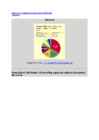
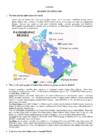
http://www.religioustolerance.org/worldrel.htm 4.08.2016. Pie-chart Image from the U.S. Center for World Mission Geographical distribution of prevailing organized religions throughout the world: 3 This map shows the most popular organized religion in each country of the world. So, for example, The Netherlands is shown as steel blue (mixed Catholic and Protestant) even though the largest group in the country are NOTAs (persons NOT Affiliated with any organized religion). Similarly, the UK is shown as Protestant Christianity even though weekly church attendance is in the single digits. Sponsored link: Basic information on various religions: Date % of
not be discussed; although they could significantly improve the sustainability of biofuels when they break through to the industrial scale. 2. The scale of biofuels production 2.1. Drivers of biofuels production Lal (2010) stated that "three inter-connected challenges face humankind in the 21st century": food security, climate change, and energy security. The world population is projected to reach 9 billion in 2050, posing more demands on energy, food, and other natural resources. It has been estimated that the world food production needs to double and meat production increase by 85% by 2050 to fulfill projected demand by population (Karp, 2011). In the recent decades, the food consumption in the most populous counties has shifted from grain-based diets to meat and dairy diets. Meat production requires times more biomass in the form of animal feed and that puts further pressures on natural resources
Islam Assemblers: ********and ******* ************** 8a form 2011.a Table of contents · Introduction · Muhammad · Angels · Five Pillars · Golden Age · Prophets · Family Life · Modern times Intoduction For other meanings, including people named 'Islam', see Islam (disambiguation). Islam is the monotheistic religion articulated by the Qur'an, a text considered by its adherents to be the verbatim word of God (Allah), and the teachings and normative example of Muhammad, often considered by the adherents of Islam as the last Prophet of God. In addition to referring to the religion itself, the word Islam means 'submission to God, 'peace', and 'way to peace'. An adherent of Islam is called a Muslim. Muslims believe that God is one and incomparable. Muslims also believe that Islam is the
The United Nations officially came into existence on 24 October 1945, when the UN Charter had been ratified by a majority of the original 51 Member States. The day is now celebrated each year around the world as United Nations Day. The purpose of the United Nations is to bring all nations of the world together to work for peace and development, based on the principles of justice, human dignity and the well-being of all people. It affords the opportunity for countries to balance global interdependence and national interests when addressing international problems. There are currently 192 Members of the United Nations. The Aims of the United Nations: -To keep peace throughout the world. -To develop friendly relations between nations. -To work together to help people live better lives, to eliminate poverty, disease and illiteracy in the world, to stop environmental destruction and to encourage respect for each other's rights and freedoms.
ISLAM Islam is a monotheistic and Abrahamic religion articulated by the Koran, a book considered by its adherents to be the verbatim word of God. By the teachings and normative example of Muhhamad, considered by them to be the last prophet of God. An adherent of Islam is called Muslim. Muslims believe that God is one and incomparable and the purpose of existence is to worship God. Muslims are beliving that Islam is the complete and universal version of a primordial
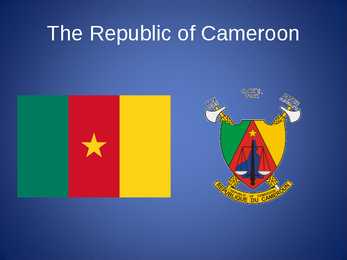
Laws are passed on a majority vote. Rarely has the assembly changed or blocked legislation proposed by the president. · President Paul Biya's Cameroon People's Democratic Movement (CPDM) was the only legal political party until December 1990. Numerous ethnic and regional political groups have since formed · The last parliamentary elections were held on 22 July 2007. Education · Most children have access to free, state-run schools or private and religious facilities. The educational system is a mixture of British and French precedentswith most instruction in English or French. · Seven state-run universities serve Cameroon's student population. More than 60,000 students were enrolled for the 19981999 school year. · Since 1990, private institutions have sprung up in at least five regions. These schools charge fees that are five to ten times those levied by state schools. Nevertheless, they offer
productivity • The recent rapid increase in human population over the past three centuries has raised concerns that the planet may not be able to sustain present or future numbers of inhabitants. Loss of Fresh Water • Most of the freshwater resources are either unreachable or too polluted, leaving less than 1% of the world's freshwater, or about 0.003% of all water on Earth, readily accessible for direct human use. • According to the Global Outlook for Water Resources to the Year 2025, it is estimated that by 2025, more than half of the world population will be facing water-based vulnerability and human demand for water will account for 70% of all available freshwater. • Freshwater is the most fundamental finite resource with no substitutes for most uses, yet we are consuming fresh water at least 10 times faster than it is being replenished in regions of northern
Author Group Girli Vasiljev RB1X Title of report Number of pages Economic Country Review: Finland, Estonia 20 and Hungary Teacher Kalevi Torunen The goal of this paper is to compare the economic performance of Finland, Estonia and Hungary. First, a general overview on the countries will be given. After, economic indicators (real GDP growth rate, inflation, unemployment, household consumption, investment, current account, government budget and deficit) of the three countries will be compared to draw a conclusion. Keywords GDP, inflation, unemployment, household consumption, investment, current account, government budget, deficit, surplus Table of contents 1 Introduction .......................................................................................1 2 Country Specs ......................................
adopt. The use of larger farm animals can be beneficial in pulling larger sleighs and wagons, in comparison to the use of dogs. Iron and other metals brought to Alaska were prized for trading and making tools. Russia left a footprint in Alaska by establishing its first library and museums, as well as introducing Russian Orthodoxy to the locals(Alaska natives) (Russian Orthodox Church in Ninilchik, Alaska and also Chapel in Fort Ross, California). Some of the religious books were further translated into native languages. However, the Russians did great damage to the local environment by depleting the sea otter population. 4. Significance of the Jewish element in Russian immigration to the US. Immigration from Russia to the US in 18811914: Nearly 3.2 million immigrants from the Russian Empire. The most prominent Russian groups that immigrated in this period were the groups seeking freedom from religious prosecution. Nearly half of the
9 United Kingdom 60,587,300 100 Although Britain is quite small in terms of land area (245,000 sq km), it has a large population of nearly 61 million, which ranks the 21st in the world (Britain is the 21st most populous state in the world) and the third largest in the European Union. The size of population is changing very slowly. Natural change is the difference between birth and death rates. It may be a natural increase or a natural decrease. Birth rate the number of babies born per 1,000 persons per year 12 Death rate the number of people who die per 1,000 persons 9.9 Natural increase per 1,000 population 2.1. (USA 5.5, Brazil 12.9, Bangladesh 17,3) The size of population may change mechanically, too through immigration and emigration. 2. Distribution. What does a population distribution map show? How people are spread out across the country. What does population density tell us? How crowded places are.
Tallinna Mustamäe Humanitargümnaasium Valeria Jefremenkova ENGLISH AS A GLOBAL LANGUAGE INGLISE KEEL KUI ÜLEMAAILMNE KEEL Research work Supervisor: Jevgenija Kozlova Tallinn 2016 1 Table of Contents СONTENT…………………………………………………………………………………...2 INTRODUCTION…………………………………………………………………………...3
without fresh foreign finance, preferably in the form of disbursements from the IMF. A two-year IMF stand-by arrangement, put in place in 2008, provided exceptional access to financing that was crucial in helping Ukraine through the Great Recession. In particular, it helped to prevent a banking crisis. In many respects, however, Ukraine reneged on its commitments, and the program went off-track very soon, as a 2011 IMF evaluation concludes. This holds for fiscal, exchange rate, and monetary policies, but in particular for the energy sector. In 2008, Ukraine committed itself to phasing out all gas subsidies in three years, but little was done on that front. For some specific industries, gas prices were actually decreased in 2009. Ukrainian households still pay traditionally extremely little for the gas their everyday life depends on. At end of the year, gas prices for households accounted for about one-fifth and those for utilities for one-third of import prices
their respect for the law in general whether the disputed law is actively enforced or not. Legislatures pass laws (called mala prohibita) that define crimes which violate social norms. These laws vary from time to time and from place to place: note variations in gambling laws, for example. Other crimes, called mala in se, are nearly universally outlawed, such as murder, theft and rape. Religion and crime Socially accepted or imposed religious morality has influenced secular jurisdictions on issues that may otherwise concern only an individual's conscience. Examples of activities that have been criminalized on religious grounds include alcohol-consumption (prohibition), abortion and stem cell research. In various historical and present-day societies institutionalized religions have established systems of earthly justice which punish crimes against the divine will and specific devotional, organizational and other rules under
There have also been terrorist organizations that used violence to promote independence for Quebec but their violent tactics were denounced by the Parti Québécois. Justifications for Quebec's sovereignty claim that the unique culture and French-speaking majority are threatened with assimilation by either the rest of Canada and that the best way to preserve language, identity and culture is via the creation of an independent political entity. Religious differences (given the Catholic majority in Québec), are also used to justify separation. The 1980 referendum took place on May 20 and the proposal was defeated by a 59% to 40 %. The 1995 Quebec referendum was launched by the Parti Québécois government of Jacques Parizeau. An eventful and complex campaign followed, with the "Yes" side flourishing after being taken over by Bloc Québécois leader Lucien Bouchard. It took place in Quebec on October 30 with "No" winning by 0.58%.
Pidgin (by black slaves). The origin of the people is mostly African, who were brought there for slavery. 6. Most West Indian countries gained independence during the 1960s-1980s. 7. The main branches of economy are tourism and companies kept offshore (tax haven). 8. Reggae, limbo dancing and salsa have originated from the West Indies. 9. Religions: Catholicism, various forms of Protestantism, Hindus and Muslims, Rastafarians; many worship the Christian god and African gods at the same time (witchcraft, voodoo). The reason why there are so many religions is because Europeans brought their own when they colonized and slaves from Africa practiced their own religions, which often combined. Rastafarians are people who practice Rastafari, which is Christianity, combined with Carribbean style. It is pro-African religion, which is against slavery. Canada 1
The guests then went to the bride's home for the banquet. The bride cut the cake and gave pieces of it to single girls to put under their pillows. When the guests began to dance, the bride and her mother went to the bridal chamber where she took off her wedding clothes and changed into her nightgown. The bride and groom spent their honeymoon in her parents' house. They were expected to stay in the bedroom for five days or more. Creole Customs Creole customs can be divided into two kinds: religious and non-religious. Religious customs focus on holidays: All Saints Day, Mardi gras and Easter, for example. On All Saints Day Creoles bring flowers made of white, black, or purple tissue paper to place on graves in the cemetery. The week before this holiday shops display crowns and crosses with black beads. Mardi Gras or Fat Tuesday is celebrated on the Tuesday before Ash Wednesday, which is the beginning of Lent. At Easter, rabbits come out at night. The children
Mountains in the United States and Canada. Grand Canyon created by Colorado River cutting a channel over millions of years, is about 227 miles long, and attains a depth of more than a mile. Nearly two billion years of Earth's history has been exposed as the Colorado River and its tributaries cut through layer after of sediment as the Colorado Plateaus have uplifted. 5. Climate Due to its large size and wide range of geographic features, the United States contains examples of nearly every global climate. The climate is temperate in most areas, tropical in Hawaii and southern Florida, polar in Alaska, semiarid in the Great Plains west of the 100 th meridian, Mediterranean in coastal California and arid in the Great Basins. Its comparatively generous climate contributed (in part) to the country's rise as a world power, with infrequent severe drought in the major agricultural regions, a general lack of widespread flooding, and a mainly temperate climate that receives adequate precipitation
Industry and motor vehicle exhaust are the number one pollutants. Heavy metals, nitrates and plastic are toxins responsible for pollution. While water pollution is caused by oil spill, acid rain, urban runoff; air pollution is caused by various gases and toxins released by industries and factories and burning of fossil fuels; soil pollution is majorly caused by industrial waste that deprives soil from essential nutrients. FIND OUT 5 WAYS HOW TO STOP POLLUTION. 2. Global Warming: Climate changes like global warming is the result of human practices like emission of Greenhouse gases. Global warming leads to rising temperatures of the oceans and the earth surface causing melting of polar ice caps, rise in sea levels and also flash floods, excessive snow or desertification. FIND OUT 5 WAYS HOW TO STOP GLOBAL WARMING. 3. Overpopulation: The population of the planet is reaching unsustainable levels as it faces shortage of resources like water, fuel and food
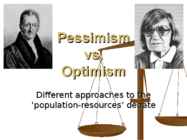
standards and to war, famine and disease. An increase in the population above the optimum limit would therefore lead to war, famine and disease. A PESSIMISTIC approach Thomas Malthus (1798) proposed his work during the early stages of the industrial revolution when inadequate food and clothing were common features in England. His argument was that population increases (geometrically) or at an exponential rate if unchecked i.e. 1-2-4-8- 16-32 etc Food supply at best increases at an arithmetic rate i.e.1-2-3-4-5-6 etc A PESSIMISTIC approach Malthus suggested that a rise in population, however small, would mean that eventually population growth exceeded increases in food supply and that yields from a given field could not go on increasing forever and that the land available is finite. He believed the population-resource
Chinese American and Filipino American. Over 80% of all Americans live in urban areas. There are 9 cities which have population more than 1 million people and 4 cities which have population more than 2 million people and these are New York, Los Angeles, Chicago and Houston. At the federal level, there is no official language but English is most spoken language in America. There are 8 languages which have more speakers than 1 million people. Nearly 80% of Americans consider themselves as Christians by religion. But still there are Protestants and Roman Catholists. The leading non-christian religions are Judaism, Buddishm, Islam and Hinduism. Also many people say that they are atheists or they don't have religion. View to the biggest city in America New York. 8 Famous Americans To write about famous examples from all walks of life would take forever because there are so many famous people
IMF(International Monetary Fund) With its near-global membership of 188 countries, the IMF is uniquely placed to help member governments take advantage of the opportunities—and manage the challenges—posed by globalization and economic development more generally. IMF is a specialized agency of the United Nations but has its own charter, governing structure, and finances. Its members are represented through a quota system broadly based on their relative size in the global economy. The IMF tracks global economic trends and performance, alerts its member countries when it sees problems on the horizon, provides a forum for policy dialogue, and passes on know-how to governments on how to tackle economic difficulties. (IMF) The IMF provides policy advice and financing to members in economic difficulties and also works with developing nations to help them achieve macroeconomic stability and reduce poverty. The IMF supports its membership by providing (IMF)
Tobago. 7. What are the main branches of economy in the West Indies? Sugar industry 8. Which styles of music and dance originate in the West Indies? Syncopation and percussion are direct manifestations of African heritage. Limbo was born in Trinidad in mid-C19. 9. Which religions are spread in the West Indies? Voodoo, Rastafarianism, Santerua, Christianity, Catholicism, Protestantism, small minority are Hindus, Muslims, or Jews, many worship the Christian God and African gods at the same time. Why are there so many different religions? many people came with their beliefs Who are Rastafarians? The Rastafari use marijuana for spiritual and ritual purposes. Dreadlocks were inspired by biblical admonitions against cutting hair and the Rastafari are likewise forbidden to cut their hair. Canada 1. Which place does it occupy in the world by its area? Canada is the second-biggest country in the world, after Rusiia, so second place. Its area is 9
..........................................16 3. Conclusion............................................................................................................ ....18 4. Sources............................................................................................................... .......19 Renewable energy Renewable energy is energy generated from natural resources--such as , wind, rain, tides and geothermal heat--which are renewable (naturally replenished). In 2006, about 18% of global final energy consumption came from renewables, with 13% coming from traditional biomass, such as wood-burning. Hydroelectricity was the next largest renewable source, providing 3% (15% of global electricity generation),followed by solar hot water/heating, which contributed 1.3%. Modern technologies, such as geothermal energy, wind power, solar power, and ocean energy together provided some 0.8% of final energy consumption.
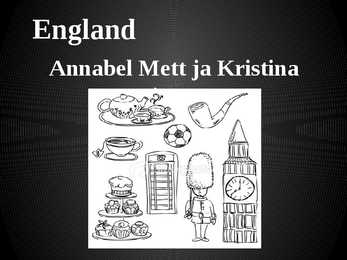
God Save the Queen, Land of Hope and Glory. · Currency: Pound sterling (GBP). · Distribution: Males: 48,7% Females: 51,3% Climate of England · England has a temperate climate, with mild winters with temperatures not much lower than 0 C, and not much higher than 32 C in summer. Generally, July is normally the warmest month, and February is normally the coldest. Religions in England · 71,75% of Englands population are Christians. · 22,52% is unidentified or non-religious. · Other religious minorities include Muslims which account for 3% of the population. · There are also Jewish, Hindu and Sikh minorities. People Distribution · White:45,082,900 · Asian:2,914,900 · Black:1,447,900 · Mixed:870,000 · Chinese:400,300 · Other:376,100 · Due to disputes about religion, southern Ireland declared independence but northern Ireland remained part of the United Kingdom.
Netherlands Antilles and Aruba. With an area of 41,528 kilometers and a population of 16 million, The Netherlands (the European part of the Kingdom) is one of the world's smaller countries. (6) The Netherlands is a constitutional monarchy with a parliamentary system, in which the government consists of the queen and the ministers. For historical reasons, The Hague is the seat of government, but Amsterdam is the capital. The current government is a coalition between the Christian democrats (CDA), the liberal democrats (VVD) and the Pim Fortuyn List (LPF). Jan Peter Balkenende (CDA) is the Prime Minister. Queen Beatrix is the head of state. (6) 1.2 Land & Climate The Netherlands is very flat. Nearly a quarter of its surface area is below sea level. The lowest point in the Netherlands, near Rotterdam, is 6.7 metres below sea level. Its highest point, the Vaalserberg, is 312 meters above sea level. The Vaalserberg is in the southeast of the country,
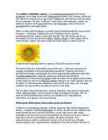
The sunflower (Helianthus annuus) is an annual(iga aastane) plant in the family Asteraceae, with a large flower head (inflorescence(õiekobar, õisik, õitseaeg, õidumine)). The stem(tüvi) of the flower can grow up to 3 metres tall, with the flower head reaching 30 cm in diameter. The term "sunflower" is also used to refer(nimetama, viitama, üle andma) to all plants of the genus(perekond, sugu) Helianthus, many of which are perennial(alaline, aastaringne) plants. What is usually called the flower is actually a head (formally(ametlikult) composite(liit-, komposiit- ; korvõieline, komposiit) flower) of numerous flowers (florets) crowded(täistuubitud, tunglev, rahvarohke) together
Composed for the sake of their own survival Fair and equal laws, for the general good Signed by 41 adult male members on the Mayflower Free of English law foundation of the USA constitution · Puritan Colony in Plymouth, New England America's first permanent puritan settlement Along with Jamestown, the most successful colony Originally 105 colonists First home in an empty Indian village Concluded a peace treaty with neighbouring tribes Aided by natives +++ (how to grow corn etc) went there to find relogious freedom · Puritan ethics and ideology God has a preordained plan for everybody Following the Bible Hard work, spiritual health, living simply, being thrifty, and self-discipline will Leave to salvation Merriness was prohibited The chief duty of a man is to glorify God · Thanksgiving 2 Annual tradition in the U.S Fourth Thursday in Nov. Thanking God The first Thanksgiving was celebrated to thank God for helping the Pilgrims
majority of the year. Climate sculpts the landscape through heat, cold, humidity, light and wind. In Canada, the variety of landscapes shows the diversity of our climate. In the north, low precipitation and cold temperatures favour permafrost and suppress vegetation growth, resulting in treeless tundra. South of the tundra, on the Canadian Shield, summers are short and warm, and winters are long and cold. Annual precipitation is abundant, allowing coniferous forests to establish and grow. On the Pacific coast, the combination of heavy rainfall and mild temperatures year round supports Canada, Kärt Kalvet 8a temperate rain forests. On the Prairies, the large number of days of sunshine affects the development of the agricultural landscape. In the Maritimes, the Atlantic Ocean moderates the climate such that winters are generally long and mild, and summers are short and cool. These conditions help in the development of forests. Finally, around the Great Lakes and alongside the
The best time to visit England is from May to September. July and August are the hottest months, but unfortunately the wettest too. In September and October the temperatures drop slightly. January and February are the coldest months and there's often snow on highland areas, especially in Scotland. Plants The mild climate, plenty of rain and a long growing season in Britain support a great variety of plants, which grow exceptionally well. Most of Britain was once covered with thick deciduous forests in which oak trees predominated. The impact of centuries of dense human population has massively altered the flora of Britain and only small parts of those forests remain today. Although about 10 percent of Britain is still forested, most of this area consists of commercially planted coniferous forests in Wales. Before they were affected by the people, the oak forests spread over the best soils of Britain
questions The first step in the survey process is to determine the research objectives. The researchers have to agree on a well-defined set of research objectives. These are then translated into a set of key research questions. For each research question one or more survey questions are then formulated, depending on the goal of the study. For example, in a general study of the population one or two general questions about well-being are enough to give a global indication of well-being. On the other hand, in a specific study of the influence of social networks on feelings of well-being among the elderly a far more detailed picture of wellbeing is needed and a series of questions has to be asked, each question measuring a specific aspect of well-being. These different approaches are illustrated in the text boxes noted later. Survey methodologists have given much attention to the problems of formulating the actual
7 the eastern part of the Czech Republic) were ultimately undone by internal conflicts, especially with the Czechs, who finally broke away from the empire. Prague Castle (Prazsk hrad, or just hrad to the Czechs) was built in the 870s by Prince Boivoj as the main seat of the Pemysl dynasty. Vysehrad sometimes served as an alternative in the 10th and 11th centuries. Christianity became the state religion under the rule of the pious Wenceslas (Václav in Czech), duke of Bohemia (r c 925-29), now the chief patron saint of the Czech people. Wenceslas was the 'Good King Wenceslas' of the well-known Christmas carol written in 1853 by English clergyman John Mason Neale. Neale, a scholar of eastern European church history, had read about St Wenceslas' legendary piety, and based his carol on the story of the duke's page finding strength and warmth by following in the footsteps of his master as they
 annaabi.ee