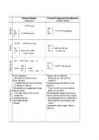
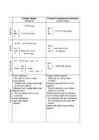
Leidsid 33 sarnast õppematerjali, mis on seotud failiga "Lihtminevik - Past Simple". Need materjalid aitavad sul teemat sügavamalt mõista.
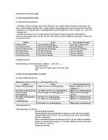
kaashäälik, work, täishäälik, yesterday, küsiv, eitav, prefer, lihtminevik, simple, worked, hard, eitavas, algvorm, õigekirjareeglid, preferred, seemedINGLISE KEEL Sisukord Sisukord.................................................................................................................................. 2 Ajavormid Tense vorms.......................................................................................................3 Lihtolevik The present simple..................................................................................... 3 Lihtminevik The past simple....................................................................................... 3 Lihttulevik The future simple...................................................................................... 3 Kestev olevik The present continuous......................................................................... 3 Kestev minevik The past continuous........................................................................... 4
INGLISE KEEL Sisukord Sisukord 2 Ajavormid Tense vorms 3 Lihtolevik The present simple 3 Lihtminevik The past simple 3 Lihttulevik The future simple 3 Kestev olevik The present continuous 3 Kestev minevik The past continuous 4 Kestev tulevik The future conrinuous 4 Täisminevik The present perfect 4 Enneminevik The past perfect 4 Ennetulevik Future perfect 5 Üldminevik Past tense 5 Üldtulevik Future indefinite 5
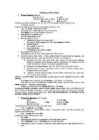
TENSES. ACTIVE VOICE. 1. Present Simple (üldolevik) I (he, she, it s) he works Eitav,küsiv do (I, you, we, they) he does not work does (he, she, it) does he work? Verbidele, mis lõpevad infinitiivis ss, -sh, -ch, -x või o, lisatakse ainsuse 3. pöördes es he touches, she goes Verbidel, mis lõpevad y-ga, mille ees on konsonant, muutub y->ies carry - he carries Vrdl: play he plays 1. Harjumuspärane, korduv tegevus või seisund olevikus. Tom drinks tea every day. He lives in Brussels. 2. Üldtuntud tõed, loodusseadused The earth goes round the sun. 3. Tulevikus toimuv tegevus
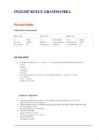
INGLISE KEELE GRAMMATIKA Present Simple Lihtoleviku moodustamine Jaatav vorm Eitav vorm Küsiv vorm I make I do not make Do I make? He/she/it speaks He/she/it does not speak Does he/she/it speak? We/you/they go We/you/they do not go Do we/you/they go? NB! ERANDID! · Verbidele, mis lõpevad ss, h, ch, tch, x või oga, lisatakse ainsuse kolmdandas pöördes es. he does he goes he misses
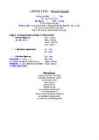
LIHTOLEVIK Present Simple I, you, we, they + I pv N: I work every day He, she, it + I pv + -s (-es) N: He works every day. Küsiv ja eitav vorm moodustatakse abitegusõnade do, does (he, she, it) abil. N: küsiv- Do you work every day? Eitav- No, I do not (don't) work every day. Lõppu -es kasutatakse ainsuse 3. isiku puhul: · kui sõna lõpus on pass passes -ss, -sh, -ch, -x push pushes wach watches mix mixes · o-lõpulistes tegusõnades do does
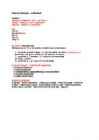
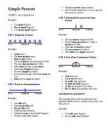
Present Simple Lihtolevk Spikker: +(jaatav) 1.põhivorm + (e)s -> he, she, it -(eitav) do(does) + not + 1.põhivorm ?(küsiv) do(does) + 1.põhivorm I do You do He, She, It does We do You do They do Do, Does = abitegusõnad. Abitegusõna Do, Does kasutatakse ainult eitavas ja küsilauses. 1) 3.pöördes lisatakse lõppu es, kui sõna lõpus on tähed ss,-sh,-ch,-x,-o nt: he does , he goes , he misses , he watches , he mixes . 2) 3.pöördes y -> muutub -> ies, kui y ees on kaashäälik nt: study studies 3) 3.pöördes y -> ys , kui y ees on täishäälik. Present Simple Lihtolevik väljendab: 1. Korduvat tegevust! 2. Püsivat olukorda! 3. Sõiduplaanide ja ajagraafikutega seotud tulevikku! 4. Tegevust mingil ajal! 5. Kõigile tuntud fakte! SPIKKERSÕNAD: 1) always - alati,2) sometimes vahepeal,3) seldom harva,4) usually tavaliselt, 5) often tihti,6) once a week kord nädalas,7) twice a day kakskorda päevas,
TEGUSÕNA Tegusõna BE pööramine (olevik) 69 Tegusõna BE pööramine (minevik) 70 HAVE GOT pööramine 71 Üldolevik 73 Üldminevik Jaatav lause - reeglipärased tegusõnad 74 Jaatav lause - ebareeglipärased tegusõnad 75 Eitav ja küsiv lause 77 USED TO 78 LISTEN & REPEAT REPEAT 59 Lk. Üldtulevik 78 Kestev olevik 80 Kestev minevik 82 Täisminevik 83
KESTEV OLEVIK Present Continuous Kestev olevik väljendab tegevust mis toimub praegu. ,,be" olevikus + põhitegusõna / I am;he, she, it is;we, you they are / -ing vorm Küsiv vorm moodustatakse sõnajärje muutumise teel ja eitav vorm not lisamisega peale BE vormi: N: Jaatav- He is reading. Küsiv- Is he reading? Eitav- He is not (isn't) reading. Märksõnad: now (paregu) at present (praegu) at the present moment (käesoleval tehtkel) at the moment (käesoleval hetkel)
Past Simple and Continuous Table of Contents Past Simple .......................................................................... 2 The spelling of endings in the Past Simple ............................ 3 When to use the Past Simple ................................................ 3 Past Continuous .................................................................. 4 When to use the Past Continuous......................................... 4 Used to & would................................................................... 5 Unfulfilled past events.......................................................... 5 Past Simple Regular Past Simple forms end in -ed. I worked he danced
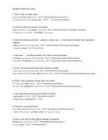
Here's a breakdown of how you can express how you really are without complaining too much. · Fine, thanks. / On top of the world, thanks. · OK, thanks · Not so bad, thanks. / Can't complain, thanks. · So so, thanks. / So and so, thanks. · Not so good, actually 1 The English alphabet Spelling Work with your partner and spell out first your name and then some names of places. Write down each letter as you hear it, and then say the word. The English alphabet on the phone: You might find the following alphabet (used by international airlines) useful when trying to spell a word on the telephone. A Alpha O Oscar Ä Alpha-Echo Ö Oscar-Echo B Bravo P Papa
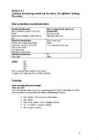
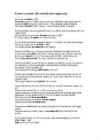
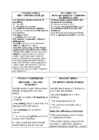
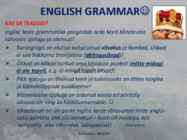
(like liked (hääldub [laikt]); hate hated [heitid]). Ebareeglipäraste sõnade puhul tuleb kasutada II põhivormi (vt. irregular verbs; ebareeglipäraste verbide tabel; näit. write wrote; run ran; buy bought jne.) - Küsimuste ja eitava vormi moodustamisel tuleb tegusõna panna algvormi; aga lisatakse mineviku abisõna did (Did you like the film? She did not (didn't) read the newspaper. When did you come home?) Jaatav Eitav Küsiv (kas-küsimus) I liked (went) I did not (didn't) like/go Did I go? (Läksin ma?) You liked (wento) You did not (didn't) like/go Did you like/go? He/she/it liked (went) He/she/it did not like/go Did he/she/it like/go? We liked (went) We did not like/go Did we like/go?
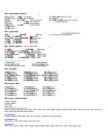
you are, they are. He is jane he/she/it isn't Is he/she/it German? No I'm not, you aren't, he/she/it isn't, we aren't, She is marta we aren't are we German? you aren't, they aren't. It is a school. you aren't are you German? We are students they aren't are they German? You are in class 12 They are teachers Unit 2 / present simple + - ? yes- I do, you do, he/she/it does. I work I don't work Do I work no I don't, you don't, he/she/it doesn't You work you don't work do you work? He/she it works he/she/it doesn't works does he/she/it work We work we don't work do we work
• we don't use an article: at night, at noon, every We don't usually use an article week, every day, every night, last morning, last • to talk about things in general. • before the names of countries, cities, towns and villages. week, all night, all day, tomorrow, yesterday,... • with plural nouns and uncountable nouns when talking about them • use the with in the morning, in the afternoon, generally. during the night, the winter, the summer, the day Examples: She has got long hair. He wears black shoes. after tomorrow,... • when talking about sports, people's first
garden. Kui me tahame teada, kes või mis oli tegija, saame moodustada passiivi küsimuse Who/ What ... by?: Who was the book written by? Passiivi moodustatakse be (is/ was jne) + mineviku kesksõna (past participle) ehk III põhivorm (done/ cleaned/ seen jne). Aktiivilause sihitisest saab passiivilause alus. Aktiivilause tegusõna jääb samasse ajavormi, kuid muutub passiivseks. Aktiivilause alus ehk tegija jäetakse ära või pannakse lause lõppu prepositsiooni by järele: Present simple passive am/ is/ are + III pv (cleaned/ seen jne) Many accidents are caused by careless driving. Present simple active: Somebody cleans this room every day. passive: This room is cleaned every day. Past simple passive was/ were + III pv (cleaned/ seen jne) We were woken up by a loud noise during the night. Past simple active: Somebody cleaned this room yesterday. passive: This room was cleaned yesterday. These rooms were cleaned yesterday.
Golden Grammar rules 1. Don't use an with own. Sue needs her own room. (NOT Sue needs an own room.) I'd like a phone line of my own. (NOT ... an own phone line.) 2. Use or rather to correct yourself. She's German or rather, Austrian. (NOT She's German or better, Austrian.) I'll see you on Friday or rather, Saturday. 3. Use the simple present play(s), rain(s) etc to talk about habits and repeated actions. I play tennis every Saturday. (NOT I am playing tennis every Saturday.) It usually rains a lot in November. 4. Use will ..., not the present, for offers and promises. I'll cook you supper this evening. (NOT I cook you supper this evening.) I promise I'll phone you tomorrow. (NOT I promise I phone you tomorrow.) 5. Don't drop prepositions with passive verbs. I don't like to be shouted at
sentences. All students of English, be they native speakers or those who are studying English as a second language, will profit from the fundamental introduction and review of grammar provided by SADDLEBACK'S BASIC ENGLISH GRAMMAR 1 and 2. Helpful marginal notes throughout the books have been provided to reinforce existing skills and call attention to common problem areas. We wish you every success in your pursuit of English proficiency. 1 What is Grammar? 5 The Simple Past Tense 98 Regular and Irregular Verbs 99 Was and Were 104 2 The Capital Letter 6 The Past Progressive Tense 106 The Future Tense 108 Can and Could 112
1. Active/Passive Active - the professor teaches the students. Passive - The students are taught by the professor 2. Present Simple [VERB] + s/es in third person. Tegevus on korduv või tavapärane. You speak English. I play tennis. Cats like milk. The train leaves tonight at 6 PM. I am here now. Active= Once a week, Tom cleans the car. Passive= Once a week, the car is cleaned by Tom. 3. Present Continuous [am/is/are + present participle]. Tegevus toimub/ei toimu praegusel hetkel. You are watching TV. You are learning English now. I am studying to become a doctor. I am meeting some friends after work.
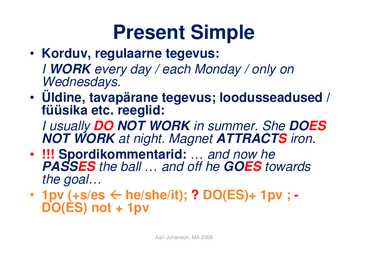
Present Simple · Korduv, regulaarne tegevus: I WORK every day / each Monday / only on Wednesdays. · Üldine, tavapärane tegevus; loodusseadused / füüsika etc. reeglid: I usually DO NOT WORK in summer. She DOES NOT WORK at night. Magnet ATTRACTS iron. · !!! Spordikommentarid: ... and now he PASSES the ball ... and off he GOES towards the goal... · 1pv (+s/es Å he/she/it); ? DO(ES)+ 1pv ; - DO(ES) not + 1pv Aari Juhanson, MA 2008 Present Progressive · Hetkel toimuv, pooleliolev tegevus: S/he IS TALKing on the phone now. I AM READing an interesting book. · Ajutine, regulaarsele ja tavapärasele vastanduv tegevus (tulevikku viitav): This summer they ARE not GROWing
coast. "No." "He used to go fishing with us during the summer," Charlie prompted. That would explain why I didn't remember him. I do a good job of blocking painful, unnecessary things from my memory. "He's in a wheelchair now," Charlie continued when I didn't respond, "so he can't drive anymore, and he offered to sell me his truck cheap." "What year is it?" I could see from his change of expression that this was the question he was hoping I wouldn't ask. "Well, Billy's done a lot of work on the engine -- it's only a few years old, really." I hoped he didn't think so little of me as to believe I would give up that easily. "When did he buy it?" "He bought it in 1984, I think." "Did he buy it new?" "Well, no. I think it was new in the early sixties -- or late fifties at the earliest," he admitted sheepishly. "Ch -- Dad, I don't really know anything about cars. I wouldn't be able to fix it if anything went wrong, and I couldn't afford a mechanic..."
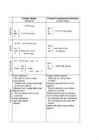
Ing Present Simple Present Progressive/Continuous (lihtolevik) (kestev olevik) I vorm (play) am JAATAV he is I vorm+ing (playing) she I vorm+s (plays) are it do not I vorm (don't play)
Ing Present Simple Present Progressive/Continuous (lihtolevik) (kestev olevik) I vorm (play) am JAATAV he is I vorm+ing (playing) she I vorm+s (plays) are it do not I vorm (don't play)
Ing Present Simple Present Progressive/Continuous (lihtolevik) (kestev olevik) I vorm (play) am JAATAV he is I vorm+ing (playing) she I vorm+s (plays) are it do not I vorm (don't play)
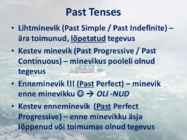
Past Tenses • Lihtminevik (Past Simple / Past Indefinite) – ära toimunud, lõpetatud tegevus • Kestev minevik (Past Progressive / Past Continuous) – minevikus pooleli olnud tegevus • Enneminevik !!! (Past Perfect) – minevik enne minevikku OLI -NUD • Kestev enneminevik (Past Perfect Progressive) – enne minevikku äsja lõppenud või toimumas olnud tegevus Created by Aari Juhanson, MA 2009 Past Simple • Ära toimunud (regulaarne) tegevus: I WORKED yesterday. S/he didn’t WORK last Monday. • Lõpetatud tegevus: I already CALLED them today. (I’m not going to call again!) Which countries did you VISIT? (You’re back …) BUT: Which countries have you VISITED so far? (You’re not back yet or you travel regularly …) • Jutustused, mineviku sündmuste kirjeldus: Once upon a time there LIVED a Garfield who HAD many friends. The first one WAS Odie, … • 2pv;
Tests Superstar 1 Luke Prodromou Test 1 Name____________________ Class_______ Use your English 1 Complete these sentences using the correct form (present simple or present continuous) of the verb in brackets. _ 1 She is in a band and she _________________________________ (record) a CD at the moment. _ 2 She is an actress and often _________________________________ (appear) on television. _ 3 At the moment she _________________________________ (have) a rest because she is tired. _ 4 Mike is a doctor and he _________________________________ (live) in Manchester. _ 5 I _________________________________ (start) work at 8.30 every morning.
Lamb to the Slaughter by Roald Dahl (1916-1990) The room was warm and clean, the curtains drawn, the two table lamps alight - hers and the one by the empty chair opposite. On the sideboard behind her, two tall glasses, soda water, whiskey. Fresh ice cubes in the Thermos bucket. Mary Maloney was waiting for her husband to come him (correction: home) from work. Now and again she would glance up at the clock, but without anxiety, merely to please herself with the thought that each minute gone by made it nearer the time when he would come. There was a slow smiling air about her, and about everything she did. The drop of a head as she bent over her sewing was curiously tranquil. Her skin - for this was her sixth month with child - had acquired a wonderful translucent quality, the mouth was soft, and the eyes, with their new placid look, seemed
This one is for Dr. David Allen Goodwin. My love and gratitude are boundless. Thank you, Dave. You saved my life. Acknowledgments My deepest gratitude to my editor, Hilary Sares, who really dug into this story and made me work for it. Basically, she kicked my ass. By not pulling her punches or letting me shortchange the details, she made me work harder and because of that, this story is a much, much better book. BARED TO YOU wouldn't be what it is without you, Hilary. Thank you so much! To Martha Trachtenberg, copy editor extraordinaire. This book is an important one for me and she treated it that way. Thank you, Martha! To Victoria Colotta, for all her hard work on the interior design and typesetting. She took my plain text and made it gorgeous. Thank you, Victoria!
· California is not in the United Kingdom. · You only speak English. · Windows are made of glass. · Do you only speak English? I am not reading any books right now. Present Continuous · · Are you working on any special projects at work? [am/is/are + present participle] · Aren't you teaching at the university now? Examples: USE 3 Near Future · You are watching TV. · Are you watching TV? · You are not watching TV. USE 1 Now Examples: · I am meeting some friends after work.
Will you give me a hand? 5.In the same way as the future continuous, but with state verbs: I'll be at the station when you arrive. 'Shall' is used mainly in the forms 'shall I ?' and 'shall we?' in British English. These forms are used when you want to get someone's opinion, especially for offers and suggestions: •Shall I open the window? (=do you want me to open the window). •Where shall we go tonight? (=what's your opinion?). PRESENT CONTINUOUS PRESENT SIMPLE AM/IS/ARE + ING (AM INFINITIVE (WORK;WORKS) WORKING) We talk about things that we have We talk about events in the future already arranged to do in the which are 'timetabled'. future. •My plane leaves at 6 in the •I've got my ticket. I'm leaving on morning. Thursday. •The shop opens at 9.30. •I'm seeing Julie at 5 and then I'm
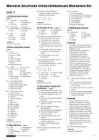
3 1 was getting, arrived Challenge! 2 It's a mixed class of girls and boys. 2 was preparing, cut Students' own answers 3 It's difficult to tell what kind of 3 discovered, were building 1E Past perfect simple and lesson their in. 4 started, was talking 4 It could be that they're in a maths 5 found, was living continuous page 8 lesson. 4 1 has/had just arrived 1 1 had been having hits since 1992
Väidetavalt on üle poole inglise keele sõnavarast mitte anglo- saksi päritolu, ehk siis laenatud – kontrolli hoolega, kas ‘sympathy’ ikka tähendab ‘sümpaatiat! kaastunne Aari Juhanson, MA 2009 Tenses – Tegusõna ajad • Olevik (Present) • Minevik (Past) • Tulevik (Future) • Kaudne tulevik (Future-in-the-Past) Aari Juhanson, MA 2009 Present Tenses • Lihtolevik (Present Simple / Present Indefinite) – regulaarne, korduv tegevus • Kestev olevik (Present Progressive / Present Continuous) – pooleliolev, ühes tükis tegevus • Täisminevik !!! (Present Perfect) – tehtud, *lõpetamata* tegevus • Kestev täisminevik (Present Perfect Progressive) – äsja tehtud (tagajärjed veel näha), ka veel kestev tegevus Aari Juhanson, MA 2009 Present Simple • Korduv, regulaarne tegevus:
Students' own answers 11 sympathies 2 1 time-consuming 12 verdict 2E Narrative tenses page 16 2 long-lasting 3 light-hearted 2 That he was responsible not only for 1 1 past perfect continuous 4 absent-minded his family but also to wider society. 2 past simple 5 wide-eyed 3 1 set 7 on 3 past continuous 6 fair-skinned 2 tells 8 on 4 future in the past 3 made 9 for 5 past perfect 3 1 well-behaved 6 used to 2 far-reaching 4 during / in 10 that
He's on the plane at the moment. 5 I ... (read) an interesting book. It's a collection of memories. 6 Leo was late again. He ... (step) out of his father's car when the bell rang. 7 Helen ... (lie) on the sofa when an ambulance stopped in front of the house. 8 I ... (give) this report from inside the school radio studio. Right now, the two teams ... (take) their places on the football field. 9 Mrs Watson ... (make) her speech when the girls rushed in. --- 4 2. Write the verbs in the past simple, the future simple, or the present perfect tense. Do you remember? I started I'll start I've started / she's started I'm not interested in sport, but lots of my classmates are. Some of them ... (1 do) great things in sport. Lisa ... (2 win) nine swimming competitions since she was 13. John ... (3 be) the school's top runner for the last two years. Next spring he ... (4 run) the London Marathon. But my friend Kelly is the best. She ... (5 start) skating when she was four. She ... (6 have)
Lihtlause (The simple sentence) Lauseliikmed on alus (t/ie subject),iildis (the predicale), sihitis lthe objecr) ja mddrus (.the adver- blal1. Lau.eliikmek. rdih olla iiLl.,siksona r0i terve:dnade riihm ehl< lraas. faraline sdnajiirg on: Alus Oeldis Sihitis MAarus
 annaabi.ee