Leidsid 33 sarnast õppematerjali, mis on seotud failiga "Kokkuvõte: "What makes a good leader?"". Need materjalid aitavad sul teemat sügavamalt mõista.
lead, leader, good, know, leadership, character, there, characteristics, skills, important, clear, sense, thinks, purpose, needs, patient, reliable, individual, makes, different, opinions, another, claims, gifts, than, others, them, likely, career, field, calling, notice, things, remember, bill, passion, missionisy, teachers, himself, herself, mindedWhat makes a good leader? Almost every employee has a leader who leads and co-ordinates his workers. Furthermore, we all lead our lives with minor exceptions. Every person is unique and each leaders has different leading techniques. First of all, leadership is an art. It is because it continually evolves, changes form, and requires creativity. It is a science because there are certain principles and techniques required. A good leader knows when it is time to change shape. A great leader allows creativity to be unleashed and takes risks. Person like that can transform his or her organization for major developement. A good leader needs to be able to laugh but a great leader should be abel to laugh at oneself. Secondly, a good leader is considering with his employees. Of course he or she has to have skills and knowledge on how to motivate workers and pave the way for company's success,
children—Christina, Michael, David, and Catherine—for their sup- port and patience during the long hours away from them to finish this book. xi ccc_tracy_fm_i-xviii.qxd 7/7/03 3:23 PM Page xii ccc_tracy_fm_i-xviii.qxd 7/7/03 3:23 PM Page xiii Introduction There is nothing on earth that you cannot have once you have mentally accepted the fact that you can have it. —Robert Collier ■ THE TRUTH ABOUT YOU You are a thoroughly good person.You deserve a wonderful life, full of success, happiness, joy, and excitement. You are entitled to have happy relationships, excellent health, meaningful work, and finan-
(Verplaetse, 2008). Since 9/11 and the following fight against terrorism it became clear that the Bush administration thought of torture as something justifiable while it goes against all possible agreed upon treaties and conventions. One could indeed possibly think of situations that could serve as an exception to the prohibition of torture but these hypothetical situations can hardly relate to real situations. The ticking bomb argument looks at the hypothetical case where a leader of a state is asked to give their permission to torture a captured rebel leader because he (probably) knows the locations of a few explosives that are spread around the city in different apartment buildings. In case they are not found within 24 hours, they will explode and many will be left dead (Walzer, 1973). Is it justified to torture this person to find out where the bomb is? This essay will look in to how it has according to the thinkers in the strand of
Education Education is so multifaceted that it is difficult for me to know where to begin discussing it, or how to prioritize the many factors. Relaying my own experience is easy: I had a standard classroom approach, supplemented by inordinate reading. In only the briefest and least memorable instances did I receive any individual tutoring. Education is commonly thought of as the job of schools. Adults cry "educate our children!" Everyone has opinions about the best way to do the job. It is of urgent importance, and all the
Quack bank present buiseness plan by 8 november, presentation 9 november long term loan (10 years), at 4,8% interest rate. Conclusion I need this sum of money from bank. Business plann: 1. management summary 2. organisational profile 3. internal analysis 4. external analysis 5. strategy 6. financial prognosis Group feedback 7/11. Leadership and management A good manager is competent in all different management styles, and knows when to apply which style. 1. Autocratic 2. Democratic 3. Free reign (vabad käed, dellegeerimine) 4. Patriarchal (he knows best what is good for his children, "family" structure) The management process: - policy function (setting targets/goals, planning, decision making); - organizational (execution, monitoring, communication/information).
Harold McMillan articulated his now famous “winds of change” sweeping Africa. We had high hopes for Africa, for the Black race, that the insidious imposition of foreign rule on us, the looting of Africa’s natural resources by our colonial masters accorded us would be things of history. That is more than forty years ago. Unfortunately, the promise of independence has not been fulfilled. Today, Africa has become more desolate; there is more starvation, diseases and non-provision of essential services than when we got our independence. There are all kinds of wars in Africa than the rest of world put together. The majority of so-called Africans leaders want to stay in power until the day their bodies are put in the grave. Through buffoonery, utter mismanagement and downright stealing of the wealth of the masses, these leaders have so impoverished Africa that we are now nothing but a beggar continent. We beg for
Power Destroys Ideals Throughout the centuries people have fought for power. Leadership has been a reason for many wars and fights. For some people one of the most important things in life is to have power over everybody else. Very often those who become leaders destroy or forget about the ideals they had before and about the promises they made. G. Orwell's book "Animal Farm" is an excellent example of how easy it is to forget about the ideals. In his novel George Orwell pictures a human society through the animal farm. He uses exagerations which help to feel the atmosphere of spoiled society. Society ruined by dictators, false ideas and corruption
1. A generalist is ignorant from the point of view of a specialist and a specialist is stupid from the point of view of a generalist. 2. All great stupidity is created by geniuses. 3. All stereotypes are true; the fact that you recognize a slur proves that it isn't. 4. Anything you're afraid is true is true. 5. Before most people get to the point of being able to tell their ass from a hole in the ground they're already assholes and it's too late. 6. Concentrating on something important can make you lose track of your soap opera. 7. Debunking the bunk is everyone's responsibility. 8. Don't ask me to pay for anyone else's mistakes. I make enough of my own. 9. Even those who possess real magic must beware of being misled by "magical thinking." 10. Everyone knows what shit tastes like. 11. Exclusive occupancy of a private room is a basic human right. 12. Fair compensation for genius is wealth. 13. God's not perfect, so it's a pretty good bet that you're not, either. 14
They can help and assist us if we need some technological help. Another thing is that in schools, in classes generally students are not allowed to use their appliances, so it means they have to communicate verbally as well. I think that teachers should be creative to blend so-called digital learning/teaching with old-fashioned learning/teaching. · Sir Ken Robinson: Do schools kill creativity? Sir Ken Robinson claims in the clip that " creativity in education is as important as literacy, we should treat it with the same status." I totally agree with all what he said. We have very strict education systems that don't allow a room for mistakes and they categorize people based on their achievements in exams. There is nothing like potentials, creativeness, possibilities or even 2nd chances. Families put high expectations on academic achievements and they always compare their kids with other's kids. A minority in
(Introduction to SP, EP, 2008) • Eneseteadvus, mina-kontseptsioon (self conciousness, self concept): a cognitive represenation of oneself that gives a coherence and meaning to one’s experience, including one’s relations to other people. It organize’s past experinece and helps us to recognize and interpret relevant stimuli in the social environment. Üldistatud pilt iseendast. • Teadmine endast (self-knowledge): knowledge about one’s own characteristics, abilities, opinions, thoughts, feelings, motives etc. Teadmine enda kohta. • Eneseteadvustamine, enesereflektsioon (self-awareness): a psychological state in which one is aware of oneself as an object, just as one is aware of other objects such as buildings or other people. Enesest mõtlemine, analüüsimine, reflekteerimine Kust tuleb teadmine iseendast? • William James: “Mina on kõik see, mida inimene võib pidada
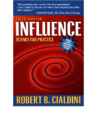
Central Europe. you should buy this new edition of Influence: o More neuroscience evidence of how the influence process works is inte- Science and Practice, gra ted throughout. For instance, brain imaging research is presented, showing here are 5 good reasons! how the "Expensive = Good" heuristic o Updated coverage of social influence leads people to perceive more costly effects in popular culture, such as the items as better than (identical) less contagion of obesity among the young costly ones. and the contagion of violence in such tragedies as the Virginia Tech and North- o Enhanced coverage of "how to say
something about orientation in zero gravity and that knowledge helped him a lot later. Most of the time passes in Battle School, which is composed of army barracks with rows of bunk beds; dining halls one for soldiers and one for commanders, with scoreboards decorating both; the game room, with various video games for the children to play; battlerooms, where the children have practice and battles in zero gravity; and a gym with shower rooms, where Ender and Bonzo fight. There is also an area for teachers' quarters, which the children never go to, but it is presumably in this vicinity where the conversations between Graff and other adults takes place. After Battle School he returns to Earth before going to Command School. There in the wilderness is a large house, overlooking lakes on either side. Although there are wasps that Ender says will sting without provocation, the setting is peaceful, allowing Ender the mental recovery and relaxation he needs.
Prior to this momentous event that heralds an evolutionary transformation in the life of plants, the planet had already been covered in vegetation for millions of years. The first flower probably did not survive for long, and flowers must have remained rare and isolated phenomena, since conditions were most likely not yet favorable for a widespread flowering to occur. One day, however, a critical threshold was reached, and suddenly there would have been an explosion of color and scent all over the planet – if a perceiving consciousness had been there to witness it. Much later, those delicate and fragrant beings we call flowers would come to play an essential part in the evolution of consciousness of another species. Humans would increasingly be drawn to and fascinated by them. As the consciousness of human beings developed, flowers were most likely the
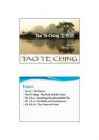
y Ch. 2 & 11 On duality and Formlessness y Ch. 8 & 78 The Virtues of Water Lao Zi The Person y Real name was Lee Er, who was a highly regarded philosopher of his time y Keen observer of the virtues of Nature and the relationship between man and his environment y Realized the existence of a formless and indescribable origin: Tao y Can not thoroughly analyzed by our thoughts and logic y Its existence gave rise to everything and pervades all that we know y The manifestation of Tao in humans is called our True Nature y Purity and innocence of a child y Spring and Autumn, Warring States Era of the Chou dynasty (~500BC), during a time of turmoil and spiritual disintegration y Decided to ride on the back of a water buffalo to spread the Truth that he realized, or Tao, westward y Requested by an official at the border of China to write down the essence of his wisdom as a guide for future generations
This does not mean that all of us are equally strong, smart or beautiful, but that everyone has the ability to damage or kill the other. The main goals, we all want to achieve, are having a shelter, security, power, wealth and enough food. This means that people are constantly competing with each other and that makes all of us (who desire the same things) enemies. Hobbes names the insecurity and fear people feel towards each other a "state of nature". In this state there are no moral rules or enforced laws, also no justice or injustice. People, being violent and arbitrary, will only follow their own interest. So without laws and boundaries, people would be in constant war - every man for himself. In this kind of society there is no time for cultural or industrial development. No one can enjoy life because of the constant fear they life in. The "state of nature" or in other words chaos is not be beneficial to anyone. So to get what
Where would I like to be? Who would I most like to be with? What are my dreams for the future? What do I intend to do to achieve these dreams? What will I be doing ten years from now? How does this university fit in my plans for the future? You can also brainstorm using the following questions: What might help the evaluating committee in understanding me better? What distinguishes me from other applicants? What are my career aims? What skills do I possess that would improve your chances for success in this field? What has stimulated my interest in this field of study? Why should an admissions committee be interested in me? Why am I interested in this field? 1 Some other topics are suggested below to stimulate your thinking: The most memorable experiences The most influential ideas, people and events in your life Your likes and dislikes
An analysis of the problem of Political Power Written by: Katre Kikkas Introduction It is said that in the political philosophy there are only two questions: ,,Who can have what?" and ,,Who will decide over it?". It is not exactly like that but it is quite close to the trough, to begin with. The first question includes material amenity's, and dividing rights and liberties.(Wolff, 1996) What is power? It is ability to influence others to do something they otherwise would not. Also, others can be affected with threats and force. (Kilp, 2010) Political power includes also right to force the others and to punish them if
ManOS Overview Everything below is rooted in my core value of creating selfesteem. My actions today focus on work, girls, travel & having fun. My career is the ultimate leverage point as this creates the money, selfesteem and confidence. The money allows me to travel and the selfesteem & confidence allow me to live the lifestyle that is congruent with drawing in girls. Long term (5+ years), I want my life to offer value to the world by having a beneficial impact on those around me. I am obviously not clear how I will do this, so for now, I am focused on taking the greatest strides possible over the next few years, to better put me in a position to achieve my long term goal. 1. Career Vision I want to earn the rank of manager in my firm within the next 3 years. I want to earn the respect and trust of fellow employees. I�
Homereading 4 Changing world Religions Islam Islam is a monotheistic Abrahamic religion originating with the teachings of Muhammad, a 7th century Arab religious and political figure. The word Islam means "submission", or the total surrender of oneself to God An adherent of Islam is known as a Muslim, meaning "one who submits (to God)". There are between 1.1 billion and 1.8 billion Muslims, making Islam the secondlargest religion in the world, after Christianity. Muslims believe that God revealed the Qur'an to Muhammad, God's final prophet, and regard the Qur'an and the Sunnah (words and deeds of Muhammad) as the fundamental sources of Islam.They do not regard Muhammad as the founder of a new religion, but as the restorer of the original monotheistic faith of Abraham, Moses, Jesus, and other prophets.
Tallinn´s University Pedagogical College Department of Youth Work and Continuing Education Andra Pant NT-32 GETTING PHYSICAL Tallinn 2012 "Delivery is more important than content." Arch Lustberg, speech trainer According to wellknown social anthropologist Edward T. Hall, 60% of our communication is nonverbal. That means whenever we stand before an audience, our stance, our posture, our facial expressions, our hand gestures, our whole body dynamic communicate more than our actual spoken words. A stiff, immobile speaker
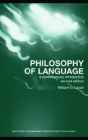
Part IV, new to this edition, examines the four theories of metaphor. Features of Philosophy of Language include: · new chapters on Frege and puzzles, inferentialism, illocutionary theories of meaning, and relevance theory · chapter overviews and summaries · clear supportive examples · study questions · annotated further reading · glossary Praise for the First Edition: "This exceptional text fulfils two essential criteria of a good introduc- tory textbook in the philosophy of language: it covers a broad range of topics well, all of which are the basis of current active research, and does so in an accurate manner accessible to undergraduate students." Mike Harnish, University of Arizona ". . . an excellent textbook for teaching. The examples throughout are delightful and students will love them."
Personal statement ,,Whatever course you decide upon, there is always someone to tell you that you are wrong. There are always difficulties arising which tempt you to believe that your critics are right. To map out a course of action and follow it to an end requires courage." - Ralph Waldo Emerson This quato, mentioned before, gives me confidence to do great things myself in life and pursue them into bigger ones one day ahead. In these moments i like to remember what Napoleon Hill once said: ,,If you can´t do great things, do small things in a great way
Table of contents 1. Introduction 2. History 2.1. Early Hospitals 2.2 Recent developments 3. The National Health Service 4. Diseases 5. First Aid 6. Medicine and elements of medical care 7. Doctors 8. Ways of keeping health 9. Conclusion 10.Used materials 1. Introduction The human body is just like a machine with many parts. Each part has a special job, and all the parts work together to keep you alive and healthy. Good health is one of the most important things in life. There are certain things we can do to stay healthy. We should eat a balanced diet that includes the right kinds of food and drink plenty of clean, fresh water. We should exercise regularly, strengthening our muscles and keeping us in shape. Exercise helps the blood circulate around our bodies, cleaning out waste and supplying plenty of oxygen. It is also important what we get enough sleep. The number of hours we sleep we need depend on our age. Young babies sleep
The basic ingredients, when fresh, are so full of flavour that British haven't had to invent sauces to disguise their natural taste. What can compare with fresh pees or new potatoes just boiled and served with butter? Why drown spring lamb in wine or cream and spices, when with just one or two herbs it is absolutely delicious? If you ask foreigners to name some typically English dishes, they will probably say "Fish and chips" then stop. It is disappointing, but true that, there is no tradition in England of eating in restaurants, because the food doesn't lend itself to such preparation. English cooking is found at home. So it is difficult to a good English restaurant with a reasonable prices. In most cities in Britain you'll find Indian, Chinese, French and Italian restaurants. In London you'll also find Indonesian, Mexican, Greek... Cynics will say that this is because English have no "cuisine" themselves, but this is not quite the true. Vocabulary:
· Man as an animal-clever than other beasts, still explainable within the framework · Man is not a free agent, is govern by something · Unable to determine his own faith · Hereditary · Naturalists tried to apply in fiction the processes of natural sciences · Writers task is to record facts, systems of behaviour, living conditions, never revealing any natural unbiased (completely natural) · Point of view: amoral-outside the category of morality, neither good or bad · Naturalist find it absurd to blame the wicked. These criminals are doing what nature, environment, their unconscious tells them to do. Naturalists do not judge their characters, they simply report. Try to describe facts like they are. Naturalists depict the lower, coarser forms of life. · Drab, squallid set of scene. Revolting, disgusting · Characters are people with strong animal desires
What is needed for good society Good society needs three things. These things are: rudimentary democratic consent, universal access to human essentials and accessibility to other desirable items. If these aspects are not fulfilled; it is not a good society. In my opinion, good society is not the thing what suits for everybody, because if you will not agree with good society standards, you really are not the person who would be advantageous for this kind of society. Person who is not accepting these standards is communist and only fits in to the dictatorship supportive countries. For being appropriate member for food society you have to accept other people needs and at the same time sacrifice some of your own needs. Good society is not a paradise. Universal access to human essentials means that everyone have the rights to access elementary things
What is the real meaning of life? Why prefer one thing to another? Can we trust observation? It’s raining outside - how do you know it is? I can see it’s raining. How to convince yourself its raining? A good reason to doubt - 49 other peaople have the same opinion. Falsifiable → possible; not falsified World disappeared in 2012 and got recreated 3 secs later → unfalsifiable - cannot prove it’s true/wrong, cannot provide any tests to prove it. Or - one or another but not both → exclusive - one or another (both) → inclusive (Invited those who are managers or specialists - both) Arguments valid or not - logic is a science where to decide it
Kati-Liis Karu 03.01.2011 The euro in Estonia Joining the European Union in 2004 made people in Estonia think about the changing of currency. We had almost six years to get used to the fact that the Estonian kroon is eventually going to end. In that time there was a lot of discussion about whether we should stick to the kroon or change our money to the euro. Lots of people were afraid that they lose their money during the period of transition - this belief was quite popular among people who still remember the time when the Russian rubles were changed into kroons and did lose much money. Luckily there haven't been any complaints yet. The reason I chose this political concern is its contradictoriness. I myself
The main question is what makes a human being happy? In my opinion, as a person claims that he is happy, then we can firmly say that this person is successful in life because he feels content with his life. Contentedness and happiness are the key factors in determing how succesful someone is. It is often said that for a small town inhabitant, it is a lot harder to achieve something in life. I totally disagree with this statement. There are just other values in a town with a small population density. Values concerning family life are coming more forth, career and such kind of personal ambitions are kept in the backround. Also it is often mentioned that making a successful career in a small town is largely impossible, because of the lack of different resources and opportunities. By these it is commonly ment a uncompetitive education and few opportunities to develop extracurricular activities
Mina mõisteaparaat (Introduction to SP, EP, 2008) Eneseteadvus, mina-kontseptsioon (self conciousness, self concept): a cognitive represenation of oneself that gives a coherence and meaning to one's experience, including one's relations to other people. It organize's past experinece and helps us to recognize and interpret relevant stimuli in the social environment. Üldistatud pilt iseendast. Teadmine endast (self-knowledge): knowledge about one's own characteristics, abilities, opinions, thoughts, feelings, motives etc. Teadmine enda kohta. Eneseteadvustamine, enesereflektsioon (self-awareness): a psychological state in which one is aware of oneself as an object, just as one is aware of other objects such as buildings or other people. Enesest mõtlemine, analüüsimine, reflekteerimine Kust tuleb teadmine iseendast? William James: "Mina on kõik see, mida inimene võib pidada omaks
Silicon Valley Could you reproduce Silicon Valley elsewhere, or is there something unique about it? It wouldn't be surprising if it were hard to reproduce in other countries, because you couldn't reproduce it in most of the US either. What does it take to make a silicon valley even here? What it takes is the right people. If you could get the right ten thousand people to move from Silicon Valley to Buffalo, Buffalo would become Silicon Valley. That's a striking departure from the past
PHOTO COMPARISON (Solutions Upper Intermediate /Photos p. 140) In picture 1 I can see a young Asian man being thrown up in the air by his course mates. The picture is taken somewhere outside as the man is wearing a coat. In picture 2 I can see numerous students sitting their exam in a big hall. The photos are connected with the topic of university There are a few similarities between these two pictures. First, they both show young people making an effort. Second, picture 1 as well as picture 2 tell us about typical aspects of student life. However, the pictures clearly differ from each other in several aspects. To start with, while the young man in p1 is obviously relaxing after winning a competition, the students in p2 are in the middle of writing their papers. Moreover, all people in picture 1
training part-time. One question I ask people is, 'What will happen if you don't do it?' The answer inevitably is that they will wish they had." There are plenty of organisations able to help people embark on their journey of career change. SMP Solutions is among them. Steve Preston, the director, says that while some people opt for one-to-one advice and support, others benefit from group workshops. "People are not very good at talking about themselves in a positive way and what happens in a group dynamic is that people point out others' strengths and potential ideas for careers. It works well." Emma White, a personal development coach, believes it's important that people understand the breadth of careers out there. "Sometimes I get people coming to me saying something like, 'I just know I want to work with animals.' They go away amazed at the opportunities available."
 annaabi.ee