Leidsid 33 sarnast õppematerjali, mis on seotud failiga "Inglise keele Test Unit 14.". Need materjalid aitavad sul teemat sügavamalt mõista.
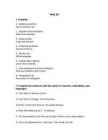
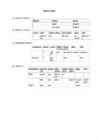
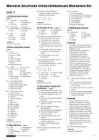
speak, live, speaks, wants, know, complete, sentences, lives, comes, germanralia, mary, late, sister, unit, translate, wholly, kannatama, suffer, illnesses, hõimud, native, tribes, avastama, official, language, traditsioone, hold, traditions, immigrants, norway, oslo, pirjo, finland, finnish, moscow, russian, nationality, dutch, holland, germanyTest 14 1 Translate. 1 arstiabi puudumine lack of medical care 2 haiguste käes kannatama suffer from illnesses 3 saksa päritolu of german descent 4 Ameerikat avastama discover America 5 ametlik keel official language 6 orjusele lõppu tegema put an end to slavery 7 oma traditsioone ja kultuuri säilitama keep your traditions and culture 8 immigrantide arv the number of immigrants 2 Complete the sentences with the names of countries, nationalities, and languages. 1 The capital of Norway is Oslo. 2 Kevin lives in Chicago. He is American. 3 Michail comes from Moscow. He speaks Russian. 4 What nationality are you? I´m Estonian. 5 The descendants of the Africans brought to America are called settlers. 6 Uwe´s grandparents live in Germany. They speak German. 7 Michael comes from Australia. He speaks Australian English. 8 Eve lives in Ireland. She speaks English and Irish.
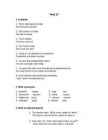
" My little sister asks where her teddy bear is. 6 The man asks, "What time is the next train for Leeds?" The man asks what time the next train for leeds is. 7 Liz asks me, "Who is your favourite writer?" Liz asks me who my favourite writer is. 4 Read the text about Martin Luther King. Fill in the gaps with the missing parts of the sentences. A learned about the life and work. E received threats to his life B made his famous speech F helped lead a well-known civil rights march C stepped out of his motel room G unedrstood the importance of religion D organised many peaceful protests H had to experience racial problems Free at Last Martin Luther king, Jr
4 VESITERM 12 LADA 5 STOW 13 SCHWUNG 6 KALEV 14 MAIASMOKK 7 YAMAHA 15 ISKU 8 ESTRAVEL 2 Affirmative tense Use Signal Words Negative/Questions · action in the present taking always, Present Simple A: He speaks. place once, never or several every ..., N: He does not speak. normally, often, Q: Does he speak? times seldom, · facts sometimes, · action set by a timetable or usually
.. (7 win) lots of prizes. She ... even ... (8 be) on TV. Kelly ... (9 break) her arm twice while doing a jump on the ice, but she's OK now. Last year she ... (10 travel) to Canada to practise in a training camp. I'm sure sometime in the future she ... (11 win) an Olympic medal. By that time, I ... (12 be) a famous author and she ... (13 ask) me to write a book about her way to the top. That's why I ... (14 start) taking notes of her and my other classmates' results. 3. Complete the exercise with the verbs in the past simple, the past continuous, or the past perfect tense. Do you remember? I went I was / we were going I had gone I couldn't wait for the first day of school to show off the new bike which I ... (1 get) as a birthday present. As I ... --- 5 (2 want) to look cool riding up to the front steps, I ... (3 put) on my new skirt. When I ... (4 reach) the school, I ... (5 make) a big mistake and ... (6 smile) at my friends instead of watching where I was going
Louise Erdrich Love Medicine Assignment 2 (pp. 4384) 1. Define the following words and expressions (considering the context) and reproduce (in your own words) the situations in which they appear in the book: the marrow of something (44) - The soft stuff inside of a bone is called marrow. ... From this biological kind of marrow comes a figurative meaning of marrow -- the essence of something. S The convent is on top of the high hill and from its window the Sisters can see the marrow of the town. to be privy to something (46) - If you're privy to something, you've been let in on a secret or know about something that most people don't. ... The adjective privy comes from the Latin privatus, meaning "private," and describes someone who has knowledge of secret or confidential information
Copyright ©2007 by Saddleback Educational Publishing. All rights reserved. No part of this book may be reproduced in any form or by any means, electronic or mechanical, including photocopying, recording, or by any information storage and retrieval system, without the written permission of the publisher. ISBN 1-59905-201-6 Printed in the United States of America 13 12 11 10 09 08 07 9 8 7 6 5 4 3 2 1 Introduction Grammar is a very old field of study. Did you know that the sentence was first divided into subject and verb by Plato, the famed philosopher from ancient Greece? That was about 2,400 years ago! Ever since then, students all over the world have found it worthwhile to study the structure of words and sentences. Why? Because skill in speaking and writing is the hallmark of all educated people. Lesson by lesson, this book provides basic instruction in the eight parts of speech--nouns, pronouns, verbs,
suppress. In the midst of the turmoil, Stiva reminds the household that his married sister, Anna Arkadyevna Karenina is coming to visit from Saint Petersburg. Meanwhile, Stiva's childhood friend Konstantin Dmitrievich Levin ("Kostya") arrives in Moscow with the aim of proposing to Dolly's youngest sister Princess Ekaterina Alexandrovna Shcherbatskaya, "Kitty". Levin is a passionate, restless but shy aristocratic landowner who, unlike his Moscow friends, chooses to live in the country on his large estate. He discovers that Kitty is also being pursued by Count Alexei Kirillovich Vronsky, an army officer. At the railway station to meet Anna, Stiva bumps into Vronsky. Vronsky is there to meet his mother. It surmises that Anna and the Countess Vronskaya have travelled together in the same carriage and talked together. As the family members are reunited, and Vronsky sees Anna for the first time, a railway worker accidentally falls in front of a train and is killed
Tests Superstar 1 Luke Prodromou Test 1 Name____________________ Class_______ Use your English 1 Complete these sentences using the correct form (present simple or present continuous) of the verb in brackets. _ 1 She is in a band and she _________________________________ (record) a CD at the moment. _ 2 She is an actress and often _________________________________ (appear) on television. _ 3 At the moment she _________________________________ (have) a rest because she is tired. _ 4 Mike is a doctor and he _________________________________ (live) in Manchester.
The Eucalyptus and the Acacia are the most common types of flora. 4 Känguru saad on umbes saja kilomeetri kaugusel lõunarannikust. Kangaruu Island is about 100km off the southern coast. 5 Austraalia taimestik on värvirikas. The flora of Australia is colorful. 6 Kängurud ja koaalad on kukkurloomad. The kangaroos and koalas are marsupials. 2 Complete the sentences with the where necessary. 1 - Great Britain is a large island in the Ataltic Ocean. 2 - Wellington is the capital - New Zealand. 3 - Mark Twain worked as a riverboat pilot on the Mississippi. 4 My brother can speak - French but he is not good at - German. 5 - Lake Peipsi is larger than - Lake Võrtsjärv.
Test 16 1 Translate. 1 Mul olid varemalt pikad juuksed. I used to have long hair. 2 Kas see on teie kooli direktor? Is that the head teacher of your school? 3 Peaaegu igaüks räägib võõrkeelt aktsendiga. Almost everyone speaks a foreign language with an accent. 4 Ära muretse, sinu inglise keel on suurepärane. Don´t worry, your English is excellent. 5 Ma ei suuda taluda valju muusikat. I can´t stand loud music. 6 Kas sa tahaksid töötada ruumis või väljas? Would you like to work indoors or outdoors? 2 Complete the sentences with a job. 1 Vets look after sick animals. 2 Lifeguards work on the beach and help swimmers in danger. 3 Childminders look after small children when their parents are at work.
(NOT I play very badly today.) Look! It's raining! (NOT Look! It rains!) 12. Use for with a period of time. Use since with the beginning of the period. for the last two hours = since 9 o'clock for three days = since Monday for five years = since I left school I've been learning English for five years. (NOT I've been learning English since three years.) We've been waiting for ages, since eight o'clock. 13. Don't separate the verb from the object. VERB OBJECT She speaks English very well . (NOT She speaks very well English.) Andy likes skiing very much. (NOT Andy likes very much skiing.) 14. Don't use the present perfect have/has seen, have/has gone etc with words that name a finished time. I saw him yesterday. (NOT I have seen him yesterday.) They went to Greece last summer. (NOT They have gone ... last summer.) 15. English (the language) normally has no article. You speak very good English. (NOT You speak a very good English.) 16
the UK in 1919. 8. What are the official languages of Ireland? Irish (first official language) and English(second official language). English is the dominant language What is the situation of the Irish language at present? Irish is compulsory in all those schools that receive public money. In 2007, Irish was recognized as an official language of the EU. Road signs are usually bilingual. According to the 2011 Census, 41% of the population claim to be able to speak Irish 77,000 people speak Irish daily outside the education system 9. What languages is the Irish language related to? Irish is a Celtic language. Other Celtic languages include Breton, Cornish, Manx, Scottish Gaelic and Welsh. In what alphabet were the earliest sources written? The Ogham alphabet was used tp write the Irish language in C4-C9. 10. Which is the most famous medieval manuscript? The Book of Kells from C9 11. Which famous writers are of Irish origin? W.B. Yeats George Bernard Shaw Samuel Beckett
INGLISE KEELE GRAMMATIKA Present Simple Lihtoleviku moodustamine Jaatav vorm Eitav vorm Küsiv vorm I make I do not make Do I make? He/she/it speaks He/she/it does not speak Does he/she/it speak? We/you/they go We/you/they do not go Do we/you/they go? NB! ERANDID! · Verbidele, mis lõpevad ss, h, ch, tch, x või oga, lisatakse ainsuse kolmdandas pöördes es. he does he goes he misses he watches he mixes · Verbid, mis lõpevad yga, mille ees on konsonant, muudavad y iks enne es lisamist. fly he flies carry he carries
Kordamine inglise keele eksamiks A 1.1 Read the text and answer the questions below. Dear Mary-Alice, It's been ages since I last wrote to you, isn't it weird? Yes, so it is, but, I do have a certain reason. Do you remember Sir Thom of the Minquettes'? That fine young man with fascinating blue eyes... Oh, my sweet Mary, you will never guess what happened yesterday! It was about seven o'clock in the evening when Lillian called me out for a walk you know I can't say `no' to my little sis. Anyway we went to the forest near the Swan Lake and, believe it or not, got lost! Awful! I was so scared... We walked and walked, not even knowing the direction we were heading to, until we reached a huge mansion. And the garden around it was so extraordinary... That is something you just must see! But neither the trees nor flowers could be as wonderful as the owner himself! Sir Thom treated us tea and sandwiches, not
Franco vs the Republicans. Three days are described. Protagonist is Robert Jordan. American, but teaches Spanish, joins the Spanish guerillas-the spanish partisans, in the fight against the facist. He is wounded and left to die. We get this sense of betrayal-most powerful emotions. The bell tolls for everybody, the bell is symbolically the funeral bell, it conserns everybody. The message of the novel is presented through inner monologue. When jordan joins the war agains facist, he wants to fight all tyrannia and improve social conditions, he has all the typical features of Hemingway heroe, tough, competent, brave. Seems to be against all forms of governments, comes to conclusion that the republicans way is the best. He finds communism helpful. The question is wheter bloodshed is justified and humane. Unlike earlier hemingway heroes Jordan is an intellectual. Jordan is against suicide, which is major theme in the novel, because Jordan's father commited suicide
1 Translate 1 Härjapõlvlane on muinasjutuolend iiri legendides. The leprechaun is a magic creature in Iirish legends. 2 Haldjad võivad su soove täita. Fairies can make your wishes come true. 3 Mu vanaemal on suur kasvuhoone; nii saame süüa värskeid juurvilju aastaringi. My granny has a large greenhouse; so we can eat fresh vegetables throughout the year. 4 Reisil Šotimaale tegime palju pilte sellest imeilusast maastikust. On our trip ti Scotland we took a lot of pictures of the gorgeous landscape. 5 Need kaks venda on täiesti erinevad. These two brother are completely different. 6 Mu ema kannab alati rohelist, sest see on tema lemmikvärv. My mum always wears green because it is her favorite colour. 7 Golfi hoovuse mõju tõttu on Iirimaa talved pehmed. Due to the influence of the Gulf Stream the winters in Ireland are mild. 8 Ma olen Eesti Vabariigi kodanik. I am a citizen of the Estonian Republic. 2 Write articles a, an, the, or - where no articles is needed. 1 ..-
.............................................................. 4 Yet, still, already ....................................................................................... 6 Adverbs and Adverbial Phrases An adverb describes a verb, an adjective, another adverb or a whole sentence. Adverbs can be divided according to the information that they give. Types of Adverbs 1. Some adverbs tell us how somebody does something or how something happens. These are called Adverbs of Manner. Please speak quietly. Tom drove carefully along the narrow road. 2. Some adverbs tell us where. These are called Adverbs of Place: She put the book on the table. 3. Some adverbs tell us when. These are called Adverbs of Time. We met them at five o´clock. 4. Some adverbs tell us how often. These are called Adverbs of Frequency. E.g. always, sometimes, often, never, usually, seldom, hardly ever, and rarely: She never comes on time. They usually work on Saturday mornings.
.......dark hair. He ........in his late twenties. He........married and........two sons. I........short, but my sister........tall. We........a dog and a cat. Our uncle........two dogs. They........brown. 2. Choose the correct item. ( 5 points ) e.g. The residents were made...D....their homes by the authorities. A leave B leaving C left D to leave 1) Ann is my best friend! We........each other for years A know B knew C knows D have known 2) Nicky........to San Francisco when the accident happened. A flies B has flown C was flying D has been flying 3) Why don`t you let her........her story? A finish B to finish C finishing D have finished 4) Tim........in a cafe at present, but he has already applied for a new job A work B have worked C is working D worked 5) My father...
Words ending with ch, x, s, sh, o ----> es class – classes brush – brushes box – boxes Some words ending with f, fe, lf ----> ves knife – knives wolf – wolves life – lives but: chiefs, safes, cliffs, handkerchiefs Irregular forms man - men woman - women tooth - teeth goose - geese ox - oxen louse - lice
• The Comedy of Errors (1594) Note: This book is brought to you by Feedbooks http://www.feedbooks.com Strictly for personal use, do not use this file for commercial purposes. 3 Act I SCENE I. Elsinore. A platform before the castle. FRANCISCO at his post. Enter to him BERNARDO BERNARDO Who's there? FRANCISCO Nay, answer me: stand, and unfold yourself. BERNARDO Long live the king! FRANCISCO Bernardo? BERNARDO He. FRANCISCO You come most carefully upon your hour. BERNARDO 'Tis now struck twelve; get thee to bed, Francisco. FRANCISCO For this relief much thanks: 'tis bitter cold, And I am sick at heart. BERNARDO 4 Have you had quiet guard? FRANCISCO Not a mouse stirring. BERNARDO Well, good night. If you do meet Horatio and Marcellus,
society for communication and self-expression. - human language at all levels is rule- or principle-governed. Linguistics: the scientific study of human natural language Synchronic approach to language: Diachronic approach to language: Linguistic competence: Linguistic performance: What is grammar?: "The sounds and sound patterns, the basic units of meaning, such as words, and the rules to combine them to form new sentences constitute the grammar of a language" Prescriptive grammar vs. Descriptive garmmar: Descriptive grammar: the systematic study and description of a language. Descriptive grammar refers to the structure of a language as it is actually used by speakers and writers. Prescriptive grammar: a set of rules and examples dealing with the syntax and word structures of a language, usually intended as an aid to the learning of that language. Prescriptive grammar refers
SYNTACTIC STYLISTIC DEVICES SYNTACTIC STYLISTIC DEVICES are based on a peculiar place of the word or phrase in the utterance (text, sentence, etc).This special place creates emphasis irrespective of the lexical meaning of the words used. Categories: syntactic stylistic devises based on: SDD: based on ABSENCE OF LOGICALLY REQUIRED ELEMENTS OF SPEECH ELLIPSIS ELLIPSIS or ELLIPTICAL SENTENCES means leaving out one or both principle members of the sentence that is the subject or predicate. NT: Where is the man I'm going to marry? - Out in the garden. (no subject) What is he doing out there? - Annoying father. Here, in the dialogue, ellipsis creates the colloquial tone of the utterance. It also renders realistically the way the characters speak. The elliptical sentences convoy/render carelessness, familiarity, harshness. It makes the
14. Good institutions help to overcome human moral inertia. 15. I am not one of your little friends. 16. If a dimension is anywhere it's everywhere. 17. If God's not crazy, why are you? 18. If one makes a promise one shouldn't have made it cannot stand against the obligation to do the right thing. 19. If you odn't give a certain amount of attention to filtering distractions, every distraction is a catastrophe. 20. If you don't know what your duty is, your duty is to find out. 21. If you're not an animal, then you must be a vegetable. 22. If you want to get along you have to get along with those who don't want to get along. 23. If you whine whenever anybody messes with your crutches you can't claim not to be crippled. 24. I hate an unfair fight, so I need to be ganged up on. 25. Inattention is not O.K. 26. Injustice in your vicinity is your business--particularly your own. 27
Broadly, there are three aspects to the study which are Pragmatics (studies the use of language → interested in the gap between the sentence’s meaning and the speaker’s meaning). Semantics (concerned with the meaning of the language aspects and the way they change, also how objects and language and thinking and language are related). Syntax (concerned with the rules [grammar] and how sentences and words are formed). Synchronic approach to language → A focus in language study on how language exists in one moment in time, not at how this language came to be the way it is now. Example Estonian in the 21st century. Diachronic approach to language → A focus in language study on how a language has changed over some period of time. In a way it is comparing language to what it was and how it is now. For example comparing 18th century and 19th century Estonian.
strait is believed to have been dry land in the distant past. From Alaska, maybe during or before the last great Ice Age, they gradually spread down into the American continent. These people from whom the Indians descended kept on entering America by way of the region of Alaska for many thousands of years. They moved and mingled throughout long periods of time. Eventually they were living across both North and South America. It seems likely that some of the first people to live in America may have been speakers of Siouan languages. Some of the first Indians in America settled in the southeast. Last of all to arrive, apparently, were the Eskimo. Most recent arrivals though they are, however, they were living in their present homeland in what is now Alaska and Artic Canada more than 2,500 years ago. Coastal route theory = New research and studies have prompted some anthropologists and archaelogists to present the theory that people from Southeast
Until Kuni Up Üles, ülal, juurde, ligi, lõpuni With Kellegi/millegi kaasas, ühes, abil Without Ilma 8 Kesksõnad 1. Oleviku kesksõna Moodustatakse ing abil. Seda kasutatakse kestvate ajavormide moodustamiseks. washing (pestes) writing (kirjutades) singing (lauldes) Oleviku kesksõna võib asendada siduvat asesõna ja tegusõna aktiivis. Do you know the girl who/that is wearing the blue pollover? Oleviku kesksõna võib mõnikord kasutada ka nimisõna ees, siis on sellel aktiivne tähendus: sleeping mice 2. Mineviku kesksõna Moodustatakse reeglipäraste tegusõnade puhul lõpuga ed. Ebareeglipäraste tegusõnade puhul tuleb need vormis lihtsalt ära õppida. Mineviku kesksõna abil moodustatakse Present Perfect, Past Perfect, samuti passiiv. washed (pesnud) written (kirjutanud) sung (laulnud)
Until Kuni Up Üles, ülal, juurde, ligi, lõpuni With Kellegi/millegi kaasas, ühes, abil Without Ilma 7 Kesksõnad 1. Oleviku kesksõna Moodustatakse ing abil. Seda kasutatakse kestvate ajavormide moodustamiseks. washing (pestes) writing (kirjutades) singing (lauldes) Oleviku kesksõna võib asendada siduvat asesõna ja tegusõna aktiivis. Do you know the girl who/that is wearing the blue pollover? Oleviku kesksõna võib mõnikord kasutada ka nimisõna ees, siis on sellel aktiivne tähendus: sleeping mice 2. Mineviku kesksõna Moodustatakse reeglipäraste tegusõnade puhul lõpuga ed. Ebareeglipäraste tegusõnade puhul tuleb need vormis lihtsalt ära õppida. Mineviku kesksõna abil moodustatakse Present Perfect, Past Perfect, samuti passiiv. washed (pesnud) written (kirjutanud) sung (laulnud)
Word order: positive sentences subjects verb(s) object I speak English. I can speak English. Negative sentences subject verbs Indirect object Direct object place time I will not you the story at Tomorro tell school w. Subordinate Clauses conjunction subject verb(s) Indirec Direct place time t object object
14 didn't want 4 She had planned a route to the students aren't wearing uniform. It 15 insisted looks as if one of them is asleep. summit. It's clear that the girl in the front Challenge! 5 She hadn't got to know the other desk isn't interested in the lesson Students' own answers climbers in the group. or perhaps she doesn't understand 6 She had spent a week at high
and the forger Eames (Tom Hardy). They are hired by Mr. Saito (Ken Watanabe) to infiltrate Robert Fischer's (Cillian Murphy) head to peform an inception to create and plant an idea in his mind. The problem is that memories of Dom's mysterious wife Mal (Marion Cotillard) and children keep invading his dreams, and won't let him accomplish the job without constantly throwing him off task. These haunting demons fill Cobb's head, and he just wants to find his way back to reality to be reunited with his children once again. That's all I'll reveal about the plot because to attempt to summarize it in more detail, would not only be an exercise in futility, but I also don't want to ruin the fun for anyone. Inception is so wisely crafted across the board. The cast does an amazing job. DiCaprio has no doubt become the # 1 pure movie star working today. He brings so much intensity to his performances, and Inception is one of his best
Russian instead. My Russian studies in school have always been very hectic and making very little sense. Teachers kept changing all the time, teaching methods kept changing as well and learning Pushkin by heart does not work wonders with one's speaking skills, really. (Although I still can recite one of his poems...) The point is, I actually really like Russian. I've never been good at it, but I like the language and I really wish I knew it better. I can speak some, but not read much. As soon as the characters stop talking to each other, I'm stuck and can barely understand anything. Most of my Russian skills my ten years younger mates envy come from my year of living in Narva (literally starve or learn!) and talking to a variety of Estonian-Russian roleplayers I know. (But since they are also fluent in English and most in Estonian as well, it turns into a stew of languages very soon.) Chronologically the second language I started to learn was French
.......................................................................................................8 11. Conclusion....................................................................................................9 12. References....................................................................................................10 Introduction I chose finland because there are friendly people and beautiful nature. Finland is bigger than Estonia. There lives over 5 milj. people. Finland capital is Helsingi and there lives about 2 milj. people. Highest top is 1328m. Finland is bordersed with Sweden to the west, Russia to the east and Norway to the north. It is the eight largest city in Europe. Most Finns speak Finnish. The second language is Swedish. Finland is rated the sixth most peaceful country in the World. In Finland there are more than 60000 lakes. Capital: Helsinki Area: 338145km2
verb tegusõna, In a clause, the verb is an obligatory and the most walk, put, do, be, must pöördsõna, verb central element. It denotes actions, events, processes and states. Verbs are either regular (cough, coughs, coughing, coughed) or irregular (speak, speaks, spoke, speaking, spoken). There are three main grammatical classes of verb: lexical (walk, put, love), auxiliary (do, be, have) and modal (can, must, will). Lexical and auxiliary verbs indicate contrasts of tense, person and
 annaabi.ee