Leidsid 33 sarnast õppematerjali, mis on seotud failiga "Inglise keele modaalid (modals)". Need materjalid aitavad sul teemat sügavamalt mõista.
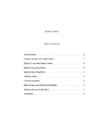
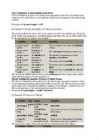
could, making, ability, might, permission, able, suggestion, shall, lack, obligation, duty, couldn, wasn, probability, asking, giving, talking, allowed, formal, offersModal Verbs Table of Contents Introduction ......................................................................... 2 Characteristics of Modal Verbs ............................................. 2 When to use the Modal Verbs ............................................... 3 Expressing permission.......................................................... 3 Expressing obligation ........................................................... 3 Making offers........................................................................ 5 Making requests ................................................................... 6 Expressing possibility/probability......................................... 7 Asking about possibilities ..................................................... 7 Infinitives ............................................................................. 8
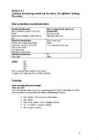
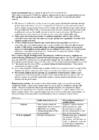
infinitive, Example: She shouln`t stay Interrogative: (Wh) Modal + Subject + Infinitive, Example: Why should she stay? Can Ability to do something in the present-I can speak English. Permission to do something in the present-Can I go to the cinema? Request - Can you wait a moment, please? Offer- I can lend you my car till tomorrow. Suggestion- Can we visit Grandma at the weekend? Possibility- It can get very hot in Arizona. Could Ability to do something in the past- I could speak English. Permission to do something in the past- I could go to the cinema. Polite question- Could I go to the cinema, please? Polite request- Could you wait a moment, please? Polite offer- I could lend you my car till tomorrow. Polite suggestion- Could we visit Grandma at the weekend? Possibility- It could get very hot in Montana. May/Might May Possibility- It may rain today. Permission to do something in the present-
/ Can't complain, thanks. · So so, thanks. / So and so, thanks. · Not so good, actually 1 The English alphabet Spelling Work with your partner and spell out first your name and then some names of places. Write down each letter as you hear it, and then say the word. The English alphabet on the phone: You might find the following alphabet (used by international airlines) useful when trying to spell a word on the telephone. A Alpha O Oscar Ä Alpha-Echo Ö Oscar-Echo B Bravo P Papa C Charlie Q Quebec D Delta R Romeo E Echo S Sierra F Foxtrot Sch Sierra Charlie Hotel
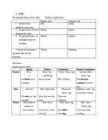
We are going to They will be I am going to a He will carry this The train leaves at fly to Leeds in playing football on party tonight. bag for you. 6.45. summer. Sunday afternoon. 8. Modal verbs: Write all the modals: (be) able to can can't could don't have to may as well/might as don't need to had better have (got) to may well might must must not need needn't
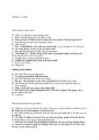
2 been meaning 9 came 2 A 4 B 6 E old-fashioned-looking uniform, so 3 got 10 grew 5 1 at first hand 5 maiden voyage I would guess that it's a private 4 fell 11 were chatting 2 tuberculosis 6 mine school, but it could be a state 5 seen 12 walked school. It's hard to say. 6 were waiting 13 didn't admit 3 stewardess 7 retirement 7 was looking 4 wonderful 2 1 I reckon they are about 17 years old.
You have to pay taxes once a month. · Kõigile tuntud fakte. Life passes by quickly. Present Continuous Kestva oleviku moodustamine Jaatav vorm Eitav vorm Küsiv vorm I am speaking I am not speaking Am I speaking? He/she/it is going He/she/it is not going Is he/she/it going? We/you/they are making We/you/they are not making Are we/you/they making? NB! ERANDID! · Verbidel, mis lõppevad ega kaob, ing lisamisel e ära. take taking make making · Lühikeste silpidega verbidel kahekordistub kaashäälik. get getting swim swimming · Yga lõppevatel verbidel, y ei kao ära. study studying cry crying · . die / tie / lie muutuvad
Subject: Suggested improvements Date:2nd May 2011 The purpose of this report is to comment on conditions in the college and to make recommendations for possible improvements. Although conditions are generally good, there are one or two problems. Firstly, in large classes, there is not much desk space. Secondly, the classrooms tend to be darl, especially in the winter months. Finally, during video lessons, some of us find it difficult to see screen properly. There are number of changes that could be made in order to improve the situation. To begin with, I would strongly suggest that the number of students per class kept to below ten. In this way... To sump up, while most of us are satisfied with the conditions, I feel that above improvements would make things even better. If these suggestions were carried out... Complaint Dear Sir I am writing to complain about the holiday apartment I rented from you on 15th of August. I believe your advertisement was misleading in a number of ways.
adjectives · no use of short forms Name: Steve Name: Yours faithfully/Yours sincerely, Steven Hill TASK 2 Put an - for formal and an I for informal language. Give reasons . 1 In reply to your query about ... 2 I trust that this is the information you require .... 3 Hope this information helps you ... 4 I would like to express my dissatisfaction with the item I purchased ... 5 I'm afraid I won't be able to make it on Friday ... 6 Why don't you come and visit us ... 7 I'm looking forward to hearing from you ... 8 I look forward to meeting you. 9 I am writing with regard to the advertisement ... 10 How about getting together next Friday instead? 11 Pop in for a chat some time soon ... 12 You've been very helpful ... 13 Well, I must leave now ... 14 By the way, I've got to tell you ... 15 I regret to inform you that ...
s ______________________ 3 A man wears this round his neck and over his shirt to make him look smart. t _______________________ 4 We wear these to protect our clothing. o ______________________ 5 This is made of wool and keeps us warm in winter. j _______________________ 6 You might wear this on the beach in the summer. T-______________________ 7 A girl wears this to get married. d ______________________ 8 These casual trousers are often blue. j ______________________ 9 These are shoes for sports or for everyday casual wear. t _______________________
till the evening after the visit was paid she had no knowledge of it. It was then disclosed in the following manner. Observing his second daughter employed in trimming a hat, he suddenly addressed her with: "I hope Mr. Bingley will like it, Lizzy." "We are not in a way to know what Mr. Bingley likes," said her mother resentfully, "since we are not to visit." "But you forget, mamma," said Elizabeth, "that we shall meet him at the assemblies, and that Mrs. Long promised to introduce him." "I do not believe Mrs. Long will do any such thing. She has two nieces of her own. She is a selfish, hypocritical woman, and I have no opinion of her." "No more have I," said Mr. Bennet; "and I am glad to find that you do not depend on her serving you." Mrs. Bennet deigned not to make any reply, but, unable to contain herself, began scolding one of her daughters. "Don't keep coughing so, Kitty, for Heaven's sake
But, sir, all the same, If I were in my son's, her husband's, place, I'd urgently entreat you not to come Within our doors. You preach a way of living That decent people cannot tolerate. I'm rather frank with you; but that's my way-- I don't mince matters, when I mean a thing. DAMIS Mr. Tartuffe, your friend, is mighty lucky . . . MADAME PERNELLE He is a holy man, and must be heeded; I can't endure, with any show of patience, To hear a scatterbrains like you attack him. DAMIS What! Shall I let a bigot criticaster Come and usurp a tyrant's power here? And shall we never dare amuse ourselves Till this fine gentleman deigns to consent? DORINE If we must hark to him, and heed his maxims, There's not a thing we do but what's a crime; He censures everything, this zealous carper. MADAME PERNELLE And all he censures is well censured, too. He wants to guide you on the way to heaven; My son should train you all to love him well. DAMIS No, madam, look you, nothing--not my father
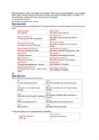
Greeting, name, position, opening formalities Good morning, ladies and gentlemen. Good afternoon, everyone. Good morning. My name's (...). I'm the new Finance Manager. Good morning. Let me start by saying just a few words about my own background. I started out in... Welcome to Standard Electronics. I know I've met some of you, but just for the benefit of those I haven't, my name's (...). It's very nice to see you all here today. I'm very pleased to be here. I'm glad you could all make it. Thanks for inviting me. Thank you (all) for coming. Title/Subject I'd like to talk (to you) today about ... I'm going to present the recent ... explain our position on ... introduce ... brief you on ... inform you about ... describe ... The subject of my talk focus presentation
WRITING LETTERS Letters of invitations Formal Informal Opening We would be honoured if you, I wish to I'm writing to invite you to, Why don't you remarks cordially invite you to, Your presence is come and spend some time, Please come required at, You are invited to attend, etc. to, I'd love it if you could come to, etc. Closing We should be grateful if you could inform I love to see you again, I hope you'll be remarks us, We hope to see you, Please indicate able to make it, Please let me know as whether you will be able to attend, etc. soon as possible, I'm looking forward to, etc. Accepting an invitation
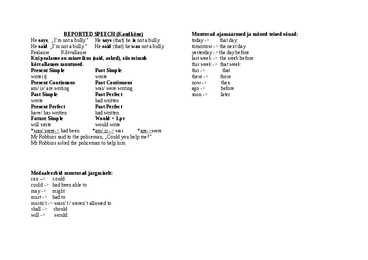
· Kui pealause on minevikus (said; asked) Past Simple(worked), Present perfect(has worked) = Past Perfect(had worked) Present Continius = Past continius (is working = was working) Do, does = did Go, goes = went Shall, will = should, would Am, is, are = was, were Was, were = had been Have, has = had Had = had had Can = could (or had been able to..) May = might Must = had to Mustn't = wasn't/weren't allowed to Went, did or have = HAD + 3. Pv · Kui pealause on olevikus NT: Hilary says, ,, I cant employ you." = Hilary says that she can't employ me. Present simple (works) = Past simple (worked) · Muutused These = those This = that Here = there Soon = later Ago = before Now = then Next year/month/week = the next year/month/week Last year/.../... = the year ../.../.. before This year/.../... = that year/.../...
Photocopiable © Oxford University Press 1 Maturita Solutions Advanced Workbook Key 4 1 let me down Leo Well, in some parts of Africa and 2 been thrown away Asia there are thousands of people 3 brought up suffering from blindness caused by a 4 to put up with lack of vitamin A. Now there's a new 5 be looked after type of rice which has been engineered to contain massive amounts of vitamin 6 drop me off A. So there you are ... problem solved! 7 to lay off Rosie Yeah, these are good 8 turned up intentions, but not if we end up
) 23. Use too much/many before (adjective +) noun; use too before an adjective with no noun. There's too much noise. I bought too much red paint. Those shoes are too expensive. (NOT Those shoes are too much expensive.) 24. Use that, not what, after all. I've told you all that I know. (NOT I've told you all what I know.) He gave her all that he had. 25. Don't say according to me to give your opinion. I think it's a good film. (NOT According to me, it's a good film.) In my opinion, you're making a serious mistake. (NOT According to me, you're making a serious mistake.) 26. Don't ask about possibilities with May you ...? etc. Do you think you'll go camping this summer? (NOT May you go camping this summer?) Is Joan likely to be here tomorrow? (NOT May Joan be here tomorrow?) or more details, see Practical English Usage 3rd Edition page 339. 27. Use who, not which, for people in relative structures. The woman who lives upstairs is from Thailand
If He is not sure about going to university. grades, university. she gets good she should go to The speaker is expressing his or her If grades, university. opinion, giving advice. he gets good he can go to If This means that it is possible. grades, university. she gets good she could go to This means that it is possible, but not that If grades, university. likely. he gets good he might go to This means that it is possible, but not that If grades, university. likely. We can also use different present forms in the condition part of the sentence like: present simple, present progressive, present perfect, etc Second Conditional: Imaginary Present or Unlikely Future
1. A generalist is ignorant from the point of view of a specialist and a specialist is stupid from the point of view of a generalist. 2. All great stupidity is created by geniuses. 3. All stereotypes are true; the fact that you recognize a slur proves that it isn't. 4. Anything you're afraid is true is true. 5. Before most people get to the point of being able to tell their ass from a hole in the ground they're already assholes and it's too late. 6. Concentrating on something important can make you lose track of your soap opera. 7. Debunking the bunk is everyone's responsibility. 8. Don't ask me to pay for anyone else's mistakes. I make enough of my own. 9. Even those who possess real magic must beware of being misled by "magical thinking." 10. Everyone knows what shit tastes like. 11. Exclusive occupancy of a private room is a basic human right.
who have a residence permit, stateless person (apatrid), people with multiple citizenships (bipatrid). How to get citizenship by birth: lex sanguinis blood principle, by birth, given to the child according to the citizenship of the parents (if parents are citizens of different countries different legislation can provide different solutions, they could choose or the child could choose); lex soli ground principle, given due to the place of birth, typical for Anglo- America and Latin-American, this can lead to dual-citizenship. Child if found without parents, he/she can still receive citizenship based on lex soli, even though lex sanguinis is used in the country. E.g. Russian and stateless person get a child
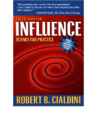
More praise for Influence: Science and Practice! "We've known for years that people buy based on emotions and justify their buying decision based on logic. Dr. Cialdini was able, in a lucid and cogent manner, to tell us why this happens." --MARK BLACKBURN, Sr. Vice President, Director of Insurance Operations, State Auto Insurance Companies "Dr. Cialdini's ability to relate his material directly to the specifics of what we do with our customers and how we do it, enabled us to make significant changes. His work has enabled us to gain significant competitive differentiation and advantage" -LAURENCE HOF, Vice President, Relationship Consulting, Advanta Corporation "This will help executives make better decisions and use their influence wisely ... Robert Cialdini has had a
wrote had written Present Perfect Past Perfect have/ has written had written Future Simple Would + 1.pv will write would write *was/ were-> had been *am/ is -> was *are->were Mr Robbins said to the policeman, ,,Could you help me?" Mr Robbins asked the policeman to help him. Modaalverbid muutuvad järgmiselt: can > could could -> had been able to may -> might must -> had to mustn't -> wasn't / weren't allowed to shall -> should will -> would
Philosophy of language has been much in vogue since early in the twentieth century, but only since the 1960s have the issues begun to appear in high resolution. One crucial development in the past forty years is the attention of philoso- phers of language to formal grammar or syntax as articulated by theoretical linguists. I personally believe that such attention is vital to success in phi- losophizing about language, and in my own work I pay as much of it as I am able. With regret, however, I have not made that a theme of this book. Under severe space limitations, I could not expend as many pages as would be needed to explain the basics of formal syntax, without having to omit presentation of some philosophical issues I consider essential to competence in the field. Since around 1980, some philosophers of language have taken a turn toward the philosophy of mind, and some have engaged in metaphysical exploration
/ I hope / assume you will replace / I trust the situation will improve / I hope the matter will be resolved/ I hope we can sort this matter out amicably, etc./ I will have no choice but to .../ I will be forced to take further/legal action. LETTER OF REQUESTING INFORMATION Opening remarks: I am writing to inquire about/ in connection with, etc./ I am writing to request your assistance concerning the matter of ../ I would greatly appreciate if you could... / Another matter I need information on is ... / I would also like some information on ...., etc/ I would be grateful if you could ..., etc. Closing remarks: I look forward to receiving/ I would appreciate if you could inform me as soon as possbile/ I hope that my request will not inconvenience you too much./ I look forward to hearing from you. LETTER GIVING INFORMATION/ AN OPINION Opening remarks: I am writing in reply to your letter asking for information about ..
.......................................................................... ...................................................................................................... ...................................................................................................... ...................................................................................................... ............................................................................. d) What could be Mary-Alice's reply? ...................................................................................................... ...................................................................................................... ...................................................................................................... ...................................................................................................... ..............................
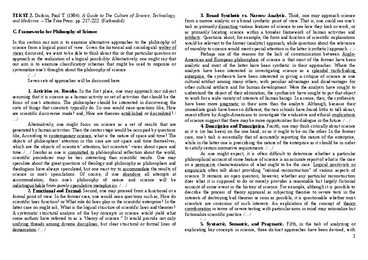
TEKST 2. Durbin, Paul T. (1984). A Guide to The Culture of Science, Technology, 3. Broad Synthetic vs. Narrow Analytic. Third, one may approach science and Medicine. The Free Press. pp. 217-222. (Katkendid) from a narrow analytic or a broad synthetic point of view. That is, one could see one's task as primarily dissecting various features of science to see how they look or work, or C. Frameworks for Philosophy of Science as primarily locating science within a broader framework of human activities and artifacts
But you shouldn't forget to insure your parcel in case there is something valuable. H: - Then, we shouldn't forget about telegrams! Urgent, express, photo, greetings...They are so useful if we really need to say something to those who are far! J: - And very pleasant moment we can cash our money orders!!! 2.Making a trunk call H: - I what to make a trunk call, so I'm calling to switchboard. Hello! I'd like to book a trunk call. Could you put me through to Moscow? J: - Of course. Give me the number of subscriber. Ah, well... The line isn't engaged, but nobody picks up the receiver. H: - Oh, I've forgotten to ask do you have a system of paying by the minute? J: - Yes, you are right. And don't forget that every subscriber should pay the telephone bill in time. H: - Oh! If you don't put me through to Moscow in 15 minutes, I'll have to cancel my order! J: - Hey! Are you there? The Moscow is on line! H: - Thank you! 3
past perfect continuous past perfect continuous I'd already been living in London for five NO CHANGE POSSIBLE years. Other verb forms Other verb forms also sometimes change: will would I'll come and see you soon. He said he would come and see me soon. can could I can swim under water for two He said he could swim under water for two minutes. minutes. had to must He said that all tickets had to be bought in All tickets must be bought in advance. advance. shall should What shall we do about it
interrogation technique? 1 Introduction It was Jeremy Bentham who thought of a famous method to give ethics a rational basis. He was fed up with the penal laws where offenders met corporate punishment and together with Cesario Beccaria he stood up to torture, corporal punishment, and the death penalty. He resisted against irrational moral emotions as the instigation for ethical conduct, saying only reasonable grounds could justify the moral decisions of individuals and legislators. And now his theory of is the one that is known for justifying torture (Verplaetse, 2008). Since 9/11 and the following fight against terrorism it became clear that the Bush administration thought of torture as something justifiable while it goes against all possible agreed upon treaties and conventions. One could indeed possibly think of situations that could serve as an exception to the prohibition of torture but these
Web site: www.sdlback.com First published in the United States by Saddleback Educational Publishing, 3 Watson, Irvine, CA 92618 by arrangement with Learners Publishing Pte Ltd, Singapore Copyright ©2007 by Saddleback Educational Publishing. All rights reserved. No part of this book may be reproduced in any form or by any means, electronic or mechanical, including photocopying, recording, or by any information storage and retrieval system, without the written permission of the publisher. ISBN 1-59905-201-6 Printed in the United States of America 13 12 11 10 09 08 07 9 8 7 6 5 4 3 2 1 Introduction Grammar is a very old field of study. Did you know that the sentence was first divided into subject and verb by Plato, the famed philosopher from ancient Greece? That was about 2,400 years ago! Ever since then, students all over the world have found it worthwhile to study the structure of words and sentences. Why? Because skill in speaking
(had gone) did + I pv. (did you go...?did not go) > had + III pv.(had/not/gone) have + III pv. (have gone) > had + III pv. (had gone) shall, will > should, would am, is, are > was, were was, were > had been have, has > had had > had had can > could could > had been able to may > might must > had to mustn't > wasn't/weren't allowed to today > that day yesterday > the day before tomorrow > the next day this year/ month/ week > that year/ month/ week
identity or mission of planning is “foresight” (Markusen 1998), “a focus on the future and pathways of change over time” (Strategic Marketing Committee of ACSP 1997), or “persuasive storytelling about the future” A Surprising Neglect (hüljatud). “....planning has lost sight of the future....Planning voluntarily is sacrificing its role as visionary and idealist and is abandoning its responsibility to be a source of inspiration and ideas about what might be and what ought to be”. In planning practice, the recent surge of interest in visioning exercises has raised awareness of planners’ role in shaping the future, in some cases 3 bringing the future to the forefront of high- profile community participation campaigns. incorporated into long-range plans. Also absent from planners’ approach to the future is a systemic understanding of how multiple trends will extend forward and interact with one another, shaping
John Galsworthy The Man of Property PREFACE "The Forsyte Saga" was the title originally destined for that part of it which is called "The Man of Property"; and to adopt it for the collected chronicles of the Forsyte family has indulged the Forsytean tenacity that is in all of us. The word Saga might be objected to on the ground that it connotes the heroic and that there is little heroism in these pages. But it is used with a suitable irony; and, after all, this long tale, though it may deal with folk in frock coats, furbelows, and a gilt- edged period, is not devoid of the essential heat of conflict. Discounting for the gigantic stature and blood-thirstiness of old days, as they have come down to us in fairy-tale and legend, the folk of the
· Carefully Organized Information If a reader needs to be persuaded or convinced, your information will need careful planning and organizing. · Correct Grammar and Spelling Train yourself to check for major grammatical errors, words which are commonly misspelt and sentences which are incomplete. · Suitable Style and Tone The style and tone must match the message and its reader. You cannot, for example, write a memo to a colleague in the same style and tone as you might use when speaking on the telephone to a friend. · Logically Connected Ideas Finally, your ideas must be suitably connected so that the reader can identify related ideas while reading through and gradually understanding the message. Text 1 and Text 2 below clearly show these five aspects of writing in the business world. Evaluation Exercise 1
 annaabi.ee