Leidsid 33 sarnast õppematerjali, mis on seotud failiga "Inglise keele majandussõnastik". Need materjalid aitavad sul teemat sügavamalt mõista.
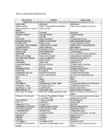
market, cost, price, rate, demand, nõudlus, supply, invest, sales, economic, account, income, marketing, manage, production, konto, curve, turundus, labour, profit, wage, employment, good, margin, kaubad, laen, reklaam, goods, total, utility, consumer, value, effect, promotion, cash, analysis, payment, money, method, ability, average, brand, equilibriumSõltumatu muutuja Independent variable Независимая переменная Pöördvõrdeline sõltuvus Inverse relationship Обратная зависимость Sirge tõus Slope of a line Подъем кривой ordinaattelg Vertical axis ордината-ось majandussüsteem Economic system Экономическая система piiratus Scarsity ограниченность Majanduslik hüvis Economic goods Экономическое благо Vaba hüvis Free goods Свободное благо Majanduslik ressurss Economic Resources Экономический ресурс
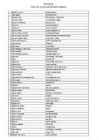
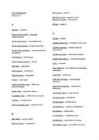
4 access right juurdepääsu õigus 5 accommodation majutamine 6 accord kooskõlastama 7 account arve, aruanne 8 accounting raamatupidamine 9 accounting period arvestusperiood 10 accounting records raamatupidamise dokumendid 11 accumulated debt kogunenud võlg 12 adequate supply piisav varustamine 13 adulterate võltsima 14 advance ettemakse 15 advantage of secrecy salajasuse eelis 16 advertising reklaamindus 17 advertising agency reklaamiagentuur 18 adviser konsultant, nõuandja 19 aid toetus, abi 20 alimony alimendid, elatsraha
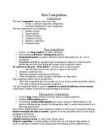
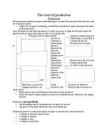
Pure Competition Competition The word "competition" may be used in two ways: rivalry (synonym; opposition, antagonism) structural competition or "pure competition" The main characteristics of competition: 1. Number of firms 2. Type of product 3. Control over price 4. Conditions of entry 5. Nonprice competition 6. Information flow Pure Competition · Involves very large numbers of sellers and buyers. · Firms producing identical or homogeneous products. · Standardized product (a product identical to that of other producers). (ex. corn or cucumbers). · Free Entry and Exit: no significant legal, technological, financial, or other obstacles
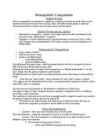
Monopolistic Competition Market Power Firms in monopolistic competition or imperfectly competitive markets are more likely to have limited market power because there are many firms with differentiated products (there are substitutes) and there is relative ease of entry and exit into the market Market Power among Sellers · Monopolistic competition - a market with a large number of sellers and relatively free entry; each firm "differentiates" its product. · Oligopoly - a market characterized by significant barriers to entry and "a few "sellers who recognize their interdependence in the market; products may be homogeneous or differentiated. Monopolistic Competition · Large number of sellers · relative ease of exit / entry · products are differentiated
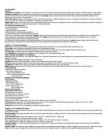
Cost Accounting. Chapter 1 Management accounting measures, analyzes, and reports financial and no financial information that helps managers make decisions to fulfill the goals of an organization. Financial accounting focuses on reporting to external parties such as investors, government agencies, banks and suppliers. It measures and records business transactions and provides financial statements that are based on GAAP. Cost accounting measures, analyzes, and reports financial and no financial information relating to cost of acquiring or using resources in an organization. Value-chain analysis: sequence of business functions in which customer usefulness is added to products and services. 1. Research and development 2. Design of products, services, or processes 3. Production 4. Marketing 5. Distribution 6. Customer service.
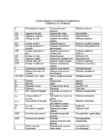
СОКРАЩЕНИЯ И СИМВОЛЫ В ЭКОНОМИКЕ LÜHENDID JA SÜMBOLID A Technological progress Технологический Tehniline progress прогресс AD Aggregate demand Совокупный спрос Kogunõudlus AE Aggregate expenses Совокупные затраты Kogukulutused AFC Average fix cost Средние постоянные Keskmine püsikulu затраты AP Average product Средний продукт Keskmine produkt, toodang APC Average propensity to Средняя склонность к Keskmine tarbimiskalduvus consume потреблению APS Average propensity to Средняя склонность к Keskmine säästmise
Monopoly Market Power In pure competition sellers are "price takers." No seller (or buyer) has the ability to influence the market price. In most markets, at least one or more of the conditions required for pure competition are violated. This gives sellers or buyers the ability to influence the market price and allocation of resources Pure competition results in an optimal allocation or resources given the objective of an economic system to allocate resources to their highest valued uses or to allocate relative scarce resource to maximize the satisfaction of (unlimited) wants in a cultural context. Pure competition is the ideal that is be benchmark to evaluate the performance markets. The economic theory of · monopolistic competitive markets, · oligopoly and · monopoly
of these decisions. Since the objectives are often pecuniary, it is often necessary to relate the decisions about the physical units of inputs and outputs to the costs of production. · If the prices of the inputs and the production relationships are known (or understood), it is possible to calculate or estimate all the cost relationships for each level of output. In practice however, the decision maker will probably have partial
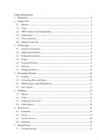
...................................................................................... 19 1.2. The Business Environment ........................................................................................ 23 1.3. Banking system.......................................................................................................... 27 1.4. Starting a business in Ukraine ................................................................................... 32 1.5. Market entry strategies .............................................................................................. 33 1.5.1. Direct Sales ........................................................................................................ 33 1.5.2. Agency and Commission arrangements ............................................................. 34 1.5.3. Joint venture with a Ukrainian partner.............................................................. 34 1.5.4
Introduction to macroeconomics Macroeconomics Macroeconomics (from Greek prefix "macr(o)-" meaning "large" + "economics") is a branch of economics that deals with · the performance, structure, behavior and decision-making of the entire economy, · be that a national, regional, or the global economy The Economist's Dictionary of Economics defines Macroeconomics as - "The study of whole economic systems aggregating over the functioning of individual economic units. It is primarily concerned with variables which follow systematic and predictable paths of behaviour and can be analysed independently of the decisions of the many agents who determine their level. It is a study of national economies and the determination of national income." Macroeconomics examines the economy as a whole and answers questions · 'What causes the economy to grow over time
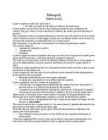
8. Nappus, scarsity (Põhiprobleem) = vajadused saadavad 9. ( )- ressursid , 1 Majandusõpetus Mõistete seletus. , I osa 9.Alternatiiv- e.loobumiskulud, opportunity cost s -parima () alternatiivse võimaluse maksumus, millest loobutakse valiku tegemisel 10. 10.Majanduslik mõtlemine, thinking like economist 11. 11. Nappus sunnib inimesi valima. Scarsity
Gross Domestic Product (GDP) The gross domestic product (GDP) or gross domestic income (GDI) is a measure of a country's overall economic output. It is the market value of all final goods and services made within the borders of a country in a year. It is often positively correlated with the standard of living, alternative measures to GDP for that purpose. · Gross domestic product comes under the heading of national accounts, which is a subject in macroeconomics. Gross National Product Gross national product (GNP), in economics, a quantitative measure of a nation's total
INTRODUCTION OF SUPPLY CHAIN MANAGEMENT (SCM) A supply chain is a network of facilities and distribution options that performs the functions of procurement of materials, transformation of these materials into intermediate and finished products, and the distribution of these finished products to customers. Supply chains exist in both service and manufacturing organizations, although the complexity of the chain may vary greatly from industry to industry and firm to firm. Supply chain management is typically viewed to lie between fully vertically integrated firms, where the entire material flow is owned by a single firm and those where each channel member operates independently. Therefore coordination between the various players in the chain is key in its effective management
Consideration arvamus, delikaatsus Consistency järjekindlus B Consolidation stabiliseerimine Bad debts suured võlad Contribution toetusmaks, annetus Balance Sheet varabilanss Controllable costs kontrollitavad kulud Conversion cost realiseerimiskulu Depreciation väärtuste vähenemine, devalveerumine Convertible loan stock muudetav laenuaktsia Direct costs otsesed kulud Discount allahindlus Cost behavior hinna käitumine Discounted cash flow allahinnatud Cost center kulukoht kassakäive
− Assures that the corporation is managed in accordance with state laws, security regulations and conflict of interest situations. Role of the Board in Strategic Management • Monitor developments inside and outside the corporation. • Evaluate and influence management proposals, decisions and actions. • Set corporate strategy, the corporation’s overall direction, mission, and vision. Carroll’s (1979) four responsibilities of business in order of priority … • Economic (must do) • Legal (have do) • Ethical (should do) • Discretionary (might do) *agenditeooria suures ettevõttes, * mis on mission, EKSISTENTS – KES ME OLEMA JA MIDA VÄÄRTUSTAME *suure ettevõtte hierarhia *Mintzberg The 5 Ps of Strategy were created by Henry Mintzberg in 1987. Each of the 5 Ps stands for a different approach to strategy: 1. Plan. 2. Ploy. 3. Pattern. 4. Position. 5. Perspective.
Italian restaurant in Tallinn. The signature line of innovative, premium, pasta and risotto dishes include pesto with smoked salmon, pancetta and peas linguini in an special sauce, and fresh mussels and clams in a marinara sauce. Toscana also serves distinct salads, desserts, and beverages. Toscana Gourmet will reinvent the Italian food experience for individuals, families, and take out customers with discretionary income by selling high quality, innovative products at a reasonable price, designing tasteful, convenient locations, and providing excellent customer service. The basic market need is to offer individuals, families, and take out customers' fresh, creative, attractive, pasta and risotto dishes, salads and desserts. Toscana uses homemade pasta, fresh vegetables, and premium meats and cheeses. Toscana Gourmet possesses good information about the market and knows a great deal about the needs of our most loyal customers.
They approach innovation in its broadest sense, including both new technologies and new ways of doing things” – (Porter 1990) ● “An innovative business is one which lives and breathes “outside the box”. It is not just good ideas, it is a combination of good ideas, motivated staff and an instinctive understanding of what your customer wants” – (Branson 1998) ● “...novel implementation of an invention, discovery, new or existing knowledge in economic process” (Joseph A. Schumpeter) ● An innovation is the implementation of a new or significantly improved product (good or service), or process, a new marketing method, or a new organisational method in business practices, workplace organisation or external relations” (Oslo Manual). Innovation and entrepreneurship Schumpeter on innovation: the role of inventions and entrepreneurs ● Innovation as “new combinations” of existing
06.05.2012 Abstract 06.05.2012 Experience and Wellness management Author Group Girli Vasiljev RB1X Title of report Number of pages Economic Country Review: Finland, Estonia 20 and Hungary Teacher Kalevi Torunen The goal of this paper is to compare the economic performance of Finland, Estonia and Hungary. First, a general overview on the countries will be given. After, economic indicators (real GDP growth rate, inflation, unemployment, household consumption, investment, current account, government budget and deficit) of the three countries will be compared to draw a conclusion. Keywords GDP, inflation, unemployment, household consumption, investment, current account, government budget, deficit, surplus Table of contents 1 Introduction
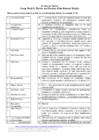
EU Internal Market Group Work I: History and Purpose of the Internal Market Please connect terms (numbers) with correct description (letter), for example 17 M 1 Common Market A ... is characterized by free movement of goods between the participating countries, but autonomous external trade policies in relation to non-participants. 2 Comparative B A top-down approach to integration that can be best
24. in a cost-effective manner- tulutooval viisil 25. cash flow- kassakäive, rahakäive, rahavoog 26. profitability requirements- kasulikkuse nõuded 27. outset- algus 28. at the outset- algul, alguses 29. sound- mõistlik, usaldatav 30. marketing- turustus, turustamine, turundus, turukeskne juhtimine 31. approach- lähenemisviis, käsitlusviis, meetod 32. a sound marketing approach- mõistlik lähenemine turundusele 33. market penetration- turu hõlvamine 34. to revamp- uut ilmet andma; uut, parandatud kuju andma 2 35. consumption- tarbimine 36. a tin- plekk-karp, plekktoos, konservikarp 37. tinned soup- purgisupp 38. a purchase- ost, ostetud kaup 39. a winter purchase- talvekaup 40. product attribute- toote omadus 41. the product attributes of celery- selleri toote omadused 42. market development- turu laiendamine 43. extension- laiendus, avardus 44
BARRIERS TO DISTRICT HEATING DEVELOPMENT IN SOME EUROPEAN COUNTRIES Abstract District heating (DH) offers low primary energy demand, high security of supply and small CO 2 emissions. Barriers to DH in the UK, Ireland, France, Romania and the Czech Republic have been compiled through publications and interviews. DH systems require large investments, have negative initial cash flow and long payback time, which obstructs financing. One actor should control DH from source to consumption. If the value chain is fragmented, contracts are required between the links. It increases risks and
cooperation with Russia and Eastern Partnership Countries. 3 1. LEGALIZATION OF A COMPANY WITH A FOREIGN OWNER IN RUSSIA Today the investment attractiveness of Russia is very high. In addition to the dynamic pace of development of the economy, Russia offers to foreign investors increasing every year the market of goods and services to consumer and business. Most often, this together with the high rate of return on invested capital is a crucial factor in the decision to enter the Russian market. One possible way to full implementation of business activities on the territory of the Russian Federation - is the creation of a legal entity. An enterprise with foreign capital - is created on the territory of the Russian business- organization whose founders are foreign citizens or organizations. Russian legislation
amplifying the speed and force of feedback mechanisms. Measurement of progress toward sustainable development – As sustainable development has become widely adopted as a foundation of public policy and organizational strategy; many organizations have turned their attention to the challenge of translating the concept into practice. Governments interest in sustainability reporting – When GRI was conceived in 1997, governmental interest in integrated economic, environmental, and social reporting was scant. Financial markets interest in sustainability reporting – The financial industry slowly but steadily is embracing sustainability reporting as part its analytical toolkit. Emergence of next-generation accounting – The late 20th century saw worldwide progress in harmonizing financial reporting. 5 Benefits of reporting
Liaison with central and local governments Liaison with branch chambers and NGOs www.investbg.government.bg GENERAL INFORMATION Official name: Republic of Bulgaria Area: 110 994 sq.m. Population: 7.4 million Capital: Sofia Time zone: EET (UTC+2) Official language: Bulgarian Currency: Lev (BGN) Fixed exchange rate: 1 = BGN 1.95583 Type of government: Parliamentary Member of: EU, NATO, WTO www.investbg.government.bg DID YOU KNOW THAT BULGARIA The best outsourcing destination in Europe, according to Cushman & Wakefield's rating for 2015. In the world our country takes the third place. Accommodated about 50 companies producing components and systems for the global automotive industry. In eight of every ten cars
tulu parimast võimalikust kasutamata jäänud olukorrast. Asenduse piirmäär – Asenduse piirmäär (rate of substitution, MRS) näitab, mitmest ühe hüvise ühikust tuleb loobuda, et saada juurde üks ühik teist hüvist. MRS on ka ÜKK tõus, see on igas ÜKK punktis erinev. Asendusefekt – Asendusefekt (substitution effect) on hüvise nõutava koguse muutus, mille põhjuseks on hindade suhteline muutus Asendushüvised – Asendushüvised (substitutes) on hüvised, mille nõudlus kasvab (kahaneb), kui teise hüvise hind tõuseb (alaneb). Neid kasutatakse ühe ja sama vajaduse rahuldamiseks (sai ja sepik) Bertrandi tasakaal – Bertrandi tasakaal (Bertrand equilibrium) saavutatakse, kui mõlemad duopoolsel turul tegutsevad firmad on valinud kasumit maksimeeriva hinna, lähtudes teise firma poolt valitud hinnast. Tasakaalutingimus on P=MC Ceteris paribus - Ceteris paribus tähendab majandusteoorias üldjuhul eeldust, et
.......................... 2 1.2. Potential future utilization..............................................................................4 1.3. Why Don't We Use More Renewable Energy? ...........................................5 2. Energy Types 2.1. Wind Energy.......................................................................................................6 2.1.1. Annual Generation........................................................................................7 2.1.2. Growth and cost trends................................................................................8 2.1.3. Theoretical potential.....................................................................................9 2.1.4. Benefits of wind energy................................................................................10 2.2. Solar Energy........................................................................................................11 2.2.1 Development, deployment and economics.................
from its clients which show clearly that for body building professionals there are no viable options at this level of fitness in Dublin or the greater Leinster area to use heavy weight equipment facilities for competition purposes. The unique competitive edge of “Your Fitness”, as stated, will be create sport and fitness facility that will serve both beginners and professionals. Target Market Market Overview The area “Your Fitness” is planning to serve is located on the south side of Dublin and it is in the postal district of Dublin …………..It comprises mostly residential areas and urban villages as …………….,…………. and ………….. “Your Fitness” is close to city centre area and the majority of population in this district are young professionals who evaluate the closeness of city’s heart
other financial intermediaries. The distinction is based on the functions of institutions institutions in the first group (MFIs) play important role in the process of money creation in modern economies. European Central Bank (ECB) describes Monetary financial institutions as including national central banks (and also ECB in the euro area), credit institutions and non-credit institutions which receive deposits from general public (individuals and non-MFI firms) and grant credit and/or invest in securities. Major non-credit MFIs in Europe are money market funds. Credit institutions are defined in the directive 1 relating to the taking up and pursuit of the business of credit institutions as: a) undertakings whose business is to receive deposits or other repayable funds from the public and to grant credits for its own account; or 1 Directive 2006/48/EC of the European Parliament and of the Council of 14 June
comments made in the publication do not necessarily reflect the opinion of GIZ. This publication may not be reproduced in whole or in part without the written permission of the copyright holder. © Deutsche Gesellschaft für Internationale Zusmmenarbeit GmbH (GIZ), 2011. 2 CYAN MAGENTA YELLOW BLACK 2 Introduction For the past few years, Georgian government has carried out a number of significant economic reforms in various fields in order to create attractive business environment and to breathe a new life into Georgian economy. The main aim of the reforms was to boost foreign investments, cre- ate new jobs, stimulate entrepreneurial activities in a variety of fields and increase the welfare of citizens. As a result of economic deregulation policy which was focused on liberalization of the Economy, a number of state regulated spheres were sharply decreased and regulation procedures were sim-
3 control of Jamaica), succeeded in organizing frequent uprisings against the European landowners. The sugar industry declined in the 19th cent., partly because of the abolition of slavery in 1833 (effective 1838) and partly because of the elimination in 1846 of the imperial preference tariff for colonial products entering the British market. Economic hardship was the prime motive behind the Morant Bay rebellion by freedmen in 1865. The British ruthlessly quelled the uprising and also forced the frightened legislature to surrender its powers; Jamaica became a crown colony. Poverty and economic decline led many blacks to seek temporary work in neighboring Caribbean areas and in the United States; many left the island permanently, emigrating to England, Canada, and the United States. Indians were imported to meet the labor shortage on
.......................................22 1. Background Lee Information Systems is an organization whose main trade is a solution-based development of business software. The primary area of competence of the organization is IT domain. Lee IS has been active since 2002 and during that time has successfully provided a wide range of services and solutions. In the past years the specialty of Lee IS was narrowed down to IS development for specific business domains due to the rising demand and profitability. 2. Business Plan 2.1.Mission Lee IS is set on catering the most effective solution to a given customer and offering the most effective partnership in its support. Effectiveness implies, amongst other things, information being: stored without essential use of paper transmitted without essential burning of fuel processed without essential human labor/endeavor 2.2.Values Simplicity and transparency
The Foundation's focus is to assist those working to achieve progress in the areas of human and civil rights, environmental and animal protection. We are part of the L'Oréal family. CLICK HERE to find out more about our parent company. History The very first The Body Shop® store opened on 26th March 1976 in Brighton, on the south coast of England. By 1978 the first overseas franchise is a kiosk in Brussels and by 1982 new shops open at a rate of two per month. In 1985, in its first year as a public company, The Body Shop sponsored posters for Greenpeace. A year later, it created an Environmental Projects Department of its own, while the first major campaign for The Body Shop is "Save the Whales" with Greenpeace, in 1986. The first Community Trade product for The Body Shop was a footsie roller, produced in 1986 by a supplier in southern India. This trade in footsie rollers has evolved into
2. The scale of biofuels production 2.1. Drivers of biofuels production Lal (2010) stated that "three inter-connected challenges face humankind in the 21st century": food security, climate change, and energy security. The world population is projected to reach 9 billion in 2050, posing more demands on energy, food, and other natural resources. It has been estimated that the world food production needs to double and meat production increase by 85% by 2050 to fulfill projected demand by population (Karp, 2011). In the recent decades, the food consumption in the most populous counties has shifted from grain-based diets to meat and dairy diets. Meat production requires times more biomass in the form of animal feed and that puts further pressures on natural resources. As food production is very energy intensive, it is closely linked to global energy consumption. Global fuel consumption
 annaabi.ee