Leidsid 33 sarnast õppematerjali, mis on seotud failiga "Inglise keele KT 2 semester". Need materjalid aitavad sul teemat sügavamalt mõista.
market, management, depend, strategy, marketing, organisation, term, consumer, markets, development, effect, cost, turundus, represent, channel, cash, products, effective, know, objective, mean, heinz, jaotuskanal, vahendaja, result, economies, sääst, needs, segment, goal, sound, approach, extension, process, current, decision, place, vocabularyBrands *Pros: quality is well-good/stylish/to show they have good taste/good design/reliability *Cons : don't want to show people you have a lot of logos/people have the same clothes/ inflated prices/needs value of money Marketing *The basic concept underlying marketing is human needs. *Marketing has been defined as the process of matching an organisation's resources with customer needs. *4 conditions necessary for exchange : value, delivery, communication, parties *4 variables of marketing mix: product, price, place, promotion The four variables, creation, distribution, promotion, and pricing are called the marketing mix. Product *Product is marketing process result. *An organisation must remain dynamic because the product is the only key to the organisation's solvency and profitability. *Company and consumer are independent because no matter how else the organisation runs itself cost-effecitively and sensibly, if the product is not selling well then the money
INTRODUCTION OF SUPPLY CHAIN MANAGEMENT (SCM) A supply chain is a network of facilities and distribution options that performs the functions of procurement of materials, transformation of these materials into intermediate and finished products, and the distribution of these finished products to customers. Supply chains exist in both service and manufacturing organizations, although the complexity of the chain may vary greatly from industry to industry and firm to firm.
7. Vii valitud strateegiad ellu 8. Hinda elluviidud strateegiaid Strateegiline audit võimaldab suunatud teemakohaseid kontrollküsimusi esitades organisatsiooni terviklikku analüüsi, eesmärgiga arendada strateegiat ja parandada organisatsioonilist tulemuslikkust. Responsibilities of the Board of Directors Due care, Board of directors are responsible that the corporation is not harmed by members of the board, Directors can be held liable. − Hires and fires the CEO and top management. − Controls, monitors, or supervises top management. − Reviews and approves the use of resources. − Cares for shareholders’ interests. − Assures that the corporation is managed in accordance with state laws, security regulations and conflict of interest situations. Role of the Board in Strategic Management • Monitor developments inside and outside the corporation. • Evaluate and influence management proposals, decisions and actions.
.............................................ärivara 96. Commodity .......................................................hüvis 97. Communications ..............................................sidevahendid 98. Competitive ......................................................konkurentsil põhinev 99. Complements ...................................................täiendkaubad 100. Constant-cost industry ...................................konstantsete kuludega tegevusharu 101. Consumer .......................................................tarbija 102. Consumer equilibrium ...................................tarbimise tasakaal 103. Consumer goods ............................................tarbekaubad 104. Consumer price index ....................................tarbijahinnaindeks 105. Consumer surplus ..........................................tarbija hinnavaru 106. Consumption ..................................................tarbimine 107
4. product positioning - is how we see a product or how a company would like us to see it in relation to other products 5. product placement - hidden commercial of a product. Customer can see a product in films, music videos and so on. 6. raw materials - basic materials from which products are made or manufactured 7. finished goods - are goods(products) that have completed manufacturing process and are ready to be sold and used by the end user 8. consumer goods - goods which are produced to satisfy consumer current needs and are bought for individual use 9. consumer durables - long time lasting products, such as home appliances, cars and so on 10. fast moving consumer goods - everyday need products that are sold quickly and in large quantities, food and toiletries for example 11. brand name - word(s) that identify product and it's company so consumer can easily recognize and notice it. 12
Service management Assignment 1(2) Girli Vasiljev HAAGAHELIA University of Applied Sciences RB1X 21.02.2012 Marketing Plans for Service Business Introduction I read a book named Marketing Plans for Service Businesses. Authors were Malcolm McDonald and Adrian Payne. Before writing about the content I would recommend this book for everybody, because the difficult subject was written very clearly and understandably there. Chapter 1 It provides a broad view of marketing as it relates to services. It describes the marketing
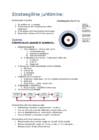
Fookus sisekeskkonnale: ressursid ja võimalused Fookus tulevikku: otsused, plaanid, muutused Strateegilise juhtimise baasteooriad: Ratsionaalse otsustamise vaade (nt Ansoff, LCAG mudel) Majandusteaduslik vaade (nt Property rights, Principal-agent, Mänguteooria, tööstusökonoomika) Ressursid ja teadmised (nt resource vased view, knowledge-based view) Organisatsiooni ökoloogia (nt Organization ecology) Evolutsiooniline ja tõlgendav vaade (nt strategy as practice) Strateegilise juhtimise tsükkel: Keskkonna kategooriad: Strateegiad moodustavad üldise kava selle kohta, kuidas äriühing täidab oma missiooni ja saavutab seatud eesmärgid, ning sisaldab nelja strateegia tasandit: Operatiivstrateegiad ehk funktsionaalsed organisatsiooni funktsionaalsete valdkondade eesmärgistatud plaanid, sisaldavad nt: o Teeninduse strateegia, Tootmise strateegia, Turunduse strateegia,
(Pages : 15-23) Prepared: Kadri Tamm, MF-I-4 Instructed: Jane Tammeorg Tartu 2009 Marketing Basics for the Small Business Marketing is the wide range of activities involved in making sure that you're continuing to meet the needs of your customers and getting value in return. Marketing is usually focused on one product or service. Thus, a marketing plan for one product might be very different than that for another product. Marketing activities include "inbound marketing," such as market research to find out, for example, what groups of potential customers exist, what their needs are, which of those needs you can meet, how you should meet them, etc. Inbound marketing also includes analyzing the competition,
vastuvusseviimist kohalike vajadustega, kuid bränd on muutumatud - regionaalne strateegia VASTUSED: globaalne standardiseeritud strateegia, globaalne kohandatud strateegia, regionaalne strateegia. 10. Rahvusvaheline turundus on oma olemuselt üks turunduse alaliikidest, st turundustegevus toimub sarnastel alustel lui koduturul, kuid turunduskanalid, turundusmeetmestik, hinnastamine ja sihtklientide positsioneerimine on erinev. . International marketing is based on an extension of a company’s local marketing strategy, with special attention paid to marketing identification, targeting, and decisions internationally. Õige/vale 12. Multinatsionaalseks nimetatakse ettevõtet… a. mis ekspordib või impordib paljudesse välisriikidesse b. mis tegutseb peale koduturu veel vähemalt ühes välisriigis c. mis on teinud otseinvesteeringu mõnda välisriiki d. mille tegevus on täielikult üle viidud mõnda välisriiki 13
Lecture 1: The mountebank pharmacy. Price: 60% of average turnover on last 2 years + 10% of profits per year during next 2 years (võib olla kasumit ei tule, kuna on vaja investeerida). Quack bank present buiseness plan by 8 november, presentation 9 november long term loan (10 years), at 4,8% interest rate. Conclusion I need this sum of money from bank. Business plann: 1. management summary 2. organisational profile 3. internal analysis 4. external analysis 5. strategy 6. financial prognosis Group feedback 7/11. Leadership and management A good manager is competent in all different management styles, and knows when to apply which style. 1. Autocratic 2. Democratic 3. Free reign (vabad käed, dellegeerimine) 4
.................................................8 3.4. Projects..............................................................................................................................9 3.5. Outsourced Services .........................................................................................................9 3.6. Structure............................................................................................................................9 3.7. Management Process ......................................................................................................10 4. Development Program............................................................................................................10 4.1. Expenses .........................................................................................................................10 4.2. Outstanding Tasks and Projects ............................................................
In 1990 The Body Shop Foundation was established, a charity which funds human rights and environmental protection groups. The Big Issue paper for homeless people, which began as a The Body Shop Foundation project, was launched in 1991. By 1998 its success saw The Body Shop Foundation part-funding the launch of the The Big Issue stateside, in Los Angeles. The New Academy of Business was established in 1995, as an initiative by Anita Roddick. This innovative management degree addressing social, environmental and moral issues is run at The University of Bath, in England. In 1993 the Company launched an international high-profile campaign to raise awareness of the plight of the Ogoni people and their leader Ken Saro-Wiwa, persecuted for protesting against Shell and the Nigerian dictatorship over exploitation in their homeland. The Body Shop At HomeTM, the direct-selling arm, was launched in the UK in 1994, Canada in 1995, Australia in 1997, and USA in 2001
Good afternoon! My name is … I will be speaking today for 10 minutes about market and marketing. At first I am going to talk about meaning of market and I must define what is market in modern marketing context. The common usage of market means a place where goods are bought or sold. A market need not necessarily mean a place of exchange. The word market is commonly used and may even mean or aim in any of the following: Market may mean a place where buying and selling take place Buyers and sellers come together for transaction An organization through which exchange of goods takes place The act of buying and selling of goods (to satisfy human wants) An area of operation of commercial demand for commodities In addition, I have to define what is marketing. Marketing is a human activity to satisfy needs and wants, through an exchange process
It is not just good ideas, it is a combination of good ideas, motivated staff and an instinctive understanding of what your customer wants” – (Branson 1998) ● “...novel implementation of an invention, discovery, new or existing knowledge in economic process” (Joseph A. Schumpeter) ● An innovation is the implementation of a new or significantly improved product (good or service), or process, a new marketing method, or a new organisational method in business practices, workplace organisation or external relations” (Oslo Manual). Innovation and entrepreneurship Schumpeter on innovation: the role of inventions and entrepreneurs ● Innovation as “new combinations” of existing resources: “Innovation is possible without anything we should identify as invention and invention does not necessarily induce
6. Information flow Pure Competition · Involves very large numbers of sellers and buyers. · Firms producing identical or homogeneous products. · Standardized product (a product identical to that of other producers). (ex. corn or cucumbers). · Free Entry and Exit: no significant legal, technological, financial, or other obstacles prohibiting new firms from selling their output in any competitive market No control over the price: "Price Takers" ( the firms have no market power) . The individual firm has very little to no impact on the market. · Demand is perfectly elastic. · Maximizes productive and allocative efficiency. · Perfect competition includes complete information. ex. Agriculture Pure competition markets do not actually exist. · Note: Pure competition does not actually exist in our society, and the agriculture industry
Executive summary 1.1 Business summary: My business idea is simple: MP CANNED FOOD LIMITED is importing canned food (meat products and ready meals) from Estonia to the United Kingdom. Unique products like "Wild Boar In Its Own Juice", "Elk In Its Own Juice" and "Venison In Its Own Juice" are hard to find in the United Kingdom. We are selling Rannarootsi and Frank Pott brands and sell them online, http://www.mpwildgame.co.uk Future plans are to start trading also in Leicester Market in November/December as a Market Stall, supplying deli shops (including North European and International), wholesalers and supermarkets (including Tesco, ASDA, Morrison's, Sainsbury's). My three big business values: * Quality products * Professional customer service * 100% recyclable products I started as a Sole Trader on 1st of June 2012, because it's simple and straight forward structure for my business. As my business have been growing I registered in
Tartu 2008 TABLE OF CONTENTS TABLE OF CONTENTS....................................................... 2 INTRODUCTION................................................................ 3 HISTORY.......................................................................... 3 PRESENT-DAY STATE ....................................................... 3 VISION AND STRATEGY.................................................... 4 PRODUCTS ..................................................................... 4 QUALITY........................................................................ 5 ANALYSIS....................................................................... 5 CONCLUSION.................................................................. 6 REFERENCES.................................................................. 7
It measures and records business transactions and provides financial statements that are based on GAAP. Cost accounting measures, analyzes, and reports financial and no financial information relating to cost of acquiring or using resources in an organization. Value-chain analysis: sequence of business functions in which customer usefulness is added to products and services. 1. Research and development 2. Design of products, services, or processes 3. Production 4. Marketing 5. Distribution 6. Customer service. Supply chain describes the flow of goods, services, and information from the initial sources of materials and services to the delivery of products to consumers, regardless of whether those activities occur in the same organization or in other organizations. Five step decision making process: 1. Identify the problem and uncertainties. 2. Obtain information. 3. Make predictions about the future. 4. Make decisions by choosing among alternatives. 5
•This application partitioning is transparent to the component developer. 3. COM Principles: Rigorous Encapsulation: - no leakage of implementation details; – All object manipulation through strict interfaces. Polymorphism: – via multiple interfaces per class; – “Discoverable”: Query Interface COM Model – how the techogy is used. COM ORB = COM Runtime – how is it implemented. COM is efficianet and scalable: 28 bytes headers; keep-alive messages. ActiveX: marketing name for a set of technologies and services, all based on COM(model,orb) Active components - controls: COM-component with designed time, optimized for download and execute; self- registering; support in multiple languages. OLE:1.0 – object and container (server/client); object application runs in own window. 2.0 – visual editing,COM based, controls = *.ocx files. --- .NET:Process: source code->compiler->metadata->CLR->result. CLR:
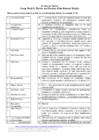
EU Internal Market Group Work I: History and Purpose of the Internal Market Please connect terms (numbers) with correct description (letter), for example 17 M 1 Common Market A ... is characterized by free movement of goods between the participating countries, but autonomous external trade policies in relation to non-participants. 2 Comparative B A top-down approach to integration that can be best
.......................................................................................................................3 Keys to Success...................................................................................................................4 COMPANY DESCRIPTION................................................................................................. 4 PRODUCT AND SERVICE ..................................................................................................4 TARGET MARKET ..............................................................................................................5 Main competitor..................................................................................................................5 MARKETING AND SALES PLAN .....................................................................................5 Marketing strategy .............................................................................................................5
000484 Tallinn 2004 2 PREFACE The Board of Directors of the Global Reporting Initiative (GRI) is pleased to release the 2002 Sustainability Reporting Guidelines. From an institutional perspective, it marks the beginning of the cycle of release, testing, review, and revision under GRIs new governance structure. The GRI was launched in 1997 as a joint initiative of the U.S. non-governmental organisation Coalition for Environmentally Responsible Economies (CERES) and United Nations Environment Programme with the goal of enhancing the quality, rigor, and utility of sustainability reporting. The first set of GRI Sustainability Reporting Guidelines appeared as an Exposure Draft in 1999. Following testing and public comment, the GRI released the June 2000 Guidelines. The 2002 Guidelines represent the GRI Boards view of a consensus on a reporting framework
Tallinna Majanduskool ,,Notes on preparing a marketing plan" Homework 03.05.2012 Liisi Nigul Turundus II Tallinn 2012 Toscana Gourmet is a place for family togetherness and will also be the leading gourmet Italian restaurant in Tallinn. The signature line of innovative, premium, pasta and risotto dishes include pesto with smoked salmon, pancetta and peas linguini in an special sauce, and
famous and how they have remained so rare is down to a company named DeBeers. This paper is about DeBeers, the most powerful diamond company in the world. Monopoly main characteristics were that firm is single seller of the product without any close substitutes. Nowadays DeBeers have many substitutes and that is the reason why they are not a pure monopoly, but they are definitely nearly one. This is because the firm still has the bulk of world sales and controls 45% of world diamonds market. This paper examines these monopoly characterises, also how and why DeBeers diamonds monopoly still exists and what benefits they give the world. Also how the firm handled the problems which resulted from new government regulations to make the diamond industry more competitive. De Beers Diamonds is a Swizz-based company which was founded in 1888 by Cecil Rhodes, a British Business man. The company was financially supported by an Alfred Beit, who was a
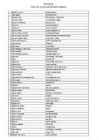
18 adviser konsultant, nõuandja 19 aid toetus, abi 20 alimony alimendid, elatsraha 21 allocated reserveeritud 22 amortization kulumine, amortisatsioon 23 amount of funds rahaliste vahendite hulk 24 appendicies lisad, kaasaanded 25 application avaldus 26 appraise the management hinnangut andma 27 arbitrage vahendustegevus 28 aspirations püüdlused 29 assets varad 30 assets and liabilities aktiva ja passiva 31 assumption ülevõtmine 32 assurance kinnitus, kindlustus 33 auction oksjon 34 audit report kontrolliaruanne
Monopolistic Competition Market Power Firms in monopolistic competition or imperfectly competitive markets are more likely to have limited market power because there are many firms with differentiated products (there are substitutes) and there is relative ease of entry and exit into the market Market Power among Sellers · Monopolistic competition - a market with a large number of sellers and relatively free entry; each firm "differentiates" its product. · Oligopoly - a market characterized by significant barriers to entry and "a few "sellers who recognize their interdependence in the market; products may be homogeneous or differentiated. Monopolistic Competition · Large number of sellers · relative ease of exit / entry · products are differentiated
5. B2G business-to-goverment, business applay for government contracts and pay taxes. 6. shopping cart Shopping cart is where you put product you have purchased from online shop. 7. last mile problem how to deliver products, purcased on internet to the customers 8. bricks-and-mortar shop Brick and mortar shops are physical shops where customers interact face-to-face. They are opposite to online shops. TELEMARKETING 1. telemarketing for of direct marketing, where telemarketers call to their customers 2. cost per inquiry, cost per order its how they measure the success of telemarketing compaigns 3. cold calling It calling from a list where new customers are. 4. hot contacts people who are ready to buy 5. phone sales selling services over the phone 6. lead generation cold prospects, people who they havent called yet, 7. lead conversion - This is telemarketers trying to convert leads into sales. 8
The Rise and Demise of the New Public Management Wolfgang Drechsler (University of Tartu and Tallinn University of Technology, Estonia) © Copyright: Wolfgang Drechsler 2005 Within the public sphere, the most important reform movement of the last quarter of a century has been the New Public Management (NPM). It is of particular interest in the post-autistic economics (pae) context because NPM largely rests on the same ideology and epistemology as standard textbook economics (STE) is based (for my take on this, see Drechsler 2000), and it has had, and still has, similar results. Already more on the defensive within public administration (PA) than STE is within economics, NPM also shows that such major paradigm shifts in theory and policy may actually happen
their problems being solved 3. Decision – the innovation is either adopted or rejected. If rejected, it could be adopted at a later time. Modern use of DOI ‘Underlying the DOI theory is that, in order to secure the successful diffusion of an innovation, it must be perceived as culturally relevant and appealing to the norms of the system one wishes to diffuse it into. This aspect applies to almost every area where the fields of communication, politics, marketing and public affairs are concerned.’ (Tina Gouws and George Peter van Rheede van Oudtshoorn p. 239) Thus, a lot of already well-known brands must change their message or visual in order to fit to the current time. What every company is looking for is repeat-buy or longevity of business. This also can be paralleled with brand loyalty, which is nurtured through three constituents of the brands: insiders, followers and feeders. Those stakeholders are part of creating the myth of the brand,
Indroduction This assignment will examine Britain's car market and shows how the external and internal environment factors influences it, mostly on Mini Ltd. External marketing environment is divided into 4 different groups; socio-cultural, economic, technological and political factors. Internal marketing evironment is divided into 6 different groups; which are customers, competitors, suppliers, distributors, employees and stakeholders. Also this assignment is provided with the SWOT analysis, where strengths, weaknesses, opportunities and threats are examined. Mini Mini was at first manufactured by the Austin Motor Company Ltd. In 1957 Alec Issigonis was commissioned to develop a new type of small car. At the same year were the first sketches of
25% of the company. At the end of its fiscal year 2007, Burger King reported that there are more than 11,300 outlets in 69 countries; 66% are in the United States and 90% are privately owned and operated. The company has more than 37,000 employees serving approximately 11.4 million customers daily. In North America, franchises are licensed on a per store basis, while in several international locations licenses are sold on a regional basis with franchises owning exclusive development rights for the region or country. These regional franchises are known as master franchises, and are responsible for opening new restaurants, licensing new third party operators, and performing standards oversight of all restaurant locations in these countries. The largest example of a master franchise is Hungry Jack's, which exclusively owns, operates or sub-licenses over 300 restaurants in Australia. As with other multi-national corporations, Burger King has been involved in several legal
x Paika panema ettevõtte strateegia, üleüldise suuna, missiooni ja visiooni 4. Strateegia 3 etappi suures organisatsioonis hierarhia alusel. Variandid olid erinevates järjekordades ja variantides käis läbi: äristrateegia - keskkonnastrateegia - finantsstrateegia - organisatsioni strateegia. Tuli valida õige järjestusega variant. Ettevõtte e organisatsiooni s. äristrateegia finantsstrateegia - keskkonnastrateegia Strategy can be formulated on three different levels: y corporate strategy- corporate level strategy fundamentally is concerned with the selection of businesses in which the company should compete and with the development and coordination of that portfolio of businesses. y business startegy - a strategic business unit may be a division, product line, or other profit center that can be planned independently from the other business units of the firm
institutions institutions in the first group (MFIs) play important role in the process of money creation in modern economies. European Central Bank (ECB) describes Monetary financial institutions as including national central banks (and also ECB in the euro area), credit institutions and non-credit institutions which receive deposits from general public (individuals and non-MFI firms) and grant credit and/or invest in securities. Major non-credit MFIs in Europe are money market funds. Credit institutions are defined in the directive 1 relating to the taking up and pursuit of the business of credit institutions as: a) undertakings whose business is to receive deposits or other repayable funds from the public and to grant credits for its own account; or 1 Directive 2006/48/EC of the European Parliament and of the Council of 14 June 2006 relating to the taking up and pursuit of the business of credit institutions, http://eur-lex.europa.eu/LexUriServ/LexUriServ.do?
 annaabi.ee