 100 punkti
Autor soovib selle materjali allalaadimise eest saada 100 punkti.
100 punkti
Autor soovib selle materjali allalaadimise eest saada 100 punkti.
 ~ 11 lehte
Lehekülgede arv dokumendis
~ 11 lehte
Lehekülgede arv dokumendis
 2013-10-05
Kuupäev, millal dokument üles laeti
2013-10-05
Kuupäev, millal dokument üles laeti
 3 laadimist
Kokku alla laetud
3 laadimist
Kokku alla laetud
 0 arvamust
Teiste kasutajate poolt lisatud kommentaarid
0 arvamust
Teiste kasutajate poolt lisatud kommentaarid
 karenkallais
Õppematerjali autor
karenkallais
Õppematerjali autor
of two most important things - willpower and determination. 3 Narcotics Narcotics are dangerous and illegal. Narcotics also known as drugs have several forms. You can consume drugs in a shape of a pill, by injecting it with a needle, smoking it and even baking it into a food and then eating it. Let's focus on five drugs marijuana, ecstasy, heroin, mushrooms and LSD. 1. Marijuana Marijuana is a green and brown mix of dried flowers, stems, seeds and leaves from the hemp plant Cannabis sativa. The main active chemical is THC (tretrahydrocannabinol), which moves quickly through the bloodstream to the brain and other organs throughout the body. Marijuana is a mild hallucinogen that can also act as a depressant or a stimulant. Many people think that it's a plant, so it's natural, and natural is always good-right? Think again, because
Health 2007 1. Introduction Health is the level of functional or metabolic efficiency of an organism at both the cellular and social level. In the medical field, health is commonly defined as an organism's ability to succesfully respond to challenges and effectively restore and keep a so-called ,,state of balance". 2. History · Early hospitals During the Middle Ages the hospital could serve other functions, such as an almshouse for the poor, or hostel for pilgrims. In ancient cultures, religion and medicine were linked. The earliest known institutions aiming to provide cure were Egyptian temples. Greek temples dedicatedto the healer-god, might admit the sick, who would wait for guidance from the god in a dream. The Romans adopted this worship. The Sri Lankans are perhaps responsible for introducing theconcept ofdedicated hospitals to the world. According to an ancient chronicle, written in the 6 th century A.D., a king had lying-in homes and hospitals b
John Berardi Dr. Justin Mager Dr. Lee Wolfer Dr. Mary Dan Eades Dr. Michael Eades Dr. Ross Tucker Dr. Seth Roberts Dr. Stuart McGill Dr. Tertius Kohn Dr. Timothy Noakes Dustin Curtis Dustin Curtis Ellington Darden PhD Eric Foster Gary Taubes Gray Cook Jaime Cevallos JB Benna Jeffrey B. Madoff Joe DeFranco Joe Polish John Romano Kelly Starrett Marie Forleo Mark Bell Mark Cheng Marque Boseman Marty Gallagher Matt Brzycki Matt Mullenweg Michael Ellsberg Michael Levin Mike Mahler Mike Maples Nate Green Neil Strauss Nicole Daedone Nina Hartley Pavel Tsatsouline Pete Egoscue Phil Libin Ramit Sethi Ray Cronise Scott Jurek Sean Bonner Tallulah Sulis Terry Laughlin The Dexcom Team (especially Keri Weindel) The OneTaste Team The Kiwi The Kiwi Thomas Billings Tracy Reifkind Trevor Claiborne Violet Blue William Llewellyn Yuri V. Griko PhD Zack Even-Esh START HERE THINNER, BIGGER, FASTER, STRONGER? How to Use This Book
The three main kinds of human food are proteins, fats and carbohydrates. We also need certain minerals and vitamins. A balanced diet one that includes all those things is necessary for good health. You may have a favorite food, but the best choice is to eat a variety. If you eat different foods, you're more likely to get the nutrients your body needs. Taste new foods and old ones you haven't tried for a while. Some foods, such as green veggies, are more pleasing the older you get. Shoot for at least five servings of fruits and vegetables a day -- two fruits and three vegetables. Drink water and milk most often. When you're really thirsty, cold water is the No. 1 thirst-quencher. And there's a reason your school cafeteria offers free milk. You need calcium to grow strong bones, and milk is a great source of this mineral. How much do you need? Aim for 3 cups of milk per day, or its equivalent. You can mix it up by
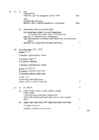
for, new cells/mitosis/new leaves; max 2 (d) (i) chemoheterotrophic; 1 (ii) photoautotrophic; 1 (e) (i) carbon; R CO2 1 (ii) Desulfovibrio, uses sulphur (S)/makes hydrogen sulphide (H2S); green sulphur bacteria, use H2S/make S; colourless sulphur bacteria use H2S; max 2 (f) colourless sulphur bacteria; 1 (g) C. perfringens similar to C. difficile/AW; (bacteria) anaerobic; (tissue damage/poor blood supply) decreases oxygen available; conditions suitable for Clostridium to multiply;
Extended Essay Research Question: To What Extent Does a Plant Based Diet Lower the Risk of Coronary Artery Disease? Subject: Biology Word Count: 3482 Abstract: Because there has been much debate over whether plant based diets are beneficial or not, I’m willing to learn more about it and since there’s eligible data available on the effects of vegetarian/vegan diets on cardiovascular diseases, my research question is formed accordingly: To what extent does a plant based diet lower the risk of coronary artery disease? The importance of this study lies in my own curiosity and my desire to acquire further knowledge on the prevention and treatment of coronary artery disease. In this investigation I will study two similar prospective studies on plant based diets and cardiovascular diseases, mainly coronary artery disease, to find out if the outcomes of one have anything common
Drugs are chemicals that change the way a person's body works. You've probably heard that drugs are bad for you, but what does that mean and why are they bad? Medicines Are Legal Drugs If you've ever been sick and had to take medicine, you already know about one kind of drugs. Medicines are legal drugs, meaning doctors are allowed to prescribe them for patients, stores can sell them, and people are allowed to buy them. But it's not legal, or safe, for people to use these medicines any way they want. Cigarettes and Alcohol Cigarettes and alcohol are two other kinds of legal drugs. (In Estonia, adults 18 can buy cigarettes and alcohol.) But smoking and excessive drinking are not healthy for adults and off limits for kids. Nicotine is the drug in tobacco leaves. Whether someone smokes, chews, or sniffs tobacco, he or she is delivering nicotine to the brain. Each cigarette contains about 10 milligrams of nicotine. Nicotine is what keeps people smoking despite its harmful effects. Because t
Chapter 4 Mechanical Properties of Wood David W. Green, Jerrold E. Winandy, and David E. Kretschmann Contents he mechanical properties presented in this chapter were obtained from tests of small pieces of wood Orthotropic Nature of Wood 4–1 termed “clear” and “straight grained” because they
 annaabi.ee









Kõik kommentaarid