Leidsid 33 sarnast õppematerjali, mis on seotud failiga "funtionalist and conflict theory". Need materjalid aitavad sul teemat sügavamalt mõista.
functional, change, other, since, there, talk, thing, explain, needs, without, social, consider, concept, dynamics, understand, even, groups, different, part, base, traditions, things, political, hand, inequality, solved, stay, same, share, individual, wrong, opposite, schools, thought, final, study, occurs, essay, briefly, going, agree, completely, thanDo you consider yourself more functionalist or more conflict theorist? Please explain why? Functionalism and conflict theory are very different views of society, but they are not exactly opposites. Both have arguments, that make people think about the society they live in and both have theorists who critize each other. In my opinion, none of the theories are completely wrong but I do tend to agree with people on the conflict theory side. Firstly, functionalism ignores inequality and focuses too much on the positive functions in society. For example racism, functionalists will say that it must be imporant in order to exist as long as it has but in my opinion that sounds quite doubtful. The most problematic part about racism is above all the tension and conflict which comes with it
Education is commonly thought of as the job of schools. Adults cry "educate our children!" Everyone has opinions about the best way to do the job. It is of urgent importance, and all the numerous factors are much studied, debated, and new (or old) ideas continually tested or retested. Some people say "it's as simple as . . . " and then name their pet peeve or passion. My view is not of an education specialist, but of one who loves sharing what I learn, and owes much to educators. Since I don't have an educational theory neatly worked-out, nor an outline of my perceptions, my intent is to address each educational ingredient that comes to my mind. After I've said what I think about each topic, readers may have a fair comprehension of my philosophy. First comes sensitivity. If a person be insensitive, be it from numbing cold, exhaustion, drugs, genetic makeup, or upbringing, then the process of education is bogged down, and results come only after great efforts
What is the real meaning of life? Why prefer one thing to another? Can we trust observation? It’s raining outside - how do you know it is? I can see it’s raining. How to convince yourself its raining? A good reason to doubt - 49 other peaople have the same opinion. Falsifiable → possible; not falsified World disappeared in 2012 and got recreated 3 secs later → unfalsifiable - cannot prove it’s true/wrong, cannot provide any tests to prove it. Or - one or another but not both → exclusive - one or another (both) → inclusive (Invited those who are managers or specialists - both) Arguments valid or not - logic is a science where to decide it
Mass Media What is Mass Media? Statistics show that there are few things which impact the human mind more than mass media. The advice of teachers, parents and relatives may fall on deaf ears, but the mass media influence holds us all spellbound! At this point, it becomes necessary to define mass media. Mass media may be defined as any form of communication which is meted out to the people at large, through the various forms of communication. What modes of communication are we talking about? Well there can be no static definition for the
The restructuring of human work and association was shaped by the technique of fragmentation that is the essence of machine technology. The essence of automation technology is the opposite. It is integral and decentralist in depth, just as the machine was fragmentary, centralist, and superficial in its patterning of human relationships. The instance of the electric light may prove illuminating in this connection. The electric light is pure information... It is a medium without a message, as it were, unless it is used to spell out some verbal a ad or name. This fact, characteristic of all media, means that the " Intent"_ of any medium is always .another medium. The content of writing is speech, just as the written word is the content of print, and print is the content of the telegraph. If it is asked, "What is the content of speech?," it is necessary to say, "It is an actual process of thought, which is in itself nonverbal
Q: Social order requires social behaviour to be predictable and individuals to cooperate. Amongst the explanations of social order are five outlined by Hechter and Horne: `meaning', `values and norms', `power and authority', `spontaneous interaction' and `networks and groups'. Describe how at least three of these (or other) factors might explain social order, and discuss the extent to which you find the explanations convincing. Introduction For societies to cohere and cooperate, it is necessary for individuals within them to have a predictable and collaborative behaviour. The presence of social order enables individuals to feel more secure publicly, as it enables them to somewhat predict their lives. Social order is also necessary for stability and serves as the basis for collective advancements. There are
goverment also has the responsoility of improving/educating the citizens. Laws are historical conventions, people can be forsed to be free. State of nature Hobes: state of nature is a state of conflict, a state of war. Locke: state of nature is peaceful, all men are equal. They treat others as themselves. Rousseau - people in the state of nature were neither good or bad. Man was like an animal not posessing any needs besides the primary ones. The bad habits of men are byproducts of ingaging in a civil society. All men are equal Sovereign Hobbes: can not be overthrown and can do whatever the fuck it wants. The best one is monarch. Locke: can be overthrown, if fails to do the job. Criticises monarch for haveing hereditary power. Prefers election for a term. Democracy? Rousseau: aristocracy, if not hereditary. (monarchy represents particular will) Authority in the social contract Hobbes: the sovereign
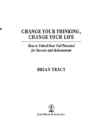
ccc_tracy_fm_i-xviii.qxd 7/7/03 3:22 PM Page iii CHANGE YOUR THINKING, CHANGE YOUR LIFE How to Unlock Your Full Potential for Success and Achievement B R I A N T R AC Y JOHN WILEY & SONS, INC. ccc_tracy_fm_i-xviii.qxd 7/7/03 3:22 PM Page i CHANGE YOUR THINKING, CHANGE YOUR LIFE ccc_tracy_fm_i-xviii.qxd 7/7/03 3:22 PM Page ii ccc_tracy_fm_i-xviii.qxd 7/7/03 3:22 PM Page iii CHANGE YOUR THINKING, CHANGE YOUR LIFE How to Unlock Your Full Potential for Success and Achievement B R I A N T R AC Y JOHN WILEY & SONS, INC. ccc_tracy_fm_i-xviii.qxd 7/7/03 3:22 PM Page iv
rational and capable of exercising responsibility until the age of majority, the age of 18. However, the adoption of the U.N Convention of the Rights of the Child (UNCRC) in 1989 granted for the first time the recognition for children as worthy individuals with rights of their own. The UNCRC laid the foundation for the potential re-evaluation of our traditional understanding of childhood and the perception of children as primarily objects of the adult world. Since, then the UNCRC has attracted significant scholarly interest from various disciplines and as such a high degree of research has been published in this area already. The increasing sociological interest in children in particular that has provided a new perspective around the idea of children as competent social actors has provoked a great controversy and confusion as it challenges the image of the incompetent child which is overwhelmingly prevalent in the Western society
BOOK REPORT Title & author of the book: 'Anita and Me' by Meera Syal The setting of the book? The story resolves around Meena Syal, the daughter of the only Punjabi family in the Midlands' mining village of Tollington. The novel provides a vision of British childhood in the 1960s, a childhood caught between two cultures, each on the brink of enormous change. Meena is desperate to fit in with the other children in her neighbourhood while forever feeling like an outsider because she is "different". Eventhough the Punjabi family is well respected by the locals, there are still sutations when they have to deal with racism. Plot summary (NB! Use the present tenses) Anita and Me by Meera Syal is the story of a young Punjabi girl growing up in the fictional English village of Tollington in the Midlands in the 1960s. The book follows Meena during her pre-teen years
Ameerika Kirjandus 30.01.13 Naturalism · France, Emile Zola · Put down his theory in 1879: Le Roman Experimental, attempt to explain the development of human society throuch biological laws · Outlook is deterministic, pessimistic, fatalistic (fate or biology) · Man as an animal-clever than other beasts, still explainable within the framework · Man is not a free agent, is govern by something · Unable to determine his own faith · Hereditary · Naturalists tried to apply in fiction the processes of natural sciences · Writers task is to record facts, systems of behaviour, living conditions, never revealing any natural unbiased (completely natural) · Point of view: amoral-outside the category of morality, neither good or bad
becoming larger. When wrongly access this kind of data, a lot damage could be done by criminals. Users privacy settings should be reviewd and fixed when needed. Social media Humans have always felt the need to socialize. Constantly. From the early ages to the signs and speech, from letters to telegram, from phones to internet, need to communicate has become less of an hussle and more convenient and accessible. In our modern society social media usage is constantly rising. For example since January 2016 to January 2017 active social media users have increased by 21% and internet users have increased by 10%. Our every day life is internet connection, sharing information, expressing ideas, liking and disliking content. It helps us to feel connected to the world and mostly provides to information we need, or at least think we need. Social media has become pinnacle of our generation and sometimes it feel impossible to live without it. Sharing
Departing from the drifter construct, which (re)constitutes this identity as socially deviant, the concept of lifestyle allows for a contemporary appraisal of these individuals’ patterns of meaningful consumption and wider insights into how ongoing mobility can lead to different ways of understanding identities and relating to place. Keywords: lifestyle consumption; backpacker; mobility; drifter; identity INTRODUCTION Within the social world of backpacking, there exist a small proportion of tourists who travel as a lifestyle for years on end. Reminiscent of Cohen’s (1972) seminal ‘drifter tourists’, but subverting connotations of aimlessness implicit in this term, these extreme tourists, who I reconceptualise as ‘lifestyle travellers’, move beyond an episodic consumption of backpacking. Backpacking is instead extended to an ongoing lifestyle practice that on a micro
PSYCHOLOGY PART 1: CORE Biological level of analysis Outline principles that define the biological level of analysis. 1) Behavior can be innate, because it is genetically based. Evolution may play a key role in behavior. 2) Animals may be studied as a means of understanding human behavior. 3) There are biological correlates of behavior. Cognitions, emotions and behaviors are products of the anatomy and physiology of our nervous and endocrine system. Explain how principles of the biological level of analysis may be demonstrated in research. 1) Correlational studies: Study by Buss, who hypothesized that across cultures, men will prefer to marry younger women because of greater reproductive capacity and women will place greater value on a potential mate's earning
...........................................................................66 The Pathological Ego................................................................................68 The Background Unhappiness...................................................................70 The Secret of Happiness............................................................................71 Pathological Forms of Ego........................................................................73 Work – with and Without Ego...................................................................75 The Ego in Illness......................................................................................77 The Collective Ego....................................................................................77 Incontrovertible Proof of Immortality.......................................................79 Chapter Five The Pain-Body - 80
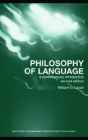
This edition published in the Taylor & Francis e-Library, 2008. "To purchase your own copy of this or any of Taylor & Francis or Routledge's collection of thousands of eBooks please go to www.eBookstore.tandf.co.uk." First edition © 2000 Taylor & Francis Group Second edition © 2008 Taylor & Francis Group All rights reserved. No part of this book may be reprinted or repro- duced or utilised in any form or by any electronic, mechanical, or other means, now known or hereafter invented, including photocopying and recording, or in any information storage or retrieval system, without permission in writing from the publishers. Trademark Notice: Product or corporate names may be trade- marks or registered trademarks, and are used only for identification and explanation without intent to infringe. Library of Congress Cataloging in Publication Data Lycan, William G. Philosophy of language: a contemporary introduction/William G. Lycan.
PIL regulates relations between states. Thats why PIL is important for international relation students. PIL influences the life of everybody, it doesn't regulate people directly but indirectly (through the decisions of the states), because it's everywhere. It's like air. E.g. when you want to send a letter to Brazil, you put a stamp from your own country and send it from your post office and the letter gets delivered. Why is this so easy, because there are certain international conventions that regulate postal services. E.g. traffic signs are almost the same everywhere, why? Because of certain int conventions that require the states to have more or less unified traffic signs. States apply international regulations to national regulations and they have to be in accordance with each other, the states can always specify these regulations. Therefore, PIL regulates people indirectly.
do it, enabled us to make significant changes. His work has enabled us to gain significant competitive differentiation and advantage" -LAURENCE HOF, Vice President, Relationship Consulting, Advanta Corporation "This will help executives make better decisions and use their influence wisely ... Robert Cialdini has had a greater impact on my thinking on this topic than any other scientist." -CHARLES T. MUNGER, Vice Chairman, Berkshire Hathaway, Inc. If you're wondering why of Latin America, the Far East, and Central Europe. you should buy this new edition of Influence: o More neuroscience evidence of how the influence process works is inte-
g. law of gravity Prescriptive law – prescribe how people ought to behave e.g. speed limits In all societies relations between people are regulated by prescriptive law; customs (informal rules of social and moral behaviour); rules we accept if we belong to a particular institution (religion, organization); laws imposed on people by a government Penalties for breaking the rules are different. For not following the customs there may not be a punishment, or a person may be criticized by the society; rules of a social institution tend to carry precise penalties but they are not enforceable by any political authority; however governments use a system of courts backed by the power of the police to enforce the laws they have made. The relations between people are regulated by a combination of all these rules. One of the ways to classify laws is to separate them into prescriprive and descriptive law.
Identity as a personal project How could be one identity created? Or is it creating itself? Or, maybe, every child is born with some kind of identity? There are many theories about what identity is and how it is developing, so in this essay I want to discuss A. Giddens´ text and my reflection about his theory. “It's like everyone tells a story about themselves inside their own head. Always. All the time. That story makes you what you are. We build ourselves out of that story.” Patrick Rothfuss When talking about identity, it´s creation is a very important moment. To
combating terrorism and will present the reasons for why this controversial behaviour that democratic governments have been proven to conduct and still are being accused of until the current day is irrational and dangerous. Theoretical justification of torture The utilitarian view that a political leader should allow torture to rescue civilians’ lives is justified by that this would result in maximum happiness for the greatest number of people. It is said that in case of a moral dilemma there is never the possibility of 2 complete justification. Torture is illegal but if human lives can be saved, it is worth it. This disregards the act itself and only looks at the result (Driver, 2014). Hedonism supposes that a decision is ethically correct if the consequence brings maximal satisfaction to the individual. Eudemonism replaces the word satisfaction by happiness
An analysis of the problem of Political Power Written by: Katre Kikkas Introduction It is said that in the political philosophy there are only two questions: ,,Who can have what?" and ,,Who will decide over it?". It is not exactly like that but it is quite close to the trough, to begin with. The first question includes material amenity's, and dividing rights and liberties.(Wolff, 1996) What is power? It is ability to influence others to do something they otherwise would not. Also, others can be affected with threats and force. (Kilp, 2010) Political power includes also right to force the others and to punish them if
Konstantin Dmitrievich Levin ("Kostya") arrives in Moscow with the aim of proposing to Dolly's youngest sister Princess Ekaterina Alexandrovna Shcherbatskaya, "Kitty". Levin is a passionate, restless but shy aristocratic landowner who, unlike his Moscow friends, chooses to live in the country on his large estate. He discovers that Kitty is also being pursued by Count Alexei Kirillovich Vronsky, an army officer. At the railway station to meet Anna, Stiva bumps into Vronsky. Vronsky is there to meet his mother. It surmises that Anna and the Countess Vronskaya have travelled together in the same carriage and talked together. As the family members are reunited, and Vronsky sees Anna for the first time, a railway worker accidentally falls in front of a train and is killed. Anna interprets this as an "evil omen." Vronsky is infatuated with Anna. Anna, who is uneasy about leaving her young son, Seryozha, alone for
- four causes or better "becauses" because they are the 4 ways in which we use the word "because" or answer the question "why?" 1. Material cause: - what it is made of - why is the bridge strong? because made of steel 2. Formal cause: - what form, definition or property it has - why is this salt? because made of sodium and chloride 3. Efficient cause: - what initiated the change or movement - why did the baseball move? because someone hit it 4. Final cause: - what end or goal does it have? - why does he walk? because he wants to be healthy - also nature operates in terms of final causes - things don't happen spontaneously, every action that nature takes is for the sake of something, everything has a purpose - where a series has a completion, all the previous steps are done for the sake of that
1. The Contradictory, diverse, chaotic 20th century. New developments in science and philosophy. The essence and influence of Freudian theory. Contradictory, diverse, chaotic 20th c- simultaneous rejection and invocation of the past. While modernists apotheosized the creative geniuses of the past, they also rejected old poetic forms. Challenge old and established beliefs and more and more people had access to books and education more people went to universities. profound change in morals: · No universal value and perspective on things · Multiple truths, multiple perspectives · Nothing has inherent (kaasasündinud, sisemist) importance · Life lacks purpose Science: Albert Einstein-general theory of relativity had a huge impact on culture as well. Everything is relative. Philosophy: Henri Bergson (French) came to challenge the immediate experience ad intuition are more significant than rationalism and science for understanding reality
Harold McMillan articulated his now famous “winds of change” sweeping Africa. We had high hopes for Africa, for the Black race, that the insidious imposition of foreign rule on us, the looting of Africa’s natural resources by our colonial masters accorded us would be things of history. That is more than forty years ago. Unfortunately, the promise of independence has not been fulfilled. Today, Africa has become more desolate; there is more starvation, diseases and non-provision of essential services than when we got our independence. There are all kinds of wars in Africa than the rest of world put together. The majority of so-called Africans leaders want to stay in power until the day their bodies are put in the grave. Through buffoonery, utter mismanagement and downright stealing of the wealth of the masses, these leaders have so impoverished Africa that we are now nothing but a beggar continent. We beg for
to say. When people are not that highly educated or developed in critical and objective thinking, they find hard to take in new information. The goal of the diffusion model is basically to represent the level of adoption of an innovation in time. Diffusion of Innovations Theory – the basics The DOI theory has been generated or analysed for already more than 100 years. It was made known by Everett M. Rogers in 1960s. According to Rogers (1983, p. 6), ‘Diffusion is a kind of social change, defined as the process by which alteration occurs in the structure and function of a social system. The elements of the diffusion: o The innovation – a new object or idea, not necessary objectively new, but perceived new to one society. o Communication through channels – essence of the process is the information exchange, done through several channels/ in several ways. o Members of social system/ network – inseparable aspect as without members there is
dangerous driving (ohtlik sõitmine) - a way of driving that threats other's safety or life international law (rahvusvaheline õigus) - body of rules that nations recognize as binding in their coundct towards one another operating law (õigusega töötamine) - ensuring obidieance to regulation; to have the rights to impliment justice on others political structure (poliitiline struktuur) - institutions or groups and their relations to each other within political systems as they constitute the political landscape of the political entity social values (sotsiaalsed väärtused) - larger concept which includes the subjective aspects of the citizens' well-being, such as their ability to participate in making decisions that affect them civil war (kodusõda) - (armed) conflict between politicalfactions or religions within same county industrialization (industrialiseerimine) - a large-scale introduction of manufacturing
11.02.09 INGLISE KEEL Palju aega läheb. 10 nädalat aint. One of the ESP courses. What we are going to do, what is needed: · What we do - 1 test, on words. · 2 Essays, that means that we have to look into academic writing · Homereading we read a case from European Court of Justice thingy. · Oral thing. · 90% you have to attend · Have to prepare for class and take part of it etc What we learn: Terms Expressions / collocations (nt obey/abide by the law) Explaining AWOL absence without a leave Legal English can be divided into 3 levels. We learn the first one, which is needed for the other two! You have to know the vocabulary etc. Second level has to do with legal contracts... The third level both 1 and 2 and explaining...
...................................................................................................... 10 2 Introduction. Years ago countries didn’t depend so much on imports and also on export. World has so many organizations controlling countries economics like WTO, The European Union, OPEC, NAFTA, ASEAN, APEC, MERCOSUR, CEEAC, IMF, World Bank and so on. Nowadays because of globalization there are large corporations like Apple, Gazprom and Allianz who rules the world and control the economic outcome with big organizations that are roled by influencial countries like China and USA. This essay is about criticism to IMF and World Bank. Critics of the World Bank and the IMF are concerned about the ‘conditionalities’ imposed on borrower countries. Often the conditionalities are attached without due regard for the borrower countries’ individual
e. an ideology), rather than as one of several useful perspectives for PA reform (i.e. part of a pluralistic approach). The question here is more whether one favors post-NPM (anti-NPM) or post-post-NPM, Weberian-based PA, the latter being the most advanced, and the most sophisticated, and now called the Neo-Weberian State (NWS). What was an option ten years ago is not an option anymore today. I would say that in PA · in 1995, it was still possible to believe in NPM, although there were the first strong and substantial critiques · in 2000, NPM was on the defensive, as empirical findings spoke clearly against it as well · in 2005, NPM is not a viable concept anymore Yet, in many areas, both of scholarship and of the world, as well as in policy, NPM is very alive and very much kicking. It is, therefore, necessary to look both at the concept itself and at the reasons for its success. Basic Problems of the New Public Management
No wonder a lot of people want to experience it – in fact a survey found out that about 165 million adults worldwide would immigrate to the United States if they had the opportunity. Unfortunately not everyone who decides to live in America does it legally and that’s where the problems begin. Illegal immigration is not a new issue in the United States. For many years immigrants have crossed the American border through Mexico, the Pacific Ocean or some other way. Also there are people who enter the country with a visa but stay for a longer time than it allows them to. Every day thousands of immigrants come to the United States and in March 2010 the estimated number of illegal aliens in the States was about 11 200 000. About eight million of them had jobs. But why are there so many illegal immigrants in the US? Is it truly that difficult to get a green card in the United States? It actually is - the whole process can be very time-consuming
Why do we need morality? As an English philosopher Thomas Hobbes (1588-1679) said, all humans are made equal in mental and physical abilities. This does not mean that all of us are equally strong, smart or beautiful, but that everyone has the ability to damage or kill the other. The main goals, we all want to achieve, are having a shelter, security, power, wealth and enough food. This means that people are constantly competing with each other and that makes all of us (who desire the same things) enemies. Hobbes names the insecurity and fear people feel towards each other a "state of nature". In this state there are no moral rules or enforced laws, also no justice or injustice. People, being violent and arbitrary, will only follow their own interest. So without laws and boundaries, people would be in constant war - every man for himself. In this kind of society there is no time for cultural or industrial development.
 annaabi.ee