Leidsid 33 sarnast õppematerjali, mis on seotud failiga "Fish and chips". Need materjalid aitavad sul teemat sügavamalt mõista.
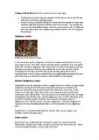
chip, chips, fish, dish, atlantic, paper, batt, english, origin, commonly, deep, fried, takeaway, became, popular, wider, south, east, england, middle, 19th, century, first, shop, wrapped, newspaper, easy, fries, slicedENGLISH N ATIONAL FOODS AND DRINK S CREATED B Y: SUNDAY ROAST: The Sunday Roast is a traditional British main meal served on Sundays. (usually for lunch) It includes: roast potatoes (or boiled or mashed potatoes), roast beef, lamb, pork or a roast chicken and vegetables. Sauces are chosen depending on the type of meat. FISH AND CHIPS: England is internationally famous for it's fish and chips. Large number of restaurants and takeaway shops selling this dish. The most popular English dish. There are lot of different combinations, but the traditional is potato slices cooked with fish. SAUSAGES: English sausages are colloquially known as ,,bangers". They are made from fresh meat and rarely smoked, dried or stronglu flavoured. A variant of the sausage is the black pudding. (you can eat every part of pig except it's squeal)
3 Antiquity The first known Italian food writer was a Greek Sicilian named Archestratus from Syracuse in the 4th century BCE. He wrote a poem that spoke of using "top quality and seasonal" ingredients. He said that flavors should not be masked by spices, herbs or other seasonings. He placed importance on simple preparation of fish. This style seemed to be forgotten during the 1st century CE when De re coquinaria was published with 470 recipes calling for heavy use of spices and herbs. The Romans employed Greek bakers to produce breads and imported cheeses from Sicily as the Sicilians had a reputation as the best cheese makers. The Romans reared goats for butchering, and grew artichokes and leeks. Middle Ages With culinary traditions from Rome and Athens, a cuisine developed in Sicily that some consider
Westminster Abby and Piccadilly Circus. Tourists also love to visit Greenwich, which is best known for giving its name to the Greenwich Meridian (0° longitude) and Greenwich Mean Time. Foods and drinks English cuisine is formed by country’s history, its temperate climate and geography. The food of England has historically been characterised by its simplicity of approach and a reliance on the high quality of natural produce. The traditional English breakfast is a hot cooked meal of bacon, eggs, sausages, fried bread, mushrooms and baked beans. Now-a-days a typical English breakfast is more likely a bowl of cereals, a slice of toast, orange juice and a cup of coffee. They have Afternoon Tea (the traditional 4 o’clock tea). This is a small meal, not a drink. Traditionally it consists of tea (or coffee) served with either of the following: freshly baked scones served with cream and jam (known as a cream tea), afternoon tea
Among the middle class throughout India, spoons and forks are commonplace. · Hot food is served on banana leaves, the leaves add aroma and taste to the food. Eating habits: · The breaksfast is most importing. They generally prefer to drink tea or coffee with the first meal of the day. North Indian people prefer curd. Western India prefer milk. · Lunch in India usually consists of a main dish of rice. It typically includes two or three kinds of vegetables. Curd and two or three sweets are also included in the main course. · Indian families will gather for evening to talk, drink tea, and eat snacks. Dinner is considered the main meal of the day, and the whole family gathers for the occasion. · Over the years, Indians have used a vast range of different vegetables like spinach,
Food, Restaurants and Cooking Task 1. Underline the most suitable word or phrase. a) Waiter, could you bring me the account/bill/addition, please? b) It's a very popular restaurant - we should apply for/book/keep a table. c) If you're hungry, why not ask for a large dish/plate/portion? d) Please help/serve/wait yourself to salads from the salad bar. e) Waiter, can I see the catalogue/directory/menu, please? f) This fish is not what I called/commanded/ordered. g) This dish/plate/serving is a speciality of our restaurant. h) Have you tried the crude/raw/undercooked fish at the new Japanese restaurant? i) Paul never eats meat, he's a vegetable/vegetarian/vegetation. j) Have you decided what to have for your main course/food/helping? Task 2. Complete each sentence (a-j) with a suitable ending (1-10). Use each ending once. a) Dinner's nearly ready. Can you lay ...6… 1
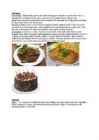
The Cold Table Flounder The first course in traditional Estonian cuisine is based on cold dishes - a selection of meats and sausages served with potato salad or Rosolje, an Estonian signature dishes based on beetroot, meat and herring . Small pastries called pirukad ("pirukas" in the singular) - a relative of the pirozhki - filled with meat, cabbage, carrots, rice and other fillings or mixtures are also popular, and are often served with bouillon. Herring is common among other fish as a part of the Estonian Cold Table. Smoked or marinated eel, crayfish dishes and imported crabs and shrimps are considered delicacies. One of Estonia's national dishes is räim (Baltic dwarf herring), along with sprats. Flounder, perch and pike-perch are also popular. Soups Soups are traditionally eaten before the main course and most often are made of meat or chicken stock mixed with a variety of vegetables. Soups are also blended with sour cream, milk and yogurt. The Main Course
A sandwich is a food item consisting of one or more types of food placed on or between slices of bread. The sandwich has a long history, but it hasn’t always been as embraced as it is now. HISTORY The sandwich as we know it was popularized in England in 1762 by John Montagu, the 4th Earl of Sandwich. Legend sais, that Montagu had a gambling problem that led him to spend hours at the card table. During a very long game, he instructed a cook to prepare his food in such way that it would not interfere with his game. the cook presented him with sliced meat between two pieces of toast. This meal could be eaten with one hand, leaving the other free to continue the game. . Montagu enjoyed his meat and bread so much that he ate it constantly, and sandwiches grew popular in Londo. it also took on the Earl’s name. By the Revolutionary War, the sandwich was well established in England. By the 19th Century the sandwich had become popula
smaller restaurants in that city's Bo-Kaap, in Khayelitsha and Langa. Or one can watch for glimmers of the real thing. There are varieties of biltong in every café, in big cities and little dorps. Every weekend there wafts from neighbourhoods rich and poor the smell of spicy sosaties being grilled over the braai. Steak houses may specialise in flame-grilled aged sirloin, but they also offer boerewors. And sometimes, in posh restaurants, there is the occasional fusion dish - not the common merger of east and west, but north and south: marinated ostrich carpaccio at Sage in Pretoria, oxtail ravioli with saffron cream sauce at Bartholomeus Klip in Hermon on the Cape west coast, even Tandoori crocodile at the Pavilion in the Marine hotel in Hermanus. There is crocodile on the menu and kudu, impala, even warthog at a number of restaurants that offer game. But there won't be seagull, mercifully, or penguin. Both
Inglise keele KT Unit 6 1.Translate (tõlgi) 1) Ma söön tavaliselt lõunaks prae ja magustoidu. I usually have a main dish and a dessert for lunch. 2) Ettekandja tõi meile menüü. The waiter brought us the menu. 3) Praetud munad, viil röstsaia ja tass teed, palun. Fried eggs, a slice of toast and a cup of tea, please. 4) Me tellisime kala friikartulitega ja õunavormi. We ordered fish and chips and apple pie. 5) Kas sulle meeldib kartulipüree? Do you like mashed potatoes? 6) Millestki koosnema. consist of something 2. Complete the text. (lõpeta tekst). A lot of , any , anything , some , something Jack realised he needed something to get Jill out of the car. They didn't have any time to lose. He knew he didn't have anything in his caravan to break the window. ,,We've had a lot of great moments together," he thought. At first he couldn't see anything in the darkness but
About Tea "Shall I put the kettle on?" or "Would you like a nice cup of tea?" are questions you might be asked if you visit someone's home in the UK. The traditional English drink is tea - it is drunk throughout the day and is often made during social occasions. Coffee has become popular in recent years, but many people continue to drink tea. In the UK there are as many different ways of making and drinking tea as there are flavours. People drink Indian teas, Chinese teas, herbal teas, and fruit teas. English tea is specially adapted for UK tastebuds. To make a cup of English tea the first step is to boil some water - usually in an electric kettle.
There are many others famous British sport competitions, which include the ashes series of cricket matches, The Wimbledon tennis championships, the Grand National etc. A great number of major sports originated in the United Kingdom, including: soccer, squash, golf, tennis, boxing, rugby, cricket, snooker, billiards, badminton and curling. Literature English literature emerged as a recognisable entity in the late 14th century. Geoffrey Chaucer is the first great identifiable individual in English literature: his Canterbury Tales remains a popular 14th-century work, which readers still enjoy today. The English novel became a popular form in the 18th century, with Daniel Defoe's Robinson Crusoe, which was written in 1719. The English novel developed in the 20th century into much greater variety. It remains today the dominant English literary form. There are many novelists whose novels are enjoyed all over the world: J.R.R. Tolkien, J.K. Rowling, Arthur Conan Doyle, D.H. Lawrence etc.
Breakfast 1:eggs, bacon, sausages, bread, beans, mushrooms,coffee Breakfast 2: cereals, slice of toast, orange juice, coffee Lunch: sandwiches, crisps, fruits, juices Dinner 1: potatoes, Brussels, sprouts, carrots Dinner 2: a meal called Curry rice, pasta, vegetables Sunday dinner: roast meat potatoes, vegetables, Yorkshire pudding Roast lamb with green mint sauce and vegetables. Puddings: salty and sweet. Apple or rhubarb crumble, bread and butter pudding. Special booths for fish and chips, bangers and mash, hotdogs if people don´t have time. They eat yoghurt, potato chips, sandwiches also. Kristjan: "Ancient Freedom Fight and Boudica" Boudica was a queen of Iceny tribe, she was tortured and her daughters were raped in public. Rebels destroyed 3 cities: London, St Albus, Colchester. Wales was the headquarter. They had several beliefs. Boudica means "victory". They won several Roman troops. Roman Empire had 50 legions and over 5000 legionaries
They say it's unimaginable, boring, tasteless, it's chips with everything and totally overcooked vegetables. The basic ingredients, when fresh, are so full of flavour that British haven't had to invent sauces to disguise their natural taste. What can compare with fresh pees or new potatoes just boiled and served with butter? Why drown spring lamb in wine or cream and spices, when with just one or two herbs it is absolutely delicious? If you ask foreigners to name some typically English dishes, they will probably say "Fish and chips" then stop. It is disappointing, but true that, there is no tradition in England of eating in restaurants, because the food doesn't lend itself to such preparation. English cooking is found at home. So it is difficult to a good English restaurant with a reasonable prices. In most cities in Britain you'll find Indian, Chinese, French and Italian restaurants. In London you'll also find Indonesian, Mexican, Greek..
1. What are the capitals of the 4 constituent countries? England- London; Northen Ireland- Belfast; Scotland- Edinburgh; Wales- Cardiff 2. Order the invaders in correct chronological order: Anglo-Saxons, Normans, Romans, Celts. Romans Anglusaxons , Norman 3. How did the Celts influence Britain? Language. Wars. Engand and Scotland eventually became 1 contry 4. How many people approximately speak English? Approximately 600 million 5. Who (which tribes) gave the base of the English language?Germanic tribes- Anglo-Saxons. 6. Describe Wales.- Wales is a mountainous country on the western side of Great Britain. The national game of Wales is Rugby. Flag- Red dragon on a green and white field. They have their own language Cymraeg ( Welsh) . Anthem- Land Of My Fathers. Official animal- Dragon. There used to be a lot of coalmines. 7
peppercorns, bay leaves and onions and is braised in the marinade for a long period, resulting in very tender melt-in-the-mouth meat. The Black Forest: cake is one of the most popular German national foods. Cake consists of several layers of chocolate cake, with whipped cream and cherries between each layer. Then the cake is decorated with additional whipped cream and chocolate shavings. A Schnitzel in German is a slice of pork or veal haunch. Dish made with boneless meat thinned with a mallet (escalope-style preparation), coated in bread crumbs and fried. Only if it is made of veal and coated in bread crumbs is it called Wiener Schnitzel; a pork version is called Schnitzel Wiener Art (Viennese type schnitzel). These are served with a slice of lemon and without a sauce. Both often are referred to as simply Schnitzel. Poland Bigos: It is a soupy stew made from meat and cabbage, red wine, along with other vegetables
Jumper header - two pins or a series of two-pin groups where jumpers are used. BIOS - Pronounced "bye-ose," an acronym for basic input/output system. The BIOS is built- in software that determines what a computer can do without accessing programs from a disk. On PCs, the BIOS contains all the code required to control the keyboard, display screen, disk drives, serial communications, and a number of miscellaneous functions. The BIOS is typically placed in a ROM chip that comes with the computer (it is often called a ROM BIOS). This ensures that the BIOS will always be available and will not be damaged by disk failures. It also makes it possible for a computer to boot itself. Because RAM is faster than ROM, though, many computer manufacturers design systems so that the BIOS is copied from ROM to RAM each time the computer is booted. This is known as shadowing. Many modern PCs have a flash BIOS, which means that the BIOS has been recorded on a
lying pig. Christmas bread was also fed to the animals in the stables and barns Kama Finely milled flour mixture Mixture of ground grains rye, oat barley, and pea flour. It is used for making some desserts Mostly enjoyed for breakfast mixed with milk, buttermilk or kefir F is h o n ia n Es t lt u re C u The Baltic Herring The Baltic herring has been the main fish dish on Estonians' table for centuries. It is the main fish that is caught in the Baltic Sea. The Baltic Herring ... has become the national fish of Estonia. ... is eaten fresh, marinated, smoked and tinned. ... with sauce is traditional fish meal Baltic Sprat A sprat sandwich is a traditional snack on Estonian food table. Sprats are usually salted with all kinds of spices. Typical Estonian black bread with sprat and
is about 244,000 square kilometres and about 60 million people live there. The UK contains a number of small islands. The largest islands that belong to the United Kingdom are the Isle of Man in the Irish Sea and the Isle of Wight which lies off of England's southern coast. The largest groups of islands are the Shetland Islands, the Orkney Islands and the Hebrides. Geographical Position The UK is situated in the Northern Hemisphere. The United Kingdom is bordered by the Atlantic Ocean in the west, the North Sea in the east, the Norwegian Sea in the north, and the English Channel, also known as La Manche, in the south and it also separates the country from the continent of Europe. The neighbours of the United Kingdom are Iceland in the north-west, Norway in the east and France in the south. Britain also has many dependant territories which are scattered throughout the world and are the remains of the huge former British Empire
Each net is fished from an outrigger boom, one on each side of the vessel (Figure 14), and towed from here on a single warp (a) shackled to a three chain bridle (b) attached directly to the beam (c) which holds open the mouth of the trawl. The beam, 9-12 m in length, is constructed from heavy steel tube and supported on each side by rugged steel trawlheads (d) which slide over the sea bottom. Ahead of each groundrope several tons of tickler chains (e) or chain mats (f) are used to disturb fish, causing them to rise up and be taken by the trawl following immediately behind. Towing speeds are generally higher than otter trawling, reaching 6 or 7 knots on clean ground with ticklers, whereas on rough ground stone mats are towed at around 4 knots. Beamers usually operate on the continental shelf (200 m) with warp length/water depth ratios of between 2.5:1 to 3:1. Some larger vessels use a double wire system (z) to facilitate the hauling procedure.
Introduction English is spoken on all five continents. With regard to the numbers of speakers it is only exceeded by Chinese and Spanish. But in terms of geographical spread it stands at the top of the league. The varieties of English in the modern world are divided into four geographical groups as follows. British Isles America United States (with African American England English) Wales Canada Ireland The Caribbean Africa Asia, Pacific
Teacher: Merike Sisask Composer: Kärt Kalvet 2010 Canada, Kärt Kalvet 8a Canada General Information Canada is in North America. It's area is 9220970 sq km. Canada's population is 313.612.000 people. Canada is divided into 10 provinces and 3 territories. The capital of Canada is Ottawa. Canada has constitutional monarchy. The head of state in Canada's government is the Queen of England. There are two main languages in Canada: English and French. Canada's curreny is Canadian dollar (1 dollar=100 cents[Can$]). The highest peak of Canada is Mount Logan, 5959 metres. The lowest point is sea level. The longest river is the Mackenzie. The climate and geography of Canada vary greatly from temperate in the south to arctic in the north and from islands and plains in the east to mountains in the west. Location Canada is located in the northern-most region of North America. It's geographical position in co-
one of the world's most sparsely populated countries. This fact, coupled with the grandeur of the landscape, has been central to the sense of Canadian national identity. 2. Geographical position Canada is the second largest country in the world after Russia. In the Arctic, Canada reaches almost as far north as Greenland. To the south it extends to the same latitude as southern France. The distance from Canada's west coast, the Pacific Ocean, to its east coast, the Atlantic Ocean, is farther than from North America to Europe. Canada's total land area includes thousands of adjacent islands, notably Newfoundland in the east and those of the Arctic Archipelago in the north. In longitude Canada extends from approximately 52° to 141° W, a distance that spans six time zones. In latitude it extends from approximately 42° to 83° N. With its vast Arctic and subarctic territories, Canada is often considered a country only of the far
Officials were appointed (governors, procurators to collect taxes, look after the estates and mines and se that the gold, silver, iron and lead were exported back to Rome). Introduced schools,a new language Latin, large farms (villas), baths. In AD 410 they had to leave . roman occupation lasted nearly 400 years. They left behind very little. Roman province of Britannia covered most of present-day England and Wales. 4. Latin influence on English *The influence of Latin is noticeable also in the names of European cities: the Latin noun colonia (settlement, colony) may be found in numerous place-names: Lincoln, Colchester, Cologne ; from Latin word castrum (military camp) were derived English affixes -chester and -castle: Manchester, Lancaster, Newcastle; Latin word portus (seaport) in Portsmouth *-tor - person, doer, masculine form. The suffix is attached to the stem: victor (`winner', from the
to the west by the Baltic Sea, to the south by Latvia (343 km), and to the east by lake Peipus and Russia (338.6 km). Across the Baltic Sea lies Sweden in the west and Finland in the north. Towns Tallinn is the capital and the largest city of Estonia. It lies on the northern coast of Estonia, along the Gulf of Finland. There are 33 cities and several town-parish towns in the country. In total, there are 47 linna, with "linn" in English meaning both "cities" and "towns". More than 70% of the population lives in towns. History • Estonia was settled near the end of the last glacial era, beginning from around 8500 BC. Before the German invasions in the 13th century proto-Estonians of the Ancient Estonia worshipped the spirits of nature. Since the Northern Crusades Estonia became a battleground for centuries where Denmark,
Newest territoy is Nunawut, it became a territory in 1999. It was created from the eastern part od North- West territories. Quebec and Ontario are the biggest provinces. In the central part of Canada there are prairies and agriculture is very common. Alberta is rich in natural resources such as oil and natural gas. In Quebec and Ontario are many manufactories and industries. In the west there is maritime climate and so they fish and ship there. Toronto is the biggest city in Canada, with a population of 5,1 million people. It is followed by Montreal with 3,9, Vancouver, Ottawa (which is the capital of Canada) 800 000 and Quebec with 700 000. Government Canada is a federation of ten provinces (Alberta, British Columbia, Manitoba, New Brunswick, Newfoundland and Labrador, Nova Scotia, Ontario, Prince Edward Island, Quebec, and Saskatchewan) and three territories (Northwest Territories, Yukon, and Nunavut)
Atlantic Ocean and in the west by the Pacific Ocean. In the south there is the Gulf of Mexico. The highest mountain in the country is Mount McKinley, which is in Alaska. It's about 6 km high. But the lowest point is in Death Valley and its 89 m below sea level. Relief About half of the United States' territory is covered by plateaus and mountains. The eastern part of the country is occupied by the Appalachian Mountains, which in the north come close to the Atlantic coast and in the south are separated from it by the Atlantic Lowland. The Appalachian Mountains are old and worn down. West of the Appalachians stretch the Central Plains, the Great Plains, and the Mexican Lowland. The Central Plains are 500-400 m high and have a hilly relief in the north. The Great Plains are a deeply cut plateau with the heights of 500 m in the east to 1600 m in the west. The flat Mexican Lowland, with the height of up to 150 m, is swampy along the
Pickled herring — center of the smorgasbord You might swap out meatballs (köttbullar) for mini sausages (prinskorv) or pick cured salmon (gravad lax) rather than smoked, but your smorgasbord wouldn’t be complete without pickled herring (sill). For this fishy favorite remains the basis of every typical Swedish buffet. With an abundance of herring in both the North and Baltic Seas, Swedes have been pickling since the middle ages, mainly as a way of preserving the fish for storage and transportation. Pickled herring comes in a variety of flavors — mustard, onion, garlic and dill, to name a few — and is often eaten with boiled potatoes, sour cream, chopped chives, hard sharp cheese, sometimes boiled eggs, and of course, crisp bread. Pea soup and pancakes Many Sweden grow up eating pea soup and pancakes (ärtsoppa och pannkakor) on Thursdays. This tradition has been upheld by the Swedish Armed Forces since World War II
SOCIETY AND CULTURE OF ENGLISH-SPEAKING COUNTRIES Introduction 1. Nowadays, English is so widely spoken that it can hardly be considered "a one nation's" language. The main countries where English is spoken are: the U.K, the U.S, Canada, Australia, the Republic of Ireland, New Zealand, West Indies 2. There are approx. 300-400 million speakers of English in the world. English occupies the 3rd place by its number of speakers; it is right behind Mandarin and Spanish. 3. ESL (English as a Second Language) used in your own country (e.g. India) EFL (English as a Foreign Language) used in a foreign country ESP (English for Specific Purposes) used in business, airlines, hotels etc. 4. Settlement colonies people migrated into them from Britain and started their own
Topic Canada Tallinn English College 2006 1. Introduction If you had to use two words to describe Canada, they might be large and diverse. Canada is the second largest country in the world with a territory of about 10 million square kilometers and it is bordered by three oceans: the Arctic, the Pacific and the Atlantic Oceans. The population of Canada is about 31 million people. About 77% of the people live in cities which lie in a band about 100 miles wide above the border of the United States. The capital of Canada is Ottawa. Other large cities are Montreal, Toronto, Vancouver, Winnipeg and Quebec. 2. Geographical position Canada is a huge country in the continent of North America. It is bordered with the Atlantic
people in the House of Representatives. At the head of the Judicial branch is the Supreme Court, which has nine judges. The leading parties in America are the Democrats and the Republicans but there are also other parties. Location The United States of America is situated in the central part of the North American continent. Its western coast is washed by the Pacific Ocean and its eastern coast is washed by the Atlantic Ocean and in the south its coast is washed by the Gulf of Mexico. The coastline is even. There are no big islands belonging to the U.S. except the Hawaiian Islands which lie halfway the continents of America and Asia. The biggest peninsulas are the Florida Peninsula and Alaska. The United States of America has got three neighbours Mexico in the south, Canada in the north and the world's biggest country Russia just across the Bering Strait. Relief
The first two groups were called Indians, the group that settled in the north were called Eskimos. These people are the only true native Canadians, the rest are new Canadians who have been transplanted from other parts of the world, especially from Europe. The first European visitors to North America were Norsemen who settled briefly in the 11th century. John Cabot, a Venetian seeking riches for England, made the next known voyage in 1497. He took back word that the sea was full of fish which could be taken not only with a net but in baskets let down into the water. The early 1500s saw the start of a rush by other seafaring countries to fish in the coastal waters of Canada. Finally the contest of claims came down to two: England and France. French claims date from explorations by Jacques Cartier (1534) and Samuel de Champlain (1603). Neither Cabot's nor Cartier's explorations left any permanent settlers behind, but after Champlain's trip , in 1604 the French founded the
American English Take-home exam 1) Discuss the significance of American English in the English-speaking world. English is one the most widely used languages in the world and globally acknowledged as the lingua franca. It is also the dominant business language. For these facts already, English has a great importance in the today’s world. As the United States of America is one of the leading countries of the world, American English has a certain authority as well. It is now an inescapable fact that America, through its worldwide influence and massive entertainment industry is the mighty power-house that drives the English language. Although British English is considered to be more sophisticated and prestigious than American English, the latter is clearly more featured in television, music, video games and internet, naturally appealing more to English learners than British English. Also, in international
Tallinna Inglise Kolledz Canada. The land of diversity. Tallinn 2006 Canada. If you had to use two words to describe Canada, they might be large and diverse. Canada is the second largest country in the world with a territory of about 10 million square kilometers and it is bordered by three oceans: the Arctic, the Pacific and the Atlantic Oceans. The population of Canada is about 31 million people. About 77% of the people live in cities which lie in a band about 100 miles wide above the border of the United States. The capital of Canada is Ottawa. Other large cities are Montreal, Toronto, Vancouver, Winnipeg and Quebec. Canada has two official languages English and French. It's interesting to know that about 61% of Canadians name English and 24% French their mother tongue
 annaabi.ee