Leidsid 33 sarnast õppematerjali, mis on seotud failiga "FILM REVIEW: Stuck in Love". Need materjalid aitavad sul teemat sügavamalt mõista.
stuck, drama, film, jennifer, greg, lily, collins, wolff, teenage, feel, them, relationship, independent, romantic, stars, logan, focuses, complicated, between, wife, daughter, different, shades, experienced, members, feelings, through, creative, steals, once, person, really, loves, wants, best, both, enable, understand, faith, teenagerThe Polar Boy A year ago, I decided to go to the cinema and watch something extraordinary. The choice fell on an Estonian film “The Polar Boy”. It is a touching romantic drama film produced in Estonia that premiered on May 13. 2016. The film was directed by Anu Aun and the film stars are Roland Laos and Jaanika Arum. This film focuses on the development of the relationship between two young people - Mattias and Hannah. "The Polar Boy" has been supported by Estonian Film Foundation. Mattias is a young talented photographer living in Tallinn, who has a dream to become a student of the Berlin Arts Academy. He is in his final year of school and has to concetrate on studying before exams, but suddendly he fells in love with a girl. Hannah suffers from a mental disorder called bipolarity
Born in Stratford-‐ upon-‐Avon. No official schooling. In 1592 joined Lord Chamberlain’s Men. 1599, the Globe. Legacy: 37 plays, 2 narrative poems and 154 sonnets. Shakespeare’s drama follows the principles of renaissance drama, derived from the Greek drama tradition. Shakespeare’s drama: historical plays, tragedies (sad ending) and comedies (anything but sad; does not mean funny!) Catharsis – the therapeutic effect of tragedies. 17th century in England. Political changes, crisis of humanism
the Russian peasant. Stiva stays with Levin on his country estate when he makes a sale of a plot of land, to provide funds for his expensive city lifestyle. Levin is upset at the poor deal he makes with the buyer and his lack of understanding of the rural lifestyle. Levin pays Dolly a visit, and she attempts understand what happened between him and Kitty and to explain Kitty's behaviour to him. Levin is very agitated by Dolly's talk about Kitty, and he begins to feel distant from her as he perceives her behaviour towards her children as false. Levin resolves to forget Kitty and contemplates the possibility of marriage to a peasant woman. However, a chance sighting of Kitty in her carriage as she travels to Dolly's house makes Levin realise he still loves her. In St. Petersburg, Karenin exasperates Anna by refusing to separate from her. He insists that their relationship remain as it was and threatens to take away their son Seryozha if she
Benjy starts the novel and very often people are schocked when reading because of the nonsense. We see the mess in his head, he is 33 but he is deaf and dumb, his development has not gone beyond babyhood. Very symbolically he exists in presents, he lives now. The past and present coexist simultaniously, since he doesn't have time and he doesn't speak or hear, his other senses are very sharp. He smells very well, all kind of physical sensations are vital to him, going to him or the tone, he can feel the tone of the voice, his character is not chosen accidentally. He symbolizes the isolation of every human being, but for him, this isolation is even stronger, because he is weaker than others. Isolation is complete for him. He is used for another purpose, through this character faulkner illustrates the idea of order in the south. Whenever something is different he starts crying and raises an alarm, if something is not used to having.
character in Homer's Odyssey. The first four books in particular focus on Telemachus' journeys in search of news about his father, who has been away at war. Molly bloom, 33. Joyce image of femaleness. Earth-goddess. Knows what it is like ,,to be a woman and a mother", frank (otsekohene) (at least with herself) about sensuality, fantasies, love affairs, affirmation of life, 39 pages long soliloquy (device often used in drama whereby a character speaks to himself or herself, relating his or her thoughts and feelings, thereby also sharing them with the audience.) Penelope-faithful wife of Odysseus, who keeps her suitors at bay in his long absence and is eventually reunited with him.Her name has traditionally been associated with marital faithfulness, [1] and so it was with the Greeks and Romans, but so me recent feminist readings offer a more ambiguous interpretation.[2]
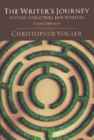
"This is a book about the stories we write, and perhaps more importantly, the stories we live. It is the most influential work I have yet encountered on the art, nature, and the very purpose of storytelling. " - Bruce Joel Rubin, Screenwriter, Stuart Little 2, Deep Impact, Ghost, Jacobs Ladder Christopher Vogler is a veteran story consultant for major Hollywood film companies and a respected teacher of filmmakers and writers around the globe. H e has influenced the stories of movies from The Lion King to Fight Club to The Thin Red Line. H e is the executive producer of the feature film, PS. Your Cat Is Dead, and writer of the animated feature, Jester Till. MICHAEL WIESE PRODUCTIONS www.mwp
murdered.[8] She is the only female on the Forbes top earning dead celebrities list.[9] Contents 1 Childhood 1.1 Family and early life 1.2 Foster homes 2 Career 2.1 Early years 2.2 Stardom 2.2.1 Playboy playmate 2.2.2 A-list actress 2.2.3 Marilyn Monroe Productions 2.3 Later years 3 Marriages and relationships 3.1 James Dougherty 3.2 Joe DiMaggio 3.3 Arthur Miller 4 The Kennedys 5 Death and aftermath 5.1 Administration of estate 6 Trivia 6.1 Pornographic film claims 7 Quotes 7.1 Quotes about Monroe 8 Filmography 9 Awards and nominations 10 Art (selection) 11 See also 12 Notes 13 References 14 External links Childhood Family and early life Main article: Childhood of Marilyn Monroe Marilyn Monroe was born in the charity ward of the Los Angeles County Hospital.[1][10] According to biographer Fred Lawrence Guiles, her grandmother, Della Monroe Grainger, had her baptized Norma Jeane Baker by Aimee Semple McPherson
The Revolution was more than just a protest against English authority; as it turned out, the American Revolution provided a blueprint for the organization of a democratic society. And while imperfectly done, for it did not address the terrible problem of slavery, the American Revolution was an enlightened concept of government whose most profound documents may have been the American Declaration of Independence and United States Constitution. To feel the full impact of the Enlightenment on America one needs only to look at the first inaugural address of Thomas Jefferson, who, along with Benjamin Franklin, is considered to be the American most touched by the ideas of the Enlightenment. Attempts to reconcile science and religion resulted in a widespread rejection of prophecy, miracle and revealed religion in preference for Deism
wrote "The Unilateral Imagination; or, I too Dislike it", in his Essays of Four Decades. This critique was established from a lecture given by Tate in 1955 based on his works. An example of Dante's ability to tell so much in one single word was expressed by Tate when he cited the word "ombre" which translates "shades," to remind us of the continuity of the Christian Hell and Virgil's pagan Hades. "Shades" are referred to as three-dimensional bodies, able to feel pain as if they were alive in solid ice and immobile, yet to have the intensity of fire. If Dante had tried to touch one of them, his hand would have met no physical resistance since the shades would melt into the air. Tate stands in awe of Dante's abilities to express such a large concept or picture in so few words. He says, "I believe we all wish we had been able not only to write better poems, but poems that say much more than we have been able to say, while at the same time seeming to say
Darcy." "You saw me dance at Meryton, I believe, sir." "Yes, indeed, and received no inconsiderable pleasure from the sight. Do you often dance at St. James's?" "Never, sir." "Do you not think it would be a proper compliment to the place?" "It is a compliment which I never pay to any place if I can avoid it." "You have a house in town, I conclude?" Mr. Darcy bowed. "I had once had some thought of fixing in town myself--for I am fond of superior society; but I did not feel quite certain that the air of London would agree with Lady Lucas." He paused in hopes of an answer; but his companion was not disposed to make any; and Elizabeth at that instant moving towards them, he was struck with the action of doing a very gallant thing, and called out to her: "My dear Miss Eliza, why are you not dancing? Mr. Darcy, you must allow me to present this young lady to you as a very desirable partner. You cannot refuse to dance, I am sure when so much beauty is before you
sleep or keep you awake at night. Your thoughts can make you happy or sad, sometimes in an instant. They can make you alert and aware, or distracted and de- ccc_tracy_fm_i-xviii.qxd 7/7/03 3:23 PM Page xv Introduction ➤ xv pressed. They can make you popular or unpopular, confident or insecure, positive or negative. Your thoughts can make you feel powerful or powerless, a victim or a victor, a hero or a coward. In your material life, your thoughts can make you a success or a failure, prosperous or poverty-stricken, respected or ignored. Your thoughts, and the actions that they trigger, determine your whole life. And the best news of all is that they are completely under your own control. ■ THOUGHTS, FEELINGS, AND DESIRES
Legends of the Fall Jim Harrison Kasper Keps 11c About the author James "Jim" Harrison Born in December 11, 1937 in Grayling , Michigan. American author known for his poetry, fiction, essays, reviews, and writings about food Blind in one eye since childhood (left eye) . He was educated at Michigan State University where he received his B.A. (1960) and M.A. (1964) in comparative literature Married and has two daughters. Has written over 50 books. Main Characters COL. WILLIAM LUDLOW - Idealistic, formalistic, rational, stong willed, so principled that he left his job because of unethical behavor in the army, it's almost obsessive to him that Indians get treated properly; wrote a book to the government objecting to their policy. TRISTAN LUDLOW - Adventurer and smuggler who loves his freedom so much that he lives like an indian, his long hairs and horse riding symbolize his independence, too self-confident,
relationship with Russell, and did not get the breast enlargement because she feels that she looks fine the way she is. Elizabeth also has a new position in the school as the new guidance counselor. Inception A maze. A trap. An enigma wrapped inside an enigma. Call Inception what you will, but overall it's a mind blowing cinematic experience. Written and directed by Christopher Nolan, this visually stunning film takes us on a journey through the dream scape. It's difficult to describe. It's a heist movie. It's a love story. It's a psychological thriller like no other before it. Leonardo DiCaprio plays Dom Cobb. Dom is a professional extractor, paid to invade people's subconscious and steal information that lays nuzzled in their psyche. His team consists of the point man Arthur (Joseph Gordon-Levitt), the architect Ariadne (Ellen Page), and the forger Eames (Tom Hardy). They are hired by Mr
· There are three kinds of bones everyone should have: a funny bone, a backbone and a WISHbone. · I didn't fall in love with you on the first sight; I fall in love with you over and over again on every sight. · Mostly, the person that you hurt the most is the person who loves you the most. · Life is a best friend when you get what you want, and life is a teacher when you don't. · There's always an eye to see each beauty, an ear to hear each truth and a heart to feel each love. · Think before u speak, because once the words are spoken and hit the heart, u CANNOT take them back! · An EX could give you an EXample what hurt is and a friEND could make it END · Life is like math: there's always another way to solve the problem. · Mean it when you say 'I love you', you don't know how it will hurt those people you tell, if you don't mean it. · Follow your heart enough that you don't have regrets, Use your head enough that you don't get
...................................................................43 In Defense of an Illusion..........................................................................44 Truth: Relative or Absolute?....................................................................45 The Ego Is Not Personal..........................................................................46 War Is a Mind-set.....................................................................................48 Do You Want Peace or Drama? ...............................................................49 Beyond Ego: Your True Identity .............................................................50 All Structures are Unstable.......................................................................51 The Ego's Need to Feel Superior..............................................................52 Ego and Fame...........................................................................................52
forced to leave Latika because of his brother Salim. Jamal didn't go on the show for the money but instead went on for Latika to see him since he knew she watched it. He had to overcome an obstacle of revisiting his most painful memories from all the questions he was asked. He did this all for his love of Latika. Boyle use cinematography to show conflict between Prem, which is one of the obstacles Jamal, must overcome in the film. The two main camera shots used to display this is the bird's eye view and the mid shot. One way cinematography added impact was when the director uses the mid shot when the host and Jamal face each other. This shot brings a lot of tension because it has them both facing each other and it looks like a standoff because there are two computer panels in between both of them, making it look like they are facing each other in a game of tennis with the net separating the two opponents.
Old Mr. Dashwood is the owner of a large estate in Sussex called Norland Park. Following the death of his sister, Mr. Dashwood invites his nephew Mr. Henry Dashwood to come live with him at Norland. The younger Mr. Dashwood brings John Dashwood, his son from a previous marriage, as well as the three daughters born to his present wife. John Dashwood is grown and married, and has a four-year-old son, Harry. When Old Mr. Dashwood dies, he leaves his estate to John and little Harry, who had much endeared himself to the old man. But now John's father, Henry Dashwood, is left with no way of supporting his wife and three daughters, and he too dies one year later, leaving only ten thousand pounds for his family. Just before his death, he makes his son John promise to care for his stepmother and three half-sisters. Mr. John Dashwood initially intends to keep his promise and treat his female relatives generously, but his wife Fanny, a narrow-minded and selfish woman, convinces him to leave them
Merde Actually By Stephen Clarke "Merde Actually" is written by Stephen Clarke, who is a British journalist and a novelist living in Paris. When he first arrived in Paris, he experienced a cultural shock and got inspired by it. He started to keep a diary of his experiences and decided to publish it as a novel when the Anglo-French relationships were at their worst during the Iraq War spring 2003. Therefore his novels (he has written three in this series) have become enormously popular all around the world, especially because they are partly true. Stephen Clarke himself still lives in Paris with his French girlfriend. This novel is considered to be seriously funny and a comedy with a message. "Merde Actually" has one main character whose name is Paul West, but there are also many other significant characters, that come from the previous book "A Year in the Merde". I can say that it would be better to
statement together and then ask the him. I imagine he is planning to stay language. The first true alphabet was students to work individually. for a long time. He looks bewildered the Semitic alphabet which appeared and rather disorientated. It must feel · Use of English: Encourage the students to read the whole text around 1700 BC, followed, about 700 lonely and pretty overwhelming to go years later, by the Phoenician system. to a country where everything feels first to grasp the overall meaning.
Kate Winslet Sigrid Pihel From 6.b Tallinn 2010 Kate Elizabeth Winslet is one of the most eminent British female actors who became famous on Hollywood movies. She won Academy Award nominations for five times. She was also nominated for the prestigious Emmy Award. The awards won by Kate Winslet the include BAFTA, Grammy and Screen Actor's guild award. The English actress is famous for diverse range of characters she played in her entire film career. She is thus a beautiful female actor with the capability to play a diverse range of roles. Early life of Kate Winslet Kate Winslet was born on October 5, 1975 in Reading, Berkshire, England to Roger John Winslet and Sally Ann Bridges. Her father was swimming-pool contractor and her mother was a barmaid, though both of them shared a common interest of acting. She had two sisters-Beth Winslet and Anna Winslet, who were also into the same profession of acting
He has been in seven wars and four revolutions. Because he has lived so much, he says, he is able to enjoy everything fully. He thinks the secret to living is to get to know the right values. He is always in love because his values include love. The three of them have a pleasant dinner before going out to a club. The count asks why Brett and Jake do not get married, and they offer curt, false answers. Brett begins to feel miserable and wants to leave. Jake accompanies Brett to her hotel; she does not want him to come up to her room, however. They kiss several times before she pushes him away. Summary: Chapter VIII Jake does not see Brett or Cohn for a while. He receives a brief card from Brett, who is vacationing in San Sebastian. He also receives a note from Cohn reporting that he has left Paris for the countryside. Frances has left for England
Ancient artists showed man as a creature full of joy of life and they glorified the beauty of man. The learned man tried to arouse (äratada) peoples interest in the origin of nature. A group of scientists called humanists came into being. Were gratelyinterested in science. Especially natural science, fond of experimenting (alkeemia). Leonardo da Vinci ( helikopter, kuldlõige), Michelangelo. Petrarka tõi sonetivormi, Cervantes " Don Quijote", Shakespeare. Development of Drama During the renaissance period art and literature developed quickly. People were fond of singingand acting. Enjoyed life. Drama became most important genre of literature in this period. Drama as a genre started already in the middle ages. At the beginning it was a religious thing, because acting in those days was part of religious ceremony. Oldest plays were called mysteries and miracles, played by clergyman, showed scenes from Christ's life and saints lives
Chekov Lady and the Lapdog Reid about Chekov: The characters in Chekhov's plays are never fully "known" as a writer, he seems to delight in maintaining a sense of indeterminacy, and unknowability, about them. The bare facts are always laughably inadequate to the complexity of "real" people. Anton Pavlovich Chekhov was born on 29 January (New Style), 1860, in Taganrog, a small port on the Sea of Azov, in southern Russia. As the son of a grocer and grandson of a serf, Chekhov was a first-generation intellectual. His modest background and upbringing are crucial to his development as a writer. Chekhov always felt that he missed out on childhood. It was a very hard lifeand it may have contributed to his poor health: he succumbed later on to the"family disease", tuberculosis, which led to his early death at the age of 44.His mother was a quiet, gentle soul who was full of stories of her early life. In later years, Chekhov would say that "we inherited our talent from our father,but mother
TARTUFFE A COMEDY CHARACTERS MADAME PERNELLE, mother of Orgon ORGON, husband of Elmire ELMIRE, wife of Orgon DAMIS, son of Orgon MARIANE, daughter of Orgon, in love with Valere CLEANTE, brother-in-law of Orgon TARTUFFE, a hypocrite DORINE, Mariane's maid M. LOYAL, a bailiff A Police Officer FLIPOTTE, Madame Pernelle's servant The Scene is at Paris ACT I SCENE I MADAME PERNELLE and FLIPOTTE, her servant; ELMIRE, MARIANE, CLEANTE, DAMIS, DORINE MADAME PERNELLE Come, come, Flipotte, and let me get away. ELMIRE You hurry so, I hardly can attend you. MADAME PERNELLE Then don't, my daughter-in law. Stay where you are. I can dispense with your polite attentions. ELMIRE We're only paying what is due you, mother. Why must you go away in such a hurry? MADAME PERNELLE Because I can't endure your carryings-on, And no one takes the slightest pains to please me. I leave your house, I tell you, quite disgusted; You do the opposi
country. The main problem or conflict the characters have to solve Families like Meena's are trying to work out how they fit into British society while attempting to maintain their own culture. Meena's house is always full of a constant stream of ethnic visitors and her parents seem to see no need to integrate further, but Meena finds them baffling. It seems as if racism is a great probleem for Meena since she does not feel that she belongs to the English or the Indian identity. Meena's is caught between two cultures. She and her family also have to deal with racism and narrow-mindedness in the village. How was the conflict solved? What is your opinion of the solution? Meena tries to reinvent her life and her past in order to make herself more interesting and in some sense to fit the stereotypes. She is very much the opposite of her mother, who has managed quite well
· The Diamond as Big as the Ritz (Novella, 1922) · Winter Dreams (Short Story, 1922) Other · The Vegetable, or From President to Postman (play, 1923) · The Crack-Up (essays, 1945) Winter Dreams by Fitzgerald Dexter Green is a middle-class boy who aspires to be part of the "old money" elite. His father owns the second most profitable grocery store in the town. He starts out as a teenage golf caddy at a Golf Club in Lake Erminie, Minnesota, which has been suggested is really White Bear Lake, where Fitzgerald lived for a relatively short time at the Yacht Club. It is when he is caddying that he is first introduced to Judy Jones, a spoiled eleven year old. Dexter works under Judy Jones' father, Mortimer Jones, at the club, and one day decides he is too old to work there. In reality, he quits his job not because of his age but because he doesn't like
apartment writing their story on his typewriter which he describes as the tale of a ,,love that will live forever". Directed, produced, and co-written by Baz Luhrmann. Mark Anthony "Baz" Luhrmann was born 17 September 1962. He is an Australian film director, screenwriter and producer. After theatrical successes, including the original stage version of Strictly Ballroom, Luhrmann moved into film, and has directed four so far: · Strictly Ballroom (1992), starring Tara Morice and Paul Mercurio · Romeo + Juliet (1996), starring Leonardo DiCaprio and Claire Danes · Moulin Rouge! (2001), starring Nicole Kidman and Ewan McGregor · Australia (2008), starring Nicole Kidman and Hugh Jackman His first three films are formally marketed as "The Red Curtain Trilogy". Luhrmann's next project is an adaptation of The Great Gatsby, with principal photography slated
to relent (39) - abandon or mitigate a severe or harsh attitude, especially by finally yielding to a request. Situation: When Lipsha was talking about mother with Albertine he said he wouldn't relent on her even if she would come back, goes down on her knees and begged him for forgiveness. 2. Explain the following literary terms. Learn and use them in your discussion of the book: Protagonist - the leading character or one of the major characters in a play, film, novel, etc. Theme - an idea that recurs in or pervades a work of art or literature. 2 Motif - a dominant or recurring idea in an artistic work. Symbol - a thing that represents or stands for something else, especially a material object representing something abstract. Allusion - an expression designed to call something to mind without mentioning it
number in a book, which she later sold to one of the thousands of book stores in New York. Many years later, both Jonathan and Sara have moved on with their lives and are getting married. As Jonathan opens one of his wedding presents, he discoveres the same book, where Sara, Sara Thomas, had written her phone number. Jonathan then sets out to find the original love of his life, which turns out to be harder than expected, but also leads to one of the funniest scene in the film: Jonathan tries to get information a most unhelpful salesman in the same store, where it all got started. Sara, having also found the five-dollar bill with Jonathan Tragers phone number on it, flies to New York with her friend Eve, who just happens to get invited to Jonathans wedding by his soon-to-be wife. The main characters in the film are Jonathan, who at first is sceptical about Sara's beliefs as well as frustrated, and Sara, who believes in letting fate take its course
Taken at the Flood "There is a Tide" redirects here. "There is a Tide" is also the name of a short story by Larry Niven, set in the Known Space universe. Taken at the Flood is a work of detective fiction by British writer Agatha Christie, first published in the US by Dodd, Mead and Company in March 1948 under the title of There is a Tide...[1] and in the UK by the Collins Crime Club in the November of the same year under Christie's original title.[2] The US edition retailed at $2.50[1] and the UK edition at eight shillings and sixpence (8/6).[2] It features her famous Belgian detective, Hercule Poirot, and is set in 1946. 1 Plot summary In a flashback from late Spring to early Spring, Lynn Marchmont, newly demobilised from the Women's Royal Naval Service, finds difficulty settling into the village life of Warmsley Vale. She is engaged to Rowley, one of several
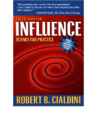
attempt was made to write it in an engaging style. In the subsequent versions, that style is retained, but in addition, I present the research evidence for my statements, recommendations, and conclusions. Although they are dramatized and corrobo- rated through such devices as interviews, quotes, and systematic personal observa- tions, the conclusions of Influence are based on controlled, psychological research. This fact allows the reader to feel confident that the book is not "pop" psychology but represents work that is scientifically grounded. The subsequent versions also provide new and updated material, chapter summaries, and study questions to en- hance its utility. A potentially attractive feature of the present version of Influence lies in its abil- ity to serve as an enjoyable, practical, yet scientifically documented offering. In a re- lated vein, the book might be seen as a way to demonstrate that, properly
Awakening movement during the second half of the 19th century. Estonian folk arts date back to the remote past. In Estonia there are 27 higher educational establishments, among them seven universities with more than 25,000 students and post-graduates (1996); the oldest is Tartu University (founded in 1632), which enjoys a high international reputation. In Estonia there are unions of writers, artists, composers, actors, cinematographers etc; ten professional theatres, two film studios, and the state institution Estonian Concert Agency. The first Estonian book was published in 1525; in 1996 2,234 books and booklets were published in Estonian. The first film company began in 1920. A National Broadcasting Company was established in 1924, and Estonian Television in 1955. Unique in their dimensions and popularity, with up to 30,000 singers and audiences over 200,000, are the traditional Song Festivals, which began in Tartu in
A person everyone seemed easy to sympathize with. · The Bennet sisters Two of the eldest were close to the heart from the beginning and this feeling grew stronger the more you understood their characters. The youngest ones, instead, were plain and silly, only out for lust and fun. The older these two grew, the worse their nature started floating out... 2. Fitzwilliam Darcy. 3. What were the three main reasons that Mr. Collins wanted to get married? 1) to act the way lady Lucas wanted 2) to gain someone, who'd take care of the household 3) to make a gift to the Bennets (following God's will). 4. What was Mrs. Bennett's utmost worry? She was one constant slanderer, so there was nothing more enjoyable nor important for her than getting her daughters married as soon as possible (and show off about it afterwards). 5. Why was Darcy's marriage proposal to Elizabeth such a struggle to him according to
 annaabi.ee