Leidsid 33 sarnast õppematerjali, mis on seotud failiga "European Union". Need materjalid aitavad sul teemat sügavamalt mõista.
europe, member, there, states, unity, other, land, country, order, between, without, them, border, symbol, almost, peace, these, travel, strict, chance, politic, good, person, germany, different, usage, goods, stars, anthem, work, compose, economic, political, fair, members, working, might, consider, year, coal, steel, joined, belgium, netherlands, italyIntroduction and history of the European Union History The European Union is set up with the aim of ending the frequent and bloody wars between neighbours, which culminated in the Second World War. The idea is that countries who trade with one another become economically interdependent and so more likely avoid conflict.The ancestor of the European Union is the European Coal and Steel Community (ECSC) which was created with the Treaty of Paris (1951) and was signed by France, Italy, Belgium, Netherlands, Luxembourg and West Germany (total of 6 countries). European Economic
The Membership of World Organisations Merilin Tamme Xa Tallinna Järveotsa Gymnasium 2008 The schedule · 04.04.1949 establishment of NATO. · 1951 Supreme Headquarters Allied Power Europe (SHAPE) was created near Paris in France. Later, SHAPE was relocated to Mons in Belgium. · 1952 Greece and Turkey join NATO. · 1955 Western Germany joins NATO. · 1982 Spain joins NATO. · 1991 Rome summit. Estonia is one of the founding members of the NACC. · January 1994 Brussels summit. Estonia joins PFP on 3 February. · March 1995 Estonia submits the first Individual Partnership for Peace (IPP) to NATO
financing the Community budget" and solutions to monetary problems. December: the Community’s heads of state or government decide to hold meetings three times a year as the European Council, agree direct elections to the European Parliament, resolve to set up the European Regional Development Fund and establish economic and monetary union. 1975 Launch of ERDF - The ERDF aims to strengthen economic and social cohesion in the European Union by correcting imbalances between its regions 1978 European Council establishes the European Monetary System based on a European currency unit (the ECU) and the Exchange Rate Mechanism (ERM). The Ecu has some characteristics of a real currency and is used in travellers’ cheques and bank deposits. ERM gives national currencies a central exchange rate against the Ecu. All the community’s members apart from the UK join the ERM. 1975 Launch of European Monetary System June 1979 – First election of the EP 1981
France and Germany) signed a treaty to run their heavy industries coal and steel under a common management. From this economic cooperation agreement, European Union has grown up. For today, the aim of this union has made 180º turn but the reason why more and more countries are joining it is still same to rise the economy. So how does it work? European Union is functioning like an independent country. It collects taxes to reach its objectives. Taxes are collected mainly from member countries GDP (1,1% of countries budget) but as well the import duties on good bought into EU. Also, every member country is paying 0,1%-0,33% of their VAT (value added tax). It is the way how EU gets its budget which is about 120 billion per year. This money is spent mainly to improve agriculture (direct aid, export refunds, storage, rural development and other) but also to improve less prosperous regions by building up infrastructure and supporting companies with different kinds of grants
Britta Kase 143123HAKB Summary The booklet offers a brief, simple explanation how the European Union is relevant to us in our everyday life, how it affects our lives in many areas and how can we benefit from it. The booklet gives also a very readable overview of EU’s history and how its member states have come together. It’s a great starting point to know the roots, history and functioning of the European Union. I found this booklet interesting because it provides an insight into relevance of the EU. I have never thought that making phone calls and flying has become cheaper as a result of EU. EU has abolished national monopolies and has permitted competition. For me the most important thing is air, water and food quality. The EU has introduced compulsory
The accession negotiations and the forthcoming Turkish accession present challenges to both Turkey and the EU. It is widely accepted that Turkey's accession would be different from previous enlargements because of the combined impact of Turkey's population, size, geographical location, economic, security and military potential. The case of Turkey will be different and more challenging from previous accessions for a number of reasons, some of them are presented below. Turkey is a country with a large population and geographic area. With a population of 74 million today, it is projected that it could be the largest member state at the time of accession. As a Moslem secular country, Turkey will also add a new demographic and religious dimension to the EU. Also, the presence of a large number of Turkish immigrants in European countries raises the issue of possible additional migration, as a natural consequence of accession, which may affect the labor market and
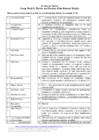
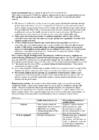
EU Internal Market Group Work I: History and Purpose of the Internal Market Please connect terms (numbers) with correct description (letter), for example 17 M 1 Common Market A ... is characterized by free movement of goods between the participating countries, but autonomous external trade policies in relation to non-participants. 2 Comparative B A top-down approach to integration that can be best Advantage explained by market failure.
Form 9 Kolga-Jaani 2010 Site map What does European Union?...........................................................3 The main aurthorities....................................................................4 Information...............................................................................5 What does European Union? European integratsion process began in 1951, when concluded European Coal and Steel Community founding agreement between Belgium, Netherland, Luxenbourg, Italy, France and West Germany. It was to prevent armed conflicts between the Member States. EU is economic and political partnership between 27 democratic European countries (Austria, Belgium, Bulgaria, Cyprus, the Czech Republic, Denmark, Estonia, Finland, France, Germany, Greece, Hungary, Ireland, Italy, Latvia, Lithuania, Luxembourg, Malta, the Netherlands, Poland, Portugal, Romania, Slovakia, Slovenia, Spain, Sweden, and the United Kingdom) .
Kati-Liis Karu 03.01.2011 The euro in Estonia Joining the European Union in 2004 made people in Estonia think about the changing of currency. We had almost six years to get used to the fact that the Estonian kroon is eventually going to end. In that time there was a lot of discussion about whether we should stick to the kroon or change our money to the euro. Lots of people were afraid that they lose their money during the period of transition - this belief was quite popular among people who still remember the time when the Russian rubles were changed into kroons and did lose much money. Luckily there haven't been any complaints yet. The reason I chose this political concern is its contradictoriness. I myself
In his Gettysburg address Abraham Lincoln referred to a government which was ‘of the people, by the people, for the people’and it is by this criterion that democracy is often judged. These principles are reflected in having equal access to power and in being equal before the law. It must be considered not only whether law making powers are granted to elected persons, but also whether the balance of power between institutions within the European Union promotes the ideals of democracy. Firstly,the democratic nature of the European Union must be measured by the extent to which its institutions (particularly those with executive and legislative power) are elected bodies of persons. The European Union is governed by seven institutions; the European Parliament, the European Council, the Council of the European Union (the Council), the European
The European Union (EU) is an economic and political union where are 27 member states drom European continent. The EU operates through a system of independent institutions and decisions are made by the member countries. EUs population is of over 500 million inhabitants which is 7.3% of the world population, there are 23 different languages and for now 17 countries are using EUs common currency Euro. EU was founded after World War II, when Europe was struggeling in social and political devastations. In 1948 a congress in Hague was held to discuss ideas about the development of European political co-operation. There were many important political figures such as Konrad Adenauer and Winston Churchill. On 9th May in 1950 French Minister of Foreign Affairs proposed that France and the Federal Republic of Germany should combine their coal and steel resources and let other European countries join also. From that on, the 9th of May has
EU Internal Market Law Mid-term online evaluation assignment for Distance Learning Students The Assignment: Hypothetical Case In the Member State A several NGOs, uniting parents concerned with safety of children and young adults, ordered a study of dog attacks on people (and especially children) resulting in deaths or maiming. The aim of the study was to identify, if possible, the dog breeds of potentially enhanced danger for people. The study’s results showed that pit bulls and their close mixes as well as Rottweilers and their close mixes were jointly responsible for over 70% of attacks. The authors of the study explained
Which have been the main developments and success stories in this partnership in 2000-2012? Which side is more interested? The main cornerstones of the EU and Russia relations are the trade and energy relations. One biggest breakthrough has been gas pipeline Nord Stream. Russia is the third biggest trade partner of the EU and is the main importer of gas and crude oil. The economic benefits are the biggest cornerstones of the relations. Cooperation between Russia and the European Union progressively strengthens in foreign policy and security issues, in combating illegal migration, organised crime and terrorism. The main achievement of recent years, which can be hardly overestimated, is the understanding increasingly gaining ground that partnership between Russia and the EU is one of the cornerstones of maintaining stability and prosperity not only in Europe, but world-wide.
do belong to a “goods” category so as it is described in CJEU case law that a good is a product which can be valued in money and which is capable of forming the subject of commercial transactions. Therefore PB&R company and its business is selling dogs, or shall I say goods not just on a local fields, but the movement of goods is linked to abroad EU countries by making a profit of it I shall conclude that it involves a “movement of goods within the EU Member States” (Articles 26 and 37). 2. Is there a restriction of trade in goods? a. Can we name an animal, or to be more exact a dog as a “good” – yes, in accordance of Article 13 TFEU: “In formulating and implementing the Union's agriculture, fisheries, transport, internal market, research and technological development and space policies, the Union and the Member
Singapore. NAFTA-North American Free Trade Agreement.It was established in 1989 by Canada, USA, and Mexico. They have remained totally independent.All countries may join with this organisation.It is one of the world's biggest economic organisations. MERCOSUR-The South common market.Regional Trade Agreement among Uruguay,Paraguay,Brazil and Argentina.It was founded in 1991. Bolivia, Chile, Colombia, Ecuador and Peru currently have associate member status. Venezuela is an applicant country. . Its purpose is to promote free trade and the fluid movement of goods, people, and currency. WTO-World Trade Organisations.At first it was known as GATT-General Agreement on Tariffs and Trade.It was established in 1948.Its main aim was to decrease or abolish different custom tariffs and to make trading better between membership countries.They changed the name in 1994 to WTO.Its main aims were to raise the living standard of the citizens of the
Pros and Cons of the European Union The European Union is a unique partnership between 27 democratic countries in the Europe. The European Union has brought peace and economic prosperity to Europe. The European Union helps a lot of countries and many Europe countries wish to be EU members. But is it really useful to join into the union? The European Union has a lot of pros, but there are also some cons. On the one hand, the European Union gives benefits to Member States. Firstly, it is easy to travel from one Member State to another, live, study or even work there. Secondly, there is no need to change money because most Member States use Euro as the common currency. Thirdly, thanks to the European Union food products became safer and phone calls to European countries cheaper. Furthermore, if somebody has own company, it is easy for him to offer his products and services in other Union countries. Finally, all of the
A dedicated and regular EU- Republic of Moldova Human Rights Dialogue was launched in March 2010. The EU and Armenia launched a dedicated and regular Human Rights Dialogue in December 2009. The EU and Georgia further consolidated their exchange on human rights, with three dedicated meetings held so far. The EU welcomed Azerbaijan's readiness to engage in a regular dialogue on human rights issues and democratization. There are also steps in the environmental matter. There have been 44 projects in order to improve the Mediterranean Sea`s condition. Also the co-operation in the field of energy have had great results. One is definately oil and gas pipelines. I think that very important things have been done but still many goals have not been achieved. Good examples are also Moldova`s first joint EU visa application centre and free trade area in Ukraine
Benefits and drawbacks of the EU Joining the European Union in 2004 has definitely brought some good and some bad things to Estonia in the past 9 years. As they say, you have to take the good with the bad. One positive thing that almost immediately pops into my head is the fact that being in the EU makes travelling so much easier between the member countries. So, along with the EU currency the euro, travelling in Europe has never been this easy. Now people don't even have to exchange their currency when travelling for example to Finland. But the simplification of travel could also bring some drawbacks. With leaving the country being so easy, many students who are looking for better opportunities abroad now have the chance to easily leave their homeland and maybe never come back. So Estonia is losing some of its valuable young people. And since the use of euro, prices have gone up a lot, and Estonians are
Life in Estonia through the eyes of an economics student With a population of 1 313 271 people, Estonia is one of the least populous member states of the European Union. However, according to the IMF, it is a developed country with an advanced and high-income economy. Estonia follows market economy system which ensures the little government intervention and the determination of prices of goods and services in a free price system. Therefore, economic decisions are guided solely by the aggregate interactions of a country's citizens and businesses. In addition to mentioned afore, Estonia tends to perform favourably in measurements of civil liberties, education, and press freedom.
- Arendab EL ühist välis- ja julgeolekupoliitikat - Sõlmib rahvusvahelisi lepinguid (annab komisjonile volitused pidada EL nimel läbirääkimisi) - Võtab vastu eelarve (koos parlamendiga) - Liikmeteks valitsuse ministrid igast ELi liikmesriigist vastavalt arutamisele kuuluvale poliitikavaldkonnale st esindab riike; permanent representaties (COREPER) - Eesistuja!!! - Asutati 1958 ECSC raames Council of Europe – Euroopa Nõukogu - Rahvusvaheline organisatsioon; 47 riiki Euroopast ja Aasiast - Tegevusvaldkonnad: inimõigused, sotsiaalõigused, keelelised õigused, haridus ja kultuur - Ei ole EL institutsioon - Asutas inimõiguste kohtu pärast EHCR 1950. aastal - Juhtorganiks parlamentaarne assamblee ja ministrite komitee European Council – Euroopa ülemkogu - Liikmeteks riigipead või valitsusjuhid, Euroopa Ülemkogu eesistuja ja Euroopa
Even though Brexit is seen by its leaders as a positive change, it will also have quite a negative effect on Britain and play a big role in reshaping European Union. Most British people were voting for Brexit to regain sovereignty, to ‘take back control’ and regulate their laws. At first glance, it may seem that they would be in charge of their actions which would mean that nobody on the outside can manipulate them. Although nowadays countries depend on each other a lot and the UK is no exception. Everything is more connected than ever and because of that existing completely on your own is quite an impossible task. For that matter, giving up a little bit of sovereignty can be beneficial. For example, trading in the EU. It is not always regulated by countries and some may not like it, but it can also lead to new routes, destinations which in the end can bring bigger profits. Also, being on your own and
Tallinn English College Topic Estonia Tallinn 2008 1. Introduction Estonia is a small country about the size of Switzerland, or New Hampshire and Massachussetts combined. Estonia is named after the people called "Ests" who lived in the region in the 1 st century AD. The Republic of Estonia is one of the three countries commonly known as the "Baltic States". The other Baltic States are Latvia and Lithuania. 2. Geographical position Estonia is situated in northeastern Europe. Estonia is bounded on the north by the Gulf of Finland, on the east by Russia, on the south by Latvia and on the west by the Baltic Sea. In the north it borders on Finland. The coastline of the Baltic Sea in Estonia is characterized by numerous gulfs and bays, the biggest of them being the Gulf of Finland, the Gulf of Riga and the Gulf of Pärnu. Bays include the
Tartu 2013 TABLE OF CONTENTS INTRODUCTION ................................................................................................................... 4 1. UKRAINE ...................................................................................................................... 5 1.1. General information ..................................................................................................... 5 1.1.1. Country Profile ..................................................................................................... 5 1.1.2. Post-Independent Ukraine. Economy and politics ............................................... 6 1.1.3. Key Macroeconomic indicators ......................................................................... 14 1.1.4. Foreign Direct Investments ................................................................................ 16 1.1.5
Public International Law is a system of law, different from domestic law. Why is this system unique? Usually law regulates relations between people, people and the state etc, PIL regulates relations between states. Thats why PIL is important for international relation students. PIL influences the life of everybody, it doesn't regulate people directly but indirectly (through the decisions of the states), because it's everywhere. It's like air. E.g. when you want to send a letter to Brazil, you put a stamp from your own country and send it from your post office and the letter gets delivered. Why is this so easy, because there are certain international conventions that regulate postal services
_Microsoft ) When we retell, we concentrate on the terms, not on the examples etc. NB! Märkmeid võib teha ja TÕLGI KINDLASTI ETTE ÄRA JUBA!!!!!!!!!!!! HOMEWORK - Academic writing Title Introduction Body conclusion Lõikude vahele 1 rida, taandrida ei jäeta! Argumendid millegi poolt, argumendid millegi vastu. Väldime I-vormi, vaid kasutame passive-vormi. Lõhikesi vorme ei kasutata! (don't) 150 sõna Teema "should mery-killing be punished?" HOMEWORK Terms to explain: Nation - a country, especially when thought of as a large group of people living in one area with their own government, language, traditions, etc: Stranger someone whom you do not know Citizen - a person who is a member of a particular country and who has rights and obligations because of being born there or because of being given them Penalty - a punishment for doing something that is against a law Government - the group of people who officially control a country
1. Social Policy aspects in EU Treaties Social and employment policy: Objectives: - The promotion of employment - Improved living and working conditions - Proper social protection - Dialogue between management and labour - The development of human resources with a view to lasting high employment and the combating of exclusion. Treaty of Rome: belief that improved working and living conditions would arise from the functioning of the common market – cooperation in the areas of employment, labour law and working conditions, vocational training, social security, occupational health and safety, and social dialogue. Improved mobility and professional
..................................................17 Appendix 1...................................................................................................................................18 2 Introduction The aim of this research is to get know more about the Netherlands history and its geographical facts. This report is describing one of most the most beautiful countries in the Europe - Netherlands. Netherlands is famous for its windmills and flowers. Netherlands is also known unofficially as Holland. Government is constitutional monarchy of north-western Europe. Netherlands is bordered on the north and west by the North Sea, on the east by Germany and on the south by Belgium. The European portion of the Netherlands has a total area of 41,528 sq km of which 33,939 sq km is land surface. Country's capital and largest city is Amsterdam. Population is about 16 million.
Economic Country Review: Finland, Estonia and Hungary Girli Vasiljev Report Business Economics, RB1X 06.05.2012 Abstract 06.05.2012 Experience and Wellness management Author Group Girli Vasiljev RB1X Title of report Number of pages Economic Country Review: Finland, Estonia 20 and Hungary Teacher Kalevi Torunen The goal of this paper is to compare the economic performance of Finland, Estonia and Hungary. First, a general overview on the countries will be given. After, economic indicators (real GDP growth rate, inflation, unemployment, household consumption, investment, current account, government budget and deficit) of the three countries will be compared to draw a conclusion. Keywords
Nowadays only about 4% of the workforce is engaged in agriculture. The 1990s was a hard time for agriculture competition with cheap imported products became an issue, enterprises had no money for new equipment and vehicles. Although today the situation in agriculture isn't perfect, some enterprises, including farms who use modern production methods, have cropped up. Joining the European Union has had a positive effect on Estonian agriculture as we can now sell food products to other European countries. Milk cattle, also pigs and poultry are the main farm animals raised in Estonia. Field crops include cereal crops, potatoes and vegetables. Plant products are mostly for internal use, a considerable amount of meat is imported. Some dairy products and some specific products e.g. cultivated and wild berries, mushrooms, ecologically pure produce etc are for export. The forest is among Estonia's most important natural resources and a source of a
Today more and more disputes are caused by the enormous spread of the English language throughout the world. Some scholars claim that it has already become the first global language. And this statement isn't far from truth. But what does it mean to say that a language is a global language? Why is English the language which is usually cited in this connection? How did the situation arise? And could it change? Or is it the case that, once a language becomes a global language, it is there for ever? [1, pg.2] These are fascinating questions to explore, whether your first language is English or not. A global language is a language that is spoken internationally and is learned and spoken by a large number of people as a second language. A global language is characterized not only by the total number of speakers (native and second language speakers), but also by its geographical distribution, as well as use ininternational organizations and diplomatic relations. [4]
Introduction Estonia, officially the Republic of Estonia (Estonian: Eesti or Eesti Vabariik) is a country in the Baltic region of Northern Europe. It is bordered to the north by Finland across the Gulf of Finland, to the west by Sweden across the Baltic Sea, to the south by Latvia (343 km), and to the east by the Russian Federation (338,6 km). The territory of Estonia covers 45,227 km² and is influenced by a temperate seasonal climate. The Estonians are a Finnic people closely related to the Finns, with the Estonian language sharing many similarities to Finnish. The modern name of Estonia is
I. Portugal ABOUT Photo Location of Portugal (dark green) Portugal (Portuguese: Portugal, IPA: [putua]; officially the Portuguese Republic, Portuguese: República Portuguesa) is a country located in Southwestern Europe, on the Iberian Peninsula. It is the westernmost country of mainland Europe, and is bordered by the Atlantic Ocean to the west and south and by Spain to the north and east. The Atlantic archipelagos of the Azores and Madeira are Portuguese territory as well. The country is named after its second largest city, Porto, whose Latin name was Portus Cale. SETTLEMENT
Benefits of the EU The European Union was formed after the Second World War, because some political leaders believed that it was the only way to avoid conflicts in the future. There are many benefits in the EU, for example the EU has allowed citizen of the European Union to travel freely around Europe and millions EU citizens have moved to other EU country to work or to study. The EU has also given European countries a voice in world affairs. Smaller countries like Estonia and Latvia now can also get a word in world affairs, they are heard. Another advantage of the EU is that the EU has a strong common currency Euro. It makes travelling easier and also cheaper, because you can go on holiday and not have to worry about exchange money, therefore avoid high exchange charges. There is also peace amongst nations
 annaabi.ee