Leidsid 33 sarnast õppematerjali, mis on seotud failiga "Ernest Hemingway". Need materjalid aitavad sul teemat sügavamalt mõista.
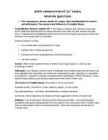
stories, hemingway, place, understand, ernest, titles, even, difficult, writer, later, these, characters, meaning, same, effective, part, could, hidden, going, canary, hills, important, know, animals, guess, reading, first, notice, took, other, matter, takes, usually, woman, miller, states, 1920s, paris, known, lost, morals, interesting, based, indian· Naturalist find it absurd to blame the wicked. These criminals are doing what nature, environment, their unconscious tells them to do. Naturalists do not judge their characters, they simply report. Try to describe facts like they are. Naturalists depict the lower, coarser forms of life. · Drab, squallid set of scene. Revolting, disgusting · Characters are people with strong animal desires · Neurotic characters unable to understand the forces that control them · By the end of the 18th century the naturalism depicts in europe, but stars to become the literature method no 1 in america · Naturalism appealed American authors because they found it very right to describe what was going on in the turn of century in America · They wanted something fresh, new · They were disgusted by romantics · Showed the harsh tone in moral life · Refleced the development of science
American literature The literary history of this nation when the first humanbeing living in what has since become the U.S used language creatively. · Mid to late 18 century put down · Words are powerful, magical · Words must be remembered · Native Americans stories creation of the world · Attidude thought their land/language · Similar stories Dates and names · America was discovered in 1492 by Columbus · 1497 John Cabot went to Canada · 1579 San Fransisco/St. Fransis · 1607 Jamestown collony/John Smith · 1620 a boat called MayFlower · 1630 Boston was established · 1636 Harvard University · 1773 Boston Teaparty · 1775 War of Independence · 1776 4 July Declaration of Independence
forms the cornerstone of the U.S. Constitution today. Since the colonies had very few individual rights, they declared certain fundamental rights that they deemed "inalienable." Democracy: The colonies had no say in the formation of the government, and had no representation in the lawmaking process. Consequently, they were attracted to the idea of democracy, where the government is "of the people, by the people, for the people," as Lincoln later expressed in his Gettysburg Address. Religious Tolerance: Much impetus for the ideas of religious tolerance came from the rule of King George II, who was a staunch Catholic and did not allow freedom of religion to Protestants in New England. Voltaire was among the first to denounce Christianity and other organized religions as mere ploys to support monarchy. What emerged was Deism, which was more or less a new religion that considered reason its foundation
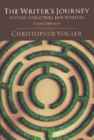
"The Hero's Journey," and step-by-step guidelines to plot and • character development. Based on the work of Joseph Campbell, The Writers Journey is a must for all writers interested in further developing their craft. This updated and revised Third Edition provides new insights and observations from Vogler's ongoing work on mythology's influence on stories, movies, and man himself. In revealing new material, he explores key principles like polarity and catharsis, plus: • A revised chapter which looks back at the Star Wars phenomenon and analyzes the six feature films as an epic on the theme of father-son relationships • New illustrations and diagrams that give additional depth to the mythic principles • A final chapter, "Trust the Path," an inspiring call to adventure for those who
unusual in the way that they also appeal to adults. Each of the six books covers about a year in Harry's life as he grows from a boy into a teenager. At the start of the first book we learn that he is an orphan who lives with his horrible aunt and uncle, the Dursleys. On his eleventh birthday he discovers he is a wizard, and soon afterwards goes off to study at Hogwarts School of Witchcraft and Wizardry, which is where most of the action in the six books takes place. Hogwarts is part of a magical world that is invisible to people without magical powers, who are known as `Muggles'. Harry is the hero of all the stories, though there are many other likeable characters such as his friends Ron and Hermione, and the powerful wizard Albus Dumbledore. The main villain is the evil wizard Lord Voldemort, who killed Harry's parents. The stories are full of things that appeal to imagination of readers of all ages. One of them is the
Geoffrey Chaucer (1343–1400) – Father of English literature, The Canterbury Tales in English, increased the prestige of the language, provided a standardised form. The Canterbury Tales: frame story. Majority in verse, some prose. Intended to contain 124 stories, only finished 24. Story: a pilgrimage to Canterbury Cathedral, where archbishop Thomas Becket had been murdered. The stories present a portrait of medieval society, e.g. a knight, a student, a monk, a miller (a flour maker at a mill), a wife of Bath, etc
Blandings Castle by P.G. Wodehouse Wodehouse was an acknowledged master of English prose admired both by contemporaries and by modern writers. He has been called "English literature's performing flea", a derogatory description that Wodehouse cherished and adopted as the title of his autobiography. Best known today for the Jeeves and Blandings Castle novels and short stories, Wodehouse was also a talented playwright and lyricist who was part author and writer of fifteen plays and of 250 lyrics for some thirty musical comedies. Wodehouse took a modest attitude to his own works. In Over Seventy (1957) he wrote: "I go in for what is known in the trade as 'light writing' and those who do that humorists they are sometimes called are looked down upon by the intelligentsia and sneered at." Wodehouse's characters are often eccentric, with peculiar attachments, such as to newts (Gussie Fink-Nottle) or socks (Archibald Mulliner)
Libraries. We know a lot of things thanks to books, but we do not know exactly when and where they originated, and what should be considered the first book in the world. Ancient document, written on parchment, papyri and vellum can hardly be qualified as books the way we understand the word today. Centuries went before paper replaced parchment and papyri. In the 15 th century Johann Gutenberg invented a mechanical process of duplicating texts, which we today call book printing. The first book was printed between 1444 and 1446, so these years can be considered as the beginning years of book printing. His most important preserved printings are the 40 copies of the Bible. By the end of the 15 th century there were about 1000 print-shops in Europe already
AGATHA CHRISTIE Agatha Christie was born Agatha May Clarissa Miller in Devon, in England in 1890, the youngest of three children. Her father died, when she was a child. At sixteen she was sent to school in Paris where she studied singing and piano. Christie was an accomplished pianist but her stage fright and shyness prevented her from pursuing a career in music. She never attended school. Dame Agatha Christie was an English crime writer of novels, short stories and plays. She also wrote romances under the name Mary Westmacott, but is best remembered for her 80 detective novels and her successful West End theatre plays. On the Christmas Eve in 1914, Agatha married an aviator, Archibald Christie. their daughter, Rosalind, was born in 1919. On discovering extramarital affair, she divorced him in 1928. In the same year Christie's beloved mother died. During World War I she worked in a Red Cross Hospital in Torquayas a hospital dispenser,
BOOK REPORT Title of the book: The Catcher in the Rye Author: Jerome David Salinger (January 1, 1919 January 27, 2010) was an American writer who died at the age of 91. He was married three times and has two children. Some of his most notable works are The Catcher in the Rye, Nine Stories and Franny and Zooey. The Catcher in the Rye is by far the most famous and most critiqued book of his, selling over 250,000 copies every year. In total the book has sold over 65 million copies worldwide. The success of The Catcher in the Rye led to public attention: Salinger became reclusive, publishing new work less frequently. Analysis of the book 1. Setting The story starts in the year 1950 when the novel's protagonist and narrator Holden
..................... My Opinion............................................................................................................................... Orson Scott Card He was born on the 24th of August, 1951 in Richland, Washington. Card's writing career began primarily as a poet, studying at Brigham Young University. During his studies as a theatre major, he began "doctoring" scripts, adapting fiction for theatre production, and finally writing his own one-act and full-length plays. Later he has worked both as a freelancer and a contracted writer. He first wrote the short story "Ender's Game" while working at the BYU press. Ender's Game and its sequel Speaker for the Dead were both awarded the Hugo Award and the Nebula Award, making Card the only author (as of 2008) to win both of science fiction's top prizes in consecutive years. Card continued the series with seven books, which divide into "Shadow" and "Speaker" series
outsider because she is "different". She and her family are the only immigrants in the village. They are trying to work out how to fit into British society while attempting to maintain their own culture. Meena's house is always full of a constant stream of ethnic visitors and her parents seem to see no need to integrate futher. Namely, her parents considered every Indian immigrant in England as a friend or even as a part of the family. Meena's family are keen to see her keeping up the family's cultural tradition. Meena on the other hand, is caught between two cultures. She is having a difficult time adjusting to her surroundings, wishing she were blonde and carefree like her 14-year-old neighbor, Anita (Brewster). Meena idolizes Anita for her looks and free spirit, and in many ways wants to be very much like her, but the reality of her life keeps putting Meena back in her place, a place she
Hong Kong • Singapore • Tokyo • Cape Town • Sydney Acquisitions Editor: Michelle Limoges Editorial Assistant: Christina Manfroni Executive Marketing Manager: Wendy Gordon Production Supervisor: Liz Napolitano Editorial Production Service: Modern Graphics, Inc. Manufacturing Buyer: JoAnne Sweeney Electronic Composition: Modern Graphics, Inc. Interior Design: Modern Graphics, Inc. Photo Researcher: Rachel Lucas Cover Design: Joel Gendron For related titles and support materials, visit our online catalog at www.pearsonhighered.com Copyright © 2009, 2001 Pearson Education, Inc. All rights reserved. No part of the material protected by this copyright notice may be reproduced or utilized in any form or by any means, electronic or mechanical, including photocopying, recording, or by any information storage and retrieval system, without written permiSSion from the copyright owner.
Dracula Bram Stoker An Irish novellist Bram Stoker’s Gothic horror novel ‘’Dracula’’ was first published in 1897. The story is about vampire that tries to find new blood for himself and the hunt for him. Also you can find a little romance in the book. It takes place in Transylvania, Romania and in England. The novel is written in diary-form and several characters are telling their story by keeping a journal. Entries are written in six months by four persons. In the novel there are nine main characters: Jonathan Harker, whose writings are seen first; Count Dracula, of whom all the story is about, but he does not keep a diary; Wilhelmina ‘’Mina’’ Harker, early Murray, wife of Jonathan Harker; Lucy Westerna, a friend of
Mother- Alice MacDonald Kipling. Alice Kipling (one of four remarkable Victorian sisters) was a vivacious woman about whom a future Viceroy of India would say, "Dullness and Mrs. Kipling cannot exist in the same room."[3] Father - John Lockwood Kipling. Lockwood Kipling, a sculptor, an illustrator, museum curator and pottery designer, was the principal and professor of architectural sculpture at the newly- founded Sir Jamsetjee Jeejeebhoy School of Art and Industry in Bombay. Later in life Kipling illustrated many of Rudyard Kipling's books, and other works. Kipling also remained editor of the Journal of Indian Art and Industry, which carried drawing works from the students of the Mayo School. COUPLE named their son after the place they had first met Rudyard Lake. Alice Kipling Fleming - Sister of British author Rudyard Kipling who became a well-known psychic, producing automatic writing under the name "Mrs. Holland." Born June 11, 1868, Alice Kipling was
of plants, the planet had already been covered in vegetation for millions of years. The first flower probably did not survive for long, and flowers must have remained rare and isolated phenomena, since conditions were most likely not yet favorable for a widespread flowering to occur. One day, however, a critical threshold was reached, and suddenly there would have been an explosion of color and scent all over the planet – if a perceiving consciousness had been there to witness it. Much later, those delicate and fragrant beings we call flowers would come to play an essential part in the evolution of consciousness of another species. Humans would increasingly be drawn to and fascinated by them. As the consciousness of human beings developed, flowers were most likely the first thing they came to value that had no utilitarian purpose for them, that is to say, was not linked in some way to survival. They provided inspiration to countless artists, poets, and mystics
pressures that some people were experiencing. Unlike other such writings at the time, the novel is unusual in that it is not set in London. A Christmas Carol in Prose, Being a Ghost Story of Christmas (commonly known as A Christmas Carol) is a novella by Charles Dickens first published on December 19, 1843 with illustrations by John Leech. The story was an instant success, selling over six thousand copies in one week, and the tale has become one of the most popular and enduring Christmas stories of all time. William Makepeace Thackeray William Makepeace Thackeray was an English novelist of the 19th century. He was famous for his satirical works, particularly Vanity Fair, a panoramic portrait of English society. Thackeray, an only child, was born in Calcutta, India, where his father, Richmond Thackeray (1 September 1781 13 September 1815), held the high rank of secretary to the board of revenue in the British East India Company.
Women writer's influence on our society Estonian women writer's history doesn't go far back. The reason for that is that people were slaves back then. Even if there were writers, then most weren't famous and they wrote poems and stories more for themselves. Also being a woman and a writer wasn't considered as a decent job for a woman at that time. The stories that we have from that time were given to one another by talking and mostly we don't know who were the authors. Education was also very expensive so only rich people could get it and Estonians, who were just farmers, mostly didn't have money for that. First I am going to talk about Marie Heiberg. She lived 1890-1942. Her first poem collection was ,,Mure-lapse laulud" in translation ,,Problem child's songs". Her talent was noticed, but she didn't have a change to really become famous
3. Joseph Conrad and Literary Impressionism. New ways of presenting character and experience. Conrad's literary output. Lord Jim. Nostromo. Heart of Darkness and a critique of colonialism. Kurtz as Nietzsche's Superman. The darkness of human heart. Civilization and barbarism: which is which? Joseph Conrad and Literary Impressionism. Effect of light. Moments, very conscious of precious moments. Conrad: writer must do something like that on paper. Only by giving the impression can painter, writer can make people forget about their daily lives. New ways of presenting character and experience. Character is described as seen by other people. Impressionism in the description. Conrad's literary output -author suspects skepticism of the human condition. ,,Lord Jim"-Jim (his surname is never disclosed), a young British seaman, becomes first mate on
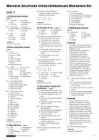
old. 3 1 was getting, arrived Challenge! 2 It's a mixed class of girls and boys. 2 was preparing, cut Students' own answers 3 It's difficult to tell what kind of 3 discovered, were building 1E Past perfect simple and lesson their in. 4 started, was talking 4 It could be that they're in a maths 5 found, was living continuous page 8 lesson.
extramarital relations recently. But, it's really hard to find something that good, and really easy to lose it. Just consider pro and con, and then keep what you really love. However, distance makes everything clearer; you can only see the whole when you are far enough. Take Alex for an example, as she had travelled ever further outwards, she found the answer. The Nature of Truth: Annie was a successful author and she met an old friend, Jane, on the train. Things change a lot, even if you had settled down. Jane had the boyfriend in collage and they soon got married after graduated. At first, they had a happy life, but one year later, Jane's husband had extramarital relations and divorced with Jane. In a summary, what will life be in the future? Future is not to see. Just the facts: Reporter was Lisa's first job and now she was going to write an article about Gary who killed a judgment in town and Gary was sentenced to death. However, Gary said he didn't kill that man
The Present Perfect Tense 96 Apostrophe 153 1 What is Grammar? Here's an old children's rhyme about the eight parts of speech of English grammar. It gives you an idea of what grammar is about. Read and remember it. Every name is called a noun, Pronoun As field and fountain, street and town. Noun In place of noun the pronoun stands, As he and she can clap their hands. The adjective describes a thing, As magic wand or bridal ring. Adjective Most verbs mean action, something done, Verb To read and write, to jump and run. How things are done the adverbs tell,
The private letters draw one’s attention not merely to the poet’s life, but also to the romantic aspect of his personality: the author who first builds up his life, then projects it into poetry. Although I will keep references to Larkin’s life in this study to a minimum, I am not suggesting that the biography must by definition be outside the scope of Larkin criticism. Discussing Larkin’s life is justifiable, since it helps us understand his poems, although in many cases it has also proven to be distorting or misleading. It is revealing that even those authors who overtly reject the methods of biographical criticism, such as John Osborne in Larkin, Ideology and Critical Violence in 2008, make use of the biography, at least to a certain extent. In the centre of the book edited by Regan one finds a hilariously subversive essay: Graham Holderness’s “Reading ‘Deceptions’”, a text balanced on the borderline
It was interesting to read stories, how Tallinn got its name beacuse of the goat, who fell from the cliff and why Tallinn will never be ready. *Tallinn is magnificent old-town, wich is full of legends about, cruelty, tragedy and magic 3 Legends of Tallinn Tallinn is a city of legends, and almost every house has its story to told some of them are nicer, some of them are more terrible. As it is with ethnic stories, every teller adds something of his own. Because of that many legends have been difficult to find a specific historical background. Some of them even tend to be more science fictional than true. A unique color is added by old-fashioned style and language. Tallinn has a long and complicated history. Tallinn has had more than twenty different names. Tallinn was for the first time mentioned in written sources in the Arab geographer al-Idrisi's in 1154
astronomer, diplomat Wrote The Book of the Duchess, the House of Fame, the Legend of Good Women and Troilus and Criseyde Best known today for "The Canterbury Tales" Crucial figure in developing the legitimacy of the vernacular, Middle English, at a time when the dominant literary languages in England were French Modern English William Shakespeare 26 April 1564 23 April 1616 The Elizabethan Era English poet and playwright, widely regarded as the greatest writer in the English language and the world's most important dramatist ,,England's national poet" Early plays in 1590's were mostly comedies (The Taming of the Shrew, The Merchant of Venice..) Began to focus on tragedy/drama in early 1600's (Romeo and Juliet, Hamlet, Macbeth, Othello..) In 1608 tragedy is replaced with romance Wrote historical plays too (Richard III, Julius Caesar..) Used allegory and methaphores Brought over 1700 words into the English language
): Monkeys like bananas. Mary has a little lamb. All the world is a stage. The teacher is explaining the rule. Peter is playing the guitar. If we want to say something about the manner of the action ( how does something happen?), we put the adverbial of manner in front of the predicate: She quietly opened the door. If we want to stress the mode of action, we put the adverbial of manner after the object. She opened the door quietly. If we want to show the place where the action takes place we put the adverbial of place after the predicate. Janet lives in Paris. I work in the library. If we want to say when or how long something happens, we put the adverbial of time at the end of the sentence: 3 I saw Peter last week. I have not seen Jane for a long time. If we want to stress the time factor, we put the adverbial of time at the beginning of the sentence:
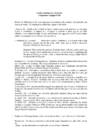
(gloomily) situation: King was upset and sat morosely in the car with a beer. to cajole (36) - persuade (someone) to do something by sustained coaxing or flattery. Situation: Lynette cajoled Eli to wear a hat for a while and then she took it. to relent (39) - abandon or mitigate a severe or harsh attitude, especially by finally yielding to a request. Situation: When Lipsha was talking about mother with Albertine he said he wouldn't relent on her even if she would come back, goes down on her knees and begged him for forgiveness. 2. Explain the following literary terms. Learn and use them in your discussion of the book: Protagonist - the leading character or one of the major characters in a play, film, novel, etc. Theme - an idea that recurs in or pervades a work of art or literature. 2
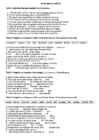
h) In the last scene, all the actors are…… stage together. Task 4. Complete each sentence with a word from the box. Use each word once only. current electric humorous modern public special dull gripping live popular readable still a) No recording can be as good as a live concert in my opinion. b) It was a very…… story and made me laugh a lot. c) I couldn't put that book down, it had such a…… plot. d) Most people find it difficult to understand …… art. e) My favourite television programmes are about …… affairs. f) Of course it's possible to like both classical and …… music. g) Everyone enjoyed the effects in the…… Star Wars films. h) I don't buy books because there's a good…… library nearby. i) We both found it a very…… film I'm afraid. j) George doesn't paint people, but mainly does…….. life paintings. k) It was an interesting book, and very……
Chekov Lady and the Lapdog Reid about Chekov: The characters in Chekhov's plays are never fully "known" as a writer, he seems to delight in maintaining a sense of indeterminacy, and unknowability, about them. The bare facts are always laughably inadequate to the complexity of "real" people. Anton Pavlovich Chekhov was born on 29 January (New Style), 1860, in Taganrog, a small port on the Sea of Azov, in southern Russia. As the son of a grocer and grandson of a serf, Chekhov was a first-generation intellectual. His modest background and upbringing are crucial to his development as a writer
FGI 1811 Proseminar (Irina Ladusseva) 2.0 AP Kab. 420 03.09.2002. Writing a term paper (this spring) and graduation paper. To get a pass: one written task (part of introduction, thesis statement) Term paper should be printed (20-25 pages long). Graduation paper should be printed (50-60 pages long). First write term paper, and choose a topic right now (theme of term paper later will be developed into graduation paper). Rights: we have a right to have a supervisor. Supervisor writes on the front page "Lubatud kaitsmisele". You need time to: 1. read the theory 2. collect material 3. regularity (1-2 hours a day deal with your paper) The first draft of term paper should be ready by March. Supervisors are: 1. Suliko Liiv (country study, grammar, contrastive studies, methodology) 2. Liliana Skopinskaja (methodology) 3
Author (name and some general information): Chuck Palahniuk is an American novelist born February 21, 1962 in Washington, USA. He is best known as the author for the novel Fight Club (1996), which was made into a movie in 1999. Palahniuk began writing fiction in his mid-thirties. When he attempted to publish his novel, Invisible Monsters, publishers rejected it for its disturbing content. This led him to work on Fight Club which he wrote as an attempt to disturb the publisher even more for rejecting him. After initially publishing it as a short story in the 1995 compilation, Pursuit of Happiness, Palahniuk expanded it into a full novel, which --contrary to his expectations--the publisher was willing to publish. Some other well-known novels: Rant, Choke, Diary. Analysis of the book 1. Setting The story takes place in somewhere between 1980s and 1990s in the United States. 2. Characters
Oxymoron - a figure of speech in which apparently contradictory terms appear in conjunction (e.g. faith unfaithful kept him falsely true ). Hyperbole - exaggerated statements or claims not meant to be taken literally. Epithet - an adjective or phrase expressing a quality or attribute regarded as characteristic of the person or thing mentioned. 3. Comment on the shifts in the setting of the three chapters. What is the mode of narration in these stories? Are the narrators always reliable? The first chapter setting is in convent, 2 the second is outside near the convent (road), and the third one is reservation and the island, in every chapters there is a 1st pr.narration. Reliable. `Saint Marie' 4. Introduce the narrator of `Saint Marie'. Why does she consider herself ignorant? What is
Every major geographical feature in Australia has an aboriginal story to explain it. The Dreaming gets very abstract, it turns almost into another dimension. Aborigines believe that they are constantly living in the Dreaming and that every time they do something they leave an impression on the other reality. The Ancestor Spirits and their powers have not gone, they are present in the forms in to which they changed at the end of the 'Dreamtime' or 'Dreaming', as the stories tell. The stories have been handed down through the ages and are an integral part of an Indigenous person's 'Dreaming'. The ancestors of the aborigines come in all shapes and sizes, in some ways they are very similar to Greek Gods and Goddess', in that they usually represent a certain theme. Such as the sky, or water. During the Dreaming the ancestors criss-crossed Australia shaping the land into its current state as the went. The Aborigines also consider certain constellations to be ancestors .
 annaabi.ee