Leidsid 33 sarnast õppematerjali, mis on seotud failiga "English download B2 workbook lk 9 harjutus 1 vastused- Use your english 2". Need materjalid aitavad sul teemat sügavamalt mõista.
english, workbook, doing, aware, calling, alone, amountEnglish download B2 workbook lk 8 harjutus 1 vastused (Grammar 2) 1. Have you been hiding 2. Has just finished 3. Have you ever smiled 4. Has been biting 5. Have been waiting 6. Has expressed
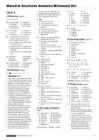
5 found, was living continuous page 8 lesson. 4 1 has/had just arrived 1 1 had been having hits since 1992 5 It looks as if one of them is asleep. 2 was she doing 2 had been writing songs since 1998 6 It's clear that the girl in the front 3 worked/was working 3 had been working as a DJ for six desk isn't interested. 4 travelled years
noticed when I was born! 3 1 Laura was offered a place at much. Personality-wise, I've got a lot of my Manchester University but she dad's traits in me. We're both quite bubbly and friendly (or so people 1C The origins of English turned it down. page 5 2 Whilst some people are in favour say), and we share quite a laid-back of the monarchy, others think we approach to life. When it comes to 1 1 Anglo-Saxon 8 Conquest
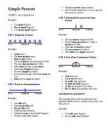
Simple Present · · New York is a small city. It is not important that this fact is untrue. [VERB] + s/es in third person USE 3 Scheduled Events in the Near Examples: Future · You speak English. · Do you speak English? · You do not speak English. USE 1 Repeated Actions Examples: · The train leaves tonight at 6 PM. · The bus does not arrive at 11 AM, it arrives at 11 PM. · When do we board the plane?
transformed into passive. E.g. Chimps eat bananas (Present Simple Active) Bananas are eaten by chimps. (Present Simple Passive) They were playing the piano. (Past Continuous Active) Piano was being played. (Past Continuous Passive) 1. They will finish the house next month. 2. The house will be finished next month. 3. Susan has completed the essay. 4. The essay has been completed by Susan. 5. People should have left the bird alone. 6. The bird should have been left alone. 7. We cannot repair their car. 8. Their car cannot be repaired. 9. The owners had sent the money to a Swiss bank. 10. The money had been sent to a Swiss bank by the owners. 11. People speak English and French in Canada. 12. English and French are spoken in Canada. 13. The police may have seen the suspected criminal. 14. The suspected criminal may have been seen by the police. 15. We are going to redecorate our kitchen this July. 16
) We'd better ask John to help us. 11. Use the present progressive am playing, is raining etc to talk about things that are continuing at the time of speaking. I'm playing very badly today. (NOT I play very badly today.) Look! It's raining! (NOT Look! It rains!) 12. Use for with a period of time. Use since with the beginning of the period. for the last two hours = since 9 o'clock for three days = since Monday for five years = since I left school I've been learning English for five years. (NOT I've been learning English since three years.) We've been waiting for ages, since eight o'clock. 13. Don't separate the verb from the object. VERB OBJECT She speaks English very well . (NOT She speaks very well English.) Andy likes skiing very much. (NOT Andy likes very much skiing.) 14. Don't use the present perfect have/has seen, have/has gone etc with words that name a finished time. I saw him yesterday. (NOT I have seen him yesterday.)
'How are you?' Very often people expect you to say something positive. Here's a breakdown of how you can express how you really are without complaining too much. · Fine, thanks. / On top of the world, thanks. · OK, thanks · Not so bad, thanks. / Can't complain, thanks. · So so, thanks. / So and so, thanks. · Not so good, actually 1 The English alphabet Spelling Work with your partner and spell out first your name and then some names of places. Write down each letter as you hear it, and then say the word. The English alphabet on the phone: You might find the following alphabet (used by international airlines) useful when trying to spell a word on the telephone. A Alpha O Oscar Ä Alpha-Echo Ö Oscar-Echo
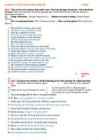
Tests Superstar 1 Luke Prodromou Test 1 Name____________________ Class_______ Use your English 1 Complete these sentences using the correct form (present simple or present continuous) of the verb in brackets. _ 1 She is in a band and she _________________________________ (record) a CD at the moment. _ 2 She is an actress and often _________________________________ (appear) on television. _ 3 At the moment she _________________________________ (have) a rest because she is tired. _ 4 Mike is a doctor and he _________________________________ (live) in Manchester.
Introduction: Hi, I'm here to talk about the advantages and disadvantages of using legal English. How many of you have had to use/have had any interaction with legal English? Well, I, myself, apart from learning it in this class, have never, but many others have. Legal English dates back to thousands of years and it is an essential part of law. Lately, in some cases, legalese has been smoothly replaced with plain language and for some it is unacceptable. So, why use legal English when there is already plain language that can be used instead? Body 1: Firstly, we all like to follow traditions, right? So do most lawyers. You know Latin was and is important for English law, the practice of using Latin word versus in case names (for "against") still occurs daily. Why change something that has been used and appreciated for thousands of years? Law is known for it's conservatism and legalese might have maintained so well because many lawyers
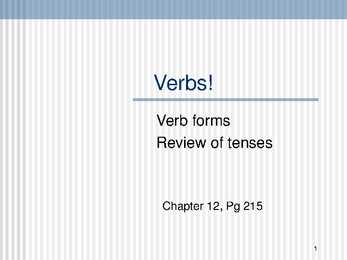
Moved to Cali 2005 Was Born Traveled to Europe Husband 1978 School graduates @ Oxford 1999 Started Got married School 1983 2008 2 The Six English Verb Tenses Three Simple Tenses Simple continuous Present You walk. You are walking I run. I am running. Past You Walked You were walking. I ran. I was running. Future You will walk. You will be walking. I will run. I will be running. Three Perfect Tenses Perfect continuous
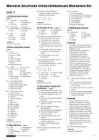
4 Who’s 4 training 5 who’s 5 speak 6 Whose 6 living 7who’s8who’s 7 am 8 eat 2 9 are 2 Where do you come from? 10 use 3 Are you married? 4 When did you start learning English? 8 5 How much English did you know when you 2 good came here? 3 terrible 6 Why are you studying English? 4 Heavy 5 busy 3 6 high 2 Why, f 3 Which, h 9 4 Whose, b 5 What, c 2a
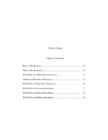
........................................................5 Word Order in Negative Sentences......................................................6 Word Order in General Questions.........................................................7 Word Order in Special Questions ..........................................................8 Word Order in Subject Questions ..........................................................9 Types of Sentences There are four basic types of sentences in English. AFFIRMATIVE and NEGATIVE sentences both end with a full stop ( ) : . I live in Tallinn. I do not live in Tallinn. I never watch soap operas. INTERROGATIVE sentences end with a question mark ( ? ) : Do you live in Tallinn? Why do you never watch soap operas? EXCLAMATORY and IMPERATIVE sentences end with an exclamation mark ( ! ) : What a beautiful day! Do your homework at once! Parts of the Sentence The basic parts of the sentence are: THE SUBJECT (WHO? WHAT?) ,
wishes/Yours, Mike. 4. Remember that it is not necessary to write addresses in the exam. Style in formal and informal letters Formal letters Greeting: Dear Sir/Madam / Mr bobbins, Informal letters · impersonal style Greeting: Dear Julie, · complex sentence structure - frequent · personal, short, zappy style use of Passive Voice - single word · use of slang or colloquial English use of verbs - non-colloquial English -- formal idioms/phrasal verbs language · pronouns are often omitted · each paragraph develops one specific · chatty, wide use of descriptive adjectives topic · use of short forms · only facts, infrequent use of descriptive Best wishes / Love / Yours / Regards.
SUBJECT: Services Provided by Autocheck Maintenance Company DATE: 6.4.01 Ref your phone call about the maintanance of field vehicles. As I said on the phone, in the past couple of months I've noticed that the standard of service which this company provides has got worse and worse and that this has caused us lots of difficult problems. Our own maintanance people have done some checks of their own recently and have found that AMC's works have really gone down. We had two trucks doing nothing since five days because the Autocheck people didn't come out when we called them though it says in their contract that they'll get here inside 24 hrs. and also twice trucks have break down inside of 3 days of Autocheck servicing them. These are some of the examples of the problems we've been having though before this the work they did on our vehicles was always quite OK.
English download B2 workbook lk 16 harjutus 1 vastused (Listening) 1. Is being examined by modern scientists 2. Success in relationships 3. Generally speaking, it covers four different areas 4. People need to understand their own feelings 5. By communicating in different ways 6. May have been important to the survival of the species 7. Learn to develop their social intelligence
minutes (= prediction based on about future plans we can use present situation, meaning "...and if either the present continuous or you don't hurry up you're going to the 'going to' future. However, miss it!") when we use the present continuous, there is more of a suggestion that an arrangement has already been made. •I'm going to see him./I'm seeing him. •I'm going to do it./I'm doing it. FUTURE CONTINUOUS WILL BE + ING (WILL BE GOING) The future continuous refers to an unfinished action or event that will be in progress at a time later than now. It is used: 1)To project ourselves into the future and see something happening: This time next week I will be sun-bathing in Bali. 2)To refer to actions/events that will happen in the normal course of events: I'll be seeing Jim at the conference next week.
y connection to the present) an action happened in the middle of another action I was working someone Past was doing was/were + he was working Progressive sth. at a infinitive + ing I was going certain time he was (in the past) going you don't know whether it
her in for/due to a cup of hot chocolate. The little girl had been/was really happy and followed the kind woman. They became good friends and in/at the evening the woman said that/if the girl could stay as long as she wanted/had wanted. And so it was decided that the girl would/will/is going to/was going to stay with her new stepmother. Happy end 1.3 Fill in missing prepositions where necessary. 1) The party was ..... Saturday. 2) What are you doing ..... Tuesday? 3) ..... teachers were not amazed by his pranks. 4) Are you going ..... the ball? 5) ..... piano sounds great, don't you agree? 6) Hey, Keith, bring me some of ..... ice cream, too! 7) Linda sat ..... the rock and sang ..... song. 8) ..... school is something you never forget, yet while studying many things just are forgotten. 9) He jumped off ..... cliff and fell ..... the ice-cold ocean. 10) It was ..... noisiest concert ever!
INGLISE KEELE PÕHITÕED C.K 2017 A – AN – SOME Singular: a or an Use some for things you can't count ◦ *a banana *a car *a monkey *a football ◦ *some milk *some water *some coffee ◦ *an egg*an accident *an umbrella *an *some sugar eagle ◦ *some tea *some juice*some money *some butter Plural: some Exercises: 1. http://www.english-4u.de/a_an_some_ex1.htm ◦ *some bananas *some cats *some monkeys *some 2. http://www.english-4u.de/a_an_some_ex3.htm balls ◦ *some eggs*some oranges *some umbrellas *some 3. http://www.english-4u.de/a_an_some_ex6.htm eagles We us the
smoke signals, they used mail. Later on, they also had some newspapers. The first expansion of media was when the radio and television were invented. The second and the biggest boom started in 1960s when the first communication satellite was launched into orbit. There are 4 main media: Newspapers, TV, Radio and the Internet. Today's people take this as an ordinary thing and we don't realise that we nearly can't live without it. Media are very important for us. They give us big amount of information, so big that we can't remember all that things. They help us to understand things and if you have lots of information you are able to make your own decisions. This is connected with education and media are very good teachers. They highly influence us. They can help other people making charities... News aren't always true, they are not objective or says just half true. Our world is very huge and sending a message from America to Asia a hundred
could be more viable in solving our problems. It has become the most productive part of our lives, because without it the African cannot really point to much that they are in charge of producing. It is better to blame others than to confront the truth of our being responsible for whatever has happened to us as an African race. I decided to write ‘Capitalist Nigger’ to open a debate on the state of the African race. But in doing so, my intention was not to treat my own contribution to the debate with kid gloves. It is to tell it like it is, the truth and nothing but the truth. My observations are bound to infuriate a lot of my people. Even the title of the title of the book is bound to make a lot of people angry. Many people will be angry, to say it mildly, when I question the intelligence of my people compared to the Asians (Indians, Pakistanis,
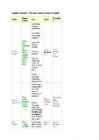
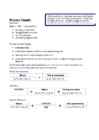
englisch-hilfen.de LEARNING ENGLISH ONLINE Examples Examples Examples Tense Signal words Use Form affirmative negative interrogative every day something happens repeatedly sometimes
kills many other people. The distinction between the two is notable: mass murder happens when one person murders multiple people at one specific place and one specific time. When we look at the perpetrators of the Aurora, Colorado and Sandy Hook, Connecticut shootings, we have two perfect examples of mass murderers. They went to one place (a movie theater, a school) and killed several people within a very short amount of time. Serial killing, on the other hand, can happen in one place, but generally occurs over a period of time. The standard distinction between serial killing and multiple murders is that serial killers murder three or more people within the time frame of one month (3). A serial killer will murder 12 people over the course of 4 months or so; a mass murderer 1 will do so in the matter of moments. II. Serial killing history
As both asian and European markets use the internet more and more to conduct business, there will be an increasing need for language choice for the different markets.English is so often used on the internet that it might make you think everyone in the world speaks English, or at least give you the impression that it is the worlds most widekyspoken language.If this were true, it would, off course, bring benefits for worldwide communication and understandig, thought it could also possibly become a threat to cultural diversity.English certainly seems to be everywhere, from films to pop music and TV, and from 15 business to science and other fields. Information varies, but suggests that about 75% of the pages on the web are in english
Have you ever had any embarrassing incidents in a shop? _______________________________________________________________ UNIT 8: Töövihikust harjutus 9. 1 See tõesti ärritab mind, kui inimesed ei lülita oma mobiile teatris välja. It really annoys me when people don´t switch off their mobile phones in the theatre. 2 Ma tahaksin oma telefonihelinat muuta. I´d like to change the ringtone of my mobile phone. 3 Tema teadmised inglise keelest on väga head. His knowledge of English is very good. 4 Ma surfasin eile kaks tundi internetis, aga ma ei leidnud vajalikku informatsiooni. Yesterday I surfed the Internet two hours but i didn´t found neccessary information. 5 Halloo, mina olen Kai. Palun kas ma saaksin rääkida Lizziega? - Ma kuulen. Hello, this is Kai. Could I speak to Lizzie please? - Speaking. 6 Vabandust, ma pean nüüd lõpetama. Ma helistan hiljem tagasi. Sorry, I have to finish now. I will call you back later. 7 Kus Maria on
Book 1 BASIC ENGLISH BASIC ENGLISH GRAMMAR GRAMMAR BASIC ENGLISH GRAMMAR Book 1 Book 1 Younger students at beginning to intermediate levels will greatly benefit from this step-by-step approach to English grammar basics. This is the ideal supplement to your language arts program whether your students are native
water." The third paragraph: ,,Another thing I am interested in is what kind of furniture there is in the flat. Is a phone included?" The fourth paragraph: ,,Lastly, I would like to know if the flat is big enough for two persons. I am coming with my girlfriend and we would like to share the flat." It would be good if you could write a closing sentence. P5: Closing sentence For example: ,,If there is anything else we should be aware of, please let us know as soon as possible" or ,,Do not hesitate to contact me if you have any other information". It is compulsory to end the letter with ,,I look forward...". It is NOT ,,I am looking forward to...". P6: Ending the letter For example: ,,I look forward to your answer.", ,,I look forward to your reply/response", ,,I look forward to hear from you". A letter ends with ,,Yours sincereley" or ,,Yours faithfully" or ,,Best regards"
1. Active/Passive Active - the professor teaches the students. Passive - The students are taught by the professor 2. Present Simple [VERB] + s/es in third person. Tegevus on korduv või tavapärane. You speak English. I play tennis. Cats like milk. The train leaves tonight at 6 PM. I am here now. Active= Once a week, Tom cleans the car. Passive= Once a week, the car is cleaned by Tom. 3. Present Continuous [am/is/are + present participle]. Tegevus toimub/ei toimu praegusel hetkel. You are watching TV. You are learning English now. I am studying to become a doctor. I am meeting some friends after work. Active= Right now, Tom is writing the letter. Passive= Right now, the letter is being written by Tom. 4
A New Earth - 167 A Brief History of Your Life......................................................................169 Awakening and the Return Movement.......................................................170 Awakening and the Outgoing Movement...................................................172 Consciousness............................................................................................174 Awakened Doing........................................................................................175 The Three Modalities of Awakened Doing................................................176 Acceptance.................................................................................................177 Enjoyment..................................................................................................177 Enthusiasm.......................................................................................
uses means to deceive someone else into divulging sensitive information.[5] Shoulder surfing Shoulder surfing is using direct observation techniques, such as looking over someone's shoulder, to get information. Shoulder surfing is an effective way to get information in crowded places because it's relatively easy to stand next to someone and watch as they fill out a form, enter a PIN number at an ATM machine, or use a calling card at a public pay phone.[6] Stealing personal items Identity thieves can also obtain your personal information by stealing your wallet or purse.[4] Skimming Skimming is the act of using a skimmer to illegally collect data from the magnetic stripe of a credit, debit or ATM card. This information, copied onto another blank card's magnetic stripe, is then used by an identity thief to make purchases or withdraw cash in the name of the actual account holder
The Present Simple is the most basic tense in the English language. It is an interesting tense because it can be used Present Simple to express the future. Generally, though, we use it to Basic form describe the present activities or to talk about routines or Subject + Verb + -s (present form) John lives in New York. We play football every day. You are really kind.
UNIVERSITY OF TARTU DEPARTMENT OF ENGLISH Using Blogs as a Platform in the Teaching of English as a Foreign Language Research paper Tartu 2010 ABSTRACT This work analyses the usefulness of blogging in teaching English as a foreign language. The definition of the term `blog' is provided along with the advantages and disadvantages of blogs' usage in practice. The analysis of language skills developed by students throughout the use of blogs for learning purposes is given in the paper with possible limitations that blogs have. Author of this paper also shares personal comments about the experience in the field. In this paper it is also
" You should also use the when you have already mentioned the thing you are talking about. For "She's got two children; a girl and a boy. The girl's eight and the boy's fourteen." example: We use the to talk about geographical points on the globe. For the North Pole, the equator example: We use the to talk about rivers, oceans and seas For the Nile, the Pacific, the English channel example: We also use the before certain nouns when we know there is only one of a particular thing. For the rain, the sun, the wind, the world, the earth, the White House etc.. example: However if you want to describe a particular instance of these you should use a/an. "I could hear the wind." / "There's a cold wind blowing." For example: "What are your plans for the future?" / "She has a promising future ahead of her."
 annaabi.ee