 Tasuta
Faili alla laadimine on tasuta
Tasuta
Faili alla laadimine on tasuta
 ~ 1 leht
Lehekülgede arv dokumendis
~ 1 leht
Lehekülgede arv dokumendis
 2021-11-24
Kuupäev, millal dokument üles laeti
2021-11-24
Kuupäev, millal dokument üles laeti
 0 laadimist
Kokku alla laetud
0 laadimist
Kokku alla laetud
 0 arvamust
Teiste kasutajate poolt lisatud kommentaarid
0 arvamust
Teiste kasutajate poolt lisatud kommentaarid
 ETH01
Õppematerjali autor
ETH01
Õppematerjali autor
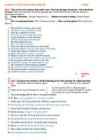
English download B2 workbook lk 8 harjutus 1 vastused (Grammar 2) 1. Have you been hiding 2. Has just finished 3. Have you ever smiled 4. Has been biting 5. Have been waiting 6. Has expressed
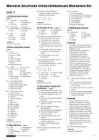
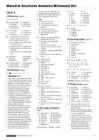
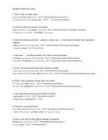
1 1 poll 5 commentators 3 Tick: belong, know, imagine, think, 2 public 6 celebrities understand Challenge! 3 Prime Minister 7 figures Students' own answers 4 votes Photocopiable © Oxford University Press 1 Maturita Solutions Upper-Intermediate Workbook Key 1G Magazine article page 10 1 1 Introduction: C 2 Background information: A 3 Main events: D 4 Conclusion: B 2 1 One afternoon, at the time, when I finally reached safety, after that day 2 and fast! The rock was now more than a kilometre out to sea! After that day, I always checked the times of the tides before I went swimming! I'd never been so exhausted in my life! 3 exhausted, fantastic 4 Only when I woke up ...
noticed when I was born! 3 1 Laura was offered a place at much. Personality-wise, I've got a lot of my Manchester University but she dad's traits in me. We're both quite bubbly and friendly (or so people 1C The origins of English turned it down. page 5 2 Whilst some people are in favour say), and we share quite a laid-back of the monarchy, others think we approach to life. When it comes to 1 1 Anglo-Saxon 8 Conquest
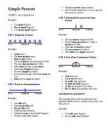
Simple Present · · New York is a small city. It is not important that this fact is untrue. [VERB] + s/es in third person USE 3 Scheduled Events in the Near Examples: Future · You speak English. · Do you speak English? · You do not speak English. USE 1 Repeated Actions Examples: · The train leaves tonight at 6 PM. · The bus does not arrive at 11 AM, it arrives at 11 PM. · When do we board the plane?
(Past Continuous Passive) 1. They will finish the house next month. 2. The house will be finished next month. 3. Susan has completed the essay. 4. The essay has been completed by Susan. 5. People should have left the bird alone. 6. The bird should have been left alone. 7. We cannot repair their car. 8. Their car cannot be repaired. 9. The owners had sent the money to a Swiss bank. 10. The money had been sent to a Swiss bank by the owners. 11. People speak English and French in Canada. 12. English and French are spoken in Canada. 13. The police may have seen the suspected criminal. 14. The suspected criminal may have been seen by the police. 15. We are going to redecorate our kitchen this July. 16. Our kitchen is going to be redecorated this July. 17. The committee is interviewing the candidate. 18. The candidate is being interviewed by the committee. 19. They make mistakes in almost every essay. 20
) We'd better ask John to help us. 11. Use the present progressive am playing, is raining etc to talk about things that are continuing at the time of speaking. I'm playing very badly today. (NOT I play very badly today.) Look! It's raining! (NOT Look! It rains!) 12. Use for with a period of time. Use since with the beginning of the period. for the last two hours = since 9 o'clock for three days = since Monday for five years = since I left school I've been learning English for five years. (NOT I've been learning English since three years.) We've been waiting for ages, since eight o'clock. 13. Don't separate the verb from the object. VERB OBJECT She speaks English very well . (NOT She speaks very well English.) Andy likes skiing very much. (NOT Andy likes very much skiing.) 14. Don't use the present perfect have/has seen, have/has gone etc with words that name a finished time. I saw him yesterday. (NOT I have seen him yesterday.)
'How are you?' Very often people expect you to say something positive. Here's a breakdown of how you can express how you really are without complaining too much. · Fine, thanks. / On top of the world, thanks. · OK, thanks · Not so bad, thanks. / Can't complain, thanks. · So so, thanks. / So and so, thanks. · Not so good, actually 1 The English alphabet Spelling Work with your partner and spell out first your name and then some names of places. Write down each letter as you hear it, and then say the word. The English alphabet on the phone: You might find the following alphabet (used by international airlines) useful when trying to spell a word on the telephone. A Alpha O Oscar Ä Alpha-Echo Ö Oscar-Echo
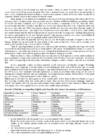
Elderly people who have lost their spouse or never married prefer to live alone in their own homes as long as they can cope. Families often live nearby and can help. There are also local services (cleaning, ‘meals-on- wheels’, day centres with activities, etc.) and voluntary organisations, such as Age Concern or Help the Aged who support them. When people become too frail, they usually move care homes. Exercise 1. Find the corresponding English word from the text. Answer the questions in full sentences. Omavalitsuse korter/maja Council flat/house Kaubaladu warehouse Elamurajoon district Õlg-(pilli)roogkatus thatched Segu mixture Väike maamaja, suvila cottage Võimalused facilities Pilliroog reeds
 annaabi.ee









Kõik kommentaarid