Leidsid 33 sarnast õppematerjali, mis on seotud failiga "Edgar A. Poe". Need materjalid aitavad sul teemat sügavamalt mõista.
death, stories, virginia, tale, work, poem, genre, year, drink, allan, himself, dream, tales, effect, poems, beauty, science, fiction, horror, taken, took, years, sent, university, away, military, place, works, other, fall, usher, morgue, land, decadent, spirit, keeping, invented, genres, fantasy, popular, today, father, mother, husband, england, fiveespecially by Thomas Paine in "The Age of Reason" and by Thomas Jefferson in his short Jefferson Bible from which all supernatural aspects were removed. Benjamin Franklin was influential in America, England, Scotland, and France, for his political activism and for his advances in physics. The American Dream is a national ethos of the United States, a set of ideals in which freedom includes the opportunity for prosperity and success, and an upward social mobility achieved through hard work. In the definition of the American Dream by James Truslow Adams in 1931, "life should be better and richer and fuller for everyone, with opportunity for each according to ability or achievement" regardless of social class or circumstances of birth. The idea of the American Dream is rooted in the United States Declaration of Independence which proclaims that "all men are created equal"
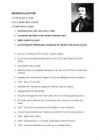
Is but a dream within a dream" A Dream within a Dream. · American poet, critic, short story writer · considered the father of the modern detective story · highly lauded as a poet · psychologically thrilling tales examining the depths of the human psyche · born on 19 January 1809 in Boston, Massachusetts · son of actors Elizabeth Arnold Hopkins (1787-1811) and David Poe (1784- 1810) · had a brother and a sister · after the death of his parents was taken in by Frances (d.1829) and John Allan (d.1834) · travelled with the Allans to England in 1815 and attended school in Chelsea · 1820 - back in Richmond · attended the University of Virginia and studied Latin and poetry · enjoyed swimming and acting · became estranged from his foster father after accumulating gambling debts · left school and enlisted in the United States Army where he served for two years
The origins of American literature The first Americans were explorers and settlers, adventurers and idealists who crossed the ocean in search of new opportunities or to escape the poverty and intolerance. Their writings were matter-of-fact accounts of life in America, which explained colonisation to Englishmen back in the homeland. An example of this form of writing is John Smith's A True Relation of Virginia, which is widely recognized to be the first example of Am lit. The early years of colonisation produced a mass of utilitarian writings including biographies, accounts of voyages, diaries, sermons, pamphlets. Much of the material addressed the problems of Church and State. There were few examples of fiction, poetry or drama. Anne Bradstreet of Massachusetts published some lyrical poems of high literary quality (1650) and Edward Taylor, who was born in England but lived in Boston,
· The American Revolution (1776 -1783) · The French Revolution (1789 1799) · The Industrial Revolution · Civil war (1861 1865) · Colonies, communes · Ralph Waldo Emerson (1803 1882) · Henry David Thoreau (1817 1862) Famous writers · Small literary world, writers knew each other · Washington Irving (1783 -1859) · James Fenimore Cooper (1789 -1851) · Nathaniel Hawthorne (1819 1891) · Herman Melville (1819 -1891) · Edgar Allan Poe (1809 -1840) · Walt Whitman (1819 -1892) · Emily Dickinson (1830 -1886) Washington Irving & James Fenimore Cooper · American writers of the early 19th century · Acclaim in Europe · Irving's best known "Rip Van Winkle" · J.F. Cooper's "Leatherstocking Tales" · Cooper American historical novel Edgar Allan Poe · January 19, 1809 October 7, 1849 · American poet, short story writer, editor, literary critic · love, beauty and death
well as a vigorous social campaigner. Considered one of the English language's greatest writers, he was acclaimed for his rich storytelling and memorable characters, and achieved massive worldwide popularity in his lifetime. Charles Dickens was born in Landport, Portsmouth in Hampshire, the second of eight children to John Dickens n 7 February 1812. The 12-year-old Dickens began working ten hour days in a Warren's boot-blacking factory. In May 1827, Dickens began work in the office of Ellis and Blackmore as a law clerk. At the age of seventeen, he became a court stenographer and, in 1830, met his first love, Maria Beadnell. Maria's parents disapproved of the courtship and effectively ended the relationship when they sent her to school in Paris. In 1834, Dickens became a political journalist, reporting on parliamentary debate and traveling across Britain by stagecoach to cover election campaigns for the Morning Chronice.
American literature The literary history of this nation when the first humanbeing living in what has since become the U.S used language creatively. · Mid to late 18 century put down · Words are powerful, magical · Words must be remembered · Native Americans stories creation of the world · Attidude thought their land/language · Similar stories Dates and names · America was discovered in 1492 by Columbus · 1497 John Cabot went to Canada · 1579 San Fransisco/St. Fransis · 1607 Jamestown collony/John Smith · 1620 a boat called MayFlower · 1630 Boston was established · 1636 Harvard University · 1773 Boston Teaparty · 1775 War of Independence · 1776 4 July Declaration of Independence
Geoffrey Chaucer (1343–1400) – Father of English literature, The Canterbury Tales in English, increased the prestige of the language, provided a standardised form. The Canterbury Tales: frame story. Majority in verse, some prose. Intended to contain 124 stories, only finished 24. Story: a pilgrimage to Canterbury Cathedral, where archbishop Thomas Becket had been murdered. The stories present a portrait of medieval society, e.g. a knight, a student, a monk, a miller (a flour maker at a mill), a wife of Bath, etc
Alice Kipling Fleming - Sister of British author Rudyard Kipling who became a well-known psychic, producing automatic writing under the name "Mrs. Holland." Born June 11, 1868, Alice Kipling was privately educated. She went to India at age 16 and married British army officer John Fleming. While in India she wrote a number of poems, and in 1893 initially experimented with automatic writing. After a long illness she returned to England in 1902 and in the following year read the classic study Human Personality and Its Survival of Bodily Death, by F. W. H. Myers. As a result she contacted the secretary of the Society for Psychical Research (SPR), London, regarding her own automatic writing. She was one of the seven principal mediums involved in the famous cross-correspondences cases. Fleming continued to do automatic writing until 1910, when she suffered a nervous breakdown. Early Life
1. Beowulf. The dating of Beowulf is still controversial. The poem is one of the earliest and greatest monuments of the Germanic literatures. The main stories of the poem (the fights of B.) are versions of common folk-tales, but the poet also introduces many incidental stories, some of which belong to the world of ancient Germanic legend. He writes his folk-tales and legends in a web of other events, mainly set in the Baltic Kingdoms. He shows a very rich and leisurely portrayal of this Baltic world, providing many customs like the close relationship between lord and man in the war-band and others. All this encouraged the supposition that the unknown author of the poem was himself a bard of the ancient type portrayed within the poem (a lord's scoop)
and positivism. Opposition to abstract, untested theories &ideologies. Friedrich Nietzsche ,,God is dead"-through explaining and putting forward theories had killed Christian god. The essence of Freudian theory: the process in the human psyche Superego-society, conscience, morals, traditions, religion, a moral censor Ego-rational behavior, motivation, self-identification, conscious decisions Id-instincts, natural responses, the pleasure principle, aggressive instincts, the death wish Influence: In art and literature, Freud's theories influenced surrealism . Like psychoanalysis, surrealistic painting and writing explores the inner depths of the unconscious mind. Freudian ideas have provided subject matter for authors and artists. Critics often analyze art and literature in Freudian terms. 2. Literary Modernism and its sub-movements. The influence of Structuralism and psychoanalysis. Main characteristic features of Modernism. Denial of
jordan. She places love above war, politics. Pablo is another type, he is a moral coward, he is a defeatist, who wants to avoid personal danger and wants to save his life, he is mean and betrays his country men. Pilar, Pablo's woman, strong, courageous, patriot, never the less understands the importance of individual human happiness. Human independence and solitarity. Jordan dies, he is left to die. Maria problably is pregnant. Towards the end of his life Heingay wrote short stories. 1952 novella ,,The old man and the sea". The protagonist is an old cuban fisherman. Cuba was that time almost the colony of usa. Santiago is an old fisherman who isn't able to catch anything for several days. One day he catches enormous fish. He is exhausted from trying to fight that fish and has to tie the fish to the boat. While he is rowing back to village the sharks eat the fish when he arrives back to village. It is a moral victory of defeat. Man may be destroyed but not defeated
Lived on the British Isles in the 1st millenium. They most probably came from Eastern Europe and belonged to the Celtic race and also spoke Celtic. They were primitive hunters- gatherers, farmers. Some Celtic words are still used in modern English, however they are used mostly in place names. For example: · avon river · cumb valley · ford shallow place in the river Ancient Britons had their own religion and priests or druids and temples. In the year 55 BC Britain became a Roman province. Romans were highly developed and had their own language latin, which has also greatly influenced English. The military occupation of the Isles ended in 410 AD. The Romans eventually brought Christianity to Britain. Hadrian's wall on the border of Scotland and England. It began construction in 122 AD. An Anglo-Saxon attack on Rome forced the Romans to leave The British Isles. They were
A group of scientists called humanists came into being. Were gratelyinterested in science. Especially natural science, fond of experimenting (alkeemia). Leonardo da Vinci ( helikopter, kuldlõige), Michelangelo. Petrarka tõi sonetivormi, Cervantes " Don Quijote", Shakespeare. Development of Drama During the renaissance period art and literature developed quickly. People were fond of singingand acting. Enjoyed life. Drama became most important genre of literature in this period. Drama as a genre started already in the middle ages. At the beginning it was a religious thing, because acting in those days was part of religious ceremony. Oldest plays were called mysteries and miracles, played by clergyman, showed scenes from Christ's life and saints lives. Were performed on religious holidays in church and they both encluded many choral elements (singing). Often formed cycles, several strories about same event .
THE ANGLO-SAXON PERIOD English literature came when the Angles, the Saxons, the Jutes and the Frisians invaded Britain. During this time English was called Anglo- Saxon or Old English. In the chronicles of Roman history (composed in Latin) is said that Britain makes its first appearance in written language when Romans invade the England. BEOWULF most important poem, surviving in a 10th-cent manuscript. The historical period of the poem's events can be dated in the 6th to 8th century. Much of the material of the poem is legendary and paralleled in other Germanic historical-mythological literature in Norse, Old English, and German. GEOFFREY CHAUCER (1340-1400) Politician and writer, fought in France during the 100 years war. He visited Genoa and Florence where he became acquainted with Italian
comparative linguistics, language typology, psycholinguistics, sociolinguistics; applied linguistics including speech and text processing, quantitative linguistics, modern applied linguistics). History of the Department Russian philology was not studied as an independent academic discipline until 1945, yet from the very beginning of the faculty's existence there were courses in Russian studies on offer for students of Slavic studies. In the 1922/1923 academic year, an independent Section of Russian Language and Literature was founded within the School of Slavic Studies. The section was, from its foundation until 1945, headed by Valerij Alexandrovic Pogorielov. In 1945 another member of the post-revolutionary wave of Russian emigrants, Prof. Alexander Vasilievic Isacenko, was appointed Professor in Russian Philology. In 1946 Prof. A. V. Isacenko became the director of the newly established School of Russian, which transformed itself into the
The Life of Dante, the Inferno of Dante Dante Alighieri, one of the greatest poets of the Middle Ages, was born in Florence, Italy on June 5, 1265. He was born to a middle-class Florentine family. At an early age he began to write poetry and became fascinated with lyrics. During his adolescence, Dante fell in love with a beautiful girl named Beatrice Portinari. He saw her only twice but she provided much inspiration for his literary masterpieces. Her death at a young age left him grief-stricken. His first book, La Vita Nuova, was written about her. Sometime before 1294, Dante married Gemma Donati. They had four children. Dante was active in the political and military life of Florence. He entered the army as a youth and held several important positions in the Florence government during the 1290's. During his life, Florence was divided politically between Guelphs and Ghibellines. The Guelphs
British authors from the United Kingdom, which includes England, Scotland, Northern Ireland, Wales, the Channel Islands, and Isle of Man Includes early works written in Gaelic, Welsh, and Latin, works in Old, Middle, and Modern English, each of which represents a different period Full of great works British works in Latin Venerable Bede He lived between 673 and 735 AD The greatest of all the AngloSaxon scholars He's the earliest English historian, whose work has shed light on a period of English history that would have otherwise been unknown ,,The Father of English History" Wrote / translated about 40 books on almost every area of knowledge, i.e. nature, astronomy, and poetry His best known work is "The Ecclesiastical History of the English People" Starting with the Roman invasion in the 5th century, he recorded the history of the English up to his own day Old English Cædmon ,,The Father of English Hymn"
Poe's best known fiction works are Gothic His most recurring themes : death (its physical signs) the effects of decomposition concerns of premature burial the reanimation of the dead, mourning Dark romanticism genre Wrote : horror satires humor tales hoaxes He used irony and ludicrous extravagance "Metzengerstein" - the first story that Poe is known to have published Poe reinvented science fiction responding in his writing to emerging technologies such as hot air balloons in "The Balloon-Hoax" He used themes specifically catered for mass market tastes. Disliked didacticism and allegory "Works with obvious meanings cease to be art."
When they grow up, they play as members of important amateur teams or as a professional in teams competing in football ,,leagues". Professional football is as much a business as a sport. Rugby football was first played in 1823. In rugby every player is allowed to carry the ball. The ball is oval, not round. Each team contains 15 players. The oldest game of football in England is probably the football match which takes place at Ashburn on Shrove Tuesday every year. The game starts in the centre of the town, and the distance between two goals is two miles. The only rule is not to use motorcycles, cars and lorries in the game. In 1958 one team buried the ball. The other team didn't know and ran after them. Later first team took the ball and won. 3) JAMES WATT He was born in the small port of Greenock on the river Clyde in Scotland in 1736. His father was a mathematical-instrument maker and also kept a shop to supply ships with goods for their voyages
Philip Larkin’s Poetry: Themes, Form, Style, Imagery and Symbolism Author: Sandra Olivares González Tutor: Jesús Marín Calvarro Degree in English Studies, English Department, Faculty of Philosophy and Letters, University of Extremadura Cáceres, 29th January 2016 Philip Larkin’s Poetry: Themes, Form, Style, Imagery and Symbolism The aim of this work is to obtain some characteristics of the poetry of Philip Larkin, such us the origin of his themes, the way in which he writes his poems and the symbolism he uses (which is a very controversial topic because some assume that he does use it, while some others say that he uses it in an ironic way). In this work we tried to make a revision on the vision of Larkin through the studies that had been made on him, and on the basis of it we can say, that the voice of Larkin still clearly contemporary
Edinburgh Journal before he was 20. Following his term at university, he served as a ship's doctor on a voyage to the West African coast. He completed his doctorate on the subject of tabes dorsalis in 1885. In 1882, he joined former classmate George Budd as his partner at a medical practice in Plymouth, but their relationship proved difficult, and Conan Doyle soon left to set up an independent practice. Arriving in Portsmouth in June of that year with less than £10 to his name, he set up a medical practice at 1 Bush Villas in Elm Grove, Southsea. The practice was initially not very successful; while waiting for patients, he again began writing stories. His first significant work was A Study in Scarlet, which appeared in Beeton's Christmas Annual for 1887 and featured the first appearance of Sherlock Holmes, who was partially modelled after his former university professor, Joseph Bell. Future short
He died at Cooperstown in 1851. He was immensely popular writer and he considered to be the first major American novelist. R.L.Stevenson(1850-1894): he was born in Edinburgh, Scotland in 1850. He was a sick little boy who spent much of his time in bed. He was very lonely only child. When he grew older and seemed stronger, his father took him on trips to he wildest coasts of Sotland. Stevenson was no student. He roamed about Edinburgh, learning to know people of all kinds. His stories were full of gaiety, sharm and mis-spelled words. Louis's father let him study law, but soon after he began, his health had become worse. He was sent off to southern France, where he finished his law studies and become a lawyer. In France he met his future wife F.Osburne. While Stevenson got better in writing, his health became worse. When his father died, he went on a voyage to Ney York. He had to spend the winter there at a special hospital. He died when he was 44
Poets spoke with the voice of celebrating the king and queen. King and court retreated into a self-perpetuating arcadia of their own. Civil War. Sense that past would never return. 1640s. Metaphysical poets were fond of imagery difficult to understand and complicated metaphors, Cavaliers preferred more straightforward expression. Valued elegance, were part of refined, courtly culture, but poetry often frankly erotic. Short lyric poem, favourite theme carpe diem. Very decent, like Charles’s court. Characteristic to Charles I’s court Carew: Sir John Suckling: The Constant Lover Richard Lovelace: celebrates the beauties of heroine, but against very different background. To Althea, from Prison: Song; The Grasshopper: To My Noble Friend, Mr Charles Cotton: Ode Waller: wrote of queen as the queen of love. Cowley: Robert Herrick: The Argument of His Book, Delight in Disorder 6. The Caroline „beauty of holiness”
and "Speaker" series. He has also announced his plan to write two more novels: Shadows in Flight, a book that connects the "Shadow" series and "Speaker" series together, and Ender in Exile, a book that takes place after Ender's game and before Speaker for the Dead. Furthermore, Card recently announced that Ender's Game will soon be made into a movie. Though Card is best-known for "Ender's Game", he has also written in a variety of other genres, including plays, short stories, books on writing, the Homecoming series, other science fiction books, and nonfiction, such as articles on computer technology. Orson Scott Card in 2008 and when he was younger. The Setting The novel starts off on Earth, with scenes at the school and the Wiggin home. Little attention is given to the details of this setting, not even the name of the city, and so it comes across as a standard American neighborhood. A shuttle is used as a background in the fourth chapter
Artists: Charles Willson Peale, Gilbert Stuart, John Trumbull, Thomas Sully, Rembrandt Peale. History. History painters had to create a demand for their paintings. History paintings encapsulated the patriotic duty to memorialize the country's struggle for independence and human rights. Allston was America's first truly Romantic artist and expressed the themes of mystery, terror and poetic daydreaming. Artists: John Trumbull, John Vanderlyn, Washington Allston. Landscape, Genre and Still Life. In late-C18, these were almost entirely neglected. Guy painted city life, Birch painted the seascape. The "Peale formula" was adhered to: objects along tableware against a dark background. Also, trompe-l'oeil persisted via Charles Willson's Peale's sons. Artists: Ralph Earl, Francis Guy, Thomas Birch, James Peale, Raphaelle Peale. Mid-C19 Landscape. In C19, landscape painting became dominant and provided many unexplored subjects. The tradition of
Artists: Charles Willson Peale, Gilbert Stuart, John Trumbull, Thomas Sully, Rembrandt Peale. History. History painters had to create a demand for their paintings. History paintings encapsulated the patriotic duty to memorialize the country's struggle for independence and human rights. Allston was America's first truly Romantic artist and expressed the themes of mystery, terror and poetic daydreaming. Artists: John Trumbull, John Vanderlyn, Washington Allston. Landscape, Genre and Still Life. In late-C18, these were almost entirely neglected. Guy painted city life, Birch painted the seascape. The "Peale formula" was adhered to: objects along tableware against a dark background. Also, trompe-l'oeil persisted via Charles Willson's Peale's sons. Artists: Ralph Earl, Francis Guy, Thomas Birch, James Peale, Raphaelle Peale. Mid-C19 Landscape. In C19, landscape painting became dominant and provided many unexplored subjects. The tradition of
Joseph Rudyard Kipling was a British author and poet. He was born on 30 December 1865 in Bombay, in India which was part of the British Empire then. he is best known for his works of fiction The Jungle Book (1894) (a collection of stories which includes Rikki-Tikki-Tavi), Kim (1901) (a tale of adventure), many short stories, including The Man Who Would Be King (1888); and his poems, including Mandalay (1890), Gunga Din (1890), and If-- (1910).He is regarded as a major "innovator in the art of the short story"; his children's books are enduring classics of children's literature; and his best works speak to a versatile and luminous narrative gift. Kipling was one of the most popular writers in English, in both prose and verse, in the late 19th and early 20th centuries
BOOK REPORT Title of the book: The Catcher in the Rye Author: Jerome David Salinger (January 1, 1919 January 27, 2010) was an American writer who died at the age of 91. He was married three times and has two children. Some of his most notable works are The Catcher in the Rye, Nine Stories and Franny and Zooey. The Catcher in the Rye is by far the most famous and most critiqued book of his, selling over 250,000 copies every year. In total the book has sold over 65 million copies worldwide. The success of The Catcher in the Rye led to public attention: Salinger became reclusive, publishing new work less frequently. Analysis of the book 1. Setting The story starts in the year 1950 when the novel's protagonist and narrator Holden starts telling a story from a hospital about the events of last year's winter. Most of the
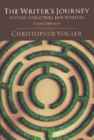
playwrights, fiction and non-fiction writers, scholars, and fans of pop culture all over the world. Discover a set of useful myth-inspired storytelling paradigms like "The Hero's Journey," and step-by-step guidelines to plot and • character development. Based on the work of Joseph Campbell, The Writers Journey is a must for all writers interested in further developing their craft. This updated and revised Third Edition provides new insights and observations from Vogler's ongoing work on mythology's influence on stories, movies, and man himself. In revealing new material, he explores key principles like polarity and catharsis, plus: • A revised chapter which looks back at the Star Wars phenomenon and analyzes
historical setting Always published novels under the name Autho r o f Wave rle y. Many years after he used the name The Wizard o f the No rth When he published ivanhoe he steered away from Scottish history to English romance in 12th -century. Wrote several books which were sympathetic towards J ews. He was granted title of the baronet, which became Sir Walter Scott. Included little punctuation in his drafts . Famous Works Writing Influence Work is influenced by the 18th century Enlightenment His work is popular throughout Europe during his time period Believed every human was practically decent regardless of class, religion, politics and ancestry Major theme in historical works is tolerance Waverley novels express belief in need for social progress First novelist to portray peasants realistically and equal to merchants, kings and soldiers Central theme of many novels were conflicts between opposing cultures
Before the war, Himmelstoss was a postman. He is a petty, power-hungry little man who torments Paul and his friends during their training. After he experiences the horrors of trench warfare, however, he tries to make amends with them. Read an in-depth analysis of Corporal Himmelstoss. Franz Kemmerich - One of Paul's classmates and comrades in the war. After suffering a light wound, Kemmerich contracts gangrene, and his leg has to be amputated. His death, in Chapter Two, marks the reader's first encounter with the meaninglessness of death and the cheapness of life in the war. Joseph Behm - The first of Paul's classmates to die in the war. Behm did not want to enlist, but he caved under the pressure of the schoolmaster, Kantorek. His ugly, painful death shatters his classmates' trust in the authorities who convinced them to take part in the war. Detering - One of Paul's close friends in the Second Company. Detering is a young man with
Karenin asks her to break off the affair to avoid society gossip and believes that their relationship can then continue as previously. Kitty goes with her mother to a resort at a German spa to recover from her ill health. There they meet the Pietist Madame Stahl and the saintly Varenka, her adopted daughter. Influenced by Varenka, Kitty becomes extremely pious, but is disillusioned by her father`s criticism. She then returns to Moscow. Part 3 Levin continues his work on his large country estate, a setting closely tied to his spiritual thoughts and struggles. Levin wrestles with the idea of falseness, wondering how he should go about ridding himself of it, and criticising what he feels is falseness in others. He develops ideas relating to agriculture and the unique relationship between the agricultural labourer and his native land and culture. He believes that the
The details of the monster's construction are left ambiguous, but Frankenstein finds himself forced to make the creature roughly eight feet tall because of the difficulty in replicating the minute parts of the human body. His creation, which he has hoped would be beautiful, is instead hideous, with dull yellow eyes, and a withered, translucent, yellowish skin that barely conceals the muscular system and blood vessels. After bringing his creation to life, Victor is repulsed by his work: he flees the room, and the monster disappears. Victor becomes ill from the experience. He is nursed back to health by his childhood friend, Henry Clerval. After a four-month recovery, he determines that he should return home when his brother William is found murdered. Upon arriving in Geneva, he sees the monster near the site of the murder, and becomes certain it is the killer. William's nanny, Justine, is hanged for the murder based on the discovery of the locket in her pocket
 annaabi.ee