Leidsid 33 sarnast õppematerjali, mis on seotud failiga "Do you consider yourself more functionalist or more conflict theorist? ". Need materjalid aitavad sul teemat sügavamalt mõista.
differ, different, both, other, ignore, explain, views, completely, agree, racism, part, best, equal, there, social, develop, consider, please, live, none, wrong, tend, inequality, focuses, positive, functions, order, exist, quite, above, tension, comes, seems, negative, sides, secondly, rights, nature, therefore, areas, competition, little, talkQ: Social order requires social behaviour to be predictable and individuals to cooperate. Amongst the explanations of social order are five outlined by Hechter and Horne: `meaning', `values and norms', `power and authority', `spontaneous interaction' and `networks and groups'. Describe how at least three of these (or other) factors might explain social order, and discuss the extent to which you find the explanations convincing. Introduction For societies to cohere and cooperate, it is necessary for individuals within them to have a predictable and collaborative behaviour. The presence of social order enables individuals to feel more secure publicly, as it enables them to somewhat predict their lives. Social order is also necessary for stability and serves as the basis for collective advancements. There are
In the state of nature man is equal to his fellows Man has the obligation of treating others as he would want to be treated Man has neither right to destroy himself or waste his property (unless in pursuit of a nobler aim) III; IV Locke outlines the differences between the state of nature and the state of war. The state of nature involves people living together, governed by reason, without need of a common superior. The state of war occurs when people exert unwelcome force on other people, interfering with their own natural rights and freedom, without common authority. The difference between war in society and war in nature depends on when they end. In society, war ends when the act of force, such as fighting, is over. But in nature, war does not end until the aggressive party offers peace and offers to repair the damage done. Locke claims that one of the major reasons people enter into society is to avoid the state of war.
The whole role of apprenticeship and master-apprentice needs to be expanded beyond its present confines of carpentry, masonry, electricity, and the like. It is true all of us are genetically capable of only so much; that our upbringing and education can be the same yet we turn out differently because of our genes. Well, how should you or I raise kids? Or if we don't want to be parents, how do we help educate children in general? Most mature adults feel a responsibility to both self-education and assisting others; the majority even tax themselves to help educate others. Schooling choices are varied. If money was not problematic I would send my kids to the best schools. If money is lacking (and so far, it is) I'd send them to the best public schools within reasonable proximity. Home education is an alternative idea, and I won't rule it out, but need to learn more about it first. My hunch is, even average Seattle public schools can turn out
What is the real meaning of life? Why prefer one thing to another? Can we trust observation? It’s raining outside - how do you know it is? I can see it’s raining. How to convince yourself its raining? A good reason to doubt - 49 other peaople have the same opinion. Falsifiable → possible; not falsified World disappeared in 2012 and got recreated 3 secs later → unfalsifiable - cannot prove it’s true/wrong, cannot provide any tests to prove it. Or - one or another but not both → exclusive - one or another (both) → inclusive (Invited those who are managers or specialists - both) Arguments valid or not - logic is a science where to decide it
It is ability to influence others to do something they otherwise would not. Also, others can be affected with threats and force. (Kilp, 2010) Political power includes also right to force the others and to punish them if they disobey. Who should have that kind of power? Actually the political power is quite mysterious by itself. If someone has legitimate political power over me then he or she has a right to force me to do things that they want.(Wolff, 1996) But how can other person have rights to tell me what I have to do? It feels insulting if someone says to me what I have to do especially if he or she thinks that he or she has a right to punish me if I disobey. But of course there is a different view. We need to think about, how will the others behave if they were not held back by laws. If we think about it then there might be a lot to say about the importance of political power. (Wolff, 1996) Nature condition
This edition published in the Taylor & Francis e-Library, 2008. "To purchase your own copy of this or any of Taylor & Francis or Routledge's collection of thousands of eBooks please go to www.eBookstore.tandf.co.uk." First edition © 2000 Taylor & Francis Group Second edition © 2008 Taylor & Francis Group All rights reserved. No part of this book may be reprinted or repro- duced or utilised in any form or by any electronic, mechanical, or other means, now known or hereafter invented, including photocopying and recording, or in any information storage or retrieval system, without permission in writing from the publishers. Trademark Notice: Product or corporate names may be trade- marks or registered trademarks, and are used only for identification and explanation without intent to infringe. Library of Congress Cataloging in Publication Data Lycan, William G. Philosophy of language: a contemporary introduction/William G. Lycan.
confusion as it challenges the image of the incompetent child which is overwhelmingly prevalent in the Western society. The purpose of this dissertation is to critically explore this hotly debated tension between these two conflicting salient features that have often prevented the recognition of children as active citizens, entitled to respect and participation. With a particular interest in Wales, the following research project analyses the development of children`s active participation both in the Welsh Government and the County and Council of Swansea as they both have regarded the UNCRC on the basis of all its activity. Finally, the Cadle Primary School in Swansea has been used as a case study to investigate the potential change in attitudes in children after the school placed the UNCRC at the heart of its ethos and curriculum across all areas of the school. The primary goal is to critically analyse the
BOOK REPORT Title & author of the book: 'Anita and Me' by Meera Syal The setting of the book? The story resolves around Meena Syal, the daughter of the only Punjabi family in the Midlands' mining village of Tollington. The novel provides a vision of British childhood in the 1960s, a childhood caught between two cultures, each on the brink of enormous change. Meena is desperate to fit in with the other children in her neighbourhood while forever feeling like an outsider because she is "different". Eventhough the Punjabi family is well respected by the locals, there are still sutations when they have to deal with racism. Plot summary (NB! Use the present tenses) Anita and Me by Meera Syal is the story of a young Punjabi girl growing up in the fictional English village of Tollington in the Midlands in the 1960s. The book follows Meena during her pre-teen years
hallucinations. They concluded from this study that sensory deprivation triggered the release of serotonin, which actually altered the way the monks experienced the world. The application of such research has improved the lives of many people, because drugs have been developed stimulating or blocking certain neurotransmitters. Psychologists however, consider the role of neurotransmitters on behavior, but do not solely rely on it to explain behavior. Brain technology has developed rapidly during the past century and is now used extensively in neuropsychology because it provides an opportunity to study the active brain. EEG Prints out brainwaves, registers patterns of voltage change in the brain. PET scan monitors radioactive glucose metabolism in brain. Produces colored maps of brain activity. Can record ongoing activity. fMRI provides 3D pictures of the brain structures, using magnetic fields and radio waves
- illusions due to the use of language - people tend to rely on false but plausible technical terms, which often mask the truth 4. Idols of the Theatre: - false systems of traditional philosophy, which people believe to be true - all systems are stage-plays representing worlds of their own creation - The human nature is so that if it has once adopted an opinion, it sticks to it and draws all other things to support and agree with it. - If there is something else that seems to be more true, people just ignore or reject it to be true so that the former opinion can hold true. - Example: A man was shown a picture hanging in a temple of all the people who had paid their vows as having escaped shipwreck. He was asked if he now acknowledged the power of god. He replied "Yes, but where is the picture of those who drowned after their vows?"
letter gets delivered. Why is this so easy, because there are certain international conventions that regulate postal services. E.g. traffic signs are almost the same everywhere, why? Because of certain int conventions that require the states to have more or less unified traffic signs. States apply international regulations to national regulations and they have to be in accordance with each other, the states can always specify these regulations. Therefore, PIL regulates people indirectly. Another unique feature: domestic law sources have a clear pyramid (top to bottom: constitution, laws, individual contracts, they cannot contradict each other) and all sources are written. In PIL there is no such hierarchy, but there are primary sources (all are equally important) and secondary sources and all are not written. Primary sources: written documents
2 the spitting image 2 distraught 6 preoccupied 3 a strong family resemblance 4 1 F 2 T 3 F 4 F 5 T 3 bewildered 7 circumspect between 4 overwhelmed 5 1 ignore 4 lot of my dad's traits 3 1 f hindsight 4 c evocative 5 comes to, more in common 2 broadened out 2 a recall 5 b recollection 6 she's passed on to me 3 a shred 3 d reminisce 6 e ingrained genetically 4 plausible
of scale or pace or pattern that it introduces into human affairs. The railway did not introduce movement or transportation or wheel or road into human society, but it accelerated and enlarged the scale of previous human functions, creating totally new kinds of cities and new kinds of work and leisure. This happened whether the railway functioned in a tropical or a northern environment, and is quite independent of the freight or content of the railway medium. The airplane, on the other hand, by accelerating the rate of transportation, tends to dissolve the railway form of city, politics, and association, quite independently of what the airplane is used for. Let us return to the electric light. Whether the light is being used for brain surgery or night baseball is a matter of indifference. It could be argued that these activities are in some way the "content" of the electric light, since they could not exist without the electric light. This fact
better and send better messages for the development of the youth than what it is sending today. Mass Media Influence on Adults Like children and youth, mass media influences adults too, although perhaps not on the same scale. Most adults with a platonic view of things will resist the temptation of being buoyed up by what the mass media has to offer. While men usually find it difficult to hold them selves back in the face of the allure of sexuality. Other subjects which also appeal to men are financial security and a luxurious hassle-free lifestyle. Women on the other hand are more tempted towards products which guarantee immunity from aging altogether and not just what the previous generation called 'aging gracefully'. Mass media can yet be used constructively to teach the adults about the importance of insurance, financial education and how to maintain a healthy lifestyle.
Why do we need morality? As an English philosopher Thomas Hobbes (1588-1679) said, all humans are made equal in mental and physical abilities. This does not mean that all of us are equally strong, smart or beautiful, but that everyone has the ability to damage or kill the other. The main goals, we all want to achieve, are having a shelter, security, power, wealth and enough food. This means that people are constantly competing with each other and that makes all of us (who desire the same things) enemies. Hobbes names the insecurity and fear people feel towards each other a "state of nature". In this state there are no moral rules or enforced laws, also no justice or injustice. People, being violent and arbitrary, will only follow their own interest. So without laws and boundaries, people would be in constant war - every man for himself. In this kind of society there is no time for cultural or industrial development.
Ameerika Kirjandus 30.01.13 Naturalism · France, Emile Zola · Put down his theory in 1879: Le Roman Experimental, attempt to explain the development of human society throuch biological laws · Outlook is deterministic, pessimistic, fatalistic (fate or biology) · Man as an animal-clever than other beasts, still explainable within the framework · Man is not a free agent, is govern by something · Unable to determine his own faith · Hereditary · Naturalists tried to apply in fiction the processes of natural sciences · Writers task is to record facts, systems of behaviour, living conditions, never revealing any natural unbiased (completely natural) · Point of view: amoral-outside the category of morality, neither good or bad
· Oral thing. · 90% you have to attend · Have to prepare for class and take part of it etc What we learn: Terms Expressions / collocations (nt obey/abide by the law) Explaining AWOL absence without a leave Legal English can be divided into 3 levels. We learn the first one, which is needed for the other two! You have to know the vocabulary etc. Second level has to do with legal contracts... The third level both 1 and 2 and explaining... We learn the vocabulary + explaining. Process of law-making draft law/bill (seaduseelnõu) is developed draft is sent to the parliament readings(amendments made to the law (seadusemuudatused)pass/ adopt the lawpass on to the presidentproclame (väljakuulutama) or veto or sent to supreme court (riigikohus) (may declare it un-constitutional)it has to be published in the state gazette (riigiteataja) Vald rural municipality Kihelkond - parish
· Nomothetic: relating to, involving, or dealing with general or universal statements or laws · Idiographic: relating to or dealing with something, concrete, individual or unique · All people are described on same set of dimensions (traits), but will differ by degree · Theories propose that person develops in conjunction with own individual experience · Usually measured by questionnaire; descriptive · `Why and how' of development are important · `Why and how' are not so important
possible agreed upon treaties and conventions. One could indeed possibly think of situations that could serve as an exception to the prohibition of torture but these hypothetical situations can hardly relate to real situations. The ticking bomb argument looks at the hypothetical case where a leader of a state is asked to give their permission to torture a captured rebel leader because he (probably) knows the locations of a few explosives that are spread around the city in different apartment buildings. In case they are not found within 24 hours, they will explode and many will be left dead (Walzer, 1973). Is it justified to torture this person to find out where the bomb is? This essay will look in to how it has according to the thinkers in the strand of consequentialism / utilitarianism been labelled justifiable to use torture techniques in combating terrorism and will present the reasons for why this controversial behaviour
law. Descriptive law – describes the way people or natural phenomena behave, e. g. law of gravity Prescriptive law – prescribe how people ought to behave e.g. speed limits In all societies relations between people are regulated by prescriptive law; customs (informal rules of social and moral behaviour); rules we accept if we belong to a particular institution (religion, organization); laws imposed on people by a government Penalties for breaking the rules are different. For not following the customs there may not be a punishment, or a person may be criticized by the society; rules of a social institution tend to carry precise penalties but they are not enforceable by any political authority; however governments use a system of courts backed by the power of the police to enforce the laws they have made. The relations between people are regulated by a combination of all these rules.
Slumdog Milionaire Robi Kivi LGA18 Describe at least ONE idea that was worth learning about in the text. Explain why the idea was worth learning about in the text as a whole, using examples of visual and / or oral language features to support your ideas. In Slumdog Millionaire directed by Danny Boyle "Love conquers all" is an idea worth learning about. Boyle uses cinematography, dialogue & gesture and flashbacks to show this. Love conquers all is an idea worth learning about because you may come across it in many texts, it's a universal idea and it's appealing to us as an audience. Love conquers
organisation and interpretation of incoming sensory information. The Gestalt theorists first identified many of the principles that dominate in human visual perception. As Dowell (1995) has observed: "To perceive seems effortless. To understand perception is nevertheless a great challenge" (cited in Gross, 2005, pp 244). This essay will look at Gregory's theory and Gibson's theory of visual perception whether one or the other offers a better explanation of human visual perception. According to top-down perceptual processing theorists, perception is the end result of an indirect process that involves making inferences about the world based on knowledge and expectations. An example of this process is Gregory's (1980) constructivist theory. He suggests that to avoid sensory overload, we need to select from the information surrounding us, therefore, we often supplement perception with unconscious inferences.
for a particular purpose. No warranty may be created or extended by sales representatives or written sales materials. The advice and strategies contained herein may not be suitable for your situation. The publisher is not engaged in rendering professional sevices, and you should consult with a professional where appropriate. Neither the publisher nor author shall be liable for any loss of profit or any other commercial damages, including but not limited to special, incidental, consequential, or other damages. For general information on our other products and services, please contact our Customer Care Department within the United States at (800) 762-2974, outside the United States at (317) 572-3993 or fax (317) 572-4002. Wiley also publishes its books in a variety of electronic formats. Some content that
probably been to add legitimacy to the already-existing trends towards greater psychological introspection and towards more prominent and franker discussions of sexuality. Main characteristic features of Modernism: Characteristics of Modernism Formal characteristics(11) · Open Form · Free verse · Discontinuous narrative · Juxtaposition (kõrvutamine) · Intertextuality · Classical allusions(vihje) · Borrowings from other cultures and languages · Unconventional(ebaharilik) use of metaphor · Metanarrative · Fragmentation · Multiple narrative points of view (parallax) Thematic characteristics(8) · Breakdown of social norms and cultural sureties(veendumus) · Dislocation(nihestus) of meaning and sense from its normal context · Valorization of the despairing individual in the face of an unmanageable future · Disillusionment (silmade avamine, illusioone purustama)
According to this, it is the failure to recognize the unique dangers immanent within the contemporary security environment and the inability of the UN security system to tackle these which is the cause of the current crisis of legitimacy. International society, this position continues, must acknowledge these, and vest in the hegemon the powers it requires in order to meet its global responsibilities. Acknowledging the implications of both of these positions, we argue that the resolution of the current crisis of legitimacy is to be achieved through a more expansive interpretation of the Security Council's extant powers, accompanied by a commitment on the part of the United States to reinvest in the multilateral machinery upon which global order is founded. Competing Conceptions of the Crisis of LegitimacyIn the introduction to this collection, Christian Reus-Smit
Psychology Gleitman Blood flow in the brain during different activities: the rate of blood flow is measured by special radiation counters that are placed at various points of the skull and that monitor radiation from mildly radioactive gas injected into the bloodstream. Blood flow pattern depends on what the patient does ( different pattern is found when person is reading aloud, yet another when he watches a moving light and so on). Ambiguous sights and sounds: The way ambiguous figures are perceived often depends on what we have seen just before. For example, if we are first shown an unambiguous figure of a rat, the ambiguous picture will be seen as a rat. If we are first exposed to an unambiguous face, we see the ambiguous figure as a face. What holds for visual patterns also holds for language
from the realm of spirit. Using the word “enlightenment” in a wider sense than the conventionally accepted one, we could look upon flowers as the enlightenment of plants. Any life-form in any realm – mineral, vegetable, animal, or human – can be said to undergo “enlightenment.” It is, however, an extremely rare occurrence since it is more than an evolutionary progression: It also implies a discontinuity in its development, a leap to an entirely different level of Being and, most important, a lessening of materiality. What could be heavier and more impenetrable than a rock, the densest of all forms? And yet some rocks undergo a change in their molecular structure, turn into crystals, and so become transparent to the light. Some carbons, under inconceivable heat and pressure, turn into diamonds, and some heavy minerals into other precious stones. Most crawling reptilians, the most earthbound of all creatures, have
Edulugude võistlus Success-story competition „Small Town Inhabitants – Educated or Uneducated People“ To begin with, my childhood was quite ordinary, I spent a lot of time in my country home, spending most of my time playing. I have been raised by my mother. As I grew older, I got more and more interested in different things. At one point it occured to me that when I want to be successful in some field, then I really have to educate myself in that filed.When my friends have characterised me then they have mainly mentioned that I am an active person, who has been successful in different fields. I still do not think I am succesful because it is a really complicated definition, but I know that I have succeeded in doing several things. For me the key is my so called success has been
dangerous driving (ohtlik sõitmine) - a way of driving that threats other's safety or life international law (rahvusvaheline õigus) - body of rules that nations recognize as binding in their coundct towards one another operating law (õigusega töötamine) - ensuring obidieance to regulation; to have the rights to impliment justice on others political structure (poliitiline struktuur) - institutions or groups and their relations to each other within political systems as they constitute the political landscape of the political entity social values (sotsiaalsed väärtused) - larger concept which includes the subjective aspects of the citizens' well-being, such as their ability to participate in making decisions that affect them civil war (kodusõda) - (armed) conflict between politicalfactions or religions within same county industrialization (industrialiseerimine) - a large-scale introduction of manufacturing
- Solon of Athens - Thales of Miletus The Presocratics- first Greece philosophers Anaximander · All things are apeiron (without border, either internal or external) · From Anaximander we have the earliest words from a philosopher's own writing: - Whence things have their origin, Thence also their destruction happens, According to necessity; For they give to each other justice and recompense For their injustice In conformity with the ordinance of Time Things have tendency to return back to its original form. Things were undifferented mass, this mass is in motion. All things are always in motion. All life, including men came from fish. First humans came full-grown from fish's belly. Anaximenes All is aer (spirit or mist) - all things come from spirit or mist. Spirit is distilled liquor
As a paradigm or worldview, constructivism (as a learning theory) states that learning is an active, contextualized process of constructing knowledge rather than acquiring it. Knowledge is constructed based on personal experiences and hypotheses of the environment. Learners continuously test these hypotheses through social negotiation. Each person has a different interpretation and construction of knowledge process. The learner is not a blank slate (tabula rasa) but brings past experiences and cultural factors to a situation The term ,,Constructivism" was first introduced to IR theory in 1989 by Nicholas Onuf. It was first considered as an interpretive meta-theory, a reflectivist approach. It emphasizes the social construction of world affairs as opposed to the claim of (neo)realists that international politics is shaped by the
PHOTO COMPARISON (Solutions Upper Intermediate /Photos p. 140) In picture 1 I can see a young Asian man being thrown up in the air by his course mates. The picture is taken somewhere outside as the man is wearing a coat. In picture 2 I can see numerous students sitting their exam in a big hall. The photos are connected with the topic of university There are a few similarities between these two pictures. First, they both show young people making an effort. Second, picture 1 as well as picture 2 tell us about typical aspects of student life. However, the pictures clearly differ from each other in several aspects. To start with, while the young man in p1 is obviously relaxing after winning a competition, the students in p2 are in the middle of writing their papers. Moreover, all people in picture 1 look over the moon, but people in picture 2 look rather preoccupied
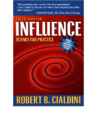
do it, enabled us to make significant changes. His work has enabled us to gain significant competitive differentiation and advantage" -LAURENCE HOF, Vice President, Relationship Consulting, Advanta Corporation "This will help executives make better decisions and use their influence wisely ... Robert Cialdini has had a greater impact on my thinking on this topic than any other scientist." -CHARLES T. MUNGER, Vice Chairman, Berkshire Hathaway, Inc. If you're wondering why of Latin America, the Far East, and Central Europe. you should buy this new edition of Influence: o More neuroscience evidence of how the influence process works is inte-
 annaabi.ee