Leidsid 33 sarnast õppematerjali, mis on seotud failiga "Conditional sentences". Need materjalid aitavad sul teemat sügavamalt mõista.
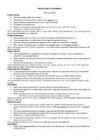
condition, conditional, present, simple, sister, bare, infinitive, verb, oleviku, perfect, clause, olevikus, unless, lift, able, come, pealause, koma, continuous, could, might, today, söönud, sentences, tingiv, kõneviis, zero, drop, breaks, katki, gets, first, imperative, eitav, jaatav, doesn, gives, hüpotees, komaga, playing, chance, winningConditionals Sentences with if are used to express possibilities. 0 Zero conditional If-clause present (past) simple Main clause present (past) simple Sometimes sentences with if express certainty rather than possibility. The zero conditional is used to talk about sth. that is always true (such as a scientific fact), or that was always true in the past. In this type of conditional we can use when instead of if. E.g., If/When you mix blue and red, you get purple. If/When you don't water flowers, they die. (present simple in both parts of the sentence) If/When I asked her to come with us, she always said no. (past simple in both parts of the sentence) 1 First conditional If-clause present simple; Main clause future tense (or: can, must, may, etc., + bare infinitive) Used to talk about the consequences of a possible action (a real or very probable situation in the
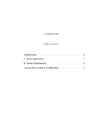
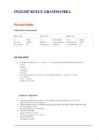
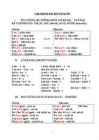
............................................................ 2 B. Unreal Conditionals ......................................................... 3 Linking words used in Conditionals ...................................... 4 Conditionals Conditions deal with imagined situations: some are possible, some are unlikely, some are impossible. A. Real Conditionals Real Conditionals refer to situations that are true, have happened, generally happen or are likely to happen. The First Conditional expresses a possible condition and a probable result: If I have time, I will help you. In the if-clause we use the Present Simple, in the main clause will + the verb. We can also use the Present Continuous or Perfect in the if-clause and a Modal Verb in the main clause. If we are having a party tomorrow, we shouldn’t go out tonight. If you have finished with the computer, you should turn it off. It can also be used in offers and suggestions, or warnings and threats.
7. Verb: The principal forms of the verbs: Verbil on 4 põhivormi: Regular verb Irregular verb 1. the base form Talk Speak üldoleviku tüvivorm 2. the past form/ -ed form Talked Spoke üldmineviku vorm 3. the past participle (-ed Talked Spoken participle) mineviku kesksõna 4. the present participle (- Talking Speaking ing participle) oleviku kesksõna The tenses: Expressing the future: Simple Perfect Continuous Perfect Continuous Present Base Have / has + to be + base+ ing has/ have been +s + pariticiple base+ -ing
INGLISE KEELE KORDAMINE TIME CLAUSES Present Simple · Permanent states, facts (Tom works..) · Repeated and habitual actions, routines (She usually goes..) · Laws of nature and general truths (The sun sets in the west) · Timetables and programmes · Sporting commentaries, rewiews (Beckham wins the ball, crosses and Owen scores) · Feelings and emotions (I love Tallinn..) TIME EXPRESSIONS USED WITH PRESENT SIMPLE: usually, often, always, every day/week etc, in the morning/evening
..), siis jäetakse by- fraas ära. Aktiivlause muutmine passiivlauseks: 1. Leiame sihitise ja muudame ta aluseks. 2. Määrame öeldise ajavormi ja asendame ta passiivi vastava ajaga 3. Leiame aluse ja muudame ta eessõna by abil sihitiseks. Example: Jane baked a cake.-active sentence A cake was baked by Jane.-passive sentence Exampple: My bike was stolen. Tence Subject Verb Object Simple Present Active: Rita writes a letter Passiv: A Letter is written by Rita Simple Past Active: Rita wrote a letter Passiv: a letter was written by Rita Present perfect Active: Rita has written a letter
3 TALLEGG 11 MIZDE 4 VESITERM 12 LADA 5 STOW 13 SCHWUNG 6 KALEV 14 MAIASMOKK 7 YAMAHA 15 ISKU 8 ESTRAVEL 2 Affirmative tense Use Signal Words Negative/Questions · action in the present taking always, Present Simple A: He speaks. place once, never or several every ..., N: He does not speak. normally, often, Q: Does he speak? times seldom, · facts sometimes,
Present tenses : 1) Present simple regular actions and routines especially with frequency(kordumine ) adverbs(määrsõna) N: Do you go to school by car every day ? I don't often watch TV. 2)Present continuousbe + verb + ing. Actions happening now N; Look! It's snowing. I'm meeting Jane tonight. You're always losing things. 3)keep + ingto describe habitual actions which may be irritating. N: my uncle keeps making silly jokes. Present perfect: 1) Present perfect simple: have/has + past participle. N: I've been here for ten minutes .The phone has rung ten times today. Look at this cheque,'I've won first prize. They have made a new star wars film. I've just got home. How long have you been here ? Have you ever been to Paris? It's the best book I've ever read. It's the first time I have ever been abroad. 2)Present perfect continious : have/has + been + ing. N:I've been living in this flat since 2000
Anglo Frisian » English 2. How to classify words into different word classes? (definition is that enough?, morphology, distribution and function tests); Grammatical categories for nominals, verbs, adjectives. "A set of words like dog, child, cat, man, bird where the individual words are mutually substitutable is known as a word class..." Definitions a) A noun is the name of a person, place or thing. b) A verb expresses an action, process or state. c) An adjective is a describing word which modifies a noun. "Although such definitions will identify many members of a word class, linguists generally agree that they need to be supplemented by formal tests. e.g. sincerity Sincerity can be frightening misery Lee is misery itself. Such miseries are uncommon Distribution: - a distribution test Kim is an engine driver
INGLISE KEEL Sisukord Sisukord.................................................................................................................................. 2 Ajavormid Tense vorms.......................................................................................................3 Lihtolevik The present simple..................................................................................... 3 Lihtminevik The past simple....................................................................................... 3 Lihttulevik The future simple...................................................................................... 3 Kestev olevik The present continuous......................................................................... 3 Kestev minevik The past continuous
INGLISE KEEL Sisukord Sisukord 2 Ajavormid Tense vorms 3 Lihtolevik The present simple 3 Lihtminevik The past simple 3 Lihttulevik The future simple 3 Kestev olevik The present continuous 3 Kestev minevik The past continuous 4 Kestev tulevik The future conrinuous 4 Täisminevik The present perfect 4 Enneminevik The past perfect 4 Ennetulevik Future perfect 5 Üldminevik Past tense 5 Üldtulevik Future indefinite 5 Artiklid ja eessõnad 7
Exercises 1. Use the Present Simple of the verb be or have. ( 10 points ) Mary........blue eyes and blond hair, but her brother ........dark hair. He ........in his late twenties. He........married and........two sons. I........short, but my sister........tall. We........a dog and a cat. Our uncle........two dogs. They........brown. 2. Choose the correct item. ( 5 points ) e.g. The residents were made...D....their homes by the authorities. A leave B leaving C left D to leave 1) Ann is my best friend! We........each other for years A know B knew C knows D have known 2) Nicky........to San Francisco when the accident happened.
Golden Grammar rules 1. Don't use an with own. Sue needs her own room. (NOT Sue needs an own room.) I'd like a phone line of my own. (NOT ... an own phone line.) 2. Use or rather to correct yourself. She's German or rather, Austrian. (NOT She's German or better, Austrian.) I'll see you on Friday or rather, Saturday. 3. Use the simple present play(s), rain(s) etc to talk about habits and repeated actions. I play tennis every Saturday. (NOT I am playing tennis every Saturday.) It usually rains a lot in November. 4. Use will ..., not the present, for offers and promises. I'll cook you supper this evening. (NOT I cook you supper this evening.) I promise I'll phone you tomorrow. (NOT I promise I phone you tomorrow.) 5. Don't drop prepositions with passive verbs. I don't like to be shouted at. (NOT I don't like to be shouted
Reported speech is often also called indirect speech. When we use reported speech, we are usually talking about the past (because obviously the person who spoke originally spoke in the past). The verbs therefore usually have to be in the past too. For example: "I'm going to the cinema". He said he was going to the cinema. Basic tense chart The tenses generally move backwards in this way (the tense on the left changes to the tense on the right): present simple past simple I'm a teacher. He said he was a teacher past continuous. present continuous He said he was having lunch with his I'm having lunch with my parents. parents. past perfect simple
Future Forms Future Forms · 1) Future Simple will work · 2) Be going to am/is/are going to work · 3) Present Continuous am/is/are working · 4) Present Simple start(s) Future Forms · 5) Future Continuous will be working · 6) Future Perfect will have worked · 7) Future Perfect Continuous will have been working Future Simple · We do our morning exercises and think, "I think we will have a nice day " · Prediction (ennustused kõhutunde põhjal) · verbs think, believe, guess, expect, hope etc · expressions be sure, be afraid etc · adverbs probably, perhaps, certainly Future Simple · You see your little brother carrying a very heavy suitcase and you think, "I will help him carry the suitcase." · on-the-spot decision (hetkeotsused)
I see that man who you are pointing at. · Üldist, kogu aeg toimuvat või korduvat tegevust, pole oluline, kas tegevus toimub rääkimise hetkel. Teachers teach in schools. He usually goes to gym on Monday. · Tegevust mingil ajal. I go to school at 8 o´clock. You have to pay taxes once a month. · Kõigile tuntud fakte. Life passes by quickly. Present Continuous Kestva oleviku moodustamine Jaatav vorm Eitav vorm Küsiv vorm I am speaking I am not speaking Am I speaking? He/she/it is going He/she/it is not going Is he/she/it going? We/you/they are making We/you/they are not making Are we/you/they making? NB! ERANDID!
All rights reserved. No part of this book may be reproduced in any form or by any means, electronic or mechanical, including photocopying, recording, or by any information storage and retrieval system, without the written permission of the publisher. ISBN 1-59905-201-6 Printed in the United States of America 13 12 11 10 09 08 07 9 8 7 6 5 4 3 2 1 Introduction Grammar is a very old field of study. Did you know that the sentence was first divided into subject and verb by Plato, the famed philosopher from ancient Greece? That was about 2,400 years ago! Ever since then, students all over the world have found it worthwhile to study the structure of words and sentences. Why? Because skill in speaking and writing is the hallmark of all educated people. Lesson by lesson, this book provides basic instruction in the eight parts of speech--nouns, pronouns, verbs, adjectives, adverbs, prepositions, conjunctions, and
We can report people's words by using direct speech or direct speech reported speech. speech `I'm tired!', Helen said. Helen said (that) she was tired. The main verb of the sentence is usually past ( Tom said that... / I told her that...) and the rest of the sentence is usually past too. Sequence of tenses if the verb in the main sentence is in the past tense the other verbs are usually in one of the past tense too. Present Simple Past Simple I'm a teacher. He said (that) he was a teacher Present Progressive Past Progressive I'm having lunch with my He said (that) he was having parents. lunch with his parents. Past Simple Past Perfect He said (that) he had bought a I bought a new car. new car.
.............................................................................................................................................. 13 Ajavormid Present simple (The earth goes round the sun) Reeglid, absoluutsed tõed Rutiin ja harjumused Püsivad situatsioonid või olukorrad Tabelid, ajagraafikud Present continuous (She is driving to work) Käsil olev tegevus Ajutine tegevus; pooleli olev Ettekorraldatud tegevus tulevikus Ärritus Present perfect (He has lost his key) Sündmus minevikus, tagajärg olevikus Üksik või korduv tegevus, mille aeg ei ole oluline (I have been in the USA)
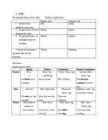
Moved to Cali 2005 Was Born Traveled to Europe Husband 1978 School graduates @ Oxford 1999 Started Got married School 1983 2008 2 The Six English Verb Tenses Three Simple Tenses Simple continuous Present You walk. You are walking I run. I am running. Past You Walked You were walking. I ran. I was running. Future You will walk. You will be walking. I will run. I will be running. Three Perfect Tenses Perfect continuous
Use the ese forms to mean that when what you are talking about is near the person you are addressing. Use the aquel forms when what you are talking about is far from both you and the person you are addressing. Esto and eso are the neuter forms of this and that. They can be used in general and abstract ways. Demonstrative adjectives (listed above) are used before a noun; if you want to use the demonstrative pronouns, which are used before a verb, add an accent on all of the first e's: éste, ésta, éstos, éstas, ése, ésa, ésos, ésas, aquél, aquélla, aquéllos, aquéllas. 5. Subject Pronouns nosotros / noh-soh-trohs / yo yoh I we nosotras noh-soh-trahs
VÕIMALIKEST SÜNDMUSTEST JA OLUKORDADEST JA NENDE TAGAJÄRGEDEST. If _________________, ______________. ___________________ if _____________. ! alati ei pruugi IF-i lauses olla! 2 4 conditionals: Zero cond. käibetõed, sagedased sündmused First cond. üsna tõenäolised sündmused Second cond. ebatõenäolised sündm. Third cond. miski, mis oleks võinud minevikus toimuda, aga ei toimunud. if-clause main clause 0 present simple + present simple 1 present simple + will future 2 past simple + would (could, might) ja I.pv. 3 past perfect + would (could,...) ja present perfect VII. TAG QUESTIONS. ____________main clause_____ , ___tag ___ . Positive verbs turn to negative and negative verbs change to positive!!! Names change to pronouns! EXAMPLES: You are going to Spain, aren´t you? She isn´t pretty, is she? It is a nice day, isn´t it? I am seeing you tomorrow, aren´t I
.................................................................. 6 Expressing possibility/probability......................................... 7 Asking about possibilities ..................................................... 7 Infinitives ............................................................................. 8 Introduction Modal Verbs are can, could, may, might, must, will, would, shall, should, ought to. They are known as modal auxiliary verbs because they ‘help’ another verb, i.e. they are always used with another verb in its base form. e.g. I can swim. Do you think I should go? Characteristics of Modal Verbs • There is no -s in the third person singular: She can ski. He must be tired. It might rain. • They are used to form questions and negatives: Shall we go for a walk? What should I do? He can’t dance. You mustn’t tell lies! • Modal auxiliary verbs don’t usually have past forms. Other expressions are
Tests Superstar 1 Luke Prodromou Test 1 Name____________________ Class_______ Use your English 1 Complete these sentences using the correct form (present simple or present continuous) of the verb in brackets. _ 1 She is in a band and she _________________________________ (record) a CD at the moment. _ 2 She is an actress and often _________________________________ (appear) on television. _ 3 At the moment she _________________________________ (have) a rest because she is tired. _ 4 Mike is a doctor and he _________________________________ (live) in Manchester. _ 5 I _________________________________ (start) work at 8.30 every morning.
1. Active/Passive Active - the professor teaches the students. Passive - The students are taught by the professor 2. Present Simple [VERB] + s/es in third person. Tegevus on korduv või tavapärane. You speak English. I play tennis. Cats like milk. The train leaves tonight at 6 PM. I am here now. Active= Once a week, Tom cleans the car. Passive= Once a week, the car is cleaned by Tom. 3. Present Continuous [am/is/are + present participle]. Tegevus toimub/ei toimu praegusel hetkel. You are watching TV. You are learning English now. I am studying to become a doctor. I am meeting some friends after work. Active= Right now, Tom is writing the letter. Passive= Right now, the letter is being written by Tom. 4. Past Simple [VERB+ed] or irregular verbs. Tegevus algas/lõppes minevikus täpsel ajal. . You called Debbie. I saw a movie yesterday. I finished work, walked to the beach, and found a nice place to swim
on Christmas Day (but at Christmas) We use at in these expressions: at night - at Christmas - at the moment / at present - at the same time - at weekends - at the age of... IN DURING
AJAD Simple Present: (olevik. Kui midagi toimub iga päev. every day.) EXAMPLES: I play tennis. She does not play tennis. The train leaves every morning at 8 am. The train does not leave at 9am. She always forgets her purse. (Ta alati unustab oma koti) He never forgets his wallet. Every twelve months, the Earth circles the sun. The sun does not circle the Earth. Past Simple: (midagi on tehtud. Tegusõna tuleb panna minevikku ehk II põhivormi. Seda aega tuleb kasutada siis, kui lause väljendab tegevust, mis minevikus tehti ja ka ära lõpetati!) EXAMPLES: I saw a movie yesterday. (Ma nägin eile filmi. Nägin filmi lõpuni.) I didn't see a movie yesterday. Last year, I traveled to Japan. (Sõitsin Jaapanini välja, mitte ei jäänud reisi peal kuhugi toppama) Last year, I didn't travel to Japan. She washed her car. (Ta pesi auto ära
Indirect force 168 Summary 170 Questions 171 Further reading 171 Part IV: The dark side 173 14 Metaphor 175 Overview 175 A philosophical bias 175 The issues, and two simple theories 176 Davidson's causal theory 177 The Naive Simile Theory 179 The Figurative Simile Theory 180 The Pragmatic Theory 183 Metaphor as analogical 187 Summary 189 Questions 190 Further reading 190
kaudses kõnes 4.2b Kestev minevik Kasutame: et rääkida asjades, mis on minevikus kestvad. They were walking along the bank of a river. et rääkida sündmusest, mis oli kestev, kui teine sündmus aset leidis They were driving down the road when a dog ran in front of the car. et rääkida tegevustest, mis leidsid aset samal ajal minevikus While I was cooking lunch, Gina was washing the floor. 4.2c Past perfect simple (Had+past participle) Kasutame et rääkida sündmustest, mis leidsid aset enne, kui teine mineviku vorm When I saw her, I realised I had met her before kaudses kõnes 4.2c Kestev täisminevik Kasutame: et rääkida tegevusest, mis kestsid kuni nimetatud sündmuseni minevikus I had been walking for three hours when I came to a small village. kaudses kõnes UNIT 5 5.1 Time expressions .
3 The wooden floor had rotted. Challenge! 4 The little boy was sobbing and Transcript Students' own answers pointing to his sister's ice cream. 5 The thief grabbed my bag and ran The photos are connected with the 1B Past and perfect tenses off. topic of school. Both photos show page 4 6 He dropped a leaf into the water students in class. In the first photo I imagine that 1 1 ate and watched it drift under the
Windows are not made of wood. Simple Present · · New York is a small city. It is not important that this fact is untrue. [VERB] + s/es in third person USE 3 Scheduled Events in the Near Examples: Future · You speak English. · Do you speak English?
1 blooded 6 action 2 hearted 10 undermining Challenge! Students' own answers 11 sympathies 2 1 time-consuming 12 verdict 2E Narrative tenses page 16 2 long-lasting 3 light-hearted 2 That he was responsible not only for 1 1 past perfect continuous 4 absent-minded his family but also to wider society. 2 past simple 5 wide-eyed 3 1 set 7 on 3 past continuous 6 fair-skinned 2 tells 8 on 4 future in the past 3 made 9 for 5 past perfect
SUBTRACTING FAT BASICS The Slow-Carb Diet I: How to Lose 20 Pounds in 30 Days Without Exercise The Slow-Carb Diet II: The Finer Points and Common Questions Damage Control: Preventing Fat Gain When You Binge The Four Horsemen of Fat-Loss: PAGG ADVANCED Ice Age: Mastering Temperature to Manipulate Weight The Glucose Switch: Beautiful Number 100 The Last Mile: Losing the Final 510 Pounds ADDING MUSCLE Building the Perfect Posterior (or Losing 100+ Pounds) Six-Minute Abs: Two Exercises That Actually Work From Geek to Freak: How to Gain 34 Pounds in 28 Days Occam's Protocol I: A Minimalist Approach to Mass Occam's Protocol II: The Finer Points IMPROVING SEX The 15-Minute Female Orgasm--Part Un The 15-Minute Female Orgasm--Part Deux Sex Machine I: Adventures in Tripling Testosterone Sex Machine I: Adventures in Tripling Testosterone Happy Endings and Doubling Sperm Count
f) Is his new job easier than the one he had in London? g) How does the writer feel about his new situation? Informal (friendly) letters are normally written to relatives, friends or other people we know very well. A good informal letter should be divided into paragraphs. Each paragraph should deal with one aspect of the subject and start with a topic sentence which gives the main idea of the paragraph. Tenses Present Perfect and Past Simple are often used in letters giving news. The Present Perfect is used to refer to recent activities and the Past Simple to refer to activities which happened at a stated time in the past. TASK 7 Read the following letter and correct the mistakes. Write S for spelling, P for punctuation, WO for word order, G for grammar or WW for wrong word. Dear Jenny , How are you ? I hope that you're very well. I've got so many to tell you that I don't know where to begin
 annaabi.ee