Leidsid 33 sarnast õppematerjali, mis on seotud failiga "Choctaw". Need materjalid aitavad sul teemat sügavamalt mõista.
choctaw, language, game, tradition, dress, games, disk, player, traditional, known, practice, could, throw, other, spirit, dresses, native, states, influences, spain, france, england, rapid, developing, farming, fell, favor, little, brother, stone, inches, length, substitution, thrown, goal, foot, hundred, feet, wooden, apart, miles, object, strikeand take her out, but they were always chaperoned. A few days before the wedding, the young man gave his fiancée a wedding basket with lacework (handkerchiefs, mantilla, fan), a cashmere shawl, gloves, and jewelry. She could not wear the jewelry before the wedding, nor could she leave the house for three days before the wedding. 4 The Creoles liked to have weddings on Mondays or Tuesdays in Saint Louie Cathedral in New Orleans in the late afternoon. The bride wore a silk dress with pearls and lace. The veil was held in place with a crown of orange blossoms. The bride carried the same flowers in her bouquet. Later she left the bouquet in the church, put it on a relative's grave, or sent it to the convent where she studied. After the ceremony the members of the family signed the register. The guests then went to the bride's home for the banquet. The bride cut the cake and gave pieces of it to single girls to put under their pillows
Inuit Culture, Traditions, and History Traditional Inuit way of life was influenced by the harsh climate and stark landscapes of the Arctic tundra from beliefs inspired by stories of the aurora to practicalities like homes made of snow. Inuit invented tools, gear, and methods to help them survive in this environment. Read on to learn more about traditional Inuit ways of life, and how Inuit culture has been changed over the past century. Geography Inuit communities are found in the Arctic, in the Northwest Territories, Labrador and Quebec in Canada, above tree line in Alaska (where people are called the Inupiat and Yupik), and in Russia (where people are called the Yupik people). In some areas, Inuit people are called "Eskimos" however many Inuit find this term offensive. The word "Inuit" means "the people" in the Inuktitut language. Inuit Homes
Conclusion – page 10-11 Resources – page 11 Appendix – page 11-14 2 Introduction I selected this theme because it was the most interesting one for me. Aborigines have interested me for a long time now so doing this essay is really fun for me. Australian Aboriginal culture is one of the world's longest surviving cultures. Australian Aborigines, also known as Indigenous Australians , are the native people of Australia . Many of them suffered when white people from Britain arrived in Australia, because of disease, the loss of their hunting lands, and unfair laws. Australian Aborigines are those people regarded as indigenous to the Australian continent. In the High Court of Australia, Australian Aborigines have been specifically identified as a group of
Tallinn English College Topic The United States of America Tallinn 2007 1. Introduction The United States of America's territory is over 3.7 million square miles (over 9.6 million km²) and population more than 300 million people. The capital city is Washington D.C. Although the United States has no official language at the federal level, English is the de facto national language. English is the most common language for daily interaction among both native and non-native speakers. Spanish is the second language. The largest city is the New York City. The Government is Federal constitutional republic and the president is George W. Bush. 2. Geographical position The United States of America is located on the continent of North America. It has borders with two countries Mexico and Canada. There are also the Atlantic Ocean, the Pacific Ocean and the Gulf of Mexico surrounding the big country
Not Dimmesdale, not Reverend Arthur Dimmesdale. He beats himself up over it. Usually thats an analogy, but not this time. The rest of his life is a descent into madness brought on by constant selfinduced suffering, which is later more than self induced when Chllingworth figures it out. Dimmesdale locks himself in a closet beating himself relentlessly with chains and a whip. He also cuts the letter "A" into his skin like how Hester has to wear it on her dress. As if this wasn't enough he also goes on near lifethreatening fasts. To top it all off, his inner conflict manifests itself into the outside world. This happens when he develops a heart condition and which causes him to clutch his chest very often. These are all examples of his pennance, but it still is not enough. Dimmesdale tries many times to tell others of his sin but always falls just short. He tries to tell the people at his church that he is a sinner like them
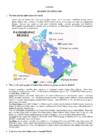
Indians in everyday conversation. They are still legally categorized by the Canadian Government under the Indian Act as Status Indians. Those who have lost their legal status are called Non-Status Indians. Prime Minister Pierre Trudeau tried to get rid of the Indian Act, but First Nations political groups insisted on keeping it, because it defines their special status. The Inuit are the people who originally lived in the Arctic. Their language is Inuktitut, but it has several dialects the differ considerably from place to place. The Métis, are the group of people who resulted from the mixing of European and Native men and women. The Métis developed a unique culture that included elements of both European and Native ways and artifacts (clothes, tools, means of travel, etc.). They pride themselves on their distinctiveness from both the cultures from which they are descended. 3
through the Gaspe Peninsula and the Atlantic provinces, creating rolling hills indented by river valleys. It also runs through parts of southern Quebec. The Appalachian mountains are an old range of mountains about 380 million years old. Notable mountains in the Appalachians include Mount JacquesCartier and Mount Carleton. Lakes Canada is known for having the most lakes in the world. There are about two million of them and they cover about 7.6% of its land. The southern parts of Quebec and Ontario, in the section of the Great Lakes (bordered entirely by Ontario on the Canadian side) and St. Lawrence basin (often called St. Lawrence Lowlands), have many lakes. The Great Lakes in particular, are the largest fresh water bodies in the world. In order of size, they include: Lake
without it resorting to the African (Black)/Caucasian (white) relationship. When we decide to buy a house in a Caucasian neighbourhood, we blame the people for refusing to sell to us because of their 1 belief that we spend more time and money on visible luxurious and ultimately worthless items, than in maintaining our property, which to everyone but us is a major part of their investment and retirement and retirement portfolio. The blame game has become a permanent part of our lives to the exclusion of any other solution that could be more viable in solving our problems. It has become the most productive part of our lives, because without it the African cannot really point to much that they are in charge of producing. It is better to blame others than to confront the truth of our being responsible for whatever has happened to us as an African race.
History exam *Stonehenge - is a monument located in England. It is one of the most famous prehistoric sites in the world and is composed of earthworks surrounding a circular setting of large standing stones. The surrounding circular, earth bank and ditch, have been dated to about 3100 BC. Stonehenge was produced by a culture with no written language. Many aspects of Stonehenge remain subject to debate. There is little or no direct evidence for the construction techniques used by the Stonehenge builders. *The Celts in Britain and their legacy The Cets lived in Britain in The Iron Age. They were warring tribes who were battleful amongst themselves as well as inter-tribal war. They were not centrally governed. The Celts brought iron working, iron ploughs and metal swords,
Linguistics teach a vast number of core courses to junior students, both offering major courses to senior students in all the divisions of the faculty. The Department of Theory of Literature teaches literature as a type of art, focusing on the genesis, structure, classification, and functioning of literary works, on stylistics and versification, as well as on the methodology of literary criticism, a number of major courses being offered in these specialist areas. The Division of the Russian Language and Literature unites the Department of the Russian Language, the Department of Russian Literature, the Department of Russian Literature of XX century, and the Department of Russian Folklore. The core curriculum includes courses in the history of Russian literature (from Kievan Rus times to the present) and folklore, modern Russian , Old Slavonic, the history of the Russian language and Russian dialectology, etc.
codes and ciphers, "decipher" and "decode" served in both senses (and occasionally still do), and in quotations where they are used in the sense of solve, they are retained if they will not confuse. Sometimes cryptanalysis is called codebreaking; this includes solving ciphers. The original intelligible text that emerges from either decipherment or cryptanalysis is again called plaintext. Messages sent without encipherment are cleartext or in clear, though they are sometimes called in plain language. Cryptology is the science that embraces cryptography and cryptanalysis, but the term "cryptology" sometimes loosely designates the entire dual field of both rendering signals secure and extracting information from them. This broader field has grown to include many new areas; it encompasses, for example, means to deprive the enemy of information obtainable by studying the traffic patterns of radio messages, and means of obtaining information from radar emissions
Influence: In art and literature, Freud's theories influenced surrealism . Like psychoanalysis, surrealistic painting and writing explores the inner depths of the unconscious mind. Freudian ideas have provided subject matter for authors and artists. Critics often analyze art and literature in Freudian terms. 2. Literary Modernism and its sub-movements. The influence of Structuralism and psychoanalysis. Main characteristic features of Modernism. Denial of conventions, traditional structure, plot and presentation of character. The stream of consciousness. Allusiveness. Virginia Woolf's Modern Fiction as a theoretical platform for Modernism. Criticism of Realist literary method. Literary modernism: end of the 19th century-1920 (reached its height) and ended 1940s. A self- conscious break with traditional aesthetic forms. Rejecting the sentiment and discursiveness typical
I didn't suspect such a marked temperamental affinity between Irish and Rumanians. Also many details Á positive and negative, trivial and important Á remind me of Ireland forty years ago. The way women dress [. . .]; children's acceptance of parental discipline; the eager unsophistication of adolescents . . . And, most significantly, the brand-mark of centuries of oppression Á a half apologetic, half-defiant national inferiority complex. (Murphy, 1992, pp. 89Á90; italics mine)
3. The Roman conquest Julius Caesar's first raid was in 55 BC but the romans left. Ad 43- the Romans came to stay. The army established Roman rule in the south and SW of the country. The Romans started to introduce their laws to a new province of the Roman Empire and started to build good roads. Officials were appointed (governors, procurators to collect taxes, look after the estates and mines and se that the gold, silver, iron and lead were exported back to Rome). Introduced schools,a new language Latin, large farms (villas), baths. In AD 410 they had to leave . roman occupation lasted nearly 400 years. They left behind very little. Roman province of Britannia covered most of present-day England and Wales. 4. Latin influence on English *The influence of Latin is noticeable also in the names of European cities: the Latin noun colonia (settlement, colony) may be found in numerous place-names: Lincoln, Colchester, Cologne ; from
Britain. One of them, which is called association football, is played all over Europe. The other kind: rugby football is also very popular in New Zealand, France, and some other European countries. English boys play it at school, and in public parks. When they grow up, they play as members of important amateur teams or as a professional in teams competing in football ,,leagues". Professional football is as much a business as a sport. Rugby football was first played in 1823. In rugby every player is allowed to carry the ball. The ball is oval, not round. Each team contains 15 players. The oldest game of football in England is probably the football match which takes place at Ashburn on Shrove Tuesday every year. The game starts in the centre of the town, and the distance between two goals is two miles. The only rule is not to use motorcycles, cars and lorries in the game. In 1958 one team buried the ball. The other team didn't know and ran after them
The crops, farmers become pendent of banks. They turn into tenants, they share crops, in the end the bank dont give any more credit and take away the land. On the one hand the banks tried to help but at a very high price, the farmers don't understand at first, who is to blame at first. At the same time like a true naturalist, steinberg shows that banks and landovwners are also actually caught into system, so they dont have any choice, these are just the rules of the game. And ofcourse the whole pursuit of money and profit, men and banks become inhuman. Steinberg paints a picture of the growing anger of the people. For example produces such as coffe is burnt, people are starved but produces are burned to keep up the prices. Instead of givind the foood to the poor people they burn it. Peoples patience becomes to an end. They are mostly illiterate. They come from oklahoma, where dust, bad crops, erosion, finally forced them to leave their land. Moreover
Britain History Pre-Norman Britain The Iberians brought their metal-working skills and the first real civilization to Britain in the third millennium B.C and were overrun by various Celtic invasions that began in the 8th century. The Celts introduced their tribal organization and an early form of agriculture before they were forced westward by the Roman invasion. Forms of Celtic language are still spoken in Britain. Romans (with Julius Caesar in the head of them) first tried to occupy Britain in 55 B.C., but there was a rebellion in Gaul so they had to leave to fight against it. Next time they came in 43 A.D. and their leader was Emperor Claudius. Romans brought a lot with them. Their brought paved roads, the sites of important cities, the seeds of Christianity, the Roman law, Roman baths, language and advanced civilization. They also built Hadrian's Wall in 122 A.D
Common Sense (1776), which sold over half a million copies, and American Crisis Papers (1776-1783). Thomas Jefferson was also an influential political writer. He made important contributions to the 85 essays of The Federalist papers, which effectively outlined the Am governmental system and the basic principles of republican theory. Jefferson also wrote the Declaration of Independence (1776), which identifies the moment in which the nation was born, and in stirring language explains the reasons for its birth. In the post-Revolution period the search began for a characteristic Am lit. The most important writers of the early 19th cent were Washington Irving (1783-1859), James Fennimore Cooper (1789-1851) and Edgar Allan Poe (1809-1849). Irving's first venture into lit was a collaboration with his brother and a friend on the Salmagundi Papers (1807-1808), a serial publication, later reissued as a book, which
Originally 105 colonists First home in an empty Indian village Concluded a peace treaty with neighbouring tribes Aided by natives +++ (how to grow corn etc) went there to find relogious freedom · Puritan ethics and ideology God has a preordained plan for everybody Following the Bible Hard work, spiritual health, living simply, being thrifty, and self-discipline will Leave to salvation Merriness was prohibited The chief duty of a man is to glorify God · Thanksgiving 2 Annual tradition in the U.S Fourth Thursday in Nov. Thanking God The first Thanksgiving was celebrated to thank God for helping the Pilgrims The first feast lasted 3 days Turkey and corn · Religious issues (freedom) People came to search for religious freedom, or not? Many different religions Puritans imposed their own beliefs Not lettin religion interfere politics No joy allowed · Quakers Religious society of friends Founded by George Fox They were treated as witches
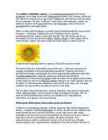
The stem has frozen, typically in an eastward orientation. The stem and leaves lose their green color. The wild sunflower typically does not turn toward the sun; its flowering heads may face many directions when mature. However, the leaves typically exhibit some heliotropism. Cultivation and uses A sunflower farm near Mysore, India. Sunflower heads solds as snacks in China. Sunflowers are native(pärit) to the Americas. The earliest known examples of a fully domesticated sunflower were found at the Olmec site of San Andrés dating some time before 2500 B.C.[1] The Incas used the sunflower as an image of their sun god. Gold images of the flower, as well as seeds, were taken back to Europe early in the 16th century. The Giant sunflower (Hlianthus giganteus) is native to Connecticut. They can grow to be between 3 and 12 feet tall. Their flower heads can be between 2 to 3 inches wide. They
In 2007 more than a hundred performers appeared at more than ten stages. The selection of music varies from jazz to rock and disco. It is a great Estonian party which cannot be found anywhere else in the world. Estonian Song Festival (Laulupidu) The AllEstonian Song Festival (Laulupidu) happens in Tallinn every five years, and gives a privileged insight into Estonian music and culture. Its aim is to bring together all the traditional songs and singers from across the country, as well as guest singers from other countries. The first AllEstonian Song Festival was held in 1869 in the town of Tartu , near the centre of Estonia. Around 870 singers took part, along with 76 musicians. Things have changed a lot, and today, the average festival gathering involves 25,000
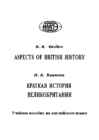
стран мира. 6 INTRODUCTION Aspects of British History presents a brief outline of the most significant milestones in the long and eventful history of Great Britain, such as the five successful invasions of the island, the birth of Parliament and transformation of an absolute monarchy into a constitutional monarchy, the origin of the English language, the rise and fall of the British Empire. The units contain an informative reading text on an important issue, preceded by preparatory discussion questions and followed by notes offering some additional information, and a vocabulary with relevant language notes. The main reading text is accompanied by comprehension, vocabulary and grammar exercises and discussion activities. Some of the units include reading passages.
Estonians from becoming Germans. Considering their relatively small number, the beneficiaries of the Landesstaat were additionally protected by their disproportionally large representation amongst the Russian elite during the following two centuries. Many noblemen of the Baltic provinces had remarkable military careers, the most brilliant being Michael Barclay de Tolly who excelled in the war against Napoleon. Highly-educated and with good language skills, the share of Baltic Germans in the Russian diplomatic corps was considerable; several became ministers and governors general. 3|Page Population and social structure Systematic pillaging by Russian forces at the time of the Northern War, and the 17101711 plague epidemia, caused a huge demographic catastrophe. It is thought that after the Northern War there left no more than 150 000170 000 Estonians
Landscape, Genre and Still Life. In late-C18, these were almost entirely neglected. Guy painted city life, Birch painted the seascape. The "Peale formula" was adhered to: objects along tableware against a dark background. Also, trompe-l'oeil persisted via Charles Willson's Peale's sons. Artists: Ralph Earl, Francis Guy, Thomas Birch, James Peale, Raphaelle Peale. Mid-C19 Landscape. In C19, landscape painting became dominant and provided many unexplored subjects. The tradition of landscape art emerged in the 1820s through the work of the so-called Hudson River School. The school of "luminism" is also distinguished, it is interested in the phenomenon of light. Exemplary artists. Thomas Cole (early-C19). He painted more in the Romantic mold than his contemporaries. He was inspired by the valleys of Catskill Mountains. He depicted lonely wilderness and apocalyptic visions. Albert Bierstadt (late-C19)
Landscape, Genre and Still Life. In late-C18, these were almost entirely neglected. Guy painted city life, Birch painted the seascape. The "Peale formula" was adhered to: objects along tableware against a dark background. Also, trompe-l'oeil persisted via Charles Willson's Peale's sons. Artists: Ralph Earl, Francis Guy, Thomas Birch, James Peale, Raphaelle Peale. Mid-C19 Landscape. In C19, landscape painting became dominant and provided many unexplored subjects. The tradition of landscape art emerged in the 1820s through the work of the so-called Hudson River School. The school of "luminism" is also distinguished, it is interested in the phenomenon of light. Exemplary artists. Thomas Cole (early-C19). He painted more in the Romantic mold than his contemporaries. He was inspired by the valleys of Catskill Mountains. He depicted lonely wilderness and apocalyptic visions. Albert Bierstadt (late-C19)
herself to avoid capture Hadrian´s wall A defensive barrier builtin 122 AD by Roman emperor Hadrian to guard the northern part of Britain against barbarian invaders Most imposing frontier of Roman Empire, controlling peoples mobements Building took several years, builders kept changing minds about the size 119 km lenght, 5m high, 3m deep The Picts, Caledonia The painted ones, northern tribes, part of the Scots Inhabited an area known as eastern and th western Scotland, until 10 c Mysteriously disappeared Constantly fought with Romans Teir country- Caledonia- Pictland The Scots, Hibernia Raiders, Celts living in Ireland/Hibernia Migrated to Scotland Raided Roman Britain After Kenneth McAlpin united Scotland all inhabitants became Scots The Venerable Bede A monk in the Northumbrian monastery of Jarrow
study the brain was case study. Often case studies provide researchers with a situation that they could never ethically reproduce in a laboratory. One of the most famous case studies of how brain damage can affect behavior is the study of Phineas Gage by Dr John Harlow. Gage was in a serious accident, where a metal pole pierced his skull and brain. Luckily he survived, losing vision in his left eye. He had no difficulty with speech or language, but the balance between his intellectual abilities and emotional control had been destroyed. He became highly agitated and irrelevant, often impatient and rude. Study to his frontal lobe provided evidence that the brain affects personality and social behaviors. Discuss ethical considerations related to research studies at the biological level of analysis. In case studies for example, the researcher often obtains deeply personal information, which is not usually shared with other people
actors, cinematographers etc; ten professional theatres, two film studios, and the state institution Estonian Concert Agency. The first Estonian book was published in 1525; in 1996 2,234 books and booklets were published in Estonian. The first film company began in 1920. A National Broadcasting Company was established in 1924, and Estonian Television in 1955. Unique in their dimensions and popularity, with up to 30,000 singers and audiences over 200,000, are the traditional Song Festivals, which began in Tartu in 1869: they vividly express the feeling of oneness within the nation. For further detailed information, please consult: Statistical Yearbook of Estonia 1997. Statistical Yearbook of Estonia 2000. Life in Estonia. Handbook 2005. Ambassador Collection. Statistical Yearbook of Estonia 2006. FOREWORD This book is first and foremost written by a composer. I am of the opinion that it is a
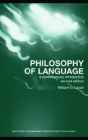
Philosophy of Language Philosophy of Language: a Contemporary Introduction introduces the student to the main issues and theories in twentieth and twenty-first-century phi- losophy of language, focusing specifically on linguistic phenomena. Topics are structured in four parts in the book. Part I, Reference and Referring, includes topics such as Russell's Theory of Descriptions, Donnellan's distinction, problems of anaphora, the description theory of proper names, Searle's cluster theory, and the causalhistorical theory. Part II, Theories of Meaning, surveys the competing theories of linguistic mean- ing and compares their various advantages and liabilities. Part III, Pragmatics
ancient people. Already in classical Latin the meaning was extended to denote the manner of expressing one's ideas in written or oral form. Jonathan Swift defined style as "proper words in proper places". In present day English the word "style" is used in about a dozen of principle meanings: 1. the characteristic manner in which a writer expresses his/her ideas (e.g. style of Byron) 2. the manner of expressing ideas, characteristic of a literary movement or period 3. the use of language typical of a literary genre (e.g. the style of a comedy, drama, novel). 4. the selective use of language that depends on spheres / areas of human activity (e.g. style of fiction, scientific prose, newspapers, business correspondence, etc.). STYLISTICS Stylistics is the study of style. The very term "stylistics" came in more common use in English only some 45 years ago.
12. Special literary vocabulary 13. Special colloquial vocabulary 14. Metre in English poetry. Modifications of metre ("Rhythm and Text") 15. Typically English stanzas ("Rhythm and Text") 16. Rhythm in poetry and in prose ("Rhythm and Text") Study independently 17. Varieties of language (I. Galperin "Stylistics") 18. Emotive prose (I. Galperin "Stylistics") 19. Scientific prose style (I. Galperin "Stylistics") 20. Language of the drama (I. Galperin "Stylistics") 21. Publicistic style (I. Galperin "Stylistics") 22. The style of official documents (I. Galperin "Stylistics") 23. Newspaper style (I
Teaduslik revolutsioon 15431600 I One of the most important developments in the western intellectual tradition was the Scientific Revolution. The Scientific Revolution was nothing less than a revolution in the way the individual perceives [ tajub ] the world. As such, this revolution was primarily an epistemological revolution it changed man's thought process. It was an intellectual revolution a revolution in human knowledge. Even more than Renaissance scholars who discovered man and Nature, the scientific revolutionaries attempted to understand and explain man and the natural world
After the 1910 revolution deposed the monarchy, the democratic but unstable Portuguese First Republic was established, itself being superseded by the "Estado Novo" authoritarian regime. Democracy was restored after the Portuguese Colonia l War and the Carnation Revolution in 1974. POPULATION As of 2011, the population of Portugal was 10,562,178, of which 547,733 live in Lisbon, the country's capital and largest city, located in the South, and 237,591 in Porto, also known as Oporto, the second-largest city, located in the North. The country is a democratic republic with a president (currently Aníbal Cavaco Silva) and prime minister (currently Pedro Passos Coelho). Since the 1990s, Portugal's economic development model has been slowly changing from one based on public consumption to one focused on exports, private investment, and development of the high-tech sector. The Portuguese currency is the euro () and the country's economy is in the eurozone. DEVELOPMENT
 annaabi.ee