Leidsid 33 sarnast õppematerjali, mis on seotud failiga "Capital punishment (essay)". Need materjalid aitavad sul teemat sügavamalt mõista.
there, death, person, penalty, even, shown, really, year, opinions, usually, based, ideal, ones, mercy, rights, fellow, members, particularly, punished, christians, firmly, good, regret, done, mature, such, them, other, hand, cannot, requires, know, gallup, poll, favour, results, mostly, same, years, although, choose, between, parole, divided, reasonsLaw-makers breaking the law: torture as a justified interrogation technique? 1 Introduction It was Jeremy Bentham who thought of a famous method to give ethics a rational basis. He was fed up with the penal laws where offenders met corporate punishment and together with Cesario Beccaria he stood up to torture, corporal punishment, and the death penalty. He resisted against irrational moral emotions as the instigation for ethical conduct, saying only reasonable grounds could justify the moral decisions of individuals and legislators. And now his theory of is the one that is known for justifying torture (Verplaetse, 2008). Since 9/11 and the following fight against terrorism it became clear that the Bush administration thought of torture as something justifiable while it goes against all possible agreed upon treaties and conventions
g. law of gravity Prescriptive law – prescribe how people ought to behave e.g. speed limits In all societies relations between people are regulated by prescriptive law; customs (informal rules of social and moral behaviour); rules we accept if we belong to a particular institution (religion, organization); laws imposed on people by a government Penalties for breaking the rules are different. For not following the customs there may not be a punishment, or a person may be criticized by the society; rules of a social institution tend to carry precise penalties but they are not enforceable by any political authority; however governments use a system of courts backed by the power of the police to enforce the laws they have made. The relations between people are regulated by a combination of all these rules. One of the ways to classify laws is to separate them into prescriprive and descriptive law. Descriptive laws simply describe how people usually behave
Introduction Body conclusion Lõikude vahele 1 rida, taandrida ei jäeta! Argumendid millegi poolt, argumendid millegi vastu. Väldime I-vormi, vaid kasutame passive-vormi. Lõhikesi vorme ei kasutata! (don't) 150 sõna Teema "should mery-killing be punished?" HOMEWORK Terms to explain: Nation - a country, especially when thought of as a large group of people living in one area with their own government, language, traditions, etc: Stranger someone whom you do not know Citizen - a person who is a member of a particular country and who has rights and obligations because of being born there or because of being given them Penalty - a punishment for doing something that is against a law Government - the group of people who officially control a country System of courts - a set of connected positions which operate together to ensure ... ? To commit a crime to do sth that is forbidden by law Corruption - illegal, immoral or dishonest behaviour, especially by people in positions of
descriptive law (kirjeldav õigus) - laws which simply describe how people or even natural phenomenas usually behave nation (riik) - country with its own goverment citizen (kodanik) - person native of a country; realationship between country and a person stranger (välismaalne) - person who is unfamiliar, from another country penalty (karistus) - punishment fixed by law, as for a crime or from any soical groups goverment (valitsus) - organization which controlls a stre or community System of Courts (kohtusüsteem) - organization applying law in the name of states to commit a crime (kuritegu läbi viima) - breaking a law, usually given out by the goverment fine (trahv) - certain sum of money person pays for breaking a law
Public International Law is a system of law, different from domestic law. Why is this system unique? Usually law regulates relations between people, people and the state etc, PIL regulates relations between states. Thats why PIL is important for international relation students. PIL influences the life of everybody, it doesn't regulate people directly but indirectly (through the decisions of the states), because it's everywhere. It's like air. E.g. when you want to send a letter to Brazil, you put a stamp from your own country and send it from your post office and the letter gets delivered
Capital punishment should be abolished Capital punishment is a form of punishment where a person's life is taken. Capital punishment has been abolished in Estonia since the year 1998, but the last man was executed in 1991. One of the reasons for not abolishing capital punishment are that a life long sentence is not as effective as execution, and that the death penalty affirms the right to life by punishing those who violate it in the most serious form. For example: death penalty should exist for serial killers. Another reason is that the criminals who would have been executed are now the country's responsibility and they use taxpayers' money. On the other hand, capital punishment is very inhumane. After the execution new evidence may appear and the criminal might turn out to be innocent but there is nothing to do
For and against capital punishment Capital punishment as death penalty is the killing of a person by judical process for retribution and incapacitation. And it has advantages and disadvantages. The main advantage of capital punishment is that it permanently removes the worst criminals from society and should prove much safer for the rest of us. It is self- evident that dead criminals cannot commit any further crimes, either within prison or after escaping or being released from it. Another advantage of capital punishment is that country can have minor costs in prison
Capital Punishment Should (not) Be Abolished Capital punishment or the death penalty is the killing of the person as the punishment for offence. To get the capital punishment, you need to do a very serious crime, like homicide, or even more serious than that. The pros of a capital punishment are that if the person gets that punishment, he or she will never get a chance to do something that cruel again. Sometimes the criminals, who get a prison sentence, do something illegal again, after that punishment. Second pro is that it's cheaper for the country to kill the person, than to pay for his/her food and clothes for the rest of his/her life in the prison. Although the killing of the person also needs money, it's still way cheaper than to pay for at least 40 years for all the life needs in prison.
/ wicce f.) is a practitioner of witchcraft. Historically, it was widely believed that witchcraft involved the use of these powers to inflict harm upon members of a community or their property, and that all witches were in league with the devil. Since the mid 20th century, the term witchcraft has sometimes been used to distinguish between bad witchcraft and good witchcraft, with the latter often involving healing. Human misfortune was often blamed on a supernatural entity or a known person in the community. Reasons for accusations of witchcraft fall into four general categories: · A person was caught in the act of positive or negative sorcery · A well-meaning sorcerer or healer lost their clients' or the authorities' trust · A person did nothing more than gain the enmity of their neighbours · A person was reputed to be a witch and surrounded with an aura of witch-beliefs
For and against capital punishment If one commits a murder or more, robbes a bank in addition or does something more terrible than human kind could possibly put up, then one is sentenced to death. But everyone can put up a legal murder of a convict. Do people agree with killing a killer, which is nothing more than a publik murder itself? Death penalty is justified if one causes pain for many people. Pain is a strong feeling, something you will never forget if experienced. Haunting nightmeres from the depths from the worst memories will probably never leave from victims dreams. In that case a capital punishment is and should be the right thing to do, to make the others feel safe again. Death of a culprit may decrease the pain, but will never make it go away? It is always
Capital punishment Capital punishment is the killing of a person by judicial process as a punishment for an great offence. It has been used in almost every part of the globe. There is an international organisation called Amnesty International who are fighting for human rights. Thanks for them there are many countries who abolished it. But is it right or should capital punishment exist? Firstly I belive capital punishment should exist because if you gonna take somebody's life it is only fair when you pay for this with your own life. Many people are thinking how cruel it is for a criminal but we should also think of the families that are broken apart because of the merciless acts of these criminals. Secondly it is too expensive to hold prisoners who have lifelong punishment
Unlike earlier hemingway heroes Jordan is an intellectual. Jordan is against suicide, which is major theme in the novel, because Jordan's father commited suicide. Falls in love with Maria, daughter of republican mayor. Three days of love bring him back to life. Maria was raped by facists and her father was killed by facists, disturbed girl. Secondary characters are rememorable. Men and women act differently to war. Men are carried away by war propaganda, women are shown to be wised and appreciate life more than political parties. Men think on taking sides but women value life more. Jordan is an idealist. He is willing to give his life for this cause. But Maria's first loyalty is to her lover, jordan. She places love above war, politics. Pablo is another type, he is a moral coward, he is a defeatist, who wants to avoid personal danger and wants to save his life, he is mean and betrays his country men
Harold McMillan articulated his now famous “winds of change” sweeping Africa. We had high hopes for Africa, for the Black race, that the insidious imposition of foreign rule on us, the looting of Africa’s natural resources by our colonial masters accorded us would be things of history. That is more than forty years ago. Unfortunately, the promise of independence has not been fulfilled. Today, Africa has become more desolate; there is more starvation, diseases and non-provision of essential services than when we got our independence. There are all kinds of wars in Africa than the rest of world put together. The majority of so-called Africans leaders want to stay in power until the day their bodies are put in the grave. Through buffoonery, utter mismanagement and downright stealing of the wealth of the masses, these leaders have so impoverished Africa that we are now nothing but a beggar continent. We beg for
Capital Punishment Should be Abolished Evidence suggests that the death penalty does not deter people from committing crimes. It is a cruel and cold blooded form of punishment and there have been instances where innocent people were sentenced to death and later found to be innocent. Why is it wrong? Capital punishment is a barbarous survival from a less enlightened and refined age; it is incongruous and incompatible with our present standard of civilization and humanity. It has been abolished by many states and countries, and we must look forward to the day when all the governments will follow this. It's a murder. The first question that comes to mind is, is it ethically acceptable to kill someone
relates to American Revolution on the one hand and the European Enlightenment on the other. Influenced by the scientific revolution of the 17th century and the humanist period during the Renaissance, the Enlightenment took scientific reasoning and applied it to human nature, society, and religion. American Enlightenment a gradual but powerful awakening that established the ideals of democracy, liberty, and religious tolerance in the people of America. If there were just one development that directly caused the American Revolution and uplifted the intellectual culture of the continent while it was only a British colony, it would be the American Enlightenment. Broadly, the Enlightenment was an intellectual movement that changed the fundamental perspective of the masses, urging them to foster skepticism and apply scientific principles in matters of religion and morality. Its chief values were: Liberty, Democracy, Republicanism, Religious Tolerance
Introduction – page 3 History – page 3-4 Religion – page 4-7 Society - page 7-9 The British – page 9-10 Conclusion – page 10-11 Resources – page 11 Appendix – page 11-14 2 Introduction I selected this theme because it was the most interesting one for me. Aborigines have interested me for a long time now so doing this essay is really fun for me. Australian Aboriginal culture is one of the world's longest surviving cultures. Australian Aborigines, also known as Indigenous Australians , are the native people of Australia . Many of them suffered when white people from Britain arrived in Australia, because of disease, the loss of their hunting lands, and unfair laws. Australian Aborigines are those people regarded as indigenous to the Australian continent.
Crime & Punishment The fight between good and evil is as old as the humankind itself. Even in society there are always black sheep and these people are called 'criminals'. Although we are part of the EU and tend to be as humane as possible, we have to deal with the problem of growing numbers of people admitted to penitentiaries. One in all we have to dwelve into the mind of a criminal and find out what makes a felon tick. What forces an individual to commit crimes against others? Are we too humane and lenient? When looking for the reasons why people commit crimes I can only say what I believe to be
worthy individuals with rights of their own. 3 The UNCRC has been considered as one of the most innovative international treaties ever ratified. It laid the foundation for the potential change of attitude and perception of children as primarily objects of the adult world. The recognition of children by the UNCRC as respected individuals with rights of their own has given impetus to a significant field of academic study. Since then, there has been increasing sociological interest in children which has provided a new perspective around the idea of children as social actors, and that childhood is not a natural phenomenon but a social 4 construct. It is now recognised that childhood is a culturally constructed phenomenon arising from human interaction.5 However, the new knowledge of children as competent 1 Mark Drankeford and Jonathan Scourfield and Sally Holland, `Welsh Children`s Views on
Capital Punishment The adherents of the death penalty refer to public safety. Still, even though violent criminals are locked away from the society forever, there is also another possibility for the inmate to escape the full punishment. However proving whether one is guilty or not is a very complicated and time-consuming process. From an ethical perspective, the death penalty is, undoubtedly, a violation of human rights. Most death penalty critics charge that it is particularly barbaric when applied to mentally retarded people and juvenile delinquents. In this case, capital punishment looks like senseless cruelty. A number of states had already passed legislation adopted by the Supreme Court in June 2002 prohibiting such executions to this group of people. As for juvenile delinquents, we should admit their lack of maturity thus they may be less culpable than adults who commit crimes
Let us go to have lunch (invitation) What time is it? (question) Go away! (command) What is an Inference? An argument has one or more premises and one conclusion. The premises provide evidence, support or reasons to believe the conclusion. The conclusion is said to follow from the premises. The premises are said to imply the conclusions. The reasoning process expressed by an argument is called an Inference. For convenience, when arguments are presented in standard form, we usually list premises first. Then, the conclusion is listed after the premises. Premises → Inference → Conclusion What is logic? Birds have Wings Swans are Birds Therefore, Swans have Wings. This is a good argument, because the conclusion follows from the premises. Logically valid - good argument. Birds are animals Dogs are animals Therefore, dogs are birds. This is a bad argument, because the conclusion does not follow from the premises. Logic is the science of correct reasoning.
The Inner Choice 79 Growing Legs to Stand On 83 Standing Up for the Public Good 86 Defense 89 Stomach Signs 89 Heart-of-Hearts Signs 91 Special Vulnerabilities 93 Summary 95 Study Questions 96 CHAPTER 4 Social Proof: Truths Are Us 97 The Principle of Social Proof 99 People Power 99 After the Deluge 102 Cause of Death: Uncertain(ty) 109 A Scientific Approach 113 Devictimizing Yourself 115 Monkey Me, Monkey Do 117 Monkey Die 120 Monkey Island 128 Defense 131 Sabotage 132 Looking Up 135 Summary 138 Study Questions 139 CHAPTER 5 Liking: The Friendly Thief 141 Making Friends to Influence People 144 Why Do I Like You
Prior to this momentous event that heralds an evolutionary transformation in the life of plants, the planet had already been covered in vegetation for millions of years. The first flower probably did not survive for long, and flowers must have remained rare and isolated phenomena, since conditions were most likely not yet favorable for a widespread flowering to occur. One day, however, a critical threshold was reached, and suddenly there would have been an explosion of color and scent all over the planet – if a perceiving consciousness had been there to witness it. Much later, those delicate and fragrant beings we call flowers would come to play an essential part in the evolution of consciousness of another species. Humans would increasingly be drawn to and fascinated by them. As the consciousness of human beings developed, flowers were most likely the
Many people have contributed to my thinking and have been invisible guides as these chapters came to- gether. I would like to first thank my friend Mark Victor Hansen, who introduced me many years ago to Emmet Fox, perhaps the finest spiritual thinker of the twentieth century. Ernest Holmes, founder of Science of Mind, opened my eyes and heart to the incredible universe of potential contained within each person when they changed their thinking and changed their lives. Great spiritual teachers such as Charles Fillmore, Neville, Eric Butterworth, Wayne Dyer, and Roberto Assagioli have had a profound influence on my thinking. I would also like to thank those great practical thinkers on suc- cess who have had such a wonderful influence on me—and on the world—such as Napoleon Hill, Maxwell Maltz, Claude Bristol,
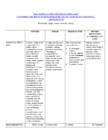
LAW WHAT DO THEY A notary public of the A judge presides over The prosecutor has Attorney at law or DO? common law is a a courtroom, hearing three main tasks: attorney-at-law, public officer evidence, making usually abbreviated in constituted by law to decisions on motions. to investigate everyday speech to serve the public in The judge is crimes, attorney, is the non-contentious responsible for to decide whether preferred term for a matters usually assuring the law is or not to instigate practising lawyer in
PSYCHOLOGY PART 1: CORE Biological level of analysis Outline principles that define the biological level of analysis. 1) Behavior can be innate, because it is genetically based. Evolution may play a key role in behavior. 2) Animals may be studied as a means of understanding human behavior. 3) There are biological correlates of behavior. Cognitions, emotions and behaviors are products of the anatomy and physiology of our nervous and endocrine system. Explain how principles of the biological level of analysis may be demonstrated in research. 1) Correlational studies: Study by Buss, who hypothesized that across cultures, men will prefer to marry younger women because of greater reproductive capacity and women will place greater value on a potential mate's earning
Maturita Solutions Advanced Workbook Key stand bananas and coffee! It's a bit 3 1 to 8 of Unit 1 uncanny really. Is it something she's 2 about 9 century passed on to me genetically, or is it 3 like 10 assumed / 1A Memories page 3 learned behaviour? Who knows? 4 of thought / 1 See exercise 2 2 5
Crime and the Law Task 1. Underline the most suitable word or phrase. a) Sally didn't realise that she had broken/countered/denied the law. b) The police have banned/cancelled/refused parking in this street. c) I must remember to get a/an agreement/licence/permission for my television. d) The president admitted that there had been a breakdown of law and crime/government/order. e) Jim's parents wouldn't agree/allow/let him go to the demonstration. f) Jake was arrested because he had entered the country falsely/illegally/wrongly. g) Talking to other students is against the law/orders/rules of the examination. h) The two men were arrested before they could commit/make/perform any more crimes. i) I had to take the company to court/justice/law to get the money they owed me.
Sittah(Six major books). Sunnis belive that the first four caliphs were rightful successors to Muhhamad. Also, Sunnis think that anyone who is righteous and just could be a caliph but they have to act like Koran and the Hadith says, the example of Muhhamad and give the people their rights. The Sunnis follow the Koran and then the Hadith. If legal matters are not found in the Koran or the Hadith, they usually follow madh'habs(schools of thought): Hanafi, Hanbali, Maliki and Shafi'i, established around the teachings of Abu Haifa, Ahmad bin Hanbal, Malik ibn Anas and al-Shaif'i respectively. All four accept the validity of the others and a Muslim can choose any one that he or she finds acceptable. The Salafi is an ultra-orthodox Islamic movement which takes the first generation of Muslims as exemplary models. The Shias are making the second biggest branch of Islam, constitute 10-20%. While the
Truancy in school individual responsibility Hello ladies and gentlemen, today I am here to talk to you about truancy in school and why is it an individual responsibility. Truancy in school is a very serious problem nowadays. Unfortunately many students have lost their motivation to study. According to the BBC 400,000 children were persistently absent from England's schools in the past year and missed about one month of school each. The effect that poor attendance at school can have on a child's education can be permanent and damaging but skipping should be child's own responsibility and it is not right to punish the parents for it. Students have many reasons why they are skipping school, mostly they do not like the teachers or the subjects that they are taught. They tend think that they won't need those subjects in their future life. Some children are just lazy and irresponsible
have led to many improvements, including the correction of some errors. Many of the comments I have received urged me to add a chapter or section on this or that additional topic. Those were good ideas, but space limitations forbade my adopting more than a handful of them; my apologies. 1 Introduction: meaning and reference Overview That certain kinds of marks and noises have meanings, and that we human beings grasp those meanings without even thinking about it, are very strik- ing facts. A philosophical theory of meaning should explain what it is for a string of marks or noises to be meaningful and, more particularly, what it is in virtue of which the string has the distinctive meaning it does. The theory should also explain how it is possible for human beings to produce and to understand meaningful utterances and to do that so effortlessly. A widespread idea about meaning is that words and more complex lin-
3. All stereotypes are true; the fact that you recognize a slur proves that it isn't. 4. Anything you're afraid is true is true. 5. Before most people get to the point of being able to tell their ass from a hole in the ground they're already assholes and it's too late. 6. Concentrating on something important can make you lose track of your soap opera. 7. Debunking the bunk is everyone's responsibility. 8. Don't ask me to pay for anyone else's mistakes. I make enough of my own. 9. Even those who possess real magic must beware of being misled by "magical thinking." 10. Everyone knows what shit tastes like. 11. Exclusive occupancy of a private room is a basic human right. 12. Fair compensation for genius is wealth. 13. God's not perfect, so it's a pretty good bet that you're not, either. 14. Good institutions help to overcome human moral inertia. 15. I am not one of your little friends. 16. If a dimension is anywhere it's everywhere. 17. If God's not crazy, why are you? 18
An analysis of the problem of Political Power Written by: Katre Kikkas Introduction It is said that in the political philosophy there are only two questions: ,,Who can have what?" and ,,Who will decide over it?". It is not exactly like that but it is quite close to the trough, to begin with. The first question includes material amenity's, and dividing rights and liberties.(Wolff, 1996) What is power? It is ability to influence others to do something they otherwise would not. Also, others can be affected with threats and force. (Kilp, 2010) Political power includes also right to force the others and to punish them if
There is still a place, where I can not do this. That place is unfortunately my home, what does not makes the homely feeling in me. When I was just a little girl, my mother died and everything in my life changed. My father separated me from my sister and brother. I had to go to live in his family and accept with a stepmother and their kids. To me was verboten to say my opinion about something. I knew only that, everyday there was a paper on my desk and there were jobs, what I had to do along this day. Sometimes they were too hard to me and I had to study late at night. In my opinion every person should feel them well and free at home. But with me it did not happened. What I am trying to say with that long story is, that if there is a freedom of speech, it is still limited with laws or from other humans. Limited freedom is understandable in state bust at home it still should be aloud. Talkeing about the school
 annaabi.ee