 50 punkti
Autor soovib selle materjali allalaadimise eest saada 50 punkti.
50 punkti
Autor soovib selle materjali allalaadimise eest saada 50 punkti.
 ~ 1 leht
Lehekülgede arv dokumendis
~ 1 leht
Lehekülgede arv dokumendis
 2010-12-16
Kuupäev, millal dokument üles laeti
2010-12-16
Kuupäev, millal dokument üles laeti
 18 laadimist
Kokku alla laetud
18 laadimist
Kokku alla laetud
 0 arvamust
Teiste kasutajate poolt lisatud kommentaarid
0 arvamust
Teiste kasutajate poolt lisatud kommentaarid
 Kätlin Lumiste
Õppematerjali autor
Kätlin Lumiste
Õppematerjali autor
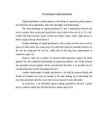
For and against capital punishment Capital punishment as death penalty is the killing of a person by judical process for retribution and incapacitation. And it has advantages and disadvantages. The main advantage of capital punishment is that it permanently removes the worst criminals from society and should prove much safer for the rest of us. It is self- evident that dead criminals cannot commit any further crimes, either within prison or after escaping or being released from it. Another advantage of capital punishment is that country can have minor costs in prison. In other words, the country may very well better spend our (limited) resources on the old, the young and the sick etc
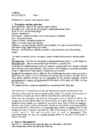
Law-makers breaking the law: torture as a justified interrogation technique? 1 Introduction It was Jeremy Bentham who thought of a famous method to give ethics a rational basis. He was fed up with the penal laws where offenders met corporate punishment and together with Cesario Beccaria he stood up to torture, corporal punishment, and the death penalty. He resisted against irrational moral emotions as the instigation for ethical conduct, saying only reasonable grounds could justify the moral decisions of individuals and legislators. And now his theory of is the one that is known for justifying torture (Verplaetse, 2008). Since 9/11 and the following fight against terrorism it became clear that the Bush administration thought of torture as something justifiable while it goes against all
TOPICS For the PRELIM Year 1 Put down 10-12 relevant terms and retell about: 1. Prescriptive and descriptive law Prescriptive law – prescribe how people ought to behave Descriptive law – describes the way people or natural phenomena behave Break the law – do something illegal Penalty – punishment Government – system by which a state or community is controlled Law – the system of rules System of courts – all judicial institutions Enforce – to make people obey the law Authority – a group of people with official responsibility for a particular area of activity /the moral or legal right or ability to control Prescribe – to tell someone what they must have or do, or to make a rule of something Impose
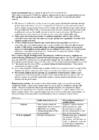
passive-vormi. Lõhikesi vorme ei kasutata! (don't) 150 sõna Teema "should mery-killing be punished?" HOMEWORK Terms to explain: Nation - a country, especially when thought of as a large group of people living in one area with their own government, language, traditions, etc: Stranger someone whom you do not know Citizen - a person who is a member of a particular country and who has rights and obligations because of being born there or because of being given them Penalty - a punishment for doing something that is against a law Government - the group of people who officially control a country System of courts - a set of connected positions which operate together to ensure ... ? To commit a crime to do sth that is forbidden by law Corruption - illegal, immoral or dishonest behaviour, especially by people in positions of power Fine (trahv) - an amount of money that has to be paid as a punishment for not obeying a rule or law
Only intergovernmental organizations are also subject of PIL, non-governmental organizations are not. There can be specific cases of PIL, e.g. nations fighting for their independence. These can be considered to be subjects of PIL. Also, some exceptions: International Committee of Red Cross, formerly it wasn't covered by PIL, but due to its unique status (covered by Geneva conventions etc), then it is a subject of PIL. PIL directly regulates private persons, e.g. punishment of international crimes (crimes against peace=crime of aggression, genocide, crimes against humanity, war crimes). This is if specific countries do not want to punish the criminals, specific international tribunals etc are created to do the job for them. Humanitarian doctrine if a certain country violates human rights very severely and if other attempts have failed to prevent and stop this, then war can be used as a method to stop this stuff.
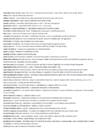
descriptive law (kirjeldav õigus) - laws which simply describe how people or even natural phenomenas usually behave nation (riik) - country with its own goverment citizen (kodanik) - person native of a country; realationship between country and a person stranger (välismaalne) - person who is unfamiliar, from another country penalty (karistus) - punishment fixed by law, as for a crime or from any soical groups goverment (valitsus) - organization which controlls a stre or community System of Courts (kohtusüsteem) - organization applying law in the name of states to commit a crime (kuritegu läbi viima) - breaking a law, usually given out by the goverment fine (trahv) - certain sum of money person pays for breaking a law corruption (korruptsioon) - dishonest or unethincal conduct by a person entrusted with a position of authority
9. Excess of jurisdiction - (jurisdiktsiooni ületamine) court's acting beyond the limits of its power 10. To conduct a preliminary inquiry (juurdlus) - (eeluurimise korraldamine) to enforce an initial questioning that occurs at the demand of an accused wherein a judge screens the proposed criminal charge against the available evidence; procedure before the trial 11. To discharge the case - type of sentence imposed by a court whereby no punishment is imposed 12. To pass a sentence – (karistust määrama) to officially say in a court of law what a criminal’s punishment will be Syn: Serve/pronounce a sentence 13. Summary offence - (väärtegu) a crime in some common law jurisdictions that can be proceeded against without discussion or a legal process, without the right to a jury trial and/or indictment 14. Indictable offence - (kuritegu) an offence which the government can opt to cause trial
They were replaced by a law that made it illegal to pretend to cast spells or tell fortunes. The last legal execution for witchcraft in Europe was in Switzerland in 1782. The Salem witch trials The witch hysteria The witch hysteria in Salem began in January 1692. It led to the deaths of more than 20. Altogether 19 people were executed by hanging. (In most of Europe witches were burned but in England and the North American colonies the punishment was hanging). Another man, 80 year old Giles Corey was pressed to death. He was accused of being a witch but before the trial could proceed he had to plead guilty or not guilty. Corey bravely refused to plead. To try and force him heavy weights were placed on him. The unfortunate man eventually died from this torture. (At one point his tongue was forced out of his mouth and the sheriff, George Corwin, pushed it back in with a cane).
 annaabi.ee






Kõik kommentaarid