You always decide which programme is the most exciting, valuable, informative or amusing and is worth seeing. Some people think that it is a waste of time watching TV. Besides, it leads, as they say, to poor health through rushed meals, lack of sleep, eyestrain. People begin to forget the art of conversation. They sit glued to the TV screen instead of visiting. As for me I prefer watching action movies in Nakhodka TV and on holidays I enjoy all Russian canals. My family prefers the news canals and serials. I often like listening music and watching clips on TV. My hobby is computing I think «Computer World program» is valuable for me. I try to know the latest models of modern computers in the world. To my mind it is very exiting. TV is the greatest invention of man.
The + adjective or + noun name etc Hilton Hotel National Theatre The Sahara Desert Atlantic Ocean These places usually have the: Hotels/restaurants/ pubs the Station Hotel, the Bombay Restaurant, the Red Lion(pub) Theatres/cinemas the Palace Theatre, the Odeon Cinema Museums/galleries the British Museum, the Tate Gallery Other buildings the Empire State Building, the Festival Hall, the White House Oceans/seas/canals the Indian Ocean, the Mediterranean Sea, the Suez Canal Newspapers the Washington Post, the Financial Times Organisations the European Union, the BBC Sometimes we leave out the noun: The Hilton (hotel), the Sahara (derest) Sometimes the name is only the + noun: The Vatican (in Rome), the Sun (British newspaper) Names with ......of...... usually have the. For example:
The Industrial Revolution. Agarian-põllumajandus. . The Industrial Revolution was the transition to new manufacturing processes that occurred in the period from 1760 to some time between 1820-1840. This transition included going from hand production methods to machines The transition also included the change from wood and other bio- fuels to coal. The Industrial revolution began in Britain and within a few decades spread to Western Europe and the United States. changed-steam power, which was used to power factories and transport and allowed for deeper mining.2) Improvement of iron making techniques allowing for vastly higher production levels. . The textile industry was transformed by new machines such as the Spinning Jenny - and factories, again allowing for much higher production at a lower cost. Creation of new and quicker transport networks thanks to first canals and then railways
A ‘NEW’ BEGINNING FOR THE POOR. • IN THE MIDDLE OF THE 19TH CENTURY MILLIONS OF BRITISH PEOPLE STARTED THEIR JOURNEY TO AMERICA FROM LIVERPOOL. • POTATO FAMINE IN 1845-1849: MANY IRISH PEOPLE LOST THEYR MAIN FOOD, THE POTATO CROP. • MANY IRISH PEOPLE PACKED THEIR THINGS AND LEFT TO LOOK FOR A BETTER LIFE IN AMERICA. HARDSHIPS ON THE ARRIVAL IN AMERICA. • MEDICAL EXAMINATION AT ELLIS ISLAND. • MEN-BUILDING BRIDGES, CANALS, OR RAILROADS. • WOMEN-MAIDS, COOKS, OR CARETAKERS. • ILLNESSES AND EARLY DEATH. • THEY HELPED EACH OHTER, GAINED POPULARITY, AND BECAME TRUE AMERICANS PROUD OF THEIR OWN NATIONAL TRADITIONS. NOWADAYS POPULATION • THE POPULATION OF AMERICA IS 308 745 538. (2010) • EVERY YEAR ABOUT 700 000 NEW SETTLERS IMMIGRANTE TO THE UNITED STATES. • BIGGIST NATIONAL GROUPS ARE: GERMAN – 58 MILLION,
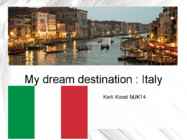
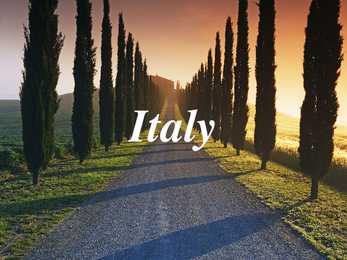
● Italy is apart of Europe ● The capital city is Rome ● The population is 60.92 million (2012) ● Official language is Italian What is Italy Known For? ● Many monuments ● Great tourist attractions ● Culture and Art ● Fine Food ( largest producer of wine) ● Fashion (Armani, Gucci, Versace) Famous Landmarks ● Leaning Tower of Pisa ● Canals of Venice ● Roman Colosseum ● Santa Maria del Fiore ● Duomo Church Leaning Tower of Pisa ● In Italian the Leaning Tower of Pisa is Torre Pendente Di Pisa. ● Located in the Piazza Dei Miracoli ● Freestanding bell tower ● Took 344 years to build, beginning in August 1173. ● Started to lean during construction because the foundation was built on a soft ground. Famous Foods
Agriculture is one the most important sektor, is now dwarfed by undusrty and services. Ireland in the decade up to 2006 than any ohter developed world economy. Ireland jooned in circulating the euro in 1. January 2002 along with 11 other EU nations. The Irish Transport System Provides a nationwide coordianted road and rail system of publik transport for goodis and passengers. It is also responsible for maintaining the canals, although they are no longer used for commercial transport. In Ireland is five main International airports. Motorists must draive on the left in Ireland. All speed limit signs in the republic hanged to the metric system in 2005. Culture is very multifarious. Singing is the favourite pastime in Ireland and traditional Celtic music is an important part of the Irish culture. Ireland is known to be a natin of scholars and there are many well-known authors, playwrights and poets
Inhabitants of Vatican have own radio and TV, currency and postage stamps. San Marino is the oldest republic in the world and it has less than 30 000 inhabitants. There are 14 volcanoes in Italy, four of which are active: Etna, Stromboli, Vulcano and Vesuvius. Etna is also the activiest volcano in the world. 60% of cultural world heritage is in the Italy Venice is a city in northeast Italy sited on a group of 118 small islands separated by canals and linked by bridges. Venice is renowned for the beauty of its setting, its architecture and its artworks. The city in its entirety is listed as a World Heritage Site, along with its lagoon. Italian chefs produce more than 350 different types of pasta. Every Italian eats on average 25 kg of pasta per a year. The Venice International Film Festival is the oldest international film festival in the world. The Carnival of Venice is an
booked in advance Pedicabs are a recent addition, being mostly used by tourists Airports London is the best served city by airports London has 6 airports (Heathrow, Gatwick, Stansted, Luton, London City and Biggin Hill) Airport system serves about 150 million people every year Water transport There are many boats and water taxis on the River Thames London has many beautiful canals, also navigatable with water taxis Cycling Cycling has become a popular way to travel in London It's cheap, often quicker and good for health Over one million Londoners own bicycles There are currently an estimated 480,000 cycle journeys each day in London
· names of: o cinemas (the Opera) o hoteles (the Hilton) o theaters (the Palladium) o museums (the Louvre), o newspapers/magazines (the European but: Newseek) o ships (the Titanic), o galleries (the Tate Gallery) o rivers (the Thames) o seas (the Black Sea) o groups of islands/states (the USA) o mountain ranges (the Alps) o deserts (the Negev Desert) o oceans o canals o names or nouns with ''of'' (the Queen of Spain) · musical intruments (the piano) · dances (the samba) · names of families (the Browns) · nationalities ending in sh, -ch or ese (the Welsh). Othe plural nationalities are used with or without ''the'' (the Australians or Australians) · titles (the King, the Professor but: King Philip III) · adjectives used as plural nouns (the rich, the poor) and the superlative degree of
from Liverpool. A great number of settlers were the Irish who left their country after the Irish Potato Famine on 1845-1849, when families lost their main food, the potato crop. During the journey, many people suffered from illnesses or died. When the boats arrived at Ellis island, new settlers often had to wait a medical examination. As many Irish immigrants were uneducated, the man worked at building bridges, canals and women became maids, cooks. Poor living conditions, lack of food and medical care led to illnesses and an early death. The population of the USA is more than 300 million. The biggest national groups today are of German ,Irish and English descent. About 30 millions African Americans live in the USA.They are the descendants of Africans brought to America as slaves in the 17th century. For them the USA is a kind of melting pot , where they have become Americans
lands, the USA; the West Indies ablished modifier): (South) Estonia, Tartu · Names of the countries, and towns with a * Expressions from North to South etc. characteristing / spacifying modifer: the Tartu of th 19th century * Names of streets, bridges, airports, parks, squares, buildings, railway stations, shops, · Names of rivers, channels / canals, seas, addresses: Fleet Street, Tower Bridge, oceans, streams, straits: the Danube; the Suez Kennedy Airport, Hyde Park, Trafalgar Canal; the Baltic Sea; the Pacific Ocean; the Square, Buckingham Palace, Victoria Station, Bering Strait French Boutique etc. · Names of points of the compass: the North etc. * Names of a single island or mountain / hill
This is only a general rule and there are exceptions. B/ Most other names (of places, buildings etc.) have names with the: These places usually have names with the: Hotels/restaurants/pubs = the Station Hotel, the Bombay Restaurant, the Red Lion (pub) theatres/cinemas =the Palace Theatre, the Odeon Cinema Museums/galleries = the British Museum, the Tate Gallery other buildings = the Empire State Building, the Festival Hall, the White House. Oceans/seas/canals =the Indian Ocean, the Mediterranean Sea, the Suez Canal also: Newspapers = the Washington Post, the Financial Times organisations = the European Community, the BBC (= the British Broadcasting Corporation) Sometimes we leave out the noun: the Hilton (Hotel), the Sahara (Desert) Sometimes the name is only the + noun: the Vatican (in Rome), the Sun (British newspaper) Names with ...of... usually have the. For example: the Bank of England/ the Tower of London/ the Museum of Modern Art
HOLLAND/ Neatherland · Holland has the highest museum density in the world, with almost 1000 museums. The Van Gogh Museum and the Kröller-Müller Museum of Holland house the largest Van Gogh collections in the world. · Hollanders usually have a bunch of flowers in their living rooms. · The landscape of Holland is dotted with windmills, which have become its hallmark. · The country has over 4,400 km of navigable rivers, canals and lakes. · The kapital of Neatherland is Amsterdam. There are no more bridges than any other city in the world. · Neatherland`s national flowers are tulips. LUKSEMBURG/ Luxembourg · Luxembourg is a small landlocked country, located in Western Europe · It is one of the smallest countries in Europe as well as the world. · Victor Hugo, the renowned French writer, stayed in Luxembourg in a picturesque town that lies close to the German border
Alpine climate in the south, with glaciers, fjords and lakes. The Pacific forms the country's entire western border, with a coastline that stretches over 6,435 kilometres. Chile expanded in the late 19th century, when it incorporated its northern and southern regions. Southern Chile is rich in forests and grazing lands and features a string of volcanoes and lakes. The southern coast is a labyrinth of fjords, inlets, canals, twisting peninsulas, and islands. Prior to the coming of the Spanish in the 16th century, northern Chile was under Inca rule while the indigenous Araucanians inhabited central and southern Chile. Although Chile declared its independence in 1810, decisive victory over the Spanish was not achieved until 1818. Currently, Chile is one of South America's most stable and prosperous nations. The national flower is the copihue (Chilean bellflower), which grows in the woods of southern Chile
Reported speech Can -> could Could -> had been able to May -> might Must -> had to Mustn't -> was/were not allowed to have to Had to -> had had to The Definite Article The is used before: · Nouns which unique · Names of cinemas, hotels, theatres, museums, newspapers/magazines, ships, institutions, galleries · Names of rivers, seas, groups of islands/states, mountain ranges, deserts, oceans, canals, and names or nouns with ,,of" · Musical instruments, dances · Names of families, nationalities ending in -sh, -ch or -ese, other plural nationalities are used with or without ,,the" · Titles , ,,The" is ommited before titles with proper names · Adjectives used as plural nouns and the superlative degree of adjectives/adverbs · Ülivõrre- the most beautiful · Seasons, beach, cinema, city, coast, country(side), earth, ground, jungle,
She works as a mechanic. 9. We use no article with continents, countries, regions, cities, streets, mountains, lakes and parks. Asia, Italy, California, Bristol, Main St., Mount Everest, Lake Superior, Central Park We use the if the country contains Kingdom, Republic, State, Union 10. We use the with plural names of people and places. The Smiths, The Netherlands, The United States, The Bahamas, The Alps (also The Caribbean) 11. We use the with oceans, seas, rivers and canals. The Atlantic Ocean, The Red Sea, The Nile, The Panama Canal 12. We use the with north, south, east and west to talk about the location of a place within another place, but no article to compare the location of two places. Greece is in the south of Europe. Spain is south of France. We use no article with northern, southern, eastern and western: Greece is in southern Europe. 13. We normally use the with buildings, except if the first word is the name of a place.
-in front of nationality words, e.g. the Canadians, the Japanese -with some adjectives when reffering to the group in general, e.g. the old, the rich, The poor, the sick, the unemployed. -with superlatives, e.g. It's the biggest cinema in London. -with names of newspapers, e.g. The Guardian, The Times, The Daily Mail -with countries, regions or groups of islands which are plural e.g. the USA, the Bahamas, the Middle East, The Netherlands -with names of oceans, seas, rivers and canals, e.g. the Atlantic Ocean, the River Danube, the Corinth Canal .(BUT NO LAKES). -with mountain ranges, e.g. the Andes, the Alps, the Himalayas, with areas e.g. the south of France, the west of England and with deserts e.g. the Sahara Desert, the Gobi desert. -with names of hotels, pubs, restaurants, museums, art galleries, cinemas and theatres, e.g. The Oriental Hotel, The Black Swan , the Prado, the Odeon ,the Piccadilly Theatre -with buildings and places containing the word of, e.g
They all sat in the sun. · Is used with superlative adjectives. Example: He was the cleverest man I ever knew. · Is used with the names of families. Example: the Browns · Is used with the names of newspapers, organisations, buildings, titles and art works. Examples: the United Nations, the Taj Mahal, the Queen of England, the Times, the Mona Lisa · Is used with the names of rivers, groups of islands,seas , mountain ranges, canals and oceans. Examples: the Suez Canal, the Pacific Ocean, the Alps, the Bahamas · Is used when countries include words such as States, Kingdom, Republic, Union , but there are some exceptions: the Netherlands, the Philippines, the Vatican Examples: the United Kingdom, the United States · Is used in geographical terms such as the Antartic/equator, the North/East/South/West Examples: the Middle East, the north of England
Plastic Ono Band had many various members, "Give peace a chance". 1 album for a film soundtrack, in 1976 "John Lennon/Plastic Ono Band", second solo album in 1971 "Imagine". In 1973 moved to California for several months. He has written songs for Ringo Starr and Mick Jagger. He was murdered in 1980. "Milk and Honey" is an album which was finished and published by Yoko Ono after John´s death. He got Grammy award in 1982. Andres: "The English Canal Network" Canals were built by Romans as irrigation canals. These are still in good condition. Aqueducts get boats over valleys, these are filled with water. There are also boat lifts like Falkirk Wheel in Scotland, stop locks, staircase locks which are built as steps and are very slow, tunnels. Tourists can have a trip on the boats and go bungee jumping from the aqueducts.
· In the 16th c. many Scots joined the Presbyterian church · James VI was the King of both countries, the crowns were united · In 1745, Bonnie Prince Charlie tried to seize the throne · The end of dreams of freedom for Scots · Major changes in the late 18th and 19th c. · Highland Clearances farmers were deprived of their land, filled with sheep instead · Fast development of coal mining, steel production and shipbuilding · Bridges, railways, canals · In 1950 the Nationalists stole the Stone of Scone from Westminster Abbey and took it back to Scotland · Important part of British Coronation since 13th c. · In 1979 the British Government decided to allow Scotland to establish a separate assembly · Surprisingly they didn't got the support of 40% of people in a referendum that was needed · In 1999 Scotland voted for its own separate parliament · The first Parliament in almost 300 years
Its western coast is washed by Pacific Ocean and its eastern coast by the Atlantic ocean and the Gulf of Mexico. The continental United States is bounded to the North by Canada and to the South by Mexico. There are two mountain ranges in the continental United States: the Appalachians in the east and the Rockies in the west. In the very middle of the continent is the Mississippi river. The five Great lakes, between the U.S.A. and Canada, are joined together by short rivers or canals. They are connected with the Atlantic Ocean by the St. Lawrence River, and with the Hudson River by a canal. In the west of the U.S.A. there is another big lake called the Great Salt Lake. Hawaii, a chain of islands in the Pacific Ocean, has a tropical climate. Alaska is separated from the continental US by Canada. The history of the USA began when England started creating colonies in the North America in the 1600s. The colonies became independent States and joined to
battle of Waterloo 1815 Admiral Nelson defeated the French in the battle of Trafalgar 1805 on the sea the flag ship called 'Victory' famous quote: 'every man of England must do his duty' Captain James Cook navigator explorer mapped many seaways and charted many countries Industrial revolution ( second half of the 18th c. ) new machines ( weaving ), factories established new methods of farming England is rich in coal, wool, iron ore international trade boom canals and railways were built population increased to London : the largest and richest city in Europe ( population 1mln ) 18101820 the Highland Clearances in Scotland local farmers could not pay the high rent so they left and they were replaced by sheep 19th c. A time of great social reform slave trade abolished laws to regulate work primary schools 18371901 the Victorian Age Queen Victoria longest reigning monarch, 64 years
The Appalachian Mountains run parallel to the Atlantic coast almost from the Gulf of Mexico into Canada. The highest peak is 2000 metres high. The Cordilleras stretch along the Pacific coast with the Sierra Nevada in the south and the Rocky mountains continuing into Canada and Alaska in the north. Their highest point in the U.S.A. is 4540 metres in Sierra Nevada. The five Great lakes, between U.S.A. and Canada, are joined together by short rivers or canals. They are connected with the Atlantic Ocean by the St. Lawrence River, and with the Hudson river by a canal. In the west of the U.S.A. there is another big lake called the Great Salt Lake. The biggest rivers of the U.S.A. are the Mississippi, the second largest river in the world (6420 km), which flows into the Gulf of Mexico, the Colorado and the Columbia, which flow into the Pacific Ocean, and the Hudson River, which flows into the Atlantic Ocean. History
Echo sounder interface UAIS transponder interface Output Navtex Manager navigational data Radar Integrator Board autopilot data current course segment transmission Navigation databases Tides and tidal currents Seasonal currents Weather forecast chart overlay Potential Errors in Marine Navigation On a number of occasions chart data, particularly in canals, locks, harbours, ports and alongside wharves could not withstand the resolution of the ECDIS ‘zooming’ function. In many instances, the result has been that the ship’s image on an ECDIS display is depicted as overlapping the dock or jetty. There are many contributing factors that may suggest that the ship’s image on the ECDIS screen is portrayed where ‘it does not belong’
people and places) and common nouns (names denoting things in general). Normally, proper names are used without an article (Mary Brown, John Smith; Eastern Europe, America). However, there are many exceptions. The exceptions are: • names of the countries when they include a common noun: the United States of America (the USA), the United Kingdom (the UK), the Republic of Estonia • names of the oceans, seas, rivers and canals: the Atlantic (Ocean), the Indian Ocean, the Amazon, the 6 Mediterranean (Sea), the Thames, the Nile, the Suez Canal • names of people and places when these are in the plural: -people: the Browns (meaning the Brown family) -countries: the Netherlands, the United States (two rules apply here: States is a common noun in the plural) -groups of islands: the Canary Islands, the Bahamas, the British Isles
oil and natural gas. Oil and gas are found in the North Sea. Other energy sources include coal and nuclear power. Some alternative energy sources, notably wind farms, are being developed n various parts of Britain. Economy The development of industry in Britain was a long process. Industrialization took place earlier and more rapidly than anywhere else because the existing conditions were favorable in England. In Britain there is a good system of internal waterways and canals, there are no physical barriers to trade and that made the transport of goods less difficult than in other nations. The south-eastern part of England is the most densely populated region. It is the main centre of printing, clothes and food industry. In that region lie the two biggest airports - Heathrow and Gatwick. The largest town is London, which is an important financial and cultural centre. East Anglia is extremely flat and is dominated by agriculture.
Groningen, Friesland, Flevopolder, Drenthe, Overijssel, Gelderland, Utrecht, North and South Holland, Zeeland, North Brabant and Limburg. The Netherlands is known as Holland because the North and South Holland provinces are the most internationally influential. Holland means hollow or soaked land. Ice skating is one of the most popular sports in Holland. Each year approximately 45,000 people go to the Waddenzee to be "mud-walkers". The people essentially walk around the muddy canals for fun. There are also places where vacationers can farm and dredge canals. The plough, in its modern form, is a Dutch invention. The Dutch invented the thimble. Many names used for fabrics and patterns came from Holland (cambric came from Cambrai, diaper from d'Apres). The shirt, nightdress, bed tick, pocket handkerchief, tablecloth and napkin were invented in Holland, along with starch. (7) 6
täiend, lisa Tenement / 'tenmnt / vilets üürimaja Industrial Revolution started in the second half of the 18th century. It was a period when many machines were invented and factories established. Factories meant more work for people but the conditions were inhuman. By the end of the 18th century Britain was the most industrialised country enjoying an international trade boom. During the late 18th century a huge network of canals and railways were built. Telegraph lines, magazines and newspapers became a part of every day. In the 1840s, when Britain was struck by famine, millions of citizens had to live in overcrowded tenements and their work regimes came close to slavery. The Victorian Age Encompass / n'kmps / ümbritsema, hõlmama Inconsolable / nkn'slbl / lohutamatu Withdraw / w'dr: / taanduma, tagasi tõmbuma
The moon is bright tonight. • to talk about geographical points on the globe like rivers, oceans, seas, canals, deserts,... Example: The Nile is the longest river. • when we talk about musical instruments, plants, animals and currencies.
The Great Lakes are a group of five large lakes in North America. They are the largest group of fresh water lakes on Earth. They are sometimes called the inland seas. There are: 1. Lake Superior (the largest and deepest) 2. Lake Michigan (the only one entirely in USA) 3. Lake Huron 4. Lake Erie (smallest and most shallow) 5. Lake Ontario (much lower elevation than the rest). The Great Lakes between the USA and Canada are joined together by rivers and canals. The lakes are connected to the Atlantic Ocean by the St. Lawrence River and to the Hudson River by a canal. Between Lake Ontario and Lake Erie is Niagara Falls (51 m). Another large lake in the USA is Great Salt Lake. It is saltier than the sea. Rivers The Mississippi river is the major river of North America and the United States. It flows from north-western Minnesota south to the Gulf of Mexico. It is a significant transportation artery and
splits northern England into western and eastern parts. There are many rivers and lakes (Lake District for example). The whole of England resembles a park in the hands of a skilful landscape gardener. Scotland covers about one-third of Great Britain. It has large areas of untouched and wild landscapes. Britain's highest peak, Ben Nevis (1343 m) lies there. Scotland may be divided into the Lowlands and the Northern Highlands. The Great Glen, cutting across the Highlands, is a string of lochs and canals, including Loch Ness and the deepest lake in the UK Loch Morar (310 m). Wales is also a mountainous country. Its border to the east with England still roughly runs along Offa's Dyke, the giant earthwork constructed in the 8 th century. Wales has two major mountain systems: the Black Mountains and the Brecon Beacons in the south and the mountains of Snowdonia in the north-west. The longest river in the UK, the Severn (322 km), rises in central
However, when one decides to travel to a different culture environment, then a possible cultural 6 Anthropology of Tourism Madli Tuvike shock might occur (Reisinger and Turner, 2003). In order to prevent these problems, it is necessary to raise traveller’s awareness. For instance, through travel magazines and travelling TV. These media canals would educate female travellers (tourists) more about different destinations and their customs and uncomfortable barriers between tourists and the host culture would disappear or communication would get easier. Jameson (1994) names key factor for effective cultural interaction: better planning and management. The tourism strategies should be linked with community or economic development plans. This means that one should complete another, unlikely so many destinations, where
Together with its tributaries it forms 20,000 km of navigable waterways. Other important rivers are the Colorado and the Columbia that flow into the Pacific Ocean, and the Rio Grande. The rivers of the Pacific basin are rapid. There are many hydro-electric power-stations on them. Over 800 rivers cross the continental (48) states. Most are small branches and/or tributaries of larger rivers. The great lakes between the USA and Canada are joined together by rivers and canals. The lakes are connected to the Atlantic Ocean by the St. Lawrence River and to the Hudson River by a canal. Between Lake Ontario and Lake Erie is Niagara Falls (51 m). Another large lake in the USA is Great Salt Lake. It is saltier than the sea. History For thousands of years America was unknown to Europe. In 1492 Christopher Columbus discovered it while trying to reach India. He didn't stay and in the sixteenth
Together with its tributaries it forms 20,000 km of navigable waterways. Other important rivers are the Colorado and the Columbia that flow into the Pacific Ocean, and the Rio Grande. The rivers of the Pacific basin are rapid. There are many hydro-electric power-stations on them.Over 800 rivers cross the continental (48) states. Most are small branches and/or tributaries of larger rivers.The great lakes between the USA and Canada are joined together by rivers and canals. The lakes are connected to the Atlantic Ocean by the St. Lawrence River and to the Hudson River by a canal. Between Lake Ontario and Lake Erie is Niagara Falls (51 m). Another large lake in the USA is Great Salt Lake. It is saltier than the sea. History For thousands of years America was unknown to Europe. In 1492 Christopher Columbus discovered it while trying to reach India. He didn't stay and in the sixteenth
William Shakespeare wrote Hamlet. Paris is the capital of France. Iran is in Asia. But we do use the definite article with: • countries whose names include words like kingdom, states or republic: the United Kingdom; the Kingdom of Nepal; the United States; the People’s Republic of China. • countries which have plural nouns as their names: the Netherlands; the Philippines • geographical features, such as mountain ranges, groups of islands, rivers, seas, oceans and canals: the Himalayas; the Canaries; the Atlantic; the Atlantic Ocean; the Amazon; the Panama Canal. • newspapers: The Times; The Washington Post • well known buildings or works of art: the Empire State Building; the Taj Mahal; the Mona Lisa; the Sunflowers • organisations: the United Nations; the Seamen’s Union • hotels, pubs and restaurants*: the Ritz; the Ritz Hotel; the King’s Head; the Déjà Vu
industry was transformed from hand-work at home to machine-work in factories. By 1800 Britain was the most industrialized country in the world. It was rich in coal, iron ore and wool and new methods of farming meant that England could produce enough food to feed herself and export some as well. However, the working conditions were brutal and unhealthy, safety was disregarded and there was a lot of environmental pollution. Travelling and communications were improved. Many canals and railways were built; telegraph lines, magazines and newspaper provided people with steady flow of information. The population of Britain rose from 8 million to 14 million. The largest and richest city in Europe was London, with a population of around a million. It was also an important financial centre. For about 200 years Britain had been a leading country in the world's slave trade, but this finally came to an end in 1807, largely thanks to the politician William Wilberforce, who
Aided by revolutions in agriculture, transportation, communications and technology, England was able to become the "first industrial nation". This is a fact that historians have long recognized. New methods of farming meant that England could produce enough food to feed itself and export as well. England was rich in coal, iron ore and wool, and its aim was to supply two-thirds of the globe with cotton spun, dyed, and woven in the industrial centres of northern England. A vast network of canals was built, supplemented by railways. Telegraph lines, magazines, and newspapers provided people with steady flow of information. England proudly proclaimed itself to be the "Workshop of the World, "a position that the country held until the end of the 19th century when Germany, Japan and United States overtook it. However, working conditions were brutal and unhealthy, safety was disregarded it all left an imprint on workers' life expectancy
protect English agricultury Repealers supported economic liberalism: no monopoly, use of economic resources should follow the actual demand Anti-repealers: favoured better working conditions for poor, not bread The Industrial Revolution The economic and social transformation of Britain in 18 and 19 C Change for domestic production to factories, steam power, knitting, spinning, other machinery A new working class, peopel moved to cities. Canals and railways The emergence of the Conservative Party Was created by Sir Robert Peel after the refrom bill of 1832. It continued the protection of Tory policy of agricultural interest and defence of Church of England against Dissent Dominant party under Stanley Baldwin 1920´s 30´s lost privilege with the failure of Chamberlain´s appeasement of Nazi Germany Heavily beated by Labour, the turned to power in 1951 being led by Churchill till 1955
These theories were developed in its sense from the commercial culture of England, and more broadly Europe. *The Industrial Revolution It was a period in the late 18th and early 19th centuries when major changes in agriculture, manufacturing, production, and transportation had a profound effect in Britain. There occurred a transition previously manual-labour-based economy towards machine-based manufacturing. Trade expansion was enabled by the introduction of canals, improved roads and railways. The impact of this change on society was enormous. The First Industrial Revolution merged into the Second Industrial Revolution, when technological and economic progress gained momentum with the development of steam- powered ships, railways and electricity. The Industrial Revolution began an era of per-capita economic growth in capitalist economies. *The emergence of the Conservative Party is the successor of the Tory Party, it was
13. hCG can also inhibit GnRH at the hypothalamus. It's a serious drug and shouldn't be taken lightly. 14. Though other hormones like FSH also correlate to the increased sex drive, LH shows the most pronounced jump. 15. This is personal, and I don't suggest the same unless you're deficient in selenium. See SpectraCell in the resources, as well as the explanation in "Sex Machine II." 16. Albumin also does this to a lesser extent. HAPPY ENDINGS AND DOUBLING SPERM COUNT The two canals, fashioned by the gods, in which man's power rests, in thy testicles ... I break them with a club. --Atharva Veda, sacred text of Hinduism "E achfrontLouismanof Guillette in this room is half the man his grandfather was." PhD, a researcher from the University of Florida, opened his discussion in a congressional committee without preamble. Named one of just 20 Howard
dried 3 months dried 2 months dried 1 month Figure 11.7. The change of tensile strength of the layers of salami during drying. 226 Chapter 11 defects occur too often without this compo- Air Circulation nent. However, fat softens the product, so Canals for both blowing air and sucking it more drying is necessary for the sufficient are built into drying rooms. In one-level hardness. The fat particles need to stick rooms, the blowers are along the sides at the to meat particles; otherwise, the product bottom and blow the air horizontally to the becomes crumbly. Good adhesion requires a
 annaabi.ee