Leidsid 33 sarnast õppematerjali, mis on seotud failiga "Artiklid". Need materjalid aitavad sul teemat sügavamalt mõista.
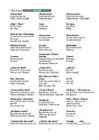
examples, names, nouns, thing, before, something, zero, sound, singular, begin, bike, words, articles, there, work, elephant, first, specific, talking, blue, adjectives, england, canal, ocean, such, states, north, east, come, languages, learning, chinese, sports, plays, basketball, academic, subjects, taking, economics, math, spring, clean, institutionsadjective + preposition omadussõna + eessõna proud of, good at, married to adverb particle Some verbs are followed by adverb particles. Examples are: put on, take off, give away, bring up, call in. Sometimes the particle is detached from the verb and put after the object. •He took his boots off. •They called the doctor in. apposition a grammatical construction in which two usually adjacent nouns having the same referent stand in the same syntactical relation to the rest of a sentence (as the poet and Burns in “a biography of the poet Burns”) back-reference In grammatical analysis, the term reference is often used to state a relationship of identity which exists between grammatical units, e.g. a pronoun 'refers' to a noun or noun phrase. When the reference is to an earlier part of the discourse, it may be called a 'back-reference' (or anaphora); collective noun
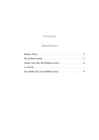
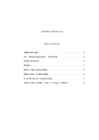
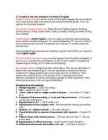
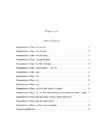
The Article Table of Contents General Rules....................................................................... 2 The Definite Article ............................................................... 5 Names that take the Definite Article...................................... 6 No article.............................................................................. 7 Countable and uncountable nouns ....................................... 9 General Rules There are two articles in the English language – the Indefinite Article and the Definite Article. The Indefinite Article has two forms – a and an (a precedes words beginning with a consonant sound and an precedes words beginning with a vowel sound). It comes from the Old English word ãn, which meant one. The Definite Article is the. It comes from the Old English word ţis, which meant this.
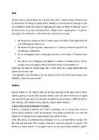
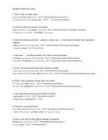
http://www.english-4u.de/a_an_some_ex1.htm ◦ *some bananas *some cats *some monkeys *some 2. http://www.english-4u.de/a_an_some_ex3.htm balls ◦ *some eggs*some oranges *some umbrellas *some 3. http://www.english-4u.de/a_an_some_ex6.htm eagles We us the • when we talk about a specific thing. • when it is clear which thing or person we mean. A – AN - THE • when there is only one of something. Examples:
greatly benefit from this step-by-step approach to English grammar basics. This is the ideal supplement to your language arts program whether your students are native English speakers or beginning English language learners. Skill-specific lessons make it easy to locate and prescribe instant reinforcement or intervention. · Illustrated lessons are tightly focused on core concepts of grammar · Nearly 70 practice exercises are included for ready reinforcement · A wealth of examples are provided on every topic · Concise explanations are bolstered by extra grammar tips and useful language notes Book 1 Anne Seaton · Y. H. Mew Three Watson Irvine, CA 92618-2767 Web site: www.sdlback.com First published in the United States by Saddleback Educational Publishing, 3 Watson, Irvine, CA 92618 by arrangement with Learners Publishing Pte Ltd, Singapore
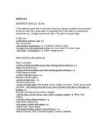
ARTICLES INDEFINITE ARTICLE (A/AN) 1.The indefinite article a/an is only used in front of a singular countable noun mentioned for the first time.The is used when it is mentioned.The is used when it is mentioned a second time, e.g. I bought a jacket and a dress. The jacket was quite cheap 2.Other uses: -to talk about someone's job, e.g. She's an architect. -with numbers and fractions, e.g. a hundred, a million, a third -to mean every with expressions of time, e.g. once a week, five times a year -with What...! exclamations, e.g. What a strange person! ZERO ARTICLE (NO ARTICLE)
kill slay Do in, make away begin commence Get going Stylistics is a very special signs because it has no fixed, single unit of study. Stylistics studies everything that makes the text expressive. Stylistics cuts right across all the basic linguistic sciences.e.g silent, sleepy streets. Stylistic point of view ,,s" sound, alliteration, drowsyness' effect. Morphology spoke and spake the truth. From the point of view of morphology, these are 2 variants of the past-tense. From the point of view of stylistics, they are 2 different modes of expression, because they carry different stylistic overtones. Spoke is archaic and so used either in elevated style or sometimes in everyday's speech for the sake of humour. Spoke is just the ordinary way of expressing this meaning. The structure of words e
run) Descriptive grammar → Underlies the actual usage of speakers of the language. Grammar also has many components: Phonetics → The study of the acoustic detail of speech sounds and how they are articulated. Phone is a smallest unit of sound in human speech. Phones can be represented with IPA symbols (International Phonectic Alphabeth). Phonology- The subfield of linguistics that studies the structure and systematic patterning of sounds in human language.
noun (proper, common, nimisõna, Refers to words which denote classes and categories of book, water, sincerity, Mary, concrete, abstract) substantiiv things in the world, including people, animals, Estonia inanimate things, places, events, qualities, and states. Nouns can be divided into proper nouns and common nouns. Proper nouns give names to people and things (Tony Blair, Greece). Nouns which are not proper nouns are common nouns (table, boy, heat). Concrete nouns refer to physical entities that can be observed
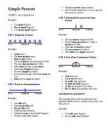
finished action that has an influence on the present action that has taken place once, never or several times before the moment of speaking Present Perfect Progressive A: He has been speaking. all day, for 4 years, putting emphasis on N: He has not been speaking. since 1993, how Q: Has he been speaking? the course or duration (not long
words; syntax. Language: a systematic, conventional use of sounds, signs or written symbols in a human society for communication and self-expression. - human language at all levels is rule- or principle-governed. Linguistics: the scientific study of human natural language Synchronic approach to language: Diachronic approach to language: Linguistic competence: Linguistic performance: What is grammar?: "The sounds and sound patterns, the basic units of meaning, such as words, and the rules to combine them to form new sentences constitute the grammar of a language" Prescriptive grammar vs. Descriptive garmmar: Descriptive grammar: the systematic study and description of a language. Descriptive grammar refers to the structure of a language as it is actually used by speakers and writers. Prescriptive grammar: a set of rules and examples dealing with the syntax and word
....................................................... 4 Both, either and neither ....................................................... 4 Few/a few – a little/little....................................................... 5 A lot of/lots of – much/many................................................ 5 Some, any + -body / -one, + -thing, + -where ........................ 6 Some and any Some and any mean a certain number or amount. They are used with or instead of plural or uncountable nouns. Some is a possible plural form of a/an and one: Have a biscuit/some biscuits. I bought a cake/some cakes. Some, any and none can be used with of + the/this/these/those (+ ...) Some of the staff can speak Portuguese. Did any of your photos come out well? You can take any of these. Some is used: • with affirmative verbs: They bought some honey. • in questions where the answer ‘yes’ is expected: Did some of you sleep on the board
· Action which was in a progress at a started time in the past. We don't mention when it was started or finished. (at 11 o'clock I was driving home) · To describe the atmosphere, setting etc and to give background information to a story (The birds were singing, sun was shining..) TIME EXPRESSIONS USED WITH PAST CONTINUOUS: while, when, as, all morning/day etc Past Perfect · Action which happened before another past action or bf a started time in the past (Lucy had finished her homework by 6) · Action which finished in the past and whose result was visible at a later point in past (He had sprained his ankle few days ago and he was still limping) · General situation in past (Everything had seemed normal at first) TIME EXPRESSIONS USED WITH PAST PERFECT: before, after, already, just, fot, since, until, when, by the time, never etc. Past Perfect Continuous
technical as well). If you refer to your heart as your ticker, you have chosen a more colloquial or slangy term. 3. Native and foreign element. Native vocabulary. 3 strata: Indo-European words mother, father, night, foot, heart, bear (bore, born), see names of close relatives, names of natural objects, parts of the body, numerals Germanic words friend, bridge, ship, life, heaven, glass, death, make v, meet v Old English words Bad, bird, woman, lady, daisy, gospel 23,000 – 24,000 items. Only about 3 % are of non-
· Verbs--hope, wish, and want (clever people everywhere. I wish to goodness we had a few fools left) · Repeated words (German art, G science and G culture) · Character's voice may be specified (hatred, she said with he voice trembling with pleasure) · Words with inherent connotation may change it in context, that is, pos may become negative and vice versa 4. Stylistic morphology: articles, nouns, pronouns, adjectives, verbs, adverbs, numerals Articles: · Article with proper names adds a colloquial touch (The Hardys, a Miss Smith) · The indefinite article (a) with a family name creates an evaluative meaning (a Caruso) · A+names of common, undistinguished names suggests contempt (a Malone, a Smith) · A may convey the meaning of belonging to a famous or aristocratic family (a Tudor) · In enumeration adj
Ladusseva "Stylistic practice: Book I, Book II" - I. Ladusseva "A Guide to Punctuation" EXAMINATION TOPICS: 1. Style, stylistics, a survey of stylistic studies 2. Inherent connotations. Phonesthemes Use lecture notes 3. Adherent connotations 4. Stylistic morphology: articles, nouns, pronouns, adjectives, verbs, adverbs, number * 5. Expressiveness on the level of word-building 6. Phonetic expressive means Study independen tly 7. Phonetic SD ("Rhythm And Style") 8. Lexical SD* 9. Syntactic SD* Use lecture notes 10. Graphical means and devices 11
Adherent connotation is the shade of meaning the word requires in a particular context only. Outside this context this shade of meaning is not present. INHERENT CONNOTATION (IC) 1. IC may be secured by the very object, quality or notion that word denotes. Positively charged words are: noble, manly, virtue, beauty, love, etc. Negatively charged words: nasty, vulgar, greedy, sin, death, fool, etc.). This connotation is called referential; it depends on the referent (mean the thing the word stands for). 2. IC may depend on the structure of the word. Such words normally have a transparent structure and more often negative affixes are used (e.g. unkind, impolite, injustice, heartless, etc.). This kind of connotation is purely linguistic. 3. Emotional connotation characterizes words in synonymic sets that occupy the so-called final position (e.g. big
flat day? When were you here? Articles Rules: 1. Rule: When you have a single, countable English noun, you must always have an article before it. We cannot say "please pass me pen", we must say "please pass me the pen" or "please pass me a pen" or "please pass me your pen". Nouns in English can also be uncountable. Uncountable nouns can be concepts, such as 'life', 'happiness' and so on, or materials and substances, such as 'coffee', or 'wood'. 2. Rule:Uncountable nouns don't use 'a' or 'an'. This is because you can't count them. For example, advice is an uncountable noun
It is not important that this fact is untrue. [VERB] + s/es in third person USE 3 Scheduled Events in the Near Examples: Future · You speak English. · Do you speak English? · You do not speak English. USE 1 Repeated Actions Examples: · The train leaves tonight at 6 PM. · The bus does not arrive at 11 AM, it arrives at 11 PM. · When do we board the plane? Examples: · The party starts at 8 o'clock.
Philosophy of Language Philosophy of Language: a Contemporary Introduction introduces the student to the main issues and theories in twentieth and twenty-first-century phi- losophy of language, focusing specifically on linguistic phenomena. Topics are structured in four parts in the book. Part I, Reference and Referring, includes topics such as Russell's Theory of Descriptions, Donnellan's distinction, problems of anaphora, the description theory of proper names, Searle's cluster theory, and the causalhistorical theory. Part II, Theories of Meaning, surveys the competing theories of linguistic mean- ing and compares their various advantages and liabilities. Part III, Pragmatics and Speech Acts, introduces the basic concepts of linguistic pragmatics, includes a detailed discussion of the problem of indirect force and surveys approaches to metaphor. Part IV, new to this edition, examines the four theories of metaphor.
I want you to meet John Smith. I'm so pleased to meet you. This is Jane Smith. I'm Jane Smith. My name's John Smith. Informal introduction Hi. John. Jane. Hello. Titles: Mr Mrs Miss Ms Ms is a modern form of address for women. It replaces the traditional forms of Mrs and Miss. Greetings Good morning/afternoon/evening! 'How are you?' Very often people expect you to say something positive. Here's a breakdown of how you can express how you really are without complaining too much. · Fine, thanks. / On top of the world, thanks. · OK, thanks · Not so bad, thanks. / Can't complain, thanks. · So so, thanks. / So and so, thanks. · Not so good, actually 1 The English alphabet Spelling
o 100 just (> Old French) Core vocabulary and syllable structure: o 93 of the first one hundred words in the Brown Corpus are monosyllabic, and the remaining have two syllables (only, about, other, also, many even people) Core vocabulary – often short (monosyllabic) words of Germanic and Old Norse origin. 3. Native and foreign element. The native vocabulary has 3 strata Indo-European words - names of close relatives, names of natural objects, parts of the body, numerals. o Mother, father, night, foot, heart, bear (bore, born), see Germanic words o Friend, bridge, ship, life, heaven, glass, death, make, meet Old-English words – o 23,000 – 24,000 items. Only about 3% are of non-Germanic origin. Etymologically homogeneous. 65-85% of the Old English vocabulary has been lost
ELT Methodology (FLGR.01.041) 27.12.2012 Home Assignments. I Youtube clips: · A vision of K-12 students I personally think that Estonian learners are also digital learners. They spend more time at the computers or laptops or iPads etc. than read books or move outside. And another thing is that teachers are less capable in using technological appliances. But the latter mentioned fact is an advantage for us teachers as well. It gives us an opportunity to provide our students to experience success. They can help and assist us if we need some technological help. Another thing is that in schools, in classes generally students are not allowed to use their appliances, so it means they have to communicate verbally as well. I
separate lg, there is Engl that bases on general L); contrastive (compares vocabularys in different languages). 2. Connection of L with other linguistic disciplines a) the word performes a certain grammatical function (nt, he always misses the class, how many misses are there; the girl powders her nose, soliders face powder)In speech words are combined according to grammatical rules. The plural of nouns may carry a new meaning (nt, arms-weapons, looks-appearance, works-plant) b)connected with phonetics. The meaning of a word is expressed by sounds and it depends on the order of sounds(spoonerism) c)history of the lg helps to understand ahanges in the meanings of words (nt, legend ment a book where a life of saints was described) d)stylistics is the sign of expressive means of the language. The same idea may be expressed in different ways and so may aquire a new meaning
What is the same and what is different about the way Christmas is celebrated in England and Estonia? In England, there's common to sing Carol's and for children, Christmas means pantomimes plays based on fairy tales which combine comedy, dance and song. A traditional Christmas dinner includes roast turkey with roast potatoes, a range of vegetables, cranberry sauce etc., followed by Christmas pudding and Christmas cake. The pulling of crackers(and the wearing of paper hats) before the meal is quite popular. Afterwards many watch the Queen's traditional Christmas address on TV at 3 pm. Christmas actually contains of 3 days: Christmas Eve, Christmas Day and Boxing Day. The latter is the first day after Christmas or the first Monday after Christmas if Christmas is on Friday or Saturday. 3. What is the same and what is different about the way Easter is celebrated in England and Estonia? Easter lasts for 4 days in Britain: from Good Friday to Eas-ter Monday
professor, for example.) Encantado, cansado, enfermo, and aburrido are the masculine forms of the words. If the words refer to a woman or are spoken by a woman, then the final o changes to a: encantada, cansada, enferma, and aburrida In Spain, as well as Argentina, Bolivia, Chile, Paraguay, Peru, Uruguay and Venezuela, the Spanish language is called castellano instead of español. 2. Pronunciation Spanish Letter English Sound a ah e ay i ee o oh u oo ll y b at beginning of word, real soft b between 2 v vowels ñ ny (as in canyon) r almost like a d when in between 2 vowels
· The vowel // in unstressed syllables (in RP) often corresponds to // (in near-RP accents). · The consonant /t/ may be realized as a glottal stop [?]. · Most EngEng accents have lost the original contrast. · Some English accents are ,,rhotic" or ,,r-ful" and others are ,,non-rhotic" or ,,r-less". 3. Estuary English - a dialect of English widely spoken in South East England. IT is commong among young Londoners. Something between RP and Cockney. Some features: · Non-rhotic · They use intrusive / r / · They use the broad / a: / sound · They use glottal stop more often (instead of k/p/t) · Use of / w /, recieved pronouncation will have / l / sound · /l/ may disappear [vunnerable] · /I/ -> /i:/ · Use of question tag [Ain't I? (einnai)] · Yod coalescence when two things come together. Like: /d/ instead of /dj/ /t/ instead of /tj/ [tu:zdeI] · Prolongs diphtongs
Opportunities Academic essay (ITI0103) 2019 spring Due to the recent data revolution, new data formats and databases with unimaginable scales have arisen, and artificial intelligence including machine learning greatly benefiting from it. Artificial intelligence requires tremendous quantities of data for it to be exact, and big data is exactly that. Some game including machine learning examples are: - AlphaGo, a software developed to play the Chinese board game Go [4]. - Stockfish, an open source chess engine [5]. - Deep Blue, an older chess-playing computer which beat Kasparov [6]. - OpenAI, an artificial intelligence research organization that aims to promote and develop friendly AI in such a way as to benefit humanity as a whole [7]. An example that mimics cognitive thinking: - CALO - Cognitive Assistant that Learns and Organizes [8].
I look forward to seeing you. (NOT I look forward to see you.) We're looking forward to going on holiday. (NOT ... to go on holiday.) 17. Information is an uncountable noun. Can you give me some information? (NOT Can you give me an information?) I got a lot of information from the Internet. (NOT I got a lot of informations from the Internet.) 18. Use ing forms after prepositions. I drove there without stopping. (NOT I drove there without to stop.) Wash your hands before eating. (NOT Wash your hands before to eat.) 19. Use this, not that, for things that are close. Come here and look at this paper. (NOT Come here and look at that paper.) How long have you been in this country? (NOT How long have you been in that country?) 20. Use a plural noun after one and a half. We waited one and a half hours. (NOT We waited one and a half hour.) A mile is about one and a half kilometres. (NOT A mile is about one and a half kilometre.) 21
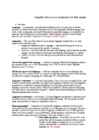
Articles 1. We use a / an when we are talking about something for the first time. He is wearing a suit and a tie. They have an elephant 2. We use the when we are talking about a specific person or thing, or if there is only one, or if it is clear which one we are talking about. She took a glass of water and started to drink. (one of many glasses of water) She took the glass of water nearest to her. (a specific glass) 3. We use no article when we are talking about people or things in general. English people drink a lot of tea. (English people in general) The English people in this hotel are very nice. (specific English people) 4
syntagmatic and paradigmatic axes of linguistic description. Saussure's 'theory of the sign' defined a sign as being made up of the matched pair of signifier and signified. Signifier The signifier is the pointing finger, the word, the sound-image. A word is simply a jumble of letters. The pointing finger is not the star. It is in the interpretation of the signifier that meaning is created. Signified The signified is the concept, the meaning, the thing indicated by the signifier. It need not be a 'real object' but is some referent to which the signifier refers. The thing signified is created in the perceiver and is internal to them. Whilst we share concepts, we do so via signifiers. Whilst the signifier is more stable, the signified varies between people and contexts. The signified does stabilize with habit, as the signifier cues thoughts and images. Signifier + signified = sign • Onomatopoeic words (examples)
Strong and weak verbs. Word order relatively free with tendencies towards SVO. SVO, SOV, VSO most common. Adposition and podposition were both possible (eesliide ja tagaliide). About syntax: clauses were joined much simpler than nowadays, using and, then etc. Because of case syncretion the word order in a sentence became much more important to be able to tell the difference between words. FIRST CONSONANT SHIFT (GRIMM'S LAW) Grimm's Law (also known as the First Germanic Sound Shift or Rask's rule) is a set of statements named after Jakob Grimm describing the inherited Proto-Indo-European (PIE) stop consonants as they developed in Proto-Germanic (the common ancestor of the Germanic branch of the Indo- European family) in the 1st millennium BC. It establishes a set of regular correspondences between early Germanic stops and fricatives and the stop consonants of certain other centum Indo-European languages (Grimm used mostly Latin and Greek for illustration).
them. The vocabulary of American English probably started developing on the first day after the arrival of the first English-speaking settlers, and it has continued to change for 400 years. As the New World had many plants,animals, and other things that were not found in Britian, the settlers added new words to their vocabulary every day. Their language was also influenced by the languages of the Native Ameircans and the settlers from other countries like Spain,France, and Germany. Examples of Native American words include tomato, potato, maize, tobacco, moccasin, and barbeque. Vocabulary changes are not as easily accepted by older people, but young generations often use a mixture of both types of English. There are no borders for songs, films, and books, wich influence the language greatly. Examples of vocabulary difference: British English American English sweets candy sweet shop candy store chemist's drugstore
................................................................................... 5 Prepositions of Place – at .................................................................................... 5 Prepositions of Place – on ................................................................................... 6 Prepositions of Place - in & at with towns & villages............................................ 6 Prepositions of Place – in, on & at with addresses and names of streets / roads .. 7 Prepositions of Place with the words ‘corner’, ‘front’ and ‘back’ ............................ 7 Prepositions of Place with the word ‘arrive’.......................................................... 7 Prepositions of Place – in & on with travelling ..................................................... 8 Prepositional Phrases ......................................................................................... 8
 annaabi.ee