Leidsid 33 sarnast õppematerjali, mis on seotud failiga ""Northern Europe’s seas. Norther Europe’s environment"". Need materjalid aitavad sul teemat sügavamalt mõista.
cause, marine, author, points, other, heavy, metal, north, europe, oceans, different, sources, animals, oxygen, there, metals, toxic, birds, products, present, based, northern, britt, reach, waters, land, four, caused, organic, these, found, throughout, another, excess, phosphorus, intense, algae, growth, areas, exchange, runs, living, survive, increasepeople need to be aware of what types of environmental problems our planet is facing. Current environmental problems make us vulnerable to disasters and tragedies, now and in the future. Unless we address the various issues seriously we are surely doomed for disaster. Current environmental problems require urgent attention. 1. Pollution: Pollution of air, water and soil require millions of years to recoup. Industry and motor vehicle exhaust are the number one pollutants. Heavy metals, nitrates and plastic are toxins responsible for pollution. While water pollution is caused by oil spill, acid rain, urban runoff; air pollution is caused by various gases and toxins released by industries and factories and burning of fossil fuels; soil pollution is majorly caused by industrial waste that deprives soil from essential nutrients. FIND OUT 5 WAYS HOW TO STOP POLLUTION. 2. Global Warming: Climate changes like global warming is the result of human practices like emission
Attention for water pollution exploded in the 1980s. The oil spill of the Exxon Valdez showed many around the world just how horrible the effects of water pollution could be. However, even the Exxon Valdez spill barely touched the surface of the problem of water pollution. The ship spilt only 5% of the oil spilt that year, and oil is just one of many pollutants that people dump into the water every year. Every year, 14 billions pounds of sewage, sludge, and garbage are dumped into the world's oceans. 19 trillion gallons of waste also enter the water annually. The problem of ocean pollution affects every nation around the world. This is especially true because water is able to transport pollution from one location to another. For many years, chemicals were dumped into bodies of water without concern. While many countries have now banned such behavior, it continues to go on today. As the world has industrialized and its population has grown, the problem of water pollution has intensified
Tallinn 2013 Ott Speek Subject: English Geodesy Study group: GI-21b PETROLEUM PRESENTATION Petroleum (L. petroleum, from Greek: Πέτρα (rock) + Latin: oleum (oil) is a naturally occurring flammable liquid consisting of a complex mixture of hydrocarbons of various molecular weights and other liquid organic compounds, that are found in geologic formations beneath the Earth's surface. The name Petroleum covers both naturally occurring unprocessed crude oils and petroleum products that are made up of refined crude oil. A fossil fuel, it is formed when large quantities of dead organisms, usually zooplankton and algae, are buried underneath sedimentary rock and undergo intense heat and pressure. Petroleum is recovered mostly through oil drilling. This comes after the studies of
D i ox i n s a n d f u r a n s i n t h e atmosphere. Their impact on humans and nature. Emission sources What are dioxines and furans? The term Dioxin is commonly used to refer to a family of toxic chemicals that all share a similar chemical structure and a common mechanism of toxic action. Most dioxins and furans are not manmade or produced intentionally, but are created when other chemicals or products are made. This family includes: seven of the polychlorinated dibenzo dioxins (PCDDs), ten of the polychlorinated dibenzo furans (PCDFs) and twelve of the polychlorinated biphenyls (PCBs). · PCDD · 2,3,7,8TCDD · PCDF · PCB · PCDDs and PCDFs are not commercial chemical products but are trace level unintentional byproducts of most forms of combustion and several industrial chemical processes. Of all
Water pollution Water pollution is the contamination of water bodies such as lakes, rivers, oceans, and groundwater caused by human activities, which can be harmful to organisms and plants and for all of us. First, we have to talk about the causes of water pollution. Domestic households, industrial and agricultural practices produce wastewater that can cause pollution of many lakes and rivers. Industry is a huge source of water pollution, it produces pollutants that are extremely harmful to people and the environment. Dumping of litter in the sea can also cause huge problems. Different items take different lengths of time to degrade in water. Oceans are polluted by oil on a daily basis from oil spills, everyday shipping and dumping. Secondly, it is very significant to know about dangers of water pollution.
*Mereelu ei häri mitte ainult nafta mürgisus vaid ka selle füüsilised omadused: veealla sukelduvad imetajad nt kilpkonn peavad veepinnal hingama tulema, mis on nafta tõttu aga raskendatud! *Tähtis ei ole mitte ühe üksiku isendi päästmine, vaid terve populatsiooni elu jäämine! *Loodust kahjustvad ka puhastusmeetme kuna kasutatakse raskeid - ja kõrgerõhu masinaid! *Tunduvalt lihtsam oleks ennetada nafta rannikuvetesse sattumist, hävitades naftalaigu juba avamerel! Effects of Marine Oil Spills Oil spills can have a serious economic impact on coastal activities and on those who exploit the resources of the sea. In most cases such damage is temporary and is caused primarily by the physical properties of oil creating nuisance and hazardous conditions. The impact on marine life is compounded by toxicity and tainting effects resulting from the chemical composition of oil, as well as by the diversity and variability of biological systems and their
Pollution of the Baltic Sea I have chosen to write my science report about pollution of the Baltic Sea. Nowadays it is a big problem to people who live in the marine region. In this report, I want to know the reason of this issue and how could we solve it. High population density, intensive agricultural production and other human activities have caused this high level pollution of the Baltic Sea. The shipment of crude oil has grown from 45 million tons to 175 million tons and this only by 10 years. Its condition is a challenge for the nine coastal states and their populations - there are 90 million people living in this catchment area. [1] The sources of marine pollution are municipal and industrial waste inputs directly into the sea or rivers, and atmospheric inputs mainly from traffic and farming. Originating
cooling, cleaning, preparing food, transportation, and communication devices. They discovered that the amount of energy used for any purpose could be measured in different ways. Light bulbs are measured in watts. Air conditioners and hot water heaters are measured in BTUs, while energy used by cars is measured in gallons of fuel. They used a spreadsheet to figure out how much energy they consumed for each of their activities. Each of the lights, car miles, games, and other appliances was converted to a common unit of power consumption called kilowatt-hours. The spreadsheet was used to determine how many kilowatt-hours were used during each day, each week, and each year for each energy consumption activity. The spreadsheet converted their energy consumption to show them the amount of money it costs for each energy consumption activity. In the end, they were shocked to see how much money Jules' energy using habits cost compared to Les' habits. USES OF ENERGY
Acid rain is caused by emissions of carbon dioxide, sulfur dioxide and nitrogen oxides, which react with water molecules. Distilled water(doesn't contain CO 2), has pH level 7. Liquids with pH level less than 7 are acidic, liquids with pH level greater than 7 are alkaline. Unpolluted rain has a pH level over 5.7, so it is slightly acidic. Affected areas Places significantly impacted by acid rain around the globe include most of eastern Europe from Poland northward into Scandinavia, the eastern third of the United States and southeastern Canada. Other affected areas include the southeastern coast of China and Taiwan Causes · It is caused when sulfur dioxide and nitrogen oxides are released into the air. In the atmosphere they react with water, oxygen and other chemicals to form more acidic pollutants, known as acid rain. Sulfur dioxide and nitrogen oxides dissolve very easily in water and can
CAN BE POLLUTED. ⦿ Surface Water Pollution - Most common type, you can visually see the pollution floating (plastic containers or oil and gasoline spills). ⦿ Ground Water Pollution – This becomes more relevant as it affects our drinking water. It become infected by toxic chemicals. ⦿ Microbial Pollution – Found in the countries who don’t have the facilities to cure the water so the bacteria and viruses grow in the water. The people have no other way of getting water so they are forced to drink it. WHAT CAUSES WATER POLLUTION? ⦿ Wastewater ⦿ Marine dumping ⦿ Industrian waste ⦿ Radioactive waste ⦿ Oli pollution ⦿ Underground storage ⦿ Global warming WHY IS IT A PROBLEM? ⦿ It causes worldwide disasters and deaths. ⦿ It may not damage our health immediately but can be harmful after long time. ⦿ Industrial waste often contains many toxic compounds that
air that we breathe, becomes dangerous to our health. The ozone layer around the Earth, there is a special type of oxygen called ,,ozone". Ozone is important because it stops ultraviolett radiation from the sun. Many aerosol sprays and factories destroy ozone and they have made a very big hole in the ozone layer. This means that too much ultraviolet radiation now enters the Earth. This is very dangerous because it can cause cancer. Poisonous chemicals also cause acid rain, that destroyes plants, rivers, lakes and buildings. Acid rain can travel thousands of miles, so pollution in one country can become acid rain for another country. So how to avoid the worst? Lets talk about cars, which are the main means of transport in our everyday life, they are useful and take us to the place, where we want to go. But lets be honest, they have also negative aspects. Like heavy traffic in the morning, while you are
1. Bacteria a) Heterotrophic bacteria, eg. symbiotic and non - symbiotic N2 fixers, ammonifier, cellulose decomposers, denitrifiers b) Autrotrophic bacteria, eg. nitrosomonas, nitrobacter, sulphur oxidizers, etc; 2. Fungus; 3. Viruses 4. Actinomycetes and stretomyces; 5. Algae eg. BGA, yellow gree algae, golden brown algae. The soil microflora largely depends on the type of soil, temperature, moisture, plant growth, nutrients, pH, and many other factors which may vary between locations but also within a single plot and over very small distances (OECD, 2007). Nevertheless of the quantity of microflora, biomass of all microorganisms living in soil play an important role in the functioning of entire soil ecosystems because their enormous biochemical activity (Barabasz et al. 2002). Soil microflora cycles carbon, nitrogen, phosphorus, and sulfur, plays a role in soil structure
Some renewable energy technologies are criticised for being intermittent or unsightly, yet the market is growing for many forms of renewable energy. Climate change concerns coupled with high oil prices, peak oil and increasing government support are driving increasing renewable energy legislation, incentives and commercialization. New government spending, regulation, and policies should help the industry weather the 2009 economic crisis better than many other sectors. Costs Renewable energy systems encompass a broad, diverse array of technologies, and the current status of these can vary considerably. Some technologies are already mature and economically competitive (e.g. geothermal and hydropower), others need additional development to become competitive without subsidies. This can be helped by improvements to sub-components, such as electric generators. The table shows an overview of costs of various renewable energy technologies. For comparison
The pollution is spread around throughout the world, and as a result, poses little threat to the health of people and ecosystems. Though some pollution comes from these natural sources, most pollution is the result of human activity. The biggest causes are the operation of fossil fuel-burning power plants and automobiles that combust fuel. Combined, these two sources are responsible for about 90% of all air pollution in the United States. Some cities suffer severely because of heavy industrial use of chemicals that cause air pollution. Places like Mexico City and Sao Paulo have some of the most deadly pollution levels in the world. EFFECTS Air pollution is responsible for major health effects. Every year, the health of countless people is ruined or endangered by air pollution. Many different chemicals in the air affect the human body in negative ways. Just how sick people will get depends on what chemicals they are exposed to, in what concentrations, and for how long.
Tundra Tundra is the world's youngest biome. It was formed 10 000 years ago. Located at latitudes 55° to 70° North. Almost all tundras are located in the Northern Hemisphere, encircling arctic desert and extending south to the coniferous forests of the taiga. The ecotone (ecological boundary region) between the tundra and the forest is known as the tree line or timberline. Tundra comes from the Finnish word tunturi, meaning treeless plain. It is noted for its frost-moulded landscapes, extremely low temperatures, little precipitation, poor nutrients, and short growing seasons
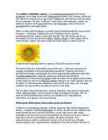
andma) to all plants of the genus(perekond, sugu) Helianthus, many of which are perennial(alaline, aastaringne) plants. What is usually called the flower is actually a head (formally(ametlikult) composite(liit-, komposiit- ; korvõieline, komposiit) flower) of numerous flowers (florets) crowded(täistuubitud, tunglev, rahvarohke) together. The outer flowers are the ray florets(pähik (õisiku osa) and can be yellow, maroon, orange, or other colors, and are sterile(steriilne, viljatu). The florets inside the circular head are called disc florets. Sunflower head displaying florets in spirals of 34 and 55 around the outside The florets within this cluster(kobar, kimp, klaster, parv ; kobarasse kogunema) are arranged (korraldatud, ettekavatsetud)spirally(spiraalselt). Typically each floret is oriented(suunitlusega) toward(poole) the next by approximately(umbkaudu, ligikaudu)
Tallinn 2012 1. Introduction Aniline (also known as phenylamine or aminobenzene) is an organic compound with the formula C6H5NH2. Consisting of a phenyl group attached to an amino group, aniline is the prototypical aromatic amine. The largest application of aniline is for the preparation of methylene diphenyl diisocyanate. The majority of aniline serves this market. Other uses include rubber processing chemicals (9%), herbicides (2%), and dyes and pigments (2%). Illustrative of the drugs prepared from aniline is paracetamol. The principal use of aniline in the dye industry is as a precursor to indigo, the blue of blue jeans. Like most volatile amines, it possesses the unpleasant smell of rotten fish. 2. Physico-chemical properties Name: Alinine CAS number: 62-53-3 IUPAC name: Phenylamine Molecular formula: C6H5NH2 Physical properties:
To fight this, we what causes during the can control what we buy. While being on the pollution. pollution, vacation, try to buy only local food from This leads because local shopkeepers. Also try to avoid buying them to the pollution can things which you see that are made out of factories and be caused by animals and endangered plants, no matter companys chemicals how exclusive they look to you. who have which cause There are also many food products caused the people made out of animals. This may not sound pollution. If allergies, very bad to you, but if you knew how many they can prove cancer or even animals have been tortured during the the polluting death. making process, you would seriously by the factory, consider eating less food made by companys they fine A torturing animals. Companies that produce
All brand names and product names used in this book are trade names, service marks, trademarks or registered trademarks of their respective owners. The publisher is not associated with any product or vendor men- tioned in this book. This publication is designed to provide accurate and authoritative information in regard to the subject matter covered. It is sold on the understanding that the publisher is not engaged in rendering professional services. If professional advice or other expert assistance is required, the services of a competent professional should be sought. Library of Congress Cataloging-in-Publication Data Handbook of meat processing / edited by Fidel Toldrá. p. cm. Includes bibliographical references and index. ISBN 978-0-8138-2182-5 (hardback : alk. paper) 1. Meat—Handbooks, manuals, etc. 2. Meat industry and trade—Handbooks, manuals, etc. I. Toldrá, Fidel. TS1960.H36 2010 664′.9—dc22
.......................... Producing process............................................................................................... Nowadays............................................................................................................ Areas where biogas is used in............................................................................. Biogas as replacement of fuel.......................................................................... Other benefits..................................................................................................... Health.............................................................................................................. Economical....................................................................................................... Dangers of biogas............................................................................................... Future prospects
Miina Härma Gymnasium Acid Rain Report Compiler: Teisi Timma 8a Teacher: Esther Linask Tartu 2009 Acid Rain Acid rain is rain consisting of water droplets that are unusually acidic because of atmospheric pollution - most notably the excessive amounts of sulfur and nitrogen released by cars and industrial processes. Acid rain is also called acid deposition because this term includes other forms of acidic precipitation such as snow. Acidic deposition occurs in two ways: wet and dry. Wet deposition is any form of precipitation that removes acids from the atmosphere and deposits them on the Earth's surface. Dry deposition polluting particles and gases stick to the ground via dust and smoke in the absence of precipitation. This form of deposition is dangerous however because precipitation can eventually wash pollutants into streams, lakes, and rivers.
had been just recently discovered at the time 1895. It is energy released by the splitting (fission) or merging together (fusion) of the nuclei of atoms. The conversion of nuclear mass to energy is consistent with the mass-energy equivalence formula E = m.c², in which E = energy release, m = mass defect, and c = the speed of light in a vacuum. Nuclear chemistry can be used as a form of alchemy to turn lead into gold or change any atom to any other atom (albeit through many steps). Radionuclide (radioisotope) production often involves irradiation of another isotope (or more precisely a nuclide), with alpha particles, beta particles, or gamma rays. Iron has the highest binding energy per nucleon of any atom. If an atom of lower average binding energy is changed into an atom of higher average binding energy, energy is given off. What is nuclear fusion? Nuclear fusion is the process by which multiple like-
r w gametes C , C ; F1 genotypes and phenotypes 1 mark: r w F1 genotypes (all) C C F1 phenotypes (all) pink; F2 genotypes and phenotypes 1 mark: r w r w gametes C , C C , C ; r r r w r w w w F2 genotypes C C C C C C C C F2 phenotypes red pink (pink) white; F2 ratio 1:2:1; accept other symbols if key given. accept r and w as symbols without key. 6 (c) (i) 65; 130; 65; 3 (ii) 0.138 + 0.007 + 0.061; (or other suitable working) 0.206 – 0.208; 2 marks for correct value if no working shown ecf for both marks but calculated value must be to three decimal
where the electricity is produced; a dam that can be opened or closed to control water flow; and a reservoir where water can be stored. Hydroelectric power provides almost onefifth of the world's electricity. China, Canada, Brazil, the United States, and Russia were the five largest producers of hydropower in 2004. The first hydroelectric power plant was built at Niagara Falls in 1879. Negative aspects of hydropower Damming rivers may destroy or disrupt wildlife and other natural resources. Hydropower plants can cause low dissolved oxygen levels in the water, which is harmful to river habitats. Hydroelectric power plants don't work for a very long time. Silt, or dirt from a riverbed, builds up behind the dam and slows the flow of water. Geothermal energy Geothermal energy is the heat from the Earth. It's clean and sustainable. It can be extracted without burning a fossil fuel such as coal, gas, or oil.
Table of contents 1. Introduction 2. Geographical position 3. Mountains, lowlands 4. Rivers, lakes 5. The territories and provinces 6. Towns, economy, agriculture 7. Climate 8. Animals, plantlife 9. Population 10. Sports 11. Culture 12. History 13. Political system, symbols 14. Conclusion 15. Materials 1. Introduction If you had to use two words to describe Canada, they might be large and diverse. Canada is the second largest country in the world, bordered by three oceans, and across the country, Canadians experience many different landscapes from rolling plains and mountains to the cold tundra of the north. Despite Canada's great size, it is one of the world's most sparsely populated countries. This fact, coupled with the grandeur of the landscape, has been central to the sense of Canadian national identity. 2. Geographical position Canada is the second largest country in the world after Russia. In the Arctic, Canada reaches almost as far north as Greenland
Formaldehyde Formaldehyde is a colorless, flammable gas at room temperature. It has a pungent, distinct odor and may cause a burning sensation to the eyes, nose, and lungs at high concentrations. Formaldehyde is also known as methanal, methylene oxide, oxymethylene, methylaldehyde, and oxomethane. Formaldehyde can react with many other chemicals, and it will break down into methanol (wood alcohol) and carbon monoxide at very high temperatures. Formaldehyde is naturally produced in very small amounts in our bodies as a part of our normal, everyday metabolism and causes us no harm. It can also be found in the air that we breathe at home and at work, in the food we eat, and in some products that we put on our skin. A major source of formaldehyde that we breathe every day is found in smog in the lower atmosphere. Automobile
The tundra is the world's coldest and driest biomes. The average annual temperature is -28° C. Nights can last for weeks when the sun barely rises during some months in the winter, and the temperature can drop to -70° C. During the summer the sun shines almost 24 hours a day. Summer are usually warm. Average summer temperatures range from 3° to 16°C. TaigaTaiga is the Russian word for forest and is the largest biome in the world. It stretches over Eurasia and North America. The taiga is located near the top of the world, just below the tundra biome. The winters in the taiga are very cold with only snowfall. The summers are warm, rainy, and humid. Some of the animals in the taiga hibernate in the winter, some fly south if they can, while some just cooperate with the environment. GrasslandsGrassland biomes can be found in the middle latitudes. They can have either moist continental climates or dry subtropical climates. There
Protecting endangered species will make a difference in humans' life In the nature of humankind it is natural to hunt animals. However, nowadays hunting endangered species will make humans be just killers, because it is not necessary to kill something just to have a trophy on the wall at home. People can be proud of what they have done, but decreasing the population of a species largely will cause the specific animal breed to go extinct faster than it would happen via natural causes. Therefore, humans should stop hunting endangered species to slow down their extinction, as these species offer balance in the wildlife, are used without purpose in medicine, and may even reduce poverty. Species on the brink of extinction affect us more than we realize. Sure, pandas are cute, and rhinos are fun to look at, but is there anything more to that
Tallinn English College Report of Canada 8a Teacher: Merike Sisask Composer: Kärt Kalvet 2010 Canada, Kärt Kalvet 8a Canada General Information Canada is in North America. It's area is 9220970 sq km. Canada's population is 313.612.000 people. Canada is divided into 10 provinces and 3 territories. The capital of Canada is Ottawa. Canada has constitutional monarchy. The head of state in Canada's government is the Queen of England. There are two main languages in Canada: English and French. Canada's curreny is Canadian dollar (1 dollar=100 cents[Can$]). The highest peak of Canada is Mount Logan, 5959 metres. The lowest point is sea level
Territory). The Australian people are culturally the same as the Anglo Americans. There also live aborigines. Aborigines are the ancestors of the people. Like the US and Canada, Australia was an English speaking colony of Great Britain. Today Australia is a modern developed country with a diversified economy. Australia is an island continent of 7.7 million square kilometres, which makes it a little smaller than the USA. Located in south of Asia, between The Pacific and Indian Oceans, Australia is the World's driest continent. Although large areas of the centre are desert, Australia has a wide range of climate from tropical in the north to temperate in the south east, where it frequently snows in winter. Geographical position The coasts of Australia are surrounded by the Pacific Ocean, the Indian Ocean and the Southern Ocean. Four seas are surrounding Australia, which are the Timor Sea and Arafura Sea in the north of
Topic Canada Tallinn English College 2006 1. Introduction If you had to use two words to describe Canada, they might be large and diverse. Canada is the second largest country in the world with a territory of about 10 million square kilometers and it is bordered by three oceans: the Arctic, the Pacific and the Atlantic Oceans. The population of Canada is about 31 million people. About 77% of the people live in cities which lie in a band about 100 miles wide above the border of the United States. The capital of Canada is Ottawa. Other large cities are Montreal, Toronto, Vancouver, Winnipeg and Quebec. 2. Geographical position Canada is a huge country in the continent of North America. It is bordered with the Atlantic
we are doing. At this current rate by the middle of next century the Earth's temperature may rise a predicted from 2 to 6 degrees Celsius. This may not seem as much but with the Earth's delicate balance we will have lost several species and habitats. Scientists are worried that soon the effects of what we have done may be irreversible. This temperature increase would drastically affect the growth of many different crops and cause the polar ice caps to melt, therefore increasing sea levels to rise up by several metres. Warmer oceans cause more intense storms. Buildings and roads close to the water will be flooded and they could suffer damage from hurricanes and tropical storms. The effects of a warmer climate may begin to take its toll on people as well. Particularly those who are physically weaker are going to have a harsh life. During the hot summer of 1995, the frightening effects of high temperatures
Margit Tepner k0848752 Sustainability aspects of biofuels 1. Introduction The literature review will discuss the sustainability aspects of biofuels. Food production will be the main concern as it is the most debated issue, but other aspects, such as land use change and water consumption will be also considered as they are essential aspects in the biofuels sustainability criteria. The review will discuss the viability of biofuels based on the current technologies. Second-generation biofuels are not yet commercially viable and therefore will not be discussed; although they could significantly improve the sustainability of biofuels when they break through to the industrial scale. 2. The scale of biofuels production 2
 annaabi.ee