 50 punkti
Autor soovib selle materjali allalaadimise eest saada 50 punkti.
50 punkti
Autor soovib selle materjali allalaadimise eest saada 50 punkti.
 ~ 2 lehte
Lehekülgede arv dokumendis
~ 2 lehte
Lehekülgede arv dokumendis
 2018-03-21
Kuupäev, millal dokument üles laeti
2018-03-21
Kuupäev, millal dokument üles laeti
 1 laadimist
Kokku alla laetud
1 laadimist
Kokku alla laetud
 0 arvamust
Teiste kasutajate poolt lisatud kommentaarid
0 arvamust
Teiste kasutajate poolt lisatud kommentaarid
 KrissuGurl
Õppematerjali autor
KrissuGurl
Õppematerjali autor
Summary The present summary is based on the book "Northern Europe’s seas. Norther Europe’s environment" by Britt Aniansson. Oceans and seas are polluted every day by different substances that reach the waters from different sources on land and at the sea. The author points out four main problems in the marine environment. One of the main problems is the chemical pollution which is caused by natural or man- made halogenated compounds, pesticides, dioxins, chlorinated organic materieals and so on. These compounds are causing deformage in marine animals and are storaged in their fatty tissues. They have also been found in organisms throughout the world oceans because they are dispersed quickly by winds and currents. Another problem that affects the marine life is excess phosphorus and nitrogen flow into
However, as our environment changes, so does the need to become increasingly aware of the problems that surround it. With a massive influx of natural disasters people need to be aware of what types of environmental problems our planet is facing. Current environmental problems make us vulnerable to disasters and tragedies, now and in the future. Unless we address the various issues seriously we are surely doomed for disaster. Current environmental problems require urgent attention. 1. Pollution: Pollution of air, water and soil require millions of years to recoup. Industry and motor vehicle exhaust are the number one pollutants. Heavy metals, nitrates and plastic are toxins responsible for pollution. While water pollution is caused by oil spill, acid rain, urban runoff; air pollution is caused by various gases and toxins released by industries and factories and burning of fossil fuels; soil pollution is majorly caused by industrial waste that deprives soil from essential nutrients.
European Union since 1995, Finland was the only Nordic state to join the euro system at its initiation in January 1999. In the 21st century, the key features of Finland's modern welfare state are a high standard of education, equality promotion, and national social security system currently challenged by an aging population and the fluctuations of an exportdriven economy (Central Intelligence Agency, 2012, ISSN 15538133). 2.1.2 Geography Location: Northern Europe, bordering the Baltic Sea, Gulf of Bothnia, and Gulf of Finland, between Sweden and Russia Area: total: 338,145 km2 land: 303,815 km2 and water: 34,330 km2 Coastline: 1250 km Climate: cold temperate; potentially subarctic but comparatively mild because of moderating inf luence of the North Atlantic Current, Baltic Sea, and more than 60,000 lakes Terrain: mostly low, f lat to rolling plains interspersed with lakes and low hills
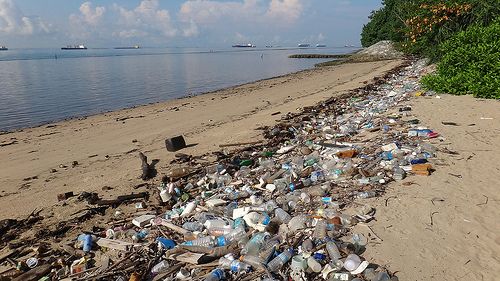
Water pollution Attention for water pollution exploded in the 1980s. The oil spill of the Exxon Valdez showed many around the world just how horrible the effects of water pollution could be. However, even the Exxon Valdez spill barely touched the surface of the problem of water pollution. The ship spilt only 5% of the oil spilt that year, and oil is just one of many pollutants that people dump into the water every year. Every year, 14 billions pounds of sewage, sludge, and garbage are dumped into the world's oceans. 19 trillion gallons of waste also enter the water annually. The problem of ocean pollution affects every nation around the world. This is especially true because water is able to transport pollution from one location to another.
what is more, are many we ourselves problems that Another big problem is are causing we could deforestation. A lot of loggers are right now most of the actually solve. cutting down the forests and what is worst, problems. Of One of them is they also cut down a lot of valuable course, all of air pollution. rainforest, which is home to many us don't cut It is mostly endangered species. If this cutting continues, down trees caused by cars these species will be wiped off the planet. and pollute the and factories. So how can we fight this? One way is to hire air on purpose So what can supervisors that keep an eye out on unlegal but we are all we do? A very loggers. This way we get to know who they slowly
Air pollution Every day, the average person inhales about 20,000 liters of air. Every time we breathe, we risk inhaling dangerous chemicals that have found their way into the air. Air pollution includes all contaminants found in the atmosphere. These dangerous substances can be either in the form of gases or particles. Air pollution can be found both outdoors and indoors. Pollutants can be trapped inside buildings, causing indoor pollution that lasts for a long time. The sources of air pollution are both natural and human-based. As one might expect, humans have been producing increasing amounts of pollution as time has progressed, and they now account for the majority of pollutants released into the air. Air pollution has been a problem throughout history. Even in Ancient Romepeople complained about smoke put into the atmosphere. The effects of air pollution are diverse and numerous. Air pollution can have serious consequences
SISUKORD ENERGY STORY................................................................................................................4 USES OF ENERGY............................................................................................................. 4 2.1 Uses of energy in homes...............................................................................................5 2.2 Types of energy used in homes.................................................................................... 6 2.3 Energy use in different types of homes........................................................................ 6 2.4 Commercial Energy Use...............................................................................................9 2.5 Industrial and Manufacturing Energy Use..................................................................11 2.6 Transportation Energy Use.........................................................................................12 RENE
demand that Kalarand would be accessible even during the developing period. The developer of Kalasadam, Pro Kapital, is a leading Estonian real estate development company who operates in the capitals of Estonia, Latvia and Lithuania. Since its establishment in 1994, it has completed 20 development projects and focuses mainly on the development of large-scale residential and commercial real estate projects in prime locations of the capitals of the Baltic States. In the second half of the 1990s, Pro Kapital aquired several unique properties in its portfolio, including two attractive coastal sites in Tallinn and Riga. One of these properties was Kalarand in Tallinn. Pro Kapital bought property next to the Kalarand seaside in 2001 and announced that they will make Kalarand into a residential and business district. From thereon there has been a heated debate between the locals and Pro Kapital over the developing plans.
 annaabi.ee









Kõik kommentaarid