Leidsid 33 sarnast õppematerjali, mis on seotud failiga "Ajalooline hoone - Haapsalu linnus". Need materjalid aitavad sul teemat sügavamalt mõista.
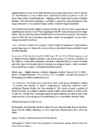
bishop, castle, wall, full, moon, maiden, lady, chapel, canon, cathedral, image, appears, monastery, residence, order, deathecretinger, find, western, founded, century, center, there, month, 1228, riga, formed, läänemaa, hiiumaa, gottfried, abbot, these, fixed, modena, 1234, first, located, lihula, wich, burned, years, later, centre, chosen, builtThe Haapsalu Bishop's Castle The Haapsalu Bishop's Castle and Cathedral, which was established in the 13th century as the centre of the SaareLääne Diocese, is one of the best preserved castles in Estonia. It is located on the western coast of Estonia in Haapsalu. The Haapsalu Castle is one of the most remarkable examples of Estonian MiddleAge fortress architecture. The stronghold construction, widening and reconstruction went on throughout several centuries, with architecture changing according to the development of weapons. The fortress achieved its final dimensions area of more than 3 hectares, thickness of the wall between 1.2 and 1.8 meters, and maximum height over 10 metres under the reign of Bishop Johannes IV(fourth).
to obey your leader's command is to help defend his life, but for this follower it is to serve his lord's absolute will for death by remaining rigidly upright (to stand fast). The Cross speaks for the bewildered humanity of the dreamer, but also for the suffering humanity of Christ. The Cross himself participates in Christ's sufferings and it can also participate in his glory. After the Crucifixion he is first buried and then raised up and honored (like Christ). The vision has come full circle and now the dreamer can also hope to participate, as one ordinary tree has done, in that victory. The poem ends in a mood of confidence. Now the dreamer can bear solitude and the loss of friends on earth though he sees the way open to a `heavenly home'. 3. The Gen. Charst. Of OE poetry and prose. The distinction between verse and prose is by no mean always clear in that period of time. Anglo-Saxon verse is the product of a tradition which reached far
They called their city Londinium. The Roman engineers noticed that the point where the swampy river narrowed would make an ideal crossing point, they built London Bridge. Less than 20 years later the native Iceni tribe, led by Queen Boudicca, rose up against the Romans in revenge for mistreatment and burnt Londinium to the ground. The well disciplined Roman army defeated her forces and Londinium was rebuilt. By AD 100 it had also become the capital of the Roman province. A massive wall was built to protect the city from further attacks. The Roman Empire came under increasing attack across Europe and in AD 410 they retreated. The Romans gave us a language based on Latin, the calendar, law and legal system, the census and also straight roads, central heating and concrete. Anglo- Saxons around AD 400 Anglo- Saxons were warrior farmers from Germany, Denmark and the Netherlands. Later in the 5th century, Anglo-Saxons settled just west of Londinium, around the Strand, and formed
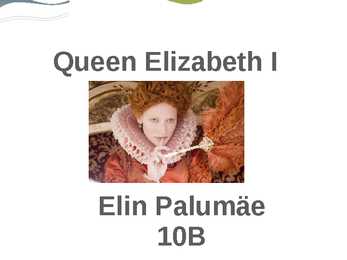
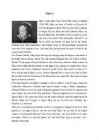
Mother - Anne Boleyn Born - 7 September 1533 Greenwich, England Died - 24 March 1603 (aged 69) Burial - Westminster Abbey Anne Boleyn Queen consort of England Mother of Elizabeth I Tenure - 28 May 1533 17 May 1536 Coronation 1 June 1533 Anne Boleyn was Queen of England from 1533 to 1536 as the second wife of Henry VIII of England and the 1st Marquess of Pembroke in her own right for herself and her descendants. House - House of Tudor Father - Thomas Boleyn, 1st Earl of Wiltshire Mother - Lady Elizabeth Howard Born c.1501/1507 Blickling Hall/ Hever Castle, England Died 19 May 1536 (aged 29-35)Tower of London Religion - Anglican, formerly Roman Catholic King of England Henry VIII Reign - 21 April 1509 28 January House - House of Tudor 1547(37 years) Father -Henry VII of England Coronation - 24 June 1509 (aged 17) Issue Mary I of England Predecessor - Henry VII Henry FitzRoy
Edinburgh Castle is an ancient stronghold which dominates the sky-line of the city of Edinburgh from its position atop Castle Rock. It is Scotland's second most visited tourist attraction. Human habitation of the site is dated back as far as the 9th century BC. As it stands today though, few of the castle's structures pre-date the Lang Siege of the 16th century, with the notable exception of St Margaret's Chapel, the oldest surviving building in Edinburgh, which dates from the early 12th century.As with all castles, Edinburgh's fortress has been a centre of military activity. As an ancient fortress Edinburgh Castle is one of the few that still has a military garrison, albeit for largely ceremonial and administrative purposes. The New Barrack Block is now home to the official headquarters of the Royal Regiment of Scotland and 52 Infantry Brigade, as well as home to the regimental museum of the Royal
Queen of Iceni people of Eastern England, led an uprising against Roman forces Prasutagus(ruler) was first allowed to rule when romans conquered England, after his death, romans decided to rule Iceni and flogged Boudicca and raped her daughters 60-62 AD Iceni rebelled, Boudicca´s warriors defeated Roman Ninth Legion, destroied capital-Colchester Finally Boudicca was defetated, she poisoned herself to avoid capture Hadrian´s wall A defensive barrier builtin 122 AD by Roman emperor Hadrian to guard the northern part of Britain against barbarian invaders Most imposing frontier of Roman Empire, controlling peoples mobements Building took several years, builders kept changing minds about the size 119 km lenght, 5m high, 3m deep The Picts, Caledonia The painted ones, northern tribes, part of the Scots Inhabited an area known as eastern and th
The throne of England passed to Canute the Great. The new king married Emma of Normandy and the couple had a son, Hardicanute. Edward lived in exile until 1041. At the death of Canute in 1035, Edward led an abortive attempt to capture the crown for himself. He was recalled, for some reason, to the court of Hardicanute. Edward was crowned at the cathedral of Winchester, the royal seat of the West Saxons on 3 April 1043. According to those who compiled the Anglo- Saxon Chronicle, the first thing Edward did, despite his religious views, was to deprive his mother of all of her estates and reduce her to relative poverty. It is said that Edward blamed her for his miserable and lonely childhood.
*Boadicea/Boudica At his death bed, Boudica's husband left half his possession to the emperor, expecting that this would protect his family. However, his property was confiscated. When Boudica, the queen of the Celts, protested, she was flogged and her daughters were raped. She swept trough Southern Britain with her tribe and tortured every Roman she met. A women having power seemed unnatural to the Romans. She fought back for 2 years, but finally took poison and died. *Hadrian's Wall It was built by the emperor Hadrian and it marked the Northen border of the Roman empire. Hadrian's Wall was built, beginning in 122, to keep Roman Britain safe from hostile attacks from the Picts. The wall stretched from the North Sea to the Irish Sea. In addition to the wall, the Romans built a system of small forts called milecastles. Sixteen larger forts holding from 500 to 1000 troops were built into the wall, with large gates on the north face
decisions. The Reform Act of 1832 had set the standard of legislative authority residing in the House of Lords, with executive Viscount Melbourneauthority resting within a cabinet formed of members of the House of Commons; the monarch was essentially removed from the loop. She respected and worked well with Lord Melbourne (Prime Minister in the early years of her reign) and England grew both socially and economically. [5] Marriage The Queen married Prince Albert on 10 February 1840 at the Chapel Royal in St. James's Palace; four days before, Victoria granted her husband the style His Royal Highness. Prince Albert was commonly known as the "Prince Consort", though he did not formally obtain the title until 1857. Prince Albert was never granted a peerage dignity. [4] Prince Albert replaced Melbourne as the dominant male influence in Victoria's life. She was thoroughly devoted to him, and completely submitted to his will. [5] Victoria did nothing without her husband's approval
of Aragón. Because Henry divorced Catherine, Mary was declared illegitimate. Nonetheless, Henry included her in his will, and on the death of her half-brother, Edward VI, on July 6, 1553, she became the legal heir to the throne. Although Lord High Chamberlain John Dudley, Duke of Northumberland, favoured the succession of his daughter-in-law, Lady Jane Grey, and proclaimed her queen on July 10, the country supported Mary. As a Roman Catholic, Mary began her reign by sweeping away the religious innovations of her father and her brother. Henry VIII had separated England from the Church in Rome; Edward VI had replaced Roman Catholicism with a Protestant settlement. Mary restored the Mass and re-established the authority of the papacy, but, although she handed back Crown
bronze statues) Julius Caesar's first raid was in 55 BC (the troops were afraid of the sea crossing) In the following year he invaded again, this time he marched inland In AD 43 the Emperor Claudius decided the full-scale invasion (army of 40,000 men) The Roman occupation lasted nearly 400 years. They couldnt conquer Scotland or as they called it caledonia, and so they built a strong wall along the northern border, named after the Emperor Hadrian who planned it. (70 miles or 117km long) The army established Roman Rule in the South and SW of the country. Permanent military forts were established in Wales, but the tribes remained difficult to subdue. The Romans started to build good roads, appointed officials (governors, procurators to look after the estates and see that the goods were exported back to Rome)
It now hangs in St Paul`s Cathedral. "The Scapegoat"(1854-5)- (patuoinas) He wanted to use something from Christs life while visiting the Holy land. As part of the Jewish ritual of Atonement(lunastus), two goats are selected, one to be sacrificed and the other to be released into the wilderness to atone for the sins of the community. The goat depicted Jesus. During the process of creating this painting Hunt found a goat near the Dead Sea and studied and painted it for a long time. "The Lady of Shalott" ( 1886 1905)- poem by Tennyson "The Lady of Shalott". (the Lady's "isolation in the tower and her decision to participate in the living world) The painting depicts the moment when the lady decides to rebel and looks out of the window at Sir Lancelot. Her punishment for this will be death. The motivation to create this painting came probably from the fact that the end of the 19th century was the time when suffragettes started their movements and women freedom was a big issue.
The City of London History The City of London occupies one square mile in the middle of the capital. It once made up the entire town of London, surrounded by the wall first built by the Romans. The Roman Londinium grew up on the northern side of the "London Bridge" in the past. Products such as olive oil, wines and fruit were brought by ships from different parts of the Roman Empire and unloaded onto wooden quays along the river. In AD 61 the native Celtic Iceni tribe, led by Queen Boudicca, rose up against The Romans. They burnt Londinium to the ground but Roman armies eventually defeated Boudicca
across the Mona Lisa's face. A police officer appears in the gallery and takes Langdon into his custody. Sophie comes out of the shadows and walks to Madonna of the Rocks. Her grandfather often showed her this painting, so she is convinced there must be something in it. ("SO DARK THE CON OF MAN"-- is an anagram for Madonna of the Rocks.) When Sophie looks behind the painting, she finds the key decorated with the fleur-de-lis and the initials P.S. Sophie removes the painting from the wall and holds it hostage, forcing guard to put down his gun and release her and Langdon. Sophie and Langdon run from the museum and get into Sophie's tiny car. Ten years ago, she went to his chateau in Normandy and saw a large group of men and women in a secret room. A ceremony was going on and they were observing something. Sophie hears sirens and sees that the police have blocked off the street leading to the embassy. When she turns the car around, the police notice and follow her
Father of English literature, The Canterbury Tales in English, increased the prestige of the language, provided a standardised form. The Canterbury Tales: frame story. Majority in verse, some prose. Intended to contain 124 stories, only finished 24. Story: a pilgrimage to Canterbury Cathedral, where archbishop Thomas Becket had been murdered. The stories present a portrait of medieval society, e.g. a knight, a student, a monk, a miller (a flour maker at a mill), a wife of Bath, etc. Stories from a humanist approach (philosophical and ethical stance that
G2K Jaana-Kristiina Jõgevest The Four oldest churches of Tallinn Report Supervisor: Ingrid Teigar Tallinn 2009 The Dome Church The Danes began fortification of Toompea after the conquest of Tallinn in 1219 and probably also built the first church there. It was presumably a wooden building located at the site of the present cathedral. However, a serious conflict with the Order of the Brothers of the Sword broke out soon as the latter wanted to gain control of the entire Estonia. The order succeeded in subordinating Tallinn and the whole of North Estonia to its rule in 1227. The monks of the Dominican Order began the construction of a stone church in Toompea in 1229. The first written data on the cathedral date back to 1233, the date of a
seeks to hide the irrefutable evidence of extraterrestrial origins. 8. The Roman Conquest. Julius Caesar’s first raid was 55 BC. In 43 the Emperor Claudius launched a full- scale invasion, army of 40,000 men. Permanent Roman rule was established in south and south-west of the country as a consequence. Forts were built in Wales, but the local tribes were difficult to subdue. Hadrian ordered to build the Hadrian’s Wall in 121 or 122, a 117km wall from sea to sea, to protect their territory from the Scots. The Roman rule was more of a colonial control rather than a large-scale settlement. They left very little behind. 9. The Anglo-Saxon Invasion. The Angles, Saxons and Jutes came from present-day Northern-Germany and Denmark in 449. A number of tribes from the European mainland invaded and settled in large numbers; however, they were not always victorious. These Anglo-
Blandings Castle by P.G. Wodehouse Wodehouse was an acknowledged master of English prose admired both by contemporaries and by modern writers. He has been called "English literature's performing flea", a derogatory description that Wodehouse cherished and adopted as the title of his autobiography. Best known today for the Jeeves and Blandings Castle novels and short stories, Wodehouse was also a talented playwright and lyricist who was part author and writer of fifteen plays and of 250 lyrics for some thirty musical comedies. Wodehouse took a modest attitude to his own works. In Over Seventy (1957) he wrote: "I go in for what is known in the trade as 'light writing' and those who do that humorists they are sometimes called are looked down upon by the intelligentsia and sneered at."
the north of Estonia in 1219. Legend has it that one day, when the Danes were about to lose a bloody battle, the sky suddenly opened and a red flag with a white cross on it dropped down upon them from the heaven. This is how the Danes obtained their national flag. In 1346 the Danish king sold his Estonian lands to the Teutonic Order, who a year later resold them to the Livonian Order. The Germans renamed Tallinn and called it Reval. Toompea became the seat of the German-born gentry. A fortified wall was built between Toompea (the Upper Town) and the Lower Town, as there were conflicts between the two. The Lower Town was the home of simple people, the artisans and the merchants. The doors and gates in the wall were locked at night. Tallinn joined the German-dominated Hanseatic League in 1285 and became a junction of trade between East and West: furs, honey, leather and seal fat moved west, while salt, cloth, herring and wine moved east. Its geographical position was very favourable, with
Legend has it that one day, when the Danes were about to lose a bloody battle, the sky suddenly opened and a red flag with a white cross on it dropped down upon them from the heavens. This is allegedly how the Danes obtained their national flag, the Dannebrog in a battle against the Estonians. In the middle of the 14th century Denmark sold its possessions in Estonia to the German Teutonic Order. Toompea became the seat of the German-born gentry. A wall was built to separate the Upper Town and the Lower Town. In 1285 Tallinn joined the Hanseatic league and became a junction of trade between East and West. Tallinn is said to be built on salt, as it was an important trading commodity. In the 16th century Tallinn had a population of about 7,000 8,000 making it one of the biggest cities in northern Europe. In 1629 Sweden took control of the whole of Estonia. Though hard times
More books could be produced. Literacy spread, knowledge of reading. By te end of Renaissance half of the people could read. Monasteries wasn't so important anymore. Grammar schools came. Students are taught English, Latin, Ancient History, Greek, Religion and Arithmetic. One of the oldest schools was Stratford, Shakespeare taught there. Art and Literature The word Renaissance means the rebirth of ancient Rome and Greek art and literature. Ancient artists showed man as a creature full of joy of life and they glorified the beauty of man. The learned man tried to arouse (äratada) peoples interest in the origin of nature. A group of scientists called humanists came into being. Were gratelyinterested in science. Especially natural science, fond of experimenting (alkeemia). Leonardo da Vinci ( helikopter, kuldlõige), Michelangelo. Petrarka tõi sonetivormi, Cervantes " Don Quijote", Shakespeare. Development of Drama
Holidays, Festivals, Cultural events TALLINN - If you're looking for entertainment in Estonia this summer, you are really spoiled for choice. Festivals and events dedicated to the consumption of beer are a lot of fun, but if you want to get the true feel of the country, you need something a little more ethnic. Like a town fair. Just as July becomes August, the seaside town of Haapsalu will host a grand spectacle of rural Estonian entertainment. The White Lady Days is a summer celebration filled with amusement for all the family. Held in and around the remains of the Teutonic-knights-era castles, the fair combines enchanting medieval legends with modern countryside charm to create a comprehensive experience of Estonia beyond the big cities. But the legend of the White Lady of Haapsalu, which is at the heart of the festival, is perhaps the most famous tall tale of the many that are so abundant in Estonia's folklore.
home with the Delaware Indians and especially their chief Chingachgook. Cooper's most famous novel, Last of the Mohicans (1826), became one of the most widely read American novels of the nineteenth century. The book was written in a second-story storefront-apartment in Warrensburg, New York, just north of where most of the book's plot takes place. Washington Irving Washington Irving was born in New York City (near present-day Wall Street) at the end of the Revolutionary War on April 3, 1783. His parents, Scottish-English immigrants, were great admirers of General George Washington, and named their son after their hero. Irving had many interests including writing, architecture and landscape design, traveling, and diplomacy. He is best known, however, as the first American to make a living solely from writing. Initially, he wrote under pen names; one was "Diedrich Knickerbocker." In 1809,
If you don't mind, I'd gladly come over someday soon and accept my lucky duty as your priestess, and, perhaps, even as a friend. Best wishes, Misery She enveloped the letter and called a servant. "Susanna, take this letter to Her Majesty," she said, "and tell her to hurry with the answer, I can't stay in this dark tower much longer." Susanna smiled and bowed her curly red-haired head. She was very happy to join the rest of the castle again. After eating the candy, Misery felt very tired. But instead of heading to the bedroom, she opened her wide white wings and flew out to the royal park. The day was warm and sunny; in the gardens many flowers had started their colourful blooming, decorating tasteless gravy castle walls. Misery landed on the juicy green grass and looked up in the light blue sky and soundless tears fell down her pale cheeks: this was the sky the previous queen and her mother had liked.
• Julius Caesar (1599) • Othello (1603) • The Merchant of Venice (1598) • Much Ado About Nothing (1600) • King Lear (1606) • The Taming of the Shrew (1594) • The Comedy of Errors (1594) Note: This book is brought to you by Feedbooks http://www.feedbooks.com Strictly for personal use, do not use this file for commercial purposes. 3 Act I SCENE I. Elsinore. A platform before the castle. FRANCISCO at his post. Enter to him BERNARDO BERNARDO Who's there? FRANCISCO Nay, answer me: stand, and unfold yourself. BERNARDO Long live the king! FRANCISCO Bernardo? BERNARDO He. FRANCISCO You come most carefully upon your hour. BERNARDO 'Tis now struck twelve; get thee to bed, Francisco. FRANCISCO For this relief much thanks: 'tis bitter cold, And I am sick at heart. BERNARDO 4
spontaneously in the peasantry. It was a calculated ruling class campaign of terrorization. The Church and European society were not always so zealous in hunting witches or blaming them for bad occurrences. Saint Boniface declared in the 8th century that belief in the existence of witches was un-Christian. The emperor Charlemagne decreed that the burning of supposed witches was a pagan custom that would be punished by the death penalty. In 820 the Bishop of Lyon and 2 others repudiated the belief that witches could make bad weather, fly in the night, and change their shape. This denial was accepted into Canon law until it was reversed in later centuries as the witch- hunt gained force. In 1307 the trial of the Knights Templar shows close parallels to accusations of witchcraft, maleficium, and sorcery and may have been the beginning of the great European witch- hunt
when his knife bounces off the corset Fandorin is wearing. As he kills Akhtyrtsev, the white-eyed man hisses one word: "Azazel". The murder of Akhtyrtsev brings a great deal of attention to what had seemed a routine case. Fandorin gets a new boss, Ivan Brilling, a sophisticated detective familiar with modern investigative techniques. Brilling believes that the murder is the work of a terrorist organization called "Azazel" that is operating in Moscow. He sends Fandorin off to interview Lady Astair, whose Astair House has now acquired Akhtyrtsev's fortune along with Kokorin's, because both students left all their assets to Astair House after Amalia Bezhetskaya encouraged them to do so. Lady Astair is helpful to Fandorin, who leaves her school convinced of her innocence and impressed by her charitable mission. Next, Fandorin investigates Count Zurov. After Fandorin beats Zurov at cards, the count challenges him to a duel, but it turns
The most famous representative was Michael Gold. The most interesting style was modernist combined with realism. The most interesting writer of this period was John Dos Passos 1896-1970. He is linked to the 1930's, the period of fear, unemployment, the rise of facism, market crashing. Came from an interesting background, grandfather was portugese, his mother came from puritan New England. Father was a lawyer and importand figure on wall street. He was born into a well off family and this is a paradox about him. Upper middle class family, yet his political views were very radical, he was extremely well educated. He was hostile against the social order in the usa. The central theme in his writings is the criticism of basic institutions of american society. Interestingly, he wasnt just a social critic but one of the best experimentalists. Anti war novel called ,,Three soldiers". Dos Passos went to Europe, served for a while
[15] She became one of Blue Book's most successful models, appearing on dozens of magazine covers. In 1946, she came to the attention of talent scout Ben Lyon. He arranged a screen test for her with 20th Century Fox. She was offered a standard six-month contract with a starting salary of $125 per week. [16] Since Norma Jeane was not considered a commercial stage name, Lyon suggested she adopt Marilyn (after the famous actress Marilyn Miller). [17] For her last name, she took her mother's maiden name of Monroe. During her first six months at Fox, Monroe was given no work, but Fox renewed her contract and she was given minor appearances in Scudda Hoo! Scudda Hay! and Dangerous Years, both released in 1947.[5] In Scudda Hoo!, her part was edited out except for a quick glimpse of her face when she speaks two words. Fox decided not to renew her contract. Monroe returned to modeling and began to network and make contacts. She posed for nude photographs which were later featured in the
He invaded and attacked England on Edward's death, as he was promised the English crown, but then denied it by the Saxon Harold. King George VI King George VI did not expect to become king, he was the shy brother of Edward VIII who only took the thrown when Edward abdicated. King George VI ruled during World War two and bravely refused to leave London during the blitz. The two princesses; Elizabeth and Margaret, spent the war years in Windsor Castle away from harm. King Henry VI King Henry VI still holds the record for being the youngest king of England, it is unlikely that the record will be broken any time soon. He came to the thrown at just 9 months old. For the first 20 years of his life England and France were ruled by his uncles and advisors. King Stephen King Stephen was king of England (and not Normandy), although he was born in France. He was crowned at Westminster Abbey, like his father before him
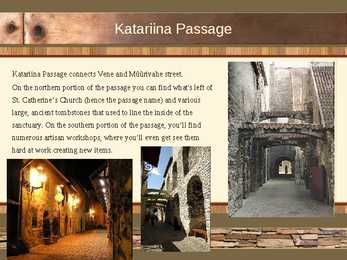
Katariina Passage connects Vene and Müürivahe street. On the northern portion of the passage you can find what's left of St. Catherine's Church (hence the passage name) and various large, ancient tombstones that used to line the inside of the sanctuary. On the southern portion of the passage, you'll find numerous artisan workshops, where you'll even get see them hard at work creating new items. City wall Tallinn's medieval city wall is a sub-facility that was built to protect the lower Tallinn and upper Tallinn (Toompea). The building of the city wall began in 1310th years, and by improving over time it formed the city wall with defensive buildings (towers). It was finished by the end of the 1561. Then it was 2.35-kilometer-long circular wall, which had 27 wall gate, 8 tower gate and 21 other stone fortifications. Many parts of the town wall have survived until today
book but I assume it is around 40's because of the description and the book was published in 1942. There is a murder in St Mary Mead and it's a hard one to solve but Miss Marple has the ability to overcome any problem and this time is no exception. The main character in the book was Miss Marple, the old amateur detective. She had been solving many crimes over the years in her home village and near it. So she is hired to help the policemen again. She is an old lady probably in her early 70's. At first she seems like a usual older lady, she likes gossip talk and knitting. But in reality she is a real genius at solving crimes. She is calm and does not like to make premature conclusions and to tell everybody about them. Her style for solving crimes was unusual-she made parallels with the people from her village and what they would do at the same situation (as a murderer or suspect) and she was excellent at knowing people.
and tacky commercialism. Packed in among thousands of other visitors, trying like crazy to see the city in three days and worrying about getting ripped off, it's not surprising, may think the city is overrated. Just relax, take a deep breath. While the city centre is a mélange of stunning architecture, from Gothic, Renaissance and baroque to neoclassical, art nouveau and cubist, beyond the medieval lanes of the Old Town and the Castle District, there's an entire other cosmopolitan city to explore. Search out the riverside parks, lively bars and beer gardens, music clubs, museums and art galleries. Harness Prague's excellent public-transport system to explore emerging suburbs such as Zizkov, Vinohrady, Smíchov and Holesovice. You'll be guaranteed cheaper prices, a more local ambience, and an assured escape from any more feelings of doubt..
 annaabi.ee