How to produce bioenergy from agricultural resources without harming the environment Jürgen Aosaar Jaak-Albert Metsoja Ahto Oja BOVA cource on biogas from biomass March 3-7 2008 Tartu Deciduous tree species on abandoned agricultural land Current situation • The long term development plan of the Estonian energy industry foresees a reduction in the use of fossil fuels and an increase in the share of biofuels: by the year 2010 renewable energy must account for 5.1% of total energy consumption Current situation (2) • In Estonia we have abandoned arable land about 400 000 ha, part of it is overgrowing naturally, and another part has been afforested
Maaelu arendamise perspektiivid suurenevas Euroopas: Ühise põllumajanduspoliitika ja põllumajandusliku ülemineku mõju uutele Euroopa Liidu liikmesriikidele Sissejuhatus Selle töö eesmärgiks on luua asjakohane teoreetiline raamistik maaelu arendamisega seotud küsimustele suurenevas Euroopas ning analüüsida maaelu arendamise perspektiive Euroopa Liidu (EL) liikmesriikidele 2004. aastal lisandunud riikides. Euroopa Liidu laienemine Kesk- ning Ida-Euroopa(KIE) riikide seas on märkimisväärselt mõjutanud nende põllumajanduse ning maaelu arengu poliitikaid. Üks rohkem vaidlust pakkunud teema seoses EL laienemisega on olnud küsimus, kas liitunud KIE riigid peaksid saama täieliku ligipääsu Ühise põllumajanduspoliitika (ÜPP) toetustele, eriti otsetoetustele ning struktuurifondidele. Hiljutised uuringud hindavad EL-i mõju eelarvekärbetele KIE riikides ning kaubanduses. On üllatav, et maaelu arendamine uutes liikmesriikides on ...
"Jonestowni juhtum - massimõrv või massienesetapp?" Jonestown oli mitteametlik nimi, mis anti Peoples Temple Agricultural Project'ile, ehk rahvaste põllumajandus templi projektile, Loode-Guyanas, mille eestvedaja oli Jim Jones. Jonestown sai rahvusvaheliselt kuulsaks, kui 18. Novembril 1978 hukkus asulas ja asula lähedal oleval lennujaamal 918 inimest. Asula nimi sai sünonüümiks juhtumitele nendes kohtades. Kokku suri tol traagilisel päeval 909 templi liiget. Kas tegu oli massimõrva või massienesetapuga? Paljudelt audio lintidelt ja Jim Jones'i enda jutust nendel lintidel oli kuulda, et tegu on
Also offers a means for risk assessments. I chose this book because my family also is engaged to farm business and agriculture. This book has 293 pages which includes 16 chapters, it was first published in 2008, so it is quite new book. It was very interesting to read about because there were lots of themes and tips about how to cultivate our soil. I think that a lots of farmers could get help from this book. I want to emphasize this book topic about non-polluting agricultural alternatives to chemicals, because it is a big problem nowadays. About the author Birth Date: 1947 Wojtkowski, with over 25 years of experience in many corners of the world, is uniquely qualified to deal with landscape agroecology. Having observed agriculture in six continents and over 70 countries, Dr. Wojtkowski has seen what works and what doesn't. His six previous books have affirmed the underlying motives, theories, and concepts. They have also
1. Agriculture - Tractors - Combine harvesters - Agricultural loaders - Agricultural trailers - Agricultural implements (seeders, plows, sprayers etc) 2. Construction - Excavators - Backhoe-Loaders - Loaders - Cranes - Dozers - Road construction - Graders 3. Transportation - Tractor units / trucks - Trailers / Semi trailers - Buses - Transportation other 4. Handling/Lifting - Forklift trucks 5. Forestry - Harvesters - Forwarders 6. Ground care - lawn mowes / sweepers etc.
Agriculture About 77 per cent of the land area of Britain is under agricultural use of some sort. However, the sector's role in the economy is much smaller than in most other major industrial countries, in terms of employment and contribution to GDP, reflecting Britain's early industrialization. Agriculture employs less than 2 per cent of the population and contributes 2 per cent of GDP. However, it achieves high levels of efficiency and productivity. Britain is self-sufficient in 58 per cent of all types of food and animal feed.
Aliis Uudelt Eritrea State of Eritrea Horn of Africa Sudan, Ethiopia, Djibouti, Red Sea Asmara 117,600 km2 6 million inhabitants Politics and government People's Front for Democracy and Justice The National Assembly Periodically scheduled Regions and districts 6 regions Control over agricultural capacity Historical intra-regional conflicts geography Virtually bisected Fertile lands West Desert East Sandy, arid coastline Highlands economy Agricultural Farming and herding GDP is growing Languages No official language Arabic and Tigrinya English and Italian The End
worldhunger.org/articles/Learn/world%20hunger%20facts%202002.htm#W see on sait, sealt saad infi! Data On October 11, 2010, it was reported that the number of malnourished people in the world exceeded 1 billion people Six million children die of hunger every year Most of the malnourished people live in Africa, Asia and South-America. Almost 1 in 7 people are hungry The United Nations has three agencies that work to promote food security and agricultural development Food and Agriculture Organization (FAO) World Food Programme (WFP) International Fund for Agricultural Development (IFAD) All three of these agencies are based in Rome,Italy. How can we help? Website Freerice Donationsites Begun voluntary Pane juurde, mis heaks arvad, ja võid ka maha võtta mis ei sobi
Võru County Vocational Training Centre Kert Kongo KBp-14 Võru County Vocational Training Centre (VCVTC or Võrumaa Kutsehariduskeskus in Estonian) is an educational institution inVäimela, Võrumaa, South-Estonia, which offers higher education, secondary vocational education and pre-training study programmes. History VCVTC was established in September 1999 as a result of a merger of two schools – Väimela Agricultural Technical School and Võru Industrial Technical School. Võru Industrial Technical School was a successor of the Võru Industrial School, established in 1925, which had been specialising in teaching the skills of wood and metal processing. Väimela Agricultural Technical School, which originates from the Võru Farming School, established in 1920 specialised in teaching agriculture. While 410 students were enrolled in 1999, today this number has risen over 900.
Võrrelge oma riike ja tehke järeldused, kummas riigis on paremad loodusolud põllumajanduse arendamiseks. Põhjendage. Paremad loodusolud on põllumajanduse arendamiseks Saksamaal, kuna Indias esinevad väga suured üleujutused, mis rikub põllumaid ja saaki. B. Põllumajandusliku maa kasutamine SAKSAMAA Leidke World Factbook'ist andmed riigi maakasutuse kohta. Riigi pindala 357 376 km² Riigi rahvaarv 80,722,792 põllumajanduslik maa kokku (agricultural land) 48% põllumaa (arable land) 34.1% püsikultuuride all (permanent crops) 0.6% heina- ja karjamaad (permanent meadows, pastures) 13.3% Niisutatav maa (agricultural area irrigated ) 6,500 sq km ARVUTAGE: Põllumajanduslikku maad inimese kohta 0,2125 ha 1 km² = 100 ha = 10 000 m² 1 ha = 0,01 km² INDIA Riigi pindala 3,287,263 sq km Riigi rahvaarv 1,266,883,598 põllumajanduslik maa kokku (agricultural land) 60.5%
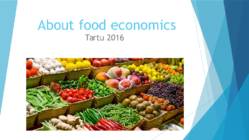
E. Roosaar 4/10/19 6 Food is a basic necessity good At the bottom of hierarchy of needs. Demand is income inelastic. Consumption does not increase when population's income increases. E. Roosaar 4/10/19 7 Instability Agriculture. Weather, pests, diseases. Fluctuations in production (crop). Drougth in all agricultural countries is very rare. E. Roosaar 4/10/19 8 Limits for reserves Limited opportunities for storing products. Managing, optimising, evening out supply. Fruit, fresh food. Storage may involve significant costs. (Grain stocks play an important role in the stability of the grain market.) Reserves are increased or reduced depending on market situation. E
and waste output of heat, air pollution - CO2, methane, and water pollution. • It should meet the needs A sustainable city should be able to... • feed itself with minimal reliance on the surrounding countryside, and power itself with renewable sources of energy. • create the smallest possible ecological footprint • produce the lowest quantity of pollution possible • efficiently use land • compost used materials - Practical Achievement • Different agricultural systems - agricultural plots within the city – reduces distance. • Renewable energy sources - wind turbines, solar panels, or bio-gas created from sewage. • Methods to reduce air conditioning - planting trees and lightening surface colors, etc Practical Achievement • Transportation planning- Improved public transport and an increase in pedestrianization to reduce car emissions • Green roofs Conclusion
alates aastast 2015 kuni 2019. Esita tulemuste kuvast ekraanipilt. 3 e) Mitu vastet väljastas andmebaas nende parameetrite alusel?111 Vaata tulemuslehel lähemalt artiklit „Antimicrobial activity of bioactive starch packaging films against Listeria monocytogenes and reconstituted meat microbiota on ham.” f) Kes on artikli autorid ja mis ajakirjas see artikkel ilmus? Zhao Y; Department of Agricultural, Food and Nutritional Science, University of Alberta, Edmonton, AB T6G 2P5, Canada. Teixeira JS; Department of Agricultural, Food and Nutritional Science, University of Alberta, Edmonton, AB T6G 2P5, Canada. Saldaña MDA; Department of Agricultural, Food and Nutritional Science, University of Alberta, Edmonton, AB T6G 2P5, Canada. Gänzle MG; Department of Agricultural, Food and Nutritional Science, University of Alberta,
Mullad piimakarjakasvatusele. Väga viljakad mustmullad Muld vajab kohati kuivendamist. Suur üleuputuse oht. Põllumajandusmaa kasutamine. Holland % Valgeven % e Riigi 4154,00 100 20760,00 100 pindala(hektarites) põllumajanduslik maa 1894,80 45,6 8875,00 42,7 kokku (agricultural land) põllumaa (arable 1042,40 25,1 5529,00 26,6 land) püsikultuuride all 36,40 0,9 112,00 0,5 (permanent crops) heina- ja karjamaad 816,00 19,6 3224,00 15,5 (permanent meadows, pastures) Niisutatav maa 0 0 30,00 0,1 (agricultural area irrigated ) ARVUTAGE: 0,0001 0,0009 Põllumajanduslikku Põllumajanduse spetsialiseerumine. Põllumajanduse osatähtsus riigi majanduses.
soap soapy ice icy storm stormy emotion emotional logic logical agriculture agricultural popularity popular tenacity tenacious volatility volatile care careful music musical fame famous
damaging the mammary tissue and frequently causing the cow to kick. • In 1859, John Kingman, of Dover, NH, patented a tin teat cup with elastic flange for use with a suction pump milker. • The first successful use of teat cups with a vacuum milker is found in the 1860 patent of L.O. Colvin, perhaps America's most famous inventor of early milking machines. This lever operated suction device drew a great response from the agricultural press. • However, the Colvin milker still subjected the cow's teats to constant vacuum, causing blood to pool there. Colvin sold the English patent for this machine for $5000, and, at least 1500 machines were sold in England, according to an article in The Agricultural Gazette. • In Scotland, William Murchland invented a very successful vacuum milker in 1889, which hung suspended under the cow. He was granted a U.S. patent in 1892.
What is agroterrorism and what can I do to protect myself and my family? Terrorist attacks aimed at reducing the food supply by destroying crops using natural pests such as the potato beetle, animal diseases such as hoof and mouth disease and anthrax, molds and other plant diseases, or chemicals that defoliate vegetation, such as Agent Orange, used in Vietnam.Agroterrorism involves the act of any person knowingly or maliciously using biological or other agents as weapons against the agricultural industry and the food supply-- plants and especially animals. Outbreaks caused by the deliberate spread of animal diseases by terrorists are likely to have much higher costs than natural occurrences or epidemics. Agricultural education and extension services inform farmers and livestock operators of the threats and work with farmers, veterinarians, and crop consultants to prevent and control plant and animal diseases Sum up : Terrorists often use violence and threats to create fear
Temperatures average between 80 °F (27 °C) and 90 °F (32 °C) in summer, and up to 109 °F (43 °C) on the Red Sea coast. Temperatures average between 55 °F (13 °C) and 70 °F (21 °C) in winter. (Population)Egypt is one of the most populous countries in Africa and the Middle East. The great majority of its estimated 79 million people live near the banks of the Nile River, in an area of about 40,000 square kilometers where the only arable agricultural land is found.The last 40 years have seen a rapid increase in population due to medical advances and massive increase in agricultural productivity, made by the Green Revolution. (Religion)Egypt is a predominantly Muslim country with Islam as its state religion. Around 90% are identified as Muslim.Religion plays a central role in most Egyptians' lives.Cairo is famous for its numerous mosque minarets and is justifiably dubbed "the city of 1,000 minarets",
Main industries Industry • Mining • Manufacturing • Agriculture • Services • Finance • Tourism • Media • Education Mining • Queensland, New South Wales and Victoria • world's leading coal exporter • the second largest diamond mine in the World Agriculture • major agricultural producer and exporter • There are three main zones • Wide variety of fruits, vegetables and nuts • The beef industry Manufacturing • peaked in the 1960s • In 2004–05, the manufacturing industry exported • Motor vehicles • Chemical industries Conclusion Australia has alot of large industries that bring in money for the people, especially mining and agriculture. Sources • http://en.wikipedia.org/wiki/Economy_of_Australia • http://en.wikipedia
paremini sobivad kliima ja pinnamood kui Egiptuses, sest Egiptuses on kasutuskõlblikku maad vähe kõrbete tõttu ning ka sademeid on väga vähe. Seetõttu saab Egiptuses aastas vaid 1 saagi, aga Kenyas seevastu 2-3 saaki. Põllumajandusmaa kasutamine Kenya % Egiptus % Riigi pindala 58037000 Ha 100% 100145000 Ha 100% põllumajanduslik 27430000 Ha 47,3% 3612000 Ha 3,61% maa kokku (agricultural land) põllumaa (arable 5600000 Ha 9,6% 2800000 Ha 2,80% land) püsikultuuride 530000 Ha 0,91% 812000 Ha 0,81% all (permanent crops) heina- ja 21300000 Ha 36,7% Info puudub Info puudub karjamaad (permanent meadows, pastures) Niisutatav maa Info puudub Info puudub Info puudub Info puudub (agricultural area irrigated ) ARVUTAGE: 0.6 Ha/inim. 0
GLOBAL OVERPOPULATION Definition A condition where an organism's numbers exceed the carrying capacity of its habitat. The relationship between the human population and its environment, the Earth. Overpopulation Increased in the last 50 years Due to: medical advancements substantial increases in agricultural productivity. Problems Consuming problems Lack of resources Lack of hygenenew unknown diseases Global problems People are not devided equally Problematic areas China~1.3 billion India~1.2 billion Parts of Africa~1 billion Europe~881.4 million The United States of America~310.9 million The United Kingdom~58.5 million Solutions Limit the birth of descandance in critical areas Encourage people to live in places with smaller population Religious beliefs/governments should
Highest point Mont D'lberville Largest river the St. Lawrence River Canadian Shield 90% of the territory Appalachian Mountains History First inhabitants were the indigenous people First French explorer Jacques Cartier 1534 First it was called New France In 16. 17. century population grew massively The Seven Year's War in 1756-1763, New France was renamed the Province of Quebec Act of Union in 1840 Economy The St. Lawrence River Valley is a agricultural region The nothern coniferous forests, lakes and rivers have many resources Many high-tech industries around Montreal Goverment Head of state is Queen Elizabeth II Head of goverment is Premier Jean Charest Political Structure is parliamentary democracy Thank you!
Fine arts- kujutav kunst paiting- maal sculpture- skulptuur skulptor- skulptor memorial- mälestusmärk agricultural- põllumajandus stylist- stilist chop- hakkima, raiuma expertly- oskuslikult, asjatundlikult high-end- kallis, kõrge kvaliteediline soul- inimolend, hing behead- pead maha raiuma major general- kindralmajor engineer- insener governor- valitseja tube- allmaaraudtee chamber- ruum, saal, kamber interrogate- küsitlema, ära kuulama plot- vandenõu imprission- vangistama fireplace- kamin rumour- kuulujutt throne- troon murder- mõrv, mõrvama movie star- filmitäht stately home- härrastemaja
● Large swan typically range from 140 to 160 cm ● Males larger than females and have a larger knob on their bill ● One of the heaviest flying bird ● Young birds, called cygnest, are not the bright whiteof mature adults, and their bill is dull greyish-black (not orange for the first year) Mute swan Finding food underwater Behaviour ● Nest on large mounds ● Monogamous, reuse the same nest each year ● Food commonly includes agricultural crop plant – oilseed rape, wheat ● Feeding flocks in the winter may cause significant crop damage ● Less vocal than the noisy whooper and Bewic´s swan ● Can be aggressive in defence of their nests Breeding ● Lay an average of four eggs ● Female broods for 36 days ● The cygnets do not reach the ability of flight before an age of 120 to 150 days Distribution and habitat ● Found naturally mainly in temperate areas of
There is only one marsupial still alive in the USA today- the opossum. But there are also very strange kind of animals, they have hair, like dogs and cats but they also lay eggs- these are the spiny anteater and the platypus. They are only found in Australia and nowhere else in the world and they are called reptile-mammals. Economy The Australian economy is dominated by its services sector, yet it is the agricultural and mining sectors that account for 65% of its exports. Rich in natural resources, Australia is a major exporter of agricultural products, particularly grains and wool, and minerals, including various metals, coal, and natural gas. Agriculture Agriculture in Australia is a major industry. Most of the farmland in Australia is pasture for raising cattle and sheep. Farmland covers about 65 per cent of Australia. However, most of
The northern and the north-eastern parts of the South Island are the sunniest areas in New Zealand - the people out there have about 100 sunny days a year. Economy. Largest Cities Economy in New Zealand is very modern and developed. It's GDP is about 101,688 billion dollars (data from 2005). Country's GDP is ~$26,400 per one resident (for example in Australia it's $31,900 and in USA $41,800). New Zealand is a country which mostly bases on its bargaining, agricultural production. 20% of agricultural produce is exported. Most important export partners are Australia, USA, Japan, China, Germany. The country's biggest incomes comes from tourism. Every year about 2 million tourists visit New Zealand - it's marketed as a green and clean adventurous place. Typical tourist attractions there are bungee jumping and whale watching. The capital city of New Zealand is Wellington, but it isn't the largest one. The
40 °C (104 °F). Canada is also geologically active, having many earthquakes and potentially active volcanoes, notably Mount Meager, Mount Garibaldi, Mount Cayley and the Mount Edziza volcanic complex. Economy Canada's main economic resources are minerals( nickel, uranium ), timber( the wood from its forests ), grain, petroleum and natural gas. Canada is one of the world's most important suppliers of agricultural products, with the Canadian Prairies one of the most important suppliers of wheat, canola and other grains. Canada is also one of the world's most important suppliers of agricultural products, with the Canadian Prairies one of the most important suppliers of wheat, canola and other grainsCanada is the world's largest producer of zinc and uranium and a world leader in many other natural resources such as gold, nickel, aluminium,
problem. But what are the biggest problems in Estonia,why and how people could solve it? Air, water, and land pollution rank among Estonia's most significant environmental challenges. The combination of 300,000 tons of dust from the burning of oil shale by power plants in the northeast part of the country and airborne pollutants from industrial centers in Poland and Germany poses a significant hazard to Estonia's air quality. Estonia's water resources have been affected by agricultural and industrial pollutants, including petroleum products, which have also contaminated the nation's soil. Some rivers and lakes within the country have been found to contain toxic sediments in excess of 10 times the accepted level for safety. The nation's land pollution problems are aggravated by the 15 million tons of pollutants that are added yearly to the existing 250 million tons of pollutants. In 1994, 24,000 acres of the country's total land area were affected
accessible ligipääsetav, kättesaadav admittedly omaks võtvalt, möönvalt affordable rahaliselt lubatav agricultural põllumajanduslik alcove seinanišš, (magamisaseme) seinasüvend ample rikkalik, rohkem kui piisav attic pööning bedsit ühetoaline korter brick pillars tellistest tugisambad bungalow ühekorruseline maja caravan haagis-autoelamu carpenter puusepp cellar kelder compatible kokkusobiv, ühendatav concrete betoon confession ülestunnistus conservationist looduskaitsja council house munitsipaalmaja descent laskumine detached eraldiseisev distinguished silmapaistev, kuulus
parcels of forestland were small. ----------------------- According to the 1995 assessment by the Forestry Agency, the private forest area was 14.6 million ha, constituting 57.9% of the total forest area. Since 1965, this area of private forestry has scarcely changed. The high percentage of private forest is one of the salient characteristics of Japanese forestry. Although part of the private forests has been converted into agricultural land, golf courses, residential land, and other developments, some agricultural land has been converted back into forest because of the decline in agriculture, and the changes have tended to cancel each other out. Private forest area increased between 1946 and 1965, but this data isn't comparable with data after 1965 because reliable forest assessment, including classification by ownership, began only in the 1960s.
Act of 1867 GEOGRAPHY Located in North America, north of USA Territory - 9,984,670 km2 World's second largest country CLIMATE Due to large territory, climate varies in greatly ECONOMY One of world's wealthiest nations 1,406,000 GDP 9th in the world About ¾ of Canadians employed in service industry Unusually high importance of primary sector Logging and oil industry two of Canada's most important One of world's most important agricultural suppliers World leader in many natural resources Gold, nickel, aluminum, lead, zinc, uranium One of few developed countries that are net exporters of energy LANGUAGES RELIGION SYMBOLS Flag Coat of Arms Anthem "O Canada!" O Canada! Our home and native land! True patriot love in all thy sons command. With glowing hearts we see thee rise, The True North strong and free! From far and wide, O Canada, We stand on guard for thee. God keep our land glorious and free!
Agriculture (2% of GDP) Industry (24% of GDP) services (74% of GDP) Politics The Kingdom of Netherlands is a Parliamentary democracy under a constitutional monarch.The monarch is the head of state, at present queen Beatrix. In practice the executive power is formed by the council of Ministers. Intresting facts One quarter of the country is below sea level with only 0.008% of the world's area, the Netherlands is the world's third largest agricultural exporter the Netherlands has at least 15,000 km of cycle tracks the Netherlands still has about 1,000 traditional working windmills the Dutch are the tallest people in Europe the Netherlands always has a coalition government almost every Dutch person has a bicycle and there are twice as many bikes as cars Amsterdam has 1,281 bridges when Dutch schoolchildren pass their exams, they hang a Dutch flag and a school bag outside their homes
There are lot of bays and peninsulas along the coast of Estonia.It has about 1,200 islands, the largest of which are Saaremaa and Hiiumaa. Nort-estonia is relatively flat and low-lying. There is a nice coastline here. Sout- estonia is hilly, but there are no high mountains in Estonia. The highest point is Suur-Munamägi, is only 318 meters above sea level. The largest industrial urban areas are in East-Estonia and there are some beautiful nature reserves in West-Estonia. Estonia is mainly agricultural country. Estonia is famous for its thousands of lakes and beautiful nature. One of the most interesting sights is the Jägala waterfall. The largest lake is Lake Peipus. The Rivers Pärnu has the largest river basin. There are vast thickly forested areas in Estonia. Main natural rsources are sand, limestone and oil-shale. The climate is temperate by the sea but inland winters are rather severe. Estonia is democratic republic and its parliament is called Riigikogu
protsenti mujal maailmas toodetavatestkohvi kakaost, vürtsidest, kajast ja karploomatoodetest. Ligikaudu pooled värsketest puuviljadest ja puuviljamahlast ning peaaegu kolmandik veinist ja suhkrust on imporditud. USA suurtest sissetulekutest tingitult, on Ameerika Ühendriikide põllumajandussaaduste impordi maht kasvanud keskmiselt 4% aastas alates 2000. aastast. Põhilised kasutatud materjalid: https://www.ers.usda.gov/data-products/ag-and-food-statistics-charting-the- essentials/agricultural-trade/ https://en.wikipedia.org/wiki/Agriculture_in_the_United_States https://et.wikipedia.org/wiki/Ameerika_%C3%9Chendriigid
EESTI HARITAVA MAA KVALITEET Hugo Roostalu EPMÜ Mullateaduse ja agrokeemia instituut Abstract. Roostalu, H. 2000. Quality of arable land in Estonia. – Transaction of The Estonian Agricultural University Only 50 - 60 % of arable land in Estonia is characterized by a high degree of fertility, where it is possible to foster competitive agricultural production. The share of low fertility, droughtly and coarse rich soils as well as eroded soils, nutrient - poor acid soils and overmoistened soils in the arable area, where agricultural production is not profitable, is relatively large. On all arable land soils with a low or very low content of lactate soluble potassium account for 40 - 65 %. Considerable phosphorus deficit occurs in 20 - 35 % of soils in the arable area. The soils of Põlva, Valga and Võru counties are
Customs Reform - From January 1, 2011 the new Tax Code of Georgia took effect which also includes the provisions regulating customs. Tax Code established business friendly customs pro- cedures. Customs Tariffs Reform significantly eased and sharply reduced the costs connected to the foreign trade. Number of import tariffs were abolished on approximetaly 90% of products and only 3 tariff rates (0%, 5%, 12%) exist instead of previous 16. Georgia sets import taxes on only several kinds of agricultural goods and constructing materials. In addition, there are no quantita- tive restrictions (quotas) on imports and exports. 3 CYAN MAGENTA YELLOW BLACK 3 Labor Relations - New Georgian Labour Code made significant reforms in the sphere of labour relations simplifying the relations between employers and employees
Water pollution Water pollution is the contamination of water bodies such as lakes, rivers, oceans, and groundwater caused by human activities, which can be harmful to organisms and plants and for all of us. First, we have to talk about the causes of water pollution. Domestic households, industrial and agricultural practices produce wastewater that can cause pollution of many lakes and rivers. Industry is a huge source of water pollution, it produces pollutants that are extremely harmful to people and the environment. Dumping of litter in the sea can also cause huge problems. Different items take different lengths of time to degrade in water. Oceans are polluted by oil on a daily basis from oil spills, everyday shipping and dumping.
Next book was "Histpry of the Kings of Britain". The book was written about Roman Invasion and Julius Caesar and the rise of King Arthur and his father. His last book was "The life of Merlin" between 1149-1151. Sir Gawain and the Green Knight Written by anonymous Pearl Poet, who was a monk. He is the author of Pearl, Patience, Cleanness also. Written in late 14th century. Totally unreligious text admits religious text. There are 3 stories: 1. Agricultural cycles gives the background 2. The exchange of winnings 3. Hero's temptation Makes a distinction between the grail knights and the others in Arthur's court. The most common number of knights in Arthur's court is 12, but there is also 100.
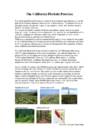
relative, the coastal redwood. This region also holds a number of threatened endemic species such as the giant kangaroo rat and the desert slender salamander, and some of the last individuals of the Critically Endangered California condor can still be found here. In fact, it is the largest avian breeding ground in the United States. Wilderness destruction caused by commercial farming is a major threat for the region as the California Floristic Province generates half of all the agricultural products used by U.S. consumers. The hotspot is also heavily threatened by the expansion of urban areas, pollution, and road construction. The California Floristic Province hotspot extend over 293.800 square kilometers. 108.715 square kilometers of this area are protected and, with the higher level of protection are 30.002 square kilometers. Hotspot vegetation is remaining about 73.451 square kilometers.There are 2.124 endemic plant species, 4 endemic
kõrgharidustasemeõppeasutust. Kõrgkoole on kahte tüüpi: · a)traditsioonilised ülikoolid · b) kõrgkoolid, kus ei tehta akadeemilist teadustööd. Viit kõrgkooli haldab riik, lisaks on kolm erakõrgkooli, mida riik samuti finantsiliselt toetab. Kõrgkoolitüübid University of Iceland ja University of Akureyri tegutsevad eraldi seaduse alusel Reykjaviki Ülikool, Bifrösti Ülikool ja Islandi Kunstiakadeemia on erakõrgkoolid Agricultural University ja Holar University College) on riigiülikoolid Õppemaks Riigi kõrgkoolides õppemaksu ei ole, kuid on registreerimistasu (46 000 islandi krooni) (praeguse kursi järgi umbes 3600 EEK) Õppemaks erakõrgkoolides varieerub. Õppemaks bakalaureuse taseme üliõpilastele on 120 000 350 000 islandi krooni (praeguse kursi järgi 9600 28000 EEK) Lisaks sellele maksavad üliõpilased väikest üliõpilasorganisatsioonide liikmemaksu.
luitevallid. Mullad Mullad on üsna hästi haritavad. Keskmine viljakus. Arvukad rohumaad on eelduseks piimakarjakasvatusele. Muld vajab kohati kuivendamist. Suur üleuputuse oht. Põllumajandusmaa kasutamine Näitaja Hektarites(ha) Protsentides( %) Riigi pindala 4154,00 100 põllumajanduslik maa kokku 1894,80 45,6 (agricultural land) põllumaa (arable land) 1042,40 25,1 püsikultuuride all 36,40 0,9 (permanent crops) heina- ja karjamaad 816,00 19,6 (permanent meadows, pastures) Niisutatav maa (agricultural 0 0 area irrigated ) Põllumajanduslikku maad 0,0001 0 Põllumajanduse spetsialiseerumine • Enim kasvatatud kaupade graafik. Osatähtsus riigi majanduses Näitajad Kui suur on riigi sisemajanduse 731
Pollution of the Baltic Sea I have chosen to write my science report about pollution of the Baltic Sea. Nowadays it is a big problem to people who live in the marine region. In this report, I want to know the reason of this issue and how could we solve it. High population density, intensive agricultural production and other human activities have caused this high level pollution of the Baltic Sea. The shipment of crude oil has grown from 45 million tons to 175 million tons and this only by 10 years. Its condition is a challenge for the nine coastal states and their populations - there are 90 million people living in this catchment area. [1] The sources of marine pollution are municipal and industrial waste inputs directly into
total fatty acids and in polar lipids from the milk fat globule membrane"- Olivia Ménard, Sarfraz Ahmad, Florence Rousseau, Valérie Briard-Bion, Frédéric Gaucheron,Christelle Lopez ,,Effects of acidification on physico-chemical characteristics ofbuffalomilk: A comparison with cow's milk"- S.Ahmad, I. Gaucher jt ,,Food Chemistry" ,,Encyclopedia of Dairy Sciences" (2.osa) "Animals that Produce Dairy Foods | Water Buffalo" - M. S. Khan "Agricultural Systems" - Berentsen, Stöckle, Walker Tänan tähelepanu eest!
.................. problem nowadays. (tarbimine, kohutav/hirmutekitav) 6. ............ is a deep feeling of guilt for something wrong or bad that you have done. (süümepiin/kibe kahetsus) 7. The new car is ................................ (tarbib vähem kütust). 8. A great number of farmers take up ...................... nowadays. (orgaaniline põllumajandus) 9. ....................... and .............. are used less and less on farms. (kunstväetised, taimekaitsevahendid) 10. Industrial and agricultural waste mustn't be .................... into rivers and lakes. (maha laadima) 11. Waste destroys .................... land and ........................ water bodies.(viljakas, ummistama) 12. Calgon ................ your washing machine. (kaitsma) 13. Only ............... materials should be taken to a special .................... (mittekorduvkasutatavad, prügila) 14. Traditional family roles were ............ in this family, so that the father found himself looking after the house
South of the tundra, on the Canadian Shield, summers are short and warm, and winters are long and cold. Annual precipitation is abundant, allowing coniferous forests to establish and grow. On the Pacific coast, the combination of heavy rainfall and mild temperatures year round supports Canada, Kärt Kalvet 8a temperate rain forests. On the Prairies, the large number of days of sunshine affects the development of the agricultural landscape. In the Maritimes, the Atlantic Ocean moderates the climate such that winters are generally long and mild, and summers are short and cool. These conditions help in the development of forests. Finally, around the Great Lakes and alongside the St. Lawrence River as far downstream as the city of Québec, the climate is characterized by relatively warm summers and cool winters, moderated by surrounding water bodies. These
production an advantage over other fuels. But sugarcane is also the major source of sugar in the world; about 80% of today's sugar is made from sugarcane, cultivated in tropical and subtropical areas of the southern hemisphere. In Brazil, however, sugarcane utilisation for biofuels does not pose competition for sugar production, as sugarcane occupies about 10% of the current planted area, and only 50% of it is used for ethanol feedstock. Sugarcane cultivation takes up only 2.5% of the total agricultural land available and it has been predicted that there is plenty of potential for agricultural expansion (Padula et al, 2007). It is well accepted that, in Brazil, the current large-scale sugarcane production does not compromise food production, and even an expansion would be possible without constraints. Sugarcane is mostly cultivated in the southeast region of Brazil and sugarcane production has limited impact on deforestation,
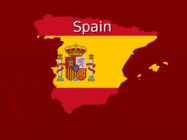
► Subtropical climatic zone (2 seasons) ► Summers are hot and dry in Spain, winters are rainy ► One of the driest countries in Europe (200-300mm per year / m²) ► Mineral resources : iron-, zinc-, copper-, lead- and uranium ore and mercury Population ► As at July 2007 - more than 40 million people (80% Hispanic, the rest Galician and Basques) ► Also Portuguese and Gypsies (mainly in Andalusia) Economy ► Industrialand agricultural ► Large Viticulture and wine production in the earth, a world leader in the production of olive oil ► The biggest export article s are oranges, mandarins and other citrus fruits ► Goods are mainly exported from France, China, Germany and Italy Peculiarities ► The main religion is Roman Catholicism ► Roman Catholic - 76% (2% other faith, and 19% atheists) ► Bullfighting - a traditional spectacle, where bulls are
sh metsaga 2086,1 47,7 761,1 73,0 1325,0 39,8 2086,1 46,1 of which stocked metsata 125,9 2,9 45,1 4,3 80,9 2,4 125,9 2,8 unstocked Põõsastik 78,8 1,8 3,0 0,3 75,7 2,3 78,8 1,7 Bushes Põllumajanudusmaa 1373,8 31,4 11,7 1,1 1362,1 40,9 1373,8 30,4 Agricultural land Soo 232,9 5,3 164,5 15,8 68,4 2,1 232,9 5,1 Bogs Siseveed 101,2 2,3 21,5 2,1 79,7 2,4 254,1 5,6 Inland water bodies Asustusala 173,6 4,0 0,8 0,1 172,9 5,2 173,6 3,8 Urban settlements Teed 62,1 1,4 5,9 0,6 56,2 1,7 62,1 1,4 Roads
There are five big cities in Australia: Sydney, Melbourne, Adelaide, Perth and Brisbane. Each city is the capital of the state in which it is situated. Most of the factories are concentrated in or around the big cities. They produce goods for the motor-car, machine-building, clothing and food industries. Sydney, Melbourne, Adelaide, Brisbane and Perth are the country's main ports. Agriculture is the main occupation in Australia. Wheat and sugar are the main agricultural crops, fruit-growing is also highly developed. Australia is famous for its sheep. The great sheep-farms, called sheep-stations are found in many parts of the country. Today there are about fifteen million people in Australia, most of them are of British origin. There are now only 40000 full aborigines in the country. The Commonwealth of Australia is a self-governing federal state. Formally the head of the state is the King or Queen of England represented by the Governor-General
Estonia is located in the Northern Europe and is a state in the Baltic region It is bordered to the north by the Gulf of Finland, to the west by the Baltic Sea, to the south by Latvia, and to the east by Lake Peipus(Peipsi) and the Russian Federation.Estonia also has a number of islands: Saaremaa and Hiiumaa, which are the most known are also the two biggest ones.The territory of Estonia covers 45,227 km2. There is 3,794 kilometers of coastline marked by numerous bays, straits, and inlets. The Republic of Estonia is divided into fifteen counties: Hiiumaa, Saaremaa, Läänemaa, Harjumaa, Lääne-Virumaa, Ida-Virumaa, Tartumaa, Jõgevamaa, Järvamaa, Raplamaa, Viljandimaa, Pärnumaa, Valgamaa, Põlvamaa and Võrumaa. The capital city of estonia is Tallinn. Estonia is influenced by a temperate seasonal climate. Estonia has four seasons of near-equal length. July is the warmest month, and February is the coldest month. Snow cover, which is d...
 annaabi.ee