 10 punkti
Autor soovib selle materjali allalaadimise eest saada 10 punkti.
10 punkti
Autor soovib selle materjali allalaadimise eest saada 10 punkti.
 ~ 5 lehte
Lehekülgede arv dokumendis
~ 5 lehte
Lehekülgede arv dokumendis
 2012-11-26
Kuupäev, millal dokument üles laeti
2012-11-26
Kuupäev, millal dokument üles laeti
 7 laadimist
Kokku alla laetud
7 laadimist
Kokku alla laetud
 0 arvamust
Teiste kasutajate poolt lisatud kommentaarid
0 arvamust
Teiste kasutajate poolt lisatud kommentaarid
 susservusser
Õppematerjali autor
susservusser
Õppematerjali autor
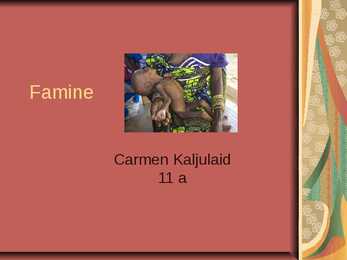
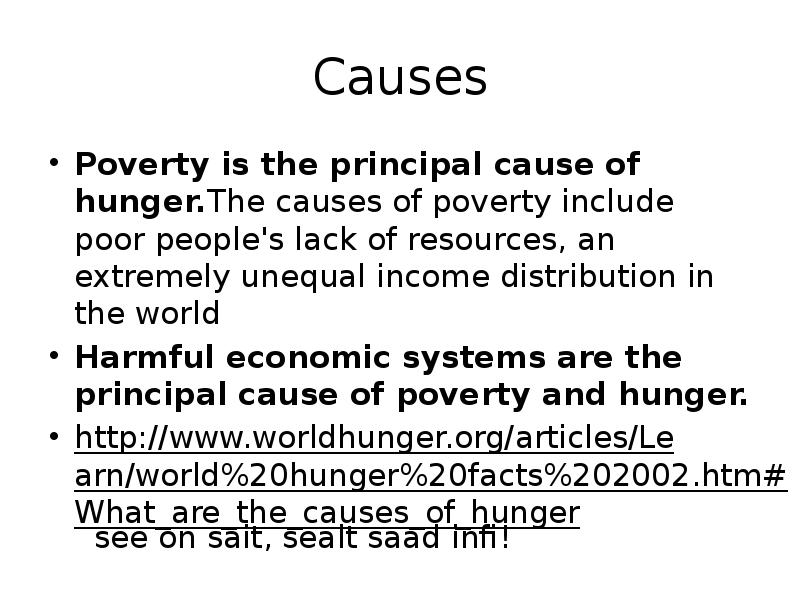
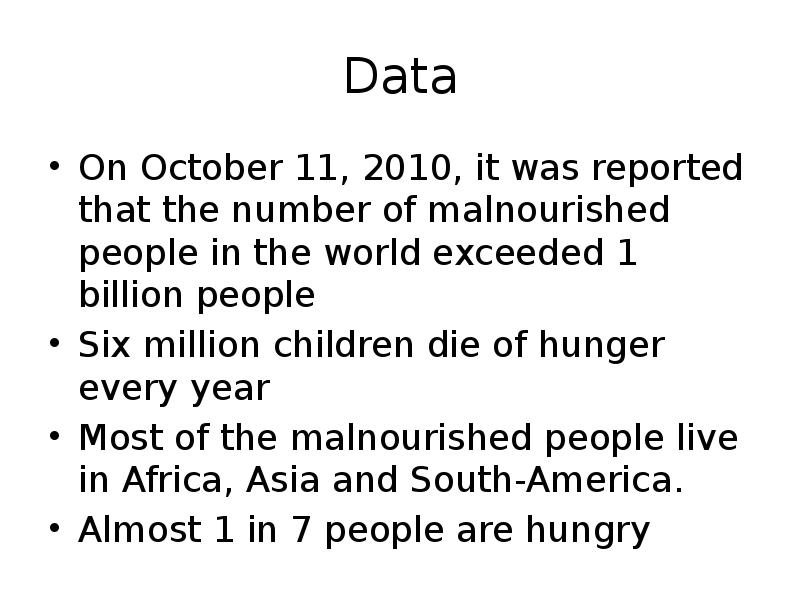
Famine Carmen Kaljulaid 11 a World Hunger, Poverty & Famine: How They Fit Together 923 million people across the world are hungry. In essence, hunger is the most extreme form of poverty, where individuals or families cannot afford to meet their most basic need for food. Hunger manifests itself in many ways other than starvation and famine. Most poor people who battle hunger deal with chronic undernourishment and vitamin or mineral deficiencies, which result in stunted growth, weakness and heightened susceptibility to illness. Countries in which a large portion of the population battles hunger daily are usually poor and often lack the social safety nets we enjoy, such as soup kitchens, food stamps, and job training programs. When a family that lives in a poor country cannot grow enough food or earn enough money to buy
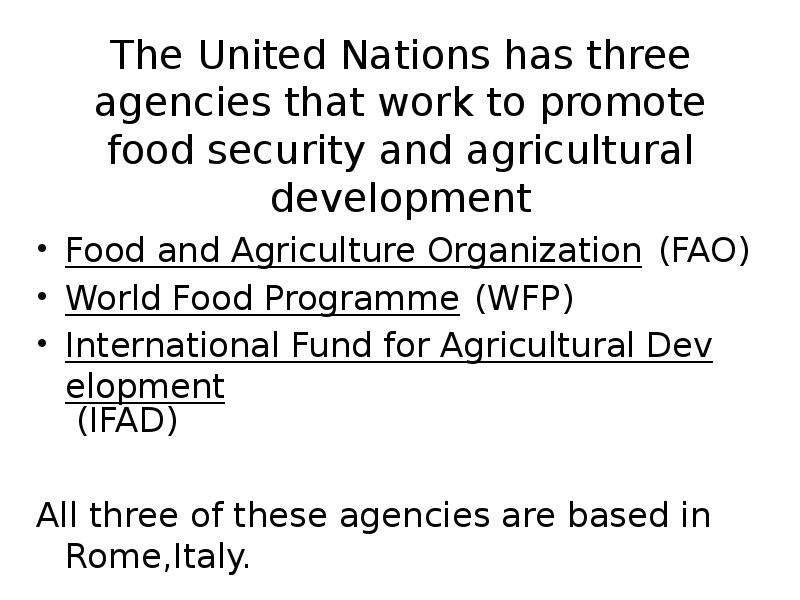
1. UN as a world organization The United Nations officially came into existence on 24 October 1945, when the UN Charter had been ratified by a majority of the original 51 Member States. The day is now celebrated each year around the world as United Nations Day. The purpose of the United Nations is to bring all nations of the world together to work for peace and development, based on the principles of justice, human dignity and the well-being of all people. It affords the opportunity for countries to balance global interdependence and national interests when addressing international problems. There are currently 192 Members of the United Nations. The Aims of the United Nations: -To keep peace throughout the world. -To develop friendly relations between nations. -To work together to help people live better lives, to eliminate poverty, disease and illiteracy in the world, to stop environmental destruction and to encourage respect for each other's rights and freedoms. -To be a centre fo
TALLINNA ÜLIKOOL POLITICAL SCIENCE AND GOVERNMENT INSTITUTE ANNELI PALM CRITISIM ABOUT IMF AND WORLD BANK INTERNATIONAL POLITICAL ECONOMY (RIR6032/RIR6004) ESSAY 2014 Contents TALLINNA ÜLIKOOL.............................................................................................. 1 Introduction............................................................................................................ 3 Basic of liberalism.................................................................................................. 4 International Monetary Fund and World Bank.........................................................4 IMF(International Monetary Fund)........................................................................4 WB(World Bank).................................................................................................. 5 Criticism..............................
The Troubled Peace 1 a) The Nazis didn't care for any other nationalities, they used people who weren't German only for ''slave work'' . Germanys only concern was to keep themselves happy and powerful. They wanted to make themselves the superior race. Hitlers idea of the perfect race, the Aryan race also didn't help, because the Aryan race should have people with light eyes,hair and skin, they should be tall and powerful. He didn't care for people who didn't meet his expectations of the perfect race. In his eyes all other groups of people like the Russians, Jews and just crazy, crippled or diseased people were worthless and didn't have any other use than for slave work or just killing. b) After the war twenty-four major political and military leaders of Nazi Germany, indicted for aggressive war, war crimes, and crimes against humanity, were brought to trial before the British, French, Russian and American judges. More than 100 additional def
· Statue of Liberty Gift from France in recognition of the friendship established during the American Revolution Situated on Ellis Island Symbol of freedom and democracy · Causes of immigration from Europe in the 19th century America- land of economic opportunity Irish, German, French, British immigrants · Different waves of immigration Irish - 1840, 207 000 Irish started to emigrate in large numbers as Britain eased travel restrictions because of the Irish Potato Famine. In 1848, bad crops and failed revolutions led to emigration of 435,000 Germans, 267,000 British and 77,000 French immigrants Immigration patterns of the 1930s were dominated by the Great Depression Between 1840 and 1930, 900,000 Canadians left Quebec to emigrate to the United States The 1910s marked the high point of Italian, Swedish and Norwegian immigration · Jewish immigration Have been present in the USA since 17th century MAIN REASONS:
Water pollution Attention for water pollution exploded in the 1980s. The oil spill of the Exxon Valdez showed many around the world just how horrible the effects of water pollution could be. However, even the Exxon Valdez spill barely touched the surface of the problem of water pollution. The ship spilt only 5% of the oil spilt that year, and oil is just one of many pollutants that people dump into the water every year. Every year, 14 billions pounds of sewage, sludge, and garbage are dumped into the world's oceans. 19 trillion gallons of waste also enter the water annually. The problem of ocean pollution affects every nation around the world. This is especially true because water is able to transport pollution from one location to another. For many years, chemicals were dumped into bodies of water without concern. While many countries have now banned such behavior, it continues to go on today. As the world has industrialized and its population has grown, the problem of water poll
Tallinn English College Report of Canada 8a Teacher: Merike Sisask Composer: Kärt Kalvet 2010 Canada, Kärt Kalvet 8a Canada General Information Canada is in North America. It's area is 9220970 sq km. Canada's population is 313.612.000 people. Canada is divided into 10 provinces and 3 territories. The capital of Canada is Ottawa. Canada has constitutional monarchy. The head of state in Canada's government is the Queen of England. There are two main languages in Canada: English and French. Canada's curreny is Canadian dollar (1 dollar=100 cents[Can$]). The highest peak of Canada is Mount Logan, 5959 metres. The lowest point is sea level. The longest river is the Mackenzie. The climate and geography of Canada vary greatly from temperate in the south to arctic in the north and from islands and plains in the east to mountains in the west. Location Canada is located in the northern-most region o
Life in Estonia through the eyes of an economics student With a population of 1 313 271 people, Estonia is one of the least populous member states of the European Union. However, according to the IMF, it is a developed country with an advanced and high-income economy. Estonia follows market economy system which ensures the little government intervention and the determination of prices of goods and services in a free price system. Therefore, economic decisions are guided solely by the aggregate interactions of a country's citizens and businesses. In addition to mentioned afore, Estonia tends to perform favourably in measurements of civil liberties, education, and press freedom. Living in Estonia has many of its good sides, for instance it is a secure place from nature disasters and it has a beautiful nature. Although, when not to look only through rose-tinted glasses, there are still some minuses in country’s organization. So, what are the beneficial and negative
 annaabi.ee







Kõik kommentaarid