Capital Punishment should (not) be abolished Capital punishment has been an ancient way of punishment, which is thought to have started with blood feud and human sacrifices to gods. There are different points of views supporting or held against this sort of punishment. First of all, it is inhumane, primitive and brutal way of revenge, which is contradiction to the basic values of Christian Europe. What is more, it stands in the way of society progressing morally.
Capital punishments should not be abolished There is a big argument in society should capital punishment be abolished or not? Some people think that some criminals should just spend their whole life in prison and suffer there instead of capital punishment. I think that they deserve capital punishment. Why? If they spend their whole life in prison, it means, they will have three free meals in a day and they can also watch tv, study, work, don't have to pay taxes and some of the prisons look more nicer than someone's ordinary home and who pays for their free living? We do. I also think
Capital punishment should be abolished Capital punishment is a form of punishment where a person's life is taken. Capital punishment has been abolished in Estonia since the year 1998, but the last man was executed in 1991. One of the reasons for not abolishing capital punishment are that a life long sentence is not as effective as execution, and that the death penalty affirms the right to life by punishing those who violate it in the most serious form. For example: death penalty should exist for serial killers. Another reason is that the criminals who would have been executed are now the country's
Should The Monarchy Be Abolished Monarchy is one of the oldest forms of government, which echoes in the leadership of tribal chiefs. It is a form of government in which an individual has the actual or nominal supreme power, who is the head of state, often for life or until abdication. Since 1800, most of the world's monarchies have been abolished, and most of the nations that retain monarchs are constitutional monarchies. The most recent nation to abolish its monarchy was Nepal, which became a republic in this year, on May 28. Currently 44 nations in the world have monarchs as heads of state, 16 of which are Commonwealth realms that recognize Elizabeth II of the United Kingdom as head of state. After commonwealth realm there are some more types of monarchy: constitutional, semi- constitutional, absolute and subnational monarchies.
Although the killing of the person also needs money, it's still way cheaper than to pay for at least 40 years for all the life needs in prison. The main con of the capital punishment is that if the person actually didn't commit the crime, he or she was punished for, will die as innocent. Nobody can wake him or her up again, after that punishment. Second con is the question of humanity. A lot of countries think that killing the people is inhuman and therefore have abolished the capital punishment. Third con is that the person will just die, not get the actual punishment. Maybe lifetime prisonment would be better for such person, because then he/she will suffer more instead of just dying. So in my opinion although the capital punishment has it's pros and cons, it should be abolished, because the people, who get prisonment, will actually suffer more than they would for just dying.
Capital Punishment Should be Abolished Evidence suggests that the death penalty does not deter people from committing crimes. It is a cruel and cold blooded form of punishment and there have been instances where innocent people were sentenced to death and later found to be innocent. Why is it wrong? Capital punishment is a barbarous survival from a less enlightened and refined age; it is incongruous and incompatible with our present standard of civilization and humanity. It has been abolished by many states and countries, and we must look forward to the day when all the governments will follow this. It's a murder. The first question that comes to mind is, is it ethically acceptable to kill someone? When you execute a person, what is the difference between you and the criminal who has committed the crime of killing another individual. Furthermore, capital punishment can be inappropriate and unjust. It's not necessary.There is always a solution
Capital punishment should to be abolished Capital punishment is a form of punishment where a person's life is taken. This is one of the most controversial topics today. People are either favour or against it. Firstly capital punishment saves money compared to the alternative of life in prison because criminals deserve to die, not stay in jail and live comfortable life. Also when a killer stays in prison he takes up space in already over crowed prisons.
Capital punishment. Some people say that capital punishment should not be abolished. In some points I agree with it but in another points I disagree. When somebody kill someone, then it is impossible describe the pain that family members and friends have to feel. So it seems fair to punish murderer in that awful way, but then murderers family members get hurt and it would be vicious circle. Also the death penalty takes away opportunity to regret those horrible mistakes. Some people can change and would live life properly. But then, some people can't change
Pros and Cons of the Capital Punishment. The death penalty is a controversial issue in most countries, but it is completely abolished in our country. Arguments for and against it are based on moral, practical, religious and emotional groups. On the one hand, there are advocates of the death penalty, who argue that it deters crime, improves community by making them sure, that convicted criminals would never find their way out onto the streets to offend again and it is cheaper than keeping convicted criminals in high security prison for the rest of their natural lives.
Capital punishment Capital punishment is the killing of a person by judicial process as a punishment for an great offence. It has been used in almost every part of the globe. There is an international organisation called Amnesty International who are fighting for human rights. Thanks for them there are many countries who abolished it. But is it right or should capital punishment exist? Firstly I belive capital punishment should exist because if you gonna take somebody's life it is only fair when you pay for this with your own life. Many people are thinking how cruel it is for a criminal but we should also think of the families that are broken apart because of the merciless acts of these criminals. Secondly it is too expensive to hold prisoners who have lifelong punishment. Especially it affects
want to make a difference. It will happen when diverse groups from industry, environment, schools, service clubs, business, governments & the public come together and work towards a common vision of sustainability for our communities - balancing the needs of human and natural systems. My vision is of a world free of war, hatred, and greed. It is a world in balance with nature, a place where poverty and starvation have been abolished and replaced with equality for all. It is a time where we have liberated ourselves from the grip of racism and discrimination and embrace individual and cultural diversity. I see a future in which we meet the basic needs of every man, woman, and child and extend to all the opportunity to realize their hopes and dreams for a better life. It is a vision where education and health are accessible to everyone and where all human beings share in clean water and air.
Argumentative essay Should monarchy be abolished in Britain?! The monarch's power over the nation has fallen so drastically that nowadays Britain's political system is described as constitutional monarchy. In fact the power is reduced so much that it is argued weather monarchy is needed at all. Firstly, kings and queens have been a part of Britain for centuries so the idea that royal families should no longer exist just does not seem right. I strongly believe that abolishing monarchy will cause more problems than it solves
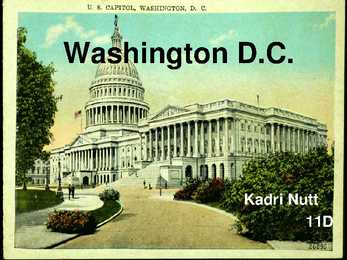
District of Columbia · is located on the banks of the Potomac River · bordered by the states of Virginia and Maryland Something about History · 1791--George Washington chooses the site for the new permanent capital · Pierre-Charles L'Enfant designes the basic plan for Washington · 1800--The nation's government moves to Washington D.C. · 1814--English troops burn the capitol and other federal buildings during the War of 1812 · 1862--Slavery is abolished in Washington D.C. during the Civil War · 1888--Washington Monument opens to the public · 1943--The Jefferson Memorial is dedicated · 1961--The 23rd Amendment to the Constitution gives citizens of the District of Columbia the right to vote in presidential elections · 1992--The House of Rep. approves statehood for Washington D.C., but the Senate does not · 2001--Terrorist attack destroys part of the Pentagon Building Interesting Places The Capitol Building
of the Great Guild was introduced in the late 15th century. There were close ties between the guild and the town rules: only members of the Great Guild had the right to belong to the town council and could be elected for mayor. Tallinn's small coat of arms is also the Great Guild's coat of arms. Guild was led by Alderman, with the assistance of two advisers. Guild only accepted merchants, who had a house, wife and who was local. Great Guild activity ended in 1920, when Estonia abolished guilds. The Great Guild Hall The Great Guild Hall is one of the most outstanding buildings of medieval Tallinn. In 1406, it was purchased Burgomaster Gosschalk Schotelmund's house on Pikk street. In 1410, the construction was completed. Same year the Great Guild moved into the building. The facade was designed in a style characteristic of gothic Tallinn. The 16th century witnessed the addition of a gable tower with wind vane, as well as a light latern above the main portal
ei j see ngemata tulevikuski. Eelmistest erineb kttemaksu kontsept. Selle peamine sisu on mitte kuritegu vltida, vaid tasuda ktte vritikitumise eest, s.o kurjategijale ktte maksta. Videtakse, et iglus nuab kttemaksu ja hiskond nitab selle lbi oma hukkamistu. Nii oleks surmanuhtlus hiskondlike normide peegeldus. I've paid close attention to this issue. Unfortunately, not yet rahuaegset the death penalty in all countries in the Baltic countries belonging to the Board have been abolished. I've often been faced with the argument that public opinion is against the death penalty and the time is not yet ripe for this purpose. For and against The most common pooltvide the death penalty is the need for society. Indeed, the deterrent is the law and order. According scarytheory is necessary for the welfare of society to kill rioter, crowd of other people, a similar time to send something back to the idea. There have been countless studies, but none of them are proven,
The 2004 YARs were therefore incorporated in relatively few contracts of carriage. The YAR 2016 largely reflect the YAR 1994, which BIMCO has to date recommended as the basis for general average adjustments, while containing some useful clarifications and additions such as on low value cargoes. Importantly, it has been agreed that an annual interest rate of LIBOR plus 4 percentage points applies according to the new rules, while the commission of 2 per cent on owners' disbursements has been abolished. The 1994 version of the YAR has previously remained prominent despite a more recent 2004 revision. The 2004 version was considered less favourable to shipowners and BIMCO has twice reviewed and decided in favour of using the 1994 version, until now. YAR 2004 versioon oli vähem soodne laevaomanikutele, selle pärast ei leidnud eriti populaarsust. Siin on mõned näited, kuidas YAR 2016 erineb YARist 2004:
our everyday life, how it affects our lives in many areas and how can we benefit from it. The booklet gives also a very readable overview of EU’s history and how its member states have come together. It’s a great starting point to know the roots, history and functioning of the European Union. I found this booklet interesting because it provides an insight into relevance of the EU. I have never thought that making phone calls and flying has become cheaper as a result of EU. EU has abolished national monopolies and has permitted competition. For me the most important thing is air, water and food quality. The EU has introduced compulsory quality standards for the air we breathe, there are quality standards for drinking water as well and EU has forced all food manufacturers to label their products. All member states must follow rules made by EU because the threat to our environment can only be tackled collectively. EU has made our lives easier
and countries that belong to the Union. Europe is our home and that’s why we need to know where we live and how it’s gonna affect us. I found these sections of booklet intresting beacuse they recalled what the European Union really is. And I was supriced to find out that in 1952, coal was as important as today oil and natural gas. 1. Expanding - laieneb 2. Permitted – lubatud; lasti tekkida 3. Intervenes - sekkub 4. Insufficient – ebapiisavalt; ei ole piisavalt 5. Abolished – kaotas 6. Strengthened – suurendati; tugevdatud 7. Doorstep sales - lävemüük 8. The warranty period – garantiiaeg 9. Environmental pollution – keskkonnareostus 10.A term abroad – semester välismaal 11.Subsequently – edaspidi, järgnevalt 12. Remote to – kauge; kaugel 13.Common currency – ühisraha 14.Queues – järjekord 15.Internal market – ühtne turg 16.Unscrupulous activities – must äri 17.Exploit - ära kasutama 18.Frontier – piiriala 19
Medieval Tallinn enjoyed a strategic position at the crossroads of trade between Western and Northern Europe and Russia. The city, with a population of 8,000, was very well fortified with city walls and 66 defence towers. During the Great Northern War the Swedish troops based in Tallinn capitulated to Imperial Russia in 1710, but the local self-government institutions retained their cultural and economical autonomy within Imperial Russia as the Duchy of Estonia. The Magistracy of Reval was abolished in 1889. The 19th century brought industrialization of the city and the port kept its importance. During the last decades of the century Russification measures became stronger. February 1918, the Independence Manifesto was proclaimed in Tallinn, followed by Imperial German occupation and a war of independence with Russia. On 2
missionaries were to move on, leaving the old missions behind to become parish churches as they built new missions in more distant locations peopled by non- converted tribes or "gentiles." In fact, neither the Spanish government nor the Franciscans ever judged any of the neophytes ready for "secularization" or life outside the mission system, and Christian natives or "Mission Indians" and their descendants remained at the missions until the system was abolished in 1834. By then, sixty-five years of exposure to Europeans had reduced the number of California's native peoples by half to about 150,000. Although outright warfare cost few lives, Spaniards had introduced not only Christianity but also new diseases to which the neophytes had no resistance, and thousands died in epidemics. Crowded, harsh living conditions at the missions contributed to the Indians' health problems, and infant mortality and death rates among young children soared
THE CIVIL WAR Expansion brought many problems, the most important was the problem of slavery. The Republican Party was made to gain support against slavery. After Abraham Lincoln, the republican candidate, was elected for President in 1860 the northern part of america was slave free and it south there was still slavery. In 1861 the war broke out between south and west, and in the question of slavery. In 1865 south had to surrender and the north had won. Then slavery was abolished all over America. INDUSTRIALIZATION AND IMMIGRATION In less than fifty years the United States was transformed from a rural republic into an urban state. The nation's economic progress, based on iron, steam and electrical power was speeded up by thousands of inventions like telephone and typewriter. 20 million immigrants poured into the country between 1870 and 1910. they agreed to work at almost any wages and under almost any conditions.
was realised principally through the creation of numerous new boroughs, all of which were Protestant-dominated. By the end of the seventeenth century all Catholics, representing some 85% of Ireland's population then, were banned from the Irish parliament. Political power rested entirely in the hands of a British settler-colonial, and more specifically Anglican, minority while the Catholic population suffered severe political and economic privations. In 1801, this colonial parliament was abolished and Ireland became an integral part of a new United Kingdom of Great Britain and Ireland under the Act of Union. Catholics were still banned from sitting in that new parliament until Catholic Emancipation was attained in 1829, the principal condition of which was the removal of the poorer, and thus more radical, Irish freeholders from the franchise. The Irish Parliamentary Party strove from the 1880s to attain Home Rule self-government through the parliamentary constitutional movement
In 1960 from the pressure of the UK the Stockholm Convention establishes European Free Trade Association. In 1963 an agreement is signed creating an association between the European Economic Community and Turkey. In 1965 in Brussels was signed a treaty which combined European Coal and Steel Community, European Atomic Energy Community and the European Economic Community into a single institution. In 1968 a common tariff is intorduced due to the fact, that industrial goods are abolished and in the next year the leaders decide to open a way for European enlargement. In 1970 greater powers are given to the European Parliament, in 1973 Denmark, Ireland and the UK join the European Communities. In 1974 the members start to meet as the European Council three times a year. The next year EEC signes a treaty with 46 African, Caribbean and Pacific countries and greater power is given to European Parliament. In 1979 the first direct elections to the European Parliament took place
importation of sugar ships. As a result, the sugar cane began to look for replacements. Found that sugar beet can be separated. Beet-sugar was very low at that time, however, and sugar prices rose. After the Napoleonic wars the French abandoned the stock trades under the control of sugar cane, and became available again. Beet-sugar production died. The situation changed again, however, if the 19th mid-century, slavery was abolished, cheap labor has disappeared, and the price of sugar rose again. By that time, was bred to sugar beet and sugar cane had reached the same level. Was about to begin an entirely new chapter in the history of the sugar. However, from more than half the world cane sugar production continues today.
) new machines ( weaving ), factories established new methods of farming England is rich in coal, wool, iron ore international trade boom canals and railways were built population increased to London : the largest and richest city in Europe ( population 1mln ) 18101820 the Highland Clearances in Scotland local farmers could not pay the high rent so they left and they were replaced by sheep 19th c. A time of great social reform slave trade abolished laws to regulate work primary schools 18371901 the Victorian Age Queen Victoria longest reigning monarch, 64 years her husband was Prince Albert ( died in 1861 > Victoria's long mourning ) nine children British Empire very powerful ( 1/4 of the world's territory and population Empire strongest in 1920 ( the peak ) The Crimean War Between Russia and the alliance of France, Turkey, Austria and Britain to halt Russian expansion into the Balkans Russia lost, many casualties on both sides
incorporated into a system that figured prominently in the state regulations for education. In fact, the period for exercise or gymnastics was equal to the time spent on art and music combined. All Greek cities had a gymnasium, a courtyard for jumping, running, and wrestling. As the Roman Empire ascended, the Greek gymnastics gave way to gymnastics whose purpose was military training. The Romans, for example, introduced the wooden horse. In 393 AD the Emperor Theodosius abolished the Olympic Games, which by then had become corrupt, and gymnastics along with other sports had been declined. For centuries, gymnastics was all but forgotten. Girolamo Mercuriale In the fifteenth century, Girolamo Mercuriale from Forlì (Italy) wrote De Arte Gymnastica, that brought together his study of the attitudes of the ancients toward diet, exercise and hygiene, and the use of natural methods for the cure of disease. De Arte Gymnastica also explained the
the gentry, for the farmer and for the servants. One of the main activities at Sandringham was shooting. The Prince of Wales liked to be outdoors as much as possible and he devised the idea of ST - Sandringham Time. The idea was to make the most of the winter daylight hours for his passion for shooting and so the clocks all over the Sandringham Estate were advanced by half an hour. King George V maintained this custom during his lifetime, but King Edward VIII abolished it on his accession in 1936. Sandringham was the setting for some dramatic events. Queen Victoria did not pay her first visit to Sandringham until 1871, when the Prince of Wales suffered an attack of typhoid fever (the illness of which his father had died) while staying there. Margus Maasik G1a To the relief of Queen Victoria and the nation, the Prince survived and made a slow recovery. The eldest son of the Prince and Princess of Wales was not so lucky 21 years later. Prince
That Dominion came into being when all of the island of Ireland seceded from the United Kingdom of Great Britain and Ireland on 6 December 1922. However, the following day the Parliament of Northern Ireland exercised its right under the Anglo-Irish Treaty to opt back into the United Kingdom. This action, known as the Partition of Ireland, followed four attempts to introduce devolved autonomous government over the whole island of Ireland (in 1886, 1893, 1914 and 1920). The Irish Free State was abolished when Ireland was formally established on 29 December 1937, the day the Constitution of Ireland came into force. Irish independence in 1922 was preceded by the Easter Rising of 1916, when Irish volunteers and the Irish Citizen Army took over sites in Dublin and Galway under terms expressed in the Proclamation of the Irish Republic. The seven signatories of this proclamation, Patrick Pearse, Thomas MacDonagh, Thomas Clarke, Sean MacDiarmada,
1837.- U.S Supreme Court rules in favor of cherokees. Jackson refused to accept court's decision + ordered army to round up cherokees (he braked the law) 1838.-,,Trail of tears" ¼ (4000) died on a 1200-mile forced march to the indian territory (now Oklahoma) 1838.- 1000 escaped in North Carolina mountains Will Thomas adopted cherokee, brought 56000 acres+gave it to cherokees- >eastern cherokees Nation+opened much of their land to white settlers Set up schools, churches.. Late 1800's congress abolished Cherokee Nation 1887.-Dawes Act-> a new ,,Cherokee Nation" disolved. 1954.-cherokee nation recognized as a ,,Federally Recognised Tribe" Today many (most) cherokees live in northeast Oklahoma 1987.-U.S Congress officially recognized ,,Trail of tears National Historic Trial"
legitimacy. South African state formed out of: Conquest Colonization Slavery Indentured labour Racially discriminatory laws reserved jobs for whites; differential pay-scales etc Post 1910 state strong and centralized institutionalised racism: "power, wealth and privileges [distributed] unequally on a racial basis" (Giliomee, 1995, p190) Farming and mining (the basis of the economy) both required large work forces. Once slavery was abolished, need for to generate labour force. Taxation (poll tax) used to force blacks into labour force. Segregation used to control access of blacks to land. A strong, centralized and unequal state. 1936 Black voters removed from common roll. 1956 Coloured voters removed from common roll. 1948 `Apartheid' state based on idea of `separate development'. Contested control of the state In South Africa, different population groups made conflicting claims to self-government (i.e. democratic rule).
b) The cruise ship hit a rock and ....... A) sank B) drowned C) flooded D) crashed c) I lost the keys to my house and had to climb in ....... the window. A) by B) to C) through D) with d) The village was completely ....... in an earthquake. A) collapsed B) destroyed C) ruined D) broken e) The bus driver couldn't ....... the accident. A) protect B) control C) provide D) prevent f) After police found drugs there, the disco .......was A) closed down B) banned C) ignored D) abolished g) During the match, someone ....... fire to the stadium. A) set B) put C) opened D) caught h) We decided not to go camping because of the ....... rain. A) great B) amount C) heavy D) extra i) I had to shut the window because the noise outside was ....... A) shouting B) unbearable C) in danger D) enormous j) When the fire broke out, an electronic alarm ....... A) came in B) opened up C) went off D) put out
Parlament is made up of two chambers the House of Commons and the House of Lords. The House of Lords is made up of people who have inherited family titles and those who have been given titles because of their outstanding work in one filed or another. There are 675 members of the Lords. The main job of the House of Lords is to ´double check` new laws to make sure they are fair and will work. Many people think that the House of Lords should be abolished. The House of Commons have 659 members who have been elected by the British public. The members are called MPs (Members of Parlament). Each MP represents one of the 659 areas in the UK and is a member of a political party. The House of Commons is the most important place for discussing policies and making laws. The party which wins the most seats in the General Election forms the government. The leader of the winning party becomes Prime Minister, his first job is
started hiring Scottish players, the debate over football's amateur status was inflamed and resulted in a move to professionalism in 1885. Initially instituted with a wage limit, this was a massive boon for the northern, predominantly working-class clubs, as opposed to the `gentleman' dominated south. The impact on results for the former was overwhelmingly positive, with the last amateur team to win the FA Cup being the Old Etonians in 1882. Although the wage cap was only abolished in 1959, the foundations of modern-day professional club and international football in Britain had been established. Football as the world sport The popularity of football on the continent was well established by the 19th century, with the first club being Switzerland's Lausanne Football and Cricket Club, established in 1860. However, the actual development of the sport came much later. The Italian Football Federation (FIGC) was formed in 1898 but the league only came
Mediterranean routes. Ibiza began establishing its own trading stations along the nearby Balearic island of Majorca such as Na Guardis, from which large quantities of renowned Balearic slingers were hired as mercenaries who fought for Carthage. The island was reclaimed for Christendom by Aragonese King James I of Aragon in 1235. Since then, the island has had its own self- government in several forms but in 1715 King Philip V of Spain abolished the local government's autonomy. The arrival of democracy in the late 1970s led to the Statute of Autonomy of the Balearic Islands. Today the island is part of the Balearic Autonomous Community, along with Majorca, Minorca and Forment History During the Second Punic War, the island was assaulted by the two Scipio brothers in 209 BC but remained loyal to Carthage. With Carthaginian military luck running out on
Pensions and National Insurance. She also got the job of Conservative spokeswoman on housing and land. Thatcher was one of few Conservative Members of Parliament to support decriminalising male homosexuality, and she voted in favour of legalising abortion. When the Conservative party under Edward Heath won the 1970 general election, Thatcher became an Education Minister. During her first months of work she was forced to make a cut in the education budget and therefore she abolished universal free milk for school-children. This caused a huge protest that gave her the name of "Thatcher Thatcher, Milk Snatcher". However, she also successfully stood against the introduction of library book charges. Within her term she also supported the proposals to close grammar schools and adopt comprehensive secondary education. Furthermore, Mrs. Thatcher also insisted that universities should accept not only school-leavers, but also adults.
closest port in the nearby Iberian peninsula, located in the Valencian Community) as the two areas were administered jointly by the same taifa. Moreover, the tribes who lived in Ibiza and Denia during the period 10601085 were Moorish tribes named Bno Alaglab & BanoMujahed. The island was reclaimed for Christendom by Aragonese King James I of Aragon in 1235. Since then, the island has had its own selfgovernment in several forms but in 1715 King Philip V of Spain abolished the local government's autonomy. The arrival of democracy in the late 1970s led to the Statute of Autonomy of the Balearic Islands. Today the island is part of the Balearic Autonomous Community, along with Majorca, Minorca and Formentera. Geography Ibiza is a part of a group of the western Balearic archip ela g o called the Pitiusa s or "Pine Islands " co m p o s e d of itself and Form e nt era
States and Canada. The Twentieth Century Estonian proclamation of independence in February 1918 was followed shortly by German occupation. After Germany surrendered to the Allies in November 1918, Estonia declared itself an independent democratic republic and repulsed the invading Red Army. In 1920, by the Peace of Tartu, Soviet Russia recognized Estonia's independence. Political parties were abolished in 1934, and President Konstantin Päts instituted an authoritarian regime(reziim). A more democratic constitution came into force in 1938; but the Nazi-Soviet Pact of August 1939, placed the Baltic countries under Soviet control.Complete Soviet military occupation came in June 1940. Following elections in July, Estonia was incorporated into the USSR as a constituent republic. Over 60,000 persons were killed or deported during the occupation's first year
and issued a Declaration of Independence in 1776. Seven years later, the signing of the Treaty of Paris officially recognized independence from Britain. In the nineteenth century, westward expansion of United States territory began, in which the United States would occupy all the North American land east to west. Ratified in 1788, the Constitution serves as the supreme American law in organizing the government; the Supreme Court is responsible for upholding Constitutional law. Slavery was abolished in 1865 by the Thirteenth Amendment to the United States Constitution. In later years, civil rights were extended to women and black Americans. The Progressive Era marked a time of economic growth for the United States, advancing to the Roaring Twenties. However, the Wall Street Crash of 1929 led to the Great Depression, a time of economic downturn and mass unemployment. Consequently, the U.S. government established the New Deal, a series of reform programs that helped "the forgotten men"
Puritans and the Parliament. They controlled London, East Anglia and the Southeast. By 1645 Charles ran out of money and his army deserted. He was defeated at the battle of Naseby, captured and imprisoned. It took them four years to decide what to do with them. They decided to behead him in 1649. After his beheading the Commonwealth or Cromwell's republic was created. However, the government was too severe and it fell in 1660. The Commonwealth abolished the House of Lords, the Anglican Church and Scotland went under Cromwell's rule. 1653 it became a dictatorship. The army was used to retain law and order. The country strictly observed Puritan beliefs no celebration of Christmas or Easter, no games on Sunday. Cromwell died in 1658, his son was his successor, but fucked up. In 1660 Charles II was invited to return to the throne. He was a good and judicious diplomat. Was Catholic yet allowed both Puritans and Catholics to follow their
A black man who tried to sue for his freedom 1857 he lost the case Overall, the Dred Scott decision had the effect of widening the political and social gap between North and South and took the nation closer to the brink of Civil War. · Formation of Confederacy Abraham Lincoln Adaption of constitution S. Carolia stepped out of the union You can't buy slaves outside of the USA · Causes of the Civil War (1861-1865) Unfair taxation (import-export cotton) Slavery (N abolished, S depended on it) States' rights (governement passed laws that threatened south) · Developments and outcome of the war 9th April 1865 end of the war Victory to the Northern States North assisted building up south 15th April assassination of Lincoln War: telegraph, railway transportation, ironclads(soomuslaev) · Emancipation Proclamation st Jan 1 , 1863 all Southern slaves were declared free because Lincoln needed men in his armies.
dissidents resulted in his execution. He wanted to return a more realistic church with vestments and ornaments, to return bischops high Church not the presbyterian individual congreagtions. The Long Parliament. 1640-1653 Summoned in 1640 by King Charles I after the dissolution of the Scots parliament. It sat alomost continuously during the English Civil War. Wanted to establish control over the arbirtary rule of king. Its first session abolished all prerogative courts and declared illegal any taxation without parliamentary consent. Declared king unfit to command the army. Tension between king and the parliament increased until Civil War broke out. The Civil war An armed conflict between English royalists and Parliamentary forces bc of constitutional, economic, religious differences between Charle I and Long Parliament. Oliver Cromwell refored parliamentary army
labour · Relatively few slaves were brought to New England and Middle Atlantic colonies, but their ports and shipowners prospered on the slave trade. · The slave was a chattel could be sold and bought like an animal · No stable family life · Prohibited to learn to read and write · In conflict with the growing revolutionary idea all men are created equal 13. The abolitionist movement. After which event was slavery abolished in the US? Who was the president then? *Abolitionists = · "the underground railroad" · "depots" hiding places · "conductors" guides who helped runaway slaves · "bounty hunters" people who got rewards for escaped slaves 1860 Abraham Lincoln was elected president on an anti-slavery platform *Abolition of Slavery = Sept. 1862 Emancipation Proclamation, which stated that slaves in states at war against the US were free as of Jan. 1, 1863
impact on cotton plantations. Abraham Lincoln was elected as the President in 1860, seven Southern states left, or seceded, from the United States. They formed the Confederate States of America. In April 1861 four more states seceded, and the Civil War began. In less than 5 years, more than 600,000 men were killed. Five days after the surrender treaty was signed, President Abraham Lincoln was assassinated by a Southern sympathizer. But in the end of the war slavery was abolished. At the outbreak of World War I in 1914, the United States remained neutral. However, attacks on ships by German submarines and the discovery of a German plan to involve Mexico in war with the US led Congress to declare war on Germany in 1917. The arrival of two million military units changed the balance enough to enable the Allies to win the war. The Senate didn't want US to get involved with European affairs and they did not ratify the Treaty of
The 2004 YARs were therefore incorporated in relatively few contracts of carriage. The YAR 2016 largely reflect the YAR 1994, which BIMCO has to date recommended as the basis for general average adjustments, while containing some useful clarifications and additions such as on low value cargoes. Importantly, it has been agreed that an annual interest rate of LIBOR plus 4 percentage points applies according to the new rules, while the commission of 2 per cent on owners' disbursements has been abolished. The 1994 version of the YAR has previously remained prominent despite a more recent 2004 revision. The 2004 version was considered less favourable to shipowners and BIMCO has twice reviewed and decided in favour of using the 1994 version, until now. YAR 2004 versioon oli vähem soodne laevaomanikutele, selle pärast ei leidnud eriti populaarsust. Siin on mõned näited, kuidas YAR 2016 erineb YARist 2004:
In connection with this, Russia's first census was organized in the same year. In 1783, the Russian guberniya system spread to the Estonian territories. It was called the `regency' and signified a policy compromise by enlightened absolutism towards the Baltic German nobility. Catherine II partly curbed the nobility's class privileges: the peerage roll lost its former significance, and the Councils of Diet were abolished. The Statthalterschaft extended townspeople's rights also to non-Germans, allowing urban Estonians to get a foot on the social ladder and limited participation in politics. 7|Page 18501918 The national awakening The development of Estonia in the second half of the 19th century is characterized by general modernization; the reorganizing of a static agrarian society into a modern European society,
won his fight in Britain and then devoted the rest of his life to ban the slave trade throughout the world. Between 1810 and 1820 the Highland Clearances took place in Scotland. Local crofters were forced to live their homelands if they couldn't pay the high rents they had been charged. These lands were given over to flocks of sheep. By the end of the decade the Highlands had become a wilderness. The 19th century was generally a time of great social reform: the slave trade was abolished, the employment of women and children was regulated by laws, primary schools were established and men could no longer be excluded from universities or politics because of their religion. Victorian Britain The Victorian age began in 1837, which lasted until Queen Victoria's death in 1901. The period was dominated by three men her Prince Consort, Albert of Saxe-Coburg and two outstanding prime ministers, William Gladstone and Benjamin Disreali. By the end
his son, Joseph I of Portugal, was crowned. In contrast to his father, Joseph I was fond of de Melo, and with the Queen Mother's approval, he appointed Melo as Minister of Foreign Affairs. As the King's confidence in de Melo increased, the King entrusted him with more control of the state. By 1755, Sebastião de Melo was made Prime Minister. Impressed by British economic success he had witnessed while Ambassador, he successfully implemented similar economic policies in Portugal. He abolished slavery in Portugal and in the Portuguese colonies in India; reorganized the army and the navy; restructured the University of Coimbra, and ended discrimination against different Christian sects in Portugal. But Sebastião de Melo's greatest reforms were economic and financial, with the creation of several companies and guilds to regulate every commercial activity. He demarcated the region for production of Port to ensure the wine's quality, and this was the first attempt to control
The duty of the lawyer is not only to punish people for various crimes: from espionage to serial murder and terrorism, but they must do their best to prevent crimes, to fight against evil in our society. The lawyers should help those people, who committed an error (broke the law) to find the right road in their life. Judges can hand down a death sentence for murder in our country. I feel strongly that the death sentence should be abolished. The lawyers protect the rights and legal interests of citizens, institutions and organisations. I want to help people, businesses to solve their problems, I want to help everybody to know the rules that we all have to get along. I think that the profession of a lawyer is one of the most important in the law-governed state, which we are creating now. Seasons 1)There are four seasons in a year: spring, summer, autumn and winter. In the United States autumn is called Fall
121. If you've got demons, make demonade. 122. No wonder they didn't notice. The whole damn empire's naked! 123. To heck with the soup; the hard part is making the duck. 124. When in Rome, pretend the Romans are civilized. 125. Where there's smoke sometimes there's fire but sometimes there's mirrors. 126. You can't make a silk purse out of a sow's ear, but you can't make a leather purse out of a silkworm's ear either. 127. Wise people, though all laws were abolished, would lead the same life. 128. Never mistake knowledge for wisdom: The first helps you make a living; the second helps you make a life. 129. Chance favors the prepared mind. 130. Love is like playing the piano. First you must learn to play by the rules, then you must forget the rules and play from your heart. 131. Judge each day, not by the harvest, but by the seeds you plant. 132. Begin doing what you want to do now. We are not living in eternity. We have only this
side of Dickens' novels. Between the 1770 and 1821, the population of Britain rose from 8.3 million to 14.2 million. London was the largest and richest city in Europe. In 1811 it was the first city in the world to reach a population of a million. It was also an important financial centre: merchants could borrow money from its banks, take out insurance, buy and sell shares. The 19th century was generally a time of great social reform: the slave trade was abolished, the employment of women and children was regulated by laws, primary schools were established, and men could no longer be excluded from universities or politics because of their religion. Translate the following sentences. 1 Tööstusrevolutsioon sai alguse 1733.aasta paiku Inglismaal esimese ketrusvabriku sünniga. 2 Inglismaa tahtis hoida oma leiutisi saladuses ja keelas kõigil, kes olid tehases töötanud, maalt lahkuda.
 annaabi.ee