Leidsid 33 sarnast õppematerjali, mis on seotud failiga "What I Think of Homereading". Need materjalid aitavad sul teemat sügavamalt mõista.
language, books, reading, words, another, important, good, find, mean, them, homereading, best, there, foreign, ways, know, interesting, english, things, fiction, native, variety, hear, meaning, translate, finding, entertainment, necessary, those, exciting, fantasy, romantic, nonfiction, action, adventure, children, biography, genre, likes, somethingMy languages I love different languages. I mean, I really, really love different languages. I also believe and have been told that I pick them up rather easily. That might be true, although I did not pick any Greek up in Greece but that might have been because they spoke so damn fast that I could not tell if it was a word or an entire sentence. The first foreign language I learned was Russian. Considering I was ten when Estonia became a Republic, it makes sense. We began studying Russian in first grade, though it was simplified – "koška" instead of "kot", "medvešonok" instead of "medved", "saichik" etc. Did not make much sense and we mostly played some games in Russian (Tare-tareke etc). Learned as much playing outside, since we had Estonian-Russian kids around as well. Not that we played with them. It's sad
ELT Methodology (FLGR.01.041) 27.12.2012 Home Assignments. I Youtube clips: · A vision of K-12 students I personally think that Estonian learners are also digital learners. They spend more time at the computers or laptops or iPads etc. than read books or move outside. And another thing is that teachers are less capable in using technological appliances. But the latter mentioned fact is an advantage for us teachers as well. It gives us an opportunity to provide our students to experience success. They can help and assist us if we need some technological help. Another thing is that in schools, in classes generally students are not allowed to use their appliances, so it means they have to communicate verbally as well. I
Libraries. We know a lot of things thanks to books, but we do not know exactly when and where they originated, and what should be considered the first book in the world. Ancient document, written on parchment, papyri and vellum can hardly be qualified as books the way we understand the word today. Centuries went before paper replaced parchment and papyri. In the 15 th century Johann Gutenberg invented a mechanical process of duplicating texts, which we today call book printing. The first book was printed between 1444 and 1446, so these years can be considered as the beginning years of book printing. His most important preserved printings are the 40 copies of the Bible. By the end of the 15 th
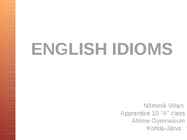
ENGLISH IDIOMS Nõmmik Vilian Apprentice 10 "A" class Ahtme Gymnasium Kohtla-Järve Relevance of the topic Ø The English language becomes the means of international communication, the language of trade, education, politics, and economics. People have to communicate with each other. It is very important for them to understand foreigners and be understood by them. Goal of my research work Ø Goal of my research work is to prove that idioms in the English language are integral part of it, which make our speech more colorful and authentically native. Tasks I like to achieve the following tasks: 1. To classify idioms; 2. To study the problem of the translation of idioms; 3. To understand the aim of the modern usage of idioms; 4. To distinguish different kinds of idioms; 5
butter? Why drown spring lamb in wine or cream and spices, when with just one or two herbs it is absolutely delicious? If you ask foreigners to name some typically English dishes, they will probably say "Fish and chips" then stop. It is disappointing, but true that, there is no tradition in England of eating in restaurants, because the food doesn't lend itself to such preparation. English cooking is found at home. So it is difficult to a good English restaurant with a reasonable prices. In most cities in Britain you'll find Indian, Chinese, French and Italian restaurants. In London you'll also find Indonesian, Mexican, Greek... Cynics will say that this is because English have no "cuisine" themselves, but this is not quite the true. Vocabulary: to criticize - tasteless overcooked - ingredient - to invent - sauces - to disguise - spice herb - delicious - disappointing - to lend cuisine British Youth (2)
1.1. Larkin Studies Points of View: Biography and Poetry 5 1.2. Larkin Stylistic Map 8 2. Chapter II 11 2.1 Expressing Himself 11 3. Conclussion 15 4. References 16 INTRODUCTION Philip Larkin is one of the most important English poets of the new Era, due to the interest of he owns, more and more readers get to know about the two Philip Larkin’s the man and the poet. Since the publication of the three most widely used sources (the Collected Poems in 1988, the Selected Letters in 1992, and Andrew Motion’s authorized biography in 1993) numerous further books, essays and articles have contributed to Larkin studies. These include publications of Larkin’s texts (such as Further Requirements in
BASIC ENGLISH GRAMMAR Book 1 Book 1 Younger students at beginning to intermediate levels will greatly benefit from this step-by-step approach to English grammar basics. This is the ideal supplement to your language arts program whether your students are native English speakers or beginning English language learners. Skill-specific lessons make it easy to locate and prescribe instant reinforcement or intervention. · Illustrated lessons are tightly focused on core concepts of grammar · Nearly 70 practice exercises are included for ready reinforcement · A wealth of examples are provided on every topic · Concise explanations are bolstered by extra grammar tips and useful language notes Book 1 Anne Seaton · Y. H. Mew
pleasures." The programmes are various and people have a chance to select what they want to see. Television provides great opportunities for education. There are programmes devoted to specialised subjects. With the help of TV it is possible to learn foreign languages, to know a lot of wonderful things concerning the world flora and fauna. TV teaches the ideals of democracy and political argument. Watching television can be compared with reading books. It provides an outlet for creative talents. By the beginning of the 21-th century TV became a coloured world network. Numerous programmes people can receive by satellite or cable. The choice of the channels ranges from six to twenty. These channels show programmes of various kinds from documentaries, current events and sports to programmes American films and science fiction cartoons. Now this medium of communication allows people to see and speak with
Art-based learning We can see that art-based learning is not a regular method in school. Although I barely can understand why. It seems to me, that it is rather interesting way of learning. I also would like to point out, that childrens emotional memory is strong and pleasant things will be understood and remembered more. Therefore I would like to discribe the method thoroughly. Only in the past few hundred years has reading been the primary way of teaching religion. For centuries, religious education relied on hearing and seeing. Religious education can benefit by returning to the ages-old methods of hearing and seeing to complement reading. This method enables you to make the old learning way-seeing available for the students nowadays.It is about deepening our understanding of faith. In times past, when people could not read, it was
Philosophy of Language Philosophy of Language: a Contemporary Introduction introduces the student to the main issues and theories in twentieth and twenty-first-century phi- losophy of language, focusing specifically on linguistic phenomena. Topics are structured in four parts in the book. Part I, Reference and Referring, includes topics such as Russell's Theory of Descriptions, Donnellan's distinction, problems of anaphora, the description theory of proper names, Searle's cluster theory, and the causalhistorical theory. Part II, Theories of Meaning, surveys the competing theories of linguistic mean- ing and compares their various advantages and liabilities. Part III, Pragmatics
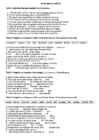
c) The play is very long but there are three breaks/intervals/rests. d) At the cinema I don't like sitting too near the film/screen/stage. e) We heard a piece by Mozart performed by a German band/group/orchestra. f) Her second book was very popular and became a best buy/seller/volume. g) I like the painting but I can't stand its ugly border/frame/square. h) Robert's new book will be broadcast/published/typed in August. i) I liked the acting, and the costumes/dressing/outfits were good too. j) The best act/place/scene in the film is when Jack meets Kate. Task 2. Complete each sentence with a word from the box. Use each word once only. Announcer composre critic editor playwright author conductor director novelist sculptor a) The orchestra would not be so successful with a different .... conductor... b) I want a book on art, but I don't know the name of the …… c) We must see the new film by that Italian ……
Style The term style is a polysemantic one. The latin word ,,stilus" meant a writing instrument used by the ancients for writing on waxed tablets. Already, in classical latin the meaning of style was extended to denote the manner of expressing one's ideas in written or oral form. One of the abts/the best was given by Jonathan Swift: ,,Proper words in proper places." In present- day english, the world style is used in about half a dozen basic meanings. 1. the characteristic manner in which a writer expresses his ideas. Some speak about the style of Hemingway, Dickens etc. 2. the manner of expressing ideas, characteristic of a literary movement or period. Style of symbolism, romanticism 3. the use of language to pick a literary genre-comedy, novel, drama, O.D (poetic form) etc. 4
office: Mortimer House, 37-41 Mortimer Street, London W1T 3JH, UK Perspectives: Studies in Translatology Publication details, including instructions for authors and subscription information: http://www.tandfonline.com/loi/rmps20 When `we' are `the other'. Travel books on Romania as exercises in intercultural communication a Rodica Dimitriu a Department of English , Alexandru Ioan Cuza University of Iaþi , Romania Published online: 06 Aug 2012.
I look forward to meeting you to discuss employment opportunities. Yours faithfully, Nicole Porter Paragraph Plan for Letters · salutation · Paragraph 1 reasons for writing · Paragraphs 2, 3 development · Final paragraph closing remarks · Name · Letters are divided into two categories, formal and informal. There are various types of formal and informal letters . · It is important to think about the person who you are writing to before you begin writing a letter. If the wrong style is used, the letter will look impolite, silly or odd. For example, if you used formal language to write to a close friend, the letter would look odd, or if you used informal language to write a letter to a company, the letter would look impolite. · There are certain characteristics which allow us to distinguish between formal and informal letters. These are:
FGI 1081 Stilistika (Irina Ladusseva) Kab. 420 2 AP Ends with an exam; lasts only for 1 semester. At the exam you get 2 questions and an exercise (50 sentences: establish the device used, recognize it, and name it). Care about the pronunciation of the terms. Books: - I. Galperin "Stylistics" - I. Ladusseva "Rhythm and Text" - I. Ladusseva "Vocabulary and Style" - I. Ladusseva "Stylistic practice: Book I, Book II" - I. Ladusseva "A Guide to Punctuation" EXAMINATION TOPICS: 1
· Man as an animal-clever than other beasts, still explainable within the framework · Man is not a free agent, is govern by something · Unable to determine his own faith · Hereditary · Naturalists tried to apply in fiction the processes of natural sciences · Writers task is to record facts, systems of behaviour, living conditions, never revealing any natural unbiased (completely natural) · Point of view: amoral-outside the category of morality, neither good or bad · Naturalist find it absurd to blame the wicked. These criminals are doing what nature, environment, their unconscious tells them to do. Naturalists do not judge their characters, they simply report. Try to describe facts like they are. Naturalists depict the lower, coarser forms of life. · Drab, squallid set of scene. Revolting, disgusting · Characters are people with strong animal desires
Maturitní otázka c. 23. Means of communication Introduction A few centuries ago people knew only a few kinds of communication. They could speak to each other, they could send their message from one place to another by smoke signals, they used mail. Later on, they also had some newspapers. The first expansion of media was when the radio and television were invented. The second and the biggest boom started in 1960s when the first communication satellite was launched into orbit. There are 4 main media: Newspapers, TV, Radio and the Internet. Today's people take this as an ordinary thing and we don't realise that we nearly can't live without it. Media are very important for us
Body language Body language means communication with the movement or position of the human body. It can be conscious or unconscious. It is something that is noticed by everybody but is not always given enough attention. We sometimes ignore it and try to hide behind words, but we should never forget that we cannot fool everyone! Children react to body language because they experience the world through intuition. The same can be true for adults when feelings are involved. People who are in bad shape emotionally will often place great importance in it. In fact, they often pick up the smallest hint of a lapse in attention in the person they are speaking to. And they frequently jump to the conclusion that they are boring or a nuisance - thus compounding any sense of depression or poor self-esteem.
English structure revision for the exam 1. Terms Language → A systematic, conventional (tavakohane) use of sounds, signs or written symbols in a human society for communication and self-expression. Human language at all levels is rule- or principle- governed (valitsema) meaning that language corresponds to the grammar. Natural language is usually spoken, while language can also be encoded into symbols (such as letters, morse etc) For example: Estonian, English. Linguistics → The scientific study of human natural language. Broadly, there are three aspects to the study which are Pragmatics (studies the use of language → interested in the gap between the sentence’s meaning and the speaker’s meaning). Semantics (concerned with the meaning of the language aspects and the way they
The first draft of term paper should be ready by March. Supervisors are: 1. Suliko Liiv (country study, grammar, contrastive studies, methodology) 2. Liliana Skopinskaja (methodology) 3. Jaanika Marley (foneetika, methods) 4. Ene Alas (translation, methods) 5. Paul Rüsse (literature (Am.,Br.), methods) 6. Annika Namme (American literature, methods) 7. Irina Ladusseva (lexicology, methods, stylistics) Choose your topic and find a supervisor. Language needs to be very transparent, but do not use colloquial elements and abbreviations (e.g. I'll, you're). Start collecting the expressions you like (e.g. "many" "the abundance" etc.) How to elaborate a topic? collaborate with supervisor (a topic has to be narrowed down). Background studies who else has written about this topic (what has been already done and what else I can do here). Papers of this kind test logical thinking. What is assessed:
1. STYLE The term "style" is polysemantic (has many meanings): a Latin word "stilus" originally meant a writing instrument used by ancient people. Already in classical Latin the meaning was extended to denote the manner of expressing one's ideas in written or oral form. Jonathan Swift defined style as "proper words in proper places". In present day English the word "style" is used in about a dozen of principle meanings: 1. the characteristic manner in which a writer expresses his/her ideas (e.g. style of Byron) 2. the manner of expressing ideas, characteristic of a literary movement or period 3. the use of language typical of a literary genre (e.g. the style of a comedy, drama, novel). 4. the selective use of language that depends on spheres / areas of human activity (e.g
1. A generalist is ignorant from the point of view of a specialist and a specialist is stupid from the point of view of a generalist. 2. All great stupidity is created by geniuses. 3. All stereotypes are true; the fact that you recognize a slur proves that it isn't. 4. Anything you're afraid is true is true. 5. Before most people get to the point of being able to tell their ass from a hole in the ground they're already assholes and it's too late. 6. Concentrating on something important can make you lose track of your soap opera. 7. Debunking the bunk is everyone's responsibility. 8. Don't ask me to pay for anyone else's mistakes. I make enough of my own. 9. Even those who possess real magic must beware of being misled by "magical thinking." 10. Everyone knows what shit tastes like. 11. Exclusive occupancy of a private room is a basic human right. 12. Fair compensation for genius is wealth. 13. God's not perfect, so it's a pretty good bet that you're not, either. 14
6 have/'ve known interested and it looks as though shipwrecked three times. 7 walked they are working hard. Most of She was lucky because she survived 8 have you phoned them are looking at the experiment each of the three disasters. 2 1 written 8 was trying and working together. They are 4 1 D 3 F 5 G all wearing uniform it's quite an 2 been meaning 9 came
religion. American Enlightenment a gradual but powerful awakening that established the ideals of democracy, liberty, and religious tolerance in the people of America. If there were just one development that directly caused the American Revolution and uplifted the intellectual culture of the continent while it was only a British colony, it would be the American Enlightenment. Broadly, the Enlightenment was an intellectual movement that changed the fundamental perspective of the masses, urging them to foster skepticism and apply scientific principles in matters of religion and morality. Its chief values were: Liberty, Democracy, Republicanism, Religious Tolerance. The movement gained momentum with the publication of landmark texts like Thomas Paine's The Age of Reason, and the Jefferson Bible, but the most influential thinker was undoubtedly John Locke, whose ideas spread to the colonies and across Europe
appropriate. Neither the publisher nor author shall be liable for any loss of profit or any other commercial damages, including but not limited to special, incidental, consequential, or other damages. For general information on our other products and services, please contact our Customer Care Department within the United States at (800) 762-2974, outside the United States at (317) 572-3993 or fax (317) 572-4002. Wiley also publishes its books in a variety of electronic formats. Some content that appears in print may not be available in electronic books. For more information about Wiley products, visit our web site at www.wiley.com. Library of Congress Cataloging-in-Publication Data: Tracy, Brian. Change your thinking, change your life : how to unlock your full potential for success and achievement / Brian Tracy. p. cm. ISBN 0-471-44858-3 (alk. paper)
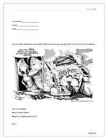
Page |1 Your Name:__________________ Grade:______________________ Date:_______________________ Do you often read books voluntarily? What books do you usually read? Discuss it with your neighbor. Ask your neighbor: Who is Harry Potter? What's so magical about him? Part I 1/9/2013 Page |2 Reading: Read through the text, look up unknown words by J. K. Rowling
Roman politician, philosopher & translator. Theory ‘‘word-for-word’’ & ‘‘sense-for-sense’’. • Martin Luther – his role in the history of translation studies. Lived during the 15th century. He was a priest, theologian & translator. During that time, the Bible’s were only available in either Latin or Hebrew, which made it very difficult for common people to understand. He came out with a radical plan to translate the Bible into local languages (the first language was German – translated by Martin Luther). This inspired many other translators during that period. • What happened in the 19th and 20th century in translation studies? When and who created the term ‘translation studies’? Translation Studies – James S. Holmes - 1972 Ferdinand de Saussure – Lived during the 19th and 20th century. He was a Swiss linguist and a semiotician. He is widely considered one of the
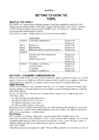
CHAPTER 1 GETTING TO KNOW THE TOEFL WHAT IS THE TOEFL? The TOEFL is a comprehensive English language examination required by more than 3,000 colleges and universities in the United States, Canada, and other parts of the world. In addition, foreign born professionals frequently need a TOEFL score for certification to practice their profession in the United States or Canada. The TOEFL is a timed test that consists of the three sections listed here. THE TOEFL Section 1 Listening Comprehension 50 questions
Education Education is so multifaceted that it is difficult for me to know where to begin discussing it, or how to prioritize the many factors. Relaying my own experience is easy: I had a standard classroom approach, supplemented by inordinate reading. In only the briefest and least memorable instances did I receive any individual tutoring. Education is commonly thought of as the job of schools. Adults cry "educate our children!" Everyone has opinions about the best way to do the job. It is of urgent importance, and all the numerous factors are much studied, debated, and new (or old) ideas continually tested or retested. Some people say "it's as simple as . . . " and then name their pet peeve or passion. My
4 to put up with lack of vitamin A. Now there's a new 5 be looked after type of rice which has been engineered to contain massive amounts of vitamin 6 drop me off A. So there you are ... problem solved! 7 to lay off Rosie Yeah, these are good 8 turned up intentions, but not if we end up poisoning people in the long run. I 1F Discussion page 9 don't know, I just find the whole thing unnatural. I don't think we have a right 1 1 laboratory 5 crops to `play God' in this way.
Women writer's influence on our society Estonian women writer's history doesn't go far back. The reason for that is that people were slaves back then. Even if there were writers, then most weren't famous and they wrote poems and stories more for themselves. Also being a woman and a writer wasn't considered as a decent job for a woman at that time. The stories that we have from that time were given to one another by talking and mostly we don't know who were the authors. Education was also very expensive so only rich people could get it and Estonians, who were just farmers, mostly didn't have money for that. First I am going to talk about Marie Heiberg. She lived 1890-1942. Her first poem collection was ,,Mure-lapse laulud" in translation ,,Problem child's songs". Her talent was noticed, but she didn't have a change to really become famous. She was in a great penury that made her life really though
LEL 2E Notes on Vocabulary One of the key facts about the lexicon of any language is that it reflects in various ways the physical and cultural environment in which the language is spoken. A people unfamiliar with, say, horses is unlikely to have a word for `horse'; similarly with ploughs, printing presses, and internet porn sites. For the most part this is trivial it's hard to imagine how it could be otherwise, given the general nature of human language. People tend to make a great deal of the alleged fact (see Pullum 1989) that "the Eskimos have lots of words for snow", but it doesn't take much thought to realise that any language spoken in a given physical and cultural environment is likely to have efficient ways of referring to distinctions that are important in that environment. That doesn't mean that you can read very much into individual words and individual facts about the lexicon of a given language (this topic has
UNIVERSITY OF TARTU DEPARTMENT OF ENGLISH Using Blogs as a Platform in the Teaching of English as a Foreign Language Research paper Tartu 2010 ABSTRACT This work analyses the usefulness of blogging in teaching English as a foreign language. The definition of the term `blog' is provided along with the advantages and disadvantages of blogs' usage in practice. The analysis of language skills developed by students throughout the use of blogs for learning purposes is given in the paper with possible limitations that blogs have. Author of this paper also shares personal comments about the experience in the field. In this paper it is also described which research methods are planned to be employed for the conduction of research project. 2 ABSTRACT..............................
 annaabi.ee