Leidsid 33 sarnast õppematerjali, mis on seotud failiga "Welcome to Palamuse". Need materjalid aitavad sul teemat sügavamalt mõista.
palamuse, welcome, aire, april, 2331, oldest, schools, parish, nukitsameesby Latvia and to the east by Russian Federation ·Estonia is divided into 15 counties (maakond) ·In Estonia are 33 cities and several town-parish towns in the country. More than 70% of the population lives in towns. ·Estonia has summer capital it's Pärnu, autum capital it's Türi, winter capital it's Otepää ·The Estonia Theatre is an opera house and concert hall in Tallinn . It was built on 1913 ·The oldest records of written Estonian date from the 13th century. ·Te most outstanding achievements are the national epic Kalevipoeg (Son of Kalev), written by Friedrich Kreutzwald ·Estonia has many famous writers over the centuries ·Estonia is denenietly song nation. The Estonian Song Festival is one of the largest amateur choral events in the world. It is held every four years in July on the Tallinn Song Festival Gorunds. The first national song festival was held in Tartu in the summer of 1869
This can also be seen in Southern Viljandimaa as there are continuously more establishments providing accommodation, caterers and organisers of active holidays. Many tourism maps have been put beside the road as well as many hiking trails have been built and marked. History of Estonia Human settlement in Estonia became possible 11,00013,000 years ago, when the ice from the last glacial era melted away. The oldest known settlement in Estonia is the Pulli settlement, which was located on the banks of the river Pärnu, near the town of Sindi, in southern Estonia. According to radiocarbon dating, it was settled around 11,000 years ago, at the beginning of the 9th millennium BC. Evidence has been found of hunting and fishing communities existing around 6500 BC near the town of Kunda in northern Estonia. Bone and stone artifacts similar to those found at Kunda have been discovered
Theatres in small cities cannot be merely regarded as employers located far from centres and therefore the more valuable. The whole local cultural life is centred around them. Other famous theatres are Estonian Drama Theatre, Estonian National Puppet Theatre, Kuressaare City Theatre, Old Baskin's Theatre, Rakvere Theatre, SalongTheatre, Tallinn City Theatre, Theatre ,,Varius", Theatre NO99, Ugala Theatre, VAT Theatre and Von Krahl Theatre. Also there are three schools in Estonia which provide higher education in drama. The oldest and most academic of them is the Higher School of Drama at the Estonian Academy of Music. The Viljandi Cultural College and the private school 'Theatrum' at the Estonian Institute of Humanities. Theatres provide work for about 2000 persons all over Estonia. The future of Estonian theatre, which is fully dependent on the state purse, lies in the hands of politicians; they decide whether to continue subsidising the theatres
The Estonian Christmas is generally in line with the North and Middle European traditions of Christmas trees and Advent calendars and traditional meals, involving a number of dishes which are typically only eaten on Christmas. Christmas is the most extensive and appreciated and commercialized holiday in Estonia. Holidays start from the 23th December and continue through Christmas Eve (24th) and Christmas Day (25th). In schools and in many workplaces, the vacation continues until the New Year. The Estonian independence day is the 24th of February. It is a national holiday. Every year a parade is held in central city. Biggest towns Tallinn Tallinn is the capital and largest city of Estonia. It lies on the northern coast of Estonia, along the Gulf of Finland. The city is an important industrial, political and cultural center, and seaport
the island between 4000 and 1000 BC. When Christopher Columbus arrived in 1494 there were over 200 villages ruled by caciques. The south coast of Jamaica was the most populated, especially around the area now known as Old Harbour. Christopher Columbus claimed Jamaica for Spain after landing there in 1494. Columbus' probable landing point was Dry Harbour, now called Discovery Bay. The capital was moved to Spanish Town, now located in the parish of St. Catherine, as early as 1534. It was then called ,,Villa de la Vega". Spanish Town has the oldest Cathedral in the British colonies. The English Admiral William Penn and General Robert Venables seized the island in 1655. In 1660 the population of Jamaica was about 4 500 whites and some 1 500 blacks. As early as the 1670s, blacks formed a majority of the population. During its first 200 years of British rule, Jamaica became one of the world's leading sugar-
3. The Roman conquest Julius Caesar's first raid was in 55 BC but the romans left. Ad 43- the Romans came to stay. The army established Roman rule in the south and SW of the country. The Romans started to introduce their laws to a new province of the Roman Empire and started to build good roads. Officials were appointed (governors, procurators to collect taxes, look after the estates and mines and se that the gold, silver, iron and lead were exported back to Rome). Introduced schools,a new language Latin, large farms (villas), baths. In AD 410 they had to leave . roman occupation lasted nearly 400 years. They left behind very little. Roman province of Britannia covered most of present-day England and Wales. 4. Latin influence on English *The influence of Latin is noticeable also in the names of European cities: the Latin noun colonia (settlement, colony) may be found in numerous place-names: Lincoln, Colchester, Cologne ; from
Philosophers &Economists: Francis Bacon, John Locke Inventors & Scientists: Isaac Newton, Charles Darwin Actors,Actresses & Filmmakers: Sir Charlie Chaplin, Dame Elizabethe Taylor, AlfredHitchock, Hugh Grant, Orlando Bloom, KeiraKnightley, Daniel Radcliffe Musicians & Singers: Sir Elton John,Phil Collins,George Michael,Robbie Williams King Henry VIII Born: June 28, 1491 at Greenwich Palace Parents: Henry VII and Elizabeth of Y ork House of Tudor Ascended to the throne: April 21, 1509 aged 17 years Crowned: June 24, 1509 at Westminster Abbey Married: (1) Catherine of Aragon 1509-1533 Divorced (2) Anne Boleyn 1533-1536 Beheaded (3) Jane Seymour 1536-1537 Died (4) Anne of Cleves 1540 Divorced (5) Catherine Howard 1540-1542 Beheaded (6) Catherine Parr 1543-1547 Survived Children: Three legitimate who survived infancy; Mary, Elizabeth and Edward. Several illegitimate children Died: January 28, 1547 at Whitehall Palace, London, aged 55 years
nave church with a rectangular chancel in 1240, and rebuilt into a Gothic basilica thereafter. The church suffered in the fire of 1684 and was largely reconstructed. A baroque tower was added in the 18th century and the dated weather-vane (1779) crowning the spire is the only original one on Toompea today. The church has a valuable collection of Baltic German noblemen's coats of arms, since it was the Baltic nobility's parish church. Many of them were carved from wood by the famous Tallinn wood carver Christian Ackermann in the 17th century. Among other functions, the church served as a burial ground for the rich and the noble. The church also features grave slabs, an oaken Baroque altar by Christian Ackermann and a number of monuments to famous people (e.g. Pontus de la Gardie, Karl Horn and Otto Uexküll, all Swedish military leaders; Admiral Samuel Greigh, a hero of Russo-Turkish
spaces, until it moved back to the palace in 1946. In September, 1991 the Kadriorg Palace was closed, because it had totally deteriorated by then. At the end of the year the Supreme Council of the Republic of Estonia decided to guarantee the construction of a new building for the Art Museum of Estonia in Kadriorg. Untill then the Knighthood House at Toompea Hill served as the temporary main building of the Art Museum of Estonia. The exhibition there was opened on April 1, 1993. Art Museum of Estonia premanently closed down the exhibitions in that building in October 2005. At the end of the 1970s, in the 1980s the first branches of the Art Museum of Estonia were founded. Starting from the 1995 all the branches offer different educational programmes for children and young people. In 1996 the exhibition hall on the first floor of Rotermann Salt Storage was opened, this branch was closed in May 2005. In summer 2000 the restored
drainage basin covers 9740 sq km. NATURE CONSERVATION AND PROTECTED AREAS In 2004 Estonia had 360 different protected areas, apart from 448 protected parks, and over 1200 natural monuments. The total area of protected land covers over 550 000 hectares (more than 10% of the Estonian territory). Protection is extended to diverse elements such as waterfalls, hills, karst areas, outcrops, caves, lakes, craters an so on. Lahemaa National Park is the largest and oldest national park in Estonia. It covers 1119 square km. The park has reserves where any human activity is prohibited except for scientific purposes. It features various landscapes. Soomaa National Park offers real wilderness it covers 370 sq km of a vast lowland is central Estonia. The aim of the park is to protect Estonia's bigger bogs, meadows and forests. The Viidumäe Nature reserve is a small area in Saaremaa rich in rare plants. Some of them are unique in the world
ago. In the ninth century A.D. Viking ships invaded Estonia and the country became a vital link in the sea-trade between East and West. By the 12th century, the Arabian geographer al-Idrisi had placed the city on his maps. In the 13th century, Tallinn joined the Hanseatic League, the union of European commercial towns that stretched from London to Novgorod. Pärnu, Viljandi and Tartu were also members. Estonia became a vital link in the sea-trade between East and West. The oldest preserved book written in Estonian, a catechism, dates from 1535. Tartu University was established in 1632, on orders from Sweden's King Gustav II Adolf. Literacy spread. The Bible was translated into Estonian in 1739(pole vaja teada). A period of wars began in the 16th century, bringing parts of Estonia under the control of Russia, Denmark, Poland and Sweden. For most of the 17th century, Sweden ruled Estonia. In the 18th century Russian Tsar Peter the Great joined Estonia to his empire.
Estonia Where it is? Republic of Estonia is a state in the Baltic region of Northern Europe .It is bordered to the north by the Finland, to the west by the Baltic Sea, to the south by Latvia (343 km), and to the east by lake Peipus and Russia (338.6 km). Across the Baltic Sea lies Sweden in the west and Finland in the north. Towns Tallinn is the capital and the largest city of Estonia. It lies on the northern coast of Estonia, along the Gulf of Finland. There are 33 cities and several town-parish towns in the country. In total, there are 47 linna, with "linn" in English meaning both "cities" and "towns". More than 70% of the population lives in towns. History • Estonia was settled near the end of the last glacial era, beginning from around 8500 BC. Before the German invasions in the 13th century proto-Estonians of the Ancient Estonia worshipped the spirits of nature. Since the N
One of the primary goals in both authorities is to work towards the adoption of the UNCRC in every school in Wales and Swansea as they recognise the positive impact rights based education may have upon young people`s emotional, social and academic development. The central theme of this dissertation rests on the commitment of the Cadle Primary School towards children`s right to participation as underpinned in the Article 12 of the UNCRC. The Cadle Primary School is one of the first schools in Swansea to adopt the UNCRC through the Rights Respecting School programme (RRSA). The RRSA school initiative is developed by the UNICEF UK, which encourages the schools to place the UNCRC `at the heart of its ethos and curriculum across all areas of the school`. 7 Thereupon, the primary goal is to critically explore the spaces the Cadle has created for children that allow them to actively to engage with meaningful discussions on the matters that concern them.The Cadle Primary School was
History St Patrick converted the Irish to Christianity In mid16th century Henry VIII declared himself King of Ireland and broke away from the Roman Catholic Church In 1601, Queen Elizabeth I defeated the Irish army at the battle of Kinsale and the land was dominated by Protestants The Act of Union in 1801 made England and Ireland one country with one parliament in London By 1900 Catholics could vote and speak in Parliament and there were Catholic schools and churches In 1916 Ireland was declared a free country In 1921 the northern and southern parts separated, the latter became the Irish Free State. Northern Ireland remained part of the UK In 1949 the southern part declared itself the Republic of Ireland Today Ireland has many political conflicts; many people have been killed in outbursts of violence Economic development Transport costs are high due to its location Low inflation and tax breaks attract foreign investors to the Republic
This was much faster and more reliable than sending messages by horse messenger. the telephone was invented In 1876 by Alexander Graham Bell. The first radio broadcasts were transmitted in the USA in 1916. Radio is generally the first of the news media to report a local story. Millions of people depend on the radio for regularly scheduled news bullets. Book-publishing grew rapidly in warily modern England and America. So did newspapers, which were the first kind of mass media. Newspaper is the oldest type of media. The first newspapers were probably handwritten newssheets that governments posted in public places. Although newspaper sales have fallen slightly over the past few years, they still have an important effect on public opinion. Newspapers often include articles on political events, crime, business, art, entertainment, society and sports. There is a difference between daily papers: quality papers cater for more sophisticated readers. They contain detailed information
intrinsically separate from government (as opposed to a theocracy, or an "established" or state church). They operate under the guidelines of complete separation of church and state. A free church does not define government policy, and a free church does not accept church theology or policy definitions from the government. A free church also does not seek or receive government endorsements or funding to carry out its work. Maintained schools funded by the state. Schools maintained by the local education authority (LEA, or, in Northern Ireland, by Education Authority). Some of those schools are voluntary schools (also known as religious schools or faith schools) where the land and buildings are owned by a charity, often a religious organisation such as a church, but the school is at least partly funded by the local education authority. In all state schools, students must follow the National Curriculum. Independent schools independent fee-charging schools
Setomaa The extreme south-eastern corner of Estonia - this is the location of SETOMAA, a peculiar historical and ethnical province in Estonia. Setomaa is bounded in the north-east by Lake Pihkva, in the east and south-east by Russia, in the south by Latvia and in the west by Võru County. The greatest extent from north to south is 65 km and from east to west 40 km. Today Setomaa is divided between three administrative units: Võru and Põlva counties of Estonia and Pechorsky district of Russia. On the territory of Estonia, Setomaa comprises four municipalities: Misso, Meremäe, Värska and Mikitamäe municipalities. According to the latest archaeological finds the area of Setomaa has been inhabited for as long as 8 400 years.The ancestors of the people speaking the Võro-Seto dialect belonged to the Balto-Finnic eastern tribes. In old chronicles they have been mentioned probably under the name of the Chudes. Seto people are their lineal desce
Beyonce Knowles Name Beyonce Knowles Beyoncé Giselle Knowles- Carter was born on September 4, 1981, in Houston, Texas, United States. Beyonce is an American recording artist, actress and fashion designer She enrolled in various performing arts schools and was first exposed to singing and dancing competitions as a child. Knowles rose to fame in the late 1990s as the lead singer of the R&B girl group Destiny's Child, one of the world's best-selling girl groups of all time. Solo career She started her solo career in 2003, when she released her first album `'Dangerously in Love'' After that she has released albums: `'B`Day'' (2006) `'I Am... Sasha Fierce'' (2008) `'4'' (2011) Knowles' work has received numerous awards and
For that purpose, organizers have invited participants from all over Estonia but also from Lithuania, Latvia and Finland. The recordbreaking event will take place on the first day of the festival on June 14th, 2008. XXII Pärnu Film Festival July 6th 26th The Museum of New Art, Esplanaadi 10, Pärnu The Pärnu International Documentary and Anthropology Film Festival, founded in 1987, is the oldest film festival in Estonia. The initiator of the festival was writer and former president of the Republic of Estonia Lennart Meri. Since its first appearance, the festival has built an efficient bridge between cultural anthropologists and film makers from the East and the West. The festival is held during the first full week of every July. An international jury awards the grand prize for the best film;
INDIVIDUAL JOB Made by: Kivirand Käty Studygroup: MY08 Supervisor: Lugina Olga What is A Le Coq ? A public limited company A Le Coq is the oldest brewery in Estonia, and now also the largest producer of beverages. Where is the main office? A. Le Coq & Co. (Russia) public limited that had been transformed into a private limited group in 1904 to move its headquarters and bottling plant from London to St. Petersburg. In order to develop the company the Public Limited Company A. Le Coq was established in London on 16 May 1912 and Tartu Brewery stated to operate as its Russian subsidiary company. Who was the founder?
o trumpet type wind instruments Herdsman's horns and trumpets were sounded in taking the cattle grazing in the morning and returning home in the evening. The large herdsman's trumpet karjapasun (up to 2 metres in length) was his tool and boys were not allowed to touch it. Herding boys had smaller trumpets and horns. They signalled information to each other and warded off wild beasts=animals STRINGED INSTRUMENTS Kannel Kannel is the oldest known instrument in Estonia. It is believed to have been around for about two thousand years. Such an instrument is common to cultures of the Baltic Finns, the Balts and the northwestern Russians. Fiddle(viiul) Violin reached Estonian towns in the 17th century. In the 18th century fiddle music spread also among peasants. (talupoegade keskel) Psalmodikon(moldpill) This is a relatively new instrument, dating from 1829 in Sweden.
Town Hall Square Raekoja plats (English: Town Hall Square) is a town square beside Tallinn Town Hall(Estonian: Raekoda) in the center of the Tallinn Old Town in Tallinn, Estonia. It is a venue for numerous small festivals or concerts like Tallinn Old Town Days. Also hosts regular market every christmas and has a tradition of christmas tree since 1441, making the tree display over 570 years old. Town Hall - first mentioned in 1322, the oldest gothic town hall in europe. magistracy existed there until 1970, its a concert hall and meeting place. Also a museum. Pharmacy - always been in business in the same exact house since the early 15th century. It is also the oldest commercial enterprise and the oldest medical establishment in Tallinn. Johann Burchart family longest ran it 60 years. Unicorn powder, burnt hedgehogs, worms. Also were a weighing house, well, pillory-
It occupies an area of 159.2 km2 with a population of 416,470. It is situated on the northern coast of the country, on the shore of the Gulf of Finland, 80 km south of Helsinki, east of Stockholm and west of Saint Petersburg. Tallinn's Old Town is in the list of UNESCO World Heritage Sites. It is ranked as a global city and has been listed among the top 10 digital cities in the world.The city was a European Capital of Culture for 2011, along with urku, Finland.Tallinn is the oldest capital inNorthern Europe. The city was known as Reval from the 13th century until the 1920s. http://en.wikipedia.org/wiki/Tallinn Old Tallinn The Old Town can historically be divided into two distinct areas: Toompea Hill and the Lower Old Town, which were separated by a dividing wall since medieval times. The elevated area of Toompea Hill with its castle was occupied by the residences of Tallinn's rulers and gentry. The Lower Old
Stenbock House ● It’s the official seat of Government and the Government office of Estonia since 2000. One of the most remarkable government buildings in the wholw of Europe with it’s architecture and location. Bears the name of its builder, Jakob Stenbock. He agreed to undertake the building of the court house, but the state failed to pay him. But hoping to maintain further interest in house, he decided to finish it. St. Mary’s Cathedral ● Oldest church in Tallinn and mainland Estonia. It is assumed that the building started in 1219. Largest collection of epitaphs. Organ built in 1878, probably the most powerful in Estonia. The interior is filled with coats of arms from the 17th to the 20th centuries as well as tombstones. Right in front of the main entrance on the floor reads Otto Johann Thuve, 1696AD, he was a landlord, a don juan of Tallinn. Asked to be buried at the threshold of the church, so that
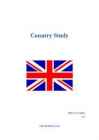
Country Study Mari-Liis Luukas 11c The British Isles Administrative / d'mnstrtv / haldus- Self-governing / self'gvn / isemajandav, iseseisev Legislative assembly/ 'ledsltv 'sembl/ seadusandlik kogu The British Isles is the name of a group of islands washed by the North Sea in the east and the
5 km ice road (the longest in Europe) across the frozen Baltic Sea. Hiiumaa is served by Kärdla airport, with regular flights to Tallinn. Bicycle rental is available in Kärdla and there is a good bicycle path built from Kärdla towards Kõrgessaare Kõpu lighthouse Kõpu Lighthouse (Estonian : Kõpu tuletorn) is one of the best known symbols and tourist sights on the Estonian island of Hiiumaa. It is one of the oldest lighthouses in the world, having been in continuous use since its completion in 1531. The lighthouse marks the Hiiu sandbank (Estonian : Hiiu madal, Swedish, Neckmansgrund) and warns ships away from the shoreline. Light from Kõpu Lighthouse can be used for navigation as far as 26 nautical miles (48 km; 30 mi) away, although in 1997 a radar lighthouse largely took over its role as navigation aid. Kõpu Lighthouse was previously known under its Swedish name, Upper Dagerort lighthouse.
''Chasing the Sun'' World's best song ''I Found You'' - World's best video The Wanted International Group of the Year The Wanted Best New Artist The Wanted Favourite Breakout artist Jay James McGuiness 24th July 1990 Is obsessed with Avatar Plays the Tambourine or drums on tour Sexiest vegetarian in 2011 Loves skittles Consitently losing his phone Nathan Nathan James Sykes 18th April 1993 Gloucester Is always late Loves a good cup of tea Is the baby of the band Plays the keyboard Won Britney Spears Karaoke Criminals in 2003 Tom Thomas Anthony Parker 4th August 1988 From Bolton Oldest member of the band Plays the guitar Favourite animal is a parrot Is know for is tantrums Has a girlfriend valled Kelsey Used Materials http://onepopz
1835.-some cherokees agreed to leave 1837.- U.S Supreme Court rules in favor of cherokees. Jackson refused to accept court's decision + ordered army to round up cherokees (he braked the law) 1838.-,,Trail of tears" ¼ (4000) died on a 1200-mile forced march to the indian territory (now Oklahoma) 1838.- 1000 escaped in North Carolina mountains Will Thomas adopted cherokee, brought 56000 acres+gave it to cherokees- >eastern cherokees Nation+opened much of their land to white settlers Set up schools, churches.. Late 1800's congress abolished Cherokee Nation 1887.-Dawes Act-> a new ,,Cherokee Nation" disolved. 1954.-cherokee nation recognized as a ,,Federally Recognised Tribe" Today many (most) cherokees live in northeast Oklahoma 1987.-U.S Congress officially recognized ,,Trail of tears National Historic Trial"
only for the very few. For an Estonian, this automatically meant Germanisation. Such a process of individuals revising their ethnic adherence, which had begun in the Middle Ages and continued until the early 20th century. Serfdom and the intensifying manorial economy The impact of the Swedish social order in Estonia continued under the Russian Empire. Although the Northern War meant a severe setback to the development of schools, the Swedish church and school systems remained practically unchanged. Most peasants learned to read at home, though the level of literacy in North Estonia was 40%, in South Estonia 55% and in Saaremaa Island 62%. The 1739 declaration of Otto Fabian von Rosen, a Livonian district magistrate, postulated the landlords' limitless right of ownership over the entire property and person of a peasant. It can be regarded as the ideal legislative model expressing the supremacy of the nobility. But
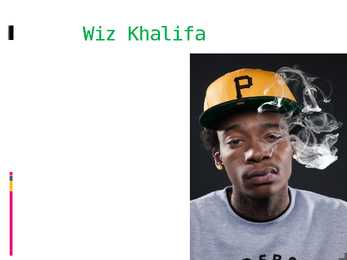
American rapper. He released his debut album, Show and Prove, in 2006, and signed to Warner Bros. Records in 2007. His euro dance-influenced single, "Say Yeah", received urban radio airplay, charting on the Rhythmic Top 40 and Hot Rap Tracks charts in 2008.Khalifa parted with Warner Bros. and released his second album, Deal or No Deal, in November 2009. He released the mixtape Kush and Orange Juice as a free download in April 2010; he then signed with Atlantic Records.He is also well known for his debut single for Atlantic, "Black and Yellow", which peaked at number 1 on the Billboard Hot 100. His debut album for the label, Rolling Papers, was released on March 29, 2011. About him Wiz Khalifa was born on September 8, 1987 to a mother and a father serving in the military. His parents divorced when Khalifa was about three years old. His parents' military service caused him to move regularly:
environment. Estonian agriculture must also find place in the European economy. The national conditions are best suited breeding daily cattle. At the moment the Estonian farmers predominantly export daily products and timber. Currently 8500 farms have been restored to their pre-war owners. Many of them would like to open their homes to bed and breakfast guests. Estonians have always had the greatest respect for education. Estonia has seven colleges and universities. The oldest is Tartu University founded in 1632. Culturally Estonia belongs to the West. Perhaps the best known in the world is Estonian music. Works by the Estonian famous composers are often played by the world’s leading performers. Estonia is also famous for its national song festivals, begun in Tartu in 1869. nowadays they take place every four years. Tallinn, the capital of the Republic of Estonia and of the Harju county, is a town in north Estonia on the coast of the Gulf of Finland
good friendship with each other. I also chose it, because it seemed so interesting. I really wanted to know, who controls Estonia's neighbour Sweden. Anyway, I enjoyed doing this report and now you can read a little about them. 3 King Carl XVI Gustaf Carl XVI Gustaf is the King of Sweden. Carl Gustaf was born twenty minutes past ten in the morning on Tuesday, on April 30, 1946, at Haga Palace. He was baptised at the Palace church and his real name is Carl Gustaf Folke Hubertus. He is also the Duke of Jämtland. Carl became Sweden's King on September 19, 1973 at the age of 27, succeeding his grandfather, King Gustaf VI Adolf. He is son of the Crown Prince Gustaf Adolf, who died in a plane crash in Copenhagen in 1947, and Princess Sibylla of Sachsen-Coburg-Gotha, who died in Stockholm in 1972. King Carl Gustaf married Miss
4 million people. The capital of Estonia is Tallinn and the official language is Estonian. The currency is Eesti kroon. The main religion is Lutheran. Anniversary of the republic is celebrated on February 20. The national flower is cornflower, national bird is barn swallow and national stone is limestone. It is a land of great natural beauty with a long and varied history and rich culture. It has served as a junction of international trade routes for centuries. History. The oldest marks of habitation on the territory of Estonia date from the 8th millennium BC. Fortified settlements were established in the 1 st century BC. The ancestors of Estonians formed several independent states headed by elected elders. Until the beginning of the 13th century Estonia was politically independent. Then began a long chain of occupation and control by foreign powers. In the 1200s the German crusaders converted Estonia into a Christianity by force and took control
 annaabi.ee