 50 punkti
Autor soovib selle materjali allalaadimise eest saada 50 punkti.
50 punkti
Autor soovib selle materjali allalaadimise eest saada 50 punkti.
 ~ 11 lehte
Lehekülgede arv dokumendis
~ 11 lehte
Lehekülgede arv dokumendis
 2014-06-10
Kuupäev, millal dokument üles laeti
2014-06-10
Kuupäev, millal dokument üles laeti
 1 laadimist
Kokku alla laetud
1 laadimist
Kokku alla laetud
 0 arvamust
Teiste kasutajate poolt lisatud kommentaarid
0 arvamust
Teiste kasutajate poolt lisatud kommentaarid
 pahnaken
Õppematerjali autor
pahnaken
Õppematerjali autor
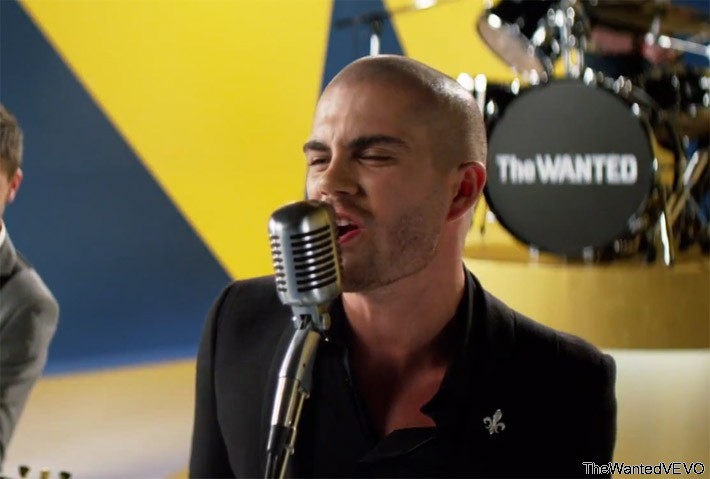
problems with his increasingly belligerent behaviour, his lack of interest in performing, and his frequent habit of missing the band's rehearsals. Both Orange and Barlow confronted Martin-Smith about the internal conflict, because they did not want him dropping out while touring and before any possible future touring of America, which never took place. During one of the last rehearsals before the tour commenced, the group confronted Williams about his attitude and stated they wanted to do the tour without him. He agreed to quit the band and left; it would be the last time for twelve years that they were all together. Despite the departure of Williams, Take That completed their Nobody Else Tour as a four-piece band. They later disbanded on February 13, 1996, which was coincidentally Williams' twenty-second birthday. Shortly afterwards, Williams was photographed by the press partying with fellow band Oasis at Glastonbury
· Drab, squallid set of scene. Revolting, disgusting · Characters are people with strong animal desires · Neurotic characters unable to understand the forces that control them · By the end of the 18th century the naturalism depicts in europe, but stars to become the literature method no 1 in america · Naturalism appealed American authors because they found it very right to describe what was going on in the turn of century in America · They wanted something fresh, new · They were disgusted by romantics · Showed the harsh tone in moral life · Refleced the development of science · Period of intense urbanisation, the city is in the center of the novel, often · New characters were businessmen, salesman, immigants, poor farmers · These characters were in new settings, skyscrapers, departments store, apartment building, ghetto, stockyard (cattle, cows were slaughtered), commercial trust
months later. No one was more dumbfounded than me. One particularly beautiful morning in San Jose, I had my rst major media phone interview with Clive Thompson of Wired magazine. During our pre-interview small chat, I apologized if I sounded buzzed. I was. I had just nished a 10-minute workout following a double espresso on an empty stomach. It was a new experiment that would take me to single-digit bodyfat with two such sessions per week. Clive wanted to talk to me about e-mail and websites like Twitter. Before we got started, and as a segue from the workout comment, I joked that the major fears of modern man could be boiled down to two things: too much e-mail and getting fat. Clive laughed and agreed. Then we moved on. The interview went well, but it was this o hand joke that stuck with me. I retold it to dozens of people over the subsequent month, and the response was always the same: agreement and nodding.
the sidewalks with romantic delight and they didn't blink an eye when the ground vibrated beneath their feet as the subway roared by below, while I grinned like an idiot and flexed my toes. New York was a brand new love affair for me. I was starry-eyed and it showed. So I had to really work at playing it cool as I made my way over to the building where I would be working. As far as my job went, at least, I'd gotten my way. I wanted to make a living based on my own merits and that meant an entry-level position. Starting the next morning, I would be the assistant to Mark Garrity at Waters Field & Leaman, one of the preeminent advertising agencies in the US. My stepfather, mega-financier Richard Stanton, had been annoyed when I took the job, pointing out that if I'd been less prideful I could've worked for a friend of his instead and reaped the benefits of that connection. "You're as stubborn as your father," he'd said
these factors to bring about such compliance? I have wondered why it is that a re- quest stated in a certain way will be rejected, but a request that asks for the same favor in a slightly different fashion will be successful. So in my role as an experimental social psychologist, I began to research the psychology of compliance. At first the research took the form of experiments per- formed, for the most part, in my laboratory and on college students. I wanted to find out which psychological principles influenced the tendency to comply with a request. Right now, psychologists know quite a bit about these principles-what they are and how they work. I have characterized such principles as weapons of in- fluence and will be discussing some of the most important of them in this book. After a time, though, I began to realize that the experimental work, while nec- essary, wasn't enough. It didn't allow me to judge the importance of the principles
UNO SOOMERE ESTONIAN SYMPHONIC MUSIC. THE FIRST CENTURY 1896-1996. AN OVERVIEW With a Historical and Cultural Summary IN MEMORY OF THE GREAT ESTONIAN COMPOSERS CONTENTS ESTONIA AND THE ESTONIANS FOREWORD IN THE FOLD OF TSARIST RUSSIA. EMERGENCE AND FIRST STEPS ON THE CLASSICAL-ROMANTIC PATH. HISTORICAL INTRODUCTION I. MUSICAL LIFE IN TARTU AT THE TURN OF THE CENTURY. TRAILBLAZERS: ALEKSANDER LÄTE, RUDOLF TOBIAS, ARTUR KAPP. II. THE FIRST DECADE OF THE 20TH CENTURY. ARTUR LEMBA: THE BEGINNING OF ESTONIAN SYMPHONY AND OPERA. III. NEW DEVELOPMENTS IN CULTURAL AND MUSICAL LIFE: THE END OF THE TSARIST PERIOD. THE INDEPENDENT REPUBLIC OF ESTONIA: THE INTRODUCTION OF INNOVATIONS FROM WESTERN ART AND THE EVOLUTION OF NATIONALLY ORIENTED MUSICAL TRENDS. IV. THE TWENTIES. ARTUR KAPP: ROMANTICIST AND DRAMATIST. V. THE INFLUENCE OF NEW WESTERN MUSICAL TRENDS. HEINO ELLER: A PROGRAMME PAINTER.
Maturita Solutions Advanced Workbook Key stand bananas and coffee! It's a bit 3 1 to 8 of Unit 1 uncanny really. Is it something she's 2 about 9 century passed on to me genetically, or is it 3 like 10 assumed / 1A Memories page 3 learned behaviour? Who knows? 4 of thought / 1 See exercise 2 2 5 6 any fought
It was worse because I was tired; I still couldn't sleep with the wind echoing around the house. It was worse because Mr. Varner called on me in Trig when my hand wasn't raised and I had the wrong answer. It was miserable because I had to play volleyball, and the one time I didn't cringe out of the way of the ball, I hit my teammate in the head with it. And it was worse because Edward Cullen wasn't in school at all. All morning I was dreading lunch, fearing his bizarre glares. Part of me wanted to confront him and demand to know what his problem was. While I was lying sleepless in my bed, I even imagined what I would say. But I knew myself too well to think I would really have the guts to do it. I made the Cowardly Lion look like the terminator. But when I walked into the cafeteria with Jessica -- trying to keep my eyes from sweeping the place for him, and failing entirely -- I saw that his four siblings of sorts were sitting together at the same table, and he was not with them.
 annaabi.ee













Kõik kommentaarid