Leidsid 33 sarnast õppematerjali, mis on seotud failiga "War and peace". Need materjalid aitavad sul teemat sügavamalt mõista.
french, egypt, israeli, arab, canal, arabs, force, attack, again, could, wanted, destroy, nasser, british, forces, started, supposed, reason, power, jews, lost, came, defeat, finance, join, weren, later, couldn, fight, back, them, government, leave, between, face, nobody, happen, colonies, nationalist, managed, france, quite, coarse, became, republicThose individuals directly involved in the killing received the most severe sentences. Other people who played key roles in the Holocaust, including high-level government officials, and business executives who used concentration camp inmates as forced laborers, received short prison sentences or no penalty 2. a) The United Nations was thought to be more successful because ( unlike in the League of Nations ) all of the largest nations joined and they had armed force at its disposal. All the winning and neutral countries were members and all of them could be called on to provide troops to deal with aggression. b) The Security council was important because they met regulary and dealt with crises. The original members were Britain, the USA , the USSR, France and China, because they were the five victors in the II World War. The other six seats were given to states in rotation. The five victors also
He was preaching to crowd and the ground rise up. To a hill David founded monastery where St David stands today The Synod of Whitby 664 664 Oswy, king of Northumbria, called a meeting at Whitby- The Synod Of Whitby Which church practises should have precedence in his kingdom- celtic or roman? How to calculate day of easter? It was decided to follow Rome Irish clergy left Northumbria and returned to Ireland Turning-point: all the Eng kingdoms could not be united under one primate Offa´s Dyke An enourmous linear earthwork, continuous barrier betwwen England and Wales, from sea to sea th Constructed in 8 C by king Offa- ruler of Anglian kingdom of Mercia Dyke was to place boundary between his domain and Welsh kingdom of Powys 20 m wide, 8 m high A defensive work, nowadays border still folllows the remains of Offas dyke Redwald Sutton Hoo
to stay. In the 10th century England fell under Danish Rule, with King Canute finally managing to unite the Anglo-Saxons and Danes at the beginning of 11th century. Medieval England After defeating the Anglo-Saxon King Harold at the Battle of Hastings in 1066, William of Normandy (who became William I, also called William the Conqueror) introduced the Norman feudal system, rewarding his French-speaking followers with land in return for their continued support. French remained the language of the upper classes and administration until the 14th century. The power of these Norman Barons gradually increased and during the reign of the Plantagenets began the challenge the King's absolute power, which resulted in King John being forced to sign Magna Carta in 1215. It consisted of long list of limitations to the King's power and it gave more power to the origins of Parliament.
They were not centrally governed. The Celts brought iron working, iron ploughs and metal swords, horses, wheels and chariots - all these things gave them an instant superiority over the native tribes. The Celts built a number of hill forts throughout the region. The society was divided into warrior aristocracy, agricultural commons and the priests, the druids. *Caesar in Britain - Britain was very rich in minerals but that wasn't the main reason Caesar wanted to defeat it. He could clearly see that Britain was a threat to his latest and greatest conquest - France. He invaded Britain twice, in 55 and 54 BC. The first invasion was unsuccessful - it gained a beachhead on the coast of Kent but achieved little else. The second was more successful, the Celts asked for truce. However it wasn't a victory he had imagined and Julius Caesar never returned to Britain after that. The island was left undisturbed for nearly a century.
as chauvinists, more efficient sovietization, 5th column potentiality, 50-60,000 Js, most survived the war. Factory owners, bank managers, large shopowners, ideological enemies. Also religious enemies, rabbis, cultural leaders, writers. Another group rounded up were refugees from Germ-occupied Poland, tens of thousands of mostly young Js. Couldn't go S, Czechoslovakia annexed, Romania fascist and anti-Semitic, sea lanes closed, mostly E. SU identifies as suspect, could be a spy. J identity very different from SU J, more use of Yiddish, more traditional, state of mind diff. Germs had dumped Js on the border, green border policy. Registered as they came over the border, porous. 6 mill SU citizens deported internally, 1920-1952, policy for suspect groups. What about everybody else? Sovietization mostly on urban centers, more keenly felt than on periphery. Farmers in Bessarabia, barely felt Sovietization, have a talk, mainly to get wine, gratice
16. Britain in WW I Causes of WWI: Mutual defence alliances (if one country was attacked then allies would rush to help and it snowballed into a war between many countries) o The alliances at the time were: o Russia and Serbia o Germany and Austria-Hungary o France and Russia o Britain and France and Belgium o Japan and Britain Austria-Hungary declared war on Serbia, Russia got involved to defend Serbia. Germany seeing Russia mobilizing, declared war on Russia. France was then drawn in against Germany and Austria- Hungary. Germany attacked France through Belgium pulling Britain into war. Then Japan entered the war. Later, Italy and the United States would enter on the side of the allies. Imperialism: empires got bigger and with that the competition between the empires grew. Everyone wanted more areas for themselves. Militarism: at the sta
African nation – the young Republic of Biafra. But Biafra was defeated and Nigeria remained one, as a giant of Africa. In the last 32 years, I have watched with horror and outright helplessness as the downward slide of the African race continues to escalate. But rather than address the problems, we resort to blaming the Caucasians, Asians and others for our misfortune. We are not men enough to accept responsibility for our actions. Africans blame either the British, French or little Portuguese/Spanish for their problems. Africans in America blame the Caucasians for all their problems, or any other ethic group they have allowed to take over their neighbours, a frequently recurring phenomena. Africans blame the International Monetary Fund, the World Bank, the Group of 7, the former colonial masters for the abject poverty in our respective countries. We blame the wars ravaging
These categories are further divided into different types. For example, Germany's bombing of London and the U.S. atomic destruction of Hiroshima during World War II are called state terrorism. Nowadays, cyberterrorism becomes more and more common and in consideration the importance of IT today (for example if we watch how important have IT became in Estonia), it's dangerous for all of us. Since the September 11, 2001 terrorist attack in U.S., there have been so called War on Terror. The War on Terror is an international military campaign led by the United States and the United Kingdom with the support of other NATO and non-NATO countries. The campaign was started in 2001 with the US/UK invasion of Afghanistan in response to the September 11 attack. Since then, other operations have got started, the largest being the War in Iraq, beginning with a 2003 invasion. Originally, it
" The term has historically been used to identify people that are now often called `Métis' in Canada. Many people back then considered the `half-breed' to be a degenerate, inferior sort of human. Some of this is related to racial theories of the 19th century that believed each `race' had a distinct origin, and that mixing would lead to serious troubles. That's why it is now considered to be a derogatory term. Métis, on the other hand, is a more general French term for mixed race, which has generally referred to a person of descent from two different major ethnic groups. Contemporary usage of Métis is also different from its historical meaning. At Red River in the 19th century there were two prominent communities of mixed-descent people. In addition to a sizeable French-speaking and nominally Catholic Métis population, there was a large group of English-speaking "Half-breeds" who were mainly Anglican agriculturists
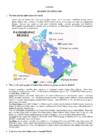
The first colony was established what was described as Vinland by the Vikings. It was located on the northernmost tip of todays Newfoundland. There has also been a theory that the Vikings penetrated Hudson Bay and reached the Great Lakes region but recent investigations have cast serious doubt on it. The Greenland colony died out during the 15th century and the Viking adventures in Canada must have come to an end long before that time. The Colony of New France By 1600 French interest in Canada was renewed because of the beaver pelt trade and the fishing industry. First French colony was established in eastern Canada. Because of the French settlement the French established a claim to the Gulf of St. Lawrence area. An agreement was made between the King of France and a private fur-trading company that if the company brought settlers to New France then they would have a monopoly on the fur trade. Early attempts of colonization failed but the first permanent colony was
Main problems- how votes were decided (each state gets one or no of people) · US Constitution and the Bill of Rights The first amendment of the constitution liberties and right of the people · The role of George Washington April 30, 1789- FIRST President of the United States reelected Supported Brits or was neutral during France-Britain war · The role of Thomas Jefferson rd 3 president Author of Declaration of Independence Supported French during France-Britain war V North versus South · Different developments in the North and South All over the country School system Women rights South Agriculture: tobacco, rice, cotton (export to England) Cotton gin (1793) Slave labor (economics of south are based on slaves work) · Abolitionist movement Antislavery movement in 1800s Send free slaves to Liberia Help slaves flee their masters · Missouri compromise 5 Forbid slavery above 36°30' latitude Except Missouri
25/11/2012 22:54 The World According to Student Bloopers Richard Lederer St. Paul's School One of the fringe benefits of being an English or History teacher is receiving the occasional jewel of a student blooper in an essay. I have pasted together the following "history" of the world from certifiably genuine student bloopers collected by teachers throughout the United States, from eight grade through college level. Read carefully, and you will learn a lot. The inhabitants of Egypt were called mummies. They lived in the Sarah Dessert and traveled by Camelot. The climate of the Sarah is such that the inhabitants have to live elsewhere, so certain areas of the dessert are cul- tivated by irritation. The Egyptians built the Pyramids in the shape of a huge triangular cube. The Pramids are a range of mountains between France and Spain. The Bible is full of interesting caricatures. In the first book of the Bible, Guinesses, Adam and Eve were created from an apple tree
-To work together to help people live better lives, to eliminate poverty, disease and illiteracy in the world, to stop environmental destruction and to encourage respect for each other's rights and freedoms. -To be a centre for helping nations achieve these aims. The Principles of the United Nations: -All Member States have sovereign equality. -All Member States must obey the Charter. -Countries must try to settle their differences by peaceful means. -Countries must avoid using force or threatening to use force. -The UN may not interfere in the domestic affairs of any country. -Countries should try to assist the United Nations. The basic structure of the United Nations is outlined in an organizational chart. What the structure does not show is that decision- making within the UN system is not as easy as in many other organizations. The UN is not an independent, homogeneous organization; it is made up of sovereign states, so actions by the UN
He is said to have exclaimed ,,Will no one rid me of this turbulent priest?" 4 knights killed Becket on the altar steps. The murder shocked. The Pope made Becket a saint. Canterbury became a shrine. Henry himself made a pilgrimage to Canterbury, walked barefoot through the town and was flogged by bishops at his request. In the end Henry quarrelled with his beautiful & powerful wife, his sons took Eleanor's side. In 1189 Henry died a broken man, disappointed & defeated by his sons and the French king. He was followed by his rebellious son, Richard. Although he spent little time in England (6 months of his 10-year reign), he was one of England's most popular kings. He was brave, a good soldier, but his nickname ,,lion-heart" shows that his culture was French. He died in 1199. He had no son. His brother John followed. King John is often regarded as the worst king England has ever had (unpopular, greedy). He
It is also possible that they drove many of the older inhabitants westwards into Wales, Ireland and Scotland where they were eventually assimilated2. Celtic Culture The Celtic tribes continued the same kind of agriculture as the Bronze Age people before them. But the use of iron technology and more advanced ploughing methods made them highly successful farmers, the Celts used ox-drawn wheeled ploughs and this meant that richer, heavier land could be farmed. Under the Celts Britain became an important food producer. It now exported corn and animals, as well as hunting dogs and slaves, to the European mainland. The two main trade outlets eastwards to Europe were the settlements along the Thames River in the south and on the Firth of Forth in the north. It is no accident the present-day capitals of England and Scotland stand on or near these two ancient trade centres
12. Duel in the Ether: I 13. Duel in the Ether: II 14. Censors, Scramblers, and Spies 15. The Scrutable Orientals 16. PYCCKAJI Kranrojioras 17. N.S.A. 18. Heterogeneous Impulses 19. Ciphers in the Past Tense 20. The Anatomy of Cryptology Suggestions for Further Reading Index A Note on the Abridged Version MANY PEOPLE have urged me to put out a paperback edition of The Codebreakers. Here it is. It comprises about a third of the original. This was as big as the publishers and I could make it and still keep the price within reason. In cutting the book, I retained mainly stories about how codebreaking has affected history, particularly in World War II, and major names and stages in the history of cryptology. I eliminated all source notes and most of the technical matter, as well as material peripheral to strict codebreaking such as biographies, the invention of secondary cipher systems, and miscellaneous uses of various systems.
cheapness of life in the war. Joseph Behm - The first of Paul's classmates to die in the war. Behm did not want to enlist, but he caved under the pressure of the schoolmaster, Kantorek. His ugly, painful death shatters his classmates' trust in the authorities who convinced them to take part in the war. Detering - One of Paul's close friends in the Second Company. Detering is a young man with a wife and a farm at home; he is constantly homesick for his farm and family. Gérard Duval - A French soldier whom Paul kills in No Man's Land. Duval is a printer with a wife and child at home. He is the first person that Paul kills in hand-to-hand combat, one of Paul's most traumatic experiences in the war. Leer - One of Paul's classmates and close friends during the war. Leer serves with Paul in the Second Company. He was the first in Paul's class to lose his virginity. Haie Westhus - One of Paul's friends in the Second Company. A gigantic, burly man, Westhus was a peat-digger before the war
The early middle ages The Norman Conquest Since William was crowned king, there were many rebellions against the Normans. A small Norman army marched from village to village and destroyed the ones it couldn't control. The Normans took away the Saxon lords' land. Only a few Saxons who supported William could keep their land. Feudalism William gave parts of his conquered land to his captains around the country to avoid rebellions and uprisings. He also kept some land to himself to make sure his was much stronger than his nobles. Of all the farmland half went to his nobles, quarter to church and fifth he kept to himself. William organised the English kingdom according to feudal system. The main purpose of using that system was economic. King gave the land to "vassals" in return of army services
John Cabot in 1497. He sailed to Newfoundland. The first European who explored further inland was Jacques Cartier in 1534. The King of France wanted to settle nowadays eastern Canada and call it New France. To avoid the high costs building the settlements, King of France made an agreement with a fur trading company if the company brought settlers to New France, they'd have monopoly to trade for furs and they would receive all the profits. First attempts of colonization failed. In 1604, French nobleman and a mapmaker named Samuel de Champlain established first permanent French settlement in the New World on an island. This area was called Acadia. When they moved to more sheltered harbour, the settlement was called Port Royal. By 1607, France wanted to establish a new French settlement along the St. Lawrence River. French went there and came back and in 1610, some of them returned. They were the ancestors of the French speaking Acadian people in Nova Scotia and New Brunswick today.
want to live in England because they didn't agree with the church. The pilgrims had rough times also, but friendly Indians helped them. In 1621 the Pilgrims had a huge dinner to give thanks for the first food that they had grown themselves. That day became known as the Thanksgiving, and is celebrated every year in America. INDEPENDENCE WAR By the end of the 18th century, the whole of the Eastern coast of North America had been colonized, largely by the British, but also French and Spanish. There were very high taxes and people in Boston refused to pay them. So when the first cargoes of tea reached to Boston harbour, in 1773, all the tea was thrown into the water. It is known as Boston Tea Party. The British government was very angry and they began the war with the colonies. A farmer from Virginia, George Washington, became the leader of the American army. And later he became the first president of USA.
The Celts were miners, traders and cattle farmers. They brought the knowledge of smelting iron with them. The Celtic language still lives in the Welsh language. While the Celts were still living in tribes, the Romans were the most powerful people in the world. The already a common law system that united the people who spoke different languages but lived under the Romans. The language of Romans was Latin. That became the basis of many languages, such as French, Italian and Spanish. The foundation for the legal systems of most countries in Western Europe and Latin America was Roman law. Their political system later influenced the building of governments in the United States and other countries. The Romans invaded Britain in 43 AD under the Emperor Claudius. They occupied Britain for almost 4 centuries. Throughout the 350-year invasion Britain was ruled as a province. The free Celts were not imprisoned but they had to pay heavy taxes
Homereading 4 Changing world Religions Islam Islam is a monotheistic Abrahamic religion originating with the teachings of Muhammad, a 7th century Arab religious and political figure. The word Islam means "submission", or the total surrender of oneself to God An adherent of Islam is known as a Muslim, meaning "one who submits (to God)". There are between 1.1 billion and 1.8 billion Muslims, making Islam the secondlargest religion in the world, after Christianity. Muslims believe that God revealed the Qur'an to Muhammad, God's final prophet, and regard the Qur'an and the Sunnah (words and deeds of Muhammad) as the fundamental
· These characters were in new settings, skyscrapers, departments store, apartment building, ghetto, stockyard (cattle, cows were slaughtered), commercial trust · Their world is not one of culture or high moral standards · For these new writers controlling new american social experience · Naturalists offered a view that questioned the belief that now was a conscious and national being and happiness could in moral behaviour · Naturalists show man as a small figure in deterministic system which ignores him · Man is a huge machine · Lot of these novels end in tragedy · For 20 years naturalism remained dominant method. The beginning of the 1910 (modernism starts ) · American naturalists: frank Norris ,,The Octopus", Stephan Crane ,,Red badge of courage" · Jack London (1876-1916) · Grew up in extreme poverty
(Fact Sheet: Armenian Genocide) (Wikipedia, 2011) (ANI, 2011) 1.2. The Armenian Massacre The Armenian Massacre started in the early 1900's, when secret meetings began to be held by the Turks. It has been quoted that a man named Dr. Nazim had once said "If we are going to do something like the Adana massacre of 1909, here and there, the result will do us more harm than good." Dr. Nazim goes on to say that the Turks would alert the Arabs and the Kurds and that therefore the danger would be multiplied. In his final words at these meetings he had said that "We (the Turks) must not leave a single Armenian alive in our country, we must kill the Armenian name." The next thing that they did was take a vote regarding the extermination of the Armenians. The results were disastrous for the Armenians when they voted that not a single Armenian should be left alive. (Angelfire, 2011) (Wikipedia, 2011) 1.3
set of ideals. The Statue of Liberty is a huge sculpture that is located on Liberty Island in New York Harbor. This monument was a gift to the USA from the people of France in recognition of the French-American alliance during the American Revolution. The formal name of the statue is "Liberty Enlightening the World." It pictures a woman who has escaping the chains of tyranny. Liberty's right hand holds a torch that is a symbol of liberty. Liberty was designed by the French sculptor Frederic Auguste Bartholdi. The hollow copper statue was built in France - it was finished in July, 1884. It was brought to the USA in 350 3 pieces on a French ship called the "Isere". The statue was re-assembled in the USA and was completed on October 28, 1886. The Statue of Liberty The White House is the official residence of the President of the United States of
They had spread over the country, varying enormously from nomadic food gatherers to fishing societies. Then the Vikings visited Canada around AD 1000, but they did not stay. In 1492 Christopher Columbus discovered America while trying to reach India. He named the native people Indians, because he though he had reached India. He didn't stay either and in the sixteenth century the first Europeans to settle in America were the Spanish, the English and the French. The first village founded by the English settlers was in Virginia in 1607. It was called Jamestown. They didn't have good relations with the Indians and many of them died. But Pocahontas, the daughter of an Indian chief, became their friend and helped them. They started growing tobacco in Virginia, using African slaves in the fields. In 1620 a new group of British settlers reached Plymouth, Massachusetts, with a ship called
In 1966 Salam Arif, the leader of the new Ba'athist government, died and his brother, Abdul Rahman Arif, not a Ba'athist, assumed the presidency. Some believe that Robert Anderson, former secretary of the treasury under President Dwight D. Eisenhower, secretly met with the Ba'ath Party and came to a negotiated agreement according to which both the oil field concessions and sulphur mined in the northern part of the country would go to United States companies if the Ba'ath again took over power. In 1968, General Ahmed Hassan al-Bakr of the Ba'ath Party was installed as the new president. The US broke relations with Iraq in 1967. After al- Bakr seized power, relations remained severed for 16 years and the US made arms sales to Iraq illegal. In June 1972 all foreign businesses including the Iraq Petroleum Company were seized and Iraq declared that oil would be used as "a political weapon in the struggle against imperialism".
Or some successful conventions can become customary norms. This is important because customary norms are legally binding for all, this way conventions can become binding on all. E.g. the convention of human rights, wasn't legally binding, now customary and legally binding. E.g. convention for chemical weapons has become a customary norm and the fact that SÜÜRIA is not a member state doesn't mean anything. Principles of PIL 1. Pacta sunt servanda (every treaty in force is binding upon the parties to it and must be performed by them in good faith) 2. Equal rights and self-determination of peoples (lot of problems with self-determination, many believe that this means that every nation can have their own independent state, self-determination in another state, autonomy; a fully independent state is only allowed if the nation is very repressed in a state, e.g. in Kosowa?, others are not recognized, even de facto states are not recognized
century and early 7th century, which was found in 1939. The wooden ship, which was buried there, contained lots of armour, weapons, jewellery, symbols of power and other treasures, but no bodies were found. 10. Roman conquest In the 1st c. BC the Roman Empire began to make contact with Britain (wine, pottery, small bronze statues) Julius Caesar's first raid was in 55 BC (the troops were afraid of the sea crossing) In the following year he invaded again, this time he marched inland In AD 43 the Emperor Claudius decided the full-scale invasion (army of 40,000 men) The Roman occupation lasted nearly 400 years. They couldnt conquer Scotland or as they called it caledonia, and so they built a strong wall along the northern border, named after the Emperor Hadrian who planned it. (70 miles or 117km long) The army established Roman Rule in the South and SW of the country.
☄ Anger grew in the country at the way that the Stuart monarchs raised money ☄ Puritanism- ideological Protestantism ☄ Some of them thought the luxurious lifestyle of the king and his followers was immoral. They were also fiercely anti-Catholic and suspicious of the apparent sympathy towards Catholicism of the Stuart monarchs. ☄ This led to The Civil War ☄ Victory for the parliamentary force ☄ The king (Charles I) was captured and became the first monarch in Europe to be executed after a formal trial for crimes against his people. 1649 Charles I is executed. For the first and only time, Britain briefly becomes a republic and is called the Common wealth. 1660 The monarchy and the Anglican religion are restored. ☾ The church was restored. However, the conflict between monarch and Parliament soon re-emerged
Civil War 1139 due to a battle for the throne between Stephen and Matilda, grandchildren of William I - In 1141 Stephen was captured and Matilda claimed the throne as "Lady of the English" however the people disliked her and when Stephen's wife raised an army against her, she was forced to release Stephen (from prison) who became the king in the same year Stephen agreed to a treaty which said he could peacefully reign England till his death if he accepted Matilda's son, Henry II Plantagenet as his lawful heir When Stephen died in 1154, the Norman dynasty had concluded it's reign The House of Plantagenet, excluding King Henry II and his wife, Eleanor of Aquitaine; King Richard I and his wife, Berengaria of Navarre; King John and his wife, Isabella of Angoulême The House of Plantagenet Henry II claimed the throne in 1154
British soldiers approached the house, proceeded to kill the Colonial wounded, burnt down the house and took Gabriel into custody as a spy, intending to hang him. Martin's 15yearold son Thomas was killed while trying to free Gabriel as he was taken prisoner. Enraged Martin set about to free his son Gabriel, with the help of his two younger sons Nathan and Samuel slaughtered, in brutal fashion, the British troops who held Gabriel. Gabriel rejoined the cause against his father's will again, stating it was his duty as a soldier so Benjamin also decided to join, leaving the rest of the children in the care of their aunt Charlotte, the sister of Martin's deceased wife. They knew that the Colonials couldn't defeat the British and so with the help of Col. Harry Burwell Benjamin organized a militia to keep the British in the south until French Navy arrived to assist. To combat the militia Tavington had to pursue more brutal tactics to draw Martin out
And against all odds, he won, barely, but he still won, everyone in the room came to congratulate him and the Graff told him that all the time he was fighting the buggers and that now the war is over. He was too exhausted and so he just went to sleep. He slept days and when he woke up his friends, the squadron leaders, told him what had happen on Eros and on Earth. There were wars, and his brother Peter helped to stop them, so that he could get power himself. Now trials were held on Earth, to decide if all the actions taken were the right ones. After a year, Valentine came and they both went with the first colony to a former bugger world. There Ender found a cocoon of a hive-queen, who spoke to him through it's thoughts. Ender was forgiven by the bugger race, because they understood him and Ender promised to find a new world for the cocoon, so that the buggers could live again, and this time in peace with humans. Quotations
 annaabi.ee