Revision questions for the test on Victorian literature 1. How would you in general terms characterise the period of Queen Victoria's reign? What were the major changes in technology, education, government, social areas, etc and how did they change the mindset of the British people? 2. Why is the Victorian period often compared to the Elizabethan period? In terms of size how would you describe the British Empire? Why was such an enormity needed at all? 3. Why did the Victorian's develop a doubt in religious matters? What were the new discoveries that triggered the questioning in religious faith? Who were David Livingston and Charles Darwin? What were their ideas like? 4. Describe the main social issues of Victorian Britain? How were they depicted in
English Literature ,Victoria Age 1) Overview of the Victorian age · Periodization During the reign of Queen Victoria (1837-1901) · Why is the Victorian Age compared to the Elizabethan Age? Both are associated with the reign of a very popular queen; Victorian age idealised the Elizabethan Age; many changes in different fields- economy, religion etc.; focusing more on people's attitudes, political developments etc; Victorian age was inspired by Elizabethan era; Britain became an empire · What were the most important changes in politics, religion and social life that occurred during the Victorian age? Politics: 1848 Chartist movement (voting right for the working class); women's suffrage movements; feminist outburst (wanted to have business openly; own property, voting etc.); world dominion (British
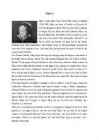
Kadri Laur PRG 11B. 26.05.07 Queen Victoria and Victorian England (Queen Victoria is supposed to have said this as a 10-year-old girl on learning that she was likely to become queen in the future: I will be good.) VICTORIA (r. 1837-1901) Victoria was born at Kensington Palace, London, on 24 May 1819. She was the only daughter of Edward, Duke of Kent. The Duke and Duchess of Kent selected the name Victoria but her uncle, George IV, insisted that she be named Alexandrina after her godfather, Tsar Alexander II of Russia
rich became richer poor people became poorer working class began to fight for rights towns began to grow families were separated work was hard working hours-> 12 hours in 19th century many new newspapers started to appear. magazines books house of commons-> rich bankers and rich people *kasvatati Kensingtoni süsteemi järgi *abiellus Albertiga *valitses 63 aastat ja 7 kuud *tal oli 9 last 42 lapselast. they brought rabbits to australia. What was the function of the Sunday school? ...
15. Victorian times Life and conditions of Victorian people Children were expected to help towards the family budget. They often worked long hours in dangerous jobs and in difficult situations for a very little wage. For example, there were the climbing boys employed by the chimney sweeps; boys and girls working down the coal mines, crawling through tunnels too narrow and low to take an adult. Some children worked as errand boys, crossing sweepers, shoe blacks, and they sold matches, flowers and other cheap goods.
charged. These lands were given over to flocks of sheep. By the end of the decade the Highlands had become a wilderness. The 19th century was generally a time of great social reform: the slave trade was abolished, the employment of women and children was regulated by laws, primary schools were established and men could no longer be excluded from universities or politics because of their religion. Victorian Britain The Victorian age began in 1837, which lasted until Queen Victoria's death in 1901. The period was dominated by three men her Prince Consort, Albert of Saxe-Coburg and two outstanding prime ministers, William Gladstone and Benjamin Disreali. By the end of her reign the nation was the most powerful in the world and by the 1920s the British Empire comprised about a quarter of the world's territory and population.
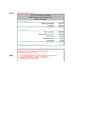
antud: Esitatud kasumiaruanne Old Victorian Bed and Breakfast Kasumiaruanne (Income Statement) 01.01. - 30.06 20X5 Tulud (Revenues) $ Omaniku investeering 300 000 Pangalaen 200 000 Tulud kokku: 500 000 Kulud (Expenses)
Gold was found in Victoria in 1851 70% of all Victorians live in Melbourn History Victoria was founded in 1803, when British soldiers came to stop French soldiers from settling any new areas. In 1854 there was an armed rebellion but it was held back by British soldiers.(over a thousand died) On 7 February in 2009 Victoria was affected by heavy bushfires, 134 died and the event is known as the "Black Saturday." Religion 67,5% of Victorian people are Christian, 27.5% Catholic and other religions are Islam, Judaism and Buddhism. The church attendance is very low in Victoria, over 20% of all Victorian claim no religion. Figures Victorian population is 5,087,000 Victoria's area is 237,629 km² Victorian time zone is +10 UTC The highest place in Victoria is 1,986 and it's called Mt Bogong. 123 Sports The Australian football's final is held in Victoria every year. Melbourn has held the summer Olympic games.(in 1956)
A fairy tale uses one of the following story starters. 1. Once upon a time...... 2. Long, long ago.... 3. In a distant land.... 4. Many years ago in a small village.... 5. There once was a ... 6. In a faraway land.... 7. The princess was sad this day because... 8. Once there was a prince who.... 9. The magical kingdom of .... 10. It was the summer of the.... 11. What was the original message of nursery rhymes? Moral lesson II Victorian era 1. Which event ended child labour during the Victorian age? 2. Name some established writers of the VA who also wrote for children. Robert Louis Stevenson, Lewis Carrol, Charles Dickens. 3. Name some new children's writers who started to write during the Victorian age? 4. Why are Wilde's fairy tales important for both children and adults? For children moral lesson Adult beautiful language 5
Exhibition in 1851, a highly profitable industrial convention. [6] Her marriage to Prince Albert brought nine children between 1840 and 1857. Most of her children married into other Royal families of Europe. [7] On December 14th 1861 Albert died from typhoid fever at Windsor Castle. Victoria remained in self-imposed seclusion for ten years. This genuine, but obsessive mourning kept her occupied for the rest of her life and played an important role in the evolution of what would become the Victorian mentality. [6] She had lost a devoted husband and her principal trusted adviser in affairs of state. For the rest of her reign she wore black. Widowhood Until the late 1860s she rarely appeared in public; although she never neglected her official Correspondence, and continued to give audiences to her ministers and official visitors, she was reluctant to resume a full public life. [7] Victoria's isolation from the public greatly diminished the popularity of the monarchy, and
violent love and power. Charlotte Bronte’s Jane Eyre – best received work of the sisters. A version of the Byronic hero, but undermines its principles. The novel takes from both the romantic and realist tradition. A female bildungsroman – coming-‐of-‐age story. Beginning of the Victorian Age – rise of the realist movement. In part appeared a reaction to romanticism. Realists strove (1) to understand what exists, determined to learn the truth; an exploration of reality, i.e. everyday life. Represents life with all its
Morse code The «dot» and «dashes» language «The Victorian Internet» 183 8 Double digit code dot (dit) dash (dah) «What hath God Wrought The Bible: Numbers 23:23 Morse code today is learned by scouts is still used by some enthusiasts SOS signal Thank you for your attention!
The Invisible Man The Invisible Man Herbert George Wells Published in 1897 Science fiction novella Victorian era What Is It About? A man who becomes invisible Cannot become visible again Mentally unstable as a result Main Characters Griffin the Invisible Man, young scientist Thomas Marvel recruited to help Griffin, stole the Invisible Man's notebooks Dr. Kemp a scientist, old friend of Griffin, betrays him Setting In 1890s England Iping Short Summary Becoming invisible The arrival of the Invisible Man in Iping Accidental revealing
monarchy restored, Charles II asked to reign B. The Great Plague in 1665 C. The Great Fire of London in 1666 In my opinion it was a negative century for the people because so many awful events took place. However, there was also one positive event: The glorious revolution in 1688, it was bloodless and as a result the monarch's powers were limited by the government, the bill of rights was drawn up in 1689 Victorian period o 1837-1901. o Queen Victoria was regarded as the personification of contemporary morals o During the 19th century Britain became the world's no.1 economic power. o the period is described by political stability and economic growth. o Changes in social structure-most ppl now lived in towns, growth of the middle class, a set of values formed that are now called Victorian
8.b klass Oscar Wilde Referaat Tartu 2009 Oscar Fingal O'Flahertie Wills Wilde was an Irish playwright, poet and author of numerous short stories and one novel. Known for his biting wit, he became one of the most successful playwrights of the late Victorian era in London, and one of the greatest celebrities of his day. Several of his plays continue to be widely performed, especially The Importance of Being Earnest. As the result of a widely covered series of trials, Wilde suffered a dramatic downfall and was imprisoned for two years hard labour after being convicted of "gross indecency" with other men. After Wilde was released from prison he set sail for Dieppe by the night ferry. He never returned to Ireland or Britain.
WOMEN's IDEALS OF BEAUTY THROUGH THE AGES Renaissance 15th century High forehead In the warmer climate hair in plaits, jeweled turbans or caps Using bleach A few extra pounds of weight. Used white lead powder Elizabethan 16th century Queen Elizabeth Naturally pale complexion Red hair Healthy glow to cheeks 18th Century Women had trim Crimped or curled heads Powdered Decorated with garlands(vanikud) Wire cages Three feet in the air Feathers Ribbons Jewels Even ships, gardens Victorian Natural beauty Without makeup Used cosmetics less Hygiene and health 1840s heads were sleek, demure Heavy knot of curls Plaits in back 1920s "Bobbed" Waved or shingled hairstyles Louise Brooks Clara Bow Powder Circles to the cheeks Plucked eyebrows Penciled in thin arches Lips very red 1940s Feminine hairstyles Bette Davis' curls Rita Hayworth's gleaming waves A lock of hair that covered one eye. 1950s "Doe eye" Pale complexion Intensely colored lips Curls Waves Bouffants
(1665-1666) Sir Christopher Wren St. Paul's Cathedral The Georgian era (1714-1830) The premier city of the Western John Nash an architect World The Bank of England 1694 Victorian era (1837-1901) London became the Metropolis it is today The Houses of Parliament 1834 Development of industry and public transport The Second World War (1939- Devastating effect but London 1945) remains a centre for fashion, culture and artistic achievement. 1. In ex
Art nouveau Beginning There was a reaction against the cluttered designs and compositions of Victorian-era decorative art, --------> the second was the current vogue for Japanese art, particularly wood-block prints, that swept up many European artists in the 1880s and 90s, including the likes of Gustav Klimt, Emile Gallé, and James Abbott McNeill Whistler. Art Nouveau, ornamental style of art that flourished between about 1890 and 1920 throughout Europe and the United States. Art Nouveau was aimed at modernizing design
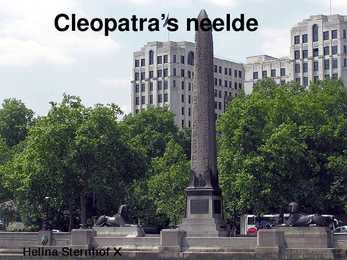
designed by the engineer John Dixon. Cleopatra's Needle is flanked by two Egyptian sphinxes cast from bronze that bear hieroglyphic inscriptions that say netjer nefer menkheperre di ankh (the good god, Thuthmosis III given life). These Sphinxes appear to be looking at the Needle rather than guarding it. This is due to the Sphinxes' improper or backwards installation. The setting is neatly completed by two large bronze Sphinxes which lie on either side of the Needle. These are a very Victorian version of the traditional Egyptian original, but still look impressive. I think, that Cleopatra's needle has a big importance in Egypt history. And it is good to have such a great monument in England. Someday, when I'm able to visit England, I will certainly go and see it by myself.
Calvin and M. Luther. For that, the pope named Henry VIII the Fidei Defensor, meaning Defender of the Faith 4. Why did Mary I get the nickname Bloody Mary? Because during her reign, England became officially a Roman Catholic country, Parliament persecuted a lot of protestants and over 300 people who were burned at the stake. 5. Historians often speak about different ages or times in British history. When (in which centuries) were the following ages: Elizabethian, Georgian, Victorian. Characterise each of them (2 3 sentences). Elizabethian time started in the middle of 16th century and ended in the beginning of 17th century. During Elizabeth I reign, England became independent of the Pope in religious matters, England's overseas expansion began. It was a prosperous period. Georgian time was from the beginning of 18th century to 19th century. It was a time of immense social change. Many reforms were done. Victorian age was from 1837-1901
After recording several EPs, it was October 22nd 2003, when Ben Moody Left the band citing "creative differences." After that incident, "Anywhere but Home" and "The Open Door" were the records that Amy made with the band. Both albums have become very popular and sold millions of copies all over the world. What I admire about Amy Lee is her incredibly beautiful style, marked by her occasional use of Gothic make-up and taste for Victorian-styled clothing. The fact that she often designs and sews her own dresses is what made me have even more respect for her. What many fans praise Lee for is her refusal to emulate other celebrities by using sex appeal in her music. In my opinion, she is truly the most talented, sincere and admirable woman in the music scene of this century. Emma Reinhold Secunda Sotsiaal
Castles and museums Cardiff castle Robert Fitzhamon built Cardiff castle. Cardiff Castle is one of Wales' leading heritage attractions and a site of international significance. During 2000 years of history, the Castle has been a Roman Garrison, a Norman stronghold and in Victorian times was transformed into a gothic fairytale fantasy. St Fagans St Fagans is an area in the west of the city of Cardiff, capital of Wales. To the south lies the village of Michaelston-super-Ely, and to the east the suburb of Fairwater. St Fagans lies on the River Ely, and previously had a railway station on the South Wales Main Line, and currently there is a level crossing. St. Fagans is home to St. Fagans Cricket Club. It is home to St
· In addition to "real" goths, there are also "poseurs", the number of which began to increase in the 1990s. · The centers around which local Gothic communities are formed in Western Europe and the US are "friendly subculture" clubs. GOTHIC MUSIC · Gothic rock · Deathrock · Darkwave · Gothic metal · Gothabilli GOTHIC FASHION DIRECTIONS IN GOTHIC FASHION · Antique Goths - also can be called Renaissance Goths, Romantic Goths, Victorian Goths. · The Vampires · Gypsy Goths · Cyber-Goths · J-Goth · Corporate Goths or business goths GOTHIC ATTRIBUTES · Ankh cross · Eye of Ra · The cross of St. Jacob · Celtic crosses and ornaments · Pentagrams · Inverted crosses · Eight-pointed stars etc. GOTHIC EVENTS · Whitby Gothic Weekend (Britain) · M'era Luna (German) · Wave-Gotik-Treffen (Leipzig) · Convergence (USA) · Amphi Festival (German) · Castle Party (Poland)
Charles John Huffam Dickens was born on 7 February 1812 in Landport, Portsmouth, in Hampshire, the second of eight children to John Dickens. He was the most popular English novelist of the Victorian era and one of the most popular of all time. He created some of literature's most memorable characters. His novels and short stories have never gone out of print Sharles visited America twice, where he gave lectures, raised support for copyright laws, and recorded many of his impressions of America. In 1835 he met and became engaged to Catherine Hogarth. In 1844 Dickens and his family toured Italy, and were much abroad, in Italy, Switzerland,
San Francisco Siit võtta ainult juttu palun, mitte sama tööd õpetajale esitada. Introduction San Francisco is the 4th most populous city in California and the 14th most populous in the United States, with a population of 805,235 as of the 2010 Census. It is located on the tip of the San Francisco Peninsula and is the focal point of the Bay Area. It is renowned for its month long episodes of fog, steep rolling hills, eclectic mix of Victorian and modern architecture and liberal culture. Landmarks San Francisco has many famous landmarks, including The Golden Gate Bridge, cable cars and Chinatown. Golden Gate Bridge is San Franciscos most famous bridge. It was built in 19331937 . It's about 3 km long and 65 m above sealevel. 40 million people cross the bridge every year. Landmarks Cable cars The San Francisco cable car system is the world's last permanently operational manuallyoperated cable car system, and is an icon of
London TOWERS Includes several towers: Victoria Tower - a square tower at the south-western end of the Palace St. Stephen's Tower a.k.a Central Tower - lies over the middle of the Palace Clock Tower a.k.a Big Ben at the north- eastern end of the Palace VICTORIA TOWER ST. STEPHEN'S TOWER CLOCK TOWER DIFFERENT PARTS The Royal Apartments the House of Lords the House of Commons Westminster Hall HOUSE OF COMMONS CHAMBER Was opened in 1950 after the Victorian chamber had been destroyed in 1941 located at the northern end members of Parliament hold most of their debates there at one end of the Chamber is the Speaker's Chair HOUSE OF LORDS CHAMBER Located in the southern part the benches in the Chamber, as well as other furnishings, are coloured red the Lords Chamber, like the Commons, has benches on either side and galleries above. at one end of the Chamber is the Throne from which Queen Elizabeth II gives her speech
things. Biggest threat to his throne was The Scottish Jocobite Rebellion. It was the attempt of Stuart restoration but it failed. When the Hanovers ruled there was the Napoleon war and also conolization was done all over the world. Biggest names of the time are of course Horatio Nelson and James Cook. Admiral Nelson defeated the French in the Battle of Trafalgar in 1805. Captain Cook New Zealand, Australia, Tonga and some parts of Antarctica. Victorian Age The Victorian era of the United Kingdom was the period of Queen Victoria's reign from June 1837 until her death on the 22nd of January 1901. The reign was a long period of prosperity for the British people, as profits gained from the overseas British Empire, as well as from industrial improvements at home, allowed an educated middle class to develop. Her middle class wiews were called ,,Victorian values". They were discipline in the family, the sobriety and puritanism of the public life
money and a room of her own if she is to write fiction. Simone de Beauvoir most wellknown feminist. bell hooks multiplicity of experience, sex(male/female) vs gender(social/construct) Judith Butler performativity – gender is performed. Bloomsbury Group modernists (max 10 ppl) 5. Feminism and women’s roles during the Victorian Era. How were women disadvantages during this period? Some laws that helped changed the status of women. Women’s rights were extremely limited in this era, losing ownership of their wages, all of their physical property, excluding land property, and all other cash they generated once married. 1857: violence recognized as grounds for divorce 1870: women could keep money they earned
1 lots of leisure activities which ...attracded... people on the 19th century ....havent lost.... their popularity nowadays, either. ( attract; not lose) 2. Queen Victoria became a queen when she was eighteen. (become;be) 3 When Prience Albert Died, she Didn't get over it and wore black clothes for the next forty years. (die; not get;wear) 4. Have the working conditions change in this factory? (change) 5.Did children make their own entertainment durning the Victorian age?(make) 6.Do your friends have a great influence on you ?(have) 7. Tom dosen't spend his holiday in the same resort every summer.He travels around the country with his friends and they usually stay at different seaside placec. (not spend;travel,stay) 8.Are you still busy, Mike?- Not really. I finised cleaning up my room an hour ago.At the moment I'am plaing my favourite computer game.(finish;play) 4 Complete the sentences with prepositions where necessary. 1. I usually meet ......
CHARLES DICKENS WHY WE STILL LOVE CHARLES DICKENS 200 YEARS ON WHAT WAS IT ABOUT CHARLES DICKENS THAT MADE HIM NOT ONLY A CELEBRITY IN HIS OWN TIME BUT AS EQUALLY CELEBRATED TWO CENTURIES AFTER HIS BIRTH? This course will examine his novels, his journalism and the social causes for which he campaigned. Through analysis of his writing, his activism and his life, students will explore his relationship with the Victorian age and beyond. In addition to discussing Dickens' life and works, students will explore Dickens' world on foot, through field trips around London and the county of Kent, where Dickens spent his childhood and the last years of his life ... Dickens believed that enriching people's life with knowledge and enjoyment of the arts was key to building a fair society and creating opportunities. Dickens 2012 is committed to following Dickens's
during the war. The leader of the Puritan Republic was Oliver Cromwell. 16) London’s greatest disaster is considered the Great Fire, which happened in 1666 and destroyed some 13 000 houses over an area of almost 400 acres. 17) The positive effect of the Great Fire was to rid the city of its accumulated filth. 18) London became the premier city of the Western world during the Georgian era. 19) The Victorian era is marked with development of industry and public transport. 20) Yes, it did. The Second World War had a devastating effect, destroying large areas of the city.
building, United Nations, museums, Broadway theaters, restaurants, Times Square, nightlife and shopping In 2010, New York City had a record number of tourists with 48.7 million Time square in 1922 and 2010 San Francisco ... is the financial, cultural, and transportation center of the San Francisco Bay Area ... is a popular international tourist destination, renowned for its chilly summer fog, eclectic mix of Victorian and modern architecture and its famous landmarks, including the Golden Gate Bridge, cable cars, and Chinatown ... is eighteenth place in the world's top producing cities, ninth in the United States, and fifteenth place in the top twenty Global Financial Centers Alcatraz Alcatraz Island is an island located in the San Francisco Bay a military fortification a military prison a Federal Bureau of Prisons federal prison until 1963
Paul's Cathedral and so on. The tower of London had a lucky escape. The architect Sir christopher Wern lost no time in drawing up plans and giving the entire city a monumental baroque aspect. Many of his plans were never realized, becaus people started rebuilding themselves, but the 50 churches and St, Paul's Cathedral were quite remarkable. During the Georgian era, London was considered the premier city of the western world. The Bank of Englad was established in 1694. But it was during the Victorian era that London became the metropolis that it is today. The second World war had almost the same effect to the town as The great Fire. But London still remains the centre for fashion, culture and artistic achievement.
* Joins lama * Meets the army regiment that his father had belonged to * Colonel recognizes Kim's talent * Kim as a part of army * Kim in military school * In war - free time * Joins Tibetian Lama in adventure to Himalayas * Lama conflicts with Russian * Kim steals maps, papers and other items from Russian * Lama finds his river of Arrow and gets his soul purification The Light that Failed * First novel * Published in 1890 * Victorian Period * about ta painter who goes blind * Made into a film in 1916 and in 1940 * Richard (Dick) Heldar- main character, painter, loves Maisie, goes blind, paints Melancholia * Maisie- Dick's childhood playmate, has artistic ambitous, the idea of Melancholia * Gilbert Torpenhow- correspondent, Dick's friend, wants to spread Dick's reputation * Bessie Brook - a prostitute, model for Melancholia, hates Dick * Story takes place in London, in 19th century * Dick- war in Sudan , meets Torpenhow
territories grew during her reign, Virginia in America being named after „The Virgin Queen“. Queen Elizabeth I also valued culture. Arts flourished while Elizabeth was in power, most notably the theatre. She had the first real theatres built allowing poets like Shakespeare to create masterpieces. It is no wonder that Elizabeth I’s reign was named „The Golden Era“ as it was a time of peace during which England’s territory grew and arts such as theatre thrived. Secondly, the Victorian era is known for the enlargement of the Empire, revolutions in industry, science, education and Queen Victoria was the symbol for this period. During Queen Victoria’s reign the British Empire’s expansion reached it’s peak. Britain had large colonies on every continent, Queen Victoria also held the title of „Empress of India“. Moreover, the Industrial Revolution took place in the 19th century, the new technology made work physically less demanding and much faster
each 213 feet (65 m) high, built on piers. The central span of 200 feet (61 m) between the towers was split into two equal leaves, which could be raised to an angle of 83 degrees to allow river traffic to pass. The leaves, weighing over 1,000 tons each, were balanced to minimize the force required and allow raising in five minutes. · Jones died in 1887 and George D. Stevenson took over the project. · Stevenson replaced Jones' original brick facade with the more ornate Victorian Gothic style, which makes the bridge a distinctive landmark. · The bridge was officially opened on 30 June 1894 by The Prince of Wales. · The total cost of construction was £1,200,000. Hydraulic systems · The original raising mechanism was powered by pressurised water. · In 1974, the original operating mechanism was largely replaced by a new electro- hydraulic drive system. · During World War II, as a precaution against the existing engines being
mid Hollywood cinema era. He is considered to have been one of the finest mimes and clowns ever caught on film and has greatly influenced performers in this field. He acted in, directed, scripted, produced, and eventually scored his own films. Chaplin was also one of the most creative and influential personalities in the silent-film era. His working life in entertainment spanned over 65 years, from the Victorian stage and music hall in the United Kingdom as a child performer, almost until his death at the age of eighty-eight. Chaplin's high- profile public and private life encompassed highs and lows with both adulation and controversy. His principal character was "The Tramp" (known as "Charlot" in France and the French- speaking world, Greece, Italy, Portugal, Romania, Spain and Turkey, and as "Carlitos" in Brazil). "The Tramp" is a vagrant with the refined manners and dignity of a gentleman
Big Ben When most people heat the words "Big Ben" they immediately conjure up an image of the striking Victorian Gothic structure of the clock tower of the Palace of Westminster (the Houses of Parliament). Let's clear up a common misconception first; technically speaking, the name "Big Ben" does not refer to the famous tower, nor to the four huge clock faces of this London landmark; instead, it refers to the largest of the five bells inside the clock tower, whose chimes are such a familiar sound to listeners to BBC radio over the years.
Oscar Wilde Oscar Wilde is one of the most iconic figures from late Victorian society. Enjoying a meteoric rise to the top of society, his wit, humour and intelligence shine through his plays and writings. Oscar Wilde was born on 16th October 1854 in Dublin, Ireland. His parents were well known and attracted a degree of gossip for their extravagant lifestyles. Oscar Wilde proved to be a student of great talent. He was awarded a scholarship to Trinity College Dublin. Here he studied the classics, in particular developing an interest in the Greek
Monument to the Great Fire of London or the Monument tube station. No matter how you choose to spend your time viewing the London Bridge, the contrast of a modern thoroughfare to the ancient bridges that it has replaced creates an intriguing tourist experience. Tower Bridge Disliked by most when constructed in 1894, the Tower Bridge has become a symbol of London. The Tower Bridge, named after its two impressive towers, is one of London's best known landmarks. This Victorian Bridge is now more than 100 years old. It was designed by Wolfe Barry and Horace Jones, and completed in 1894. The middle of the bridge can be raised to permit large vessels to pass the Tower Bridge. It used to be raised about 50 times a day, but nowadays it is only raised 4 to 5 times a week. The bridge is 60 meter (197 ft) long and its towers rise to a height of 43 meter. From the top of the towers, you have a great view on the centre of London
Discounting for the gigantic stature and blood-thirstiness of old days, as they have come down to us in fairy-tale and legend, the folk of the old Sagas were Forsytes, assuredly, in their possessive instincts, and as little proof against the inroads of beauty and passion as Swithin, Soames, or even Young Jolyon. And if heroic figures, in days that never were, seem to startle out from their surroundings in fashion unbecoming to a Forsyte of the Victorian era, we may be sure that tribal instinct was even then the prime force, and that "family" and the sense of home and property counted as they do to this day, for all the recent efforts to "talk them out." So many people have written and claimed that their families were the originals of the Forsytes that one has been almost encouraged to believe in the typicality of an imagined species. Manners change and modes evolve, and "Timothy's on the Bayswater Road" becomes a nest of the unbelievable in
What are they exactly? Crown jewels How many resident ravens live in the Tower? At least 6 - rongad What is the legend about six ravens and the Tower about? if they are absent, the kingdom will fall Destination 7: The Tower Bridge Tower Bridge is a bascule bridge. What does it mean? Opens up in the middle so boats can get trough What can you do there? The Tower Bridge Exhibition is a display housed in the bridge's twin towers, the high-level walkways and the Victorian engine rooms You visited The Tower, now crossed the Tower Bridge. Do you have to turn left or right to reach the Globe Theatre? right Destination 8: The Globe Theatre Why is this particular theatre that important? Shakespear's home teather, Shakespeare globe When was it built? 1599 Why was it closed already in 1642? closed down by the Puritans in 1642 - puhtusevennad The term "box office" (kassa) is said to originate from the Elizabethan theatre
tunnels and pipes under London to take away sewage and provide clean drinking water. When the London sewerage system was completed, the death toll in London dropped dramatically, and epidemics of cholera and other diseases were curtailed. Bazalgette's system is still in use today. As the capital of a massive empire, London became a magnet for immigrants from the colonies and poorer parts of Europe. A large Irish population settled in the city during the Victorian period, with many of the newcomers refugees from the Great Famine (1845-1849). At one point, Irish immigrants made up about 20% of London's population. London also became home to a sizable Jewish community, and small communities of Chinese and South Asians settled in the city. London popultsion 1801 -- 959,300 1831 -- 1,655,000 1851 -- 2,363,000 1891 -- 5,572,012 1911 -- 7,160,525
By the end of the 18th century Britain was the most industrialised country enjoying an international trade boom. During the late 18th century a huge network of canals and railways were built. Telegraph lines, magazines and newspapers became a part of every day. In the 1840s, when Britain was struck by famine, millions of citizens had to live in overcrowded tenements and their work regimes came close to slavery. The Victorian Age Encompass / n'kmps / ümbritsema, hõlmama Inconsolable / nkn'slbl / lohutamatu Withdraw / w'dr: / taanduma, tagasi tõmbuma The Victorian Age lasted from 1837 to 1901, when the throne belonged to Queen Victoria. She liked to be involved in the affairs of state and this resulted in Britain being the most powerful nation in the world and the British Empire having a quarter of the world´s territory and population. Queen Victoria had nine children during her 20-year marrige to
new methods of farming England is rich in coal, wool, iron ore international trade boom canals and railways were built population increased to London : the largest and richest city in Europe ( population 1mln ) 18101820 the Highland Clearances in Scotland local farmers could not pay the high rent so they left and they were replaced by sheep 19th c. A time of great social reform slave trade abolished laws to regulate work primary schools 18371901 the Victorian Age Queen Victoria longest reigning monarch, 64 years her husband was Prince Albert ( died in 1861 > Victoria's long mourning ) nine children British Empire very powerful ( 1/4 of the world's territory and population Empire strongest in 1920 ( the peak ) The Crimean War Between Russia and the alliance of France, Turkey, Austria and Britain to halt Russian expansion into the Balkans Russia lost, many casualties on both sides Florence Nightingale ( Lady With the Lamp )
stage name was Sara Sothern. Sara retired from Fifth level the stage when she and Francis Taylor married in 1926 in New York City. Beatrix Potter Beatrix Potter was born on the 28th of July in 1866 at Number 2 Bolton Gardens, the Potter family home in the South Kensington DIstrict of London. The Potters were typical of the Victorian era a middle class family of means; Click to edit Master text styles able to maintain a large house with several servants. As was the custom of the day, Beatrix was cared for and raised by a nurse. She spent long hours alone, seeing her parents only at bedtime and special occasions. Her younger brother Bertram was born when she was six, and was raised in a similar manner
terrible poverty and lived in the East End slums. For some six hundred years the only bridge across the Thames in London was London Bridge. In 1750 an other stone bridge, Westminster Bridge, was added to ease the movement. During the reign of King George III, Australia was discovered and colonized. Also, the troubles in America began with the Boston Tea Party. The American Colonies proclaimed their independence on July 4th 1776. Victorian London 1837-1901 In 1837, Victoria became Queen. She was only 18 years old. In the 1830s, the Industrial Revolution turned London into a manufacturing and trading centre. During the Victorian era the British Empire became powerful and rich. During the reign of Victoria, London expanded enormously as industry came to Britain and railways were built linking much of Britain to the capital. In 1834 the Houses of Parliament at Westminster Palace burned down. They were gradually
9. What do you know about the Tower of London? It was at first a castle for the king of England, but Henry VIII turned it into a prison. There are Beefeaters, who are the tour guides now but used to be the guards. They keep the royal jewels there. It's one of the most visited sight in London and also one with the most fascinating history. 10. If going back in time was possible, which decade in British history would you choose to live in? Why? I'd like to be in the Victorian age. Simply because the architecture changed and also the industry was developed. All in all it looks like an interesting time period to try. 11. Make a list of things / people / events that you associate with Scotland. Bloody Mary, Loch Ness, Scottish fought for their independence a lot, "Braveheart", Sean Connery, bagpipes, kilts, 12. Where are the British monarchs crowned? What else do you know about this building?
laastanud pärast Alberti surma, et ülejäänud elu jooksul, 40 aastat, oli ta riietatud leinarõivastesse. Leinariietuse juurde valis Viktoria musta värvi leinaehteid, tavaliselt olid nad valmistatud mustast jaspist, kuid must jaspis oli võrdlemisi kallis materjal ning must klaas sai populaarseks alternatiiviks, sest see oli kättesaadavam, odavam ja lihtsam töödelda. Teised populaarsed materjalid leiaehe valmistamiseks olid Onyx, vulkaniit, gutaperts ja tamm. Niimodi tekkis mõiste Victorian jewellery. 2 Surm oli Läänemaailma kunstis armastuse loomulik vaenlane kuni hilise 19. sajandini. Pärast võib aga näha, et surm kunstis muutus sensuaalseks õndsuseks. Oma töös "Love beyond Death. The anatomy of Myth in the Arts" Rudolph Binion kirjutab, et kaasagses kunstis muutus surma mõiste ja kuju füüsiliseks armastuseks. Rudolph Binion jälgib fantaasia joont füüsilise armastuse surma pärast ja Kristliku mõistet vaimse armastuse surma pärast vahel, ta
unknown figure, even by name, to most of her subjects. When she died on January 22, 1901, outliving the century, she was one of the best-known figures, by reputation as well as name, not only in the United Kingdom but also in a greatly expanded British Empire and in the world, including the United States. Her reign had been the longest in British history, and she had given her name to an age --the age of Victorian Britain. Elizabeth II Elizabeth II, full name Elizabeth Alexandra Mary (1926- ), Queen of Great Britain and Northern Ireland (1952- ), daughter of King George VI and Lady Elizabeth Bowes-Lyon, born in London. In 1944 she served as a councillor of state while her father was on the war front in Italy. She married Prince Philip, Duke of Edinburgh, in 1947, and a year later gave birth to a son, Charles
 annaabi.ee