 50 punkti
Autor soovib selle materjali allalaadimise eest saada 50 punkti.
50 punkti
Autor soovib selle materjali allalaadimise eest saada 50 punkti.
 ~ 9 lehte
Lehekülgede arv dokumendis
~ 9 lehte
Lehekülgede arv dokumendis
 2012-02-12
Kuupäev, millal dokument üles laeti
2012-02-12
Kuupäev, millal dokument üles laeti
 7 laadimist
Kokku alla laetud
7 laadimist
Kokku alla laetud
 0 arvamust
Teiste kasutajate poolt lisatud kommentaarid
0 arvamust
Teiste kasutajate poolt lisatud kommentaarid
 klehes
Õppematerjali autor
klehes
Õppematerjali autor
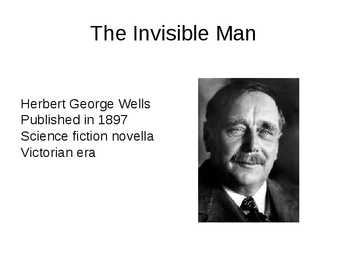
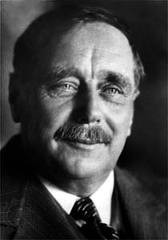
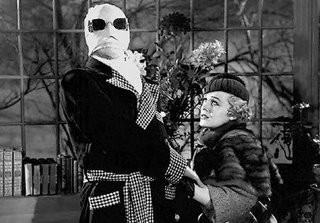
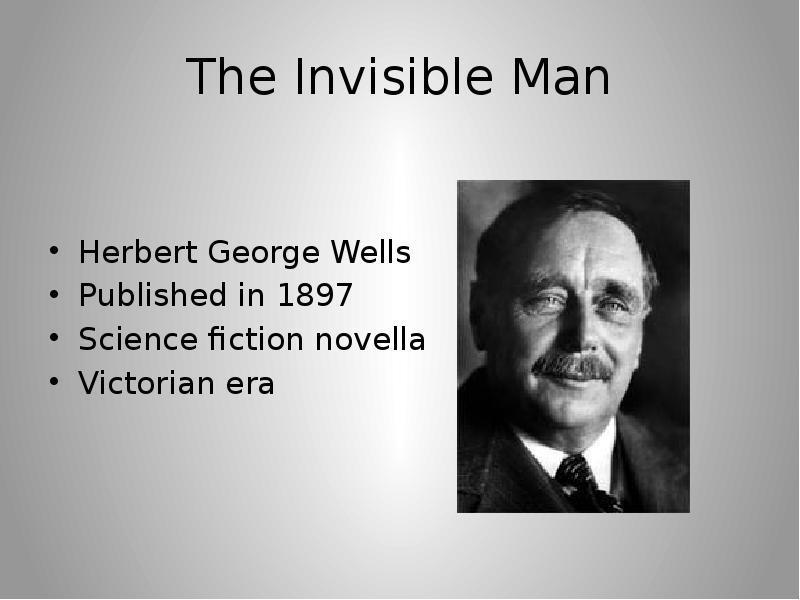
realistlikud romaanid (1905-1930-ndad), hilisemad sotsioloogilised pessimistliku kallakuga romaanid. Ta on kirjutanud ka hulga vaimukaid novelle, ilukirjanduse kõrval esseesid ja ülevaateteoseid. Kokku küünib Wellsi teoste arv üle saja. 5 Wellsile maailmakuulsust toonud romaanid ,,Ajamasin" (,,The Time Machine," 1895; eesti k. 1924), ,,Doktor Moreau saar" (,,The Island of Doctor Moreau," 1896), ,,Nähtamatu" (,,The Invisible Man," 1897, eesti k. 1913 ja 1966), ,,Maailmade sõda" (,,The War of the Worlds," 1898; eesti k. 1911 ja 1929), ,,Esimesed inimesed Kuul" (,,The First Men in The Moon," 1901, eesti k. 1929), ,,Õhusõda" (,,The War in The Air," 1908; eesti k. 1914). 6 Veel teoseid ,,Inimjumalad" (,,Men Like Gods," 1923; eesti k. 1968) ,,Ajaloo peajooned" (,,The Outline of History," 1932 eesti k. 1939) ,,Ann Veronica" (1909)
The writings of Jules Verne undoubtably influenced Wells, and he wrote his first novel, The Time Machine, partly in response to this new kind of literature that Verne produced. The story appeared in various forms in magazines from 1888 to 1894 and was released in its current form in 1895. The book was successful, and Wells did not need to teach or worry about money from that time on. Wells' early novels continued in the science fiction mode of The Time Machine. The Island of Dr. Moreau (1896), The Invisible Man (1897) and The War Between the Worlds (1898) cemented his position within the genre. For many readers, these early novels are the extent of Wells' writing. He's the "time machine guy" or the "martian guy." Wells, however, wrote short stories, mainstream fiction and non-fiction essays his entire life, most of them espousing in some form or another his views on humanity, society and the direction he saw the world going. Some of these works were also science fictional in nature.
the understanding that the origin which has no name is the true source y Forms are constantly changing shape, hence its name will change with it constantly y We call something that holds fluids a cup > y What do we call the cup is shattered? y So whatever name we choose for the source is not is everlasting name 1.2) Tao and Its Name y The nameless is the origin of Heaven and Earth y The nameless is this invisible force that existed before Heaven and Earth, or the universe, began y The source, or origin, or Tao y True Nature y The named is the mother of myriad things y The named is the visible form gave rise to the infinite manifestations of the physical world y The function, the movement, or the application of Tao y Virtues y Constantly with desire, one observes its manifestations y When our heart is filled with desires, then we will only observe the
Of course not. In Galileo's day, seeing something that could not be seen with the naked eye was the same thing seeing apparitions or hearing voices it was the work of the Devil! The religious authorities at Rome were uneasy with the New Science. Copernicus, Kepler and Galileo seemed to be turning the world upside down. The sun was the center of the cosmos, the earth moved and the sky seemed to hold hidden visions. In effect, the Scientific Revolution had created an invisible world behind the visible world and those men of an older generation, weaned on Aristotle and Aquinas were fearful of it. On April 12, 1615, Cardinal Bellarmine (15421621) wrote his famous LETTER TO FOSCARINI , a letter which expressed his displeasure with Copernican theory. The following year, Galileo was summoned [ kutsuti välja ] to Rome and ordered to desist teaching Copernican theory. He was, however, free to think about Copernican
Ameerika Kirjandus 30.01.13 Naturalism · France, Emile Zola · Put down his theory in 1879: Le Roman Experimental, attempt to explain the development of human society throuch biological laws · Outlook is deterministic, pessimistic, fatalistic (fate or biology) · Man as an animal-clever than other beasts, still explainable within the framework · Man is not a free agent, is govern by something · Unable to determine his own faith · Hereditary · Naturalists tried to apply in fiction the processes of natural sciences · Writers task is to record facts, systems of behaviour, living conditions, never revealing any natural unbiased (completely natural) · Point of view: amoral-outside the category of morality, neither good or bad · Naturalist find it absurd to blame the wicked. These criminals are doing what nature, environment, their unconscious tells them to do. Naturalists do not judge their characters, they sim
Britain. Very few who had actually travelled and seen ancient Rome (Arundel), because of wars, theological divide, it was to change. Peace with France, travel easier, more money. Essential part of education of ambitious young man – to see the home of the classical heritage which they cherished. From Britain biggest number of people on Grand Tour, wide spectrum (aristocrats, commoners, patrons, collectors, artists, designers, many women = virtual or invisible academy for them). Learning foreign languages, studying history, politics, laws. Looking at architecture, art, antiquities. Man was expected to return with qualities needed to move in international courtly aristocratic society, fluent in French, graceful in behaviour, polished in manners. Singly or in groups, under supervision (bear leader). Aristocrats alone (governor). Fixed route: Low Countries, France (some months learning language, social graces like dancing, fencing), south to Italy, tour
American literature The literary history of this nation when the first humanbeing living in what has since become the U.S used language creatively. · Mid to late 18 century put down · Words are powerful, magical · Words must be remembered · Native Americans stories creation of the world · Attidude thought their land/language · Similar stories Dates and names · America was discovered in 1492 by Columbus · 1497 John Cabot went to Canada · 1579 San Fransisco/St. Fransis · 1607 Jamestown collony/John Smith · 1620 a boat called MayFlower · 1630 Boston was established · 1636 Harvard University · 1773 Boston Teaparty · 1775 War of Independence · 1776 4 July Declaration of Independence · First President George Washington Christopher Columbus Christopher Columbus (1451
Referaat: Agatha Christie raamatu kohta ''the mysterious affair at styles'' CONTENTS 1. INTRODUCTION................................................... 3 2. AGATHA CHRISTIE............................................. 4 3. PICTURES.............................................................. 5 4. PLOT....................................................................... 6 5. PLOT....................................................................... 7 6. CHARACTERS...................................................... 8 7. SETTING................................................................ 9 8. LANGUAGE AND STYLE................................... 9 9. WHOM DO I RECCOMEND THIS NOVEL........ 9 10. SUMMARY........................................................... 10 11. SOURCES.............................................................. 11 INTRODUCTION The Mysterious Affair at Styles is a detec
 annaabi.ee









Kõik kommentaarid