Leidsid 33 sarnast õppematerjali, mis on seotud failiga "Verbid". Need materjalid aitavad sul teemat sügavamalt mõista.
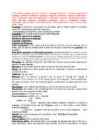
sing, singing, sung, simple, base, verb, perfect, continuo, present, sang, excepton Christmas Day (but at Christmas) We use at in these expressions: at night - at Christmas - at the moment / at present - at the same time - at weekends - at the age of... IN DURING
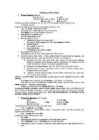
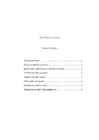
INGLISE KEEL Sisukord Sisukord 2 Ajavormid Tense vorms 3 Lihtolevik The present simple 3 Lihtminevik The past simple 3 Lihttulevik The future simple 3 Kestev olevik The present continuous 3 Kestev minevik The past continuous 4 Kestev tulevik The future conrinuous 4 Täisminevik The present perfect 4 Enneminevik The past perfect 4 Ennetulevik Future perfect 5 Üldminevik Past tense 5 Üldtulevik Future indefinite 5 Artiklid ja eessõnad 7
INGLISE KEEL Sisukord Sisukord.................................................................................................................................. 2 Ajavormid Tense vorms.......................................................................................................3 Lihtolevik The present simple..................................................................................... 3 Lihtminevik The past simple....................................................................................... 3 Lihttulevik The future simple...................................................................................... 3 Kestev olevik The present continuous......................................................................... 3 Kestev minevik The past continuous
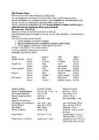
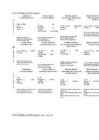
Tense Form Use Hints Example + I pv ((e)+s) Present Simple 1. daily routines, habits or repeated actions Every hour/day/week etc , I always play football in -? do/does not+I pv 2. permanent states usually, always, in the the evenings
Anglo Frisian » English 2. How to classify words into different word classes? (definition is that enough?, morphology, distribution and function tests); Grammatical categories for nominals, verbs, adjectives. "A set of words like dog, child, cat, man, bird where the individual words are mutually substitutable is known as a word class..." Definitions a) A noun is the name of a person, place or thing. b) A verb expresses an action, process or state. c) An adjective is a describing word which modifies a noun. "Although such definitions will identify many members of a word class, linguists generally agree that they need to be supplemented by formal tests. e.g. sincerity Sincerity can be frightening misery Lee is misery itself. Such miseries are uncommon Distribution: - a distribution test Kim is an engine driver
TENSES. ACTIVE VOICE. 1. Present Simple (üldolevik) I (he, she, it s) he works Eitav,küsiv do (I, you, we, they) he does not work does (he, she, it) does he work? Verbidele, mis lõpevad infinitiivis ss, -sh, -ch, -x või o, lisatakse ainsuse 3. pöördes es he touches, she goes Verbidel, mis lõpevad y-ga, mille ees on konsonant, muutub y->ies
Good morning! I'm Monika. First of all, I am going to tell you something my hobbies. I have some exciting ones. I am going to jump out of airplane this summer. I have been dreaming about it all the year. Parachutists have been joking and asking all the time why birds are singing? They only know that. Because flying is so great, that's why. So I suppose I will probably sing too after that. I have another exciting interest in my plans too. It is diving. Most of all I like to swim. Sometimes I drive hobby cart. I like to do different things. For example I enjoy dancing, skating, skiing, reading, traveling and also many another things. But I guess it is not necessary talk about all my hobbies and interests. OK, why I'm here today? As we know learning is becoming more and more popular nowadays and it is never late to do it
local beach, Bondi Beach in Sydney's Eastern Suburbs attracts thousands of people on Christmas Day. Other families enjoy their day by having a picnic. If they are at home, the day is punctuated by swimming in a pool, playing Cricket out the backyard, and other outdoor activities. The warm weather allows Australians to enjoy a tradition which commenced in 1937. Carols by Candlelight is held every year on Christmas Eve, where tens of thousands of people gather in the city of Melbourne to sing their favorite Christmas songs. The evening is lit by as many candles singing under a clean cut night sky. The sky with its Southern Cross stars is like a mirror. Sydney and the other capital cities also enjoy Carols in the weeks leading up to Christmas. Australians surround themselves with Christmas Bush, a native plant which has little red flowered leaves. Christmas shopping is often done in shorts and t-shirts. At many beaches Santa Claus arrives
3 TALLEGG 11 MIZDE 4 VESITERM 12 LADA 5 STOW 13 SCHWUNG 6 KALEV 14 MAIASMOKK 7 YAMAHA 15 ISKU 8 ESTRAVEL 2 Affirmative tense Use Signal Words Negative/Questions · action in the present taking always, Present Simple A: He speaks. place once, never or several every ..., N: He does not speak. normally, often, Q: Does he speak? times seldom, · facts sometimes,
INGLISE KEELE KORDAMINE TIME CLAUSES Present Simple · Permanent states, facts (Tom works..) · Repeated and habitual actions, routines (She usually goes..) · Laws of nature and general truths (The sun sets in the west) · Timetables and programmes · Sporting commentaries, rewiews (Beckham wins the ball, crosses and Owen scores) · Feelings and emotions (I love Tallinn..) TIME EXPRESSIONS USED WITH PRESENT SIMPLE: usually, often, always, every day/week etc, in the morning/evening
Moulin Rouge It is a movie about two lovers who fall in love but their love is not possible. Woman, Satine is a courtesan who works in Moulin Rouge and the man, Christian is a poor writer who writes a play ,,Spectacular Spectacular" for Moulin Rougle and Harold Zidler who is the owner of Moulin Rouge. At the beginning Christian presents himself as the Duke to win Satine's favour. The reason was not that he wanted to trick her but to present his work to Satine. Satine believed that Christian was the right Duke and tried to seduce Christian eventhough the man recisted. They fell in love after Christian reads her one of his poems. But Zidler had planned Satine to spend the night with the right Duke because he wanted him to become the investor of the Moulin Rouge because Zidler wanted Moulin Rouge to be a real theatre. He used Satine to do that. After Christian had read poetry to Satine the real Duke arrives. Satine understood
7. Verb: The principal forms of the verbs: Verbil on 4 põhivormi: Regular verb Irregular verb 1. the base form Talk Speak üldoleviku tüvivorm 2. the past form/ -ed form Talked Spoke üldmineviku vorm 3. the past participle (-ed Talked Spoken participle) mineviku kesksõna 4. the present participle (- Talking Speaking ing participle) oleviku kesksõna The tenses: Expressing the future: Simple Perfect Continuous Perfect Continuous Present Base Have / has + to be + base+ ing has/ have been +s + pariticiple base+ -ing
Moved to Cali 2005 Was Born Traveled to Europe Husband 1978 School graduates @ Oxford 1999 Started Got married School 1983 2008 2 The Six English Verb Tenses Three Simple Tenses Simple continuous Present You walk. You are walking I run. I am running. Past You Walked You were walking. I ran. I was running. Future You will walk. You will be walking. I will run. I will be running. Three Perfect Tenses Perfect continuous
I haven't worked. Have I worked? you say that sth. has happened or have/has + past is finished in the past and it has a participle* Simple already He has worked. He hasn't worked. Has he worked? connection to the present Present Perfect *(infinitive + -ed) or so far, I have gone. I haven't gone. Have I gone? action started in the past and (3rd column of table continues up to the present of irregular verbs)
We are going to the theatre. Pane tähele! Kestvat olevikku kasutatakse tegevusverbides (I am dancing, you are eating etc.). Mõned verbid on mitte tegevusverbid, näiteks ei saa öelda I am liking või you are knowing, vaid I like ja you know. Järgmiseid verbe ei kasutata tavaliselt kestvas olevikus. like love hate want need prefer know realise suppose mean understand believe remember belong contain consist depend seem Past Simple Lihtmineviku moodustamine Jaatav vorm Eitav vorm Küsiv vorm I asked I did not ask Did I ask? He/she/it went He/she/it did not go Did he/she/it go? We/you/they made We/you/they did not make Did we/you/they make?
group. Due to seniority titles are very important when addressing people. It is expected that you will use a person's title and their surname until invited to use their first name. Cultural Traditions Estonian culture as an identity is very strong. Oral traditions especially have played a key role in preserving traditions, stories and customs during Soviet administration. Singing is a very Estonian activity and the Estonians are known to have sung their way to freedom during the "Singing Revolution" of 1989-91. Manners Estonians on the whole are quiet and reserved. They tend to speak softly and do not like to draw attention to themselves. Being rational, calm and not going to emotional extremes are all qualities that respected. At first Estonians can come across as aloof. Once a relationship warms up this becomes less so. Meeting and Greeting Greetings can come across as rather formal and rather reserved.
Windows are not made of wood. Simple Present · · New York is a small city. It is not important that this fact is untrue. [VERB] + s/es in third person USE 3 Scheduled Events in the Near Examples: Future · You speak English. · Do you speak English?
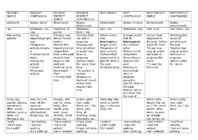
PRESENT PRESENT PRESENT PRESENT PAST SIMPLE PAST PAST PERFECT PAST PERFECT SIMPLE CONTINIOUS PERFECT PERFECT CONTINUOUS SIMPLE CONTINUOUS SIMPLE CONTINUOUS Lihtolevik Kestev olevik Täisminevik Kestev Lihtminevik Kestev minevik Enneminevik Kestev täisminevik enneminevik I pv Am/is/are, I pv, Has/have, III Has/have, II pv, -ed Was/were, -ing Had, III pv Had, been, -ing
..), siis jäetakse by- fraas ära. Aktiivlause muutmine passiivlauseks: 1. Leiame sihitise ja muudame ta aluseks. 2. Määrame öeldise ajavormi ja asendame ta passiivi vastava ajaga 3. Leiame aluse ja muudame ta eessõna by abil sihitiseks. Example: Jane baked a cake.-active sentence A cake was baked by Jane.-passive sentence Exampple: My bike was stolen. Tence Subject Verb Object Simple Present Active: Rita writes a letter Passiv: A Letter is written by Rita Simple Past Active: Rita wrote a letter Passiv: a letter was written by Rita Present perfect Active: Rita has written a letter
1. Active/Passive Active - the professor teaches the students. Passive - The students are taught by the professor 2. Present Simple [VERB] + s/es in third person. Tegevus on korduv või tavapärane. You speak English. I play tennis. Cats like milk. The train leaves tonight at 6 PM. I am here now. Active= Once a week, Tom cleans the car. Passive= Once a week, the car is cleaned by Tom. 3. Present Continuous [am/is/are + present participle]. Tegevus toimub/ei toimu praegusel hetkel. You are watching TV. You are learning English now. I am studying to become a doctor. I am meeting some friends after work. Active= Right now, Tom is writing the letter. Passive= Right now, the letter is being written by Tom. 4. Past Simple [VERB+ed] or irregular verbs. Tegevus algas/lõppes minevikus täpsel ajal. . You called Debbie. I saw a movie yesterday. I finished work, walked to the beach, and found a nice place to swim
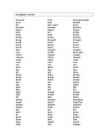
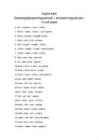
mean meant meant meet met met pay paid paid put put put quit quit quit read read read ride rode ridden ring rang rung rise rose risen run ran run say said said see saw seen seek sought sought sell sold sold send sent sent set set set shake shook shaken shine shone shone shoot shot shot show showed shown shut shut shut sing sang sung sit sat sat sleep slept slept speak spoke spoken spend spent spent spring sprang sprung stand stood stood steal stole stolen swim swam swum swing swung swung take took taken teach taught taught tear tore torn tell told told
What makes it even more special is that, due to the small population of Estonia, there are less than million Estonian speakers and yet, a tenth of them attend the event. Long established song festival traditions are most likely the reason why Estonians not known for our pop- music or global musical prowess are still referred to as the "singing nation". Singing and songs have played a very important role in Estonian history. Songs were sung when cottagers tilled the manor land, singing sparked the "awakening" era in Estonia, our troops sang national songs fighting through the world wars and during the end of eighties, the Singing Revolution (which started right here on the Song Festival grounds) enabled us to regain our independence from the Soviet Union. The Estonian national collection of folk songs comes second only to Ireland. 2007, the first-ever punk-song-choir festival was organised in Estonia. In 2010 the first ever digital song festivalwas held in Estonia. Our
have been many different answers to that question. One the one hand, young Estonians are very supportive and helpful when there is a crisis situation in our country. For example, in case of the disturbances in April 2007, young men where ready to go as voluntaires to protect our country. Also, more an more young people are interested in taking part in the Song and Dance Festivals. Where they can wear our national clothes, sing our national songs and dance our national dances. And they do it with pleasure and proudness. Everyone who has been there, including me, know how every song and dance makes you feel more Estonian and what an overpowering feeling of unity it gives. It has been always said that Estonians are singing natoin and young people carry this tradition on and all over the world, advertising and introducing it proudly. Furthermore, there are many young
..................................................... 5 The Passive with ’by/with’ .................................................................. 6 Talking about what other people say ................................................ 6 The Passive Voice The subject is the starting point of the sentence, the thing we are talking about. The new information about the subject comes at the end of the sentence. When the subject is the person or thing doing the action, then we use an active verb: Bell invented the telephone. When the subject is not doing the action, but something is happening or being done to it, or the action is directed at it, then we use a passive verb. The telephone was invented by Bell. NB! The object of an active sentence becomes the subject of a passive sentence. The doer of the action is indicated by a by phrase. When the doer of the action is not important, the ’by phrase’ is omitted:
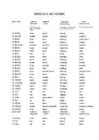
IRREGULAR VERBS INFINITIVE SIMPLE SIMPLE PRESENT PAST PRESENT PAST PARTICIPLE PARTICIPLE (for he, she, or it, (Use with is or was to refer (Use with have or had) add "s" in present to a continuing action) tense) TO ARISE arise arose arising arisen TO AWAKE awake awoke awaking awoken TO BEAR bear bore bearing borne, born TO BEAT beat beat beating beaten
F One morning the Giant was lying awake in bed when he heard some lovely music. G Then spring came, and all over the country there were flowers and little birds. The Selfish Giant 1 C It was a large lovely garden with soft green grass. Here and there over the grass stood beautiful flowers like stars and birds sat on the trees and sang so sweetly that the children stopped their games to listen to them. 2 E He had been to visit his friend, and had stayeed with him for seven years. When he arrived, he saw the children playing in the garden. "What are you doing here?" he roared and the children ran away. So he built a high wall all round his garden. He was a very selfish giant. The poor children had nowhere to play now. They tried to play on the road, but it was very dusty and full of hard stones, and
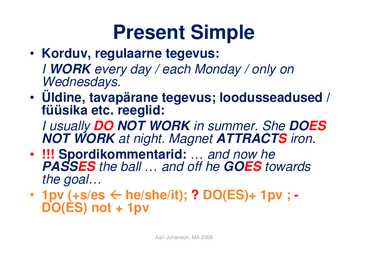
Present Simple · Korduv, regulaarne tegevus: I WORK every day / each Monday / only on Wednesdays. · Üldine, tavapärane tegevus; loodusseadused / füüsika etc. reeglid: I usually DO NOT WORK in summer. She DOES NOT WORK at night. Magnet ATTRACTS iron. · !!! Spordikommentarid: ... and now he PASSES the ball ... and off he GOES towards the goal... · 1pv (+s/es Å he/she/it); ? DO(ES)+ 1pv ; - DO(ES) not + 1pv Aari Juhanson, MA 2008 Present Progressive · Hetkel toimuv, pooleliolev tegevus: S/he IS TALKing on the phone now. I AM READing an interesting book. · Ajutine, regulaarsele ja tavapärasele vastanduv tegevus (tulevikku viitav): This summer they ARE not GROWing cucumbers as usual. They'RE GROWing tomatoes instead. · !!! Halvakspanu väljendus harjumuspärase tegevuse kohta: He IS always COMPLAINing! · BE (am/is/are) + 1pv-ing Aari Juhanson, MA 2008 Present Perfect ON -NUD
Will he have worked for twenty years by Will he really have been wo then? hours? He will not have worked for twenty He will not have been worki years. TEGUSÕNA AKTIIVI AJAD (be + verb 3) Lihtolevik Kestev olevik Perfekti olevik [ minu käest küsitakse (alati [ (just praegu) küsitakse minu [ (täna) töötanud (juba arvamust) arvamust) ] käest (arvamust) ] küsitud ] O L E I am I am being I, you, we, they have been asked
All rights reserved. No part of this book may be reproduced in any form or by any means, electronic or mechanical, including photocopying, recording, or by any information storage and retrieval system, without the written permission of the publisher. ISBN 1-59905-201-6 Printed in the United States of America 13 12 11 10 09 08 07 9 8 7 6 5 4 3 2 1 Introduction Grammar is a very old field of study. Did you know that the sentence was first divided into subject and verb by Plato, the famed philosopher from ancient Greece? That was about 2,400 years ago! Ever since then, students all over the world have found it worthwhile to study the structure of words and sentences. Why? Because skill in speaking and writing is the hallmark of all educated people. Lesson by lesson, this book provides basic instruction in the eight parts of speech--nouns, pronouns, verbs, adjectives, adverbs, prepositions, conjunctions, and
Active Present Past Future Simple I work II (-ed) Will + I usually Don’t work Didn’t work Will not work
cover many more styles including pop, rock, jazz, blues, metal and funk. So don't be worried if this song is not your thing. It's just there to get you up and rolling, and stringing some chords together. Today we will be using chords that you already know and using a strum that you have already practiced. Not only that, we have practiced using both these chords and this strum with changes. So you can see how we have systematically built you up, so that playing this song is just another simple step in developing your playing. Today, like yesterday, I am going to teach you a new warm up pattern. This one will be a touch more difficult than the last few. This pattern starts on the first fret and the sixth string (thickest string). You will play all six strings and use all your fingers. As always with these exercises, I would like you to use the correct fingering. Warm up: Video and Audio Available: Dial Up Broadband QuickTime - Exercise 1 (1
16.Fly flew flown - lendama 17.Get got - got - saama 18.Go went gone - minema 19.Have had had - omama 20.Hear heard heard - kuulma 21.Hold held held - hoidma 22.Leave left left lahkuma, jätma 23.Lose lost lost kaotama 24.Make made made - tegema 25.Meet met met - kohtama 26.Put put put - panema 27.Read read read - lugema 28.Say said said - ütlema 29.See saw seen - nägema 30.Sing sang sung - laulma 31.Sleep - slept slept - magama 32.Take took taken - võtma 33.Wear wore worn - kandma 34. Write wrote written kirjutama 35. Hang hung hung riputama 36.Win won won võitma 37.Sit sat sat istuma 38.Bite bit bitten hammustama 39.Cost cost cost maksma, väärt olema 40.Cut cut cut lõikama 41.Know knew known teadma, tundma 42.Lay laid laid panema, asetama 43
Ken says that kids are not afrayd to be wrong. But by the time they start going to school, they are taught to be scared of being wrong. In school, the most important subjects - math, languages and humanities – are those where you don’t have enough space to be wrong in. But subjects, where you could make your wrong decisions to work for you, are in the bottom and most of the teachers, don’t care about them that much. Subjects like art, singing, dancing and so on. There’s still one thing that I don’t agree with Ken. He says that there’s no school, where kid could study arts as much as math. In Estonia, we have schools where are classes specialized of some certain subjects like folk dances, gymnastics, different languages, art and so on. Still it isn’t like that in every school, even not in every class in this certain school. Ken admits, that right now we are tought to be university proffessors. I must agree
 annaabi.ee