 50 punkti
Autor soovib selle materjali allalaadimise eest saada 50 punkti.
50 punkti
Autor soovib selle materjali allalaadimise eest saada 50 punkti.
 ~ 1 leht
Lehekülgede arv dokumendis
~ 1 leht
Lehekülgede arv dokumendis
 2011-09-28
Kuupäev, millal dokument üles laeti
2011-09-28
Kuupäev, millal dokument üles laeti
 16 laadimist
Kokku alla laetud
16 laadimist
Kokku alla laetud
 0 arvamust
Teiste kasutajate poolt lisatud kommentaarid
0 arvamust
Teiste kasutajate poolt lisatud kommentaarid
 tiiger94
Õppematerjali autor
tiiger94
Õppematerjali autor
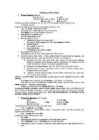
) How much is the dress? ◦ HOW MANY – (kui mitu?) How many rackets do you have? PRESENT SIMPLE ◦ That's the way to express habits, facts, thoughts and feelings. It is used with general statements and actions that happen sometimes, always, usually,... ◦ Key words: often, always, never, every day, month,..., usually, sometimes, generally, normally, rarely, seldom, whenever, on Mondays, Tuesdays,... I, YOU + PLURAL DON'T (do not) + VERB TO BE, CAN, MUST --> VERB + NOT They go to school. They don't go to school. They are not (aren't) at home. I like oranges. I don't like oranges. The boys are not (aren't) in the park. We hate peppermint. We don't hate peppermint. I am not (I'm not) hungry.
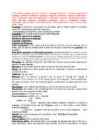
INGLISE KEEL Sisukord Sisukord 2 Ajavormid Tense vorms 3 Lihtolevik The present simple 3 Lihtminevik The past simple 3 Lihttulevik The future simple 3 Kestev olevik The present continuous 3 Kestev minevik The past continuous 4 Kestev tulevik The future conrinuous 4 Täisminevik The present perfect 4 Enneminevik The past perfect 4 Ennetulevik Future perfect 5 Üldminevik Past tense 5 Üldtulevik Future indefinite 5 Artiklid ja eessõnad 7 Eessõnad 7 Kesksõnad 8 Prefiksid ehk eesliited 8 Sufiksid ehk jär
INGLISE KEEL Sisukord Sisukord.................................................................................................................................. 2 Ajavormid Tense vorms.......................................................................................................3 Lihtolevik The present simple..................................................................................... 3 Lihtminevik The past simple....................................................................................... 3 Lihttulevik The future simple...................................................................................... 3 Kestev olevik The present continuous......................................................................... 3 Kestev minevik The past continuous........................................................................... 4 Kestev tulevik The fut
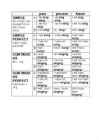
Tense Form Use Hints Example + I pv ((e)+s) Present Simple 1. daily routines, habits or repeated actions Every hour/day/week etc , I always play football in -? do/does not+I pv 2. permanent states usually, always, in the the evenings morning/evening/night, at night Present Am/is/are+Iing 1. actions happening now, at the moment of speaking Now, at the moment, these I am writing a lettesat Continuous 2.actions happening around the time of speaking days,
Anglo Frisian » English 2. How to classify words into different word classes? (definition is that enough?, morphology, distribution and function tests); Grammatical categories for nominals, verbs, adjectives. "A set of words like dog, child, cat, man, bird where the individual words are mutually substitutable is known as a word class..." Definitions a) A noun is the name of a person, place or thing. b) A verb expresses an action, process or state. c) An adjective is a describing word which modifies a noun. "Although such definitions will identify many members of a word class, linguists generally agree that they need to be supplemented by formal tests. e.g. sincerity Sincerity can be frightening misery Lee is misery itself. Such miseries are uncommon Distribution: - a distribution test Kim is an engine driver
3. Tulevikus toimuv tegevus a) Sõiduplaanid, planeeritud programmid. The train for Tallinn leaves at 10. The course begins on Monday. b) Tingimuslausetes If you want me, just call c) Ajamääruslausetes I shall speak to him when he comes. 2. Spordireportaazid, arvustused. Lepp passes the ball to Kask. Gibson acts well in "Braveheart". 3. Seisundiverbidega (state verbs) verbid, mida tavaliselt ei kasutata kestvates aegades, sest nad kirjeldavad seisundit, mitte tegevust Need on verbid, mis väljendavad: a) meeltetaju (see, hear, feel, smell, taste, look, sound ). Kui meeltetaju verbidega tahetakse väljendada hetkel toimuvat tegevust, kasutatakse tihti modaale can või could Jim must be at home . I can see his car parked outside.
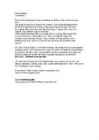
Good morning! I'm Monika. First of all, I am going to tell you something my hobbies. I have some exciting ones. I am going to jump out of airplane this summer. I have been dreaming about it all the year. Parachutists have been joking and asking all the time why birds are singing? They only know that. Because flying is so great, that's why. So I suppose I will probably sing too after that. I have another exciting interest in my plans too. It is diving. Most of all I like to swim. Sometimes I drive hobby cart. I like to do different things. For example I enjoy dancing, skating, skiing, reading, traveling and also many another things. But I guess it is not necessary talk about all my hobbies and interests. OK, why I'm here today? As we know learning is becoming more and more popular nowadays and it is never late to do it. I want to continue my study by correspondence at university. Ok that's why I was decided to take this examination once again and refresh my memory. Besides that make i
Christmas in Australia Christmas in Australia is often very hot. Whereas the northern hemisphere is in the middle of winter, Australians are baking in summer heat. It is not unusual to have Christmas Day well into the mid 30 degrees Celsius, or near 100 degrees Fahrenheit. A traditional meal includes a turkey dinner, with ham, and pork. A flaming Christmas plum pudding is added for dessert. In the Australian gold rushes, Christmas puddings often contained a gold nugget. Today a small favor is baked inside. Whoever finds this knows s/he will enjoy good luck. Another treat is Mince Pies. Some Australians and particularly tourists often have their Christmas dinner at midday on a local beach, Bondi Beach in Sydney's Eastern Suburbs attracts thousands of people on Christmas Day. Other families enjoy their day by having a picnic. If they are at home, the day is punctuated by swimming in a pool, playing Cricket out the backyard, and other outdoor activities.
 annaabi.ee









Kõik kommentaarid