 10 punkti
Autor soovib selle materjali allalaadimise eest saada 10 punkti.
10 punkti
Autor soovib selle materjali allalaadimise eest saada 10 punkti.
 ~ 14 lehte
Lehekülgede arv dokumendis
~ 14 lehte
Lehekülgede arv dokumendis
 2013-12-08
Kuupäev, millal dokument üles laeti
2013-12-08
Kuupäev, millal dokument üles laeti
 3 laadimist
Kokku alla laetud
3 laadimist
Kokku alla laetud
 0 arvamust
Teiste kasutajate poolt lisatud kommentaarid
0 arvamust
Teiste kasutajate poolt lisatud kommentaarid
 Loloo
Õppematerjali autor
Loloo
Õppematerjali autor
A Course In the Design of ABS Piping Our Objectives Presented by Geoffrey D Stone FIMechE C.Eng http://waterhammer.hopout.com.au/ Provide an insight into what piping designers need & expect Define the role of the supplier & designer Learn some fundamentals of piping design Discover failure analysis techniques Share experiences of problems A Course In the Design of ABS Piping What We Shall Look at This Week ABS Material Properties Thermoplastic Pipe Design Waterhammer Analysis Typical Applications of ABS Pressure Pipe Some Anticipated Events Stages of the Design Process Representation-Drawings & Specification Calculation-Engineering & Assumptions Visualisation-Presentation of Information Validation-Testing & Commissioning Role of the ABS Pipe Supplier What the Customer Expects Avoid the following: Material Properties Accept design risk for a sale Design Criteria Accept MTO risk Design Guidance What you should do Material take
SISUKORD ENERGY STORY................................................................................................................4 USES OF ENERGY............................................................................................................. 4 2.1 Uses of energy in homes...............................................................................................5 2.2 Types of energy used in homes.................................................................................... 6 2.3 Energy use in different types of homes........................................................................ 6 2.4 Commercial Energy Use...............................................................................................9 2.5 Industrial and Manufacturing Energy Use..................................................................11 2.6 Transportation Energy Use.........................................................................................12 RENE
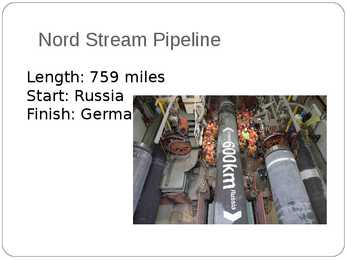
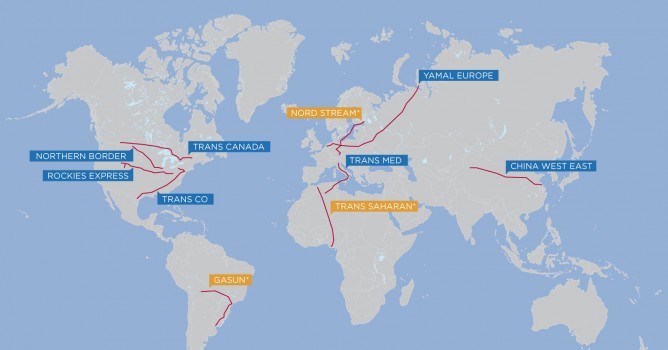
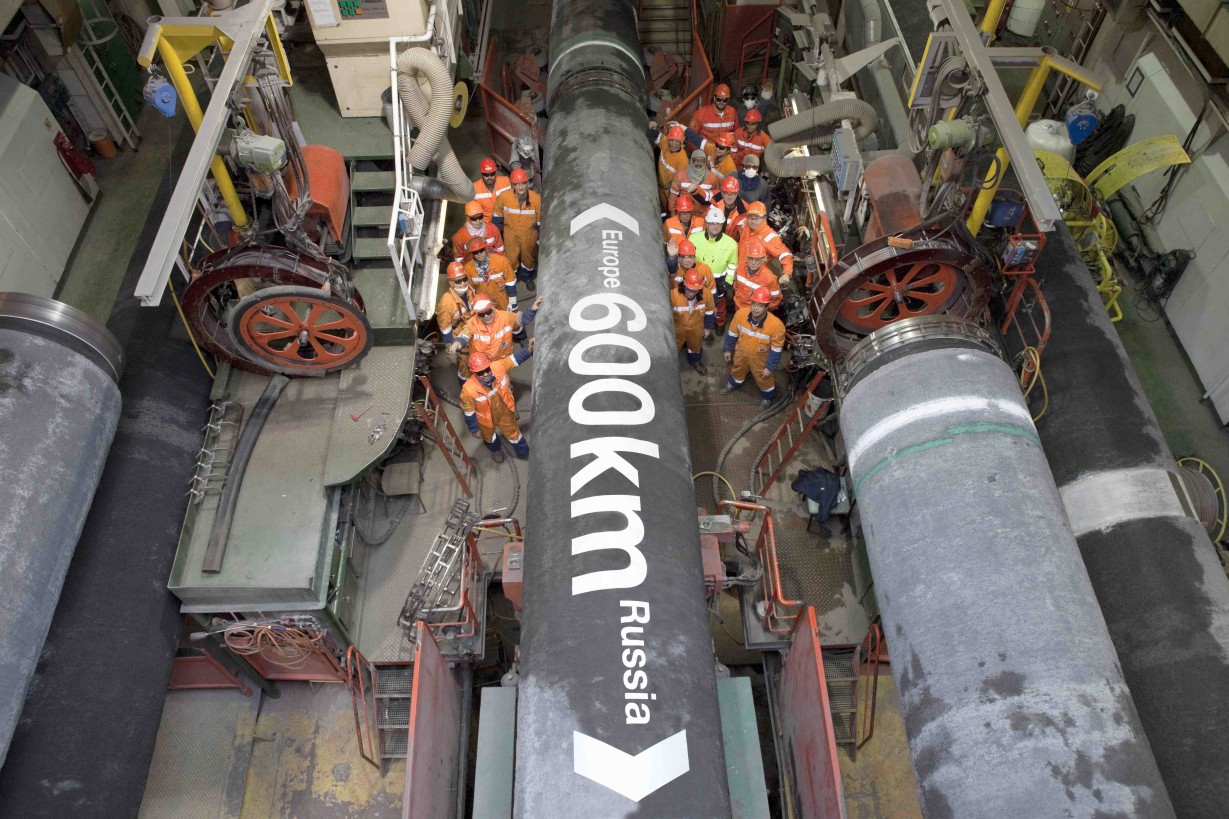
1. Which are the main cornerstones of EU-Russia cooperation? Which have been the main developments and success stories in this partnership in 2000-2012? Which side is more interested? The main cornerstones of the EU and Russia relations are the trade and energy relations. One biggest breakthrough has been gas pipeline Nord Stream. Russia is the third biggest trade partner of the EU and is the main importer of gas and crude oil. The economic benefits are the biggest cornerstones of the relations. Cooperation between Russia and the European Union progressively strengthens in foreign policy and security issues, in combating illegal migration, organised crime and terrorism. The main achievement of recent years, which can be hardly overestimated, is the understanding increasingly gaining ground that partnership between Russia and the EU is one of the cornerstones of maintaining stability and prosperity not only in Europe, but world-wide. Joint Russian-EU program called "A Partnership fo
Tallinn 2013 Ott Speek Subject: English Geodesy Study group: GI-21b PETROLEUM PRESENTATION Petroleum (L. petroleum, from Greek: Πέτρα (rock) + Latin: oleum (oil) is a naturally occurring flammable liquid consisting of a complex mixture of hydrocarbons of various molecular weights and other liquid organic compounds, that are found in geologic formations beneath the Earth's surface. The name Petroleum covers both naturally occurring unprocessed crude oils and petroleum products that are made up of refined crude oil. A fossil fuel, it is formed when large quantities of dead organisms, usually zooplankton and algae, are buried underneath sedimentary rock and undergo intense heat and pressure. Petroleum is recovered mostly through oil drilling. This comes after the studies of structural geology (at the reservoir scale), sedimentary basin analysis, reservoir characterization (mainly in terms of porosity and permeable structures). It is refined and separated
TOPICS FOR SPEAKING CYLINDER FRAME The cylinder section of the engine consists of a number of cylinder blocks, which are tightened together with the engine frame and the bedplate by means of through- going stay bolts. Two central bores, one at the top and one halfway down inside the cylinder block, enclose the cylinder liner. The upper part of the cylinder block forms part of the cooling water space around the central part of the cylinder liner, whereas the lower part forms the scavenge air space. A central bore in the bottom of the cylinder block encloses the piston rod stuffing box. The bottom is double with a hollow space through which cooling water is circulated. On the exhaust side of the cylinder block there is a circular opening leading into the longitudinal scavenge air receiver of the engine. Furthermore, there is an inlet pipe for cooling and lubricating oil. The cylinder block is provided with cleaning and inspection covers for the cooling water and
INTRODUCTION OF SUPPLY CHAIN MANAGEMENT (SCM) A supply chain is a network of facilities and distribution options that performs the functions of procurement of materials, transformation of these materials into intermediate and finished products, and the distribution of these finished products to customers. Supply chains exist in both service and manufacturing organizations, although the complexity of the chain may vary greatly from industry to industry and firm to firm. Supply chain management is typically viewed to lie between fully vertically integrated firms, where the entire material flow is owned by a single firm and those where each channel member operates independently. Therefore coordination between the various players in the chain is key in its effective management. Cooper and Ellram [1993] compare supply chain management to a well-balanced and well-practiced relay team. Such a team is more competitive when each player knows how to
Two-Stroke TUNER’S HANDBOOK By Gordon Jennings Illustrations by the author Copyright © 1973 by Gordon Jennings Compiled for reprint © 2007 by Ken i PREFACE Many years have passed since Gordon Jennings first published this manual. Its 2007 and although there have been huge technological changes the basics are still the basics. There is a huge interest in vintage snowmobiles and their “simple” two stroke power plants of yesteryear. There is a wealth of knowledge contained in this manual. Let’s journey back to 1973 and read the book that was the two stroke bible of that era. Decades have passed since I hung around with John and Jim. John and I worked for the same corporation and I found a 500 triple Kawasaki for him at a reasonable price. He converted it into a drag bike, modified the engine completely and added mikuni carbs and tuned pipes. John borrowed Jim’s cop
Games Programming with Java and Java 3D Andrew Davison Dept. of Computer Engineering Prince of Songkla University HatYai, Songkhla 90112 E-mail: [email protected] Draft: 14th January 2003, #2 Abstract This article looks at the advantages and disadvantages of using Java and Java 3D for games programming. It assumes the reader is familiar with Java, but presents short overviews of gaming, the low-level APIs OpenGL and DirectX, and Java 3D. No programming examples are included here, although links to online code are supplied. 1. Background to Gaming Giving a definition for `computer game' is problematic, due to the wide range of game types. For example, the ArcadePod site (http://www.arcadePod.com) divides its hundreds of Java games into more than ten categories: 3D games, multiplayer, action
 annaabi.ee














Kõik kommentaarid