 50 punkti
Autor soovib selle materjali allalaadimise eest saada 50 punkti.
50 punkti
Autor soovib selle materjali allalaadimise eest saada 50 punkti.
 ~ 8 lehte
Lehekülgede arv dokumendis
~ 8 lehte
Lehekülgede arv dokumendis
 2016-11-19
Kuupäev, millal dokument üles laeti
2016-11-19
Kuupäev, millal dokument üles laeti
 1 laadimist
Kokku alla laetud
1 laadimist
Kokku alla laetud
 0 arvamust
Teiste kasutajate poolt lisatud kommentaarid
0 arvamust
Teiste kasutajate poolt lisatud kommentaarid
 Brigita Maria Raave
Õppematerjali autor
Brigita Maria Raave
Õppematerjali autor
the wife of Kalev and mother of Kalevipoeg Koluvan - mentioned in Russian chronicles; derives from the hero Kalev from our national epic Reval - comes from the German words “REH” and “FALL”, meaning the falling of the deer; could be deers trying to escape from the Danes, running down the Toompea hill Tallinn - the word origins from estonian language, could mean “taani-linn”, “tali-linn” or “talu- linn”; Reval was replaced when Estonia became independent Symbols Flag - blue black white tricolor; blue represents sky, black the soil, and white our freedom. Danneborg - red flag with a white cross fell from the sky during the battle in 1219. It is also set into the small coat of arms of Tallinn. Great coat of arms - three lions, a knight, and Danish queen; leaves around Old Thomas - quardian of Tallinn, put on top of the spire of Tallinn Town Hall in 1530;
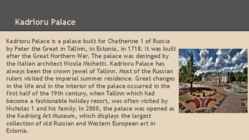
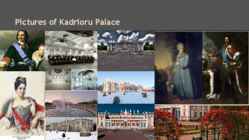
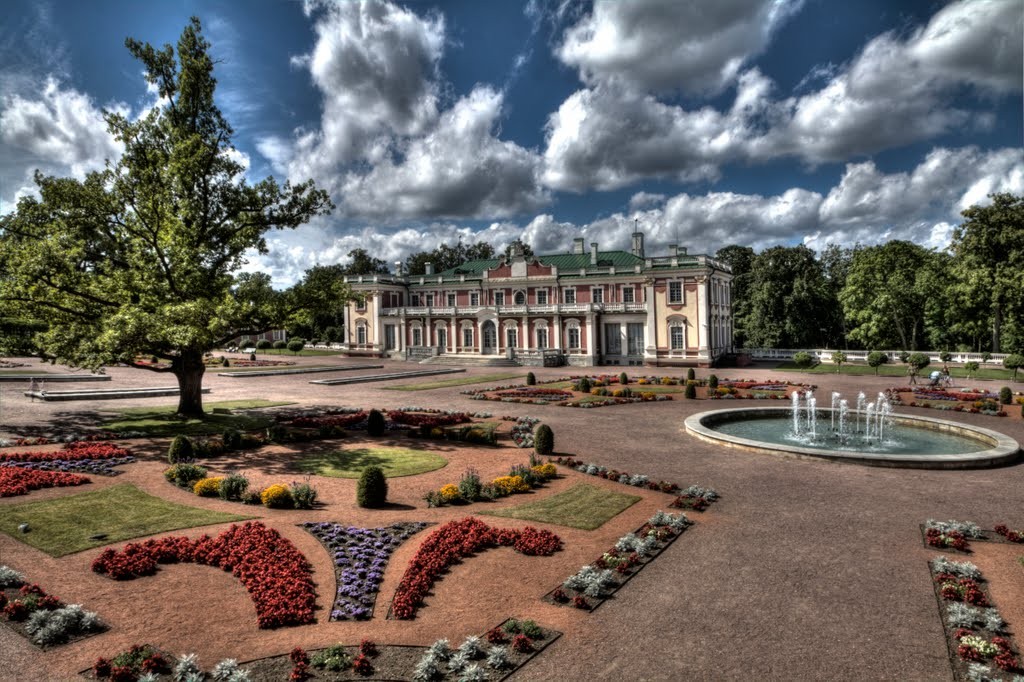
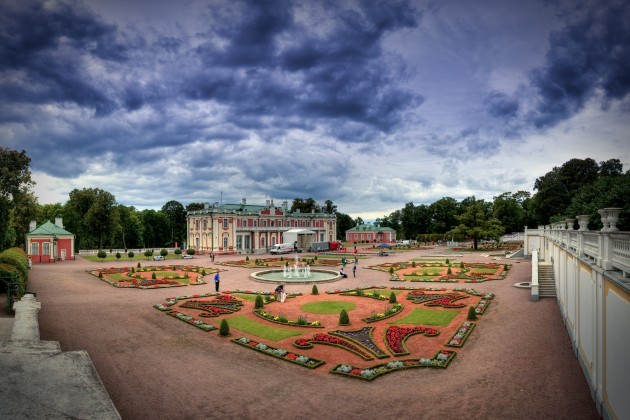
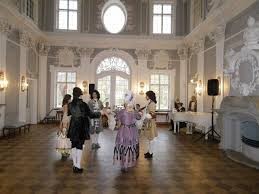
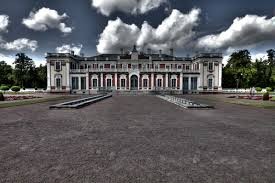
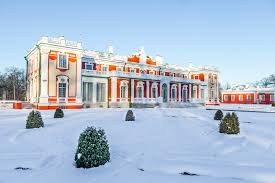
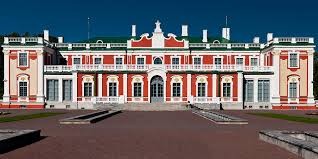
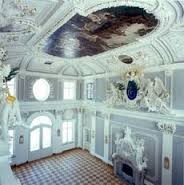
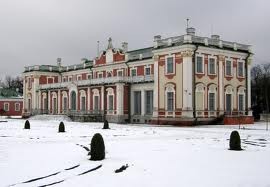
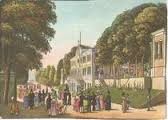
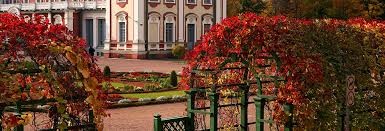
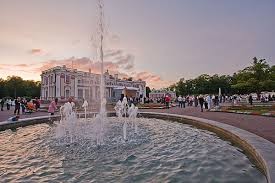
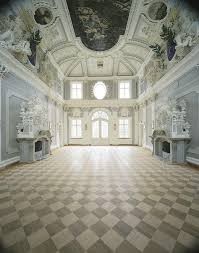
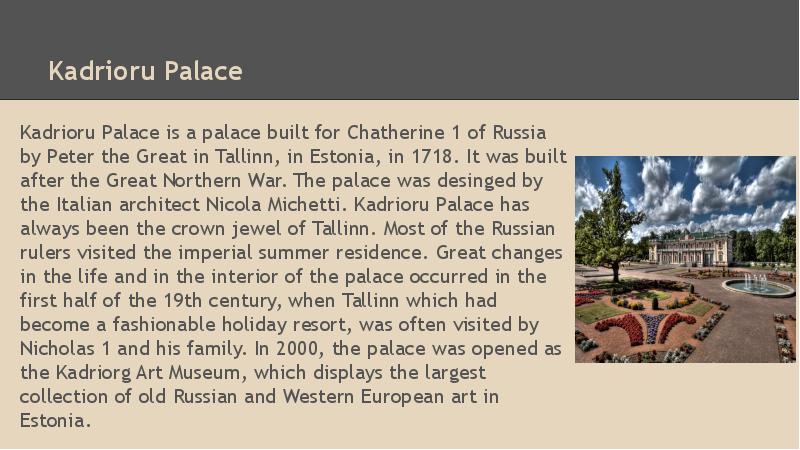
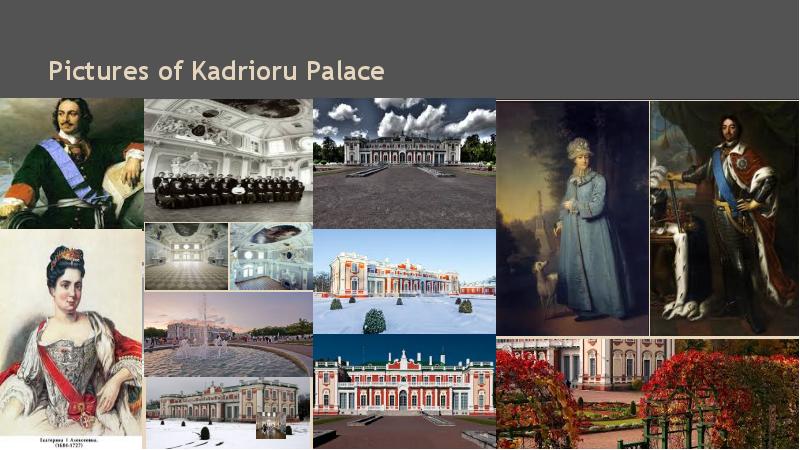
Art Museum of Estonia Art Museum of Estonia was founded on November 17th, 1919, but it was not until 1921 that it got its first permanent building the Kadriorg Palace, built in the 18th century. In 1929 the palace was expropriated from the Art Museum in order to rebuild it as the residence of the President of Estonia. The Art Museum of Estonia was housed in several different temporary spaces, until it moved back to the palace in 1946. In September, 1991 the Kadriorg Palace was closed, because it had totally deteriorated by then. At the end of the year the Supreme Council of the Republic of Estonia decided to guarantee the construction of a new building for the Art Museum of Estonia in Kadriorg. Untill then the Knighthood House at Toompea Hill served as the temporary main building of the Art Museum of Estonia
Tallinn English College English Sergo Vainumäe 9A TALLINN Report Supervisor: Inge Välja Tallinn 2006 Order of contents: 1.Introduction 2.Toompea 3.Lower Town 4.Kadriorg and Pirita 5.Museums 1. Introduction Tallinn, the capital of Estonia, lies on the Baltic Sea. It is on almost the same latitude east St. Petersburg in Russia, Stockholm in Sweden and Stavanger in Norway, and covers 158 sq km. Tallinn was first marked on a map of the world by the Arab geographer al-Idrisi in 1154, its name then being Kolyvan (probably derived from the name Kalev). In the 13th-century Chronicle of Henricus de Lettis the town was called Lyndanise. Later came Reval (presumably after the old county
national hero. ● Koluvan - found in old Russian chronicles, the name possibly deriving from the Estonian mythical hero Kalev ● Reval - used after 1219; comes from two german words ‘reh’ and ‘fall’, meaning the falling of the deer - as they fall down the Toompea hill, probably when escaping from the Danish occupation or just the hunters. ● Tallinn - used after Estonia gained its independence in 1918, origin is definitely estonian; meaning Taani-linn, tali- linn. Liberty Square ● The central square of Tallinn, it was renovated in 2008. There used to be Harju gate, which can now be seen through glass. ● The statue of Liberty, 2009; represents freedom, Estonia has been under many foreign powers, starting with Danes, Sweden, German and Russia. The clock of liberty, 2004. Kiek in de Kök
Introduction Tallinn, the capital city of the Republic of Estonia and of the Harju county, is a town in North Estonia on the coast of the Gulf of Finland. It has nearly half a million inhabitants and covers an area of almost 160 sqkm. It is also an important economic and cultural centre and one of the main ports in the Baltic States. Tallinn is one of the oldest cities on the Baltic Sea. It is unique for its well-preserved architecture from the 13-15 centuries. In contrast to the ancient town-walls and towers, Tallinn of today offers modern hotels, restaurants, sport and cultural centres
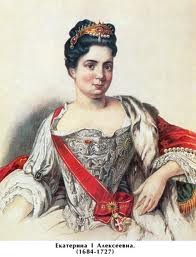
The premises came into the possession of the Puppet Theatre in 1955. In 1991, the whole building was given to the theatre. Renovation works took place in 2001-03. 5 17 Lai Street Lai 17, so-called Menshikov House was completed about 1685 in the Dutch Baroque style. The family coat-of-arms on the pediment was added in 1817 by then owner Count Stenbock (Sweden origin Russian brigade leader and estate owner). It belonged to Prince Alexander Menshikov, the governor- general of Estonia in 1710-19. He was born in the family of a groom at the Russian Royal court, and at the age of 13 became a personal servant and later a close assistant to Czar Peter I. After Peter's death he helped the czar's widow, Catherine I, to the throne and became the actual ruler of Russia for a couple of years until he was defeated in the power struggle and banished into exile. 23 Lai Street The buildings at Lai 19-23 belong to the City Theatre. It has a couple of small halls as well as
TALLINN History Tallinn is one of the oldest cities in the Baltic Sea region. Tallinn was first mentioned in written sources of the 1154th, when the Arabian geographer Al Idris took a world map the city 'Kaleveny "/ Kolõvan. Through the years, the city of Tallinn had several names: Lindanisa, Kolõvan, Reval and eventually Tallinn. Tallinn was granted the Lübeck law in 1248 and became the member of the Hanseatic League in 1285. General Data l Country - Estonia l County - Harju County l First appeared on map - 1154 l Town rights - 1248 l Mayor - Edgar Savisaar l Aera - Total 159.2 km2 (61.5 sq mi) l Population - (1 Mar 2012) Total - 416,470 Denisty - 2,614.0/km2(6,766.6/sq mi) Tallinn Coat of arms Flag Top 5 Attractions 1. Kiek in de Kök Visitors to the museum will see examples of Medieval firepower, displays detailing how the city's system of walls and towers developed
Old Market square (Vanaturg) is the former market square in Tallinn old town. Five streets meet here: Vene, Viru, Suur Karja and Kuninga streets, and Vana Turu Kael sidestreet. The market location perfectly suited for trade: five trade routes started there. The square is connected to Town Hall Square by a short sidestreet. Town Hall Square Was used as marketing place, for festivities as well as for executions. In summer it is filled with outdoors cafes In winter it becames a magical christmas market The L-shaped sigh There has been a town hall in Tallinn since at least 1322. Town Hall Built in 13th century The management of the city worked in the Town Hall until the year 1970 The only gothic town hall on Northern Europe Weathervane Old Thomas The height of the towe is 64 metres Town Hall pharmacy Is one of the oldest working pharmacies in Europe and the oldest company in Tallinn Was first
 annaabi.ee








Kõik kommentaarid