Leidsid 33 sarnast õppematerjali, mis on seotud failiga "The Scorpion King". Need materjalid aitavad sul teemat sügavamalt mõista.
king, scorpion, mummy, egypt, destiny, action, film, chuck, russell, events, place, years, before, those, returns, along, half, brother, hired, kill, whose, allow, emperor, rule, empire, iron, fist, camp, finds, tent, queen, balthazar, wishes, them, night, strip, visionefforts at reconciliation, but does give her a letter previously withheld out of spite. The letter is from John Eyre, Jane's uncle, notifying her of his intent to bequeath his fortune to her. After returning to Thornfield, Jane proclaims her love for Rochester, who returns her feelings and proposes. As she prepares for her wedding, Jane's forebodings arise when a strange, savage-looking woman sneaks into her room one night and rips her wedding veil in two. As with previous mysterious events, Mr Rochester attributes the incident to drunkenness on the part of Grace Poole, one of his servants. During the wedding ceremony, Mr. Mason and a lawyer declare that Mr Rochester cannot marry because he is already married to Mr. Mason's sister. Mr Rochester bitterly admits this, explaining that his wife is a violent madwoman whom he keeps locked in the attic, in the care of Grace Poole. When Grace occasionally drinks too much, it gives his wife a chance to
Few records of Shakespeare's private life survive, and there has been considerable speculation about such matters as his sexuality, religious beliefs, and whether the works attributed to him were written by others. Shakespeare produced most of his known work between 1590 and 1613. His early plays were mainly comedies and histories, genres he raised to the peak of sophistication and artistry by the end of the sixteenth century. Next he wrote mainly tragedies until about 1608, including Hamlet, King Lear, and Macbeth, con- sidered some of the finest examples in the English language. In his last phase, he wrote tragicomedies, also known as ro- mances, and collaborated with other playwrights. Many of his plays were published in editions of varying quality and accur- acy during his lifetime, and in 1623 two of his former theatrical colleagues published the First Folio, a collected edition of his dramatic works that included all but two of the plays now re- cognised as Shakespeare's
Vronsky gazed, never taking his eyes from her, and smiled, he could not have said why. But recollecting that his mother was waiting for him, he went back again into the carriage." Just as Vronsky is falling in love, a major accident happens. It appears the stationmaster has either fallen, or thrown himself, in front of the moving train. Vronsky gives the man's widow 200 rubles to impress Anna. Yet something is strange about this scene. It seems to be a foreshadowing of events to come. Also, it instantly puts a dent in the passion growing between Anna and Vronsky. Most importantly, it associates something entirely negative with Anna's arrival in Moscow: death. Finally, at the home, Anna convinces Dolly to forgive Stiva. She tells her about Stiva's shame and remorse (all lies she makes up to save the marriage) and tells Dolly that she is the most important thing in the world to Stiva. Anna, it appears, is
Irish and Scottish missionaries were spreading Christianity in Anglo-Saxon England during the 6th centurie. The Latin term Scotti refers to the Gaelic-speaking people of Ireland and the Irish who settled in western Scotland. *The Venerable Bede Bede was a Christian monk, he was the most learned man in Europe at that time. He is remembered mainly for his "Ecclesiastical History of the English People." This five volume work records events in Britain from the raids by Julius Caesar to the arrival of the first missionary from Rome. Bede's writings are considered the best summary of this period of history ever prepared. Some have called it "the finest historical work of the early Middle Ages." *The coming ofe the Angles, Saxons, Jutes, Frisians to Britain Very little is known about the first several hundred years of the Anglo-Saxon era, primarily because the invaders were an illiterate people
live up to the legends that had grown around him. Hence, he is bitter and dejected. He seems to symbolize the entire Lost Generation in that he feels out of place and purposeless in his later adult life. Harvey Stone - A drunken expatriate gambler who is perpetually out of money. Harvey is intelligent and well read, yet he cannot escape his demons of excessive drinking and gambling. Like many of Jake's friends, he is prone to petty cruelty toward Cohn. Jake Barnes The key events in the formation of Jake's character occur long before the novel's action begins. As a soldier in World War I, Jake is wounded. Although he does not say so directly, there are numerous moments in the novel when he implies that, as a result of his injury, he has lost the ability to have sex. Jake's narration is characterized by subtlety and implication. He prefers to hint at things rather than state them outright, especially when they concern the war or his injury
Adams Middle School who curses at her students, consumes lots of alcohol, smokes marijuana, and only shows movies while she sleeps through class. She plans to quit teaching and marry her wealthy fiancé, but when he dumps her, she must resume her job as a teacher. She tries to win over substitute teacher Scott Delacorte (Justin Timberlake), who is also wealthy. Amy Squirrel (Lucy Punch), a dedicated teacher and colleague of Elizabeth, also pursues Scott while the school's gym teacher, Russell Gettis (Jason Segel), makes advances on Elizabeth which she rejects.[3] Elizabeth plans to get surgery to enlarge her breasts, believing she is being overlooked for women with larger chests. However, she cannot afford the $10,000 procedure. To make matters worse, Scott admits that he has a crush on Amy, only viewing Elizabeth as a friend. Elizabeth attempts to raise money for the surgery by participating in her 7th grade class car
All Quiet on the Western Front Erich Maria Remarque Character List Paul Bäumer - A young German soldier fighting in the trenches during World War I. Paul is the protagonist and narrator of the novel. He is, at heart, a kind, compas-sionate, and sensitive young man, but the brutal expe-rience of warfare teaches him to detach himself from his feelings. His account of the war is a bitter invective against sentimental, romantic ideals of warfare. Read an in-depth analysis of Paul Bäumer. Stanislaus Katczinsky - A soldier belonging to Paul's company and Paul's best friend in the army. Kat, as he is known, is forty years old at the beginning of the novel and has a family at home. He is a resourceful, inventive man and always finds food, clothing, and blankets whenever he and his friends need them. Albert Kropp - One of Paul's classmates who serves with Paul in the Second Company. An intelligent, speculative young man, Kropp is one of Paul's closest friends during the war. His interest
2 others repudiated the belief that witches could make bad weather, fly in the night, and change their shape. This denial was accepted into Canon law until it was reversed in later centuries as the witch- hunt gained force. In 1307 the trial of the Knights Templar shows close parallels to accusations of witchcraft, maleficium, and sorcery and may have been the beginning of the great European witch- hunt. Other rulers such as King Coloman of Hungary declared that witch-hunts should cease because witches do not exist. The Crimes of the Witches Undoubtedly, over the centuries of witch hunting, the charge of ,,witchcraft" came to cover a multitude of sins ranging from political subversion and religious heresy to lewdness and blasphemy. But three central accusations emerge repeatedly in history of witchcraft throughout northern Europe:
monarchies based on nationality were estabilished. The Renaessance started in Italy In the 14th century. Then it spread all over Europe, reached England in 16th century. The struggle for power culminated in a war called The War of Roses. It was a civil war between two dynasties, families. They had different emblems on one side the Yorks (white rose) other Lancasters (red). They couldn't decide who gets the throne. War ended 1485. A new dynasty came to throne, Tudor, the first king in this dynasty was Henry Vll. When he came to throne a period of stability followed because he built a nation based state. He was good at diplomacy.He could avoid quarrels and wars with neigbouring countries. France, Spain - greatest enemies.So he could save much money and thus laid a good economic basis for his state. Besides that he built a merchant fleet (kaubalaevastik) England begun to dominate in international trade. Unfortunately the king got old and died.
1. Beowulf. The dating of Beowulf is still controversial. The poem is one of the earliest and greatest monuments of the Germanic literatures. The main stories of the poem (the fights of B.) are versions of common folk-tales, but the poet also introduces many incidental stories, some of which belong to the world of ancient Germanic legend. He writes his folk-tales and legends in a web of other events, mainly set in the Baltic Kingdoms. He shows a very rich and leisurely portrayal of this Baltic world, providing many customs like the close relationship between lord and man in the war-band and others. All this encouraged the supposition that the unknown author of the poem was himself a bard of the ancient type portrayed within the poem (a lord's scoop). However, many people propose that the author could be
they deemed "inalienable." Democracy: The colonies had no say in the formation of the government, and had no representation in the lawmaking process. Consequently, they were attracted to the idea of democracy, where the government is "of the people, by the people, for the people," as Lincoln later expressed in his Gettysburg Address. Religious Tolerance: Much impetus for the ideas of religious tolerance came from the rule of King George II, who was a staunch Catholic and did not allow freedom of religion to Protestants in New England. Voltaire was among the first to denounce Christianity and other organized religions as mere ploys to support monarchy. What emerged was Deism, which was more or less a new religion that considered reason its foundation. In Deism, there is no interference by a deity, and man controls his own destiny.
Othello opens in the stately city of Venice, a worldwide hub for trade and commerce. The first characters introduced are Iago, an ensign denied promotion by Othello, and Roderigo, a jealous ex- suitor of Desdemona. The two are in route to describing to Senator Brabantio the elopement of Othello and Desdemona, Brabantio’s daughter. Quickly revealing Iago’s deceitful nature, the matter is breached to Brabantio and soon afterward brought before the Duke of Venice to be discussed. Othello and Desdemona plead their love to the Duke, refuting the Senator’s claims that Othello bewitched his daughter, and that their marriage was true. After Othello claims that he wooed her with his adventurous stories, Desdemona herself testifies that she fell honestly in love with the Moor and freely married him. Following their clearance of wrongdoing, Othello is immediately sent to defend against the Turks in Cyrpus. Taking Desdemona with him, Othello sets out for the island with Iago and his wife E
later bishop. Ireland was largely christian by 6th C Monasteries multiplied, monastic lines, provinces were ruled by abbots St Columba 6th, 7th C Irish sent missionaries to Gaul, Germany, Scotland and England St Columba went to Scotland, converted Picts, 563 founded a monastery of island Iona Credited with major role in converting Scotland to Christianity St Aidan Irish missionary, King Oswalds of Northumbria bishop Had qualities to convet Northumbria. After monastery of Lindisfarne 635 had built he set up a church in royal village He always travelled on foot, Several monasteries were founded St Augustine 597 Christ church influenced English society of kings, warriors ad farmers Pope Gregory the Great, sent the first mission in 597 headed by monk St Augustine to Kent, where he founded a monastery at Canterbury
And that is riches quite beyond compare. This match will bring you every joy you long for; 'Twill be all steeped in sweetness and delight. You'll live together, in your faithful loves, Like two sweet children, like two turtle-doves; You'll never fail to quarrel, scold, or tease, And you may do with him whate'er you please. DORINE With him? Do naught but give him horns, I'll warrant. ORGON Out on thee, wench! DORINE I tell you he's cut out for't; However great your daughter's virtue, sir, His destiny is sure to prove the stronger. ORGON Have done with interrupting. Hold your tongue. Don't poke your nose in other people's business. DORINE (She keeps interrupting him, just as he turns and starts to speak to his daughter). If I make bold, sir, 'tis for your own good. ORGON You're too officious; pray you, hold your tongue. DORINE 'Tis love of you . . . ORGON I want none of your love. DORINE Then I will love you in your own despite. ORGON You will, eh? DORINE
Only think of that, my dear; he actually danced with her twice! and she was the only creature in the room that he asked a second time. First of all, he asked Miss Lucas. I was so vexed to see him stand up with her! But, however, he did not admire her at all; indeed, nobody can, you know; and he seemed quite struck with Jane as she was going down the dance. So he inquired who she was, and got introduced, and asked her for the two next. Then the two third he danced with Miss King, and the two fourth with Maria Lucas, and the two fifth with Jane again, and the two sixth with Lizzy, and the Boulanger--" "If he had had any compassion for me," cried her husband impatiently, "he would not have danced half so much! For God's sake, say no more of his partners. Oh that he had sprained his ankle in the first dance!" "Oh! my dear, I am quite delighted with him. He is so excessively handsome! And his sisters are charming women
end, make her stronger than Peter. She is able to use that power to keep Ender from going back to Earth, where she is sure that he would fall under Peter's control, and instead takes him to the colony, where she writes a history of the war. Peter The oldest of the Wiggin children, Peter uses threats and violence in order to control those around him. Despite having tortured a squirrel in the woods, he admits that he fears becoming evil, and takes on the identity of Locke in order to influence events. When the bugger war ends, he ends the fighting on Earth through the Locke Proposal, and becomes Hegemon, basically ruling the world. Graff Although the character appears only at the beginning of the chapters and occasionally in the chapters as well, he is the main adult character in the novel. It is Graff who decides what will be done to Ender in order to shape him into a commander, and although he knows that this
"This is a book about the stories we write, and perhaps more importantly, the stories we live. It is the most influential work I have yet encountered on the art, nature, and the very purpose of storytelling. " - Bruce Joel Rubin, Screenwriter, Stuart Little 2, Deep Impact, Ghost, Jacobs Ladder Christopher Vogler is a veteran story consultant for major Hollywood film companies and a respected teacher of filmmakers and writers around the globe. H e has influenced the stories of movies from The Lion King to Fight Club to The Thin Red Line. H e is the executive producer of the feature film, PS. Your Cat Is Dead, and writer of the animated feature, Jester Till. MICHAEL WIESE PRODUCTIONS www.mwp
Chapter1: An unknown woman was found lying in the street and brought into the workhouse. She delivered a sickly child who had trouble breathing. The woman, without a word of who she was, died and left her new born boy, Oliver, to the drunken nurse that stood by. Chapter2: The State gave Oliver to Mrs. Mann who housed a number of orphaned children. Mrs. Mann took a large portion of the money given to her by the authorities for each child's food so Oliver grew up small and malnourished. On his ninth birthday, the town beadle, Mr. Bumble, came to collect Oliver and take him to the board for an interview. They told him he was to live with other wards of the state to become educated and learn a trade. Oliver did not mind this, but soon after he arrived, the state decided to implement a plan that would save money by feeding the people very little. After a time on this diet, the boys at the table chose Oliver to go ask the head cook for more gruel. Oliver did this, and was taken away. A flye
join it. John Andrews, he is the intellectual of the three. He is also very sensitive young man and wants to be a musician. He and Chris Field desert the army. Andrews hides with a French girl and starts writing a symphony and is arrested later. War is hostile to the artist. And destructive of his art. This novel is written in more or less anti war. ,,Manhattan transfer"- truly modernist novel. Ruinous effect of capitalism on human lives. The scene of action is New York. The city itself becomes the central character, the whole novel is an attempt to show the complex nature of the novel metropolis-huge city. It is a truly modernist level in any sense, tries to imitate devices used by cinema. Late 1920's the cinema was already very popular and two great directiors-Griffith and Eisenstein. The greatest innovators of the cinema and they used the devices of montage and collage. He also uses a lot of fragmentation and rapid cutting
25/11/2012 22:54 The World According to Student Bloopers Richard Lederer St. Paul's School One of the fringe benefits of being an English or History teacher is receiving the occasional jewel of a student blooper in an essay. I have pasted together the following "history" of the world from certifiably genuine student bloopers collected by teachers throughout the United States, from eight grade through college level. Read carefully, and you will learn a lot. The inhabitants of Egypt were called mummies. They lived in the Sarah Dessert and traveled by Camelot. The climate of the Sarah is such that the inhabitants have to live elsewhere, so certain areas of the dessert are cul- tivated by irritation. The Egyptians built the Pyramids in the shape of a huge triangular cube. The Pramids are a range of mountains between France and Spain. The Bible is full of interesting caricatures. In the first book of the Bible, Guinesses, Adam and Eve were created from an apple tree
3 cool 8 skinned 6 status 7 prestigious 3 urge 8 ensues 4 assured 4 frenzy 9 savage Down 8 awards 9 guilty 5 lurking 1 blooded 6 action 2 hearted 10 undermining Challenge! Students' own answers 11 sympathies 2 1 time-consuming 12 verdict 2E Narrative tenses page 16 2 long-lasting 3 light-hearted 2 That he was responsible not only for 1 1 past perfect continuous
Boriss Akunin „Azazel“ Moskva 1876. Noor mees astub pargipingil istuva kauni daami juurde ning palub teatraalselt luba teda suudelda. Naine keeldub ning noormees laseb ennast maha. Staažikas uurija peab juhtumit labaseks enesetapuks. Tema noor abiline Erast Fandorin näeb aga teos midagi enamat ning avastab uurimise käigus poliitilise vandenõu. «Azazel» on esimene raamat, kus lugejate ette astub tõeline riiginõunik Erast Fandorin, segu klassikalisest inglise džentelmenist ja vene intellektuaalist. The novel opens on 13 May 1876 with a university student, Pyotr Kokorin, committing suicide in the public park in front of a beautiful young noblewoman, Elizaveta von Evert-Kolokoltseva. His will leaves his large fortune to the newly opened Moscow chapter of Astair House, an international network of schools for orphan boys founded by an English noblewoman, Lady Astair. The apparently open-and-shut suicide case falls to inexperi
Romans developed a number of towns and introduced schools, new language Latin large farms, baths. In AD 410 they had to leave. 11. The battle of hastings. Bayeux Tapestry. On I 4 October 1066 an invading army from Normandy defeated the English at the Battle of Hastings. The battle was close and extremely bloody. At the end of it, most of the best warriors in England were dead , including their leader, King Harold. On Christmas day that year the Norman leader, Duke William of Normandy, was crowned king of England. He is known in popular history as 'William the Conqueror'. The date is remembered for being the last time that England was successfully invaded. The Bayeux Tapestry is technically not a tapestry, but a huge band of embroidered linen, which describes the Norman invasion of England and the events that led up to it. The Tapestry contains
Years 1154-1485 Henry I was the first unquestioned ruler. One of the most important kings in the Middle Ages. He had lands in Britain & France. Then the government was the monarch, a person, not a place. He had more land than any pervious king. After his marriage to Eleanor of Aquitaine, he also ruled the lands south of Anjou. His empire stretched from the Scottish border to the Pyrenees. England provided most of its wealth, but the heart was Anjou. Henry II began to regain royal control. During the war some barons had become very powerful. He pulled down some of their castles. He tried to restore law & order. He wanted the same kind of justice to be used everywhere. He appointed his own judges to travel around the country
Hamlet WILLIAM SHAKESPEARE Character List Hamlet - The Prince of Denmark, the title character, and the protagonist. About thirty years old at the start of the play, Hamlet is the son of Queen Gertrude and the late King Hamlet, and the nephew of the present king, Claudius. Hamlet is melancholy, bitter, and cynical, full of hatred for his uncle's scheming and disgust for his mother's sexuality. A reflective and thoughtful young man who has studied at the University of Wittenberg, Hamlet is often indecisive and hesitant, but at other times prone to rash and impulsive acts. Hamlet (In-Depth Analysis) Claudius - The King of Denmark, Hamlet's uncle, and the play's antagonist. The villain of the play, Claudius is a
QUEEN VICTORIA & HER TIME Project Mari Murakas Class 11A 2011 Early life of Queen Victoria Victoria was born in London on 24 May 1819, the only child of Edward, Duke of Kent, and Victoria Maria Louisa of Saxe-Coburg. [1] The Duke of Kent was the fourth son of George III and Victoria Maria Louisa was the sister of King Leopold of Belgium. The Duke and Duchess of Kent selected the name Victoria but her uncle, George IV, insisted that she be named Alexandrina after her godfather, Tsar Alexander II of Russia. [2] Victoria's father died when she was eight months old. The Duchess of Kent developed a close relationship with Sir John Conroy, an ambitious Irish officer. Conroy acted as if Victoria
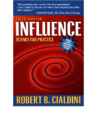
brace a natural enemy just because it goes cheep-cheep and she will mistreat or murder one of her chicks just because it does not. She acts like an automaton CLICK, WHIRR _ whose maternal instincts are under the automatic control of that single sound. The ethologists tell us that this sort of thing is far from unique to the turkey. They have begun to identify regular, blindly mechanical patterns of action in a wide variety of species. Called fixed-action patterns, they can involve intricate sequences of behavior, such as entire courtship or mating rituals. A fundamental characteristic of these patterns is that the behaviors comprising them occur in virtually the same fashion and in the same order every time. It is almost as if the patterns were recorded on tapes within the animals. When a situation calls for courtship, a courtship tape gets
century. The author is unknown and the manuscript is kept in the British Museum (near Trafalgar Square). The story is very important as it allows us to lear about the way of life in the 4th century. The characters can be divided into two groups fictitious and historical. The epic deploys many metaphors - e.g. the sea = the swan's road, body = a house for bones and alliteration. It is structured as two parts. In the first part King Hroghtgar, king of Danes built a palace Hereot near a lake. He disturbed the lake monsters sleep with his racuous parties. Grendel then goes to the castle every night and kidnaps a man. This went on for 12 years. Beowulf, a young viking, decides to put an end to it. He chooses 14 men to join him and sails across the strait with no weapns, mind you, because Grendel fought unarmed and Beowulf was an idiot however according to the rules of fiction he defeats Grendel
apartment writing their story on his typewriter which he describes as the tale of a ,,love that will live forever". Directed, produced, and co-written by Baz Luhrmann. Mark Anthony "Baz" Luhrmann was born 17 September 1962. He is an Australian film director, screenwriter and producer. After theatrical successes, including the original stage version of Strictly Ballroom, Luhrmann moved into film, and has directed four so far: · Strictly Ballroom (1992), starring Tara Morice and Paul Mercurio · Romeo + Juliet (1996), starring Leonardo DiCaprio and Claire Danes · Moulin Rouge! (2001), starring Nicole Kidman and Ewan McGregor · Australia (2008), starring Nicole Kidman and Hugh Jackman His first three films are formally marketed as "The Red Curtain Trilogy". Luhrmann's next project is an adaptation of The Great Gatsby, with principal photography slated
Sherlock holmes 1. "Sherlock Holmes" is a mystery thriller and action movie. Where he solves mysterys with John Watson. 2. The main characters are Sherlock Holmes and Dr. John Watson, the main villain is Lord Henry Blackwood. 3. Sherlock Holmes in being played by Robert Downey Jr and Jude Law plays Dr John Watson 4. The film is directed by Guy Ritchie. 5. The filmed it in diffrent country's, where the most is filmed in UK and some is filmed in USA aswell. But the the film is located in London. 6. Detective Sherlock Holmes and his stalwart partner Watson engage in a battle of wits and brawn with a nemesis whose plot is a threat to all of England. 7. After finally catching serial killer and occult "sorcerer" Lord Blackwood, legendary sleuth Sherlock Holmes and his assistant Dr
A.D. Romans occupied Britain for four centuries. The Roman way of life all vanished after the invasions from Northern Europe by the Angles, Saxons and Jutes from the 5th century onwards. They ruined Londinium, but they were easily turned into Christianity and religion became more and more important. The Vikings, who came in the 9th century, first raided England to plunder it, but then they decided to stay. In the 10th century England fell under Danish Rule, with King Canute finally managing to unite the Anglo-Saxons and Danes at the beginning of 11th century. Medieval England After defeating the Anglo-Saxon King Harold at the Battle of Hastings in 1066, William of Normandy (who became William I, also called William the Conqueror) introduced the Norman feudal system, rewarding his French-speaking followers with land in return for their continued support. French remained the language of the upper classes and administration until the 14th century.
Richborough landing, on the river Medway, the second on the Thames. One of the Catuvellaunian leaders, Togodumnus, was killed, but his brother Caratacus survived to continue resistance elsewhere. Plautius halted at the Thames and sent for Claudius, who arrived with reinforcements, including artillery and elephants, for the final march to the Catuvellaunian capital, Camulodunum . The future emperor Vespasian subdued the southwest,Cogidubnus was set up as a friendly king of several territories, and treaties were made with tribes outside the area under direct Roman control.Romans built many roads and also many great bulidings like the Hadrians wall. Anglo-Saxons and Normans The history of Anglo-Saxon England broadly covers early medieval England from the end of Roman rule and the establishment of Anglo-Saxon kingdoms in the 5th century until the Conquest by the Normans in 1066.
9. The Anglo-Saxon Invasion. The Angles, Saxons and Jutes came from present-day Northern-Germany and Denmark in 449. A number of tribes from the European mainland invaded and settled in large numbers; however, they were not always victorious. These Anglo- Saxons soon had the south-east of the country in their control. In the west, their advance was temporarily halted by an army of (Celtic) Britons under the command of the legendary King Arthur. By the 7th century the Anglo-Saxons were ruling most of Britain. 10. Scandinavian raids. In 789 three Viking ships landed on the coast of the kingdom of West Saxon. They were traders and raiders. In the 9th century they conquered and settled the islands around Scotland and some coastal regions of Ireland. Their conquest of England was halted when they were defeated by King Alfred of the Saxon kingdom of Wessex
 annaabi.ee