Leidsid 33 sarnast õppematerjali, mis on seotud failiga "The Most Important Buildings in Lai Street in Tallinn". Need materjalid aitavad sul teemat sügavamalt mõista.
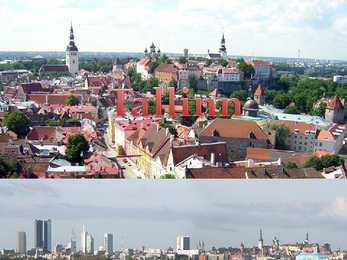
street, tall, tallin, build, building, heat, theatre, here, church, century, room, there, first, olaf, built, late, wall, gothic, rooms, date, medieval, present, belong, origin, merchant, interior, once, known, even, came, diele, part, stone, hueck, wing, round, shedport, houses, several, although, becamefer, kotzebue, fire, ceiling, front, floorrestaurants, sport and cultural centres. Every five years national song and folk dance festivals take place in Tallinn. The yachting regatta of the 1980 Moscow Olympic Games was held at Pirita. History Tallinn means in English "Danish town". The place is believed to have been settled by Finno-Ugric people about 2500 BC. It was first marked on a map of the world by the Arab geographer al-Idrisi in 1154. The Estonians were the first to build a stronghold on the spot of the Toompea Hill, but the real Tallinn was built by the Danes who conquered the north of Estonia in 1219. Legend has it that one day, when the Danes were about to lose a bloody battle, the sky suddenly opened and a red flag with a white cross on it dropped down upon them from the heaven. This is how the Danes obtained their national flag. In 1346 the Danish king sold his Estonian lands to the Teutonic Order, who a year later resold them to the Livonian Order
then being Kolyvan (probably derived from the name Kalev). In the 13th-century Chronicle of Henricus de Lettis the town was called Lyndanise. Later came Reval (presumably after the old county of Rävala), the name used by the Germans who ruled the country for seven centuries. Russians then modified Reval to Revel. For Estonians, the town came to be called Tallinn from Taanilinn (Danish town) after Danish conquest in the 13th century. Over the course of time, Taanilinn was shortened to Tallinn The place is believed to have been settled by Finno-Ugric peoples about 2500 BC. The Danes, led by King Valdemar II, conquered northern Estonia in 1219. Legend has it that one day, when the Danes were about to lose a bloody battle, the sky suddenly opened and a red flag with a white cross on it dropped down upon them from the heavens. This is allegedly how the Danes obtained
London History The Romans AD 43- AD 410 The Romans finally invaded Britain in AD 43 from Kent. The Romans lead by Julius Caesar attempted to invade Britain twice before that in 55 and 54 BC but the invasions were unsuccessful. They made their way to the river Thames and sailed up it. The Romans knew it was important to control a crossing point at the river Thames, so they decided to build a settlement on the north bank. Although small settlements had been built on the banks of the Thames, the Romans were the ones who built the first city. They called their city Londinium. The Roman engineers noticed that the point where the swampy river narrowed would make an ideal crossing point, they built London Bridge. Less than 20 years later the native Iceni tribe, led by Queen Boudicca, rose up against the Romans in revenge for mistreatment and burnt Londinium to the ground
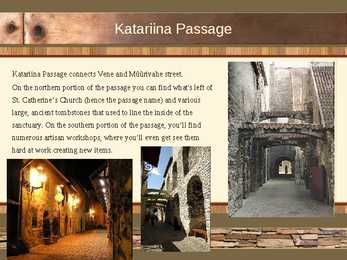
Katariina Passage Katariina Passage connects Vene and Müürivahe street. On the northern portion of the passage you can find what's left of St. Catherine's Church (hence the passage name) and various large, ancient tombstones that used to line the inside of the sanctuary. On the southern portion of the passage, you'll find numerous artisan workshops, where you'll even get see them hard at work creating new items. City wall Tallinn's medieval city wall is a sub-facility that was built to protect the lower Tallinn and upper Tallinn (Toompea). The building of the city wall began in 1310th years, and
Lower Town was a merchantile centre, Tallinn also belonged to the Hansaetic League (1285). It is often referred to as the town of citizens. Any grown-up, married and economically independent person, born in a legal marriage between two free people and having lived in the town for at least 3 months, could apply to the Magistracy for citizenship. Serfs could escape from serdom after having successfully hidden in town for a year and a day. Two parts remained separated until the end of the 19th century. Four Names Lyndanise - mentioned by Henricus de Lettis in his Chronicle; derives from the name Linda - the wife of Kalev and mother of Kalevipoeg Koluvan - mentioned in Russian chronicles; derives from the hero Kalev from our national epic Reval - comes from the German words “REH” and “FALL”, meaning the falling of the deer; could be deers trying to escape from the Danes, running down the Toompea hill
1. Fat Margareta - 16. Cent. Tallinn's most impressive defensive structures, the Great Coastal Gate (Suur Rannavärav) and Fat Margaret's Tower. They were built not only to defend the city from the seaward side of town, but also to impress any visitors arriving via the harbour. Fat Margareta used to be a prison. It is a town wall's building. Now it's home to the Estonian Maritime Museum, which provides a detailed look at the nation's seafaring past. 2. The Great Coastal Gate - with the Viru Gates, are the last of six gates that controlled access to the town in Medieval times. 3. Kolm Õde - a hotel. In 2003, three of Tallinn's splendid merchant houses, built in 1362, were renovated and united to create The Three Sisters, which now offers modern amenities with great design and a
Toompea Castle is also one of the most potent symbols of the reigning power. Today Toompea is the seat of the Government of Estonia as well as the Riigikogu, both of which are often simply colloquially referred to as Toompea. For centuries there was only one access to Toompea - Pikk Jalg - but there is also another way leading up to Toompea - Lühike Jalg, which was made in the 14th century. At present Pikk Jalg and Lühike Jalg are used only by pedestrians. Until the 20th century there was no way down from the western side of Toompea except for a foot-path. The stairs were built in 1903 and called Patkul Stairs after Dietrich Friedrich von Patkuli who had been the deputy Governor in Tallinn during the Great Northern War. Pikk Jalg (Long Leg) - the original road leading to the ancient Estonian stronghold (therefore the oldest street in Tallinn) and the only public road connecting the upper and lower town. It was paved with cobblestones already in the 14th
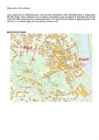
Urban trail in Tartu old town. Tartu, small town in southern-Estonia. Town was first mentioned in 1030. Nowadays there is living nearly 100 000 people. Tartu is known as city of students, and students come to improve to Tartu from all over the world. But Tartu is also known as a Hansa town, that is why one of the most attractive sightseeing place is the old town. It is a valuable place for Tartu and for Estonia as well. PHOTO HUNT MAP: Start the photo hunt on the corner of Lai and Jakobi street. Go up to the Toome hill, it's a great upturn and a great test for legs. As you move forward you will see the famous ,,Musumägi". In english it is called ,,The Kissing Hill" Take a picture with your crew members in the background of the hill. After a brief walk in the Toome Park you see the Ruins of Toome Cathedral. Is it possible to visit the ruins of the Cathedral? Now, go straight ahead until you reach the Lossi street, turn right. Soon you will see The Devils Bridge.
The Great Guild Liisbeth Kallakmaa The Great Guild Medieval Tallinn's social institutions were guilds and brotherhoods, whose main function was to provide members with social interactions and ensure their rights, but also played an important political and economic role. Tallinn had three important guilds - The Great Guild, St. Canute's Guild and St. Olaf's guild. The Great Guild was the youngest among them, founded in the 14th century, but soon became the biggest and most important. It was founded as an organization of the wealthiest merchants and shipowners. The name of the Great Guild was introduced in the late 15th century. There were close ties between the guild and the town rules: only members of the Great Guild had the right to belong to the town council and could be elected for mayor. Tallinn's small coat of arms is also the Great Guild's coat of arms. Guild was led by
his grieving wife Linda. While we don’t want to question this wonderful theory, there is an alternative version which says that Toompea is just a naturally formed limestone hill. ● It’s the birthplace of Tallinn - in 1229, the Knights of the Sword built a fortress - Toompea castle. It’s the most potent symbols of the reigning power. Today it’s the seat of the Government of Estonia as well as the Riigikogu. ● Tall Hermann is one of the towers around the Toompea Castle. It’s 49-metres high watch-tower from the year 1371. Viewing platform, to get on top you must take 215 steps. Whoever’s flag is on top of this tower is the ruler of Estonia. (There have been German and Soviet flags). Today the estonian flag is hoisted every day at sunrise and lowered at the sunset, except at midsummer when it’s not lowered at all on the night of June 23. Nevsky Cathedral
than true. A unique color is added by old-fashioned style and language. Tallinn has a long and complicated history. Tallinn has had more than twenty different names. Tallinn was for the first time mentioned in written sources in the Arab geographer al-Idrisi's in 1154. Tallinn has survived many historical events. Over the centuries, has Tallinn been reflected in ethnical stories - in numerous legends. In some areas the number of stories may reach tens. For example, a legend of St. Olaf's church, which is known around the legend of eighty, tells how the Estonians wanted that their city would be famous. The habitants of Tallinn let the chuch built by a mighty man. Unknown man said that he will build the church free if they guess his name. What in fackt happend. The church was named as its builder. And the sculpture of the snake and frog, which came out from Olaf'f mouth, are there nowadays. According to legend, there were some difficulties to find a right place where to build
Tallinn Mustamäe College G2K Jaana-Kristiina Jõgevest The Four oldest churches of Tallinn Report Supervisor: Ingrid Teigar Tallinn 2009 The Dome Church The Danes began fortification of Toompea after the conquest of Tallinn in 1219 and probably also built the first church there. It was presumably a wooden building located at the site of the present cathedral. However, a serious conflict with the Order of the Brothers of the Sword broke out soon as the latter wanted to gain control of the entire Estonia. The order succeeded in subordinating Tallinn and the whole of North Estonia to its rule in 1227. The monks of the Dominican Order began the construction of a stone church in Toompea in 1229. The first written data on the cathedral date back to 1233, the date of a
Sculptures and monuments St. John's Lutheran Church St John's Church was probably built in the first third of the 14th century. There is no other brick church decorated with so much terracotta plastic in Europe Eduard Tubin Monument The Eduard Tubin monument, marking the 100th birthday of the composer, was dedicated in 2005. The authors of the statue are sculptor Aili Vahtrapuu, architect Veronika Valk, with sound installations by Louis Dandrel.Eduard Tubin (1905-1982) was a versatile composer and conductor, one of the most recognized symphonists throughout history. He served as concert master and conductor at the Vanemuise Theatre
It was built to a design by Mikhail Preobrazhensky in a typical Russian Revivalstyle between 1894 and 1900, during the period when the country was part of theRussian Empire. The Alexander Nevsky Cathedral is Tallinn's largest and grandest orthodox cupola cathedral. It is dedicated to Saint Alexander Nevsky who in 1242 won the Battle of the Ice on Lake Peipus, in the territorial waters of present-day Estonia. The late Russian patriarch, Alexis II, started his priestly ministry in the church. Interior of the Cathedral. The Alexander Nevsky Cathedral crowns the hill of Toompea where the Estonian folk hero Kalevipoeg is said to have been buried according to a legend. (There are many such legendary burial places of him in Estonia.) The cathedral was built during the period of late 19th century Russification and was so disliked by many Estonians as a symbol of oppression that the Estonian authorities scheduled the cathedral for demolition in 1924, but the decision was
My Town I live in Tallinn. It's the capital and main seaport of Estonia. Tallinn is a very beautiful city that lies on the Baltic Sea. It covers 158 square kilometres. The Mayor of Tallinn is Jüri Ratas. The population of our capital is about 400000 people. About 55% of them are Estonian, 37% Russians and the other 8% are from different nations. The people here are mostly engaged in industry- mainly the food industry (23%), trade (16%) and transport and communication (14%). History. Tallinn has a great history. It was first marked on a map of the world by the Arab geographer al-Idrisi in 1154, its name then being Kolyvan. In the 13 th- century chronicle of Henricus de Lettis the town was called Lyndanise. Then it was called Reval for some time and finally Estonians started to call the town Tallinn from
A.D., it is more accepted by historians that the Romans were the first. The settlement was called Londinium. The first London lasted for just seventeen years, for around AD 61, a tribe of Celts led by Queen Boudica stormed London, burning it to the ground. The next heavily-planned London prospered and surpassed Colchester (another major city at the time) as the capital of the Roman province of Britannia. At its height in the 2nd century, Roman London had a population of about 60,000. However, by the 3 rd century, the city fell into a decline due to trouble in the Roman Empire and by the 5th century, it was largely abandoned. But, under the control of various English kings, London once again prospered as an international trading centre. However, Viking raids began in the late 10 th century and reached a head when they took the city under Danish king Canute and forced the then-English king to flee.
London important sights guide Roman period 20th century · Big Ben is the nickname for the great bell of the clock at the north end of the Palace of Westminster in London and is often extended to refer to the clock or the clock tower as well. It is the largest four-faced chiming clock and the third-tallest free-standing clock tower in the world. The clock first ticked on 31 May 1859. The pendulum is installed within an
Art Museum of Estonia Art Museum of Estonia was founded on November 17th, 1919, but it was not until 1921 that it got its first permanent building the Kadriorg Palace, built in the 18th century. In 1929 the palace was expropriated from the Art Museum in order to rebuild it as the residence of the President of Estonia. The Art Museum of Estonia was housed in several different temporary spaces, until it moved back to the palace in 1946. In September, 1991 the Kadriorg Palace was closed, because it had totally deteriorated by then. At the end of the year the Supreme Council of the Republic of Estonia decided to guarantee the construction of a new building for the Art
Tartu's toy museum Located in an old wooden building in the heart of Tartu's Old Town, the Toy Museum transports its adult visitors back to their most joyful childhood days and offers children plenty to see and do. The Tartu Toy Museum opened on 29 May 1994 under the auspices of the City Government of Tartu. The museum was located in the basement of a private house at the foot of Toome Hill and in a smaller adjoining building at the address 1 Lai St. In late 2003, the Tartu Toy Museum moved to its new location, an old wooden building on Lutsu Street, which had been specially renovated to house the museum. On 13 March 2004 a new permanent exhibit was opened, including a playroom and crafts room. The permanent exhibit displays toys that children in Estonia have played with throughout the ages. The display also includes artist-made dolls, souvenir dolls from around the globe and traditional Finno-Ugric toys.
TALLINN TOWN HALL Tallinn Town Hall is the only surviving Gothic town hall in Northern Europe. Built in the heart of Tallinn, next to a marketplace, the Town Hall has witnessed trade and social activities for over 700 years. It has still remained the most important representational building in town. The building history of the Town Hall goes back to the 13th century, but it acquired its medieval appearance in 140204. It was as early as 1248 when King Eric IV Ploughpenny of Denmark granted the Lübeck Charter to Tallinn. Relying on that document a town council was elected from amongst merchants of the Hanse and started convening in the Town Hall. It is possible to state on the basis of research findings that a meeting place of the magistracy and a goods depot in the form of a small, fortified
Old Market square (Vanaturg) is the former market square in Tallinn old town. Five streets meet here: Vene, Viru, Suur Karja and Kuninga streets, and Vana Turu Kael sidestreet. The market location perfectly suited for trade: five trade routes started there. The square is connected to Town Hall Square by a short sidestreet. Town Hall Square Was used as marketing place, for festivities as well as for executions. In summer it is filled with outdoors cafes In winter it becames a magical christmas market The L-shaped sigh
Table of Contents........................................................................................................................2 Introduction.................................................................................................................................3 The Estonia National Opera........................................................................................................4 Russian Drama Theatre...............................................................................................................5 Tallinn City Theatre.................................................................................................................... 6 Estonian Drama Theatre..............................................................................................................7 Estonia National Puppet Theatre....................................................................................
entertainment. The White Lady Days is a summer celebration filled with amusement for all the family. Held in and around the remains of the Teutonic-knights-era castles, the fair combines enchanting medieval legends with modern countryside charm to create a comprehensive experience of Estonia beyond the big cities. But the legend of the White Lady of Haapsalu, which is at the heart of the festival, is perhaps the most famous tall tale of the many that are so abundant in Estonia's folklore. It is the story of a poor girl who falls in love with the son of the village elder, and disguises herself as a choirboy in order to sneak into the castle. But, alas, the lord of the manor's son discovers the deception. He is overcome by jealous rage and orders his men to seal the girl inside the thick stone walls while still alive. Turned into an incarnation
seasons. It appears in number of novels. These days it is not only the interest of tourists but is also a gathering point of certain minority groups. It is now fenced off to protect it from damage. 3. The Roman conquest Julius Caesar's first raid was in 55 BC but the romans left. Ad 43- the Romans came to stay. The army established Roman rule in the south and SW of the country. The Romans started to introduce their laws to a new province of the Roman Empire and started to build good roads. Officials were appointed (governors, procurators to collect taxes, look after the estates and mines and se that the gold, silver, iron and lead were exported back to Rome). Introduced schools,a new language Latin, large farms (villas), baths. In AD 410 they had to leave . roman occupation lasted nearly 400 years. They left behind very little. Roman province of Britannia covered most of present-day England and Wales. 4. Latin influence on English
It is situated on the northern coast of the country, on the shore of the Gulf of Finland, 80 km south of Helsinki, east of Stockholm and west of Saint Petersburg. Tallinn's Old Town is in the list of UNESCO World Heritage Sites. It is ranked as a global city and has been listed among the top 10 digital cities in the world.The city was a European Capital of Culture for 2011, along with urku, Finland.Tallinn is the oldest capital inNorthern Europe. The city was known as Reval from the 13th century until the 1920s. http://en.wikipedia.org/wiki/Tallinn Old Tallinn The Old Town can historically be divided into two distinct areas: Toompea Hill and the Lower Old Town, which were separated by a dividing wall since medieval times. The elevated area of Toompea Hill with its castle was occupied by the residences of Tallinn's rulers and gentry. The Lower Old Town meanwhile developed as an autonomous merchantile centre, flourishing during the 13th-16th
Westminster Today For centuries, Westminster was the political and religious center, but today Westminster is the center of government. Westminster Hall was built in 1099 by the son of William the Conqueror and is one of the largest medieval halls. It was part of the Westminster Palace, which was destroyed by a fire in 1834. The Houses of Parliament that we see today were rebuilt in the 19th century after the fire. The Big Ben clock tower is the largest four-sided ringing clock in the world and it is also one of the London's most famous symbols. Some think that Big Ben is the name of the clock on the tower, but actually it is the name of the big 13-ton bell that rings every fifteen minutes. The most historic religious building in Britain is Westminster Abbey, a beautiful church across the street from the Houses of Parliament. It was begun between
seeks to hide the irrefutable evidence of extraterrestrial origins. 8. The Roman Conquest. Julius Caesar’s first raid was 55 BC. In 43 the Emperor Claudius launched a full- scale invasion, army of 40,000 men. Permanent Roman rule was established in south and south-west of the country as a consequence. Forts were built in Wales, but the local tribes were difficult to subdue. Hadrian ordered to build the Hadrian’s Wall in 121 or 122, a 117km wall from sea to sea, to protect their territory from the Scots. The Roman rule was more of a colonial control rather than a large-scale settlement. They left very little behind. 9. The Anglo-Saxon Invasion. The Angles, Saxons and Jutes came from present-day Northern-Germany and Denmark in 449. A number of tribes from the European mainland invaded and
How well do you know London? Form 10, February 2012 Welcome back to the tour of London! This is your second day (lesson) that you spend exploring the famous landmarks of the city. Again - follow the map so that you would not get lost and try to get streetwise in London. It is also wise to use Google Maps Street View simultaneously it gives you the wonderful feeling of strolling the streets and landmarks. Take the following questions with you, find answers to them and put them down for yourself in this MSWord document. Don't forget to "take" photos - you are supposed to recognise the landmarks later on! At the end of the tour send the worksheet to yourself so that you could use it again. Good luck with exploring the city! DAY 2. The route: Westminster Abbey The Houses of Parliament London
– Was the house for sale? I saw a man standing near the house. The man was well-dressed and looked like a businessman. In case of plural countable nouns and uncountable nouns, in ordinary situations, when something is mentioned for the first time, some is used. We passed some beautiful houses on our way to the beach. There were some people at the station. There was some sand on the building site. In extraordinary situations or when we want to emphasize something no article is used. Poor people cannot afford to live in beautiful houses. There were people inside the house on fire! There was sand on my plate! The Indefinite Article is used when referring to an indefinite object (just any of the kind). Could you lend me a pen? (Any pen would do, I just need something to write with.) I'll take a sandwich
When the navy servicemen from the submarine base in the town of Groton across the river began ordering 500 sandwiches a day, the sandwich became irrevocably associated with submarines. The third popular theory claims that the term comes from Dominic Conti, an Italian who immigrated to New York in the early 1900s. His granddaughter Angela Zuccar has stated that her grandfather started a grocery store, called Dominic Conti's Grocery Store, on Mill Street in Paterson, New Jersey, selling the traditional Italian sandwiches there. He had brought the recipe from Italy. According to Zuccar, her grandfather first used the term when she was 16 years old at the time, when he went to see the first experimental 14-foot submarine called Holland I, and said: “It looks like the sandwich I sell at my store.” As is known, there are a number of regional words for this type of sandwich. What are they, and where are they used?
What kind of city is Tallinn? What is it famous for? Old own The old City, city of Hanseatic sellers, was not an administrative part of a city (the Cathedral Hill) till the end of a XIX-th century. It was the centre of medieval marketing that has provided him well- being. Now it is the most popular place among tourists with shops and big variety of restaurants. It was opened 22 july 1718 year.Kadriorg it is the largest park in Tallinn.Kadriorg`s founder was the Peter I. He named the park in honour of his wife Ekaterine I. Y ou can walk around this beautiful park and enjoy delightful sights of nature. Tallinn Hall square is the area, popular in summer months and is
The interior design process follows a systematic and coordinated methodology, including research, analysis, and integration of knowledge into the creative process, whereby the needs and resources of the client are satisfied to produce an interior space that fulfills the project goals. Baroque Baroque (pronounced /brok/ b-ROHK in American English or /brk/ in British English) is an artistic style prevalent from the late 16th century to the early 18th century in Europe.[1] It is most often defined as "the dominant style of art in Europe between the Mannerist and Rococo eras, a style characterized by dynamic movement, overt emotion and self-confident rhetoric". The popularity and success of the Baroque style was encouraged by the Roman Catholic Church, which had decided at the time of the Council of Trent, in response to the Protestant Reformation, that the arts should communicate religious themes in direct and emotional involvement. The
THE DOMINICAN St. CATHERINE`S MONASTERY One of the best-kept secrets of Tallinn is to be found in the very center of the city. Located near Viru Street, between Müürivahe and Vene Streets, is a medieval Dominican monastery which reveals a fascinating dimension of the city's history. The Dominican Order was founded by a Spaniard, Saint Dominic Gusman, in 1216. Up to that moment only bishops were permitted to preach, but their performance was inadequate beause of the time they had to devote to the administrstion of their dioceses. The result was that many Christians heard the Word of God rarely if at all . Dominic
 annaabi.ee