Leidsid 33 sarnast õppematerjali, mis on seotud failiga "The article". Need materjalid aitavad sul teemat sügavamalt mõista.
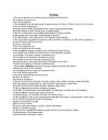
count, noun, nouns, definite, here, names, there, refer, thing, mean, work, indefinite, plural, other, tate, something, place, cannot, mary, states, english, elephant, building, room, these, europe, night, hospital, road, iron, words, things, both, rule, first, before, particular, light, class, teacher, person, money, phone, theatre, goes, mount, rulesadjective + preposition omadussõna + eessõna proud of, good at, married to adverb particle Some verbs are followed by adverb particles. Examples are: put on, take off, give away, bring up, call in. Sometimes the particle is detached from the verb and put after the object. •He took his boots off. •They called the doctor in. apposition a grammatical construction in which two usually adjacent nouns having the same referent stand in the same syntactical relation to the rest of a sentence (as the poet and Burns in “a biography of the poet Burns”) back-reference In grammatical analysis, the term reference is often used to state a relationship of identity which exists between grammatical units, e.g. a pronoun 'refers' to a noun or noun phrase. When the reference is to an earlier part of the discourse, it may be called a 'back-reference' (or anaphora); collective noun
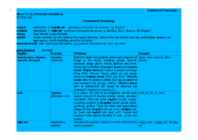
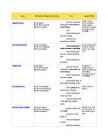
marker tunnus (mitmuse, oleviku, lihtmineviku, tingiva kõneviisi, käskiva kõneviisi, kaudse kõneviisi, umbisikulise tegumoe, ma- tegevusnime, oleviku kesksõna, mineviku kesksõna) derivational affix liide, tuletusliide, tuletusafiks (e.g. postwar, anti-American, wiser, greenish) parts of speech sõnaliigid English Estonian Definition Example noun (proper, common, nimisõna, Refers to words which denote classes and categories of book, water, sincerity, Mary, concrete, abstract) substantiiv things in the world, including people, animals, Estonia inanimate things, places, events, qualities, and states. Nouns can be divided into proper nouns and common
ARTICLES INDEFINITE ARTICLE (A/AN) 1.The indefinite article a/an is only used in front of a singular countable noun mentioned for the first time.The is used when it is mentioned.The is used when it is mentioned a second time, e.g. I bought a jacket and a dress. The jacket was quite cheap 2.Other uses: -to talk about someone's job, e.g. She's an architect. -with numbers and fractions, e.g. a hundred, a million, a third -to mean every with expressions of time, e.g. once a week, five times a year -with What...! exclamations, e.g. What a strange person! ZERO ARTICLE (NO ARTICLE) There is no article: -in front of plural countable nouns when making general statements, e.g. Apples are good for you. -in front of an uncountable noun when making general statements, e.g. Coffee keeps me awake. -in front of abstract nouns, e.g. Honesty is the best policy. -in front of meal times ,e.g. We have lunch at one.
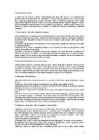
.................................................. 3 Whole ................................................................................... 4 Both, either and neither ....................................................... 4 Few/a few – a little/little....................................................... 5 A lot of/lots of – much/many................................................ 5 Some, any + -body / -one, + -thing, + -where ........................ 6 Some and any Some and any mean a certain number or amount. They are used with or instead of plural or uncountable nouns. Some is a possible plural form of a/an and one: Have a biscuit/some biscuits. I bought a cake/some cakes. Some, any and none can be used with of + the/this/these/those (+ ...) Some of the staff can speak Portuguese. Did any of your photos come out well? You can take any of these. Some is used: • with affirmative verbs: They bought some honey.
What would you like to me tell Did you have a party in your yester flat day? When were you here? Articles Rules: 1. Rule: When you have a single, countable English noun, you must always have an article before it. We cannot say "please pass me pen", we must say "please pass me the pen" or "please pass me a pen" or "please pass me your pen". Nouns in English can also be uncountable. Uncountable nouns can be concepts, such as 'life', 'happiness' and so on, or
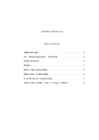
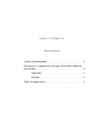
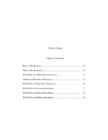
Was and Were 104 2 The Capital Letter 6 The Past Progressive Tense 106 The Future Tense 108 Can and Could 112 May and Might 113 3 Nouns8 Do, Does and Did 115 Common Nouns 8 Would and Should 120 Proper Nouns 13 Singular Nouns 21 Plural Nouns 23 8 Subject-Verb Agreement 123 Collective Nouns 34 Masculine and Feminine Nouns 37 9 Adverbs 127 4 Pronouns 44 Personal Pronouns 44 10 Prepositions 132
Terms Language → A systematic, conventional (tavakohane) use of sounds, signs or written symbols in a human society for communication and self-expression. Human language at all levels is rule- or principle- governed (valitsema) meaning that language corresponds to the grammar. Natural language is usually spoken, while language can also be encoded into symbols (such as letters, morse etc) For example: Estonian, English. Linguistics → The scientific study of human natural language. Broadly, there are three aspects to the study which are Pragmatics (studies the use of language → interested in the gap between the sentence’s meaning and the speaker’s meaning). Semantics (concerned with the meaning of the language aspects and the way they change, also how objects and language and thinking and language are related). Syntax (concerned with the rules [grammar] and how sentences and words are formed).
Infixation is common in languages of Southeast Asia and the Philippines, and it is also found in some Native American languages. circumfixes morphemes that are attached to a root or stem morpheme both initially and finally. Morphs: the concrete realisation of a morpheme (`was' be, past, singular) Allomorphs: a/an Types of affixes: Derivational and infelctional Derivational affixes: Derivational affixes may change the grammatical class of the root verbs into nouns, nouns into adjectives (boy, boyish), and so on. Derivation is a lexical process which actually forms a new word out of an existing one by adding affixes to stems or roots. consideration, considerate, inconsiderate, inconsiderateness Inflectional affixes: Inflectional affixes may be described as `relational markers' that fit words for use in a sentence (express a syntactic relation). Inflections do not change the grammatical class of a given item or produce new lexemes, just different word forms.
(We have been cleaning the house all morning) · To express anger, irritation or annoyance (She has been using my computer without asking) · Fo repeated actions in the past continuing to the present. (She has been going to the gym) TIME EXPRESSIONS USED WITH PRESENT PERFECT CONTINUOUS: how long..?, for, since, all day/morning etc, lately, recently Past Simple · Action occurred at a definite time in the past (Postman delivered the parcel..) · Actions that happened immediatly after one another in the past (She opened the curtains and looked out of the window) · Habits and states which are now finished (Paul worked in a factory when he was younger) NB! Used to can be used instead of past simple for habits and states TIME EXPRESSIONS USED WITH PAST SIMPLE: yesterday, then, how long ago..?, last night/week/Friday etc three days etc ago, in 1990 etc
12. Articles zero, a/an, the Zero · Zero article is used, when article the or a/an is not used. · Articles are not used with the names of languages. Example: He was learning Chinese. · Is not used with the names of sports. Example: She plays badminton and basketball. · Is not used before academic subjects. Example: She's taking economics and math. · Is not used with seasons. Example: In spring, we like to clean the house. · Is not used with institutions. Example: He's in church/college/jail/class. · Is not used with meals. Example: Breakfast was delicious. · Is not used with diseases. Example: She has cancer. · Is not used with time of day.
elegant use of language by developing and polishing stylistic devices. In the 18th century, an individualistic-psychological view on style and stylistics emerges. The late 19th and and early 20th centuries witnessed a utilitarian approach to stylistics. The tendency to regard stylistics as an applied science has been particularly marked in english- 1 speaking countries. It was believed here that the main aim of stylistics is to improve the style of the writer and of a textbook, that is to show how better to express one's thoughts. Of foreign linguists, it is the french Ch.Balley, G.Marduzeon who in the 20th century made a definite contribution. This happened because of the centuries-old tradition in France of interest in style. The classical works on english stylistics are those by the german scholars: Ph.Aronstein, M.Deutschbein, I.Galperin
I don't like to be shouted at. (NOT I don't like to be shouted.) This needs to be thought about some more. (NOT This needs to be thought some more.) 6. Don't use a present tense after It's time. It's time you went home. (NOT It's time you go home.) It's time we invited Bill and Sonia. (NOT It's time we invite Bill and Sonia.) 7. Use was/were born to give dates of birth. I was born in 1975. (NOT I am born in 1975.) Shakespeare was born in 1564. 8. Police is a plural noun. The police are looking for him. (NOT The police is looking for him.) I called the police, but they were too busy to come. 9. Don't use the to talk about things in general. Books are expensive. (NOT The books are expensive.) I love music. (NOT I love the music.) 10. Use had better, not have better. I think you'd better see the doctor. (NOT I think you have better see the doctor.) We'd better ask John to help us. 11
INGLISE KEELE PÕHITÕED C.K 2017 A – AN – SOME Singular: a or an Use some for things you can't count ◦ *a banana *a car *a monkey *a football ◦ *some milk *some water *some coffee ◦ *an egg*an accident *an umbrella *an *some sugar eagle ◦ *some tea *some juice*some money *some butter Plural: some Exercises: 1. http://www.english-4u.de/a_an_some_ex1.htm
· Fine, thanks. / On top of the world, thanks. · OK, thanks · Not so bad, thanks. / Can't complain, thanks. · So so, thanks. / So and so, thanks. · Not so good, actually 1 The English alphabet Spelling Work with your partner and spell out first your name and then some names of places. Write down each letter as you hear it, and then say the word. The English alphabet on the phone: You might find the following alphabet (used by international airlines) useful when trying to spell a word on the telephone. A Alpha O Oscar Ä Alpha-Echo Ö Oscar-Echo B Bravo P Papa C Charlie Q Quebec
Linguistic Stylistics studies linguistic facts from the point of view of their ability to convey extra shades of meaning (connotations we call them). Stylistics has no fixed single unit of study. Stylistics studies everything that makes the utterance of the text expressive. STYLISTIC STUDIES Stylistics is regarded as a relatively new branch of philology, yet its roots go back as far as ancient Greece and Rome. In the 18th century there emerged an individualistic psychological view of style and stylistics. According to this view style bears the stamp of individual usage. The late 19th century and early 20th century saw the appearance of the pragmatic approach to stylistics: the tendency to regard stylistics as an applied science. It was believed that the chief aim of the stylistics is to improve the style of the reader, to teach him to express his thoughts better.
Ladusseva "Stylistic practice: Book I, Book II" - I. Ladusseva "A Guide to Punctuation" EXAMINATION TOPICS: 1. Style, stylistics, a survey of stylistic studies 2. Inherent connotations. Phonesthemes Use lecture notes 3. Adherent connotations 4. Stylistic morphology: articles, nouns, pronouns, adjectives, verbs, adverbs, number * 5. Expressiveness on the level of word-building 6. Phonetic expressive means Study independen tly 7. Phonetic SD ("Rhythm And Style") 8. Lexical SD* 9. Syntactic SD* Use lecture notes 10. Graphical means and devices 11
· Verbs--hope, wish, and want (clever people everywhere. I wish to goodness we had a few fools left) · Repeated words (German art, G science and G culture) · Character's voice may be specified (hatred, she said with he voice trembling with pleasure) · Words with inherent connotation may change it in context, that is, pos may become negative and vice versa 4. Stylistic morphology: articles, nouns, pronouns, adjectives, verbs, adverbs, numerals Articles: · Article with proper names adds a colloquial touch (The Hardys, a Miss Smith) · The indefinite article (a) with a family name creates an evaluative meaning (a Caruso) · A+names of common, undistinguished names suggests contempt (a Malone, a Smith) · A may convey the meaning of belonging to a famous or aristocratic family (a Tudor) · In enumeration adj
The restaurant is called "Luigi's". Italian food is great! Here are the rules for when to use "A, An or The": · a = indefinite article (not a specific object, one of a number of the same objects) with consonants She has a dog. I work in a factory. · an = indefinite article (not a specific object, one of a number of the same objects) with vowels (a,e,i,o,u) Can I have an apple? She is an English teacher. · the = definite article (a specific object that both the person speaking and the listener know) The car over there is fast. The teacher is very good, isn't he? · The first time you speak of something use "a or an", the next time you repeat that object use "the". I live in a house. The house is quite old and has four bedrooms. I ate in a Chinese restaurant. The restaurant was very good.
Degrees of Comparison are used to compare things (living beings, actions, phenomena, etc). We use the comparative degree to compare two things: She’s shorter than me. John works harder than Jim. After a comparative we use than. We use the superlative degree to compare more than two things: Mary is shorter than Jane but Judy is the shortest of the three sisters. Ben is the shortest boy in his class. The superlative degree is usually used with the definite article the. Formation of comparatives and superlatives from adjectives and adverbs: Adjectives 1) one-syllable Adjectives • for one-syllable adjectives, add –er to form the comparative and -est to form the superlative: sweet sweeter the sweetest If an adjective ends with a mute –e, it is omitted: late later the latest NOTE! For one-syllable adjectives ending in a vowel + consonant, we double the consonant:
Philosophy of Language Philosophy of Language: a Contemporary Introduction introduces the student to the main issues and theories in twentieth and twenty-first-century phi- losophy of language, focusing specifically on linguistic phenomena. Topics are structured in four parts in the book. Part I, Reference and Referring, includes topics such as Russell's Theory of Descriptions, Donnellan's distinction, problems of anaphora, the description theory of proper names, Searle's cluster theory, and the causalhistorical theory. Part II, Theories of Meaning, surveys the competing theories of linguistic mean- ing and compares their various advantages and liabilities. Part III, Pragmatics and Speech Acts, introduces the basic concepts of linguistic pragmatics, includes a detailed discussion of the problem of indirect force and surveys approaches to metaphor. Part IV, new to this edition, examines the four theories of metaphor.
action You use the when you know that the listener knows or can work out what particular person/thing you are talking about. For "The apple you ate was rotten." example: "Did you lock the car?" You should also use the when you have already mentioned the thing you are talking about. For "She's got two children; a girl and a boy. The girl's eight and the boy's fourteen." example: We use the to talk about geographical points on the globe. For the North Pole, the equator example: We use the to talk about rivers, oceans and seas For the Nile, the Pacific, the English channel example: We also use the before certain nouns when we know there is only one of a
1.Lexicology as a science L. studies the voc of lg as a system. Word-learning, lexis-logos. The task of L is to establish the general features of modern Engl voc. Theoretical L. gives a complete picture of voc. Practical value lies in using and appretiating the lg more conciously. There is diachronic (historical) L that studies origin and development; syncronic studies voc at a given historical period. There are general L (studies words disregarding particular features of any particular lg); special L (studies specific features of a separate lg, there is Engl that bases on general L); contrastive (compares vocabularys in different languages). 2. Connection of L with other linguistic disciplines a) the word performes a certain grammatical function (nt, he always misses the class, how many misses are there; the girl powders her nose, soliders face powder)In speech words are combined according to
Articles 1. We use a / an when we are talking about something for the first time. He is wearing a suit and a tie. They have an elephant 2. We use the when we are talking about a specific person or thing, or if there is only one, or if it is clear which one we are talking about. She took a glass of water and started to drink. (one of many glasses of water) She took the glass of water nearest to her. (a specific glass) 3. We use no article when we are talking about people or things in general. English people drink a lot of tea. (English people in general) The English people in this hotel are very nice. (specific English people) 4
What is your name? (formal) What is your name? (informal) My name is... Mucho gusto. / Encantado. Señor / Señora / Señorita Igualmente. moo-choh goo-stoh / en-cahn- sayn-yor / sayn-yor-ah / ee-guahl-mehn-tay tah-doh sayn-yor-ee-tah Same here. / Same to you. Nice to meet you. Mister / Mrs. / Miss ¿De dónde eres? ¿De dónde es usted? Yo soy de... day dohn-day eh-rehs day dohn-day ehs oo-sted yoh soy day Where are you from? Where are you from? (formal) I'm from..
They are stigmatized as shameful and inferior, socially lower. Judging people by their accent might, however, be offensive. These varieties are connected to race in US and class in UK. Grammatical and lexical differences throughout the world in the English language are rather insignificant . Most oftenly pronounciation is the most significant/different. Deviations from the standards: 1. Multiple negations ,,I didn't do nothing." 2. Ain't negative of ,,have" or ,,be" 3. ,,Never" used to refer to a single occasion in the past ,,I never done it" (I didn't do it) 4. Extension of 3rd person ending ,,s" to 1st and 2nd person forms ,,I/You wants" (used by the working class) 5. Regularisation of ,,be" ,,Me/You/They was" 6. Regularisation of some irregular verbs draw/drawed/have drawed; go/went/have went 7. Optional ,,-ly" ending on adverbs ,,He writes real quick." 8. Unmarked plurality on amounts of measurement after numerals 10 pound, 20 year 9
Pronouns By: Anneli Võikar Pronouns are small words that take the place of a noun. We can use a pronoun instead of a noun. Pronouns are words like: he, you, ours, themselves, some, each... If we didn't have pronouns, we would have to repeat a lot of nouns. Types of pronouns Personal pronouns Reflexive pronouns Demonstrative pronouns Interrogative pronouns Indefinite pronouns Relative pronouns Possesive pronouns Reciprocal pronouns Pronoun case Personal pronouns Personal pronouns represent specific people or things. We use them depending on: number person gender Case
EXCLAMATORY and IMPERATIVE sentences end with an exclamation mark ( ! ) : What a beautiful day! Do your homework at once! Parts of the Sentence The basic parts of the sentence are: THE SUBJECT (WHO? WHAT?) , THE PREDICATE (does, is doing, has done, etc – action/statement), THE OBJECT (WHO/WHAT is the action/statement directed at?) : Marion (who?) has a boy-friend (who?). She (who?) likes to read books (what?). The earth (what?) is a planet (what?). Besides, there are: THE ATTRIBUTE (WHAT?/WHAT KIND?) and THE ADVERBIAL (WHEN? - adverbial modifier of time/WHERE? – adverbial modifier of place/ HOW? – adverbial modifier of manner) Attributes modify nouns and stand in front of them. Adverbials modify verbs and usually stand behind them: This girl has a beautiful smile. This girl smiles beautifully. Attributes are usually adjectives but sometimes nouns as well: This is an interesting (adjective) story. The kitchen ( noun) door is locked.
1. Nouns: how is the plural formed? The plural form of most nouns is created simply by adding the letter s: · more than one snake / snakes · more than one ski / skis · more than one Barrymore / Barrymores Words that end in -ch, x, s or s-like sounds, however, will require an -es for the plural: · more than one witch / witches · more than one box / boxes · more than one gas / gases · more than one bus / buses · more than one kiss / kisses
15 monophtongs, (7 long, 7 short, 1 central), 4 diphtongs, 17 consonants. Free variaton of R, and it was pronounced everywhere. Very much Germanic in character. Quite some special consonants that no longer exist. About morphology: synthetic with numerous aglutinating tendencies. System of tenses Germanic, but with a reduction of tenses. Paradigmatic leveling; Stress shift; Word order; Loan words (Old Norse, Old French). Dual pronouns. Determiners - no separate definite article. Strong and weak verbs. Word order relatively free with tendencies towards SVO. SVO, SOV, VSO most common. Adposition and podposition were both possible (eesliide ja tagaliide). About syntax: clauses were joined much simpler than nowadays, using and, then etc. Because of case syncretion the word order in a sentence became much more important to be able to tell the difference between words. FIRST CONSONANT SHIFT (GRIMM'S LAW)
LEXICOLOGY 1. Size of English vocabulary 1) Old English – 50,000 to 60,000 words Vocabulary of Shakespeare OE – homogeneous; 1/3 of the vocabulary has survived • 884,647 words of running text About 450 Latin loans (Amosova) • 29,000 different words (incl. work, working, Viking invasions added 2,000 worked, which are counted here as separate 2) Middle English – 100,000 – 125,000 words) English becomes heterogeneous (Norman French, • 21,000 words English, Latin), hybrid of Germanic and Romance languages Norman French influence – about 10,000 words, 75 % are still in use (Baugh) Latin influence continues 3) Early Modern English – 200,000 – 250,000 English becomes a polycentric language; polyglot,
English lexicology 1. Size of English vocabulary Vocabulary is a sum total of words used in a language by speakers or for dictionary-making. Active and passive vocabulary. The Old English vocabulary was homogenous. There were about 50 000 – 60 000 words, 1/3 of which have survived. o About 450 loans from Latin o About 2000 from the Viking invasions. The Middle-English vocabulary became a heterogeneous hybrid of Germanic and Romanic languages. 100 000 to 125 000 words. o About 10 000 loans from Norman French, 75% are still in use o Continuing Latin influence Early Modern English. 200 000 – 250 000 words
.....................................................................................11 Kaudkõne Reported speech........................................................................................11 Kaudküsimused Reported questions..........................................................................12 Passiiv Passive voice .................................................................................................12 Loendatavad nimisõnad Countable nouns.................................................................12 Loendamatud nimisõnad Uncountable nouns............................................................13 Mitmuse moodustamine................................................................................................13 Siduvad asesõnad..........................................................................................................14 Omastav kääne...............................................
Artikkel the pärisnimedega 10 Artikkel the geograafiliste nimedega 10 Artikkel a, an 10 Muu 11 Otsekõne Direct speech 11 Kaudkõne Reported speech 11 Kaudküsimused Reported questions 12 Passiiv Passive voice 12 Loendatavad nimisõnad Countable nouns 12 Loendamatud nimisõnad Uncountable nouns. 13 Mitmuse moodustamine 13 Siduvad asesõnad 14 Omastav kääne 14 Käskiv kõneviis 15 Omadussõnad 15 Viisimäärsõnad 16 Tingimuslaused 16 2
 annaabi.ee